Delta metal screw backout: causes, fixes, and prevention
Delta metal screw backout: causes, fixes, and prevention
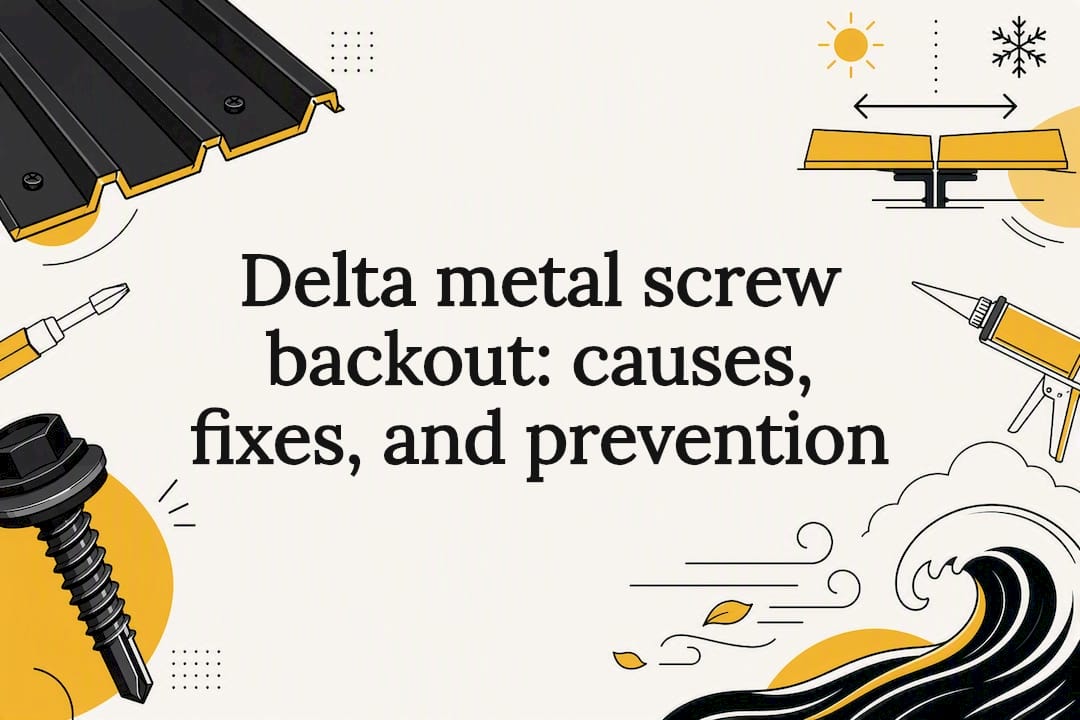
Screw backout is exactly what it sounds like: the fasteners holding your metal roof panels down slowly work themselves upward, losing grip on the substrate underneath. On Delta roofs, it shows up as raised screw heads, cracked washers, or a faint rust halo ringing each fastener. Left alone, it becomes a leak.
Three things cause most of it in Delta specifically: repeated thermal movement in the panels, installation shortcuts (over-driven or under-driven screws, wrong angle, wrong fastener), and corrosion from the salt-laced air rolling off Boundary Bay and the Fraser estuary.
If you spot backed-out screws today, here’s what to do before anything else:
- Photograph every affected fastener and note its location on the roof
- Prioritize edges, ridges, and anywhere you see rust streaks or split washers
- Call a qualified roofer immediately if you find more than a handful, or any showing active corrosion
One loose screw is a maintenance note. Ten loose screws on a wind-exposed elevation is a roof that’s telling you something.
TL;DR:
- Backout mainly results from thermal cycling, installation errors, and coastal salt corrosion, with coastal fasteners needing higher-grade materials like 316 stainless steel.
- Inspections should occur annually in high-exposure areas and every two years inland, focusing on raised screw heads, rust streaks, and washer damage.
- Retightening screws only addresses superficial symptoms; addressing substrate quality and using proper fastener materials prevent recurring failures.
- Installing concealed clip systems or upgrading to stainless fasteners significantly extends roof lifespan and reduces backout cycles in Delta’s challenging environment.
- Proper technique, matching fastener materials to exposure levels, and regular inspections are crucial for effective long-term fastener performance.
Table of Contents
- What causes delta metal screw backout?
- How do you spot early signs of screw backout?
- What are the best prevention and retrofit options?
- What installation practices actually prevent backout?
- What does field experience in Delta actually show?
- What actually matters most with screw backout
- When should you book a repair for backed-out screws?
- Key Takeaways
- Sources
- FAQ
What causes delta metal screw backout?
Metal panels expand and contract with every temperature swing, and Delta gets more of those swings than people expect. A dark steel roof can move several millimetres across its length between a cold January morning and a sunny July afternoon. That movement doesn’t damage the panel itself, but it repeatedly tugs on every fastener holding it down. Each cycle is small. Thousands of cycles over a decade is how a snug screw becomes a loose one. Backout at this stage is often the first visible sign of thermal stress accumulating in a roof system, and it’s a cue to plan replacement before the next cycle turns a loose screw into a missing one, according to Rainville Carlson’s overview of thermal expansion damage.
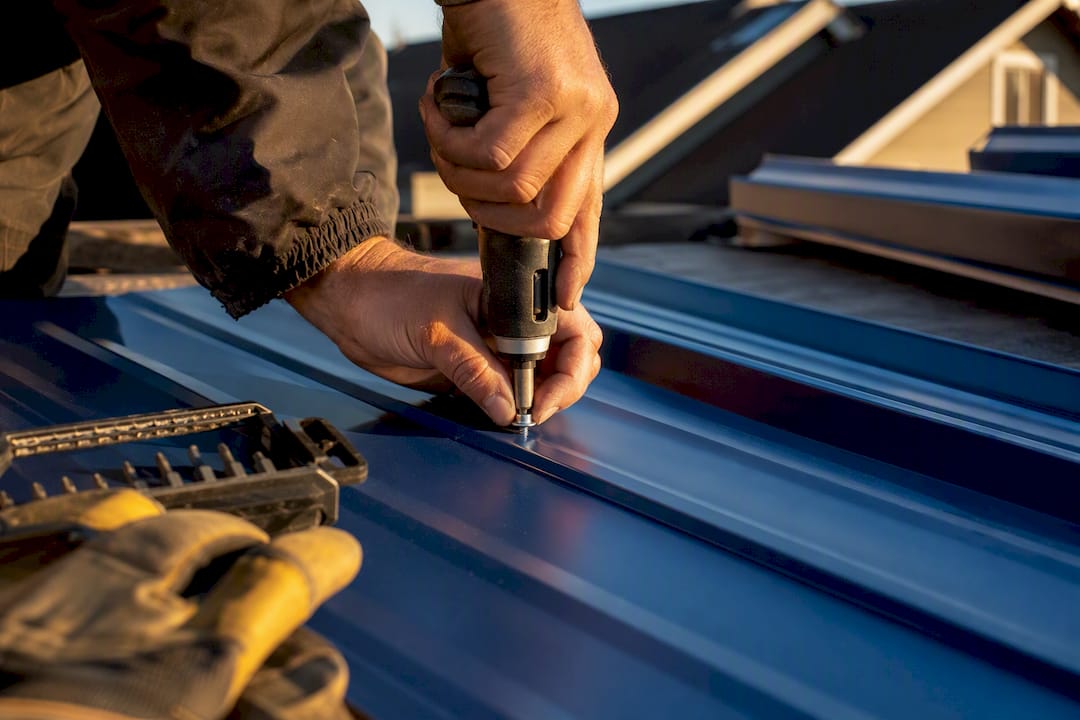
Installation errors compound the problem faster than most property owners realize. A screw driven with too much torque crushes its EPDM washer flat, destroying the seal and letting the fastener work loose the moment the panel starts moving. A screw driven with too little torque never seats properly in the first place. Both mistakes are common on crews working fast to hit a schedule, and trade research from Metal Construction News identifies over-driving and under-driving as leading causes of fastener failure industry-wide, not just a Delta problem, but one that hits harder here because of what comes next.
Substrate matters just as much as the fastener itself. Thin purlins, undersized battens, or a screw that missed solid wood and caught only the edge of a stud all reduce pull-out strength. Engineering studies on thin steel roofing connections confirm that substrate thickness and screw geometry directly determine how much holding power a fastener actually has, and a mismatch between screw and substrate shows up years later as backout, per research published on pull-out failures in thin steel connections.
Then there’s wind. Delta’s open, low-lying geography, especially near Boundary Bay, the Fraser River corridor, and anywhere with a clear run of exposure, means panels flutter more in gusty conditions than they would in a sheltered North Shore valley. That flutter is a form of vibration, and vibration loosens threads the same way it loosens bolts on a truck.
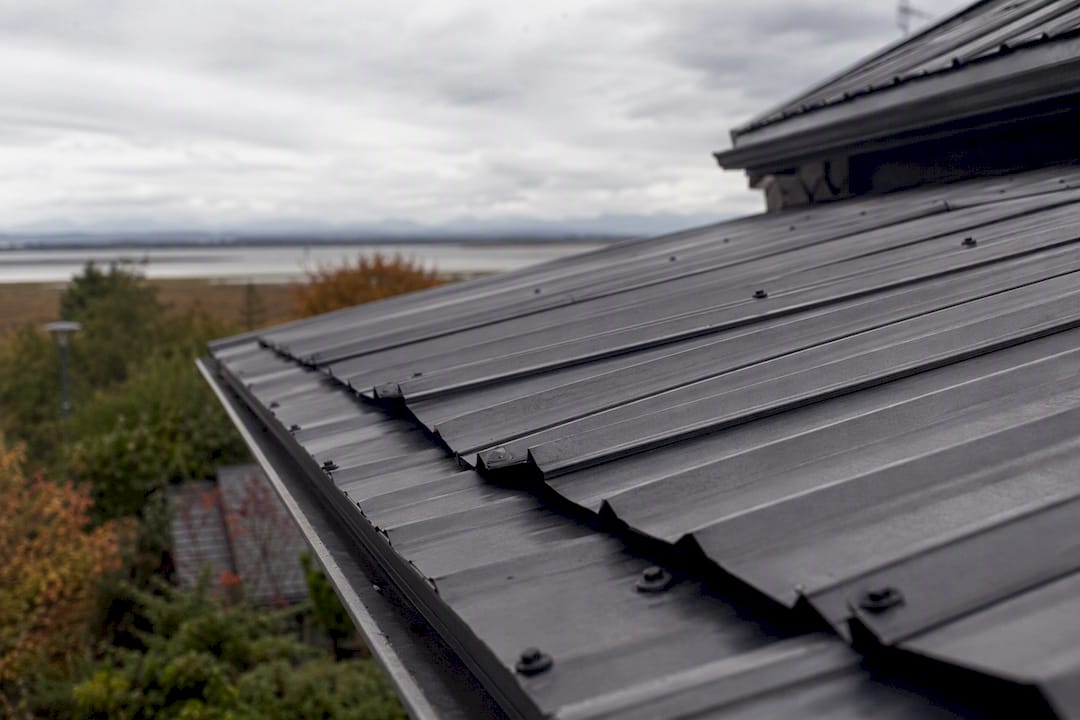
Why coastal salt speeds it all up: Fasteners near Delta’s shoreline corridors face a corrosion environment that inland Coquitlam or Burnaby roofs simply don’t see. Standard ZAC-coated carbon steel screws can start failing within 5 to 15 years in coastal salt air, while stainless alternatives last considerably longer, based on the Gulf Coast Metal Roof Guide’s coastal fastener data. Corrosion doesn’t just weaken the screw. It pits the threads, reduces clamping force, and gives water a path straight into the building envelope once backout starts, a mechanism confirmed in the NISTIR review of fastener corrosion in roofing systems.
Fastener choice and installation quality overlap constantly, which is why we cover both in detail in our guide to roof fasteners in the Vancouver climate.
How do you spot early signs of screw backout?
Most backout is visible long before it leaks, if you know where to look and how often to check.
Here’s a quick walk-through of what to look for and when:
- Scan for raised screw heads. A fastener that sits even 2 or 3 millimetres above the panel surface has already started backing out.
- Check washers for splitting or crushing. A washer that looks flattened, cracked, or offset from the screw shaft has lost its seal, whether or not the screw itself has moved.
- Look for rust streaks trailing down from a fastener. This is one of the clearest signs of corrosion setting into the screw threads.
- Press or wiggle-test a sample of screws across different roof zones, especially ridges, edges, and any panel run exposed to prevailing wind.
- Feel for panel flutter on windy days near eaves and gable ends, where movement concentrates.
Inspection frequency should match exposure, not just calendar habit. A wind-exposed commercial roof near the Fraser corridor or Boundary Bay warrants an annual check at minimum, sometimes twice yearly on high-exposure elevations. A sheltered residential roof further inland can usually run on a biennial schedule. Coastal corrosion category guidance backs this up, treating higher salt exposure zones as needing shorter inspection intervals than sheltered ones, according to industry guidance on coastal fastener coatings and corrosion categories.
Pro Tip: Keep a simple photo log with dates and roof-zone labels every time you inspect. Strata councils especially benefit from this. It turns a vague complaint about “leaks again” into a documented pattern that supports a warranty claim or a maintenance budget request.
What are the best prevention and retrofit options?
The fix depends on how far the problem has already progressed, and coastal exposure changes which fastener grade actually makes sense for a Delta property.
Fastener material comes first. For roofs within a couple of kilometres of Boundary Bay, Delta’s coastal marshes, or the Fraser estuary, 316 stainless steel is worth the extra cost. It resists chloride-driven pitting corrosion far better than standard coatings. Further inland, in drier pockets of Delta away from direct salt spray, 304 stainless is usually adequate and considerably cheaper. The Gulf Coast Metal Roof Guide is explicit on this split: reserve 316 for the harshest exposure and use 304 where the environment is less aggressive.
Polymer-coated and aluminium-zinc alloy fasteners sit in the middle. They’re not as corrosion-resistant as full stainless, but they outperform bare carbon steel by a meaningful margin and cost less than stainless upgrades across a whole roof. They make sense on lower-risk elevations or as a budget-conscious middle step for strata buildings phasing in upgrades over several years.
When backout has already started, here are the retrofit tactics that actually hold:
- Replace the fastener with a longer or larger-diameter screw driven into fresh, solid substrate a few millimetres from the original hole
- Relocate the fastener entirely if the original hole missed the purlin or stripped out
- Add a stress plate under the fastener head to spread load across more panel surface, keeping in mind that plastic stress plates reduce galvanic corrosion risk but can trap moisture and invite crevice corrosion in the wrong environment
- Upgrade to a concealed clip system on panel runs with repeated backout, since clips accommodate thermal movement instead of fighting it
That last point deserves more explanation, because it’s where the real decision gets made. Through-fastened panels are simple and cheap to install, but every fastener is a fixed point resisting a panel that wants to move with temperature. Concealed clip systems let the panel float and expand without stressing any single screw, which is exactly why they hold up better over decades on Delta’s high-swing roofs, a trade-off explained well in trade guidance on metal roofing fastening methods and failure modes. Clips cost more upfront and add installation complexity, so they’re not automatic for every project, but on a roof that’s already shown repeated backout across multiple seasons, a clip retrofit is often the only fix that actually stops the cycle instead of just resetting the clock.
Upgrading to stainless fasteners typically adds only a modest fraction to total roof cost, yet it prevents the far more expensive cycle of repeat re-fastening calls and leak repairs that coastal carbon-steel fasteners tend to generate. We break down the clip-versus-fastener decision in more depth in our piece on fasteners versus concealed clips in Vancouver wind conditions, and if your roof is a low-slope design, our guide to metal roofing on low-slope Vancouver roofs covers substrate concerns specific to that profile.
What installation practices actually prevent backout?
The single biggest lever against future backout isn’t the fastener brand. It’s whether the installer drives every screw with consistent, correct technique.
- Match the screw to the substrate. Steel purlins, wood battens, and OSB decking each demand a different thread type and length. A generic screw pulled from a mixed bin is a common source of premature backout on Metro Vancouver jobs.
- Set drivers to a torque range that seats the screw fully without crushing the washer. Impact drivers set too aggressively are one of the most common causes of split EPDM washers on a fresh install.
- Drive every screw perpendicular to the panel surface. An angled screw concentrates stress on one side of the hole and creates an oval opening that loosens faster than a clean, straight bore.
- Confirm washer compression visually on every fastener , not just a sample. A properly seated EPDM washer bulges slightly and evenly around the screw shaft, dual-seal washer designs offer extra insurance on high-exposure roofs.
- Run torque spot checks across a sample of fasteners after each work session and log the results before the crew moves to the next roof section.
Field experience backs this up directly: overdriven screws crush washers and underdriven screws never seat, and both failure types trace back to installer technique rather than fastener quality, per Metal Construction News’ analysis of fastener installation risk.
Pro Tip: If you’re hiring a contractor, ask them directly what torque setting they use on their drivers and whether they document sample checks. A crew that can’t answer that question in specifics probably isn’t checking.
Quality control matters just as much for a small residential re-roof as it does for a strata complex. We’ve documented the most common installation shortcuts we see on Delta jobsites in our article on mistakes during roof installation in Delta and how to avoid them.
What does field experience in Delta actually show?
On Delta roofs, backout clusters in predictable spots: wind corridors near Boundary Bay, roof edges facing open exposure, and any run where the original crew hit undersized purlins instead of solid framing. We see the same patterns repeat across strata buildings and commercial units alike.
A short field checklist we work from:
- Do check washer compression on every fastener during a service visit, not just a sample
- Do prioritize salt-corridor elevations for stainless upgrades first
- Don’t assume one loose screw is isolated. It rarely is
- Don’t re-drive a backed-out screw into the exact same hole
When we inspect a Delta roof with repeat backout complaints, the pattern is almost always the same: undersized purlins on one elevation, salt air doing the rest. Fixing the fastener without addressing the substrate just buys a few more years before the same call comes in again.
We document every finding with dated photos and a written repair priority list, whether the property is a single-family home, a strata townhouse complex, or a commercial building.
What actually matters most with screw backout
Most advice on this topic treats backout as a fastener problem, and that’s the mistake. It’s a systems problem where thermal movement, substrate quality, and coastal air all act on the fastener at once. Swapping in a better screw without checking what it’s driven into just delays the same failure.
The conventional fix, tightening the visible screw and moving on, ignores that a screw which backed out once has already told you something about the substrate underneath it or the exposure it faces. Retightening without upgrading the material or relocating the hole usually buys a season, not a decade.
What should actually come first is an honest look at exposure. A roof three streets from Boundary Bay needs a different fastener strategy than one tucked behind a windbreak in North Delta, and pretending otherwise is how strata councils end up paying for the same repair twice. Get the substrate and material right the first time, and the rest of the roof takes care of itself.
— Harman
When should you book a repair for backed-out screws?
If you’re seeing more than a couple of raised screw heads, any rust streaking, or a leak that started small and got worse after a windy week, that’s the point to stop patching and get a proper inspection scheduled. Waiting through another freeze-thaw cycle or storm season on a roof with active backout usually turns a fastener repair into a water-damage repair.
A Paragon Roofing BC service visit for backout issues starts with a full fastener inspection across every exposed elevation, including torque spot testing to catch loose screws before they show visible signs, as part of their comprehensive roofing services. From there we handle selective re-fastening, stainless upgrades where coastal exposure calls for it, or a full clip retrofit if the roof has outgrown through-fastening entirely. Every visit ends with a written report and photos, useful for strata minutes, insurance files, or your own maintenance records. We work across Delta and the wider Lower Mainland, including Surrey, Burnaby, Coquitlam, North Vancouver, and West Vancouver.
If your roof is showing any of the signs covered above, get a proper look before the next storm system rolls in. Start with our residential roofing services page to request an inspection and quote, or reach out directly for a Surrey or Delta area assessment through our Surrey residential roofing page.
Key Takeaways
Screw backout in Delta stems from thermal cycling, installation shortcuts, and coastal corrosion acting together, and fixing it requires matching fastener material and substrate to actual exposure, not just retightening the visible screw.
| Point | Details |
|---|---|
| Backout has three root causes | Thermal movement, installation error, and coastal corrosion combine, rarely acting alone. |
| Inspect based on exposure | High wind or salt exposure zones need annual checks; sheltered roofs can run biennially. |
| Match fastener to distance from shore | Use 316 stainless near Boundary Bay and coastal corridors, 304 further inland. |
| Retighten only fixes the symptom | A backed-out screw signals a substrate or material mismatch that retightening alone won’t solve. |
| Paragon Roofing BC handles the full fix | Inspection, torque testing, stainless upgrades, and clip retrofits are all part of a standard service visit. |
Sources
FAQ
What is screw backout on a metal roof?
Screw backout happens when a fastener gradually loosens and lifts above the panel surface, usually from repeated thermal movement, poor installation, or corrosion weakening the threads.
How often should a Delta property inspect for backout?
Wind-exposed or coastal-facing roofs near Boundary Bay warrant annual inspections, while sheltered inland roofs can typically go every two years.
Should I use 304 or 316 stainless screws in Delta?
Use 316 stainless for roofs close to the shoreline or salt marshes, and 304 stainless for properties further inland with lighter salt exposure.
Can backed-out screws be repaired without replacing the whole roof?
Most cases only need selective re-fastening, relocation to solid substrate, or a stainless upgrade rather than a full roof replacement, unless backout has already caused widespread substrate damage.
Does Paragon Roofing BC repair screw backout in Delta?
Yes, inspections, torque tests, and re-fastens or upgrades screws across Delta and the wider Lower Mainland, with a written report provided after every visit.
Recommended
Our Roofing Blog


Have more questions about roofing?
Check out our FAQs or give us a call today to speak to an expert roofer in Vancouver Lower Mainland, BC. We're here to help our neighbours make educated decisions about their roof. For our team, we value helping clients save money while making their roofs last.