Start with the structure. Then compare the details.
Clay and concrete tiles can both create a distinctive roof. The right choice depends on the selected product, the building, the roof assembly and your budget. For an existing tile roof, the condition beneath the tiles matters as much as the visible finish.
Compare the whole roof system, from the tile profile to the layers underneath.
BEFORE YOU CHOOSE A TILE
Confirm the roof can carry it
Both clay and concrete are heavy roof coverings. Compare the installed weight of the actual products being considered, including the rest of the assembly. Concrete is not automatically heavier than every clay product, and a material name alone cannot establish structural suitability.
If you are changing from another covering to tile, have the building's capacity reviewed before committing to the roof system. Existing tile on a house also does not prove that its present structure is sound or suitable for a different product.
Where structural review is needed, involve the appropriate design professional. A roofing estimate should identify the roofing work and any separate engineering or building work required.
PLANNING A TILE ROOF PROJECT
Tell us what you are considering
Share the property address, current covering and whether you are dealing with a leak, planning replacement or comparing materials. Include any existing reports or drawings in your discussion.
You do not need to climb onto the roof to make an enquiry. Photos you already have or can take safely from the ground are a useful starting point.
Paragon Res Roof #1
Thank you for contacting us. We will get back to you as soon as possible.
Oops, there was an error sending your message. Please try again later.
THE MATERIAL COMPARISON
Clay and concrete at a glance
Use these differences to narrow the questions for your project. Product specifications, local availability and the complete installation scope should decide the final selection.
On a small screen, scroll the table sideways to read every column.
Clay and concrete roof tile comparison
Factor
Clay tile
Concrete tile
Material
Clay shaped and fired in a kiln.
A formed cement based tile, available in several profiles.
Colour and finish
Natural clay tones or fired surface finishes, depending on the product.
Integral colour, surface treatments or finishes vary by product.
Appearance
Curved and flatter profiles can suit traditional or contemporary buildings.
Profiles can offer a tile, slate or shake inspired appearance.
Roof weight
A heavy covering. Check the selected tile and full assembly.
A heavy covering. Compare actual installed weights rather than a blanket ranking.
Cost
Often a premium material choice; obtain a complete project proposal.
Can be a lower material cost option, but total installed cost is project specific.
Service life
Depends on the tile, installation, exposure and upkeep.
Depends on the tile, installation, exposure and upkeep.
Layers underneath
Underlayment, flashings and attachment details are part of the system.
Underlayment, flashings and attachment details are part of the system.
Wet weather and upkeep
Check drainage paths, debris and the condition of roof details.
Check drainage paths, debris, surface changes and the condition of roof details.
Roof access
Tiles can break under foot traffic. Plan professional access.
Tiles can break under foot traffic. Plan professional access.
A durable tile is only one component of a durable roof. Avoid choosing between clay and concrete using a single lifespan claim, photograph or price per tile.
PROFILE, COLOUR AND FINISH
Choose the look with actual samples
Clay tile
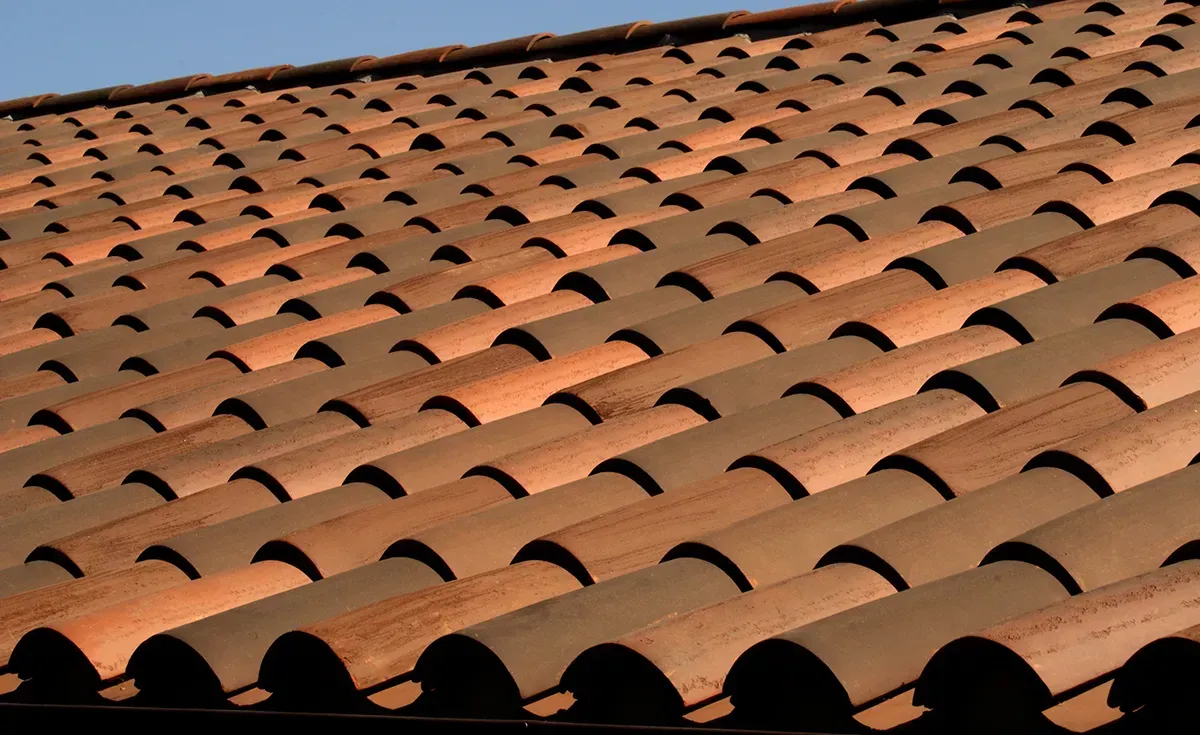
Clay is available in natural tones and a range of fired finishes. Some colour comes from the clay itself; other colours come from finishes applied before firing. It is inaccurate to describe every clay tile as having colour through its full thickness.
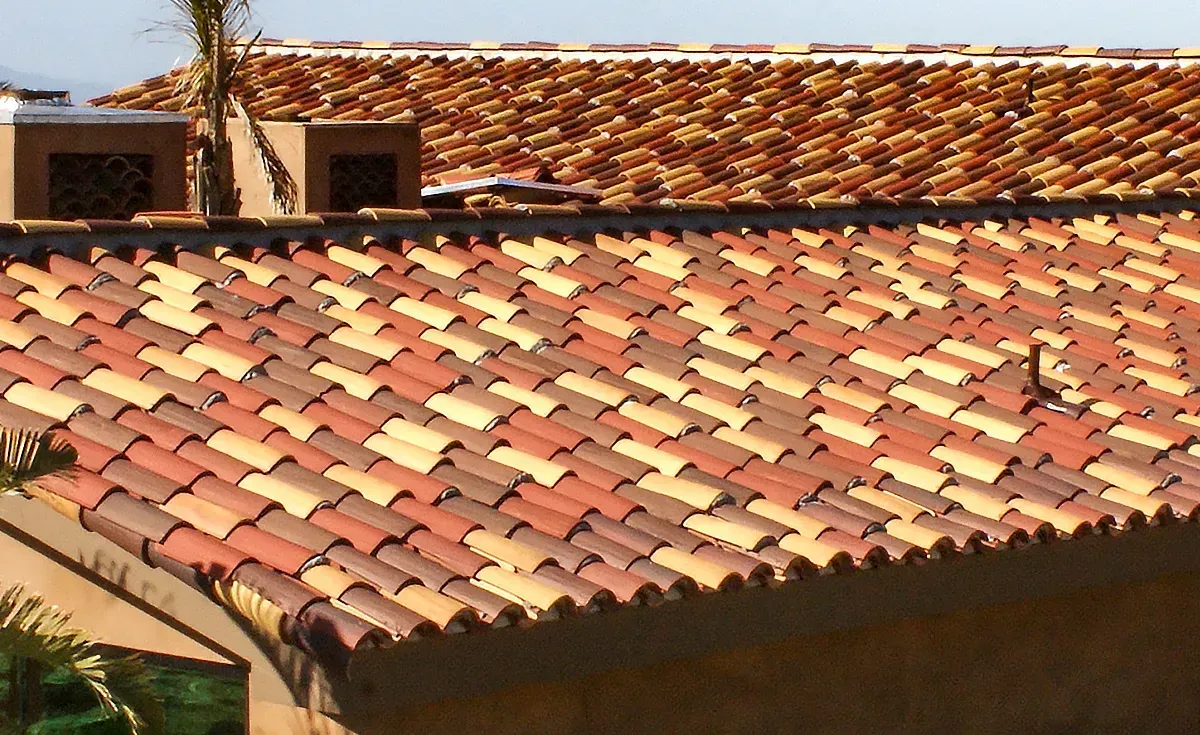
Compare the intended blend and profile in natural light. A single sample does not show how variation will read across an entire roof.
Concrete tile
Concrete tiles offer different profiles and colour treatments. Ask how the selected product is coloured, how its surface may change and what maintenance the manufacturer recommends.
A change in appearance alone does not establish that the roof needs replacement. Assess visible wear alongside the tile condition and the performance of the whole assembly.
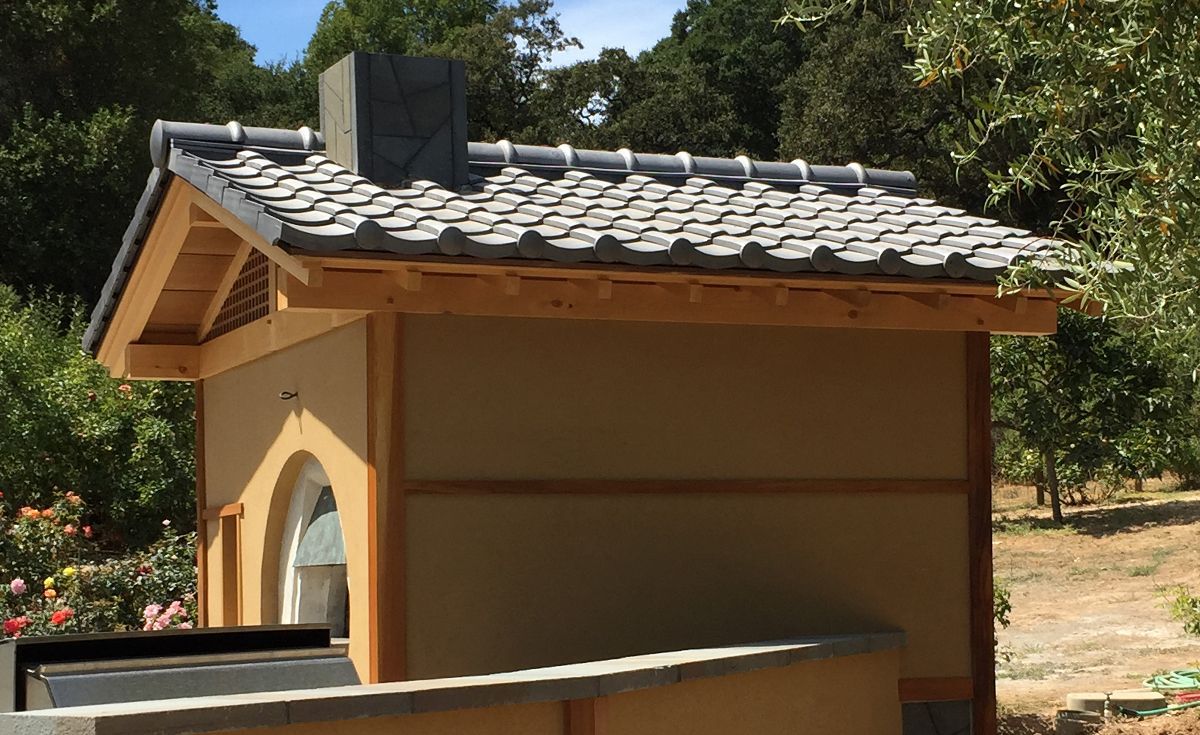
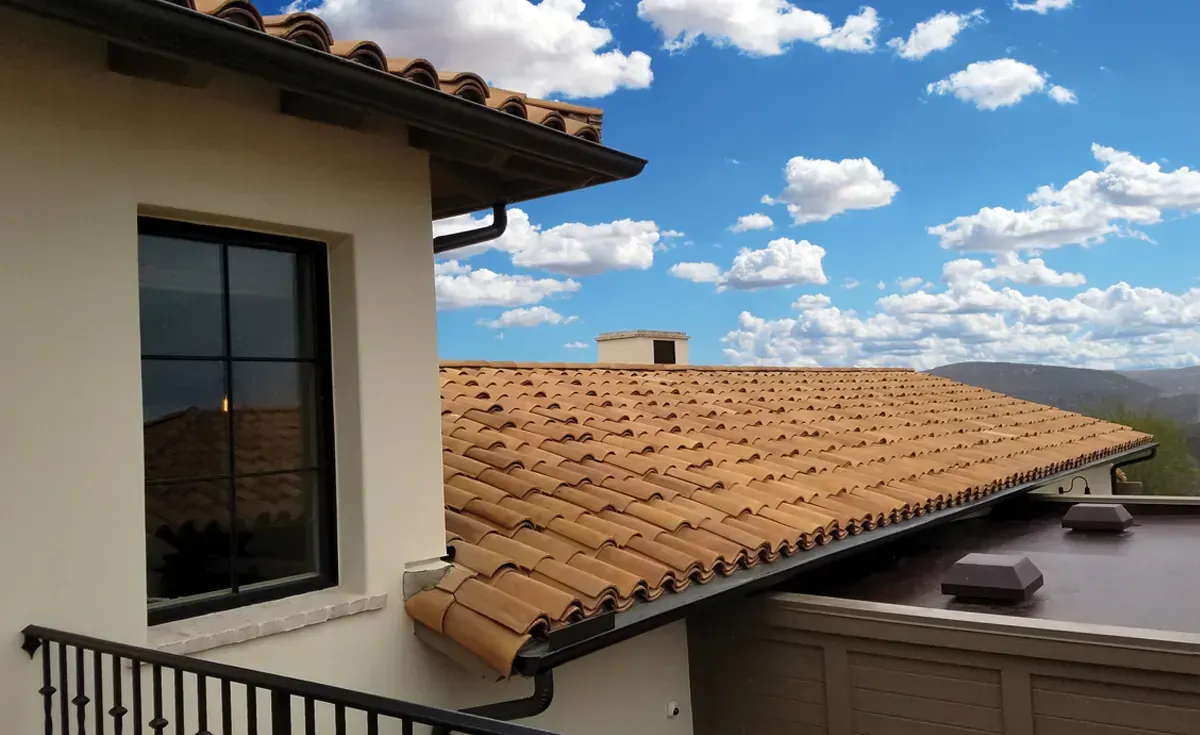
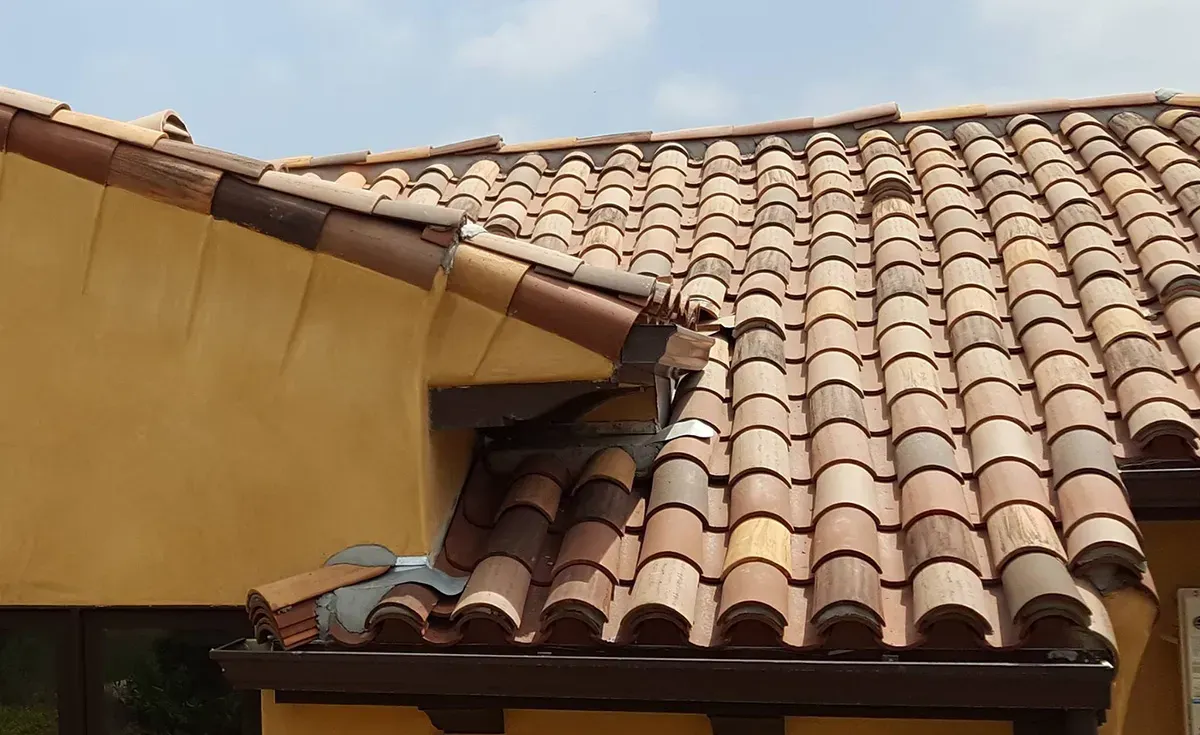
A grey finish and detailed ridge give this small roof a distinctive outline.Colour blends change the appearance of a tile roof across the full roof plane.The covering, wall junction and drainage details need to work together.
A concrete tile roof can have sound looking tiles and still develop a leak. The covering sheds water, while underlayment and flashing provide protection at the deck and around interruptions in the roof. A defect in one of those layers may be difficult to see from the ground.
Record when the leak appears, where staining is visible and whether anything has changed recently. A ceiling stain identifies an affected area inside the home, but does not reliably identify the entry point on the roof.
What to include in the assessment
Ask about cracked, slipped or missing tiles, the condition of ridges and valleys, wall and chimney junctions, roof openings, and the drainage route. If investigation requires lifting tiles, confirm the access plan and how that area will be protected.
The findings should distinguish a local defect from wider deterioration. Do not assume that every leak needs a new roof, or that replacing the nearest broken tile will resolve the whole problem.
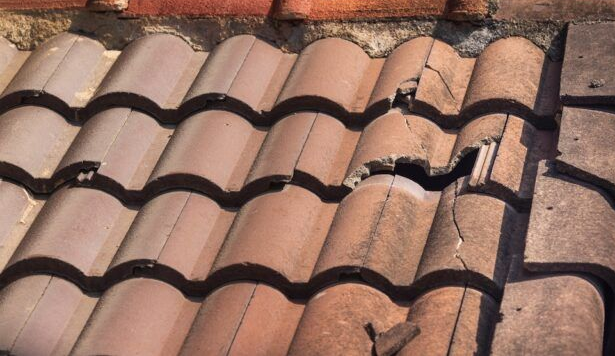
Valleys and wall junctions deserve attention during a tile roof assessment.Visible tile damage is a reason to assess the surrounding roof and underlying layers.
USE THE CONDITION TO SET THE SCOPE
Repair, relay or replace?
The useful question is which scope addresses the identified problem and remains practical for the existing roof. Tile condition, compatible replacements, underlying layers and access all influence that decision.
On a small screen, scroll the table sideways to read every column.
Questions for an existing tile roof assessment
What is found
What to investigate
What the proposal should explain
One damaged or displaced tile
The cause, surrounding condition and availability of a compatible replacement.
Whether a local repair addresses the defect and any damage underneath.
A leak near a valley or roof opening
Flashing, drainage and underlayment around the affected detail.
Which layers need access and how the repaired area connects to the rest of the roof.
Wider underlayment deterioration
The extent of the problem and whether the tiles can be lifted without excessive breakage.
The feasibility and limits of retaining tiles compared with installing a new system.
A discontinued tile profile
Exact profile identification and compatible replacement availability.
How shortages or breakage affect the scope, cost and ability to complete repairs.
Widespread damage or a planned material change
The whole assembly, structural requirements, drainage and finish details.
A complete replacement scope and the assumptions behind the estimate.
Relaying means lifting suitable tiles, renewing the necessary underlying components and reinstalling usable tiles. It is not practical for every roof. Tile fragility, compatible spares and the work needed underneath can make another approach more suitable. Confirm whether relaying is available for your particular project before relying on it as an option.
Moss, other surface growth and debris should be assessed in the context of the roof and its drainage. The appropriate cleaning method depends on the material, finish and manufacturer guidance. A cosmetic treatment does not repair failed flashing or underlayment.
Arrange roof access and cleaning with someone equipped to work on tile safely. Walking can damage tiles, and wet roof surfaces add risk. Avoid experimenting with pressure settings or chemical mixtures on the roof.
Keep records of repairs and photographs supplied after work. They can help a future assessment distinguish an old mark or repair from a new concern.
COMPARE THE COMPLETE PROJECT
What affects tile roofing cost?
Product and availability
Profile, finish, accessory pieces, compatible replacements and delivery all affect the material portion of a proposal.
Roof shape and access
Roof area, pitch, height, valleys, openings and access affect the work and equipment needed.
Work below the tiles
Deck repairs, underlayment, flashing and any separate structural work can change the scope substantially.
Removal and completion
Compare removal, disposal, protection, cleanup and the applicable warranty terms alongside the covering itself.
Ask each proposal to identify what is included, what remains uncertain and how additional findings will be priced and approved. A lower tile price does not necessarily mean a lower total project cost.
WHEN YOU WANT A DIFFERENT COVERING
Consider the whole conversion
If tile is no longer the right fit, compare alternatives for appearance, installed weight, slope suitability and upkeep. A change in covering also requires a plan for the deck, roof edges, flashings, ventilation and drainage.
For broader planning, see our residential roof replacement services. Share your goals and the existing roof details so the relevant options can be discussed.
COMMON QUESTIONS
Clay and concrete tile questions
Is clay or concrete tile better for a BC home?
There is no universal winner. Compare the selected products, the building structure, roof assembly, appearance, upkeep and total installed cost. For an existing roof, its actual condition is more useful than a general ranking of materials.
Can my house support a tile roof?
That requires a review of the building and the proposed assembly. Do not assume a structure designed for another covering can carry tile. Where needed, obtain advice from the appropriate design professional before choosing the system.
Is concrete tile always heavier than clay?
No. Weight varies with the product and profile. Compare the installed weights of the actual options and account for the full roof assembly rather than treating either material as a single fixed weight.
Does clay tile have colour all the way through?
Not in every case. Natural clay colour and fired surface finishes are different ways of creating the final appearance. Ask about the selected tile and finish rather than assuming all clay products are coloured in the same way.
Which lasts longer, clay or concrete tile?
Both can be durable coverings, but there is no single lifespan that applies to every roof. Product quality, installation, exposure, maintenance and the condition of flashings and underlying layers all matter.
Why can a tile roof leak when the tiles look intact?
Water can enter at a flashing, roof opening, damaged detail or underlying layer even when the visible tiles appear sound. The source needs to be investigated before a repair scope is selected.
Can concrete tiles be reused over new underlayment?
Sometimes, if the tiles remain suitable and compatible replacements are available for any breakage. The roof condition and work needed underneath determine feasibility. Confirm whether that scope is available and appropriate for your project.
Is it safe to walk on a tile roof?
Roof access involves fall risk and can also break tiles. Do not climb onto the roof to identify a material or collect enquiry photos. Use existing photos or pictures taken safely from the ground, and arrange professional access when needed.
Does moss mean a concrete tile roof needs replacement?
Moss alone does not establish the replacement decision. Assess the tile, drainage, flashings and underlying layers together. Any cleaning or treatment should suit the material and manufacturer guidance.
How do I discuss a tile roof with Paragon Roofing BC?
Send the property address, current roof covering and the issue or planned work. Mention existing reports, previous repairs and any proposed material change. The project scope and suitable next steps can then be discussed.
TAKE THE NEXT STEP
Discuss your roof with Paragon
Tell us about the existing roof and the result you want. Whether you are comparing materials or dealing with a roofing problem, start with the property details and the scope you need.