
How to prepare your home for roof replacement in BC
TL;DR:
- Proper pre-project planning, including contractor vetting and clear communication, prevents many issues.
- Protecting indoor and outdoor belongings, along with managing logistics and safety, ensures a smooth roof replacement.
- Ongoing proactive communication and documentation are key to avoiding surprises and ensuring quality work.
Getting a new roof installed should feel like a relief, not a headache. Yet a surprising number of BC homeowners find themselves scrambling mid-project because they didn’t prepare their property beforehand. Vehicles get scratched by falling debris, attic items get water-damaged from a sudden downpour, and confused family members wander into unsafe work zones. The good news is that a little organisation before the crew arrives can prevent almost all of these problems. This guide walks you through every preparation step, from vetting your contractor to managing the final walk-through, so your roof replacement goes smoothly from start to finish.
Table of Contents
- Assess your contractor and clarify the plan
- Protect your property: Indoors and out
- Coordinate logistics and safety for the worksite
- Stay proactive: Communication and contingency planning
- A seasoned roofer’s take: What truly matters for hassle-free replacements
- Expert roof replacement services for your BC home
- Frequently asked questions
Key Takeaways
| Point | Details |
|---|---|
| Verify credentials | Always choose a contractor with WorkSafeBC clearance, insurance, and references. |
| Protect your property | Move valuables, cover items in attic spaces, and safeguard gardens before work starts. |
| Plan for safety | Set up clear access, organize logistics, and follow site safety to avoid accidents. |
| Stay proactive | Maintain communication with your roofing team and document every phase for a smooth project. |
Assess your contractor and clarify the plan
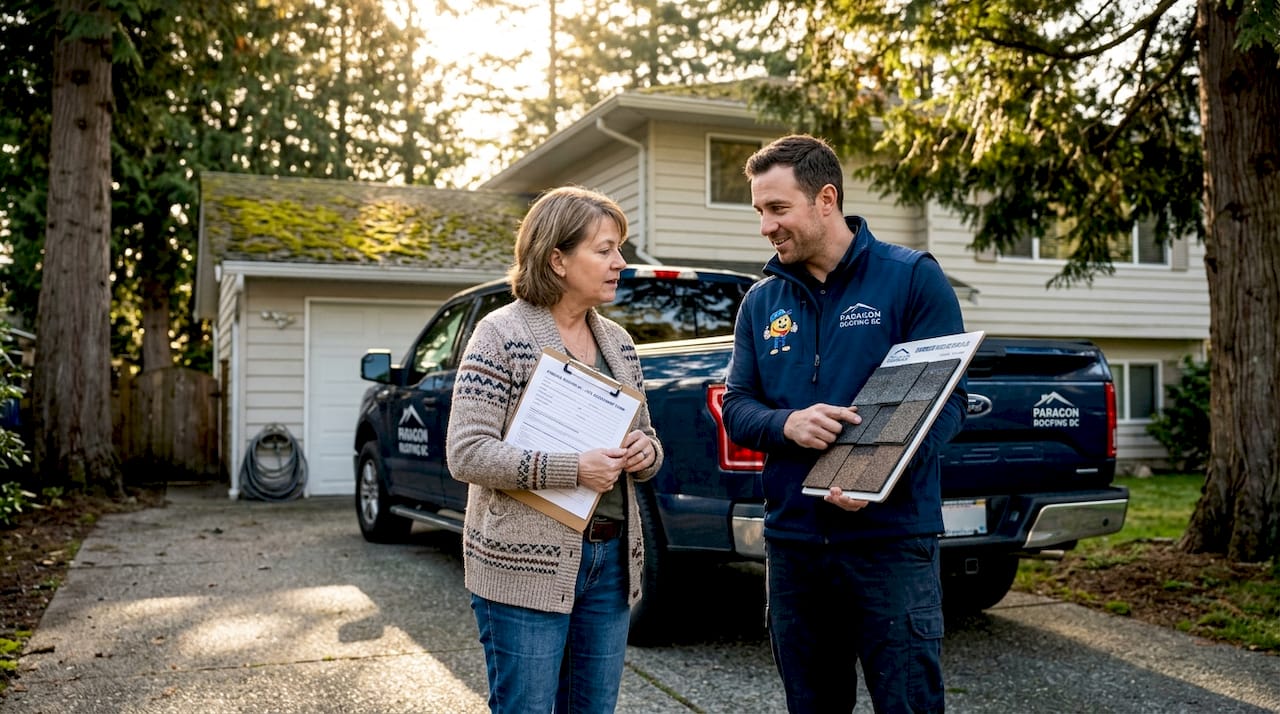
Preparation starts with choosing the right contractor and setting clear expectations. This step is more important than most homeowners realise. Think of it like hiring a surgeon: credentials and communication matter far more than price alone.
Before signing anything, verify contractor credentials including WorkSafeBC clearance, valid liability insurance, and RCABC (Roofing Contractors Association of BC) membership, and always request references and written quotes. WorkSafeBC clearance confirms that the contractor’s workers are covered for on-site injuries, which protects you from liability if someone gets hurt on your property. Liability insurance protects your home if something goes wrong during the job. RCABC membership signals that the contractor follows industry standards and best practices.
It’s worth noting that nearly half of homeowners avoid home renovations entirely because they can’t find reliable builders. Doing your due diligence upfront saves you from becoming one of those frustrated homeowners.
Here’s a quick checklist of what to confirm before work begins:
- Written quote with a detailed scope of work, materials, and timeline
- Proof of WorkSafeBC clearance letter (dated within 30 days)
- Certificate of liability insurance (minimum $2 million is standard in BC)
- RCABC membership verification
- At least two to three local references you can actually call
- Confirmation of who will be on-site daily (the foreman’s name and contact number)
- Clear terms for change orders and payment milestones
Knowing the right questions to ask roofers before you commit can save you thousands of dollars and weeks of frustration. Ask specifically about how they handle unexpected rot or structural damage discovered mid-project, because this is where costs can balloon without warning.
“A written contract protects both parties. Never rely on verbal agreements for something as significant as a roof replacement. If it’s not in writing, it doesn’t exist.”
Understanding the full roof installation process also helps you set realistic expectations. A typical residential roof replacement in BC takes two to five days depending on size, complexity, and weather. Knowing this timeline helps you plan your household routines accordingly.
Pro Tip: Never pay the full amount upfront. A reasonable deposit is 10 to 30 percent, with the remainder tied to project milestones or completion. Contractors who demand full payment before starting are a significant red flag.
Protect your property: Indoors and out
Once you have a reliable contractor and a plan, it’s time to prepare your property inside and out. This step is where many homeowners drop the ball, assuming the crew will handle everything. In reality, protecting your belongings is your responsibility.
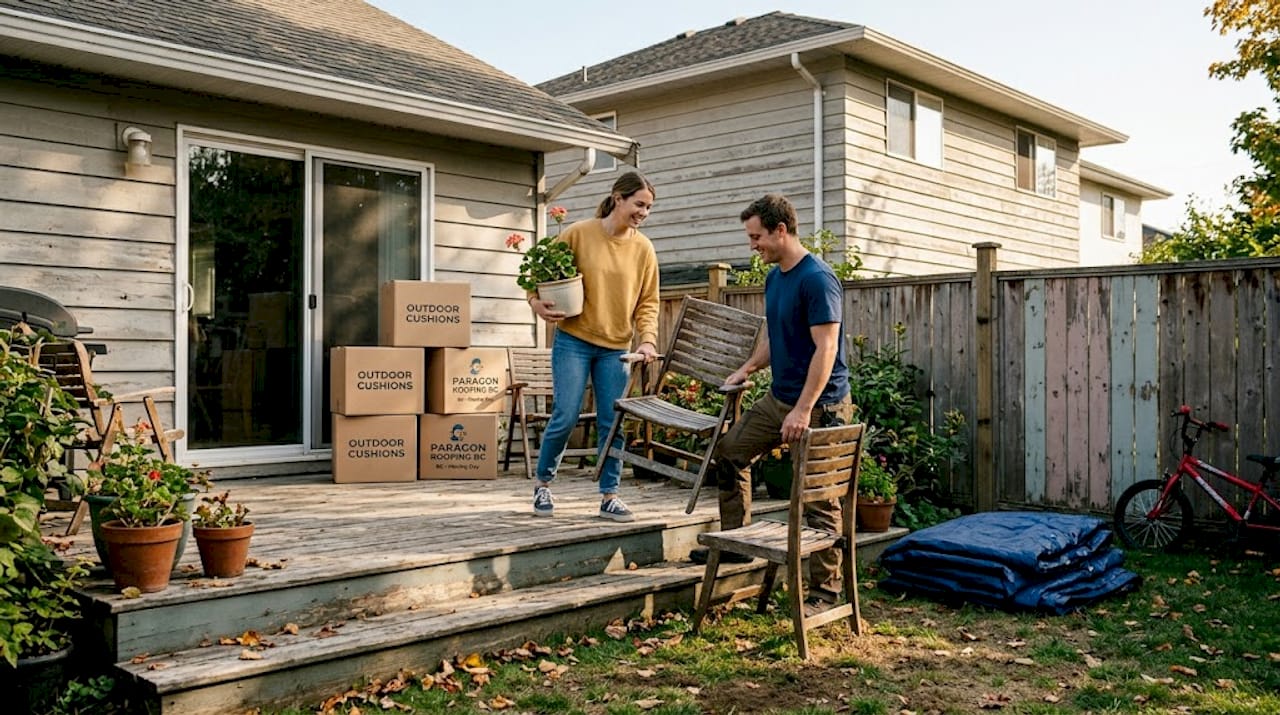
The RCABC recommends preparing your property thoroughly before work begins to prevent accidental damage during roof replacement. This covers everything from your garden beds to your grandmother’s china cabinet.
Follow this roof replacement prep workflow to make sure nothing gets overlooked. Here’s a breakdown of what to address both inside and outside your home:
Outdoors:
- Move all vehicles at least 6 metres away from the house, ideally off the property entirely
- Remove or cover patio furniture, BBQ equipment, and outdoor décor
- Relocate potted plants and garden ornaments from the perimeter
- Cover garden beds and delicate shrubs with tarps or drop cloths
- Clear the driveway and side yards to give the crew unobstructed access
- Disconnect and store satellite dishes or exterior antennae if possible
Indoors:
- Cover belongings stored in the attic with plastic sheeting or old bedsheets
- Remove wall art, mirrors, and shelving from interior walls, especially on the top floor
- Take down ceiling light fixtures or fans in rooms directly below the work area if they’re fragile
- Relocate valuables from open shelving in upper-floor rooms
| Area | Action required | Priority |
|---|---|---|
| Driveway and yard | Clear vehicles, furniture, and plants | High |
| Attic storage | Cover with tarps or sheeting | High |
| Top-floor walls | Remove art, mirrors, and shelving | Medium |
| Garden beds | Cover with tarps | Medium |
| Pets and children | Arrange off-site or restrict access | High |
| Outdoor lighting | Check for proximity to work zone | Low |
Pets and children deserve special attention. Roofing work is loud, and the constant noise from nail guns and compressors can stress animals and frighten young kids. Falling debris is also a genuine hazard. Arrange for pets to stay with a neighbour or at a boarding facility during work hours. If children are home, keep them well away from the work zone at all times.
Pro Tip: Place a sticky note on your attic hatch reminding you (and anyone else in the house) that items up there are covered but fragile. It’s easy to forget during a busy project week.
These roof replacement tips from experienced Vancouver roofers reinforce that property protection is just as important as the technical work itself. A scratch on a vehicle or a broken planter might seem minor, but it creates friction and delays that nobody wants.
Coordinate logistics and safety for the worksite
With your personal property protected, ensure that logistics and safety are set up for a smooth build. This is where the project either flows efficiently or starts falling apart.
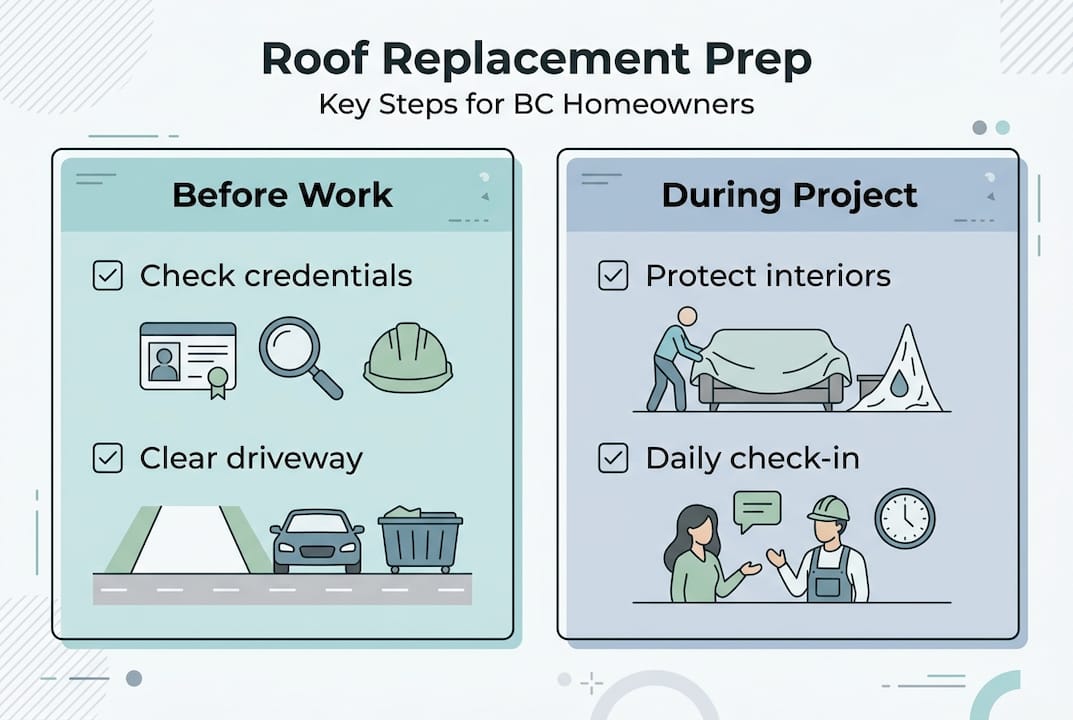
Good logistics planning means thinking like a project manager. The roofing crew needs clear access, a place to stage materials, and a safe working environment. Your job is to make that possible.
Here are the key logistics steps to work through before the project starts:
- Confirm equipment access. Find out whether the crew needs a boom truck, scaffolding, or a dumpster bin. These require clear driveway access and sometimes a permit from your municipality.
- Designate a materials staging area. Old shingles and new materials both need a temporary home. Agree on a specific spot in your yard that won’t damage landscaping or block access.
- Sort out parking. Roofing crews typically arrive with multiple vehicles. Check your local by-laws about street parking and give your neighbours a heads-up as a courtesy.
- Arrange dumpster placement. In many Metro Vancouver municipalities, placing a bin on the street requires a permit. Your contractor should handle this, but confirm it in writing beforehand.
- Establish safe zones. Clearly mark areas where family members and pets should not go during working hours. Use caution tape or temporary fencing if needed.
- Monitor the weather. BC weather is notoriously unpredictable. Ask your contractor what their rain protocol is. Most experienced roofers will cover exposed sections with tarps overnight, but confirm this explicitly.
“Ensuring contractors follow WorkSafeBC protocols and safety best practices is not optional. It protects workers, your family, and your property simultaneously.”
This roofing safety guide covers the essential safety standards that professional crews should follow on any BC job site. Familiarising yourself with these basics helps you recognise whether your contractor is operating safely.
| Scenario | Recommended action | Who is responsible |
|---|---|---|
| Rain forecast during project | Confirm tarp coverage protocol | Contractor |
| Dumpster placement needed | Check municipal permit requirements | Contractor with homeowner input |
| Crew vehicles blocking neighbours | Notify neighbours in advance | Homeowner |
| Children or pets on property | Restrict access to work zones | Homeowner |
| Unexpected structural damage found | Pause work and review change order | Both parties |
If you’re managing this process for a rental or investment property, the property manager roof workflow offers additional guidance tailored to that situation. The logistics become more complex when tenants are involved, so having a clear plan is even more critical.
Establish a daily check-in routine with the foreman. A five-minute conversation at the start or end of each workday keeps you informed without interfering with the crew’s work. Ask about progress, any issues discovered, and the plan for the next day.
Stay proactive: Communication and contingency planning
Beyond logistics, proactive communication can be the difference between a seamless project and stressful surprises. The best contractors are excellent communicators, but you still need to hold up your end of the dialogue.
Establishing clear protocols for updates, change orders, and payment arrangements is essential to keeping your roof replacement on track and on budget. This isn’t about being difficult or mistrustful. It’s about having a shared understanding so that nobody is caught off guard.
Here’s a practical framework for staying proactive throughout the project:
- Set up a daily update schedule. Agree on a specific time each day when the foreman will send you a brief update, whether by text, phone call, or email. Even a two-sentence summary keeps you in the loop.
- Create a written change order process. Any work that falls outside the original scope must be approved by you in writing before it proceeds. This prevents surprise charges on your final invoice.
- Document everything. Take photos of the work each day, note any issues that come up, and keep a simple log of what was discussed and agreed upon. This record is invaluable if a dispute arises later.
- Plan for contingencies. Set aside 10 to 15 percent of your total budget as a contingency fund. Discovering rotted decking or damaged fascia boards (the wooden boards along the roof edge) is common in older BC homes and will add to your costs.
- Confirm the final walk-through process. Before the crew packs up for the last time, schedule a formal walk-through. Check that the site is clean, all debris has been removed, and the work matches what was agreed upon.
- Collect warranty documentation. Make sure you receive both the manufacturer’s warranty for the roofing materials and the contractor’s workmanship warranty before making your final payment.
These roof replacement tips for Surrey homeowners offer practical examples of how proactive communication has helped local homeowners avoid costly disputes. The pattern is consistent: homeowners who stay engaged throughout the project have far better outcomes than those who hand over the keys and disappear.
Pro Tip: Create a simple shared folder (Google Drive or similar) where you store photos, the signed contract, change orders, and warranty documents. If anything goes sideways after the project, you’ll have everything in one place.
When choosing a Delta roofer, or any contractor across BC, the same communication principles apply. A contractor who resists written change orders or gets defensive about daily updates is showing you exactly how they’ll behave when problems arise.
A seasoned roofer’s take: What truly matters for hassle-free replacements
Here’s something I’ve seen play out dozens of times over the years: the roof replacements that go sideways almost never fail because of a technical mistake. They fail because of a breakdown in communication. A homeowner assumes something is included in the quote. A contractor assumes the homeowner knows about a common extra charge. Nobody confirms anything in writing. And then the final invoice is $3,000 higher than expected, and everyone is upset.
The biggest risk on any roof replacement project isn’t the weather or the materials. It’s the gap between what was said and what was understood.
Most of the prep steps in this guide exist to close that gap. When you read a roofer’s perspective on the installation process, you start to see how many decisions happen quickly on a job site. Experienced roofers make those calls every day, but homeowners who are informed and engaged get better results because they’re part of the conversation.
Regular check-ins matter far more than hovering over the crew. You don’t need to watch every nail being driven. You just need to know what’s happening, what’s changed, and what’s coming next. That level of engagement keeps the project honest and on track without creating friction.
Expert roof replacement services for your BC home
Ready to take the next step in your roof replacement journey? At Paragon Roofing BC, we handle every part of the process with clear communication, verified credentials, and genuine care for your property.
Whether you need professional roof installation in Vancouver, a Delta roof replacement, or ongoing roof maintenance inspections to keep your investment protected, our team is ready to help. We’re fully insured, WorkSafeBC compliant, and RCABC members. Book a consultation with us today and experience a roof replacement that’s organised, transparent, and stress-free from the very first call.
Frequently asked questions
How far should I move outdoor items from the house before roofers arrive?
Move vehicles, patio furniture, and décor at least 6 metres from your home to prevent accidental damage from falling debris, as recommended by the RCABC for property preparation before roof work begins.
Is it safe to stay at home with children or pets during a roof replacement?
It’s best to limit access to work areas, and if possible, arrange for children and pets to be off-site during work hours to avoid hazards from noise, debris, and heavy equipment.
What safety certificates should my roofing contractor have in BC?
Ensure your contractor has WorkSafeBC clearance and RCABC membership with valid liability insurance before any work begins on your property.
How do I handle unexpected changes or extra work once the roof replacement starts?
Set up a protocol to approve change orders in writing before any additional work proceeds, and keep a contingency budget of 10 to 15 percent for surprises like rotted decking.
What’s included in a typical final walk-through after my roof is replaced?
A final walk-through covers site clean-up verification, inspection of the completed work against the original scope, and delivery of both manufacturer and workmanship warranty paperwork before your last payment is made.