Cedar roofing care tips for BC homeowners
Cedar roofing care tips for BC homeowners
TL;DR:
- Proper maintenance extends a cedar roof’s lifespan in BC’s wet climate through regular gentle cleaning, inspections, and timely preservative treatments. Installing zinc or copper strips prevents moss and algae growth while avoiding harmful pressure washing protects the wood fibers from damage. Consistent care and prompt repairs significantly reduce the risk of costly damage and maximize cedar’s natural durability.
Cedar roofing care tips are the practical, hands-on methods that keep wood shake and shingle roofs performing well through decades of Lower Mainland weather. A well-maintained cedar roof is defined by its ability to shed moisture, resist biological growth, and retain its natural oils long after installation. In BC, where heavy rainfall, freeze-thaw cycles, and coastal humidity are the norm from October through April, cedar demands more attention than most roofing materials. The good news is that consistent, gentle maintenance extends a cedar roof’s lifespan significantly and prevents the kind of costly repairs that come from years of neglect. These tips cover everything from safe cleaning and inspections to moss prevention and protective treatments.
1. How to clean cedar roofs safely and effectively
Cleaning cedar roofs every two to three years with soft-bristle brushes and oxygen bleach solutions is the standard recommended practice. That schedule keeps debris, algae, and surface grime from embedding into the wood grain without stripping the natural oils that give cedar its weather resistance. In the Lower Mainland, where moss spores travel on the wind and organic debris accumulates fast, you may need to clean more frequently if you have overhanging trees or a north-facing roof slope.
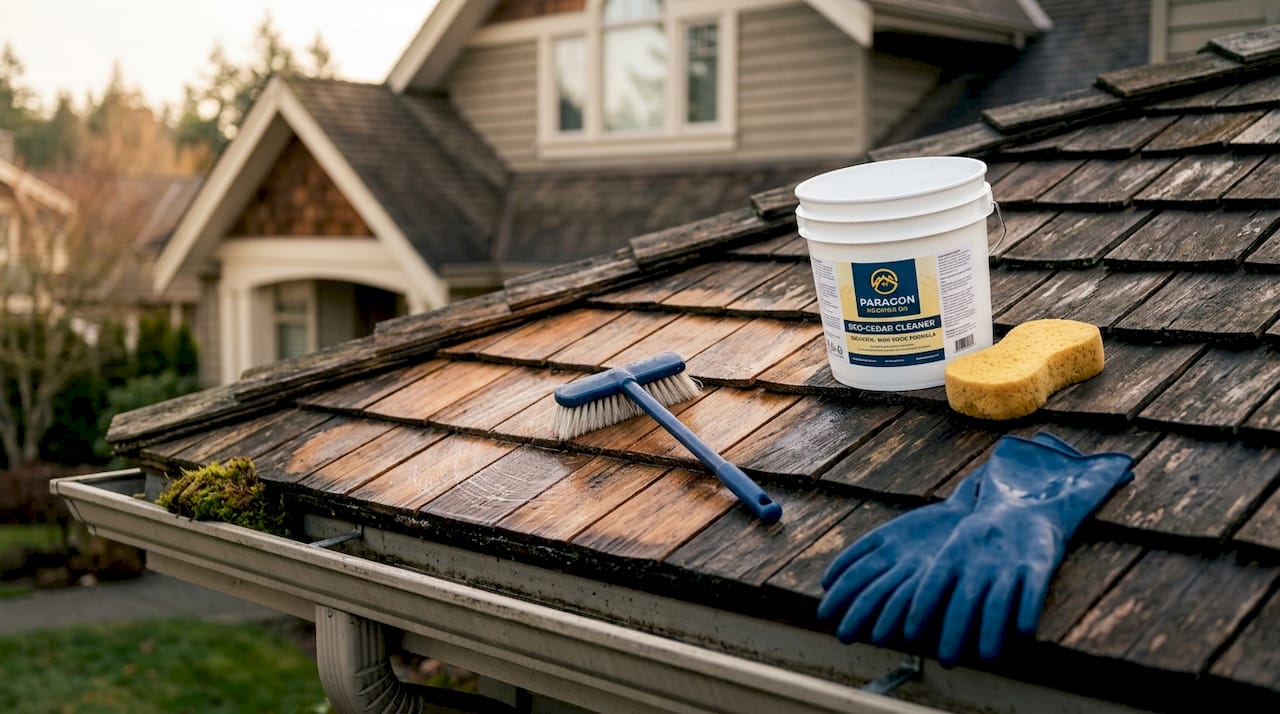
The cleaning method matters as much as the frequency. Oxygen bleach mixed with water at a low concentration lifts biological staining and kills moss without degrading wood fibres. Mild dish soap or purpose-made wood cleaner works for lighter surface dirt. Chlorine bleach is a poor choice because it breaks down lignin in the wood, leaving shakes brittle and grey far ahead of their natural weathering timeline.
Pro Tip: Apply your cleaning solution on a cloudy day so it does not evaporate before it has time to work into the wood surface. Rinse thoroughly from the ridge down to avoid pooling at the eaves.
- Use a soft-bristle brush or a low-pressure garden hose attachment
- Mix oxygen bleach at the manufacturer’s recommended dilution, not stronger
- Work from the ridge downward in sections to control runoff
- Rinse each section before moving to the next
- Allow the roof to dry fully before applying any treatment or preservative
Avoid pressure washers above 1,200 PSI on cedar. Pressure washing cedar can dislodge shakes and weaken wood fibres, causing moisture intrusion that shows up as rot or leakage months after the roof looked perfectly clean. That delayed failure is the part most homeowners do not see coming.
2. Why and how to perform regular cedar roof inspections
Biannual roof inspections are the single most effective way to catch problems before they become expensive. Spring and fall are the ideal times in BC. Spring lets you assess any damage from winter freeze-thaw cycles and snow load. Fall gives you a chance to clear debris and address vulnerabilities before the wet season sets in.
Here is a practical inspection checklist to work through from ground level and, if safe, from a ladder at the eaves:
- Look for cracked, split, cupped, or missing shakes along every visible slope
- Check for moss or algae patches, especially on north-facing sections and near valleys
- Inspect metal flashing around chimneys, skylights, and roof-to-wall transitions for lifting or rust
- Examine exposed fasteners for corrosion or backing out of the wood
- Check gutters and downspouts for blockage and debris from the roof surface
- Look at the ridge cap for gaps or deterioration
- From inside the attic, check for daylight penetration or water staining on the sheathing
Pro Tip: Use binoculars from the ground to get a close look at the ridge and upper slopes without climbing. You can spot most early-stage problems without setting foot on the roof, which is safer and faster.
Routine cedar inspections should happen at least once annually at minimum, with maintenance performed every five years as a baseline. In BC’s climate, treating that five-year mark as a maximum rather than a target is the smarter approach. A small cracked shake left through one wet winter can allow enough moisture into the sheathing to require a full section replacement by spring.
3. Strategies to prevent moss, algae, and lichen growth
Moss and algae are the most persistent threats to cedar roofs in the Lower Mainland. They hold moisture against the wood surface, accelerating rot and degrading the shakes from the underside out. A roof that looks green and textured from the street is already losing years off its lifespan.
The most reliable passive prevention method is installing zinc or copper strips along the ridge. Zinc and copper strips release ions that suppress moss and algae growth without requiring ongoing chemical applications. Rain washes the ions down the slope, creating a treated zone that discourages biological growth across a wide area below the ridge.
| Feature | Zinc strips | Copper strips |
|---|---|---|
| Biocidal activity | Moderate, effective for most moss and algae | Higher potency, more aggressive suppression |
| Lifespan | 10 to 20 years depending on climate | Similar lifespan, varies by exposure |
| Corrosion risk | Low | Can cause galvanic corrosion near aluminium components |
| Cost | Lower upfront cost | Higher upfront cost |
| Best suited for | Most residential cedar roofs in BC | Roofs with heavy biological growth history |
Zinc strips last 10 to 20 years in most climates, while copper strips offer stronger suppression but require care around aluminium flashings and gutters. For most homes in Metro Vancouver, zinc is the practical choice.
Beyond metal strips, these habits make a real difference:
- Trim overhanging branches to reduce shade and allow sunlight and airflow to dry the roof surface after rain
- Keep gutters clear so water drains away from the fascia and does not back up onto the lower shakes
- Remove leaf and needle accumulation from valleys and flat sections promptly after storms
- Address any early moss patches with a targeted oxygen bleach treatment before they spread
4. Protective treatments and repairs to prolong cedar roof lifespan
Applying a preservative treatment every three to five years is one of the highest-return maintenance tasks you can perform on a cedar roof. Oil and water-based preservatives restore the natural oils that cedar loses through weathering, improving water resistance and slowing the greying and cracking that come with UV exposure. In BC, where UV is less intense than in drier provinces but moisture stress is constant, a water-repellent preservative with a mildewcide additive is a sound choice.
Choosing the right product matters. Look for a penetrating oil-based formula designed for exterior wood, not a film-forming stain that sits on the surface and peels. Cedar’s natural oil content means it absorbs penetrating treatments well when the wood is clean and dry. Apply on a dry stretch of weather, ideally after a full cleaning and at least 48 hours of drying time.
Pro Tip: Test your preservative on a small, less visible section of the roof first. Some products darken cedar significantly, and you want to confirm the colour result before treating the full slope.
Repairs should not wait. Replacing damaged shakes promptly with stainless steel or galvanised fasteners maintains weatherproofing and prevents secondary damage to the sheathing and underlayment below. Stainless steel is the preferred fastener material in coastal BC because it resists the salt-laden air that corrodes standard galvanised nails over time. When replacing individual shakes, match the thickness and grade of the surrounding material as closely as possible to maintain consistent drainage and overlap.
- Clean the roof surface before applying any preservative
- Allow a minimum of 48 hours drying time after cleaning
- Apply preservative with a brush, roller, or low-pressure sprayer
- Use stainless steel or hot-dipped galvanised nails for shake replacement
- Seal around flashing penetrations with a compatible roofing sealant rated for wood substrates
5. Common cedar roofing maintenance mistakes and how to avoid them
Most cedar roof failures we see at Paragonroofingbc trace back to a handful of repeated mistakes. Knowing what they are puts you well ahead of the average homeowner.
Pressure washing is the most damaging error. It looks effective because the roof comes out visually clean, but latent moisture intrusion from dislodged shakes and damaged wood fibres shows up months later as rot or interior leakage. The roof looks fine until it does not. By then, the repair bill is far larger than a gentle cleaning would have cost.
Ignoring moss and debris buildup is the second most common problem. Homeowners often treat a green roof as a cosmetic issue rather than a structural one. Moss holds water against the wood surface continuously, and that sustained moisture contact is what drives premature rot. A roof that goes two or three wet seasons without cleaning in the Lower Mainland can age five or more years in that time.
Other mistakes worth avoiding:
- Delaying shake repairs because the leak has not appeared yet. By the time water reaches the interior, the sheathing is already compromised.
- Using chlorine bleach or harsh chemical cleaners that degrade wood fibres and strip protective oils.
- Skipping the preservative treatment cycle because the roof looks fine. Cedar does not show oil depletion visually until the damage is already done.
- Neglecting gutters and drainage, which causes water to back up and sit against the lower course of shakes.
You can read more about common maintenance errors that affect cedar and other roofing materials in the Vancouver area.
Key takeaways
Consistent cedar roof maintenance, built around gentle cleaning, biannual inspections, passive moss prevention, and timely preservative treatments, is the most reliable way to extend a cedar roof’s lifespan in BC’s wet climate.
| Point | Details |
|---|---|
| Clean every 2 to 3 years | Use oxygen bleach and soft brushes; never use a pressure washer above 1,200 PSI. |
| Inspect twice yearly | Check shakes, flashing, fasteners, and gutters each spring and fall. |
| Install zinc or copper strips | Passive ridge strips suppress moss and algae growth for 10 to 20 years. |
| Apply preservative every 3 to 5 years | Penetrating oil-based treatments restore cedar’s natural moisture resistance. |
| Repair damaged shakes promptly | Use stainless steel or galvanised fasteners to prevent secondary sheathing damage. |
What I’ve learned from years of cedar roofs in BC
Hey, it’s Harman here. After inspecting and maintaining cedar roofs across the Lower Mainland for years, the pattern I keep seeing is this: the roofs that fail early are almost never the ones that were poorly installed. They are the ones that were well installed and then ignored.
Cedar is a forgiving material when you work with it. It has natural oils, natural tannins, and a grain structure that sheds water beautifully when it is clean and treated. But it punishes neglect. One missed cleaning cycle in a shaded North Vancouver yard can mean a full moss takeover by the following spring. One cracked shake left through a Coquitlam winter can mean a saturated sheathing section by March.
The homeowners I see getting the most out of their cedar roofs are the ones who treat maintenance like a scheduled service, the same way they treat their furnace or their gutters. They clean, they inspect, they treat. They do not wait for a drip to tell them something is wrong.
My honest advice: if you are not comfortable on a ladder or not sure what you are looking at, bring in a professional for the inspection and cleaning. The cost of a professional visit is a fraction of what a section re-roof costs. And if you are choosing between cedar shakes and other materials for a new roof, understand that cedar rewards investment in maintenance in a way that asphalt simply does not.
— Harman
Let Paragonroofingbc take care of your cedar roof
At Paragonroofingbc, we work with cedar roofs throughout Metro Vancouver, Coquitlam, Delta, Maple Ridge, and the broader Lower Mainland. We know what BC’s rainfall and freeze-thaw cycles do to wood shakes over time, and we bring that hands-on knowledge to every inspection, cleaning, and repair job we take on. Whether your cedar roof needs a full assessment, a targeted moss treatment, or individual shake replacements, our team uses methods that protect the wood rather than damage it.
If you are overdue for an inspection or want a professional eye on your roof before the wet season, our drone roof inspection service gives you a detailed condition report without anyone walking on your shakes. For homeowners in Coquitlam needing more extensive work, our roof installation team handles everything from shake replacement to full re-roofing with quality materials suited to BC’s climate.
FAQ
How often should I clean my cedar roof?
Clean cedar shake roofs every two to three years using oxygen bleach solutions and soft-bristle brushes. In heavily shaded or tree-covered areas in BC, annual cleaning may be needed to prevent moss buildup.
Can I pressure wash my cedar roof?
Pressure washing above 1,200 PSI damages wood fibres and dislodges shakes, causing moisture intrusion that can lead to rot months after the roof appears clean. Always use low-pressure methods on cedar.
How do I stop moss from growing on my cedar roof?
Install zinc or copper strips along the ridge to release ions that passively suppress moss and algae growth. Combine this with regular debris removal and trimming of overhanging branches to reduce shade and moisture retention.
How long does a cedar roof last with proper maintenance?
A well-maintained cedar roof in BC can last 30 to 50 years depending on the grade of material, climate exposure, and how consistently it is cleaned, inspected, and treated with preservatives.
When should I call a professional for cedar roof maintenance?
Call a professional if you notice cracked or missing shakes, visible moss patches covering large areas, flashing separation, or any signs of water staining inside the attic. Early professional intervention prevents far more costly structural repairs.
Recommended
Our Roofing Blog

Have more questions about roofing?
Check out our FAQs or give us a call today to speak to an expert roofer in Vancouver Lower Mainland, BC. We're here to help our neighbours make educated decisions about their roof. For our team, we value helping clients save money while making their roofs last.