Essential fall roof preparation tips for Vancouver homeowners
Essential fall roof preparation tips for Vancouver homeowners
TL;DR:
- Vancouver’s heavy autumn rainfall and wind can cause significant roofing damage if not properly prepared.
- Regular maintenance including debris removal, shingle inspection, and gutter cleaning prevents costly emergencies.
- Professional roof inspections and repairs are recommended for hidden issues and structural concerns before severe weather strikes.
Vancouver’s autumn rains don’t ease in gently. They arrive hard, often overnight, turning a dry summer roof into a system under real stress within days. If your roof isn’t ready, a single heavy storm can push water through small cracks, saturate your insulation, and turn a minor repair into an expensive emergency. The good news is that most serious fall roofing problems are completely preventable with the right preparation. This guide walks you through exactly what to do, what to watch for, and how to choose the best solutions for your home before the season’s worst weather arrives.
Table of Contents
- Know the challenges: Vancouver’s fall roofing risks
- The essential fall roof maintenance checklist
- Best materials and solutions for Vancouver’s climate
- When to call a pro: Navigating repairs and inspections
- Our take: What most homeowners overlook in fall roof prep
- Get expert help with your fall roof prep
- Frequently asked questions
Key Takeaways
| Point | Details |
|---|---|
| Clear gutters, prevent leaks | Regular gutter and roof debris removal reduces the risk of water damage in Vancouver’s rainy fall. |
| Inspect for damage early | Spotting and repairing small roof issues before autumn storms helps avoid expensive repairs. |
| Choose weatherproof materials | Using the right roofing materials gives better protection against fall’s challenging climate. |
| When in doubt, call a pro | Professional inspections can reveal hidden dangers and provide peace of mind for Vancouver homeowners. |
Know the challenges: Vancouver’s fall roofing risks
Vancouver’s fall climate is unlike anywhere else in Canada. The combination of heavy sustained rainfall, strong coastal winds, and falling organic debris creates a unique and relentless set of challenges for residential roofs. Understanding what you’re actually up against helps you prioritise the right maintenance tasks rather than just ticking boxes.
Rainfall and moisture intrusion
Vancouver’s October rainfall alone averages over 160 millimetres of rain, and that’s before November and December pile on even more. This isn’t just a surface issue. Prolonged moisture exposure finds every small gap, crack, or lifted shingle edge and works its way inward. Once water reaches your underlayment (the protective membrane beneath your shingles), you’re heading toward rot and mould in your roof deck.
Wind and falling debris
Fall windstorms along the Lower Mainland are a real threat. Gusts regularly exceed 60 to 80 kilometres per hour during October and November, which is more than enough to lift loose or ageing shingles off entirely. Overhanging branches become projectiles. Even smaller twigs and pine needles accumulate quickly, blocking the drainage pathways your roof needs to shed water efficiently.
Here are the most common fall risks Vancouver roofers deal with every season:
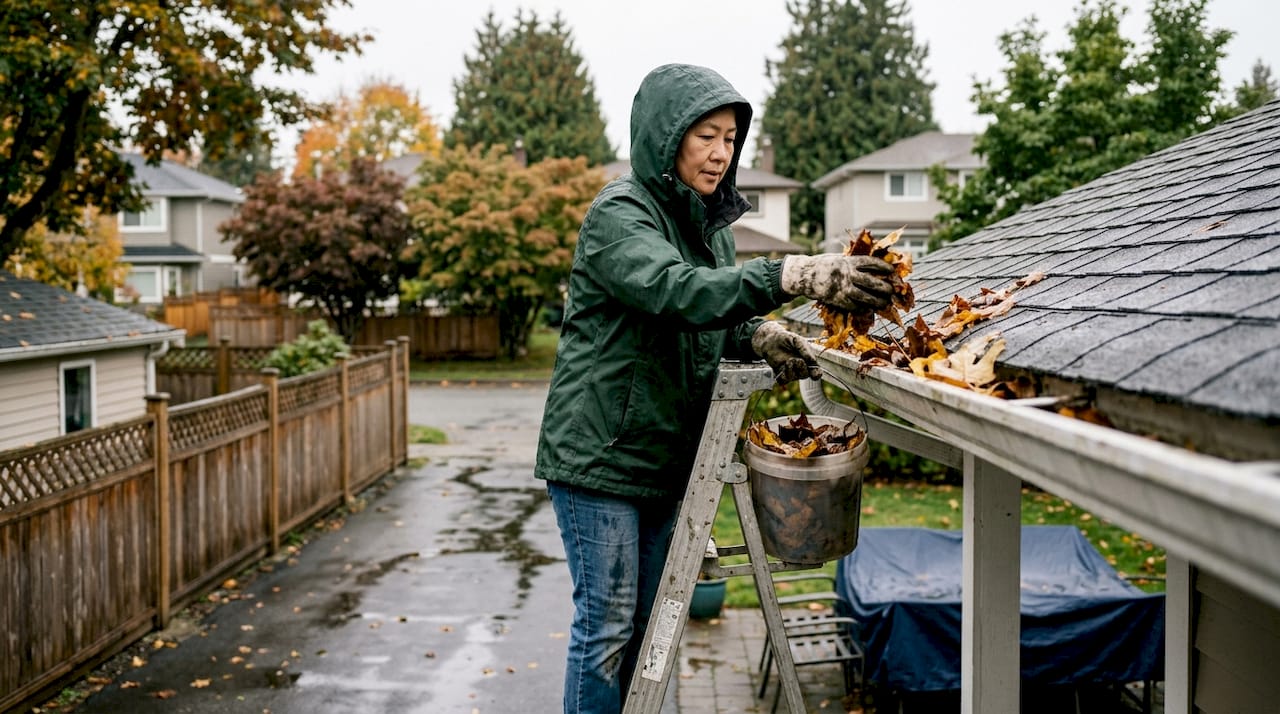
- Clogged gutters and downspouts from fallen leaves, causing water to back up under shingles
- Shingle damage from wind uplift, fallen branches, and debris impact
- Moss and algae growth accelerated by Vancouver’s persistently damp, shaded conditions
- Flashing failures around chimneys, vents, and skylights where caulk dries out over the dry summer months
- Fascia board rot caused by overflowing gutters sitting against the wood
- Roof deck deterioration under areas of persistent debris accumulation
Why timing matters so much
Most damage doesn’t happen overnight. It builds quietly through small, unaddressed issues. A tiny lifted flashing corner, a handful of missing shingle granules, a gutter that’s 70 percent blocked. When the first major autumn storm arrives, those small issues become full-on waterfalls inside your walls. Staying ahead of these risks by preparing for winter storms early in the season is the single smartest thing a Vancouver homeowner can do.
With those stakes in mind, let’s break down the most important maintenance steps.
The essential fall roof maintenance checklist
Now that you understand the threats, here’s the practical checklist every Vancouver homeowner needs. Think of this as your annual autumn ritual, as routine as putting away patio furniture or changing smoke detector batteries.
1. Clear debris from the entire roof surface
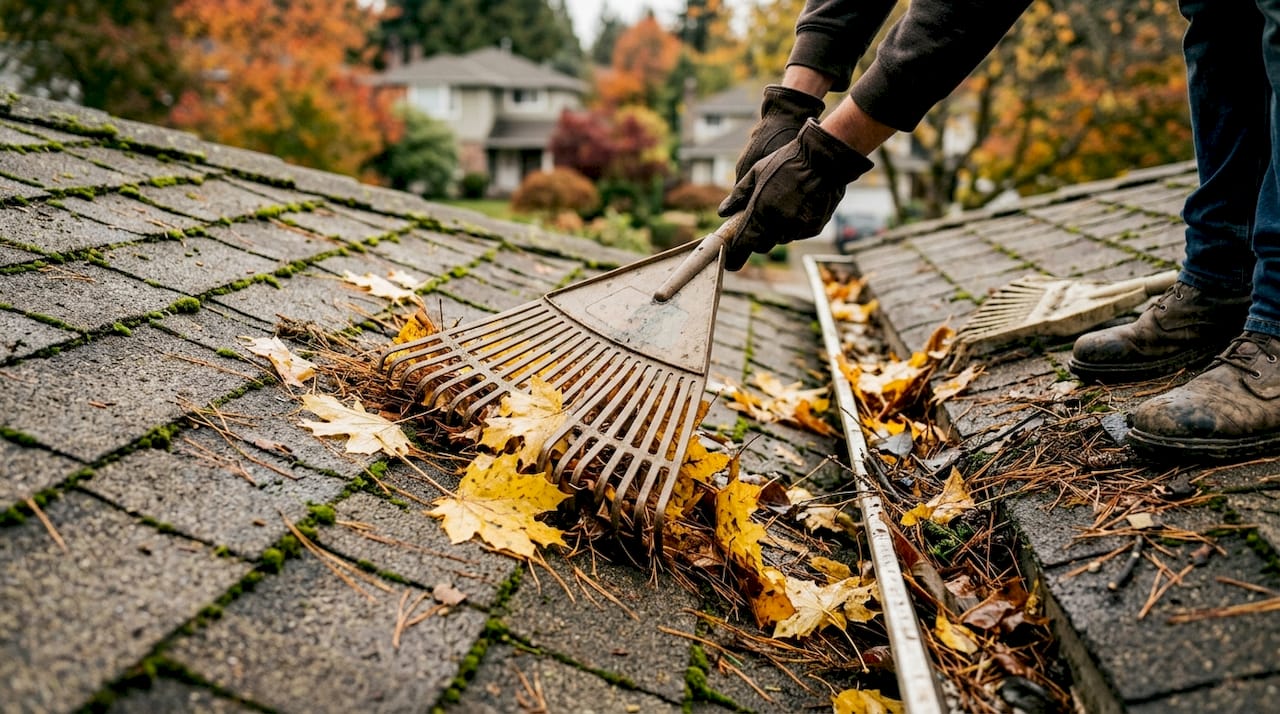
Start from the top. Leaves, twigs, pine needles, and compacted moss sitting on your roof hold moisture against the shingles. Use a soft-bristle roof brush or a leaf blower from a safe standing position. Pay extra attention to roof valleys (the angled channels where two roof slopes meet) because these collect the most debris and channel the most rainwater.
2. Inspect shingles carefully
Walk the perimeter of your home and look up at all visible roof surfaces. You’re checking for curled shingle edges, cracked or broken shingles, and patches where the granule surface has worn away. Granule loss exposes the asphalt layer beneath to UV and moisture. Missing shingles, even one or two, need immediate attention before rain arrives. Understanding common mistakes homeowners make helps you avoid misreading what’s genuinely urgent versus cosmetic.
3. Check all flashing points
Flashing is the metal edging and sealing around any roof penetration: chimneys, skylights, vent pipes, and walls. Over a dry summer, caulk and sealants can dry out, crack, or pull away. Run a finger along every flashing joint you can safely access. Any gap, even a small one, is a direct water entry point during heavy fall rains.
4. Clean gutters and downspouts thoroughly
This step deserves its own article. Clogged gutters don’t just overflow. They force water to pool against your fascia boards, back up under the first row of shingles (called the starter course), and eventually saturate your roof’s edge. Clean gutters at least twice in fall, and make sure every downspout is flowing freely. You can test this easily by running a garden hose into each one and watching for blockages. For flat roof prep tips, drainage is even more critical since flat roofs have no natural slope to shed standing water.
5. Treat moss and algae growth
Moss and algae are not just cosmetic issues. Moss roots work into shingle material and lift edges over time. Algae creates a slick, dark coating that holds moisture and accelerates shingle breakdown. Use a dedicated roof moss treatment product in early fall before the wet season locks in. Avoid pressure washing, which strips granules and voids most shingle warranties.
6. Assess the attic for hidden moisture
Your attic is the first place that tells you something is wrong before you can see it on the exterior. Look for water stains on rafters, damp insulation, or any visible light penetrating through the roof deck. Even small damp patches indicate active leaks that need attention.
Pro Tip: Schedule a post-storm roof check after every significant wind or rain event during fall. Many shingle problems and flashing gaps only become visible after weather stress has revealed them. Taking 15 minutes to look after a big storm can catch an issue before it escalates. Also check DIY repair safety guidelines before attempting any hands-on work.
Best materials and solutions for Vancouver’s climate
Choosing the right materials makes your fall prep much more effective. If you’re dealing with an ageing roof or planning any repairs or partial replacements this fall, understanding which materials hold up best in Vancouver’s wet climate will save you money and headaches down the road.
The best roofing materials for Vancouver’s climate balance drainage performance, moisture resistance, longevity, and moss resistance. Here’s a practical look at the most common options:
| Material | Fall weather performance | Moss resistance | Approx. lifespan | Cost range |
|---|---|---|---|---|
| Asphalt shingles | Good with regular maintenance | Moderate | 20 to 30 years | Low to mid |
| Metal panels (steel/aluminium) | Excellent, sheds water fast | High | 40 to 70 years | Mid to high |
| Clay or concrete tile | Good, heavy and durable | Moderate | 50+ years | High |
| Flat membrane (TPO/EPDM) | Excellent for flat roofs | High | 20 to 30 years | Mid |
| Cedar shakes | Fair, needs regular treatment | Low | 15 to 25 years | Mid to high |
Asphalt shingles remain the most popular choice in Vancouver. They’re cost-effective and readily available, but they do require the most active fall maintenance of any material. Without annual cleaning and moss treatment, they deteriorate faster in Vancouver’s damp environment.
Metal roofing is increasingly popular for good reason. Rain simply runs off it, it doesn’t support moss growth, and it handles debris impact better than asphalt. The higher upfront cost (roughly two to three times asphalt) pays off over decades of reduced maintenance.
Tile roofing is durable and visually striking, but its weight requires a structurally sound roof deck. Fall prep for tile mostly involves clearing debris from between tiles and inspecting the underlayment, since water can still penetrate if the membrane beneath deteriorates.
Flat membrane systems like TPO (thermoplastic polyolefin) and EPDM (ethylene propylene diene monomer) are standard on flat or low-slope roofs. They require clear drains and no pooling. Even a few leaves blocking a drain can cause standing water that stresses the membrane over a Vancouver fall season.
Cedar shakes have that classic West Coast look, but they’re the most labour-intensive material to maintain. They need annual moss treatment, occasional re-splitting of cracked shakes, and consistent sealing. In Vancouver’s construction industry recommendations, cedar is still used but increasingly replaced by synthetic alternatives that mimic the look without the high maintenance burden.
When to call a pro: Navigating repairs and inspections
Even the most thorough DIYer can benefit from expert support during the fall rush. Some roofing problems are obvious. Others hide beneath seemingly fine surfaces until they’ve done real damage. Knowing when to stop and call in a professional is not a sign of defeat. It’s smart home management.
Warning signs that need professional attention immediately:
- Sagging roof sections: This signals structural damage, often to the roof deck or rafters, and needs urgent assessment.
- Persistent or recurring leaks: If the same spot leaks every time it rains, a surface patch isn’t the real fix.
- Significant granule loss in gutters: Finding large amounts of sandy granules in your gutters after a rain means your shingles are nearing the end of their life.
- Flashing that’s visibly separated or corroded: This is not a caulk-gun fix. Proper flashing replacement requires professional installation to be watertight.
- Multiple missing shingles or widespread cracking: When damage is spread across the roof rather than isolated to one spot, you’re looking at a systemic issue.
Understanding roof maintenance mistakes that homeowners commonly make helps you avoid misidentifying a serious problem as something minor.
What a professional fall inspection includes
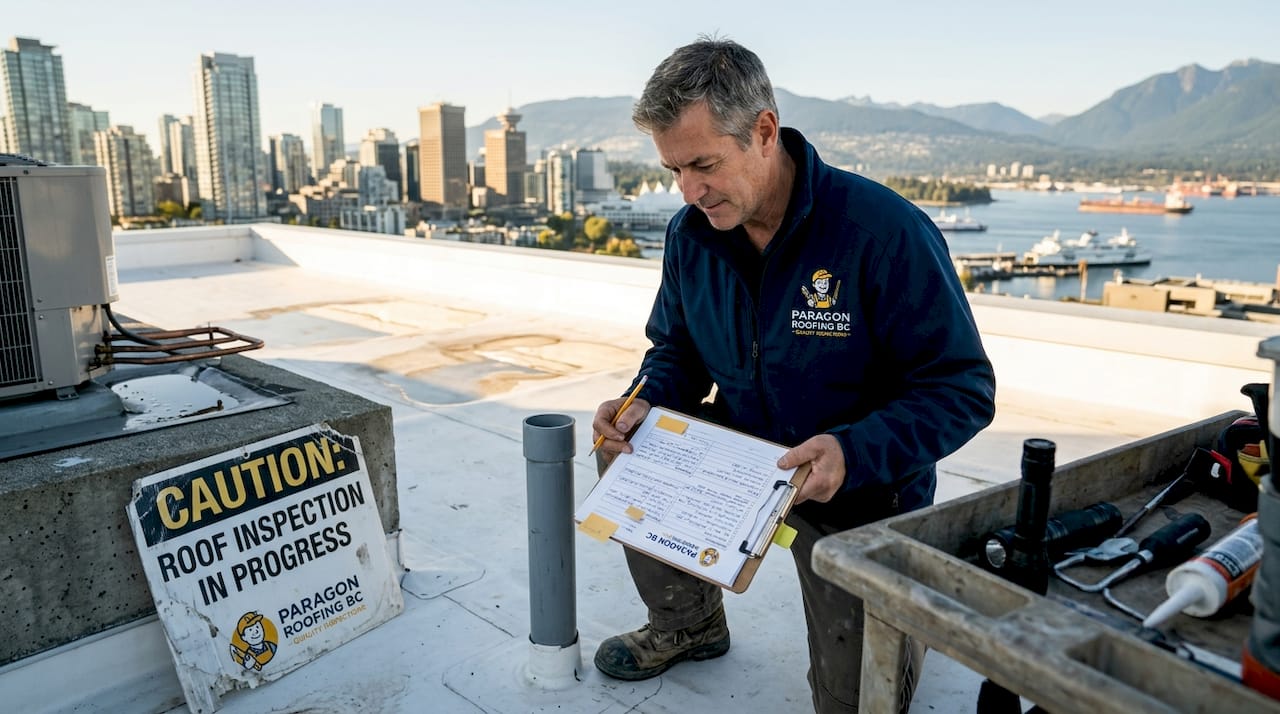
A qualified Vancouver roofer will check every area a homeowner typically can’t safely access: the full ridge line, inside the valleys, around every penetration, and often into the attic. They carry moisture metres to detect wet roof deck areas that aren’t visible to the eye. This level of detail is how professionals catch the problems that turn into $10,000 emergencies if left until spring.
“Book your fall roof inspection before October if possible. Once the heavy rains settle in, appointment availability drops and emergency repair costs increase significantly. An inspection done in September or early October gives you the most options and the best pricing.” — Paragon Roofing BC
When hiring a Vancouver roofer, ask about their licensing and WCB coverage, whether they carry liability insurance, if they provide a written inspection report, and what their warranty terms cover. Following solid roof repair best practices protects both you and your investment.
Our take: What most homeowners overlook in fall roof prep
Here’s something we see every single fall across Vancouver neighbourhoods: homeowners who genuinely care about their homes still put off small roof issues because they look minor. A little moss in one corner. A gutter that’s almost clean. One cracked shingle. The logic is “I’ll deal with it properly in spring.” We understand the impulse, but that thinking leads to some of the most expensive repair calls we receive.
What concerns us most is gutter neglect. In our experience, blocked gutters are the single leading cause of premature roof edge and fascia damage in Vancouver. Water sitting in a blocked gutter during a week of October rain backs up under shingles and quietly rots the fascia and the first few centimetres of your roof deck. By spring, what started as a $150 gutter clean has become a $3,000 section repair.
We also consistently find hidden rot and moisture under patches of debris that homeowners assumed were harmless. A clump of wet leaves sitting undisturbed in a roof valley through fall is essentially a sponge pressed against your shingles for three months straight.
The homeowners who invest in advanced winter roof prep every year and schedule annual inspections almost never face emergency repairs. They also tend to extend roof life well beyond average industry timelines. That’s not a coincidence. It’s the return on a small, consistent investment.
Get expert help with your fall roof prep
If you’ve done your walkthrough and spotted any of the warning signs above, or if you simply want the peace of mind that comes from a thorough professional assessment, we’re here to help.
At Paragon Roofing BC, we specialise in Vancouver residential roofing services tailored to the specific demands of our local climate. Whether you need a full fall inspection, targeted roof repair help for damaged shingles or flashing, advanced waterproofing solutions, or a new roof installation before the rainy season sets in, our certified team is ready. We know Vancouver’s weather patterns and neighbourhoods, and we bring that local knowledge to every job. Reach out today to book your fall inspection.
Frequently asked questions
How often should I clean my gutters in Vancouver during the fall?
Clean gutters at least twice during fall, once in early October before peak leaf drop and again in late November after most leaves have fallen and settled.
What’s the best way to spot early roof leaks before major storms hit?
Check your attic for water stains on rafters, look for damp spots on interior ceilings, and inspect the exterior for curled, cracked, or missing shingles.
Do roof moss and algae require immediate attention in the fall?
Yes. Treating moss and algae promptly in the fall prevents moisture retention through winter, which significantly reduces the risk of shingle and deck damage.
Can I do fall roof prep myself or should I always hire a pro?
Basic maintenance like gutter cleaning and visual inspections is DIY-friendly for most homeowners, but anything involving structural concerns, persistent leaks, or flashing replacement is best left to a licenced roofer.
Recommended
Our Roofing Blog

Have more questions about roofing?
Check out our FAQs or give us a call today to speak to an expert roofer in Vancouver Lower Mainland, BC. We're here to help our neighbours make educated decisions about their roof. For our team, we value helping clients save money while making their roofs last.