Extend the life of your commercial roof with preventive maintenance
Extend the life of your commercial roof with preventive maintenance
TL;DR:
- Routine preventive maintenance can extend commercial roof lifespan by 40 to 60 percent.
- Regular inspections and timely repairs are essential due to BC’s moisture, temperature swings, and weather.
- Proper documentation and working with certified contractors protect warranties and insurance claims.
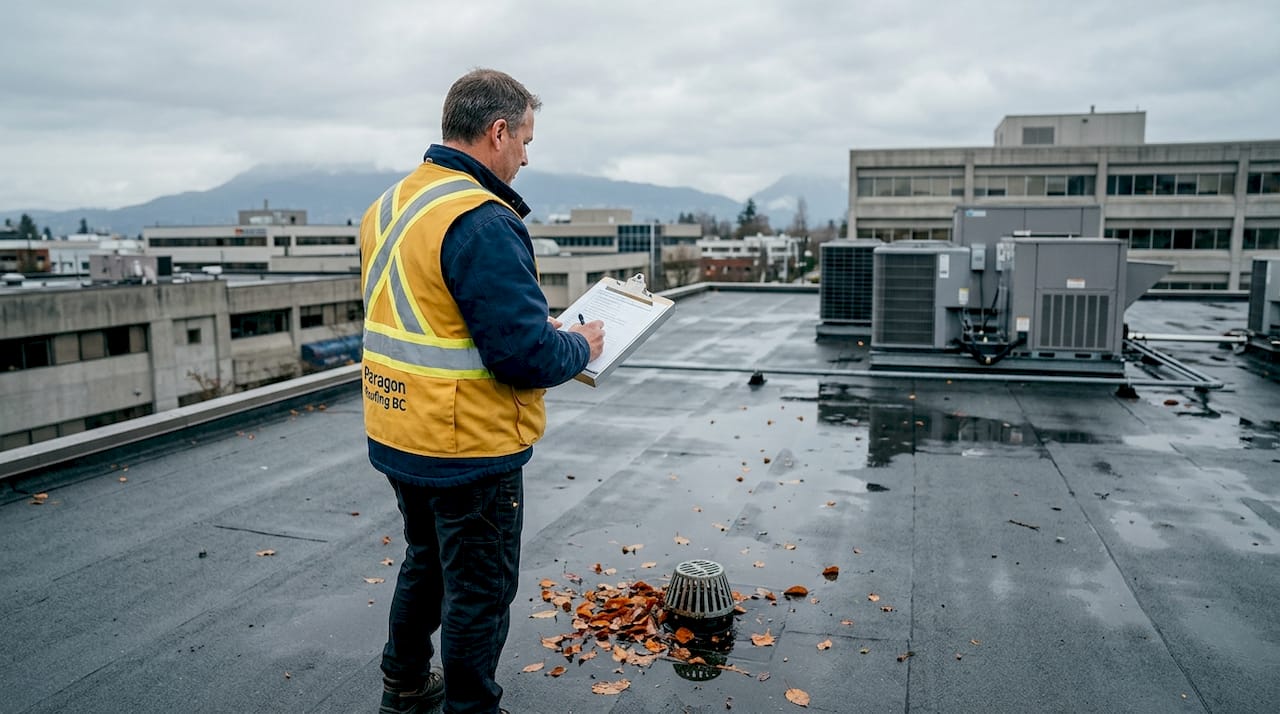
Most commercial property owners in British Columbia assume that booking an annual inspection covers their roof maintenance obligations. It doesn’t. The truth is that a single yearly visit barely scratches the surface of what your roof needs to stay healthy through BC’s relentless rain seasons, freeze-thaw cycles, and heavy wind events. Routine maintenance extends roof lifespan by 40 to 60%, pushing a standard 20-year roof well past the 25 to 30-year mark. In this guide, you’ll find a practical, evidence-based maintenance plan built specifically for BC commercial properties and the people who manage them.
Table of Contents
- Why preventive maintenance matters for commercial roofs
- Essential components of a commercial roof maintenance plan
- Advanced tools and tactics: Beyond basic maintenance
- Documentation, compliance, and protecting your warranty
- What most property managers miss about commercial roof maintenance
- Get expert help for your commercial roof maintenance plan
- Frequently asked questions
Key Takeaways
| Point | Details |
|---|---|
| Maintenance matters | Preventive maintenance can add 5-10 years to your commercial roof’s lifespan. |
| Follow a schedule | Monthly, quarterly, and annual inspections are key to preventing expensive emergencies. |
| Document everything | Keep detailed logs and hire professionals to protect warranties and insurance compliance. |
| Advanced tactics pay off | Infrared testing and silicone coatings offer major performance boosts for BC climates. |
| Partner with experts | RCABC-certified contractors ensure unbiased assessments and custom plans for British Columbia conditions. |
Why preventive maintenance matters for commercial roofs
Think of your commercial roof like the engine in a fleet vehicle. You wouldn’t skip oil changes and only look under the hood when the engine light comes on. The same logic applies here. Small issues like pooling water, cracked sealant around penetrations, or lifting membrane edges are easy and inexpensive to fix when caught early. Left alone, they turn into full-blown interior damage, structural concerns, and emergency callouts that cost far more to resolve.
Here in British Columbia, the climate stacks the odds against building owners. Coastal regions like Vancouver and Burnaby deal with persistent moisture and moss growth. Interior areas face dramatic temperature swings between summer heat and winter frost. The Lower Mainland sits in one of Canada’s wettest zones, meaning drainage failures aren’t just inconvenient — they’re genuinely destructive over time. Staying ahead of these conditions requires a plan, not just a hope.
The financial case is clear. Reactive repairs cost 3 to 5 times more than the same work done preventively, according to industry data. Pair that with the fact that biannual inspections in spring and fall, plus post-storm checks, are recognised as the professional standard by the National Roofing Contractors Association (NRCA), and the argument for proactive care becomes impossible to ignore.
A quick comparison of maintenance approaches:
| Approach | Average cost | Roof lifespan | Risk level |
|---|---|---|---|
| Reactive repairs only | High per incident | 15 to 20 years | Very high |
| Annual inspection only | Low upfront | 18 to 22 years | Moderate to high |
| Full preventive programme | Moderate ongoing | 25 to 30+ years | Low |
Key reasons preventive maintenance matters for BC commercial properties:
- Moisture control: BC’s rainfall creates standing water that degrades membranes, seams, and insulation faster than almost any other single factor
- Early detection: Catching small cracks, blistering, or soft spots before they become leaks saves thousands in interior remediation
- Warranty protection: Many manufacturer warranties require documented professional maintenance to remain valid
- Insurance compliance: Insurers increasingly require proof of routine care when processing claims for weather-related damage
- Tenant and occupant safety: A poorly maintained roof can create liability exposure through leaks, mould growth, and structural compromise
If you’ve ever had to deal with commercial roof repairs after a wet BC winter, you already know the real cost of delayed maintenance. And if you want to understand the full picture of what affects roof longevity advice in this province, there’s a lot more to consider than just surface wear.
Essential components of a commercial roof maintenance plan
Now that you understand why maintenance is vital, here’s how to assemble a plan that works in BC’s unique environment. A strong plan isn’t just about showing up once or twice a year. It layers different levels of attention throughout all four seasons, creating a rhythm that keeps your roof performing at its best.
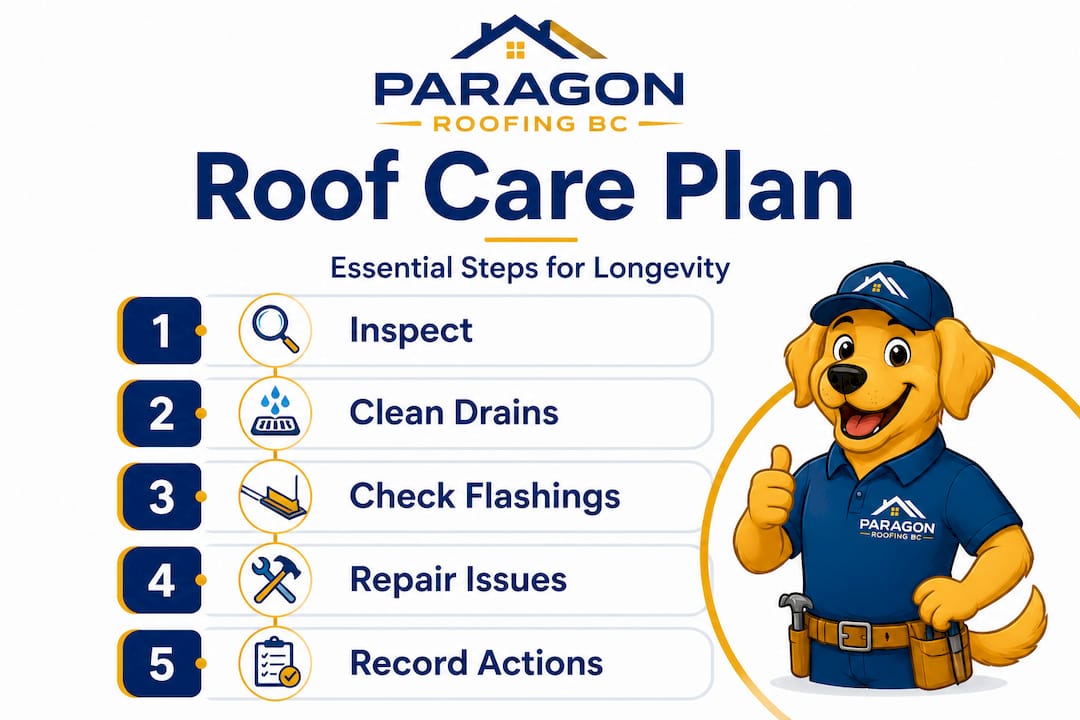
The recommended maintenance schedule for commercial roofs looks like this:
- Monthly visual checks — Walk the perimeter of the building and, where safe, scan the roof surface for obvious debris accumulation, signs of ponding water, or visible damage after storms. These don’t need to be lengthy, but consistency is everything.
- Quarterly deep inspections — A more thorough review of drainage systems, seams, flashing, penetrations (like HVAC units, vents, and skylights), and any areas flagged in previous checks. This is where many early-stage problems get caught.
- Annual professional assessments — A certified roofing contractor performs a full evaluation, documents findings, and provides written recommendations. This is your primary compliance and warranty record.
- Seasonal tasks — In autumn, clear gutters and drains before the heavy rain season begins. In spring, assess any damage from winter freeze-thaw events. Before summer heat peaks, inspect membrane integrity and reflective coatings.
- Post-storm reviews — After any significant wind, hail, or rain event, conduct a targeted check of the areas most exposed to weather impact. Don’t wait for the next scheduled visit.
The RCABC (Roofing Contractors Association of British Columbia) recommends ongoing maintenance programmes that include inspections at completion, two years, five years, and eight years post-installation, plus regular professional assessments in between. For BC property managers, working with RCABC-certified contractors isn’t just a quality signal — it’s a practical safeguard that ties your maintenance programme to recognised industry standards.
Inspection focus areas by season:
| Season | Key focus areas |
|---|---|
| Autumn | Gutters, drains, flashings, debris removal |
| Winter | Ponding ice, membrane stress, penetration seals |
| Spring | Freeze-thaw damage, blistering, seam separation |
| Summer | Coating condition, thermal movement, UV degradation |
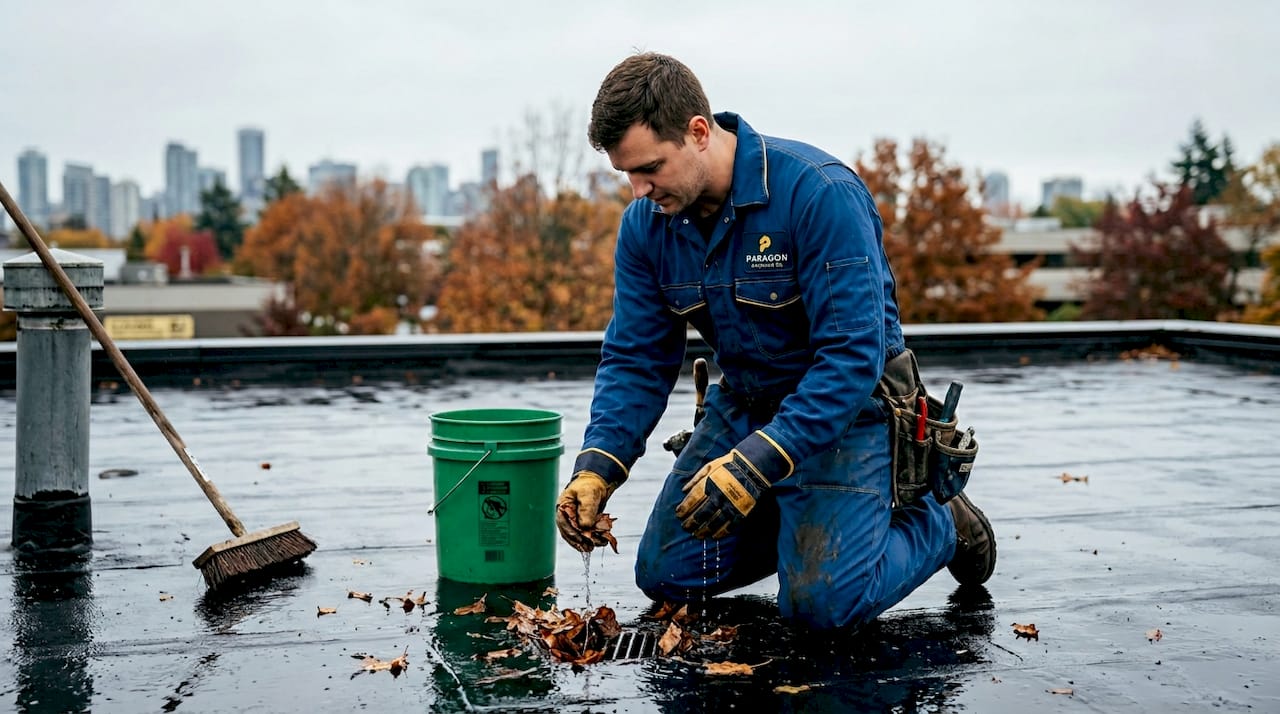
Pro Tip: For BC properties, drainage is your single most critical maintenance priority. A blocked drain in October can mean standing water sitting on your roof membrane through November and December, accelerating deterioration faster than almost any other failure mode. Check drains first, every time.
You can find a detailed maintenance checklist for property managers that breaks down each inspection step, along with essential maintenance tips that apply across property types. A seasonal roof checklist is also useful if you manage properties across multiple BC communities with varying weather patterns.
Advanced tools and tactics: Beyond basic maintenance
Once the basics are in place, you can leverage advanced techniques to take your maintenance plan even further. Technology has genuinely changed what’s possible in commercial roofing maintenance, and several tools and approaches are now accessible to property managers who want to push their roofs toward maximum lifespan.
Infrared thermographic scanning is one of the most valuable tools available. This non-invasive technique uses thermal cameras to detect temperature differences across the roof surface, which reveal areas where moisture has infiltrated the insulation layer beneath the membrane. The key insight here is that wet insulation holds heat differently than dry insulation, making it visible in infrared imaging even when the surface looks perfectly normal to the naked eye. Infrared testing detects over 25% wet insulation before it reaches visible failure, giving you a window to repair rather than replace.
Other advanced tactics worth considering:
- Silicone roof coatings: Applied over existing membranes, silicone coatings create a seamless waterproof barrier and reflect UV radiation, reducing heat gain. Silicone coatings outperform polyurethane and acrylic in long-term weathering tests spanning 40 years. In a climate like BC’s where membranes are perpetually exposed to moisture, this kind of protective layer can meaningfully extend service life.
- Drone inspection: For large commercial rooftops or areas difficult to access safely, drones equipped with high-resolution cameras provide detailed imagery without putting workers at risk. This is particularly useful after severe weather events.
- Core sampling: A small plug is extracted from the membrane and insulation to assess moisture content and layer condition without exposing large areas. It’s a surgical way to confirm or rule out hidden damage.
- Full-service maintenance contracts versus inspection-only: This distinction matters more than most property managers realise. Full-service contracts priced at $0.15 to $0.25 per square foot and including minor repairs consistently outperform inspection-only agreements for lifespan extension. When your contractor finds a small seam separation during a quarterly visit and fixes it on the spot rather than quoting it as a separate job, your roof wins.
“The most cost-effective moment to fix a roof problem is exactly when you find it. Every week of delay compounds the damage and the bill.”
Pro Tip: When reviewing contract options, ask specifically whether minor repairs (sealant work, flashing re-attachment, drain clearing) are included. A contract that only documents problems without fixing them misses the whole point of preventive maintenance.
For broader context on how maintenance fits into the overall lifecycle of a commercial asset, the commercial roofing insights on our blog cover everything from material selection to lifespan planning. If you’re managing an older building that may be approaching the end of its current roof’s service life, understanding the re-roofing process in Vancouver can help you plan ahead with confidence.
Documentation, compliance, and protecting your warranty
To ensure your plan delivers long-term protection and value, proper documentation is just as important as hands-on maintenance. This is the part most facility managers underestimate, sometimes critically.
Maintenance logs prove compliance, support insurance claims, and provide a chronological record of how deterioration has progressed over time. When you need to file a weather-related insurance claim, the insurer will ask for proof that the roof was properly maintained. Without that documentation, claims can be reduced, delayed, or denied outright.
What your maintenance records should capture:
- Date and description of every inspection, including who performed it and what was observed
- Photographs of any deficiencies found, with location notes tied to a simple roof plan or grid
- Contractor details including licence number, RCABC certification status, and contact information
- Repair records noting what was fixed, what materials were used, and who performed the work
- Warranty documents for the membrane, insulation, and any applied coatings, stored alongside your maintenance logs
The DIY approach is tempting when a leak looks minor. But sending an unqualified worker onto a commercial roof to apply patch material can void the manufacturer’s warranty on the entire membrane system. Most commercial roofing warranties contain explicit language requiring that all work be performed by certified professionals using approved materials. One unauthorised repair can wipe out years of warranty coverage on a roof that still has significant life left.
Proper roofing safety guide practices also come into play here. Falls from commercial rooftops are a serious occupational hazard, and WorkSafeBC regulations apply whether your maintenance crew is an employee or a contractor. Certified professionals carry the right insurance, training, and equipment to work safely at height.
For BC properties heading into the wet season, proactive steps outlined in this winter roof preparation resource can save you from some of the most expensive and disruptive repair scenarios we see every year.
What most property managers miss about commercial roof maintenance
Here’s the honest truth, drawn from years of working on commercial rooftops across British Columbia. The biggest gap in most maintenance programmes isn’t the lack of effort. It’s the assumption that a generic schedule built for a warehouse in Ontario or a mall in Calgary will work the same way for a mixed-use building in North Vancouver or a retail strip in Abbotsford.
BC’s climate is not average. The combination of persistent moisture, biological growth (moss and algae are genuine structural threats here, not just cosmetic issues), and dramatic elevation changes across the province means your maintenance plan needs to be custom-built, not copied from a template.
We also see drains neglected more than almost any other component. Property managers diligently check flashings and membranes but walk right past a drain clogged with leaves, organic debris, and moss growth. A blocked drain in autumn sets the stage for ponding water, membrane saturation, and freeze-thaw damage that compounds all winter. It’s one of the most preventable failure modes in the industry and one of the most common.
Small issues have a way of snowballing faster than people expect. A hairline crack in sealant around a rooftop HVAC penetration might let in a few drops during a light rain. By mid-winter, that same crack has allowed water to wick into the insulation layer below, and now you’re looking at insulation replacement alongside the original sealant repair. The cost difference between catching it in September versus March can be staggering.
Finally, the lowest bid almost always costs more in the long run. Partnering with RCABC-certified contractors who know BC’s specific materials, climate demands, and code requirements gives you a genuine return on investment. The right contractor isn’t just fixing what’s broken — they’re protecting the 25 to 30 years of life your roof is capable of delivering.
Get expert help for your commercial roof maintenance plan
If reading through this guide has made you realise your current maintenance programme has some gaps, you’re not alone. Most commercial property owners in BC are somewhere between reactive and proactive, and the good news is that it’s never too late to build a better plan.
At Paragon Roofing BC, we work with facility managers and commercial property owners across British Columbia to develop customised maintenance programmes that match your building type, roof system, and local climate demands. Whether you need a full-service contract with quarterly visits and minor repairs included, or you’re starting with a thorough professional assessment to understand where things stand, our RCABC-certified team is ready to help. Explore our roof maintenance and inspections services, or if you’re in the Fraser Valley and need support including a Maple Ridge roof replacement assessment, we can help with that too. Reach out today to get a tailored plan that protects your investment for decades to come.
Frequently asked questions
How often should commercial roofs be inspected in British Columbia?
Visual checks should be completed monthly by building staff, with deeper inspections quarterly, a full professional assessment annually, and targeted reviews after each significant weather event. Following this layered inspection schedule is the recognised industry standard and helps catch problems at the earliest and most affordable stage.
Does preventive maintenance really extend roof lifespan?
Yes, consistently. Routine maintenance extends lifespan by 40 to 60%, often pushing a standard 20-year commercial roof to 25 to 30 years or more, which represents significant capital savings on replacement costs.
What happens if I skip documentation or try DIY repairs?
Skipping maintenance logs can leave you without the proof insurers require when processing weather-related claims, and using non-certified workers for repairs risks voiding manufacturer warranties that could otherwise protect your roof system for years.
Are full-service maintenance contracts worth the extra cost?
Absolutely. Full-service contracts priced at $0.15 to $0.25 per square foot that include minor repairs alongside inspections deliver better lifespan extension and lower total cost of ownership than inspection-only agreements, because problems get fixed when they’re found rather than tracked and re-quoted.
Recommended
Our Roofing Blog


Have more questions about roofing?
Check out our FAQs or give us a call today to speak to an expert roofer in Vancouver Lower Mainland, BC. We're here to help our neighbours make educated decisions about their roof. For our team, we value helping clients save money while making their roofs last.