What to expect during roof replacement in BC homes
What to expect during roof replacement in BC homes
TL;DR:
- BC’s wet climate and terrain require careful planning and adherence to building codes for roof replacement.
- Proper inspections, permits, and certified contractors are essential to avoid costly errors and delays.
- Asphalt and metal are common materials, with metal lasting longer but incurring higher initial costs.
Most homeowners assume a roof replacement is straightforward: pull off the old shingles, nail down the new ones, and call it a day. In British Columbia, that assumption can lead to permit headaches, failed inspections, and costly do-overs. BC’s wet climate, steep terrain, strata properties, and evolving building codes make roof replacement more layered than in most other Canadian provinces. This guide walks you through every stage of the process, from the first inspection to the final sign-off, so you can approach your project with confidence and avoid the surprises that catch so many BC homeowners off guard.
Table of Contents
- Key stages of roof replacement in British Columbia
- Repair or replace? Making the right call
- Choosing materials and understanding costs
- Common surprises and how to prepare
- Why most BC homeowners underestimate roof replacement complexity
- Take the stress out of your roof replacement
- Frequently asked questions
Key Takeaways
| Point | Details |
|---|---|
| Stages demystified | Know each step of a BC roof replacement, from inspections to final approval. |
| Repair vs replace | Use age, damage, and qualified inspections to decide if you need a full new roof. |
| BC code compliance | Ventilation, pitch, and heritage rules make choosing the right material and contractor crucial. |
| Expect surprises | Weather, property quirks, and code updates can affect your project’s timeline and cost. |
Key stages of roof replacement in British Columbia
Now that you know why the process can feel daunting, let’s walk through the main stages and requirements for roof replacement in BC.
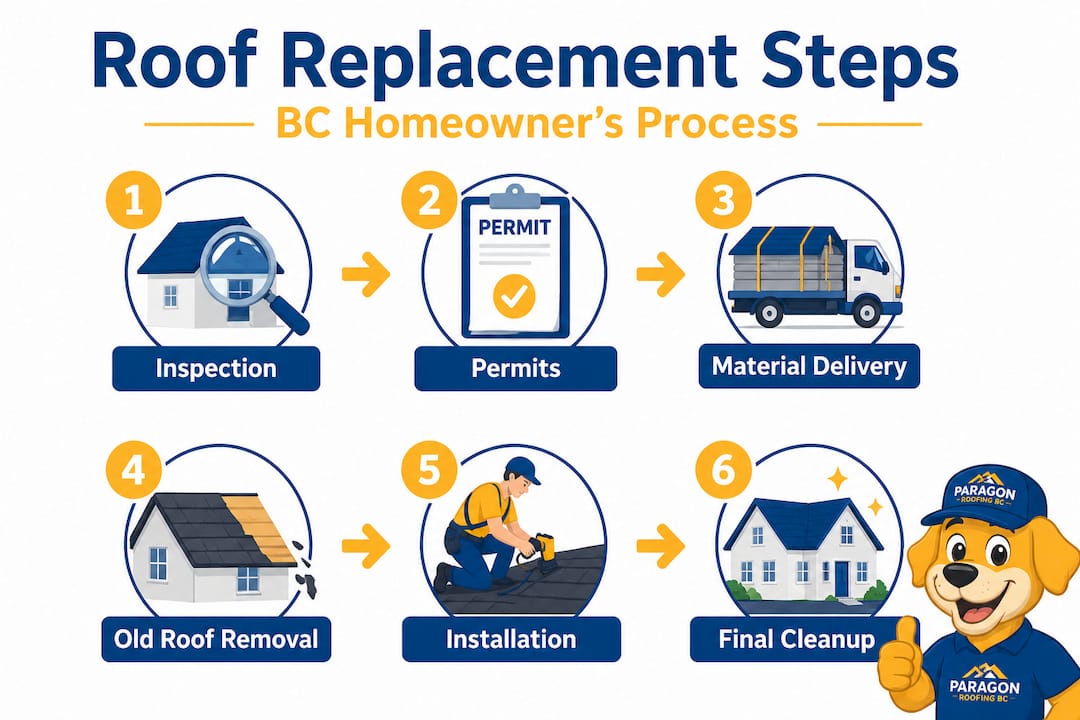
A roof replacement is not a single event. It’s a sequence of decisions and tasks, each one building on the last. Understanding the roof replacement workflow before work begins helps you stay organised and keeps the project on track.
Here are the key stages you can expect:
- Initial inspection and assessment. A qualified contractor examines your existing roof for damage, ventilation issues, and structural concerns. This is where hidden problems like rotted decking or inadequate ventilation get flagged before they become expensive mid-project surprises.
- Permits and approvals. Depending on your municipality, property type, and the scope of work, you may need a building permit. Strata properties require council approval, and heritage homes often need additional sign-off. BC roofing code requires minimum ventilation ratios of 1:300 (one square metre of ventilation for every 300 square metres of insulated ceiling area), pitch standards of at least 4:12 for asphalt shingles, and prohibits spray foam without engineered venting solutions.
- Material selection and ordering. Once the scope is confirmed, materials are selected and ordered. Lead times vary, particularly for metal roofing or specialty products.
- Tear-off. The existing roofing material is removed down to the decking. This is when the true condition of your roof structure becomes visible.
- Decking repairs and underlayment installation. Any damaged sheathing (the wooden boards beneath your shingles) is replaced. A waterproof underlayment, which acts as a secondary barrier against moisture, is then installed.
- New roofing installation. Shingles, metal panels, or other chosen materials are installed according to manufacturer specs and BC code.
- Finishing and clean-up. Flashing (the metal strips around chimneys, vents, and valleys), fascia boards (the trim along the roof edge), and ridge caps are completed. Debris is cleared and a final inspection is done.
Here’s a quick overview of what each stage means for your daily life:
| Stage | Typical duration | Homeowner impact |
|---|---|---|
| Inspection and assessment | 1 to 2 hours | Minimal disruption |
| Permits and approvals | 1 to 4 weeks | Planning and waiting period |
| Material ordering | 1 to 3 weeks | No on-site activity |
| Tear-off | Half to full day | Noise, debris, no parking under eaves |
| Decking repairs and underlayment | Half to full day | Continued noise |
| New roofing installation | 1 to 3 days | Noise, crew on property |
| Finishing and clean-up | Half day | Minimal disruption |
Pro Tip: Get your permits and strata or heritage approvals started as early as possible. Waiting until the last minute can push your project weeks into a rainier season, which creates its own set of delays.
For a detailed breakdown of what each stage involves for Vancouver-area properties, the steps for BC roof replacement article covers local nuances that are easy to overlook.
Repair or replace? Making the right call
Once you understand each stage, it’s important to confirm whether you really need a total roof replacement or if a repair will do.
This is one of the most common questions we hear, and the honest answer depends on two things: how much of your roof is damaged, and how far along it is in its lifespan. According to the Roofing Contractors Association of BC, if less than 30% of your roof is damaged and the roof has used less than 70% of its expected lifespan, repairs are often a reasonable option. Beyond those thresholds, a full replacement is almost always the smarter investment.
In Vancouver’s climate, asphalt shingle lifespan typically runs 20 to 28 years, shorter than the 25 to 30 years you might see quoted for drier climates. The constant moisture, freeze-thaw cycles in higher elevations, and heavy moss growth all accelerate wear.
Here’s a side-by-side comparison to help you decide:
| Signal | Repair likely sufficient | Replacement likely needed |
|---|---|---|
| Damage extent | Less than 30% of surface | More than 30% of surface |
| Roof age | Less than 70% of lifespan | More than 70% of lifespan |
| Leak frequency | Isolated, single area | Multiple areas or recurring |
| Shingle condition | Minor curling or cracking | Widespread curling, missing shingles |
| Moss and algae | Surface-level, treatable | Deep-rooted, structural damage |
| Layers present | Single layer | Two or more layers already |
Signs that you almost certainly need a full replacement rather than a patch-up:
- Water stains appearing on multiple interior ceilings or walls
- Shingles curling at the edges or cupping upward across large sections
- Significant moss or lichen growth that has lifted shingles away from the decking
- Granules from asphalt shingles filling your gutters (a sign the material is breaking down)
- Visible daylight through the roof boards when viewed from the attic
- A second layer of shingles already present, which many BC municipalities no longer permit
Pro Tip: Always get an inspection from a certified, independent contractor rather than a friend of a friend. An unbiased assessment protects you from both unnecessary replacements and missed problems. Our repair vs. replacement guide walks through the decision in more detail.
If you’re still weighing the options, choosing repair or replacement comes down to long-term value, not just upfront cost.
Choosing materials and understanding costs
Once you’ve established the need for a replacement, your material choice can substantially shape your project’s cost, durability, and code requirements.
Think of it like choosing a vehicle. Asphalt shingles are your reliable, practical sedan. Metal roofing is the long-haul SUV. Rubber (TPO or EPDM) is the specialised work truck for flat or low-slope roofs. Each has its place, and the right choice depends on your roof’s pitch, your budget, and how long you plan to stay in the home.
Here’s a breakdown of the most common options for BC homes:
| Material | Lifespan in BC | Approx. cost per sq. ft. (installed) | Best suited for |
|---|---|---|---|
| Asphalt shingles | 20 to 28 years | $4 to $8 | Standard pitched roofs, most budgets |
| Metal (steel or aluminium) | 40 to 70 years | $10 to $20 | High-wind, heavy-snow, or coastal areas |
| Cedar shakes | 20 to 30 years | $8 to $15 | Heritage-style homes, moderate climates |
| Rubber (TPO/EPDM) | 20 to 30 years | $5 to $10 | Flat or low-slope roofs |
| Synthetic (composite) | 30 to 50 years | $9 to $18 | Varied styles, low maintenance |
Asphalt shingles last 20 to 28 years in Vancouver’s climate, making them the most popular choice for budget-conscious homeowners doing a straightforward replacement. They’re code-compliant on pitches of 4:12 and above, widely available, and easy to install.
Metal roofing is gaining serious traction in BC, particularly in areas prone to heavy snowfall or high winds. The durability of metal roofs in Vancouver’s climate is impressive, with properly installed systems regularly lasting 50 years or more. The higher upfront cost is offset by far fewer replacements over the life of a home.
A few important points to keep in mind when choosing your material:
- Code compliance matters. Some materials require specific pitch minimums. Asphalt shingles need at least a 4:12 pitch. Metal can go lower. Always confirm with your contractor before ordering.
- Weight affects structure. Heavier materials like tile may require structural upgrades to your roof framing.
- Colour and appearance. Strata communities often have approved colour palettes, so check your bylaws before committing to a material or colour.
- Warranty terms vary. Manufacturer warranties range from 20 to lifetime, but installation quality determines whether those warranties hold up. For a full comparison of lifespan by material, it’s worth reviewing what each option means for your specific property type.
Common surprises and how to prepare
No matter how well you plan, some surprises and special challenges are unique to BC properties and climate. Here’s what most guides forget to mention.
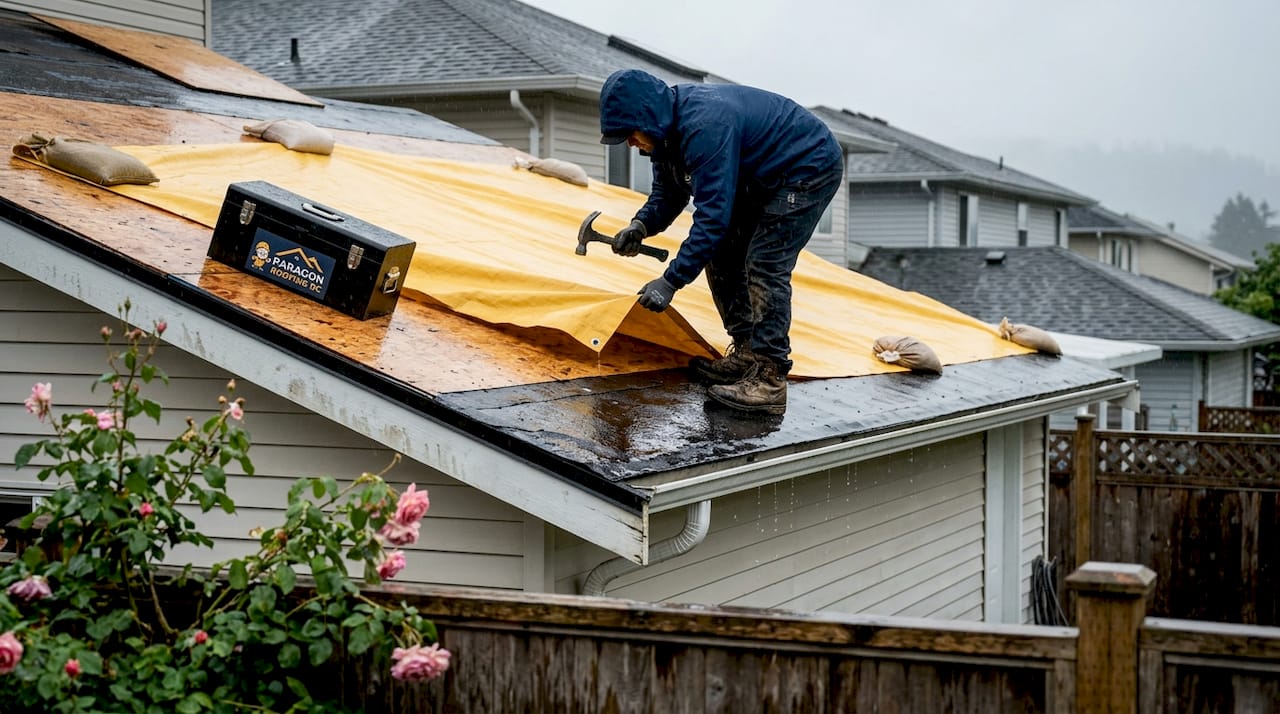
Weather delays are a reality in BC. Roofing requires dry conditions, and Vancouver and surrounding areas average over 160 rainy days per year. If your project is scheduled for October through February, build in extra buffer time. Contractors will reschedule rather than risk improper installation in wet conditions, and that’s actually the right call.
Heritage and strata properties add layers of complexity. Steep pitches and heritage or strata buildings often require special permits or council approvals that standard residential replacements do not. If you live in a strata, your roof may be classified as common property, meaning the strata council must approve the replacement, the contractor, and sometimes even the material. Heritage designations can restrict material choices entirely.
Cost overruns happen more often than homeowners expect. The most common culprits are:
- Rotted or soft decking discovered during tear-off (very common in older Vancouver homes)
- Ventilation upgrades required to meet current BC code
- Flashing replacement around chimneys, skylights, or dormers
- Additional layers of shingles that need to be removed before new installation
Steep roofs cost more. Labour costs increase significantly on pitches above 7:12 because crews need safety equipment and work more slowly. If your home has a steep or complex roofline, expect your quote to reflect that.
“The RCABC strongly recommends hiring certified roofing contractors for all replacement work. Using uncertified labour puts your warranty and liability protection at risk, and leaves you with little recourse if something goes wrong.” — Roofing Contractors Association of BC
Pro Tip: Set aside 10 to 15 percent of your project budget as a contingency fund before work begins. It’s much less stressful to have that buffer ready than to scramble mid-project when the crew finds rotted decking. Reviewing the workflow for BC homes ahead of time also helps you ask the right questions before signing a contract.
Why most BC homeowners underestimate roof replacement complexity
Here’s something we’ve seen repeatedly over the years: homeowners who are otherwise careful, detail-oriented people completely underestimate what a roof replacement involves in British Columbia. And it’s not because they’re careless. It’s because most of the information available online is written for generic North American conditions, not for homes in Burnaby, North Vancouver, or Langley.
The most costly mistake we see is skipping a proper, independent inspection before committing to either a repair or a full replacement. Homeowners often rely on a quote from a single contractor who has a financial interest in recommending the more expensive option, or they go the opposite direction and trust a friend’s referral to someone who isn’t certified. The Consumer Guide to Roofing is clear on this: unbiased inspections and certified contractors are essential, not optional, and avoiding the “friend of a friend” approach protects your warranty and your liability.
The second pattern we see is homeowners ignoring BC-specific code requirements until they become a problem. Ventilation ratios, pitch minimums, and strata approval processes are not bureaucratic formalities. They exist because BC’s climate is genuinely demanding, and a roof installed without proper ventilation will fail years ahead of schedule, often voiding the manufacturer’s warranty in the process.
The real wisdom here is treating documentation as seriously as the physical work itself. Keep records of your permits, your contractor’s certifications, your material warranties, and your inspection reports. If you ever sell your home, that paper trail is worth real money. If something goes wrong, it’s your protection. Making the right repair decisions starts with having complete, accurate information, not assumptions based on what worked for your neighbour’s roof five years ago.
Take the stress out of your roof replacement
If you want peace of mind throughout your roof replacement, the right partners make all the difference. Working with a team that knows BC’s building codes, understands local weather patterns, and has experience with everything from standard Burnaby bungalows to complex strata properties means fewer surprises and a result you can count on for decades.
At Paragon Roofing BC, we handle code-compliant Vancouver roof installation and Coquitlam roof installation with full permit support, certified crews, and transparent quotes. Whether you’re starting with a question about materials or you’re ready to book, our roof maintenance and inspections service is a great first step. Reach out today for an honest assessment with no pressure and no guesswork.
Frequently asked questions
How long does roof replacement usually take in BC?
A typical roof replacement in BC takes 2 to 5 days for the physical installation, but permitting, material ordering, and weather delays can extend the overall timeline to several weeks. Planning ahead is key.
What permits or approvals are needed for roof replacement in BC?
Standard replacements may not require a permit in every municipality, but heritage buildings and strata properties almost always require special approvals, and BC Building Code ventilation requirements apply universally. Always confirm with your local authority before starting.
How do I know if I need to replace my roof or just repair it?
According to the RCABC Consumer Guide, if less than 30% of the roof is damaged and it has used less than 70% of its expected lifespan, repairs may be sufficient. Beyond those thresholds, replacement is the smarter long-term investment.
What roof material lasts the longest in BC climates?
Metal roofing generally outperforms all other common options in BC, often lasting 40 to 70 years with proper installation and maintenance. Asphalt shingles remain the most popular choice for their lower upfront cost, but they need replacing more frequently in BC’s wet climate.
Why is hiring a certified roofing contractor so important?
Certified contractors ensure your roof meets BC code and that manufacturer warranties remain valid. The RCABC Consumer Guide specifically warns against using uncertified labour, noting it leaves homeowners without warranty coverage or liability protection if problems arise.
Recommended
Our Roofing Blog


Have more questions about roofing?
Check out our FAQs or give us a call today to speak to an expert roofer in Vancouver Lower Mainland, BC. We're here to help our neighbours make educated decisions about their roof. For our team, we value helping clients save money while making their roofs last.