A PRACTICAL GUIDE FOR STRATA COUNCILS
Strata and townhouse roofing in West Vancouver
Plan the roof. Clarify the scope. Keep owners informed.
From the first condition assessment to comparing proposals, make the decisions that move a shared roofing project forward.
Where should a council start?
Start with the depreciation report and a current roof condition assessment. Define the work for each roof area, compare materials and details for the building’s exposure, confirm owner approvals and funding, and resolve District permit and access requirements. A clear written scope helps the council compare proposals and explain the decision to owners.
CONDITION BEFORE ASSUMPTIONS
Use today’s roof condition to plan tomorrow’s work
A depreciation report is a planning tool. A roof assessment helps define the work now.
Bring together leak reports, previous repairs, maintenance records and the current depreciation report. Ask the assessment to distinguish an isolated defect from deterioration across a roof area, and to explain any limitations of the inspection.
Where applicable, BC’s depreciation report rules require a new report at least every five years, prepared by a qualified person. A roofing quote does not replace that report. Ask its preparer to review the planning assumptions when new condition information becomes available.
Separate urgent work from renewal
An active leak may need immediate attention while council develops a replacement plan. Record the affected area and the work authorized. A temporary repair should have a clear purpose and limitations.
Keep residents clear of sagging ceilings or areas where water may affect electrical equipment. Report the concern to the responsible council or manager.
START THE CONVERSATION
Tell us about your building
Include the West Vancouver address, building type, roof concerns and the council or management contact. Share existing reports and photos taken safely from the ground or inside.
COUNCIL AND OWNER DECISIONS
Agree on the approval and funding route
On a smaller screen, swipe the table to read both columns.
| Decision | What council needs to establish |
|---|---|
| Responsibility | Check the strata plan and bylaws to establish which roof areas and related components the strata corporation maintains. |
| Condition and scope | Identify urgent repairs, replacement areas, retained items and any further professional investigation. |
| Funding | Confirm whether the work will use the contingency reserve fund, a special levy or another authorized source. |
| Owner approval | Confirm the required resolutions for both spending and any significant change in common property appearance. |
| Authority during construction | Name the contact who can receive findings and obtain approval for changes before extra work proceeds. |
The Strata Property Act distinguishes reserve spending recommended in the most current depreciation report from other reserve spending. Special levies have their own approval and allocation rules. A material or colour change can also raise a separate common property appearance question.
Have the strata manager or legal adviser confirm the process for this project. A contractor’s quote does not authorize council to spend funds. Emergency expenditure provisions are limited and should not be treated as approval for an entire renewal project.
MATERIALS, FLASHINGS AND FASTENERS
Match the roof system to its coastal setting
Near the shore, ask about the exact materials and warranty terms for the building’s exposure.
Do not select a roof on the covering alone. The proposed system needs compatible flashings, fasteners, edges and connections. Ask which metals and finishes are specified and how runoff from adjacent materials will be handled.
Some steel coating warranties exclude marine exposure or runoff from copper or lead. Coverage varies by product and document. Obtain the manufacturer’s written terms for the actual location, and identify who holds each warranty.
Compare the complete options
For sloped areas, compare asphalt, cedar, metal or composite products against the supporting deck, roof geometry, appearance, maintenance and installed scope.
Explore the West Vancouver cedar guide, metal and copper guide and composite roofing guide. Confirm the current terms for any product under consideration.
LOW SLOPE ROOF PLANNING
Treat flat sections as their own roof areas
Garages, walkways and additions can need a different system from the main sloped roof.
Look beyond the membrane
Assess drainage, outlets, edges, penetrations and connections to adjoining walls or roofs. Establish whether underlying materials are wet or damaged and whether drainage improvements belong in the scope.
A new membrane follows the support beneath it. If water collects because of the roof’s shape, replacing only the covering may leave that issue unresolved.
Define the details and work method
Ask the proposal to name the membrane system and explain its installation requirements, temporary weather protection and work around occupied areas. Include roof access for future maintenance.
Metal edges and flashings still need consideration on a membrane roof. The coastal suitability discussion should cover these parts too.
PROJECT PHOTOGRAPHS
A closer look at membrane roof details
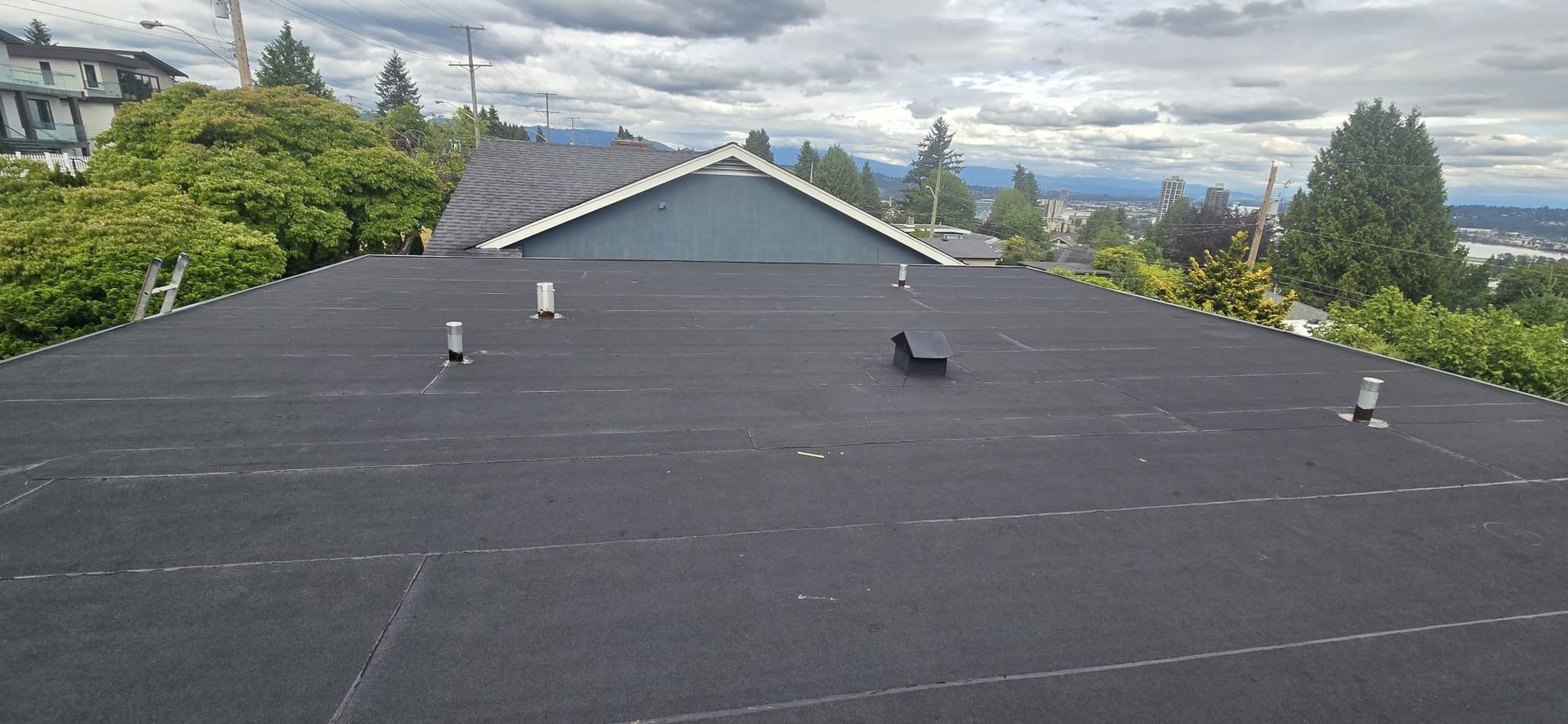
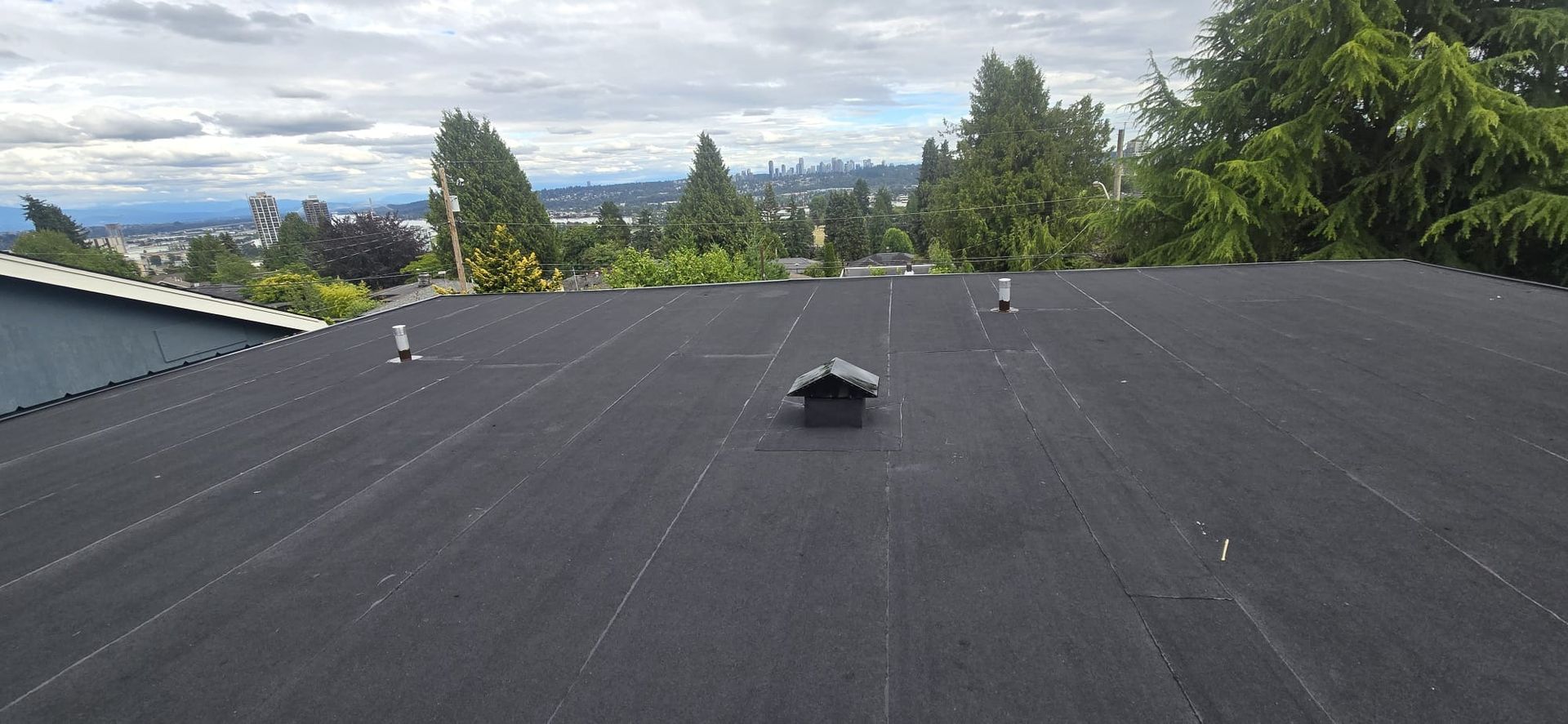
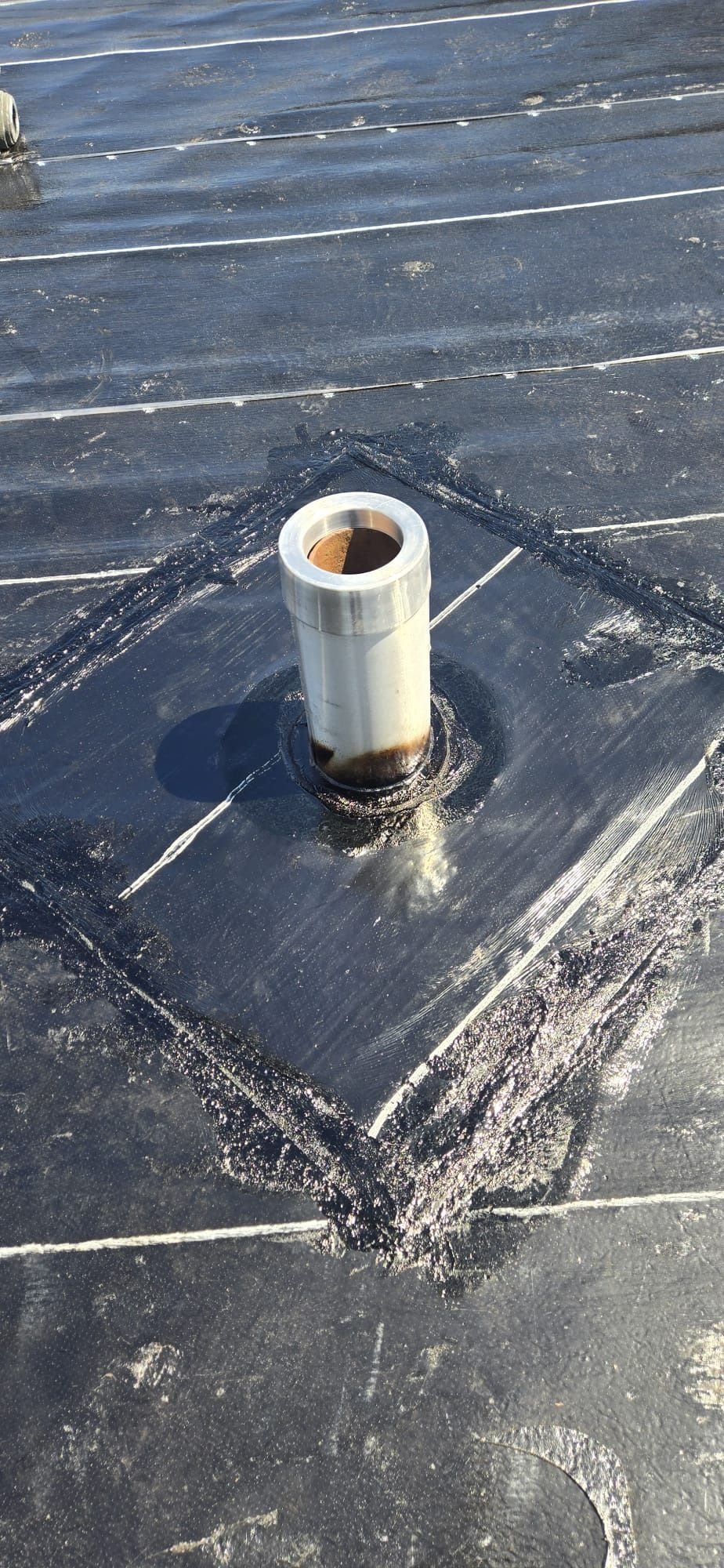
These photographs are from Paragon’s Massey Street project in New Westminster. They show the roof surface and a pipe flashing detail that should be addressed in a written scope.
WEST VANCOUVER PROJECT PLANNING
Check permits, trees and staging early
Confirm the exact scope
West Vancouver’s building bylaw regulates repair and alteration work and has no blanket roofing exemption. Confirm requirements with the District for the address and proposed work, including structural changes and any property or heritage restrictions.
Protect trees and access
Tree and branch work needs a separate check under District rules. Do not assume branches can be cut for crane or ladder access. Plan equipment, bins and material storage around protected trees and root zones.
Plan the space outside
Agree on delivery routes, bin locations and safe pedestrian access. Use of a street or other public space may require a separate authorization. Resolve staging before promising a start date.
OCCUPIED BUILDINGS NEED COORDINATION
Keep residents and the building in the plan
Notices and daily access
Set expectations for noise, parking, balconies, entrances and working areas. Name a contact for resident concerns and a process for weather or schedule changes.
If entry to a strata lot is needed, arrange authorization through the strata corporation and follow the applicable bylaws and notice requirements. The Standard Bylaws distinguish planned entry from emergencies; check the strata’s filed bylaws.
Roof and envelope interfaces
Include roof to wall connections, skylights, gutters and rooftop equipment in the scope discussion. Identify work belonging to other trades or requiring a consultant’s design.
Some building envelope renovations trigger BC Housing licensing and warranty requirements, with scope criteria and exemptions. Check whether these apply to the complete project before tendering; do not assume that every reroof falls under the same rules.
CARE AND DOCUMENTATION
Maintain records between roof replacements
Keep inspection findings, photographs, repair invoices and warranty documents together.
BC Housing’s roof maintenance guidance recommends inspections in spring and fall and after major storms or construction activity. Arrange safe professional access, track developing issues and keep drains and outlets in the maintenance plan.
Choose cleaning or moss treatment to suit the roof material, product instructions and local rules. Avoid an aggressive cleaning method simply to improve appearance. See the West Vancouver roof maintenance guide for planning the ongoing care.
COMPARE THE WORK, THEN THE PRICE
Questions that make roofing quotes comparable
On a smaller screen, swipe the table to read both columns.
| Ask about | Look for in writing |
|---|---|
| Scope by roof area | Removal, retained components, deck preparation, insulation where included, and each proposed roof system. |
| Details and coastal suitability | Product and finish, flashing and fastener metals, wall connections, roof openings, drainage and location specific warranty terms. |
| Hidden conditions | How damage will be photographed, priced and authorized; any allowances and exclusions. |
| Phasing and protection | Work sequence, weather protection, resident notices, staging, pedestrian routes and cleanup. |
| Coverage and responsibilities | Current WorkSafeBC clearance and insurance documentation, permit responsibilities and the named project contacts. |
| Price, warranties and handover | Taxes, payment stages, change process, workmanship terms, product warranty holder and registration duties, maintenance instructions and completion records. |
Compare the same scope across proposals. A lower total can reflect omitted work, different assumptions or retained components. Ask the contractor to explain those differences before council makes a recommendation to owners.
PRACTICAL ANSWERS
West Vancouver strata roofing questions
How should a West Vancouver strata council plan a roof replacement?
Start with the depreciation report, maintenance records and a current roof condition assessment. Define the work for each roof area, compare written proposals and confirm the funding and approval process. Before scheduling, settle the material selection, permit questions, access, resident notices and who can authorize additional work.
Does salt air change which roofing material we should choose?
It can affect product selection and warranty eligibility. Ask the supplier to confirm the exact roofing product, finish, flashings and fasteners for the building’s exposure. Some steel coating warranties exclude marine exposure or runoff from other metals. Obtain written terms for the actual location rather than assuming all metal roofs have the same coverage.
Is our depreciation report enough to plan the roof?
A depreciation report supports long term renewal and funding planning. It is not a detailed construction scope or a guarantee of the roof’s remaining life. Use current condition findings to refine the proposed work and ask the qualified report preparer whether the timing or cost assumptions need updating.
Do owners need to vote on roof replacement or a change of material?
The required approval depends on the funding source and proposed work. Spending from the contingency reserve fund and raising a special levy have different rules. A significant change in the appearance of common property also needs separate consideration. Have the strata manager or legal adviser confirm the resolutions required for your project.
Do we need a District permit to replace the roof?
Confirm the address and full scope with the District of West Vancouver before work begins. Its building bylaw regulates repair and alteration work and does not provide a blanket roofing exemption. Structural changes, property restrictions, tree work and use of public space can introduce additional requirements.
What about flat sections over garages and walkways?
Assess them as distinct roof areas, including their slope, drainage, edges and connections to walls or adjacent roofs. The scope should identify the membrane system, drains or outlets, penetrations and any wet or damaged underlying materials. Replacing the visible membrane does not by itself correct an underlying drainage problem.
A CLEAR NEXT STEP
Put the next roofing decision in motion
Contact Paragon Roofing BC with the building details, roof concerns and the information council needs to make its next decision.
RELATED SERVICES AND GUIDES
Continue planning your project
Explore our strata and multifamily roofing services and West Vancouver roofing services.
For the broader process, read the West Vancouver roof replacement guide.
Local guides: Ambleside and Dundarave.
By Harman Singh, Paragon Roofing BC.