
Surrey apartment roof ponding water damage: what to do
Surrey apartment roof ponding water damage: what to do
TL;DR:
- Ponding water on Surrey apartment roofs signals drainage failure due to design flaws, blocked drains, or soil movement. It causes membrane degradation, insulation saturation, and possible interior leaks if not addressed early. Regular inspections, drain cleaning, and timely repairs prevent costly damage and structural issues.
Surrey apartment roof ponding water damage occurs when rainwater sits on a flat roof for more than 48 hours after a storm, signalling a drainage failure that puts the entire building at risk. The 48-hour rule is the industry’s standard early-warning test for flat roofs across the Lower Mainland. Surrey’s heavy seasonal rainfall and clay-rich soils make this problem more common here than in many other Metro Vancouver cities. Paragonroofingbc works with property managers and strata councils across Surrey every season, and ponding water is one of the most underestimated threats we see on apartment flat roofs.
What causes ponding water on Surrey apartment flat roofs?
Ponding water on a flat roof is almost always a drainage problem, not a waterproofing problem. The water has nowhere to go, so it sits. Understanding why it can’t drain is the first step toward fixing it for good.

Roof design flaws are the most common root cause. Many older Surrey apartment buildings were built with minimal slope, sometimes less than the minimum 1:50 pitch recommended for low-slope membranes. Over time, structural deflection makes this worse. Roof decks sag slightly between joists, creating low spots that collect water even when drains are working.
Blocked drainage systems are the second major cause. Scuppers, roof drains, and internal downpipes clog with leaves, moss, and debris. Surrey’s tree canopy is dense, and autumn leaf fall can block a roof drain in a matter of days. A blocked drain turns a minor rain event into a full pond.
Soil settlement adds another layer of risk specific to Surrey. Clay-rich soils in Surrey and the Guildford area have poor drainage and shift seasonally. That movement transfers to building foundations and, eventually, to roof decks. A roof that drained perfectly five years ago may now hold water because the building has settled unevenly.
Here are the most common causes property managers should track:
- Inadequate original roof slope or structural deflection creating low spots
- Clogged roof drains, scuppers, or internal downpipes
- Debris accumulation from trees, moss, and organic growth
- Seasonal soil settlement shifting the roof deck
- Missing or undersized secondary overflow drains
Pro Tip: Walk your roof after the first heavy rain of the season. Any standing water you see after two days is a drainage failure, not normal behaviour. Photograph it and note the location before calling a roofer.
How does ponding water damage a Surrey apartment building?
Ponded water adds load and pressure to roofing seams and membranes, accelerating failure in ways that are not always visible from inside the building. Think of it like leaving a wet sponge pressed against a wall. The damage is slow, quiet, and expensive by the time you notice it.
The physical consequences follow a predictable sequence:
- Membrane degradation. UV exposure and biological growth from algae and moss break down modified bitumen and TPO membranes faster when they stay wet. A membrane rated for 20 years can fail in 10 under constant ponding conditions.
- Seam failure. Flat roof membranes are joined at seams. Sustained water pressure works into those seams over time, especially where adhesive has aged or laps were not properly heat-welded.
- Insulation saturation. Water that breaches the membrane soaks into rigid insulation below. Wet insulation loses its thermal value and becomes a breeding ground for mould.
- Interior leaks and mould. Once insulation is saturated, water migrates to the structural deck and eventually into ceiling assemblies. Residents in top-floor units report staining, bubbling paint, and musty odours long before the source is identified.
- Structural load increase. Water weighs approximately one kilogram per litre. A large pond covering 20 square metres at 50 millimetres deep adds roughly 1,000 kilograms of unplanned load to the roof structure.
Property managers should inspect for these warning signs regularly: blistering or bubbling membrane, visible cracks near drains, staining on parapet walls, and any interior ceiling discolouration in top-floor suites. Catching these signs early is the difference between a drain cleaning and a full roof replacement.
What steps prevent ponding water damage on Surrey roofs?
Prevention is far less expensive than repair. The good news is that most ponding water problems on Surrey apartment roofs are preventable with a consistent maintenance schedule and a few targeted upgrades.
Drain cleaning before October is non-negotiable. Scheduling drain cleanouts before the October rain season is the single most effective step Surrey property managers can take. October marks the start of Surrey’s heaviest rainfall window. A blocked drain entering that season is a liability.
Professional roof inspections should focus on drainage, not just membranes. Many inspections overlook drainage design in favour of membrane condition, which misses the root cause of most ponding issues. Ask your inspector to assess slope, drain placement, and overflow capacity specifically.
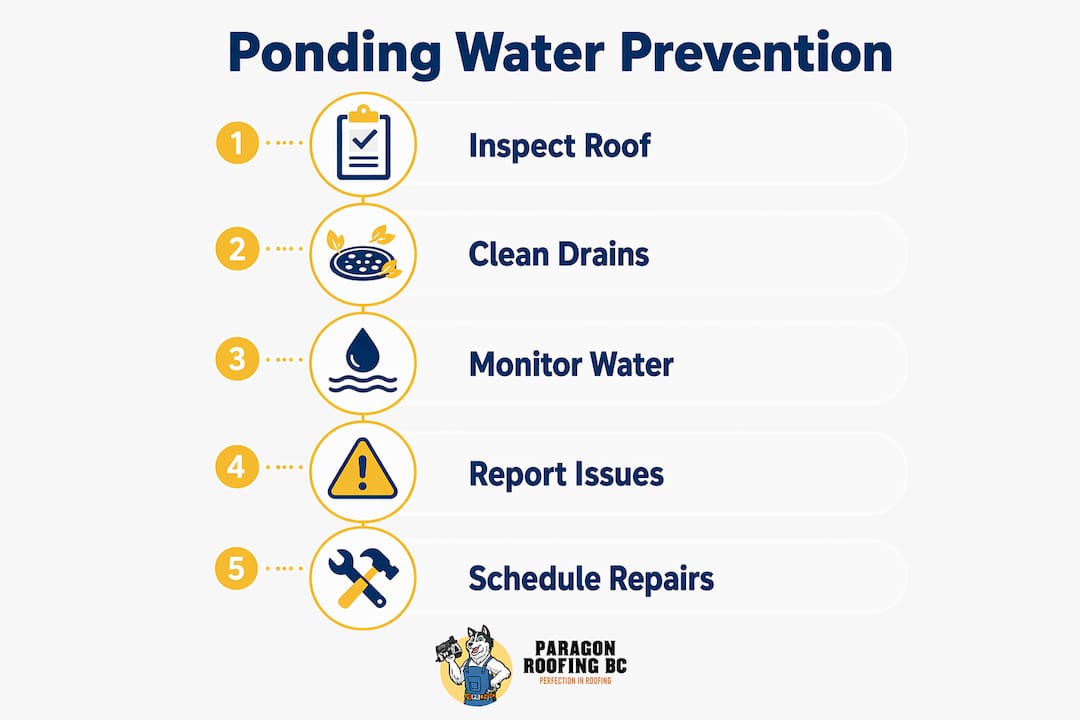
Here is a practical prevention checklist for Surrey apartment buildings:
- Clean all roof drains, scuppers, and gutters in september and again in february
- Inspect membrane condition and seams twice yearly
- Check for new low spots or deflection after winter freeze-thaw cycles
- Confirm secondary overflow drains are clear and functional
- Review perimeter grading to reduce ground-level water pooling near the building
- Document all inspections with photos for strata reporting
Pro Tip: Strata councils respond to data, not descriptions. Bring photos, measurements of standing water depth, and a written drainage assessment to your next strata meeting. That documentation is also what your insurer will ask for if a claim is filed. Deferred repairs can void coverage entirely.
Proactive communication with residents and strata councils builds support for preventive maintenance and lowers long-term costs. Detailed professional reports to strata councils are the most effective tool for securing capital expenditure approval on drainage projects. Integrating roof drainage into long-term capital planning helps strata buildings budget for repairs before they become emergencies.
How are ponding water problems diagnosed and repaired?
Diagnosing ponding water damage correctly determines whether you spend $800 on a drain cleaning or $80,000 on a roof replacement. The two problems look similar from the surface but have completely different solutions.
Thermal imaging and moisture mapping locate hidden water damage beneath the membrane before it spreads to interior assemblies. Drone surveys give inspectors a full picture of slope and pooling patterns without walking the roof repeatedly. These tools separate drainage blockages from structural deflections, which is a critical distinction.
| Problem type | Diagnostic sign | Typical repair |
|---|---|---|
| Blocked drain or scupper | Water pools near drain, clears quickly once unblocked | Drain cleaning, debris removal |
| Structural deflection | Water pools away from drains in a low spot | Tapered insulation install, additional drain |
| Membrane seam failure | Water intrusion at seam lines, interior staining | Membrane patching or full re-seam |
| Insulation saturation | Soft spots underfoot, thermal imaging shows wet zones | Partial or full insulation replacement |
| Insufficient drainage capacity | Overflow during heavy rain despite clear drains | Additional drain installation, scupper enlargement |
Common repairs include unclogging drains, improving roof slope with tapered insulation, patching membranes, and installing additional drainage points. Timing matters. Repairs completed before november avoid the risk of winter rain escalating a small leak into a major interior flood.
Strata buildings require repair approval before work begins. A written scope of work with photos and cost estimates speeds that process considerably. Paragonroofingbc provides detailed inspection reports formatted specifically for strata council review, which removes the back-and-forth that delays repairs into the wet season.
Key takeaways
Surrey apartment flat roofs require consistent drainage maintenance and professional inspection to prevent ponding water from causing membrane failure, insulation damage, and costly interior repairs.
| Point | Details |
|---|---|
| Apply the 48-hour rule | Standing water after 48 hours signals drainage failure and requires immediate investigation. |
| Clean drains before October | Surrey’s autumn rain season makes september drain cleaning the highest-return maintenance task. |
| Inspect drainage, not just membranes | Many inspections miss ponding risks by focusing on membrane condition alone. |
| Document everything for strata | Photos and professional reports are required for budget approval and insurance claims. |
| Repair before winter | Repairs completed before november prevent small leaks from becoming major structural damage. |
What I’ve learned about ponding water on Surrey apartment roofs
Hey, it’s Harman here. After years of inspecting flat roofs across Surrey, the pattern I see most often is this: property managers know there’s a drainage issue, but they wait. They wait for the strata meeting, they wait for the budget cycle, they wait to see if it gets worse. By the time the repair gets approved, the insulation is saturated and the membrane is failing at three seams instead of one.
The 48-hour rule sounds simple, but most buildings I visit have never had anyone apply it deliberately. Nobody walks the roof two days after a storm and photographs what they find. That one habit, done consistently in october and february, would catch the majority of drainage failures before they become interior leaks.
The other thing I want to flag is the clay soil issue. Surrey’s ground moves more than people realise. A building that was perfectly graded and drained when it was built in the 1990s may have shifted enough to create new low spots on the roof deck. That is not a maintenance failure. It is a geology problem that requires a structural solution, usually tapered insulation or an additional drain. No amount of drain cleaning fixes a deflection.
My honest advice: schedule a professional roof inspection focused specifically on drainage before this autumn. Bring the report to your strata council with photos. The cost of that inspection is a fraction of one interior repair claim.
— Harman
Paragonroofingbc’s approach to Surrey apartment roof drainage
Paragonroofingbc specialises in flat roof inspection, maintenance, and repair for Surrey apartment and strata buildings. Our team understands Surrey’s clay soil conditions, seasonal rainfall patterns, and the strata approval process that governs most repair decisions.

We provide written drainage assessments formatted for strata council review, so property managers have the documentation they need to move repairs forward without delay. Whether you need a drain cleaning, a membrane patch, or a full flat roof repair assessment, we work around building occupancy and strata timelines. For property managers and homeowners ready to address ponding water before the autumn rains arrive, our Surrey residential roofing team is available for inspections and estimates now.
FAQ
What is the 48-hour rule for flat roofs?
The 48-hour rule states that water remaining on a flat roof more than 48 hours after rain indicates a drainage failure. Any standing water visible after two days requires professional investigation.
Why does Surrey have more ponding water problems than other cities?
Surrey’s clay-rich soils shift seasonally, causing building settlement that creates new low spots on roof decks. Combined with heavy autumn and winter rainfall, this makes drainage failures more frequent than in areas with sandier, better-draining soils.
How often should Surrey apartment roofs be inspected?
Flat roofs on Surrey apartment buildings should be inspected at least twice yearly, with drain cleanouts completed before october and again in late winter. Buildings with known drainage issues benefit from quarterly checks.
Can ponding water damage be covered by strata insurance?
Coverage depends on whether the damage resulted from a sudden event or deferred maintenance. Insurers often deny claims when drainage failures were known and not addressed. Documented inspections and timely repairs protect your claim.
What is the difference between a drainage blockage and structural deflection?
A drainage blockage clears once the drain is cleaned and water flows normally. Structural deflection creates a permanent low spot in the roof deck that holds water regardless of drain condition, requiring tapered insulation or an additional drain to fix.
Recommended
Our Roofing Blog

Have more questions about roofing?
Check out our FAQs or give us a call today to speak to an expert roofer in Vancouver Lower Mainland, BC. We're here to help our neighbours make educated decisions about their roof. For our team, we value helping clients save money while making their roofs last.