Cedar shake roof lifespan: what BC homeowners must know
TL;DR:
- A cedar shake roof in Metro Vancouver lasts 30 to 50 years with proper maintenance but only 15 to 20 years when neglected. Climate conditions like heavy rain and freeze-thaw cycles significantly accelerate deterioration, making regular upkeep essential for longevity. High-quality installation and choosing premium cedar grades, along with proper attic ventilation, further extend the roof’s lifespan.
A cedar shake roof lifespan typically ranges from 30 to 50 years with proper maintenance, but drops to just 15–20 years when upkeep is neglected. That gap is not a minor detail. It represents tens of thousands of dollars and decades of service life. In Metro Vancouver and across the Lower Mainland, local conditions like heavy rainfall, coastal moisture, and freeze-thaw cycles make that maintenance gap even wider. The grade of cedar you choose, the quality of installation, and how consistently you care for the roof all determine where your roof lands in that range. Understanding what is a cedar shake roof lifespan means understanding these variables, not just picking a number.
What is a cedar shake roof lifespan in the lower mainland?
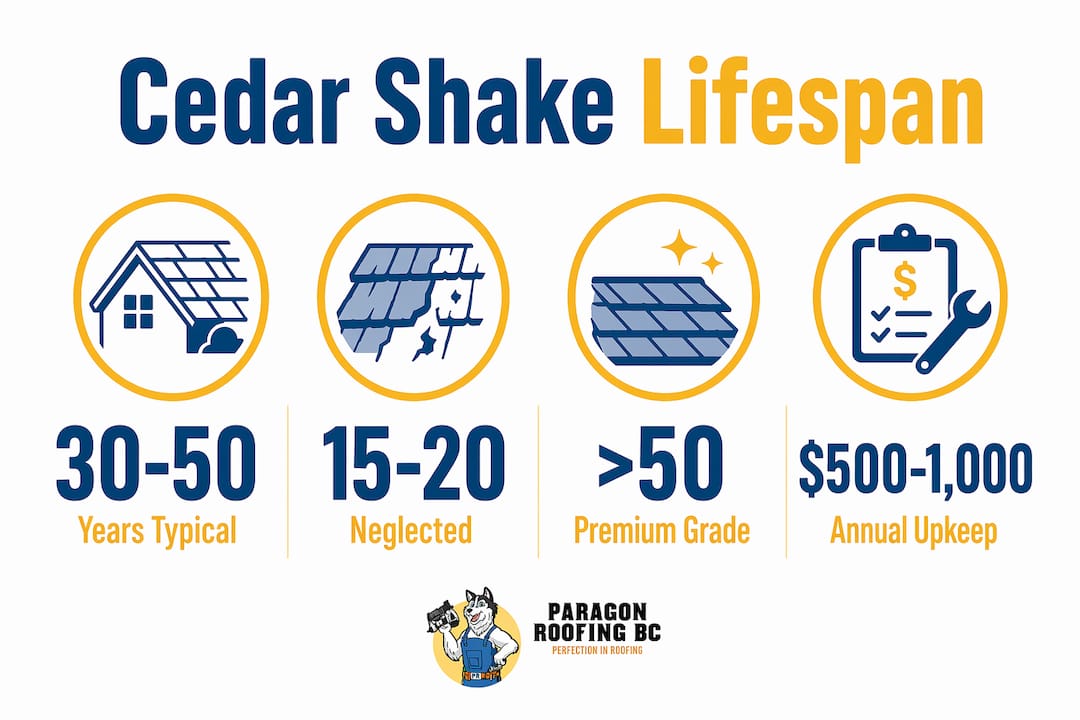
Properly maintained cedar shake roofs last between 30 and 50 years, with high-grade installations reaching beyond 50 years. Neglecting maintenance reduces that lifespan to 15–20 years. That is a 20-plus year difference driven almost entirely by how well you look after the roof.
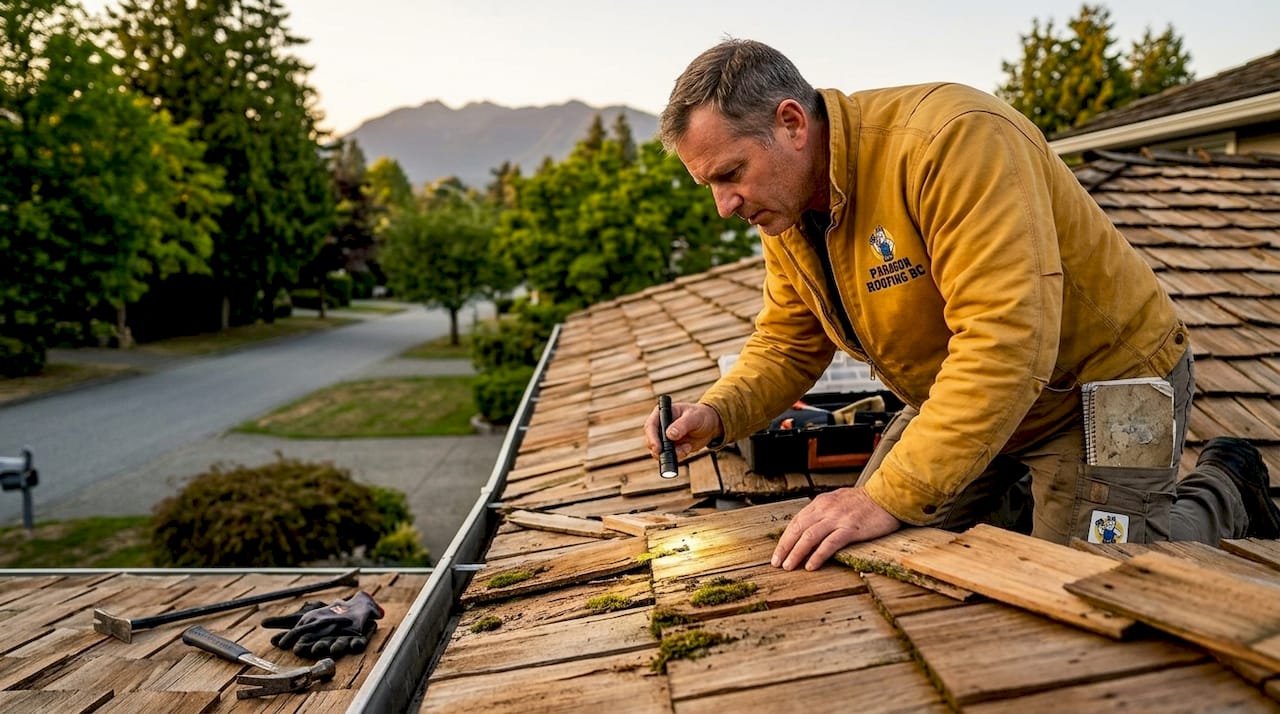
In the roofing industry, the standard term for this material is cedar shake roofing, which refers specifically to hand-split or sawn wood shakes made from western red cedar. Cedar shingles are a related but distinct product. Cedar shakes are thicker and more rugged than cedar shingles, giving them a longer service life. Shakes typically last 35–50 years; shingles run closer to 25–35 years. That thickness difference matters a great deal in a wet climate like ours.
The Lower Mainland is one of the most demanding environments for any wood roofing product. Burnaby, Coquitlam, North Vancouver, and Delta all see annual rainfall well above the Canadian average. That moisture, combined with seasonal freeze-thaw cycles, puts cedar shake roof durability under constant pressure. Knowing what you are getting into before you install is the smartest move you can make.
How does metro vancouver’s climate affect cedar shake durability?
Metro Vancouver’s climate is the single biggest threat to cedar shake roof durability. High humidity and frequent rain cause moisture to accumulate inside the wood fibres, accelerating rot, fungal growth, and decay. Wood moisture content in humid climates reaches 25–35%, compared to 15–20% in dry interior regions. That elevated moisture content creates ideal conditions for fungal decay to take hold.
Here is what the Lower Mainland climate does to a cedar shake roof over time:
- Heavy rain and standing moisture cause the wood to swell repeatedly, weakening the grain structure over years.
- Freeze-thaw cycles in North Vancouver and Coquitlam crack and warp shakes as water expands inside the wood during cold snaps.
- Coastal salt air in West Vancouver and Delta adds a secondary wear factor, though moisture remains the primary concern.
- Shade from trees and neighbouring structures slows drying time, keeping shakes wet for longer periods after rain.
- Moss and lichen growth thrive in our damp conditions and physically lift shakes away from the roof deck if left untreated.
In contrast, cedar roofs in BC’s dry interior zones, like Kamloops or Kelowna, regularly exceed 50 years in service life. The same material performs very differently depending on where it sits.
Roof pitch and attic ventilation are the two structural factors that counteract moisture damage most effectively. A steeper pitch sheds water faster and reduces the time shakes stay wet. Proper attic ventilation is the single largest determinant of cedar shake longevity because it allows the wood to dry completely between rain events. Without it, even premium cedar shakes rot from the underside up, and no topical treatment will fix that.
Pro Tip: If your home has a low-pitch roof or heavy tree cover, ask your roofer about cedar-specific breather mats and baffled attic vents. These are designed to keep air moving under the shakes and dramatically reduce underside rot in wet climates like ours.
What maintenance practices extend cedar shake roof life?
Maintenance is not optional for cedar shakes. Think of it as a structural requirement. Cedar is a managed, sacrificial material. It gives you decades of service in exchange for consistent attention. Skip that attention, and the roof ages at double speed.
Industry best practices recommend annual debris cleaning, professional inspections, and preservative treatments every 3–5 years. Following this schedule can add 10–30 years of functional life compared to a neglected roof. Here is what that looks like in practice:
- Annual debris removal. Clear leaves, pine needles, and organic matter from the roof surface and valleys every autumn. Debris holds moisture against the shakes and accelerates decay.
- Moss and algae treatment. Apply a zinc sulphate or sodium percarbonate solution once a year in late autumn. Moss physically lifts shakes and traps water underneath.
- Gutter cleaning. Clear gutters at least twice a year, in spring and autumn. Blocked gutters cause water to back up under the lower courses of shakes.
- Preservative and fire retardant treatment. Apply a penetrating wood preservative every 3–5 years. This replenishes the natural oils that cedar loses over time and slows moisture absorption.
- Professional inspection. Book a qualified roofer to inspect the roof every 2–3 years. They will catch early rot, cracked shakes, and failing flashings before those issues become full replacements.
- Selective shake replacement. Replacing individual damaged shakes is a normal part of cedar roof lifecycle management. Catching and swapping out a few shakes costs a fraction of a full replacement.
Pro Tip: Budget roughly $500–$1,000 per year for cedar shake maintenance in the Lower Mainland. That annual spend protects a roof that costs $15,000–$30,000 to replace. The maths are straightforward.
Cedar shake roofing maintenance in BC’s humid environment requires more intensive effort than in drier regions. Homeowners who commit to this schedule consistently achieve lifespans beyond 40 years. Those who treat it as optional rarely make it past 20.
How do material quality and installation affect lifespan?
The grade of cedar you install sets the ceiling on how long your roof can last. Premium No. 1 Blue Label cedar shakes contain 100% heartwood and 100% edge grain. Heartwood is the dense, resin-rich core of the tree. It resists moisture and decay far better than sapwood, which is the lighter outer wood found in lower-grade products. A No. 1 Blue Label roof installed correctly in Metro Vancouver can reach 40–50 years with proper care. A utility-grade shake roof in the same conditions may struggle to hit 20.
| Feature | No. 1 Blue Label Cedar | Standard/Utility Grade Cedar |
|---|---|---|
| Heartwood content | 100% | Partial or none |
| Edge grain | 100% | Mixed grain |
| Expected lifespan | 40–50 years | 15–25 years |
| Moisture resistance | High | Moderate to low |
| Cost | Higher upfront | Lower upfront |
| Best for | Lower Mainland climate | Dry, low-moisture regions |
Installation quality matters just as much as material grade. Natural tannins and oils in cedar provide decay resistance, but they cannot compensate for poor ventilation or incorrect nailing. Common installation mistakes that shorten cedar shake roof life include:
- Inadequate attic ventilation, which traps moisture and causes underside rot regardless of shake quality.
- Improper nailing, where over-driven nails split shakes and under-driven nails allow movement and water entry.
- Missing or incorrect interlayment, the felt or synthetic underlayment installed between shake courses to manage water flow.
- Wrong roof pitch, where cedar shakes are installed on slopes too shallow to shed water quickly.
When choosing an installer in Metro Vancouver, ask specifically about their experience with cedar shake installation in wet coastal conditions. A roofer who installs cedar in Surrey or Coquitlam regularly will understand ventilation requirements and interlayment specifications that a generalist may overlook.
When should you repair or replace a cedar shake roof?
Age alone should not determine when you replace a cedar shake roof. Professional evaluation is necessary to assess actual condition, because a well-maintained 40-year-old roof may outperform a neglected 20-year-old one. Condition is the deciding factor, not the calendar.
That said, certain signs tell you clearly that the roof needs attention. In Metro Vancouver’s climate, watch for these indicators:
- Curling or cupping shakes. This signals moisture cycling and advanced weathering. Curled shakes no longer shed water properly.
- Splitting and cracking. Freeze-thaw damage in North Vancouver and Coquitlam accelerates this. Split shakes allow water directly into the roof deck.
- Missing shakes. Wind-driven rain events, common in Delta and West Vancouver, can dislodge shakes. Even one missing shake creates a water entry point.
- Visible moss and lichen. Heavy growth means moisture is being held against the wood. If moss has been present for years without treatment, check for rot underneath.
- Dark staining or soft spots. These indicate rot has already taken hold. Soft spots on the roof deck mean the damage has progressed beyond the shakes themselves.
- Interior leaks or staining. Water showing up inside the home is a late-stage warning. By the time you see ceiling stains, the underlayment has likely failed.
Partial replacement is a legitimate and cost-effective strategy for roofs under 30 years old with isolated damage. Selective replacement of deteriorated shakes preserves roof integrity and extends life without the cost of a full tear-off. For roofs over 35 years old with widespread curling, rot, or repeated leaks, full replacement is the more practical path. Deferring that decision only adds structural damage and higher costs down the road. You can learn more about when to replace your roof and the real cost of waiting too long.
Key takeaways
A cedar shake roof in Metro Vancouver lasts 30–50 years with consistent maintenance, but climate, cedar grade, and installation quality determine where in that range your roof actually lands.
| Point | Details |
|---|---|
| Lifespan range | Maintained cedar shakes last 30–50 years; neglected roofs fail in 15–20 years. |
| Climate impact | Lower Mainland humidity and freeze-thaw cycles accelerate decay and require intensive upkeep. |
| Material grade matters | No. 1 Blue Label cedar with 100% heartwood delivers the longest service life of 40–50 years. |
| Ventilation is critical | Proper attic airflow prevents underside rot and is the top determinant of cedar shake longevity. |
| Repair vs. replace | Condition, not age, drives the decision; selective shake replacement extends life cost-effectively. |
What i’ve learned about cedar shakes after years on lower mainland roofs
Hey, it’s Harman here. After inspecting and installing cedar shake roofs across Burnaby, Coquitlam, North Vancouver, and Delta for years, I can tell you the single most common mistake homeowners make: they treat cedar like asphalt. They install it, forget about it for a decade, and then call us when the leaks start.
Cedar is not a set-it-and-forget-it material. It is more like a hardwood floor. You would not install a beautiful hardwood floor and never clean or refinish it. Cedar shakes work the same way. The wood needs to breathe, dry out, and be treated periodically to stay healthy.
The other thing I see constantly is homeowners who paid for premium No. 1 Blue Label shakes but got a mediocre installation. The best cedar in the world will fail early if the attic ventilation is wrong. I have pulled up 15-year-old premium shakes that were completely rotten on the underside because the installer skipped the breather mat and the attic had no airflow. The tannins and natural oils in cedar are genuinely impressive, but they are not a substitute for good ventilation design.
My honest advice: if you love the look of cedar and want it to last, commit to the maintenance schedule and hire someone who installs cedar regularly in wet coastal conditions. The life expectancy of cedar shake roofing in this region is absolutely achievable at 40-plus years. We see it regularly on roofs that were installed well and cared for properly. The ones that fail early almost always share the same story: wrong grade, poor ventilation, or years of skipped maintenance.
Cedar shake roofing is worth it in the Lower Mainland. Just go in with clear eyes about what it asks of you.
— Harman
Cedar shake roof services in metro vancouver from Paragonroofingbc
If you are weighing whether cedar shake roofing is the right choice for your home, or your existing cedar roof needs a professional eye, Paragonroofingbc works with cedar shake roofs across Metro Vancouver every season. We understand the specific demands of Lower Mainland weather on wood roofing, from the moss pressure in Burnaby to the freeze-thaw stress in Coquitlam.
Our team handles cedar shake installation in Vancouver using premium No. 1 Blue Label materials and proper ventilation design built for coastal conditions. We also offer drone roof inspections to assess your current cedar roof’s condition without anyone walking on ageing shakes. If your roof is approaching the end of its service life, we provide roof replacement in Coquitlam and surrounding communities. Reach out to Paragonroofingbc for an assessment and find out exactly where your cedar roof stands.
FAQ
How long do cedar shake roofs last in BC?
Cedar shake roofs in BC last 30–50 years with proper maintenance. In Metro Vancouver’s humid climate, consistent upkeep is required to reach the upper end of that range.
What shortens cedar shake roof lifespan the most?
Poor attic ventilation is the leading cause of premature failure. Without adequate airflow, moisture builds up under the shakes and causes rot regardless of cedar grade or topical treatments.
How often should cedar shake roofs be treated?
Preservative treatments should be applied every 3–5 years. Annual debris and moss removal is also required to prevent moisture retention and physical damage to the shakes.
Is cedar shake roofing worth it in metro vancouver?
Cedar shake roofing is worth it for homeowners who commit to regular maintenance. The total cost of ownership is higher than asphalt in a humid climate, but the lifespan and aesthetic value justify the investment when the roof is properly installed and maintained.
What is the difference between cedar shakes and cedar shingles?
Cedar shakes are thicker and hand-split, giving them greater weather resistance and a longer lifespan of 35–50 years. Cedar shingles are sawn smooth on both sides and typically last 25–35 years.