Large Scale Roofing in Vancouver and Surrey: Key Solutions
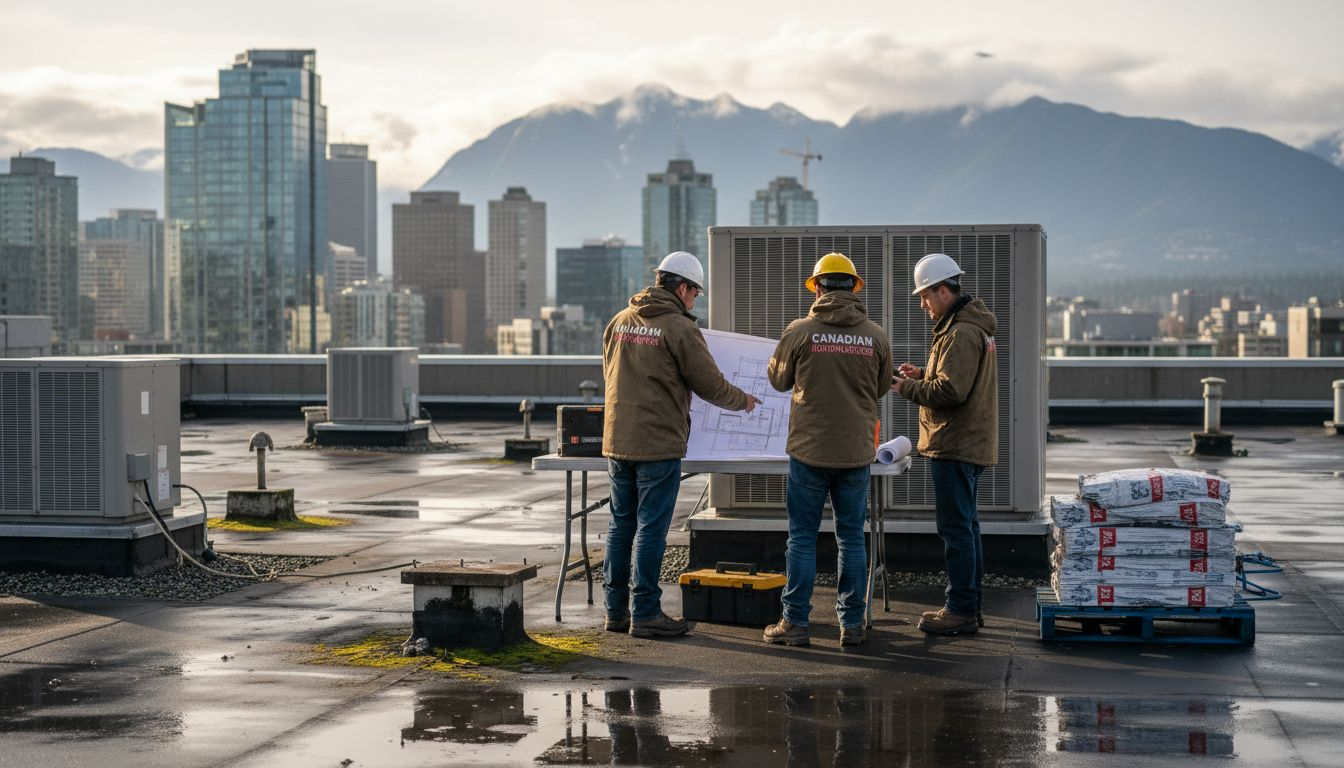
Handling multiple properties across Vancouver and Surrey often means juggling complex roofing needs that traditional solutions simply cannot resolve. For property managers and strata corporations, the demands of continuous use, strict budget limits, and stringent maintenance call for large-scale roofing strategies built on practical systems. Metal roofing stands out for its adaptability and minimal operational disruption, offering robust options that address architectural challenges and tough Canadian climate stressors. This guide clarifies what defines major projects, material choices, planning phases, legal standards, and cost management, helping you navigate high-stakes roofing decisions with confidence.
Large-Scale Roofing in Vancouver & Surrey (Strata + Commercial Guide)
Handling multiple properties across Vancouver and Surrey requires roofing strategies built for scale, performance, and long-term asset protection. Large-scale projects—often 20,000+ square feet—demand specialized planning, stakeholder coordination, and strict adherence to Canadian building code requirements to protect occupants and operations.
This short video explains why metal roofing systems, insulated metal panels, and ventilated rainscreens are often preferred for high-stakes commercial and strata buildings in BC’s climate—plus how lifecycle cost planning and supply chain strategy reduce long-term risk.
Table of Contents
- Defining Large Scale Roofing Projects
- Major Roofing Materials and Systems Used
- Project Phases: Planning to Completion
- Meeting Safety Codes and Legal Standards
- Managing Costs and Long-Term Performance
Key Takeaways
| Point | Details |
|---|---|
| Understanding Large Scale Projects | These projects involve buildings over 20,000 square feet and require strategic planning and specialized expertise. |
| Material Selection is Crucial | Choosing durable materials like Metal Roofing Systems is essential for performance in challenging Canadian climates. |
| Thorough Budget Management | Effective financial planning and phased implementation can help manage costs while meeting long-term performance expectations. |
| Regulatory Compliance is Mandatory | Adhering to Canadian National Model Codes ensures safety and quality in large-scale roofing projects. |
Defining Large Scale Roofing Projects
Large scale roofing projects represent complex infrastructure undertakings involving significant construction and maintenance challenges specific to public and commercial buildings across Vancouver and Surrey. These projects require strategic planning, specialized expertise, and comprehensive approaches that go well beyond standard residential roof replacements.
Understanding the scope of large scale roofing involves recognizing several critical characteristics:
- Projects involving buildings over 20,000 square feet
- Multiple roof sections or complex architectural designs
- Buildings used for continuous public or commercial purposes
- Roofing systems requiring minimal operational disruption
- Extensive budget considerations and phased implementation strategies
Operational Complexity defines these projects, as Canadian cities prioritize roofing systems that accommodate consistent detailing and regular inspections. The focus remains on developing practical roofing solutions that minimize interruptions to daily building functions.
Metal roofing emerges as a preferred solution for large scale projects due to its durability, ease of maintenance, and adaptability to diverse architectural requirements. Property managers and facility administrators must consider multiple factors when planning these extensive roofing initiatives, including weather resistance, long-term performance, and budget constraints.
Budget Considerations play a pivotal role in defining large scale roofing projects. These initiatives often require phased implementation strategies that distribute costs while maintaining comprehensive coverage and minimizing operational disruptions. Strategic planning becomes crucial in managing complex roofing requirements across multiple buildings or extensive commercial properties.
Pro tip: Always conduct comprehensive site assessments and develop multi-year maintenance strategies before initiating large scale roofing projects to optimize long-term performance and budget management.
Major Roofing Materials and Systems Used
Large scale roofing projects in Vancouver and Surrey demand specialized materials and systems capable of withstanding challenging Canadian environmental conditions. Modern commercial roofing materials increasingly focus on durability, performance, and compliance with strict provincial building codes.
Key roofing materials for large-scale projects include:
- Aluminum Composite Material (ACM)
- Solid Aluminum Plates
- Insulated Metal Panels (IMP)
- Metal Roofing Systems
- Ventilated Rainscreen (VRS) Cladding
These advanced materials are engineered with specific performance characteristics tailored to the demanding Canadian climate. Non-combustibility, superior thermal performance, and exceptional wind load resistance represent critical design considerations for large-scale roofing initiatives.
Metal Roofing Systems have emerged as the predominant solution for commercial and government buildings across British Columbia. Metal roofing accommodates complex environmental stressors like wind-driven rain, repeated freeze-thaw cycles, and significant snow accumulation, providing robust protection and ease of maintenance.
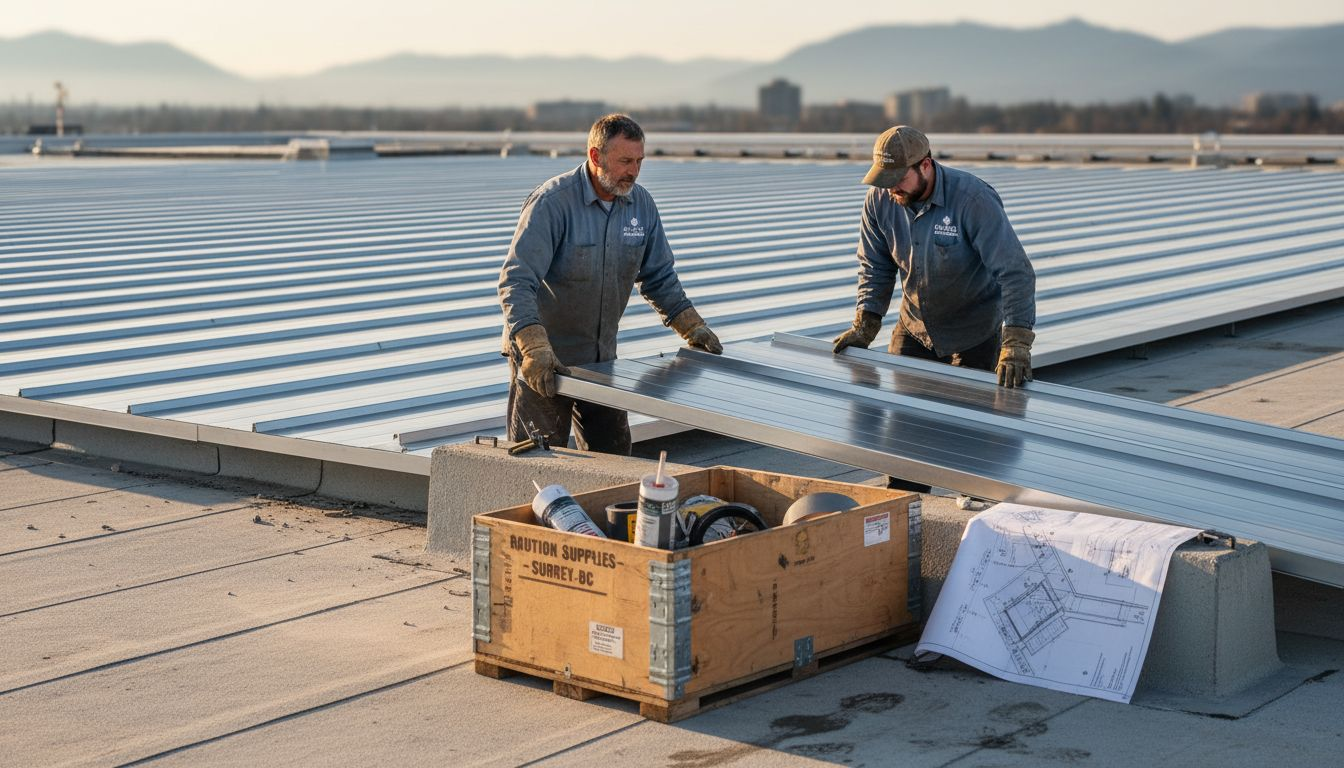
The selection of roofing materials involves comprehensive evaluation of multiple factors, including climate resistance, long-term performance, maintenance requirements, and budget constraints. Property managers must consider thermal efficiency, moisture management, and structural integrity when determining the most appropriate roofing system for their specific architectural and operational needs.
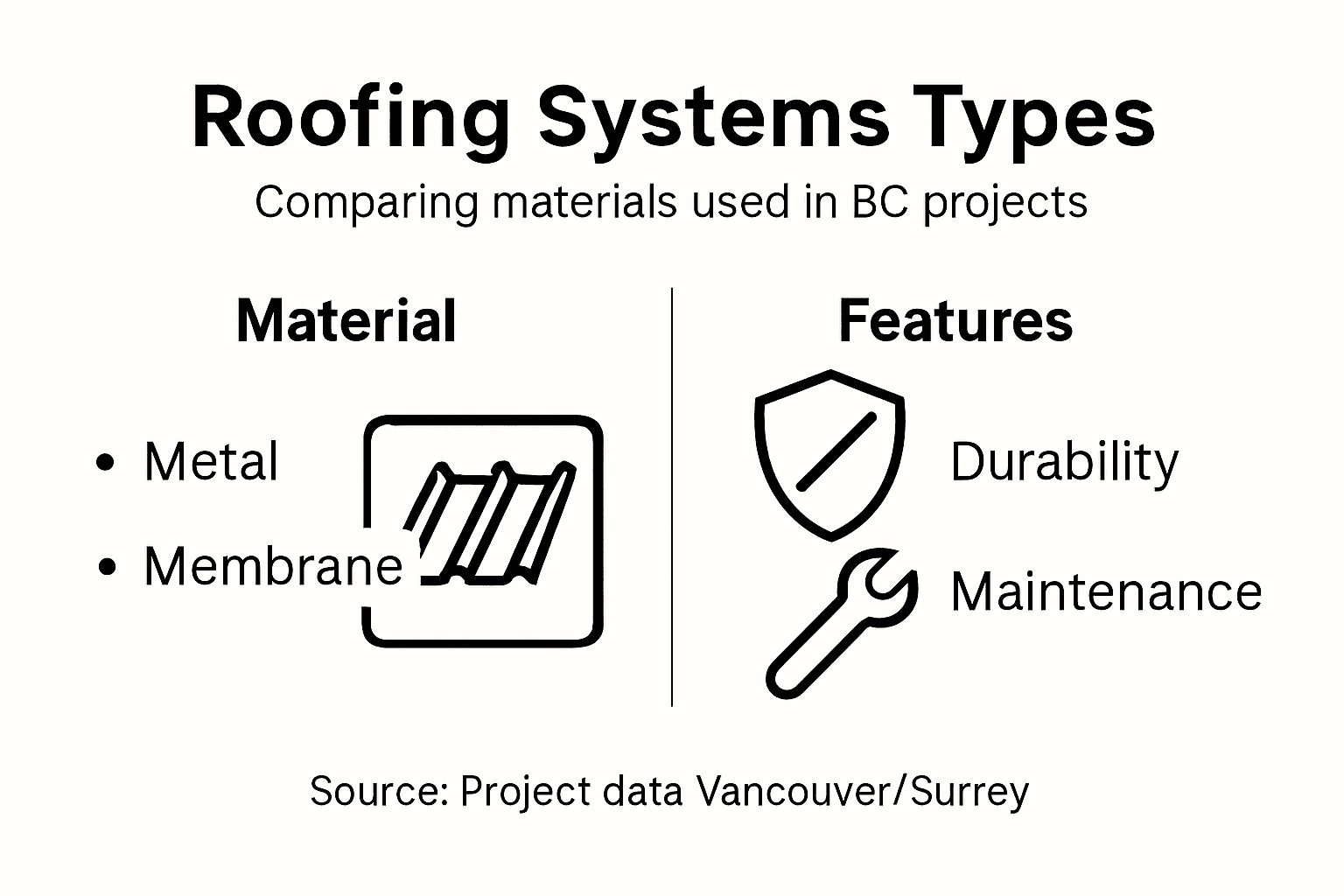
Here’s a summary of how major roofing materials support operational needs in large-scale projects:
| Material Type | Durability Benefits | Architectural Adaptability | Maintenance Impact |
|---|---|---|---|
| Aluminum Composite Panels | Corrosion resistant | Custom shapes and finishes | Minimal cleaning required |
| Solid Aluminum Plates | High structural strength | Flexible for complex designs | Long lifespan, easy repairs |
| Insulated Metal Panels | Superior thermal insulation | Supports energy efficiency | Reduced heating and cooling costs |
| Ventilated Rainscreen | Moisture management | Enhances façade performance | Prevents mould, lowers upkeep |
| Metal Roofing Systems | Withstands weather extremes | Suitable for wide spans | Fast installation, low downtime |
Pro tip: Prioritize roofing materials that offer integrated moisture management systems and have proven performance records in challenging Pacific Northwest climate conditions.
Project Phases: Planning to Completion
Large scale roofing projects for Vancouver and Surrey properties require meticulous construction planning and systematic approaches to ensure successful implementation. The complexity of these projects demands a comprehensive strategy that addresses multiple technical, logistical, and operational challenges.
Key project phases typically include:
- Initial Site Assessment
- Technology and Material Selection
- Detailed Design Development
- Regulatory Compliance Review
- Resource and Subcontractor Coordination
- Phased Implementation
- Final Inspection and Validation
Each phase requires careful consideration of site-specific conditions, environmental factors, and project-specific requirements. Stakeholder Coordination plays a critical role in managing expectations, budgetary constraints, and operational continuity throughout the project lifecycle.
Design and construction processes demand an integrated approach that emphasizes iterative review and adaptability. Property managers must balance multiple considerations, including safety protocols, regulatory compliance, and minimizing disruption to existing building operations.
Successful large-scale roofing projects require continuous communication between design teams, contractors, and property management. This collaborative approach ensures that technical specifications align with operational requirements, budget constraints, and long-term performance expectations.
Reviewing typical phases highlights distinct project management priorities:
| Phase | Critical Task | Stakeholder Focus |
|---|---|---|
| Site Assessment | Assess physical and risk factors | Ensure accurate data collection |
| Design Development | Establish technical specifications | Align with regulatory goals |
| Implementation | Execute work in stages | Minimise business disruption |
| Inspection & Handover | Verify compliance and quality | Confirm performance standards |
Pro tip: Develop a comprehensive project communication matrix that clearly defines responsibilities, reporting structures, and decision-making protocols for all project stakeholders.
Meeting Safety Codes and Legal Standards
Canadian National Model Codes establish comprehensive frameworks governing large-scale roofing projects in British Columbia, ensuring stringent safety, environmental, and structural standards. These regulatory guidelines provide critical benchmarks for protecting public safety and maintaining high-quality construction practices across Vancouver and Surrey.
Key safety and legal compliance requirements include:
- Structural Load Specifications
- Fire Protection Standards
- Accessibility Requirements
- Environmental Performance Metrics
- Worker Safety Protocols
- Material Performance Certifications
- Climate Resilience Guidelines
Occupational Safety represents a crucial dimension of legal compliance for large-scale roofing projects. Construction project safety regulations mandate specific protective equipment, work platform standards, and comprehensive risk management strategies to safeguard workers and project stakeholders.
Property managers and roofing contractors must navigate a complex landscape of provincial and national regulations. This requires deep understanding of technical standards, ongoing training for personnel, and systematic documentation demonstrating adherence to evolving safety codes and legal requirements.
Implementing robust safety management systems involves continuous education, regular site inspections, and proactive risk mitigation strategies. Successfully meeting legal standards demands a comprehensive approach that integrates technical expertise, regulatory knowledge, and a commitment to protecting both workers and building occupants.
Pro tip: Develop a comprehensive compliance checklist that tracks all safety code requirements and is updated annually to reflect the latest regulatory changes.
Managing Costs and Long-Term Performance
Large-scale roofing costs in Canada are influenced by complex economic factors requiring strategic financial planning and proactive management approaches. Property managers must develop comprehensive strategies that balance immediate expenses with long-term performance expectations.
Key cost management considerations include:
- Material Procurement Strategies
- Supply Chain Diversification
- Contingency Fund Allocation
- Labour Market Monitoring
- Performance Lifecycle Assessment
- Insurance and Risk Management
- Technology Investment
Strategic Financial Planning demands careful evaluation of multiple economic variables. Construction cost trends reveal significant regional variations, particularly in British Columbia, where material and labour costs can fluctuate dramatically.
Successful cost management requires a holistic approach that integrates financial forecasting, material selection, and long-term performance metrics. Property managers must develop nuanced strategies that account for potential market volatilities while maintaining high-quality roofing infrastructure.
Comprehensive performance tracking involves regular assessments, predictive maintenance protocols, and ongoing technological evaluations. This approach ensures that initial investments translate into sustainable, reliable roofing systems that provide consistent value over extended periods.
Pro tip: Implement a dynamic budgeting model that includes annual performance reviews and allows for flexible resource allocation based on emerging technological and market conditions.
Expert Large Scale Roofing Solutions Tailored for Vancouver and Surrey
Managing large scale roofing projects involves navigating complex challenges such as budget constraints, maintaining operational continuity, and ensuring compliance with strict Canadian safety codes. Property managers and business owners face the pressure of selecting durable materials like metal roofing systems that withstand the Pacific Northwest climate while minimizing disruptions to critical operations. At Paragon Roofing BC, we understand these specific pain points and offer professional roofing services designed to meet these demanding requirements.
Benefit from our expertise in:
- Strategic project planning and phased implementations
- Use of advanced materials including metal roofing tailored for commercial and public buildings
- Comprehensive compliance and safety management aligned with Canadian National Model Codes
Ready to secure your building with a roofing partner who truly understands large scale roofing? Visit Paragon Roofing BC today to schedule your free roof inspection. Discover how our detailed approach and local expertise can protect your investment and ensure long-term performance. Don’t let roofing challenges slow your operations – take the first step toward a reliable, expertly managed roofing project now.
Explore our full range of commercial roofing services and learn how we make complex roofing projects simpler for property managers and owners across Vancouver and Surrey.
Frequently Asked Questions
What are the key characteristics of large scale roofing projects?
Large scale roofing projects typically involve buildings over 20,000 square feet, complex architectural designs, and the need for minimal operational disruption. They also require comprehensive budget considerations and phased implementation strategies to manage costs effectively.
What are the benefits of using metal roofing systems for large scale projects?
Metal roofing systems offer exceptional durability, ease of maintenance, and adaptability to various architectural requirements. They are designed to withstand challenging environmental conditions, providing robust protection against wind-driven rain and heavy snow loads.
How do I choose the right roofing materials for a large scale project?
Selecting the appropriate roofing materials involves evaluating factors such as climate resistance, long-term performance, maintenance needs, and budget constraints. Consider materials with proven performance records in demanding conditions, which include moisture management systems and thermal efficiency features.
What are the essential phases in managing large scale roofing projects?
Key phases in managing large scale roofing projects include initial site assessments, technology and material selection, detailed design development, regulatory compliance review, resource coordination, phased implementation, and final inspection. Each phase demands careful planning and stakeholder coordination to ensure successful project execution.