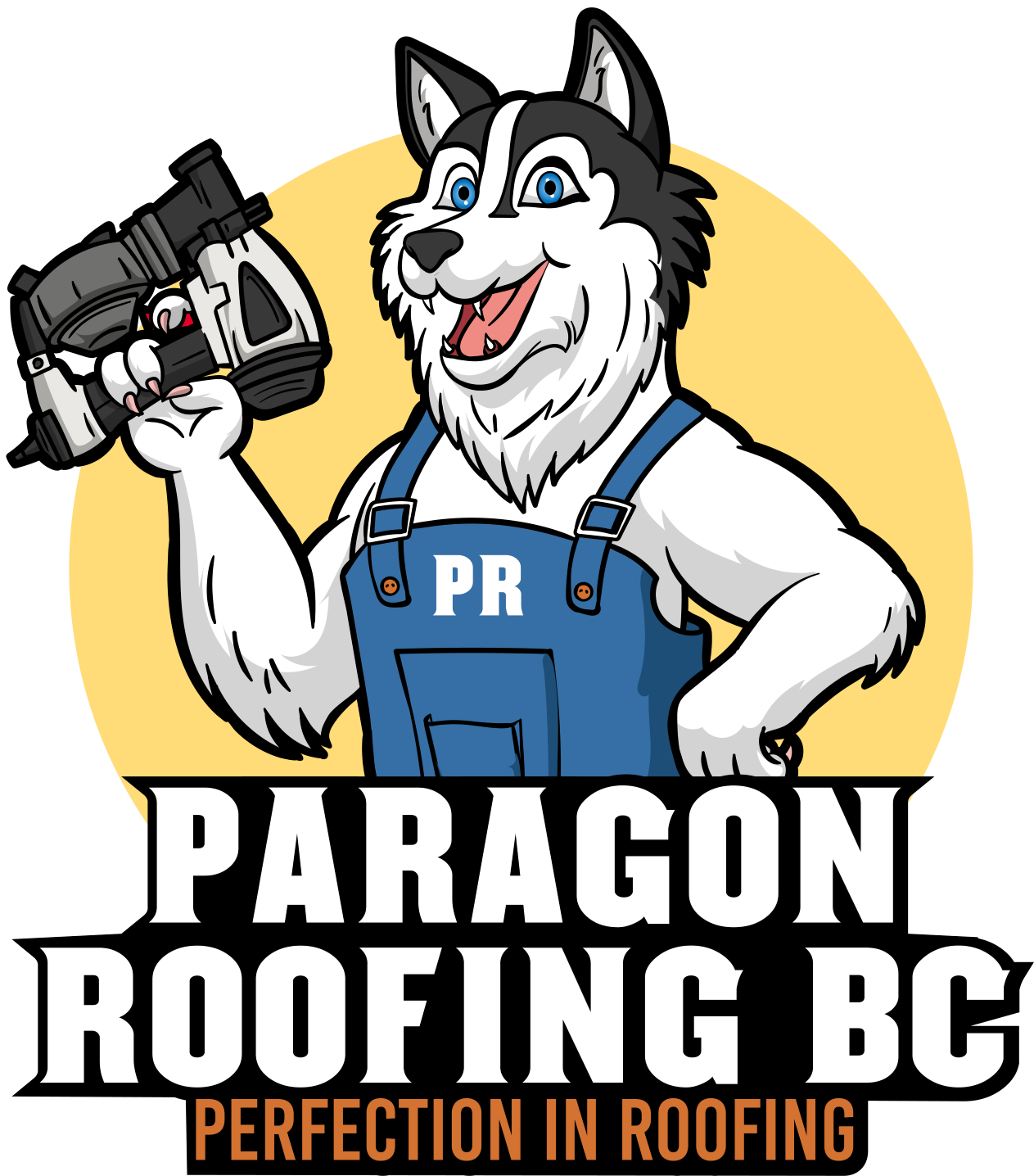
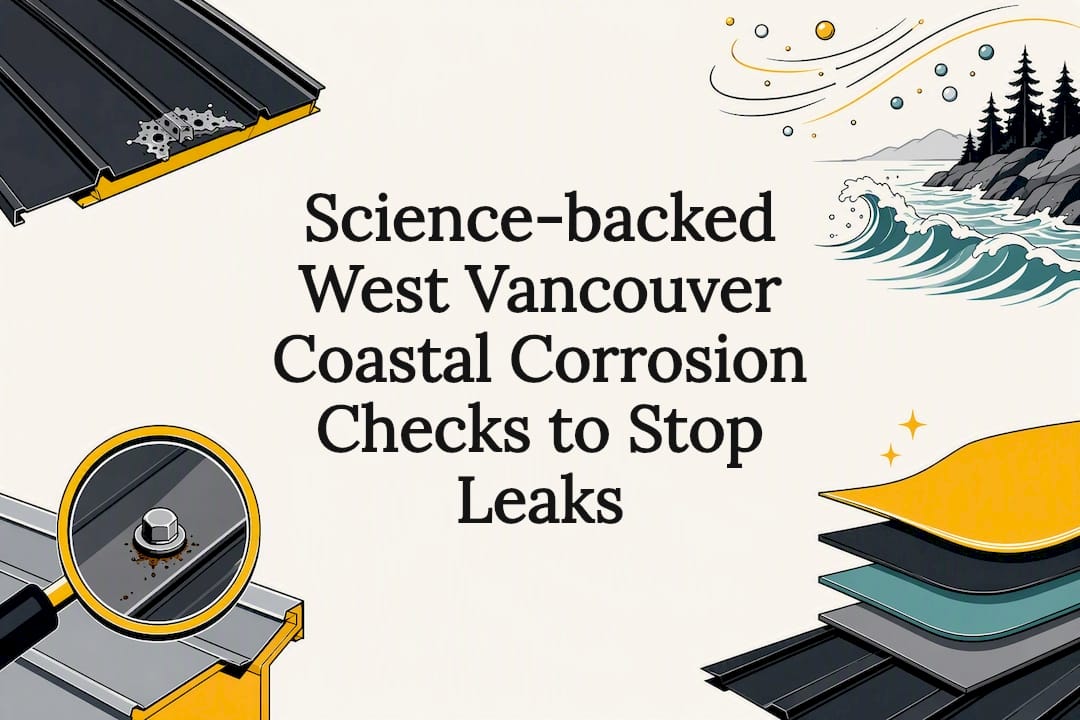
Science-backed West Vancouver Coastal Corrosion Checks to Stop Leaks
Science-backed West Vancouver Coastal Corrosion Checks to Stop Leaks
If your West Vancouver property sits anywhere near the water or catches wind off Burrard Inlet, salt-air corrosion is a real and ongoing risk to your roof’s metal components. Check gutters, fasteners, and flashings now, and book a professional assessment the moment you spot rust streaking, pitting, or a fastener head that looks chalky or swollen. Paragon Roofing BC sees this pattern constantly in waterfront and mid-slope homes, and the National Research Council Canada backs up why it happens faster here than most homeowners expect.
TL;DR:
- Properties near open water, especially with direct wind exposure or sheltered features, face faster and more severe salt-air corrosion on roof metals.
- Salt crystals penetrate coating defects invisibly, often initiating pitting at fasteners and cut edges well before surface rust appears.
- Using aluminum or Galvalume panels with PVDF finishes and stainless steel fasteners significantly extends a roof’s lifespan in coastal conditions.
- Regular inspections include monthly visual checks, seasonal salt rinsing, and annual professional assessments focusing on fastener integrity and coating condition.
- Immediate repair of loose fasteners, compromised flashings, or early corrosion spots saves costs and prevents leaks more effectively than delayed full replacements.
Table of Contents
- Where West Vancouver coastal corrosion hits hardest
- How salt air corrodes metal roofing and what to look for
- Choosing corrosion-resistant materials for coastal roofs
- How often should you inspect a coastal roof in West Vancouver?
- When corrosion needs a professional, not a patch
- What I see contractors miss on West Vancouver roofs
- Get a coastal corrosion assessment for your West Vancouver roof
- Sources
- FAQ
Where West Vancouver coastal corrosion hits hardest
Not every West Vancouver home is exposed equally, and that surprises a lot of homeowners. A property two blocks from the water can corrode noticeably faster than one sitting right on the shore, depending on wind funnels, tree cover, and how the roof is shaped.
Airborne salt concentration drops off quickly as you move inland, but terrain and shelter rewrite that rule constantly. The CFSEI technical note on ocean proximity confirms that wind direction and local shielding change the width of the high-corrosion zone, so a distance-only estimate misses a lot. Two houses on the same block can see very different pitting rates because of how one sits relative to a hedge, a hill, or a neighbouring building.
Here’s what actually raises your risk in West Vancouver specifically:
- Direct line of sight to open water or a wind funnel off the inlet
- Elevated sites exposed to driving wind-driven rain and salt spray
- Sheltered features like dead valleys, box gutters, and parapet returns that trap moisture rather than shed it
- South and southwest orientations that catch prevailing weather
- Older galvanized flashing or fasteners installed before coastal-grade specs were common
If two or more of those apply to your property, treat your roof metal as higher priority for inspection than the average Lower Mainland home.
How salt air corrodes metal roofing and what to look for
Salt-air corrosion is electrochemical, not just surface grime. Salt crystals dissolve in coastal moisture and form an electrolyte on the metal surface. Chloride ions in that electrolyte penetrate coatings at microscopic weak points and start pitting the metal underneath, often while the surface still looks fine, according to NRC corrosion research.
That’s the part homeowners underestimate: coatings can fail invisibly. A panel or flashing piece can look intact from the ground while chloride is already working through a coating defect below.
Humidity matters more than people think. Laboratory work published through IOPscience in 2014 found that corrosion can initiate at relative humidity as low as roughly 33%, with rates climbing sharply above moderate relative humidity levels. West Vancouver’s fog, marine layer, and near-constant coastal humidity put a lot of roofs in that accelerated zone for much of the year, not just during storms.
Watch for these signs during any roof walk or ground-level check:
- Rust streaking below fastener heads or seams
- Blistering or bubbling paint on metal flashing
- Pitting or white powdery corrosion at cut edges of panels
- Gutters with rust holes or flaking at the seams
- Flashing that’s lifted, discoloured, or crumbling at the joints
Onset timing varies widely by exposure, but coastal-exposed fasteners and cut edges are consistently the first places to show damage, often well before the field of a panel does.
Choosing corrosion-resistant materials for coastal roofs
Bare or lightly coated steel has no business on a West Vancouver roof facing open exposure. It corrodes fast, and once pitting starts at a cut edge or fastener hole, it spreads underneath the coating where you can’t see it. Manufacturer and building-science guidance for coastal metal roofing consistently points toward aluminum or Galvalume panels with a PVDF finish as the stronger long-term choice for exposed sites.
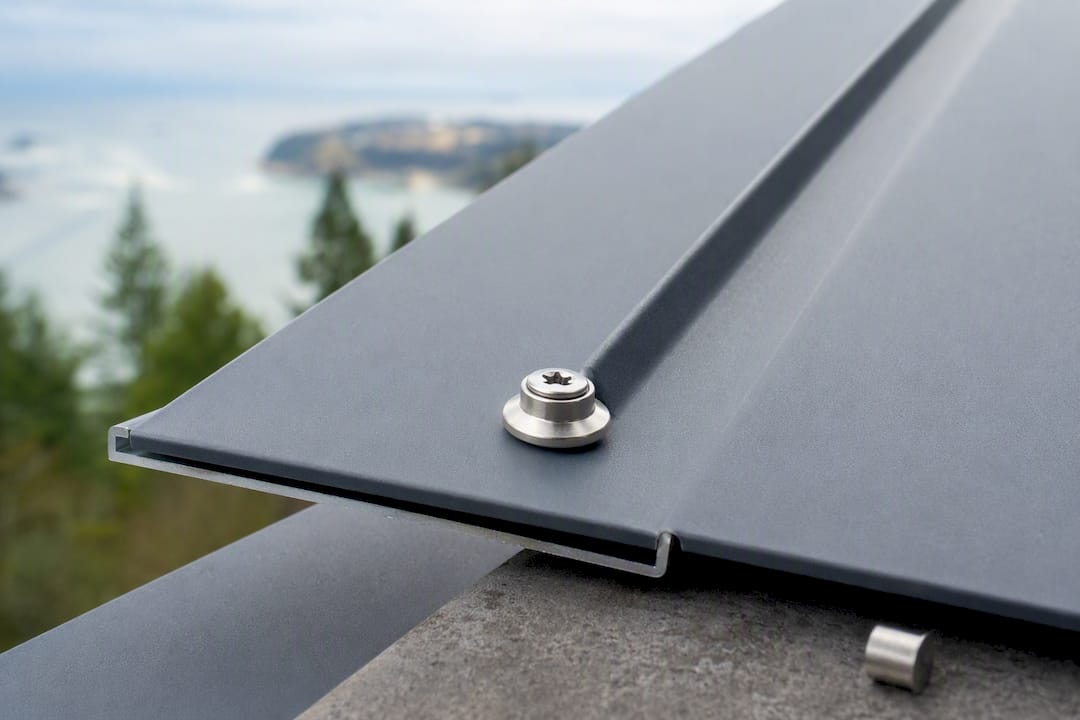
Fasteners are where a lot of otherwise good installations fail. Standard coated carbon steel screws deplete their protective layer quickly in salt air, then rust from the head down and stain everything below them. Stainless steel is the fix: Type 304 as a baseline, and a higher grade stainless for anything close to open water or heavy spray exposure.
A few specification rules worth locking in with any roofer you hire:
- Factory-finished trim and flashing over field-cut and field-painted pieces wherever possible
- Thicker zinc coatings on galvanized components, since doubling coating thickness roughly doubles the protection window according to CFSEI guidance
- Sealant rated for UV and salt exposure at every flashing lap, reapplied on a schedule rather than only when it visibly fails
- Cut edges primed or capped rather than left raw
Pro Tip: Ask your contractor for the fastener spec in writing before installation starts. “Stainless” alone isn’t specific enough. You want the grade (304 or 316) on the invoice, not just the sales pitch.
Realistic coastal lifespans vary by product and exposure severity, but PVDF-coated aluminum and Galvalume systems installed with stainless fasteners generally outlast bare or standard-coated steel by a wide margin in salt-air conditions. For a broader material comparison, our guide to roofing materials for BC properties covers trade-offs beyond corrosion resistance alone.
How often should you inspect a coastal roof in West Vancouver?
A defensible maintenance plan doesn’t need to be complicated, but it does need to be consistent, especially for strata councils that need a paper trail.
- Monthly (or after any significant windstorm): Walk the perimeter and check visible gutters, downspouts, and flashing for streaking, debris buildup, or standing salt residue. Photograph anything that looks off, with a date stamp.
- Seasonally: Rinse exposed metal surfaces with fresh water to remove accumulated salt, particularly after dry spells followed by storms when salt concentration builds up on surfaces. Clear drains and scuppers of debris that traps moisture against metal.
- Annually, by a professional: Check fastener condition and torque, map any visible pitting against the previous year’s photos, and assess coating condition on flashings and panels. Keep this report in strata or property management files. It matters for insurance conversations and for budgeting future repairs.
- As needed: Replace individual corroded fasteners with stainless equivalents as soon as they’re spotted, rather than waiting for a full re-fastening project. Re-coat or replace flashing sections showing early failure before they become leak points.
That last step is the one most owners skip, and it’s the one that actually slows corrosion instead of just monitoring it. Targeted stainless fastener swaps and localized re-coating cost far less than waiting for a full flashing replacement after a leak develops. Our West Vancouver box gutter inspection guide walks through what a thorough seasonal check looks like on the ground.
When corrosion needs a professional, not a patch
Some corrosion damage is safe for a property owner to manage directly. Rinsing salt residue off exposed panels, clearing scuppers and gutters of debris, and photographing developing rust spots for a maintenance log are all reasonable DIY tasks that don’t require a ladder crew.
Other signs mean it’s time to call in a contractor:
- Through-thickness pitting you can see light through or that’s created a hole
- Loose, rusted, or backed-out fasteners that are already causing leaks
- Flashing seams that have separated or corroded at the joint
- Gutters with rust-through at the seams or hangers pulling away from fascia
A proper inspection scope should cover fastener-by-fastener assessment in high-exposure zones, coating condition mapping, and a clear recommendation on repair versus targeted material upgrade. Cost drivers typically come down to access difficulty, how much of the roof needs upgraded fasteners or flashing, and how far the pitting has progressed. Paragon Roofing BC handles corrosion assessments and repairs across West Vancouver’s coastal properties, from single-family homes to strata buildings, and our roof leak detection and repair service covers exactly this kind of diagnostic work.
What I see contractors miss on West Vancouver roofs
The most common mistake isn’t material choice. It’s under-specifying fasteners on an otherwise good coastal roofing job, then treating sheltered dead valleys as low-priority because they’re “protected.” Sheltered spots trap salt and moisture longer than open exposure, which flips the risk entirely…
Give any inspector this short checklist: fastener grade and torque check, dead valley and parapet inspection, cut-edge condition, and photo documentation with dates. If they skip any of the four, ask why.
— Harman
Get a coastal corrosion assessment for your West Vancouver roof
Paragon Roofing BC is the direct local option for West Vancouver property owners who’d rather have a corrosion issue diagnosed and fixed properly than keep patching symptoms. We handle corrosion assessments, targeted stainless fastener replacement, localized re-coating, and full material upgrades to aluminum or Galvalume systems, on both residential homes and commercial and strata buildings.
Our crews have direct experience with West Vancouver’s trickier microzones, including dead valleys and box gutters that trap salt longer than an open roof field.
If you’ve spotted rust streaking, a corroded fastener, or a flashing seam that’s starting to lift, get it looked at before the next storm season adds to it. Book a residential roofing assessment in Vancouver or reach out about our commercial roofing services if you’re managing a strata or commercial property. A proper inspection now is a lot cheaper than a flashing replacement after a leak finds its way inside.
Sources
FAQ
How often should I inspect my West Vancouver roof for corrosion?
Check visible metal monthly and after major windstorms, rinse salt off exposed surfaces seasonally, and schedule a professional inspection annually to check fastener condition and coating wear.
What fasteners resist salt-air corrosion best?
Stainless steel is the standard: Type 304 for general coastal exposure, Type 316 for properties with direct sightlines to open water or heavy spray.
Does washing salt off my roof actually help?
Yes. Rinsing exposed metal with fresh water reduces the salt residue that forms the electrolyte driving chloride-based pitting, particularly after dry spells followed by storms.
What signs mean I should call a roofing contractor?
Through-thickness pitting, loose or rust-stained fasteners causing leaks, and separated or corroded flashing seams all warrant a professional assessment rather than a DIY patch.
How close to the shore counts as high risk in West Vancouver?
There’s no fixed distance, since terrain, wind funnels, and shelter change exposure block by block. A property with direct wind exposure or sheltered dead valleys can face elevated risk even set back from the waterfront.
Recommended
Our Roofing Blog
Have more questions about roofing?
Check out our FAQs or give us a call today to speak to an expert roofer in Vancouver Lower Mainland, BC. We're here to help our neighbours make educated decisions about their roof. For our team, we value helping clients save money while making their roofs last.