Industrial Roofing Explained: Durability, Safety, Compliance
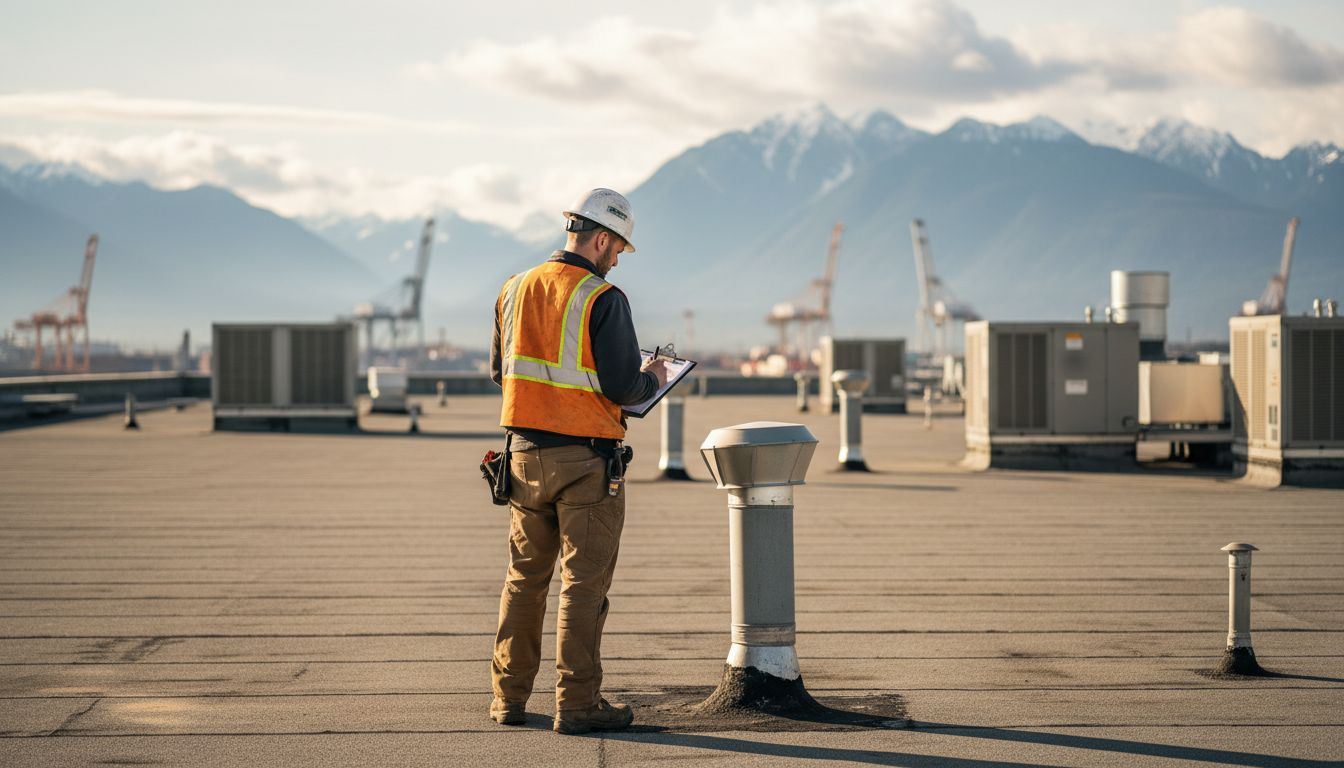
Most Canadian industrial facilities in British Columbia face intense challenges from unpredictable rain, heavy snow, and constant temperature swings. Facility managers know that even minor roofing failures can shut down operations and drive up costs. Reliable industrial roofing is not just about durability but also staying compliant with local building codes and safety standards. This guide highlights key considerations for Canadian businesses seeking long-term protection and regulatory peace of mind in British Columbia’s demanding climate.
Table of Contents
- Defining Industrial Roofing In British Columbia
- Types Of Industrial Roofing Systems Available
- Material Choices And Performance Factors
- Safety, Building Codes, And Industry Standards
- Lifecycle Costs And Maintenance Planning
- Avoiding Common Industrial Roofing Mistakes
Key Takeaways
| Point | Details |
|---|---|
| Understanding Local Challenges | Industrial roofing in British Columbia requires knowledge of local climate factors, including heavy rainfall and variable temperatures, to ensure durability and performance. |
| Material Selection Matters | Choosing the right materials, such as metal or advanced membranes, impacts long-term structural integrity and performance in challenging environments. |
| Importance of Compliance | Adhering to local building codes and safety regulations is essential to ensure that industrial roofs withstand extreme weather and provide occupant safety. |
| Proactive Maintenance Strategy | Regular inspections and maintenance planning are crucial to extend the lifespan of industrial roofing systems and prevent costly repairs. |
Defining Industrial Roofing in British Columbia
Industrial roofing in British Columbia represents a specialized discipline designed to protect large-scale commercial and industrial facilities against the province’s challenging environmental conditions. Roofing practices specific to British Columbia demand comprehensive understanding of local climate challenges, including intense rainfall, significant snow loads, and variable temperature ranges.
Unlike residential roofing systems, industrial roofs are engineered for durability and performance under extreme conditions. These structures typically feature low-slope designs constructed from robust materials like metal, bitumen membranes, and advanced synthetic composites. The primary objective remains protecting substantial facilities from moisture intrusion, thermal stress, and structural degradation while meeting stringent local building codes and safety regulations.
In the Lower Mainland, industrial roofing systems must address unique environmental factors such as coastal moisture, wind exposure, and rapid freeze-thaw cycles. Contractors specializing in these installations require extensive technical knowledge and precise execution strategies. Key characteristics include enhanced waterproofing, superior thermal insulation, and engineered load-bearing capabilities that withstand British Columbia’s demanding weather patterns.
Pro tip: When selecting an industrial roofing contractor in British Columbia, always verify their understanding of local building codes, regional climate challenges, and documented experience with complex commercial roof installations.
Types of Industrial Roofing Systems Available
British Columbia’s diverse industrial landscape demands a range of sophisticated roofing solutions tailored to withstand the region’s challenging environmental conditions. The RCABC Roofing Practices Manual outlines several critical industrial roofing systems that provide robust protection for commercial and industrial facilities across the province.
The primary industrial roofing systems available include Built-Up Roofing (BUR), which features multiple layers of bitumen and reinforcing fabrics, and Modified Bitumen Systems, offering enhanced flexibility and durability. Single-ply membrane technologies like Thermoplastic Polyolefin (TPO), Ethylene Propylene Diene Monomer (EPDM), and Polyvinyl Chloride (PVC) membranes provide excellent weather resistance and are particularly suited to the Lower Mainland’s variable climate conditions.
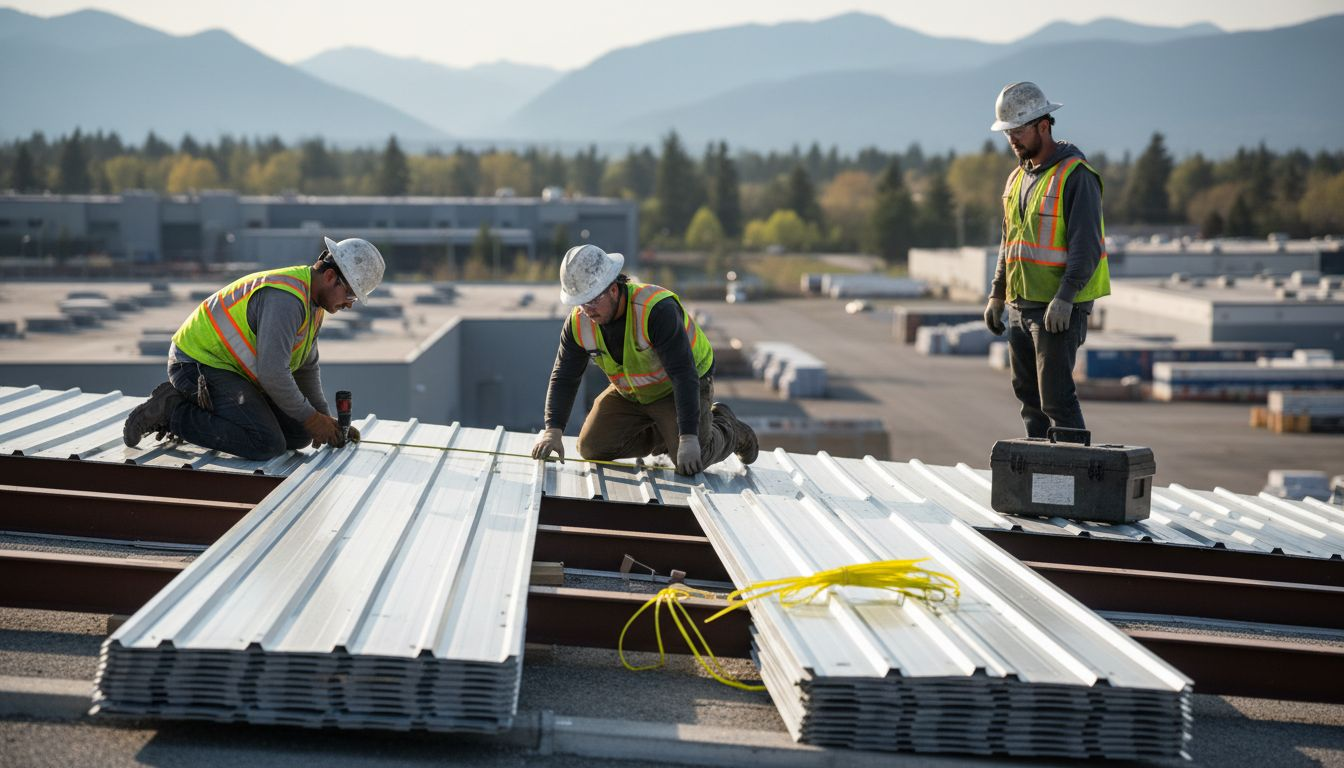
Metal roofing systems represent another critical option for industrial applications, featuring exceptional longevity and performance. These systems include standing seam, corrugated, and metal panel configurations that can withstand heavy snow loads, high winds, and rapid temperature fluctuations characteristic of British Columbia’s regions. Additionally, green roofing systems are emerging as an innovative solution, providing environmental benefits alongside robust structural protection for industrial facilities.
Here’s a comparison of major industrial roofing system types used in British Columbia and their key business impacts:
| Roofing System Type | Durability | Climate Adaptability | Maintenance Complexity |
|---|---|---|---|
| Built-Up Roofing (BUR) | High (multi-layered) | Good for rainfall and snow | Moderate; regular inspections needed |
| Modified Bitumen | Excellent with flexibility | Strong UV and thermal endurance | Moderate; membrane repairs as needed |
| Single-Ply Membrane (TPO/EPDM/PVC) | Good, varies by material | Resists variable temperatures | Low; easy replacement sections |
| Metal Roofing | Exceptional longevity | Handles heavy snow and wind | Low; periodic inspections recommended |
| Green Roofing | Sustainable, protects substrate | Improves insulation and drainage | High; plant and irrigation care |
Pro tip: When selecting an industrial roofing system, always consider local climate factors, building usage, maintenance requirements, and long-term performance characteristics specific to British Columbia’s unique environmental conditions.
Material Choices and Performance Factors
Material selection for industrial roofing in British Columbia represents a critical decision that directly impacts long-term structural integrity and performance. Material efficiency considerations play a crucial role in determining the optimal roofing system, balancing durability, environmental impact, and lifecycle costs for industrial facilities across the province.
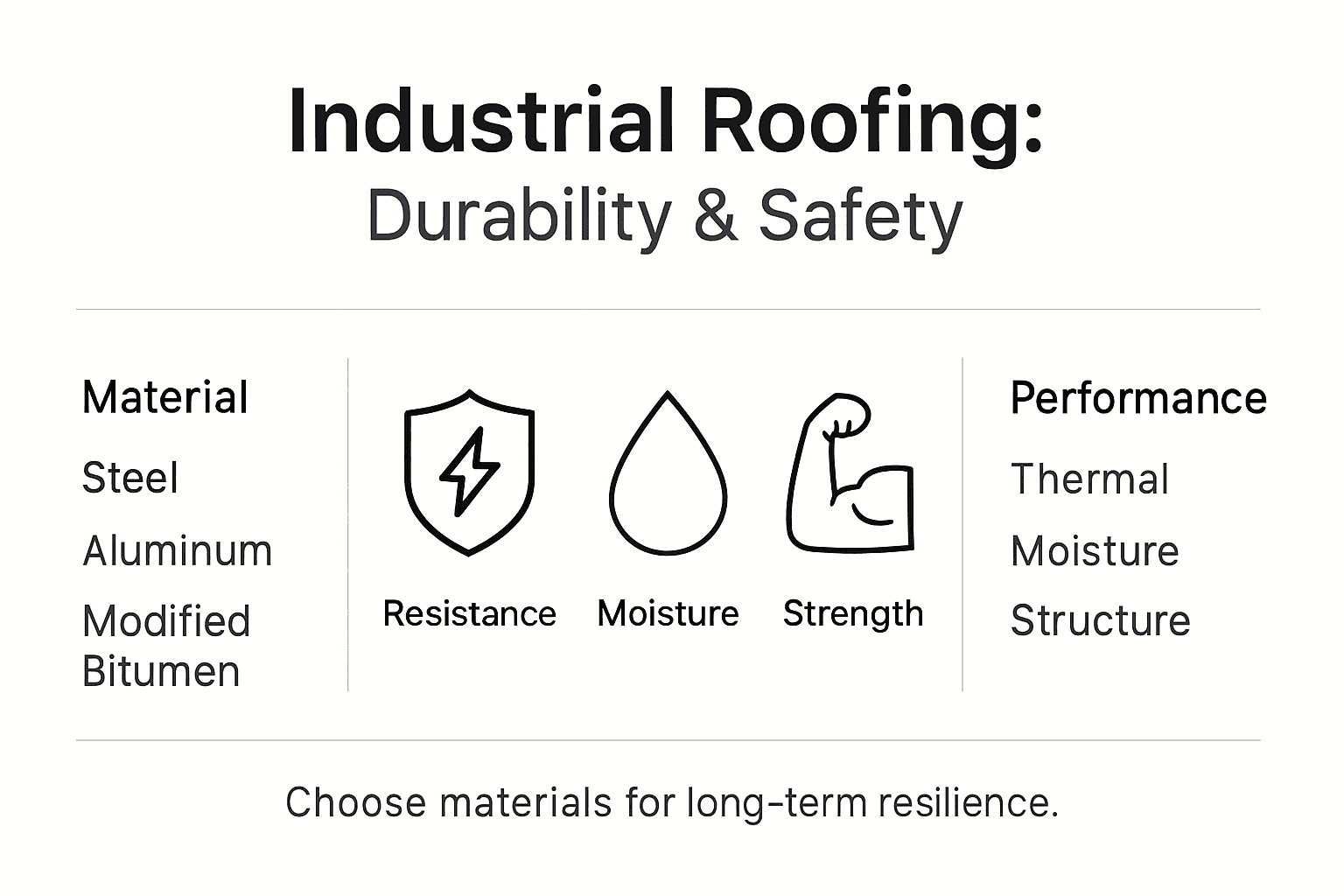
The primary performance factors include thermal resistance, moisture protection, and structural resilience. Steel and aluminum alloys emerge as preferred materials for metal roofing systems, offering exceptional strength-to-weight ratios and remarkable durability against British Columbia’s extreme weather conditions. Reinforced bitumen membranes and thermoplastic materials provide alternative solutions, each with unique advantages in managing temperature fluctuations, UV exposure, and wind resistance typical in the Lower Mainland’s challenging climate.
Advanced industrial roofing materials now incorporate sophisticated technologies that enhance performance beyond traditional expectations. Reflective coatings, integrated thermal insulation, and self-healing membrane technologies represent cutting-edge innovations that improve energy efficiency, reduce maintenance requirements, and extend the operational lifespan of industrial roofing systems. These material advancements address critical challenges such as thermal expansion, moisture infiltration, and environmental degradation that industrial facilities regularly encounter.
For quick reference, here are performance factors and their impact on long-term industrial roofing success in British Columbia:
| Performance Factor | Business Impact | Typical Solution |
|---|---|---|
| Thermal Resistance | Reduces energy costs and strain | Metal alloys, insulated membranes |
| Moisture Protection | Prevents costly water damage | Bitumen, waterproof coatings |
| Structural Resilience | Supports heavy loads, wind, snow | Engineered metal, reinforced systems |
| UV Stability | Extends material lifespan | Reflective coatings, PVC/TPO membranes |
Pro tip: Consult with local roofing specialists who understand British Columbia’s specific environmental challenges to select materials that offer the most appropriate balance between performance, durability, and long-term cost-effectiveness.
Safety, Building Codes, and Industry Standards
Safety in industrial roofing is paramount, with comprehensive national building standards establishing critical guidelines for structural integrity, occupant protection, and environmental performance. The National Building Code of Canada provides a rigorous framework that addresses the unique challenges of industrial roofing systems, particularly in demanding regions like British Columbia.
Key safety considerations include load-bearing capacity, fire resistance, thermal performance, and moisture management. Industrial roof designs must withstand extreme environmental conditions specific to the Lower Mainland, including heavy snow loads, intense rainfall, and significant wind exposure. Building codes mandate precise engineering specifications for material selection, installation techniques, and structural reinforcement to ensure maximum safety and long-term durability.
Compliance with industry standards involves multiple layers of regulatory oversight. Provincial building regulations, municipal bylaws, and WorkSafeBC guidelines intersect to create a comprehensive safety ecosystem for industrial roofing projects. These standards cover critical aspects such as worker safety during installation, structural load calculations, fire protection requirements, and environmental performance metrics that protect both the facility and its surrounding environment.
Pro tip: Always engage a certified roofing professional who understands local building codes and can navigate the complex regulatory landscape specific to British Columbia’s industrial roofing requirements.
Lifecycle Costs and Maintenance Planning
Lifecycle planning for industrial roofing systems represents a strategic approach to managing long-term performance and financial investment for industrial facilities in British Columbia. Understanding the total cost of ownership extends far beyond initial installation, encompassing ongoing maintenance, potential repairs, and eventual replacement strategies that directly impact operational budgets and facility performance.
Maintenance planning involves a comprehensive approach that anticipates potential challenges specific to the Lower Mainland’s unique environmental conditions. Regular inspections, proactive repairs, and systematic maintenance scheduling can significantly extend roof lifespan, preventing costly emergency interventions. Critical maintenance activities include annual professional assessments, debris removal, drainage system checks, and immediate addressing of minor damage before it escalates into substantial structural issues.
Financial considerations in industrial roofing extend beyond immediate repair costs. Facility managers must evaluate long-term performance metrics, including material durability, energy efficiency impacts, and potential downtime associated with roofing system failures. Advanced planning allows for strategic budgeting, with comprehensive maintenance programs potentially reducing overall lifecycle costs by 30-50% compared to reactive repair approaches. Understanding the nuanced balance between preventative maintenance and strategic replacement becomes crucial for optimizing industrial roofing investments.
Pro tip: Develop a comprehensive roofing maintenance log that tracks all inspections, repairs, and performance metrics, enabling data-driven decisions about future maintenance and replacement strategies.
Avoiding Common Industrial Roofing Mistakes
Industrial roofing in British Columbia demands precision and expertise, with systematic standards governing critical installation practices. The most prevalent mistakes often stem from inadequate planning, improper material selection, and overlooking regional environmental challenges specific to the Lower Mainland’s unique climate conditions.
Critical errors frequently emerge in surface preparation, material compatibility, and installation techniques. Contractors must meticulously assess substrate conditions, ensuring proper moisture barriers, thermal insulation, and structural reinforcement. Common pitfalls include selecting inappropriate roofing materials that cannot withstand British Columbia’s extreme temperature variations, inadequate drainage design, and neglecting comprehensive waterproofing strategies that protect against persistent rainfall and potential snow accumulation.
Engineering and compliance represent another crucial dimension of avoiding roofing failures. Industrial facilities require roofing systems that not only meet stringent building codes but also provide long-term performance under demanding conditions. This necessitates understanding load-bearing requirements, thermal expansion characteristics, and precise fastening techniques that maintain structural integrity. Facility managers must prioritize comprehensive professional assessments, rigorous quality control, and ongoing maintenance to mitigate potential system failures.
Pro tip: Conduct quarterly professional inspections with documented assessments, tracking even minor performance variations to proactively address potential roofing system vulnerabilities before they escalate into significant structural challenges.
Ensure Industrial Roofing Durability and Compliance with Expert Solutions
Protecting your industrial facility in British Columbia from harsh weather and strict safety standards requires more than just basic roofing. This article highlights key challenges such as moisture protection, load-bearing durability, and compliance with provincial building codes. At Paragon Roofing BC, we understand these critical factors and offer tailored industrial roofing services designed to address your facility’s unique environmental and regulatory demands. Our expert team specialises in advanced materials and installation methods that ensure safety, longevity, and cost-effective maintenance.
Don’t let roofing issues compromise your industrial operations. Take action now by contacting Paragon Roofing BC for a free inspection and personalised consultation. Learn how our comprehensive roof installation and maintenance solutions align with your goals for durability and compliance. Secure your facility’s future with trusted professionals who prioritise quality and client satisfaction.
Frequently Asked Questions
What are the main types of industrial roofing systems?
The primary types of industrial roofing systems include Built-Up Roofing (BUR), Modified Bitumen Systems, Single-Ply Membrane (TPO, EPDM, PVC), Metal Roofing, and Green Roofing Systems. Each type is designed to withstand specific environmental challenges and offer distinct benefits in terms of durability and maintenance.
How do I ensure safety and compliance with industrial roofing projects?
To ensure safety and compliance, it’s essential to engage certified roofing professionals who understand local building codes and can adhere to safety standards. Regular inspections, load-bearing capacity calculations, and appropriate material selection are also critical to maintaining compliance with industry regulations.
What factors should I consider when selecting materials for industrial roofing?
When selecting materials, consider factors such as thermal resistance, moisture protection, structural resilience, and UV stability. The right material will not only protect against environmental challenges but also enhance the energy efficiency and longevity of the roofing system.
How can I extend the lifespan of my industrial roofing system?
To extend the lifespan of an industrial roofing system, implement a proactive maintenance plan that includes regular inspections, timely repairs, and debris removal. Following a systematic maintenance schedule can significantly reduce the risk of major issues and ensure long-term performance.