
Snow Guards for Metal Roofs in Vancouver: When You Need Them (and When You Don’t)
PARAGON ROOFING BC
Protecting Your Home.
Building Your Family’s Future.

Why Snow Retention Matters on Metal Roofs
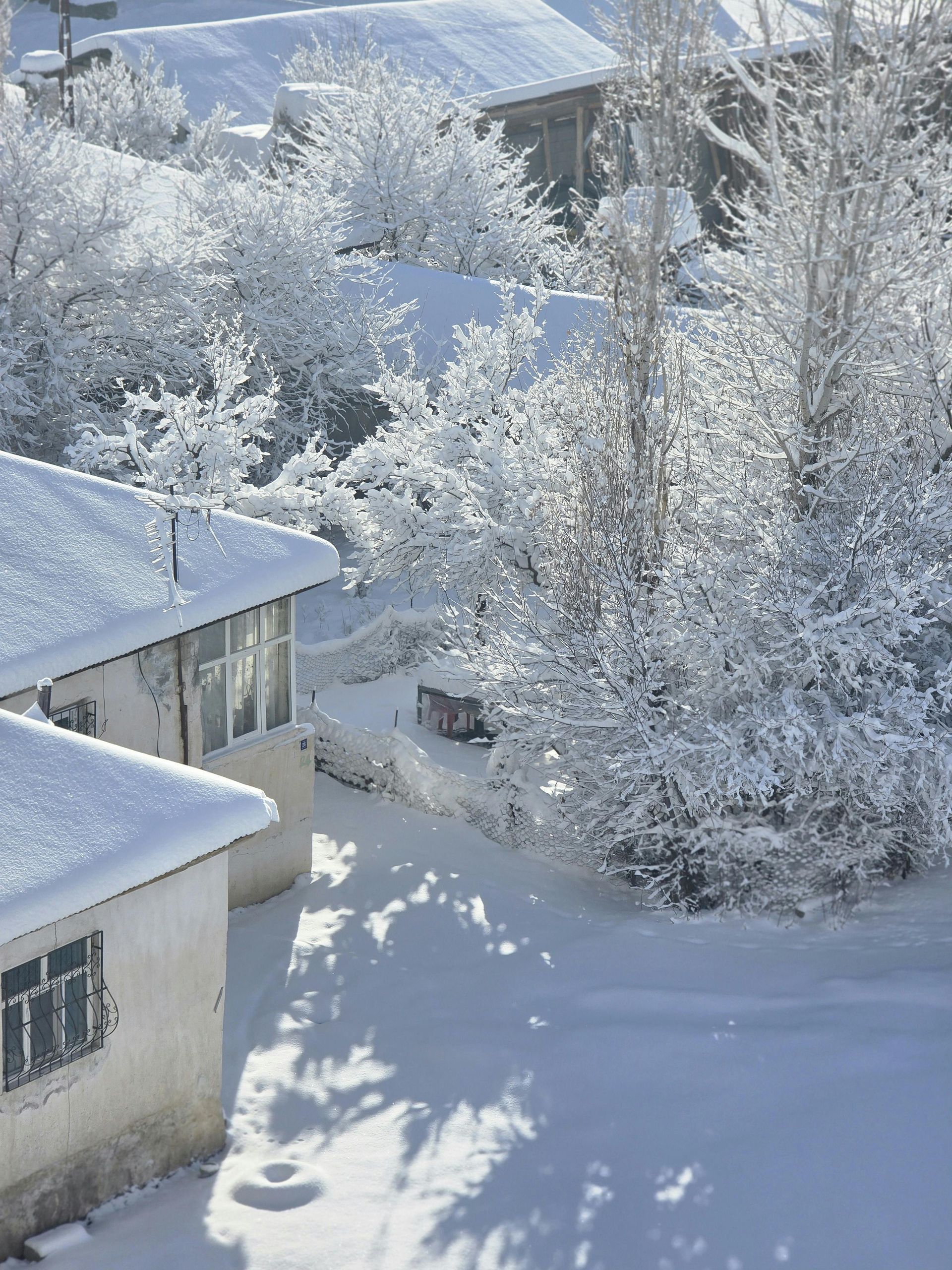
In Metro Vancouver, snow isn’t an everyday problem the way it is in true snowbelt cities—but it does show up often enough to cause real damage, especially in higher elevations and colder pockets. Think North Shore slopes, upper West Van, parts of Coquitlam/Port Moody, and even the occasional heavy wet snowfall that hits the whole Lower Mainland in a short window. When that happens, metal roofs behave very differently than asphalt.
Metal is a high-performance roofing material here because it sheds water fast, resists moss better than many surfaces, and handles long wet seasons well. But that same “slick” surface is exactly why snow retention matters. Instead of sitting and slowly melting, snow on metal often releases all at once. And that’s where the risk shows up: not “too much snow weight” (most of the time), but the sudden movement of snow and ice as a single sliding mass.
Snow retention is about controlling that movement so it doesn’t rip off gutters, crush landscaping, smash cars, or create a safety hazard at walkways and entrances. If you’ve ever seen a sheet of wet snow slide off a roof like a wave, you already understand why this is a real-world issue even in a mostly rainy climate.
If you’re planning a metal upgrade—especially standing seam—snow retention should be part of the system design, not an afterthought. (This is one of the reasons a properly planned Standing Seam Metal Roof matters so much: it opens up retention options that don’t rely on poking holes through the panels.)
How Snow Behaves Differently on Metal Roofs
On asphalt shingles, snow tends to “key in” to the rough surface. It grips, compacts, then melts gradually. On metal, you get the opposite:
- Low friction = faster release. Snow doesn’t bond as strongly to smooth coated panels.
- Warm/cool cycles trigger sliding. Even a small temperature swing can loosen the snowpack.
- Wet coastal snow is heavier and sticks together. Vancouver snow is often dense, not fluffy—so it slides in chunks or sheets.
- Long roof runs build momentum. A steep pitch with a long rafter length creates a “runway” that increases the force of a slide.
- Solar and heat loss accelerate movement. Sun hitting metal panels (or warm air escaping from poor attic insulation) can loosen the underside of the snowpack and trigger a release.
This is why the “problem” isn’t always the snowfall itself—it’s what happens two days later when the sun comes out, or when temperatures rise just enough for the bond to break.
There’s also a property-specific factor: Vancouver homes often have front entries, patios, stair landings, and driveways directly under eaves. If a roof sheds snow into those areas, you can get immediate functional and safety issues. Add gutters and downspouts to that, and you’ve got expensive components sitting right in the impact zone.
The Real Risk Isn’t Snow Accumulation — It’s Snow Slides
When snow slides off a metal roof, it doesn’t gently fall—it releases like a loaded tarp being pulled. That sudden release can create several common problems:
1. Gutter and fascia damage
Heavy snow slides can bend eavestroughs, rip hangers loose, or distort fascia metal. Even if it doesn’t fully detach, it can throw your drainage off for the rest of the rainy season—which is the last thing you want in Vancouver.
2. Safety hazards at entrances and walkways
The danger isn’t dramatic Hollywood “avalanches.” It’s the practical risk: someone stepping outside under an eave line while snow drops in a hard slab. That’s why retention matters most above doors, staircases, and high-traffic paths.
3. Property damage below
Cars parked in a driveway, heat pumps, patio furniture, railings, and landscaping can all take hits. Wet coastal snow carries a lot of mass, and when it slides, it can break things that would survive a normal dripline.
4. Ice formation in the impact zone
After a slide, the meltwater can refreeze in shaded areas—creating slick spots on walkways and steps. Vancouver’s freeze–thaw cycles may be “secondary,” but they’re still enough to turn runoff into a hazard.
5. Unexpected liability (especially for rentals and multi-family)
If you’re a landlord, property manager, or strata, uncontrolled snow slides can become a liability issue. Even if snow events are occasional, the risk is still real when they happen.
What effective snow retention looks like (in practical terms)
The goal is to break up the snowpack and slow the release, rather than trying to “hold all the snow forever.” In the Lower Mainland, the best retention strategy is usually targeted and intentional:
- Snow guards (individual units): Good for smaller roof sections, entries, or where you need “stopping points” to break the slide into smaller pieces.
- Snow rails / fence-style systems: Better for long roof runs, steeper pitches, and higher-risk zones where a single slide would be destructive.
- Layout matters as much as the hardware: One row in the wrong location can fail; multiple rows placed correctly can control the whole roof plane.
Why metal-roof type matters
Not all metal roofs accept snow retention the same way:
- Standing seam: Often allows clamp-on retention systems that avoid panel penetrations (a big win for long-term leak resistance).
- Exposed-fastener metal: Retention can be trickier because penetrations must be handled carefully and movement/expansion still needs to be respected.
- Complex roof geometry: Valleys, dormers, and intersecting slopes can funnel snow into specific drop zones—so retention planning needs to follow the roof layout, not a generic “one-size-fits-all” approach.
The Vancouver reality: design for the rare but heavy event
Because snow isn’t constant here, homeowners sometimes skip retention thinking it’s optional. But Vancouver snow events often come as heavy wet dumps, and those are the exact conditions that create destructive slides. If your roofline drops snow onto a driveway, front steps, a deck, or a narrow side yard walkway, retention becomes less of an upgrade and more of a preventative measure.
If you’re considering metal roofing (or already have it) and want the system to perform properly in every season—not just during rain—this is something a true metal-roof crew should plan with you from the start. That’s part of what we focus on when installing long-term metal systems: details, transitions, and site-specific risk zones—not generic add-ons. You can see the broader approach here: Best Metal Roofing Services.
We're Excited To Serve YOU!
Paragon Res Roof #1
We will get back to you as soon as possible.
Please try again later.
Vancouver’s Climate Is Not the Same as Snowbelt Cities
One of the biggest mistakes homeowners — and even some contractors — make when thinking about roofing in Vancouver is assuming our climate behaves like colder, snow-heavy regions. It doesn’t. Roofing strategies designed for Toronto, Calgary, the Prairies, or the northern U.S. often miss the mark here because Vancouver’s roofs don’t fail from months of snow load and deep freeze. They fail from water that never really leaves.
Our problems are slower, sneakier, and far more persistent. Vancouver is a city where roofs stay wet, where rain arrives in long stretches instead of quick storms, and where wind constantly pushes moisture into places roofs were never meant to handle without precision detailing. Understanding this difference is critical — because the wrong assumptions lead to the wrong materials, the wrong underlayment strategies, and the wrong expectations about roof lifespan.
Rain, Wind-Driven Water & Long Wet Seasons
Vancouver roofs don’t get a break. From fall through spring, it’s common to see weeks of consistent rain, drizzle, mist, and coastal moisture without meaningful drying time. That reality changes everything about how water behaves on a roof.
Water moves sideways, not just down
In textbook roofing diagrams, water flows neatly downhill. In Vancouver, water behaves differently. Roofs are rarely dry. Surfaces stay saturated. Moss and debris slow drainage. And when rain hits an already-wet roof, it doesn’t just run down — it creeps, pools, and gets pushed laterally.
Valleys become rivers. Eaves collect debris. Low-slope sections hold moisture far longer than intended. Once water lingers, gravity becomes less important than path of least resistance, which often leads toward seams, nail penetrations, and flashing joints.
Wind pushes rain under shingles and flashings
Coastal wind is one of the most underestimated forces acting on Vancouver roofs. Storm systems coming off the Pacific don’t just drop rain — they drive
it. Gusts force water upward, sideways, and inward. This is why perfectly fine-looking shingles can still leak. Water is pushed under tabs, behind step flashings, and up vertical transitions at walls and chimneys.
This is also why detailing matters more than material alone. A premium shingle installed with weak flashing or minimal waterproofing will fail faster than a mid-range product installed with proper overlap, sealing, and secondary protection.
Homes in older neighbourhoods, especially areas with mature trees and complex rooflines, see this constantly. It’s one of the reasons roof performance varies block by block across the city, including places like East Vancouver, where roof geometry and exposure play a huge role in long-term durability. East Vancouver Roofing
Freeze–Thaw Is Secondary, Not Primary
Vancouver does experience freezing temperatures — but they are not the dominant force shaping roof failure here. This is a crucial distinction.
Short cold snaps vs months of snow elsewhere
In snowbelt cities, roofs endure months of accumulated snow, repeated melt-freeze cycles, and prolonged ice buildup at eaves. Vancouver rarely sees that pattern. Our cold snaps are usually brief, intermittent, and followed by rain. Snow may fall, but it doesn’t typically sit on roofs long enough to create classic ice-dam conditions.
Because of this, designing a Vancouver roof primarily around snow load and ice control misses the bigger picture. Our roofs are far more likely to fail during a November rainstorm than during a January freeze.
Ice dams are rare compared to leak paths at details
Ice dams do happen here — especially in poorly ventilated homes — but they are the exception, not the rule. What’s far more common are leaks caused by:
- Failing flashings at chimneys and skylights
- Open seams at valleys and transitions
- Improperly sealed vents and roof penetrations
- Saturated underlayments that never dry out
- Trapped moisture due to poor ventilation
In Vancouver, details fail before surfaces. The roof plane might look fine while water quietly works its way in through a flashing corner or nail line.
This is why experienced Vancouver roofers think in systems, not just products. They focus on how all the layers — ventilation, underlayment, waterproof membranes, flashing, and surface materials — interact over years of wet conditions. That system-based thinking is what separates short-lived roofs from long-lasting ones in this climate. Best Roofing Company in Vancouver
Why This Climate Difference Matters for Homeowners
When homeowners assume Vancouver behaves like colder regions, they often overspend in the wrong areas and underinvest in the right ones. They may prioritize products designed for ice buildup while overlooking drainage, ventilation, and waterproofing at critical transitions. Or they may believe a roof is “fine” because it survived a winter, only to be surprised by leaks during a long rainy stretch.
Understanding Vancouver’s climate shifts the focus toward:
- Superior flashing and penetration detailing
- Strategic waterproof membranes, not blanket coverage
- Ventilation designed to manage moisture, not just heat
- Drainage paths that stay functional even when debris builds up
- Inspections timed around rain exposure, not snow season
The Real Takeaway
Vancouver is not a snowbelt city — it’s a moisture city. Roofs here don’t fail from dramatic events. They fail from persistence. Rain that doesn’t stop. Surfaces that never fully dry. Wind that finds the smallest weaknesses and exploits them over time.
When roofing decisions reflect that reality, roofs last longer, perform better, and cost less over their lifetime. When they don’t, problems appear quietly — and often expensively.
In Vancouver, water always wins eventually. The goal isn’t to stop it completely — it’s to control it intelligently, detail by detail, season after season.
Vancouver’s Snow Conditions Are Different Than Interior BC
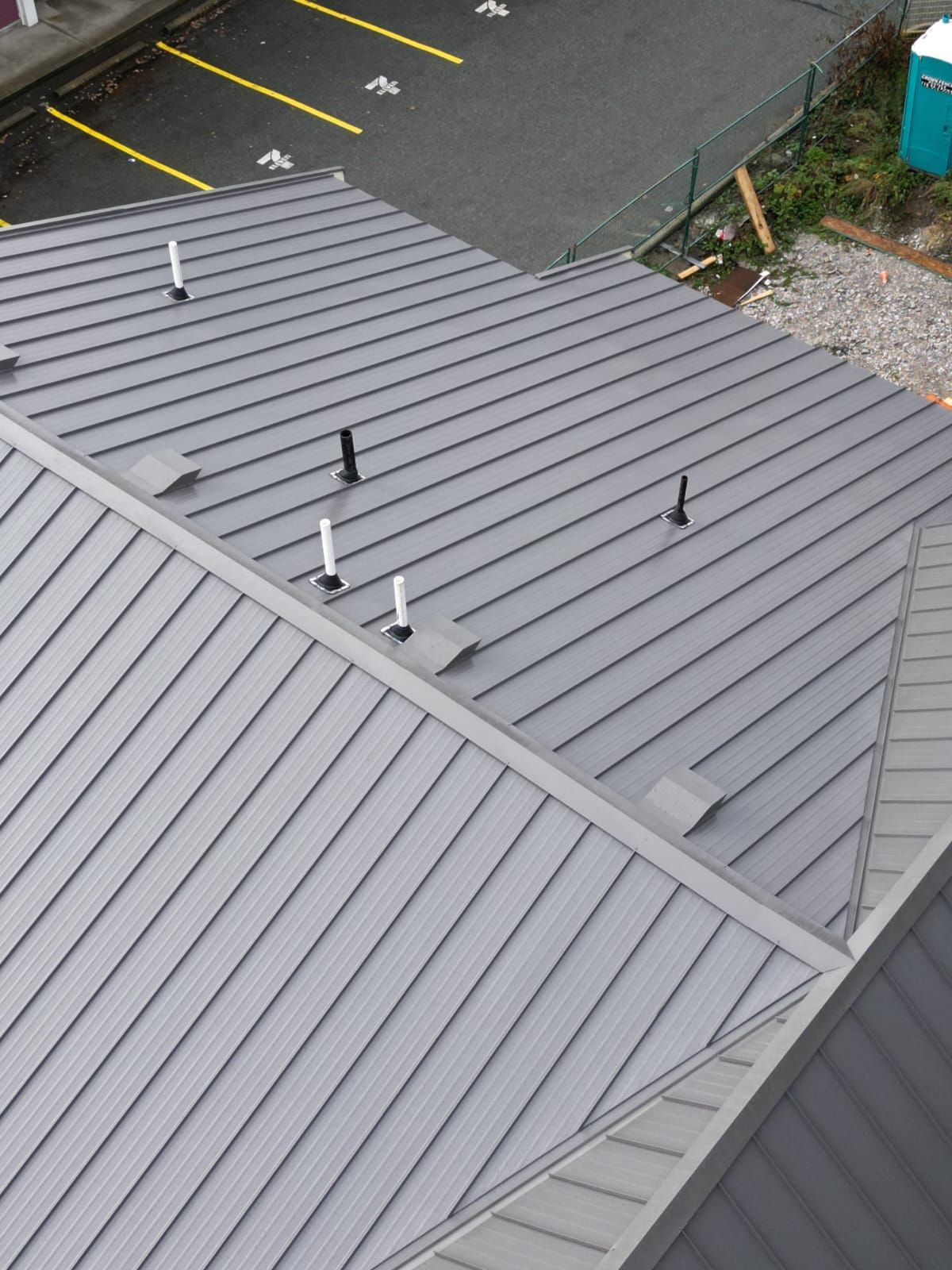
A common mistake homeowners make is assuming that snow-related roofing concerns only apply to Interior BC or mountain regions. In reality, Vancouver’s snow profile is different—but not less dangerous. The risk here isn’t long winters or deep accumulation. It’s the type of snow we get, how it melts, and where it releases.
Interior regions like Kamloops, Kelowna, or Prince George deal with colder, drier snow that accumulates gradually and stays frozen for long periods. Roof systems there are designed around static load management. Vancouver, by contrast, deals with dynamic snow movement —snow that melts, refreezes, and then suddenly releases. That distinction matters enormously on metal roofs.
This difference is why snow retention is often overlooked in the Lower Mainland—until the first real event causes damage.
Wet, Heavy Snow Followed by Freeze–Thaw Cycles
Vancouver snow is typically wet, dense, and heavy. It contains more moisture than Interior snow, which means:
- Higher weight per square foot, even with shallower accumulation
- Stronger bonding between snow layers, causing larger sections to move together
- More destructive force when released, especially on smooth metal surfaces
The real issue begins after the snowfall. Vancouver almost never stays cold long enough for snow to remain stable. Instead, we see:
- Daytime melting from mild temperatures or sunlight
- Nighttime refreezing along the roof surface
- Loss of adhesion between the snowpack and the metal panel
When that bond breaks, snow doesn’t slide in small amounts—it often releases in sheets. On a metal roof, especially a standing seam system, that sheet can travel fast and hit hard. The combination of weight + momentum is what bends gutters, damages fascia, and creates safety hazards below.
This is also why metal roofs installed without proper planning can perform perfectly for years—until one snow event exposes the missing detail. Snow retention isn’t about constant winter management; it’s about controlling these brief but intense moments.
Metal roofing systems that are properly detailed—especially Standing Seam Metal Roofs —allow snow retention to be added in a way that respects panel movement, water shedding, and long-term waterproofing. Without that foresight, retention becomes harder and riskier to retrofit.
Short Snow Events, High Risk Windows
Another key difference in Vancouver is timing. Snow events here are short, but the risk window is highly concentrated.
Instead of weeks of quiet winter conditions, we get:
- Snowfall during normal workdays
- Immediate thawing while people are active
- Snow release when driveways, sidewalks, patios, and entries are in use
That creates a unique hazard profile:
- Pedestrians exiting homes during melt periods
- Cars parked directly under eaves during daytime thaw
- Contractors, delivery drivers, and visitors moving through impact zones
- Children and pets playing in yards during brief snow breaks
In other words, snow slides in Vancouver often occur when people are present—not during isolated deep-winter conditions.
This is why snow retention planning isn’t just about the roof—it’s about the site layout:
- Where roof planes terminate
- What sits below the eave line
- How snow would travel if released
- Whether drainage and gutters can survive the impact
Homes with long metal roof runs over front entries, driveways, or narrow side yards are especially vulnerable. Townhomes and multi-family properties face even greater risk due to shared walkways and repeated foot traffic.
A properly designed metal roofing system takes these factors into account from day one. Snow retention isn’t added everywhere—it’s installed where release would cause damage or danger, and nowhere else. That kind of planning is part of a full-system approach, not an upsell or accessory. It’s also why choosing installers who understand local behaviour—not just manufacturer specs—matters when investing in metal roofing. You can see how that system-based thinking comes together here: Metal Roofing Services in Vancouver.
In Vancouver, snow isn’t constant—but when it shows up, it behaves aggressively on metal roofs. Understanding that difference is what separates a roof that merely looks good from one that performs safely in every season.
What Are Snow Guards and Snow Retention Systems?
Snow guards and snow retention systems are safety and control devices designed specifically for metal roofs. Their purpose isn’t to stop snow forever—it’s to manage how snow leaves the roof. In Vancouver’s climate, that distinction is critical.
Metal roofing performs exceptionally well in rain and wind, but its smooth surface changes how snow behaves. Instead of slowly melting and shedding in small amounts, snow on metal often releases suddenly, especially after a freeze–thaw cycle. Snow guards exist to interrupt that movement and reduce risk.
Individual Snow Guards vs Continuous Snow Retention Systems
There are several snow retention approaches, and choosing the right one depends on roof design, slope, exposure, and what exists below the eaves.
Pad-style snow guards
These are individual units installed in a staggered pattern across the roof surface. They work by increasing friction and breaking up snow movement into smaller sections. Pad-style guards are often used on smaller roof areas, decorative metal roofs, or where only light snow control is needed. They’re subtle, but they rely heavily on proper spacing and layout to be effective.
Bar systems
Bar-style snow retention uses one or more horizontal bars mounted above the eave line. These systems are engineered to hold snow in place across an entire roof plane. On Vancouver homes, bar systems are common on steeper standing seam roofs
where snow can build momentum quickly. They provide predictable performance and are often preferred when safety is a priority.
Fence-style retention
Fence systems are a heavier-duty version of bar systems, designed for larger snow loads or long roof runs. They’re most commonly seen on multi-unit, strata, or commercial buildings, where failure isn’t an option and liability exposure is higher.
The key point: snow retention is not “one size fits all.” The wrong system—or the right system installed in the wrong place—can be ineffective or even damaging.
How Snow Guards Work
Snow guards don’t eliminate snow. They control its behavior.
Their function is to:
- Break large snow sheets into smaller, manageable releases
- Hold snow in place long enough for gradual melting
- Reduce sudden load transfer to gutters, fascia, and areas below
- Minimize risk to people, vehicles, and property
On metal roofs, especially standing seam systems, snow guards are often clamp-mounted rather than fastened through the panel. This preserves the roof’s waterproofing and allows for thermal movement—both essential for long-term performance. This approach is standard on well-designed Standing Seam Metal Roofs and should never be improvised.
Where Snow Guards Are Most Important on Vancouver Metal Roofs
Snow retention isn’t about covering every square inch of roof. It’s about targeting risk zones —places where snow release would cause damage, injury, or liability.
Roofs Over Driveways & Parking Areas
This is one of the most common—and most overlooked—applications.
Laneway homes, garages, and front-facing roof planes often dump snow directly over parked vehicles. When wet Vancouver snow slides off a metal roof, it can:
- Dent vehicle panels
- Crack windshields
- Tear off mirrors
- Destroy gutter systems in a single release
Snow guards above parking areas dramatically reduce these risks and are often far cheaper than repairing the damage from one uncontrolled slide.
Roofs Above Walkways, Entrances & Sidewalks
Anywhere people walk regularly is a non-negotiable snow retention zone.
This includes:
- Front door entries
- Side-yard walkways
- Basement suite entrances
- Public-facing sidewalks
In Vancouver, snow events often happen during active hours, not overnight. Snow release during daytime melt cycles creates real safety hazards and potential liability for homeowners and strata corporations. Installing snow retention in these areas is less about snow management and more about risk management.
Multi-Unit & Strata Buildings
On townhomes, apartments, and strata buildings, snow retention becomes a shared responsibility. Multiple entrances, shared walkways, and vehicle access points mean a single roof plane can affect dozens of people.
For these buildings, snow retention systems are often:
- Required by strata councils
- Specified by engineers
- Installed as part of long-term maintenance planning
Bar or fence-style systems are common here because they provide consistent, predictable control across long roof runs. This is especially important on modern metal-clad strata buildings where aesthetics, durability, and safety must coexist.
Steep-Slope Standing Seam Roofs
Slope changes everything.
The steeper the roof, the faster snow accelerates when it releases. On high-pitch standing seam roofs, snow can behave more like a sliding mass than a melting layer. That increased velocity translates directly into impact force.
Steep roofs almost always require engineered snow retention—especially when paired with smooth finishes and long panel runs. This is why snow management is treated as part of the metal roofing system, not an optional accessory, by experienced installers offering Metal roofs in the Lower Mainland.
In Vancouver, snow retention isn’t about winter severity—it’s about short, intense risk windows. Snow guards and retention systems exist to control those moments, protect what’s below, and ensure metal roofs perform safely in every season, not just the rainy ones.
When Snow Guards May NOT Be Necessary
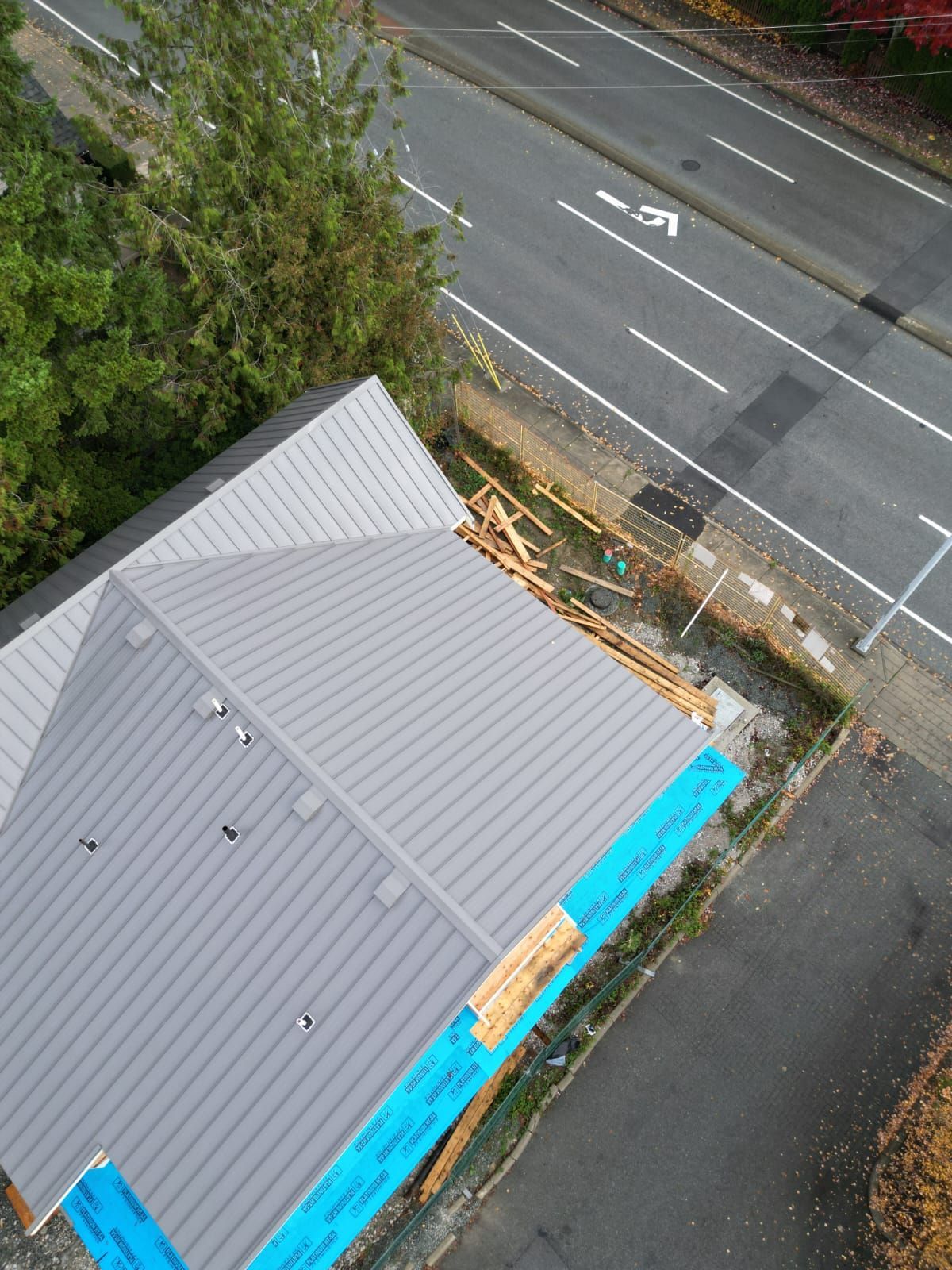
Snow guards are an important safety tool—but like every good roofing detail, they should be intentional, not automatic. In Vancouver, there are situations where snow retention adds little value and can even be unnecessary if the roof system is designed correctly from the start.
The mistake many contractors make is treating snow guards as a checkbox item instead of a risk-based decision. Let’s break down when they may not be required.
Low-Slope Metal Roofs
On low-slope metal roofs, snow behaves very differently than it does on steep pitches.
Because the angle is shallow:
- Snow tends to stay in place rather than slide
- Meltwater drains gradually instead of releasing in sheets
- Friction between snow and surface is naturally higher
In these cases, the risk isn’t sudden snow slides—it’s drainage management. As long as the roof has:
- Proper slope to drains or scuppers
- No ponding zones at transitions
- Clear drainage paths
Snow retention often provides little benefit. Installing snow guards on low-slope metal roofs can actually interfere with drainage if not carefully planned.
This is especially true for garages, additions, or modern flat-to-low-slope hybrid roofs common in Vancouver’s newer builds.
Roofs Without Pedestrian or Asset Exposure Below
Snow retention is about protecting what’s underneath the roof.
If there is:
- No driveway
- No walkway
- No entrance
- No parked vehicles
- No landscaping or equipment
…then the risk profile drops significantly.
For example, a rear roof plane that sheds into an unused yard, green space, or buffer zone may not require snow guards—even on a metal roof. In these situations, snow release may be inconvenient, but not dangerous or damaging.
This is why experienced roofers assess site layout, not just roof material. Snow guards should be installed where release creates consequences—not everywhere by default.
Properly Designed Drainage & Eaves
Good roof design reduces snow risk before snow guards are even considered.
Key elements include:
- Adequate overhangs that drop snow away from structures
- Strong gutter systems (or intentional no-gutter designs)
- Roof planes that don’t funnel snow toward high-risk zones
When drainage, slope, and eave geometry are designed correctly, snow often releases in smaller, controlled amounts. In these cases, adding snow retention may offer little additional protection.
Bottom line: not every metal roof needs snow guards. But every metal roof does need proper design thinking.
Snow Guards for Standing Seam Metal Roofs
Standing seam metal roofing is where snow retention requires the highest level of technical expertise. This is not an area for shortcuts, generic parts, or improvisation.
Why Standing Seam Requires Non-Penetrating Systems
Standing seam panels are engineered as a continuous waterproof system. Introducing fasteners through the panel surface defeats the purpose of the design.
Penetrating snow guards create several long-term risks:
- Compromised waterproofing
- Expansion and contraction stress around fasteners
- Increased chance of leaks years after installation
- Voided manufacturer warranties
That’s why non-penetrating systems are mandatory on properly built standing seam roofs. This is standard practice on high-quality Standing Seam Metal Roofs and should never be treated as optional.
Clamp-On Snow Guard Systems
Clamp-on systems attach directly to the standing seams, not the flat panel surface.
This approach:
- Preserves the integrity of the panel
- Allows for natural thermal movement
- Avoids punctures and sealant reliance
- Maintains manufacturer warranties
Clamp-on snow guards come in pad, bar, and fence configurations depending on load requirements. The clamps are torque-set to manufacturer specifications to ensure they grip securely without damaging the seam.
This is not a “tighten it until it feels good” scenario. Improper torque can crush seams or reduce holding strength—both serious failures.
Layout & Engineering Considerations
This is where true expertise shows.
Snow retention on standing seam roofs must be engineered, not guessed. Key variables include:
- Panel gauge: Thinner panels require different load strategies than heavier-gauge metal
- Seam height and profile: Affects clamp compatibility and holding strength
- Roof pitch: Steeper slopes generate higher slide velocity and force
- Panel length: Longer runs accumulate more snow mass
- Snow load expectations: Wet Vancouver snow weighs far more than dry interior snow
Retention systems are laid out to distribute load across multiple seams, not concentrate force in one line. On steeper roofs, multiple rows may be required, staggered vertically to reduce release energy gradually.
This engineering-first approach is why snow retention should always be planned by professionals who understand metal behavior, climate, and real-world performance —not just catalog parts. It’s a standard part of high-level Best Metal Roofing Services, not an afterthought.
In Vancouver, snow guards are neither mandatory nor optional by default. They are situational tools —critical in some areas, unnecessary in others. The difference lies in understanding slope, exposure, risk, and metal roofing physics. When done right, snow retention disappears into the design—quietly protecting everything below.
Let's Chat Roofing!
Paragon Res Roof #2
We will get back to you as soon as possible.
Please try again later.
Common Snow Guard Mistakes We See in Vancouver
Snow guards fail far more often from planning errors than from product defects. In Vancouver’s climate—where snow is wet, heavy, and released during short, high-risk windows—small miscalculations compound quickly. The result isn’t just cosmetic damage. It’s bent metal, torn gutters, and real safety exposure.
Below are the most common snow guard mistakes we see on metal roofs across the Lower Mainland—and why they matter.
Installing Too Few Snow Guards
This is the number one failure point.
When too few snow guards are installed, the system doesn’t control snow—it redirects force unevenly. Instead of one controlled melt or gradual release, snow breaks free in sections. Those sections hit harder.
What happens in practice:
- Snow loads concentrate at gaps
- Partial releases increase impact velocity
- Retention devices take stress they weren’t designed for
- Panels, seams, or clamps absorb uneven force
On metal roofs, especially standing seam, snow wants to move as a single mass. Undersized retention layouts interrupt that mass poorly, creating weak points that snow exploits immediately during freeze–thaw cycles.
Snow retention must be designed to hold or manage the entire load, not fragments of it. Anything less creates a false sense of protection.
Poor Layout or Spacing
Even with the right number of snow guards, bad layout will undermine performance.
Common spacing mistakes include:
- Installing guards too high up the roof
- Leaving long uninterrupted panel runs below the retention line
- Clustering guards instead of distributing load
- Ignoring roof pitch and panel length
Snow always looks for the path of least resistance. When spacing is inconsistent, snow doesn’t “respect” the retention system—it breaks through weak zones, often tearing guards loose or overwhelming the strongest points.
Proper layout considers:
- Panel length from ridge to eave
- Roof pitch and expected slide velocity
- Wet snow weight typical to coastal Vancouver
- Load distribution across multiple seams
This level of planning is standard practice on well-executed Standing Seam Metal Roofs, but is often skipped when snow guards are added as an afterthought.
Using Penetrating Fasteners on Standing Seam Roofs
This mistake causes damage that may not show up for years—but when it does, it’s expensive.
Standing seam metal roofs are designed to remain penetration-free across the panel surface. Driving screws through panels to install snow guards introduces several problems:
- Water intrusion at fastener points
- Sealant failure due to expansion and contraction
- Corrosion around penetrations
- Voided manufacturer warranties
Vancouver’s long wet seasons accelerate these failures. What looks “tight” today becomes a leak path five winters later.
Non-penetrating clamp-on systems exist for a reason. Any installer using screws through standing seam panels is either uninformed—or cutting corners.
Treating Snow Guards as an Afterthought
Snow guards should never be an accessory decision.
When retention is added after the roof is installed, compromises happen:
- Suboptimal placement due to finished details
- Limited clamp compatibility with seam profiles
- Missed opportunities to align retention with structure below
- Reduced load-sharing across seams
The best snow retention systems are planned during metal roof design, not bolted on later. This allows retention rows to align with framing, entrances, parking areas, and drainage zones from the start.
Professional metal roofing teams integrate snow management as part of a complete system—one of the reasons experienced homeowners seek out Best Metal Roofing Services rather than treating snow guards as a standalone upgrade.
Snow Retention vs Gutters — Why Gutters Alone Aren’t Enough
One of the most dangerous misconceptions in Vancouver roofing is the idea that gutters can manage snow. They can’t. And they weren’t designed to.
Why Gutters Fail Under Sliding Snow Loads
Gutters are engineered for water, not moving mass.
When snow releases from a metal roof, especially wet coastal snow, the force is immense. Gutters sit directly in the impact zone and absorb the first hit.
Typical failure outcomes include:
- Bent or crushed aluminum gutters
- Torn gutter hangers and brackets
- Gutters ripped completely off the fascia
- Damage to soffits and roof edge metal
Once gutters fail, water management fails too. Meltwater spills behind fascia, soaks trim, and finds its way into wall assemblies—creating secondary problems long after the snow is gone.
Importantly, bigger gutters don’t solve this. No gutter size is designed to absorb sliding snow loads.
Snow Guards Protect the Entire Roof Edge System
Snow guards do what gutters cannot: control energy before impact.
By holding snow in place or breaking it into smaller releases, snow retention systems protect:
- Gutters
- Fascia boards
- Soffits
- Exterior cladding
- Vehicles and people below
Instead of absorbing force, the roof manages it upstream—where it belongs.
In Vancouver’s climate, this is especially important because snow events are brief but violent. Snow guards reduce peak force during those moments, preserving not just the gutter system but the entire roof edge assembly.
Snow guards aren’t about aesthetics. They’re about physics, planning, and prevention. When installed correctly—and integrated into the roof design—they quietly do their job. When installed poorly, they fail loudly.
In Vancouver, where snow doesn’t linger but hits hard when it comes, getting snow retention right is the difference between a metal roof that performs flawlessly and one that causes avoidable damage year after year.
Proudly serving our local community & focused on being the best Vancouver roofers possible.
We let our reviews do the talking.
Brands you know and trust.





Roofing Installs Designed By You
Let us help you select the right roofing material for your home.
Building Code, Liability & Best Practice in Vancouver
Snow retention is one of those roofing topics where building code, real-world risk, and homeowner responsibility don’t always line up neatly. Many Vancouver property owners assume that if something isn’t strictly required by code, it isn’t necessary. Snow retention proves why that assumption can be costly.
What Building Code Does (and Doesn’t) Address
BC Building Code focuses primarily on structural safety and minimum performance standards. It addresses things like:
- Structural snow load capacity
- Roof assembly requirements
- General life-safety considerations
What it often does not explicitly mandate is snow retention hardware on residential metal roofs—especially in coastal regions like Vancouver where snowfall is intermittent.
That absence does not mean liability disappears.
If snow slides off a roof and:
- Injures a pedestrian
- Damages a vehicle
- Breaks property below
- Creates a foreseeable hazard
…the responsibility doesn’t vanish because “code didn’t require it.” Liability is assessed based on reasonable risk prevention, not just minimum compliance.
In Vancouver, where snow events are rare but predictable, uncontrolled snow release can easily be argued as a known and preventable hazard, particularly on smooth metal roofing.
Why Best Practice Goes Beyond Minimum Code
Best practice is where experienced roofing professionals operate—not at the lowest allowable threshold, but at the level where risk is managed intelligently.
Best practice considers:
- Site-specific exposure (driveways, walkways, entries)
- How snow behaves on metal roofs in freeze–thaw cycles
- Whether people or assets are regularly present below roof edges
- Insurance expectations and claims history
Insurance providers don’t evaluate losses based solely on code language. They look at foreseeability. If a metal roof sheds snow in sheets above an entrance and no retention was installed, questions follow—especially if the risk was obvious.
Best practice fills the gap between what’s allowed and what’s responsible. It’s the difference between “technically compliant” and professionally defensible.
How Paragon Roofing BC Designs Snow Retention Systems the Right Way
Snow retention isn’t a product decision—it’s a design process. Done correctly, it blends into the roof system quietly. Done poorly, it becomes a visible, expensive mistake.
Roof-Specific Snow Retention Planning
Every roof behaves differently.
Paragon Roofing BC does not use copy-paste snow guard layouts because no two roofs share the same combination of:
- Pitch and panel length
- Seam profile and panel gauge
- Orientation to sun and prevailing winds
- Exposure below eaves
- Drainage paths and architectural details
Instead, snow retention planning starts with geometry and consequence.
We ask:
- Where would snow naturally want to release?
- What exists below those release zones?
- How much snow mass could realistically accumulate?
- How fast would it move on this pitch and finish?
Only after answering those questions do we determine if retention is needed—and if so, where and how much.
This is especially critical on steep metal systems like Standing Seam Metal Roofs, where snow velocity and panel movement must be accounted for together.
Integration with Standing Seam Metal Roofing
Snow retention should never fight the roof system—it should work with it.
On standing seam roofs, that means:
- Non-penetrating, clamp-on systems only
- Seam-compatible hardware matched to profile and gauge
- Load distribution across multiple seams
- Allowance for thermal expansion and contraction
Retention systems are coordinated during the roof installation phase, not bolted on afterward as a reactionary fix. This ensures:
- Panel warranties remain intact
- Seams are not overstressed
- Waterproofing is never compromised
Because the snow retention layout is planned alongside panel layout, seams, clips, and flashing details align logically. Nothing is forced. Nothing is improvised.
That system-first thinking is a hallmark of professional Best Metal Roofing Services —and it’s what separates engineered solutions from hardware add-ons.
Clear Explanations for Homeowners & Strata Councils
One of the most overlooked parts of snow retention is communication.
Homeowners and strata councils deserve to understand:
- Why snow guards are recommended on one roof plane but not another
- What risks are being mitigated
- What problems snow retention does not solve
- Where retention adds real value—and where it doesn’t
Paragon Roofing BC takes a transparent approach. If snow guards aren’t necessary, we say so. If they are critical, we explain why , using real-world scenarios tied to the property—not fear tactics or generic upsells.
For strata councils, this clarity matters even more. Decisions must be defensible, documented, and aligned with long-term risk management. Snow retention becomes part of the building’s maintenance strategy, not a cosmetic upgrade.
In Vancouver, snow retention lives in the space between code and consequence. Building code may not demand it—but physics, liability, and best practice often do. When snow retention is designed thoughtfully, integrated properly, and explained clearly, it stops being a question mark and becomes a quiet layer of protection that proves its value the one time it’s needed.
Experience The Paragon Roofing BC Difference
Perfection in roofing. Because we're different.
Your satisfaction is guaranteed. Throughout the whole process, from the initial onsite consult to the final roof install, our friendly and knowledgeable team members will work with you to maintain open communication.
Frequently Asked Questions.
Roofing is an investment into your property. Here are some FAQs to help navigate making that choice.
Frequently Asked Questions About Snow Guards in Vancouver
Snow guards tend to raise questions because Vancouver sits in a grey zone for snow risk. We’re not a mountain climate, but we’re also not immune to snow-related damage—especially on metal roofs. These FAQs address the most common concerns we hear from homeowners, builders, and strata councils across the Lower Mainland.
Do metal roofs in Vancouver really need snow guards?
Sometimes yes. Sometimes no. And that’s the honest answer.
Metal roofs in Vancouver don’t face constant snow pressure, but when snow does arrive, it behaves aggressively. Wet coastal snow combined with freeze–thaw cycles can cause sudden, high-energy snow slides. Whether snow guards are needed depends on what’s below the roof edge, not just the roof itself.
Snow guards are typically recommended when a metal roof sheds snow over:
- Driveways or parking areas
- Walkways, entrances, or sidewalks
- Decks, patios, or landscaping
- Shared access points on strata or multi-unit buildings
If a roof plane sheds into an unused yard with no foot traffic or assets below, snow guards may not be necessary. This is why snow retention should always be site-specific, not automatic—especially on high-performance systems like Standing Seam Metal Roofs.
Can snow guards damage my metal roof?
When installed incorrectly, yes. When designed and installed properly, no.
The biggest risk comes from:
- Using penetrating fasteners on standing seam panels
- Over-tightening clamps and deforming seams
- Installing retention systems not rated for the panel gauge or profile
Proper snow guards are non-penetrating, clamp-on systems that attach to seams—not the flat panel surface. They are engineered to allow thermal expansion and contraction without stressing the metal.
Damage almost always traces back to poor planning or improper hardware—not the concept of snow retention itself. Experienced metal roofing professionals treat snow guards as part of the roof system, not an add-on.
Are snow guards required by code in Vancouver?
In most residential cases, no —they are not explicitly mandated by BC Building Code.
However, code compliance and liability are not the same thing.
Building code sets minimum structural standards, not comprehensive risk management. If snow slides off a roof and causes injury or damage, responsibility may still fall on the property owner—regardless of whether snow guards were “required.”
For strata buildings, commercial properties, or homes with public exposure, snow retention may be recommended by engineers, insurers, or risk advisors even if code is silent. Best practice often goes beyond minimum compliance.
Can snow guards be added after a metal roof is installed?
Yes—but with important caveats.
Snow guards can be retrofitted to most standing seam metal roofs if:
- The seam profile is compatible with clamp-on systems
- The panel gauge can handle the intended load
- Proper layout and spacing can still be achieved
That said, retrofitting is never ideal. Planning snow retention during roof installation allows for better alignment with seams, structure, and exposure below. It also avoids working around finished details.
Whenever possible, snow retention should be designed alongside the metal roof, not treated as a reactionary fix after the first snow event.
Do snow guards stop ice dams?
No—and this is a common misconception.
Snow guards manage snow movement, not ice dam formation.
Ice dams are caused by:
- Heat loss from the building
- Poor insulation
- Inadequate attic ventilation
Snow guards will not prevent ice dams, nor are they intended to. In fact, on poorly ventilated roofs, holding snow in place without addressing heat loss can make ice dam issues worse.
If ice dams are a concern, the solution lies in ventilation, insulation, and air sealing —not snow retention hardware.
Are snow guards needed on aluminum and steel roofs?
Material alone doesn’t determine the need— surface behavior does.
Both aluminum and steel metal roofs are smooth and shed snow efficiently. Aluminum tends to be lighter and more thermally responsive, while steel is heavier and stiffer, but snow slides on both.
Snow guard requirements depend on:
- Roof pitch
- Panel length
- Finish type
- Exposure below the eaves
- Local snow behaviour
Whether the roof is aluminum or steel, steep slopes over active areas often warrant retention. This is why snow management is considered part of comprehensive Best Metal Roofing Services, not a material-specific checkbox.
Final Thought
In Vancouver, snow guards are not about surviving winter—they’re about controlling rare but high-risk moments. The right answer isn’t always “yes” or “no.” It’s a thoughtful assessment of roof design, site exposure, and real-world consequences.
When snow retention is planned correctly, it disappears into the roof system—quiet, unobtrusive, and only noticed when it prevents damage that never makes the news.
Here's What Our Existing Clients Think.
Home and business owners we've served across the greater Vancouver area.
Our Google Reviews
Edit Google Reviews Widget
Paragon Res Roof #3
We will get back to you as soon as possible.
Please try again later.