

Ice & Water Shield vs Synthetic Underlayment in Vancouver
One of the most important — and most misunderstood — roofing decisions in Vancouver happens before the shingles, metal, or membrane ever go on. It’s the choice between Ice & Water Shield and synthetic underlayment, and more specifically, how they’re used together.
Many roofing problems in Vancouver don’t come from bad shingles. They come from the wrong underlayment strategy for a coastal, rain-dominant climate. Homeowners are often told one product is “better” than the other, when the reality is more nuanced: they do different jobs, and the strongest roofs here almost always rely on both , used intentionally.
Understanding this difference is key to avoiding moisture problems, premature aging, and expensive repairs years down the line.
What Synthetic Underlayment Does Better
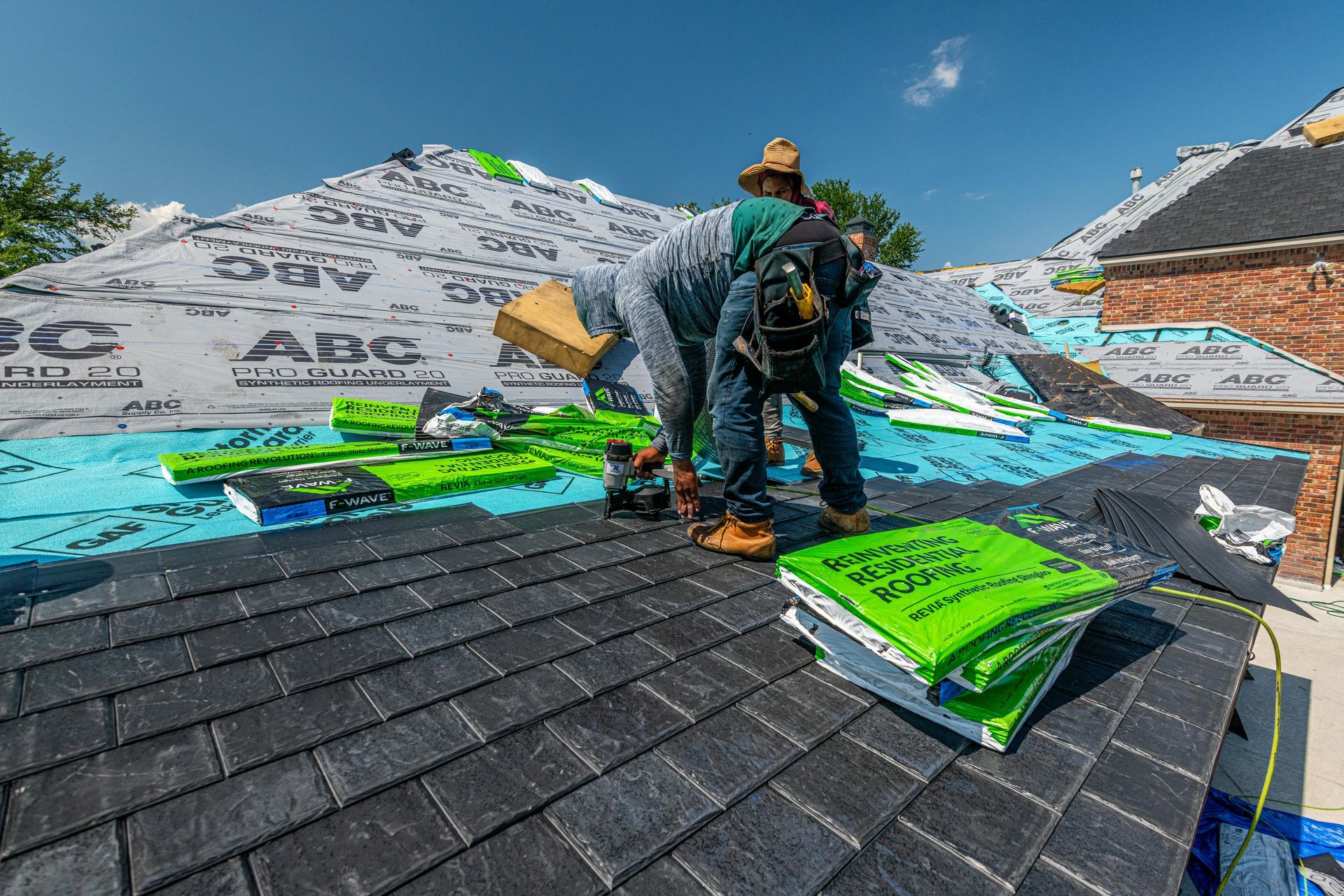
Synthetic underlayment has largely replaced traditional felt for good reason. For most of a Vancouver roof’s surface area, it performs better, lasts longer, and works with our climate instead of against it.
Breathability
This is the single most important advantage in Vancouver.
Synthetic underlayments are designed to shed bulk water while still allowing limited moisture vapour to escape. That matters here because Vancouver homes generate moisture year-round — showers, cooking, laundry, breathing — and that moisture moves upward into the attic and roof assembly.
A breathable underlayment helps the roof dry out between storms, even when the weather doesn’t fully cooperate. This drying potential is critical in preventing condensation buildup, mold growth, and slow plywood rot — issues that are extremely common in older Vancouver homes with imperfect ventilation.
Whole-roof coverage
Synthetic underlayment is ideal for covering the entire field
of a pitched roof — the broad, open areas where water is expected to flow downward and exit quickly.
On these main roof planes:
- Water doesn’t typically pool
- Drainage is predictable
- Exposure is uniform
Using a breathable, durable underlayment here provides consistent protection without sealing the roof deck too tightly. It allows the roofing system to manage both rain and vapour — something Vancouver roofs must do well to last.
Long-term durability
Modern synthetic underlayments resist tearing, UV exposure, and degradation far better than old felt paper. They don’t wrinkle when wet, don’t break down after repeated saturation, and maintain their integrity even if roofing installation takes longer than expected.
In Vancouver’s stop-and-go weather, that durability matters. Underlayments often get exposed to rain before the final roofing layer is installed. A quality synthetic product handles that exposure far better than cheaper alternatives.
Why the Best Vancouver Roofs Use Both Strategically
This is where experience separates solid roofing systems from problematic ones.
In Vancouver, the question isn’t Ice & Water Shield or synthetic underlayment?
It’s where does each one belong?
Ice & Water Shield in high-risk zones
Ice & Water Shield excels where water pressure, slow drainage, or wind-driven rain overwhelms normal shedding. These are areas where breathability matters less than absolute waterproofing.
High-risk zones include:
- Roof valleys
- Eaves and lower roof edges
- Around skylights and roof penetrations
- Chimneys and wall-to-roof transitions
- Low-slope tie-ins and dead-water zones
In these locations, the self-adhering, self-sealing nature of Ice & Water Shield provides critical backup protection when water inevitably tests the details.
Synthetic underlayment on the remaining field
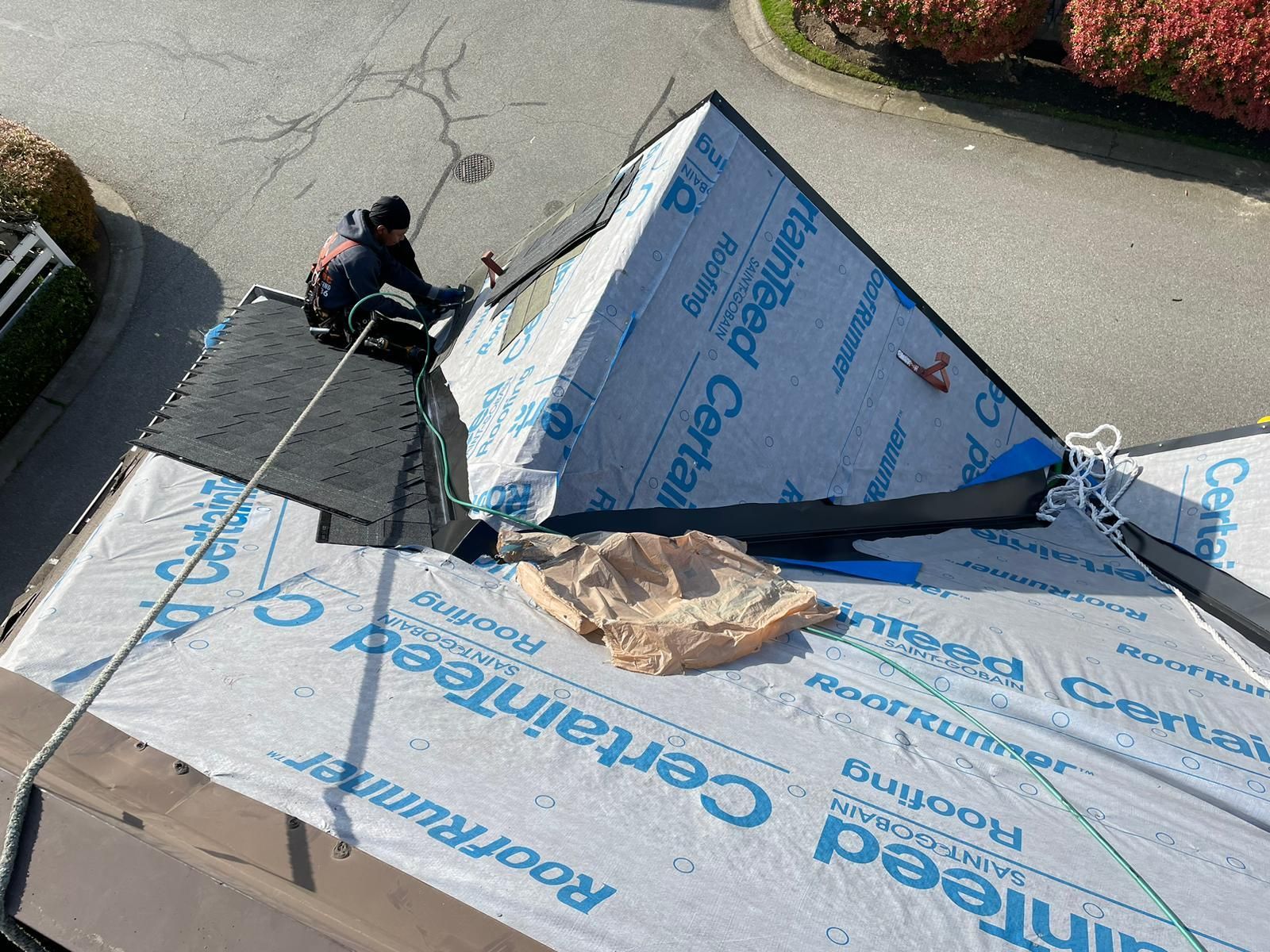
Everywhere else, synthetic underlayment does the job better. It protects the deck, allows drying, and supports the roofing system without trapping moisture.
This combination — Ice & Water Shield where water concentrates, synthetic underlayment where water sheds — is the foundation of high-performing Vancouver roofs.
It’s also one of the first things experienced inspectors look for when assessing why a roof is aging well or failing early. Many hidden issues uncovered during inspections trace back to poor underlayment strategy rather than surface materials. Roof Inspections in Vancouver
A Simple Comparison (Vancouver Context)
Ice & Water Shield
- Fully waterproof
- Non-breathable
- Self-seals around nails
- Best for valleys, eaves, penetrations, transitions
- Risky if overused across entire roof
Synthetic Underlayment
- Water-shedding, not fully sealed
- Breathable
- Designed for whole-roof coverage
- Allows drying between storms
- Ideal for main roof planes
Neither product is “better” overall. Each is better in the role it was designed for.
Why This Balance Matters More Than Material Choice
Homeowners often focus on shingles — brand, colour, warranty length. But in Vancouver, underlayment decisions often have a bigger impact on real-world performance.
A premium shingle installed over a poorly planned underlayment system can fail faster than a mid-range shingle installed over a well-balanced one. Moisture trapped beneath the surface doesn’t care how good the shingle looks.
That’s why experienced Vancouver roofers design roofs as systems:
- Ventilation
- Underlayment
- Waterproof membranes
- Flashing
- Surface material
Each layer supports the others. When one is misused — especially Ice & Water Shield — the system suffers.
These decisions are especially important during full replacements, where correcting old mistakes is part of building a roof that will last in our climate. Roof Replacement in Vancouver
The Takeaway for Vancouver Homeowners
Ice & Water Shield and synthetic underlayment are not competitors. They’re teammates — but only when used correctly.
Synthetic underlayment handles the broad, everyday demands of Vancouver rain while allowing the roof to breathe. Ice & Water Shield steps in at pressure points where water concentrates and details are most vulnerable.
The strongest roofs in Vancouver aren’t built with “more of everything.”
They’re built with the right material in the right place
— and that distinction makes all the difference over time.
Common Ice & Water Shield Installation Mistakes We See in Vancouver
Ice & Water Shield is only as effective as the way it’s installed. In Vancouver, we regularly see roofs that technically have Ice & Water Shield — but still leak, rot, or fail early because it was installed incorrectly, incompletely, or without regard for how moisture actually behaves in a coastal rainforest climate.
Most of these mistakes aren’t dramatic. They’re subtle. And that’s what makes them dangerous. Water doesn’t rush in all at once — it sneaks in over years, quietly degrading plywood, insulation, and framing until the damage finally shows up inside the home. By then, the cost is far higher than it ever needed to be.
Below are the most common Ice & Water Shield installation mistakes we see on Vancouver roofs — and why they matter far more here than in drier or colder regions.
Skipping Valleys to Save Cost
This is the single most damaging shortcut we encounter.
Valleys are where multiple roof planes converge and funnel water into a narrow channel. In Vancouver, that channel often carries water continuously for days during long rain events. Add tree debris, moss, and needles, and valleys become slow-draining, high-pressure zones.
Skipping Ice & Water Shield in valleys to reduce material cost is a false economy. Standard synthetic underlayment is not designed to handle backed-up water, debris dams, or wind-driven rain concentrated in one location. Once water gets beneath the surface layer in a valley, it can travel laterally and leak far from the original entry point, making diagnosis difficult and repairs expensive.
Many of the “mystery leaks” uncovered during inspections trace back to underbuilt valleys — even on relatively new roofs. Valleys are not optional protection zones in Vancouver; they are non-negotiable.
If you want to see how these failures are typically identified, professional inspections often reveal valley issues long before homeowners notice interior damage: Roof Inspections in Vancouver
Poor Lapping or Incorrect Sequencing
Ice & Water Shield is unforgiving when it comes to sequencing. Unlike breathable underlayments, it must be lapped, layered, and terminated correctly — or it can actually direct water into the roof instead of stopping it.
Common sequencing mistakes include:
- Installing upper layers before lower ones
- Incorrect overlap direction
- Inadequate lap widths
- Exposed membrane edges that catch water
In Vancouver’s wind-driven rain, even a small sequencing error can allow water to be pushed under a lap and trapped against the roof deck. Because Ice & Water Shield is fully waterproof and non-breathable, trapped water has nowhere to go — it sits against the plywood and accelerates rot.
This is especially problematic at transitions: valleys meeting eaves, dormers tying into main roof planes, or roof-to-wall intersections. When sequencing is wrong, the membrane becomes part of the problem instead of the solution.
Cutting Corners Around Skylights & Vents
Skylights, plumbing vents, and exhaust fans are some of the highest-risk leak points on any Vancouver roof — yet they’re also where we most often see rushed or incomplete Ice & Water Shield installation.
Common shortcuts include:
- Small patches instead of full wrap coverage
- Sloppy cuts that leave gaps around corners
- Membrane stopping short of vertical transitions
- Relying on sealant instead of proper membrane detailing
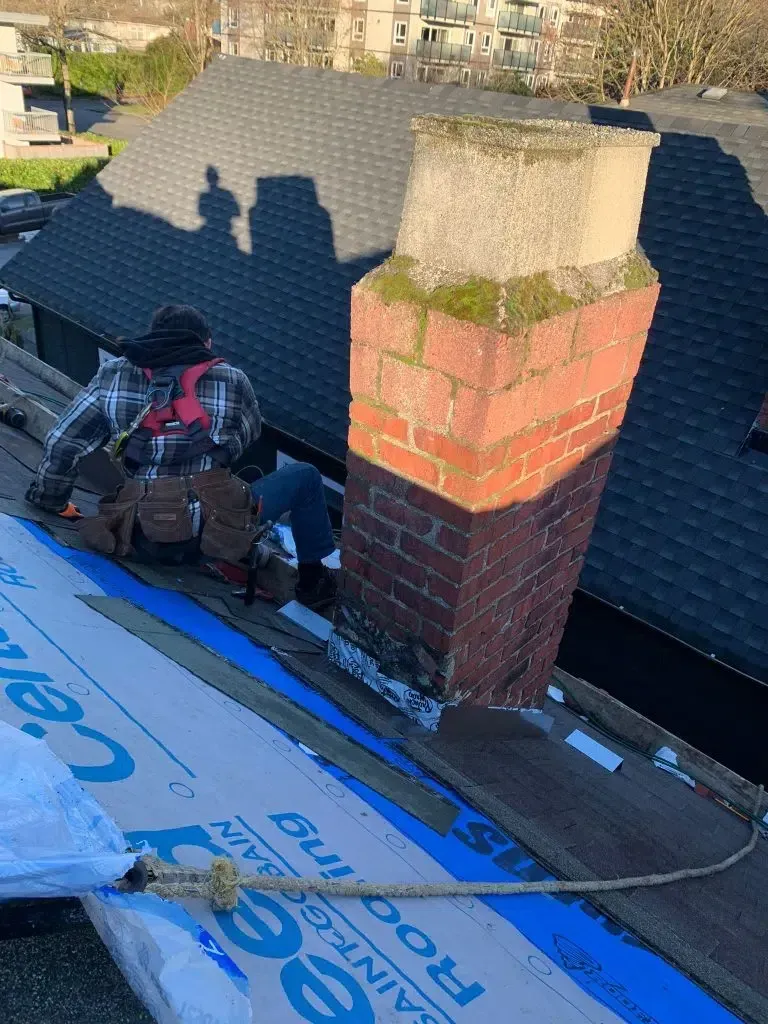
These details matter because penetrations experience water pressure from multiple directions. Rain falls vertically, wind pushes it sideways, and condensation forms around temperature differences. If Ice & Water Shield isn’t properly wrapped and sealed around these areas, water will eventually bypass the flashing and reach the deck.
Even newer roofs can develop leaks at penetrations if these steps are skipped — which is why so many homeowners are surprised when a “nearly new” roof starts staining ceilings after a few seasons.
No Consideration for Ventilation & Moisture Flow
This is the most misunderstood mistake — and one of the most harmful over time.
Ice & Water Shield is non-breathable. That means it completely blocks moisture movement through the roof deck. In some locations, that’s exactly what you want. But when installers apply it without considering attic ventilation, moisture flow, and drying potential, they create a sealed environment where condensation can build silently.
In Vancouver, homes generate moisture year-round. Warm air rises into the attic, especially in winter. If that moisture condenses under a fully sealed deck and cannot escape, it leads to:
- Wet insulation
- Mold growth
- Hidden plywood rot
- Musty attic conditions
- Premature structural damage
This problem is most common when Ice & Water Shield is overused across large roof areas without proper intake and exhaust ventilation upgrades. The membrane isn’t failing — the system design is.
This is why experienced Vancouver roofers think in systems, not products. Ice & Water Shield must work with ventilation, not against it. When that balance is ignored, the roof may look perfect on the surface while deteriorating underneath.
These design decisions are especially critical during full replacements, where correcting old moisture and ventilation issues is part of building a roof that will last in Vancouver’s climate: Roof Replacement in Vancouver
The Bigger Pattern Behind These Mistakes
Almost all of these issues stem from one misconception: that Ice & Water Shield is a universal fix. It isn’t.
In Vancouver, Ice & Water Shield must be:
- Installed in the right locations
- Layered and sequenced correctly
- Integrated with proper flashing
- Balanced with ventilation and drying potential
When any of those pieces are missing, the membrane can’t do its job — and may even contribute to failure.
Final Takeaway
Ice & Water Shield doesn’t fail roofs.
Misuse does.
Skipping valleys, rushing details, ignoring sequencing, or sealing a roof without understanding moisture flow are the most common mistakes we see — and they’re responsible for a large percentage of premature roof problems in Vancouver.
The best-performing roofs here aren’t built with shortcuts or sales tactics. They’re built with careful planning, proper detailing, and a deep understanding of how water behaves in a wet, wind-driven coastal climate.
In Vancouver, precision beats excess — every time.