A flexible membrane. A roof planned around the details.
EPDM is a synthetic rubber sheet membrane used on flat and low slope roofs. Large sheets cover the main roof area, while compatible seams, flashings and drainage details complete the waterproofing.
Paragon Roofing BC helps Vancouver homeowners and building managers assess rubber roofing repairs, replacement and new roof options. Tell us about the roof, the problem you want solved and any plans for the space above or below it.
MATCH THE BUILDING
Where EPDM is worth considering
The useful question is whether an EPDM assembly suits your roof’s slope, condition, exposure and intended use. A sheet membrane can serve a low roof area where overlapping shingles would be unsuitable, but it still needs a designed route for water to leave.
Garages and sheds
Review the deck, roof edge and gutter arrangement. An unheated garage and a roof over a heated room may need different insulation and moisture control details.
Additions and dormers
Pay attention to the junction with the main roof, siding and windows. The connection to adjoining materials can require more work than the open roof area.
Roofs beneath decks
Plan a protected membrane assembly, supported walking surface and access to drains. Bare EPDM is not a finished patio surface.
Commercial and strata roofs
Equipment, regular maintenance access and occupied spaces affect the design. Explore commercial roofing in Vancouver
when planning work for a managed building.
Rubber membrane or rubber shingles?
These are different products. This page covers EPDM sheet roofing. Moulded rubber shingles imitate individual shakes or tiles and use a different installation system. Identify the covering before comparing proposals.
START WITH YOUR PROPERTY
Tell us what your roof needs
Share the building type, Vancouver location, existing roof material and whether you need a repair or are planning replacement. Include the leak history and any deck, skylight or equipment changes. We will discuss the next assessment step and any applicable assessment fee.
Paragon Home #1
Thank you for contacting us. We will get back to you as soon as possible.
Oops, there was an error sending your message. Please try again later.
WHAT GOES INTO THE PROPOSAL
Choose the membrane and the layers beneath it
EPDM is sold in different thicknesses and constructions. Manufacturer ranges include 45, 60 and 90 mil sheets, with other options in particular product lines. A mil is one thousandth of an inch. These are product examples, not a statement that every thickness or brand is available for every Paragon project.
Black EPDM is common, and white EPDM products are also available. Reinforced sheets include an internal scrim; other sheets are nonreinforced or have a fleece backing. The chosen membrane, attachment method and accessories must belong to a compatible assembly. A thicker sheet alone does not establish a roof’s wind performance, fire classification or warranty eligibility.
On a small screen, scroll sideways to compare every column.
Three EPDM attachment approaches
Approach
How it works
What must be checked
Fully adhered
The sheet is bonded to an approved substrate using the specified adhesive, or a compatible factory applied adhesive system.
Substrate suitability, board attachment, surface dryness and the adhesive’s installation conditions.
Mechanically attached
Specified fasteners and plates secure the membrane assembly to a suitable deck.
Deck condition, fastener engagement, wind design and the details at perimeters and penetrations.
Ballasted
An approved layer of stone or pavers holds the assembly in place.
Structural capacity, ballast design, roof geometry, edge restraint and drainage. Adding stone is not a substitute for a designed system.
The supporting layers are part of the roof
The proposal should identify deck repairs, insulation, any tapered drainage layout, the cover board and any required air or vapour control layer. Use substrates and separation layers permitted by the selected system. Shingle underlayment is not automatically a suitable bonding surface for EPDM.
COMPARE THE WORK
EPDM, TPO or torch on roofing?
Each can be a suitable low slope roofing option when the assembly fits the building. Compare how the roof is attached, how details are formed and how future access will be managed. There is no universal winner for every Vancouver property.
On a small screen, scroll sideways to compare every column.
Membrane systems at a glance
System
Seams and application
Useful points to compare
EPDM rubber
Rubber sheets use compatible tape or adhesive seam systems. Attachment may be adhered, mechanically secured or ballasted.
Flexible sheet material, compatible flashing accessories, chemical exposure and protection from punctures.
TPO
Thermoplastic sheets typically have seams welded with hot air. The roof assembly still needs its specified attachment.
Surface colour, weld preparation, equipment details and the complete product specification.
Torch on SBS
Reinforced modified bitumen sheets form a layered roof. Torch applied products are bonded with heat; other SBS application methods also exist.
Layer configuration, substrate compatibility, fire precautions and the details around walls and penetrations.
The installation sequence depends on the specified system and what is found on the roof. A useful proposal makes the preparation and detailing visible before work begins.
Assess and define the work
Identify roof areas, the existing covering, drainage, leak history and access. Record concealed conditions that cannot be confirmed without opening the assembly.
Prepare the supporting roof
Remove the layers included in the scope and address wet or damaged materials. Install the specified insulation, cover board and moisture control layers on a suitable deck.
Lay out and secure the sheet
Plan sheet positions and details before attachment. Follow the chosen membrane system’s requirements for substrate preparation, adhesive or fasteners and weather conditions.
Complete seams and flashings
Use the compatible seam system and accessories. Inspect joins, corners and changes in level, as well as the open membrane field.
Connect drainage and edges
Complete the roof’s connections to drains, scuppers, gutters, walls and metal edge details. Keep the intended water routes clear.
Inspect and document
Agree what completion checks, photographs, product records, care instructions and warranty documents you will receive. Record any remaining work or exclusions.
Vancouver weather belongs in the plan
A forecast break does not establish that the substrate is dry. Adhesives, primers and sheets have product specific installation conditions. Plan temporary weather protection and daily closures around the exposed roof area.
THE CONNECTIONS MATTER
Look beyond the centre of the roof
Sheet seams
EPDM joins are not simply loose overlaps. Surface preparation, compatible primer and seam materials, pressure during bonding and the treatment of intersections affect the completed seam.
Walls and curbs
Flashing must connect the field membrane to the upstand, with appropriate securement and termination. The junction with siding, counterflashing or a skylight curb should be explicit in the scope.
Drains and scuppers
The membrane needs a compatible connection to the outlet. Review the outlet condition, surrounding slope and access for cleaning rather than assuming the existing drain can be left untouched.
Edges and penetrations
Metal edges, pipe boots and other accessories need the selected system’s details. A broad bead of general purpose sealant does not replace the required flashing assembly.
ROOF DETAILS IN CONTEXT
Plan the transitions as well as the surface
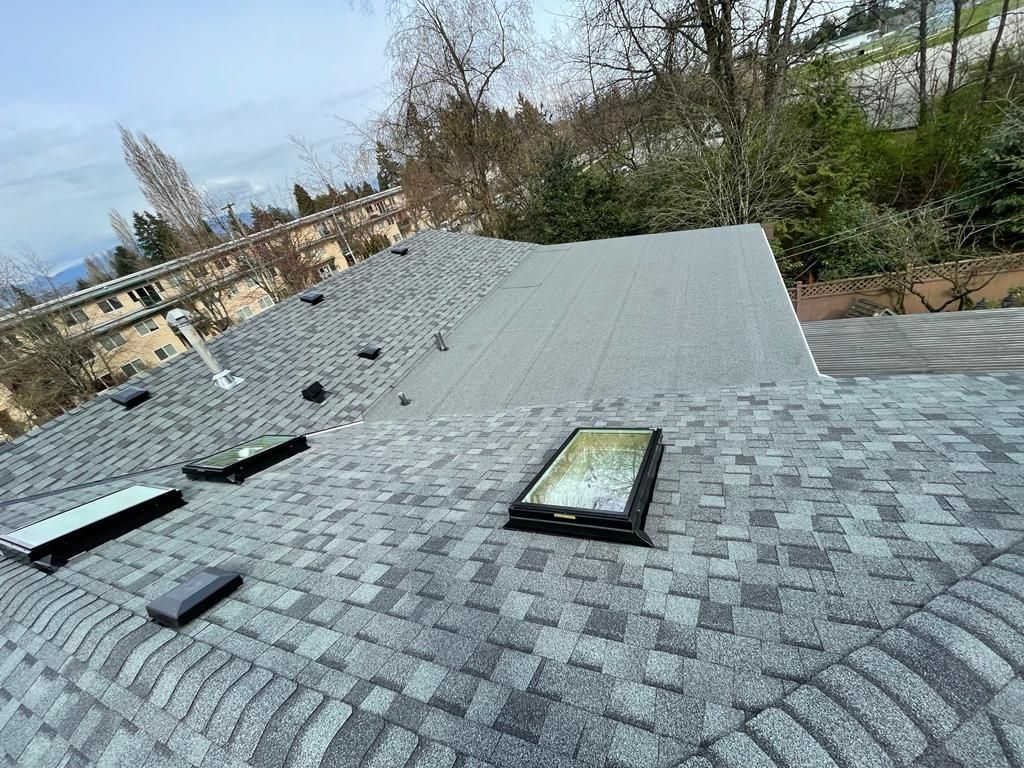
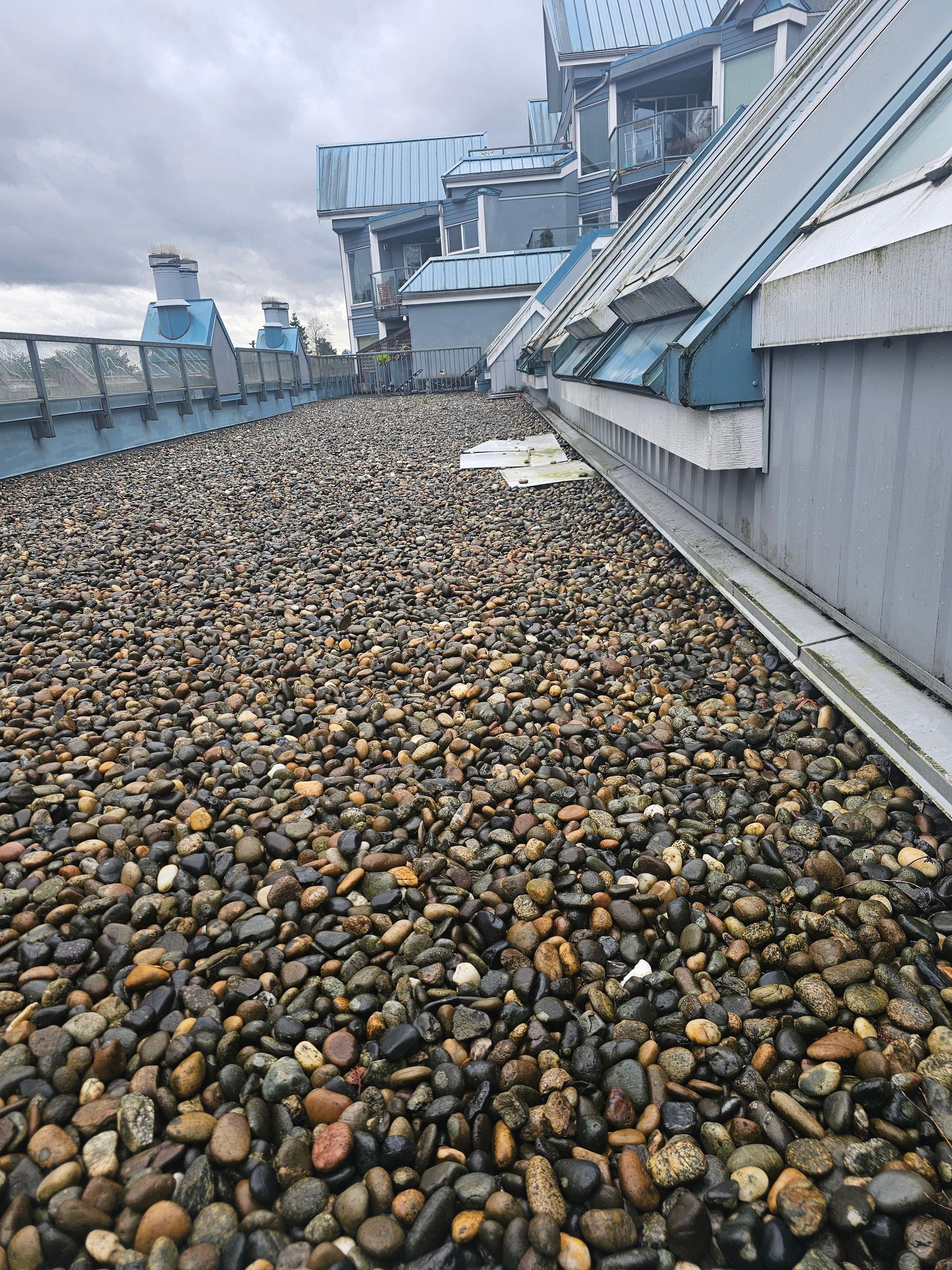
Roof coverings meet other parts of the building. These views show why roof shape, adjoining walls and access belong in the conversation before a membrane is selected.
Different roof surfaces meet beside skylights. A membrane proposal should include the transition to neighbouring coverings.Glazing, walls and metal flashings around a gravel covered roof. These connections remain part of the assessment when the membrane is concealed.
RAIN NEEDS A WAY OUT
EPDM does not solve poor drainage
A waterproof membrane and a roof that drains are different requirements. Repeated standing water can point to blocked outlets, low spots, an inadequate slope layout or movement in the supporting assembly. Replacing the sheet without understanding the cause may leave the same problem behind.
Describe where water remains, how long it persists and whether leaks occur during or after rainfall. The assessment should consider the primary outlets, any required overflow route and the condition beneath the membrane. A designer may need to review changes to slope, loads or drainage.
Keep an accessible record of drain cleaning and roof observations. Arrange safe professional access for maintenance; do not climb onto a wet roof to investigate a leak.
IF PEOPLE WILL USE THE ROOF
Design a roof terrace as a complete assembly
EPDM can form the waterproofing beneath a suitably designed deck or paver surface. The roof needs protection from supports, sharp edges and repeated foot traffic. Maintenance walkway pads serve access routes; they do not turn a membrane into a recreational deck.
Before adding a walking surface, confirm structural capacity, the support and protection arrangement, drainage clearance and how the membrane will remain accessible for inspection or repair. Railings, doors and other penetrations need coordinated waterproofing details.
Tell us about proposed furniture, planters, equipment or deck alterations at the outset. Their loads and interfaces may call for design work or another trade beyond the membrane installation. Confirm the applicable City requirements and strata approvals for the actual project.
UNDERSTAND THE CAUSE
Repair a local defect or plan replacement?
A puncture or an open seam does not automatically mean the entire roof must be replaced. A repair may be appropriate when the surrounding membrane and underlying assembly remain suitable. Recurring leaks, widespread deterioration or wet materials below the sheet need a broader investigation.
A repair needs a defined target
Identify the membrane, the defect and the condition around it. The repair materials and preparation must suit that product. Keep previous patch and warranty records available for the assessment.
Replacement needs a defined scope
Confirm which layers are removed, how the exposed deck is reviewed and what drainage or flashing changes are included. Explain how concealed repairs will be documented, priced and approved.
Avoid applying an unidentified coating, roofing cement or solvent to rubber roofing. Chemical compatibility matters, particularly around grease, oils and rooftop exhaust equipment. An improvised patch can complicate the next repair.
COMPARE LIKE FOR LIKE
What affects the cost of EPDM roofing?
The roof area is only one part of the price. A small addition with difficult wall connections can require substantial detail work. A larger open roof may have a different balance of membrane, preparation and access costs.
Existing roof conditions
Removal, disposal, wet insulation and deck repairs affect the work. Confirm which findings are known and which are allowances for concealed conditions.
System specification
Membrane construction, thickness, attachment, insulation and cover board selection change the scope. Compare the named products and complete assembly.
Details and drainage
Walls, skylights, pipes, drains, scuppers and edge metal add interfaces to complete. Include any necessary adjustments rather than comparing membrane area alone.
Access and occupied areas
Height, delivery space, material staging and protection of the property affect planning. A strata or commercial project also needs clear access and communication arrangements.
Get the important terms in writing
Ask for the included roof areas, exclusions, approval process for extra work and applicable product and workmanship warranty documents. A manufacturer’s advertised warranty does not establish that a particular contractor, assembly or repair qualifies.
ANSWERS BEFORE YOU COMMIT
EPDM roofing questions
Is rubber roofing the same as EPDM?
The term can describe several products. EPDM is a synthetic rubber sheet membrane for flat and low slope assemblies. Moulded rubber shingles are individual coverings for a different roof system. Confirm the material before choosing a repair or comparing quotes.
How long does an EPDM roof last?
Its service life depends on the product, installation, exposure, drainage, traffic and maintenance. The condition of seams, flashings and underlying materials matters as well as age. We do not promise one lifespan for every EPDM roof; compare the actual specification and written warranty terms.
Can EPDM handle ponding water?
Do not choose EPDM as a way to accept poor drainage. Persistent standing water needs investigation of outlets, slope and the supporting assembly. The proposed system and drainage design should address the cause rather than covering over it.
Can I put a deck over an EPDM roof?
A designed deck or paver surface can be installed above a suitable protected membrane assembly. Confirm loads, supports, protection layers, drainage and future repair access before work begins. Bare EPDM is not a finished walking deck, and maintenance pads are not a patio surface.
Can an EPDM roof be repaired?
Local defects may be repairable when the surrounding membrane and roof assembly remain suitable. The material must be identified and the repair system must be compatible. Recurring problems or wet materials underneath may require a wider scope.
Is a thicker membrane always the best choice?
Thickness is one factor. Reinforcement, attachment, substrate, accessories, expected traffic and the complete roof design also matter. Ask why the proposed membrane suits the building and which product and warranty requirements apply.
Do I need a permit for EPDM reroofing in Vancouver?
The answer depends on the actual scope, building and proposed alterations. Confirm current City requirements before work begins, particularly when changing structure, roof use, insulation or drainage. Establish who is responsible for approvals and any required design work.
What should I send when requesting an assessment?
Send the property location, building type, known roof material and a description of the problem or planned work. Leak dates, earlier repair records and photographs taken from a safe position are useful. Mention any deck or rooftop equipment changes and who can arrange access.
PARAGON ROOFING BC
Bring the roof details into one clear scope
Our own roofing crews carry out the work, with owner involvement and a detailed written proposal. Tell us what you need to achieve so we can discuss assessment, material choices and the next step for your Vancouver property.