
Townhouse & Strata Roofing in Delta – Reliable Roofing for Multi-Family Buildings
PARAGON ROOFING BC
Protecting Your Home.
Building Your Family’s Future.

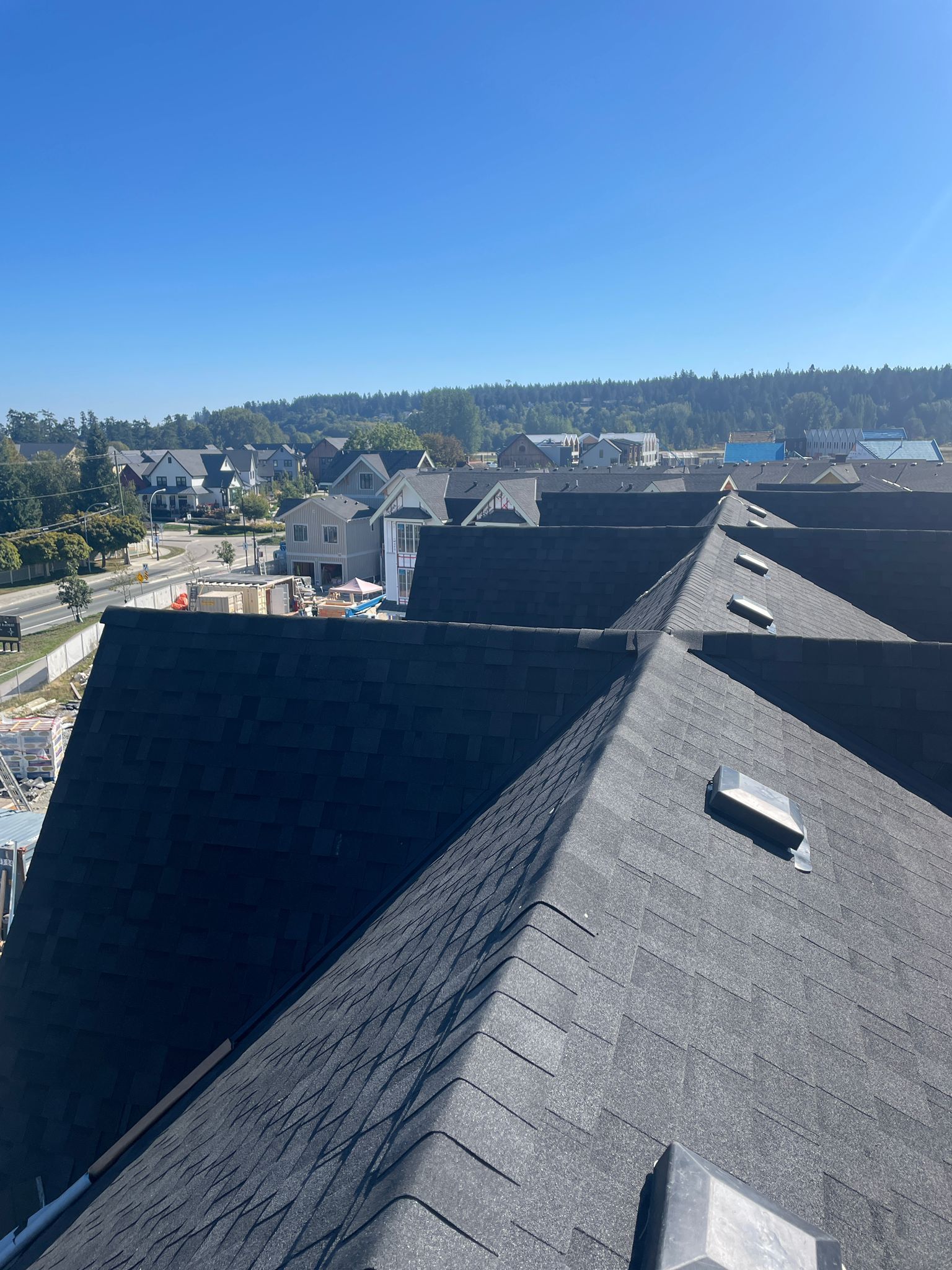
Townhouse & Strata Roofing in Delta, BC
Roofing solutions tailored for Delta townhomes, duplexes & low-rise strata
Townhouse and strata roofing in Delta isn’t just “a bigger house roof.” It’s a different ecosystem altogether. You’ve got shared walls, mixed rooflines, multiple unit types stacked into one structure, and a council balancing budgets, reserve funds and owner expectations—all while the roof quietly takes every storm on the chin.
On these buildings, the roofing system has to do three things at once:
- Protect dozens of individual living spaces(not just one family)
- Handle complex details like party walls, shared gutters, long continuous ridges and transitions between units
- Stay manageable from a budgeting and maintenance standpoint over 20+ years
For Delta townhomes, duplexes and low-rise strata, we typically design solutions around:
- Long, continuous slopes that need consistent details from unit to unit
- Shared attic and ventilation strategies (one bad detail can affect several homes)
- Proper tie-ins at unit separations, firewalls and parapets
- Clear phasing plans so sections can be done over time without leaving weak links in the system
The goal is zero surprises: a system that’s predictable in performance, easy to maintain, and backed by clear documentation that strata councils and property managers can refer to year after year. For a broader look at how we handle multi-family roofs beyond Delta specifically, see our dedicated page for strata and multifamily roofing services.
How Delta’s coastal weather impacts multi-family roofs
Delta’s weather is a stress test for multi-family roofs. Long, soaking rains work at every seam. Coastal winds push water sideways into details that would be “fine” in a drier city. Add moss, shade and debris from nearby trees, and you’ve got a recipe for early failure if the system isn’t designed properly.
On townhomes and strata complexes, the impact is amplified because:
- Roof runs are often longer and more continuous, so any ponding or drainage issues affect a much larger area.
- Flat or low-slope sections over garages, entries or amenity spaces are common, and they’re exactly where ponding likes to show up.
- A small defect—an open flashing, a poorly sealed penetration—can affect multiple units before anyone even knows there’s a problem.
That’s why we put extra emphasis on:
- Drainage design – ensuring water doesn’t sit for days along parapets, walls or shared gutters.
- Consistent detailing – the same high standard at every unit transition, not a mix of “good here, patched there.”
- Maintenance planning – seasonal inspections, drain checks and moss control scheduled before heavy rain seasons.
The buildings that fare best in Delta aren’t lucky—they’re the ones whose roofs were built and maintained with this climate in mind from day one.
Working with active strata councils, property managers & owners
A multi-family roofing project in Delta has two sides: the technical roof work and the human logistics. If you ignore the second one, the project turns stressful fast. We treat communication and coordination as seriously as the installation itself.
When we work with strata councils and property managers, we typically:
- Start with a clear condition assessment – photos, notes, and plain-language explanations that councils can share with owners.
- Present options, phasing and budgets – not just “replace everything now,” but realistic pathways that match reserve funds and priorities.
- Provide written scopes that spell out exactly what’s being done, where, and why.
- Help councils explain the difference between patching, partial replacement and full system upgrades, so owners understand what they’re voting on.
During the project, we:
- Coordinate schedules around parking, garbage days, access routes and quiet hours where possible
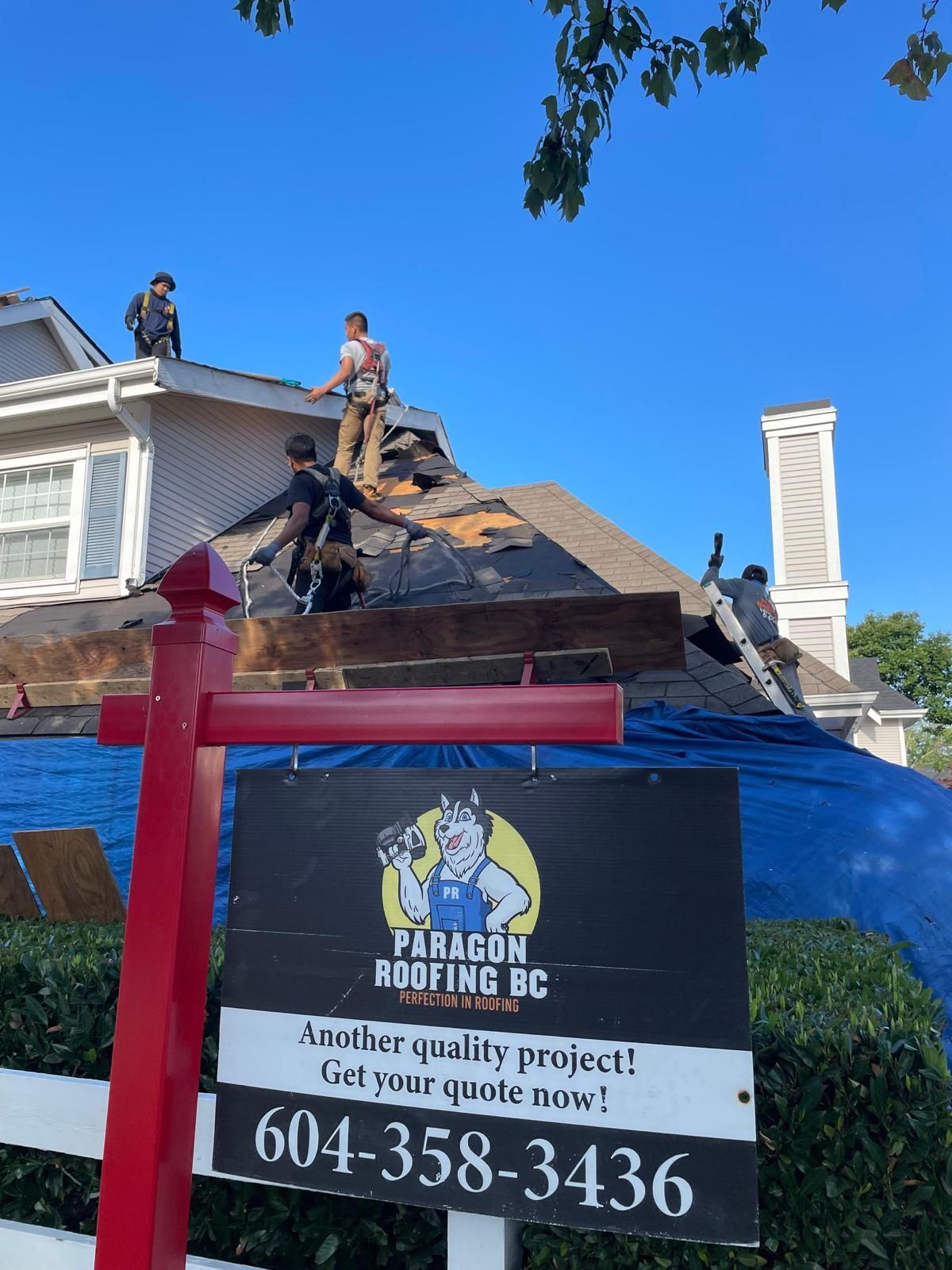
- Put up signage so residents know what’s happening and when
- Keep property managers and council reps updated with progress photos and daily/weekly summaries
After completion, we make sure strata has:
- Final documentation of the work, materials and warranties
- Photos of key details and completed areas
- A maintenance roadmap so the roof stays in good shape instead of drifting into “out of sight, out of mind” mode
Townhouse and strata roofing in Delta is a long game. The right partner doesn’t just install a system—they give councils, property managers and owners the information and support they need to manage that system for the next couple of decades.
We're Excited To Serve YOU!
Paragon Res Roof #1
We will get back to you as soon as possible.
Please try again later.
Roofing Systems We Install on Delta Townhomes & Strata Buildings
Architectural asphalt shingles for pitched townhouse roofs
Most Delta townhomes and duplex-style strata buildings still rely on architectural asphalt shingles for their sloped roofs—and for good reason. They hit the sweet spot between cost, durability and appearance, especially in complexes that want a consistent look across dozens of units.
On these roofs, we don’t just “re-shingle”; we build a full system designed for Delta’s coastal weather:
- High-quality architectural shingles with proper coastal-rated wind resistance
- Ice & water protection in valleys, at wall intersections and around penetrations
- Synthetic underlayments that hold up better in long periods of dampness
- Proper flashing at party walls, shared chimneys and step transitions between units
Because townhouse rows often share long ridges and continuous eaves, ventilation and gutter performance become critical. We look at the whole row, not just one unit, so you don’t end up with one “good” section surrounded by weak links. For a broader view of how we approach multi-building communities, our page on strata and multifamily roofing services explains how we scale these systems across complexes.
SBS torch-on and membrane systems for flat & low-slope strata roofs
Many Delta townhome and low-rise projects have a mix of sloped and flat/low-slope areas —over garages, entries, corridors, amenity spaces or top-floor units. Those sections can’t rely on shingles; they need properly designed membrane systems.
We typically use:
- SBS torch-on systems for larger flat roofs, corridors and over-living-space sections where durability is non-negotiable
- Single-ply membranes(TPO/EPDM) where the design, budget and building use call for them
- Protected membrane assemblies with insulation and coverboards on buildings that need higher R-values and better long-term stability
On Delta strata roofs, the failure points are almost always details, not just the field membrane:
- Drains and scuppers that pond water
- Parapet caps and terminations that let wind-driven rain back in
- Transitions where flat roofs meet sloped shingle sections
Our approach is to build a system that keeps water moving, protects seams from UV, and uses clean, repeatable detailing so any future repairs or inspections are straightforward.
Metal roofing upgrades for long-term durability
When strata councils in Delta want to stretch lifecycle performance and reduce future replacement cycles, metal becomes a serious option—especially on higher-end townhomes, exposed ridge lines and key architectural elements.
We design metal roofing options for:
- Prominent townhouse rooflines facing main streets or view corridors
- Highly exposed rows in Tsawwassen or near open farmland where wind and salt-laden air are harsher
- Complexes moving away from aging cedar or repeated shingle failures
On these projects we focus on:
- Correct substrate and underlayments under the metal
- Clip spacing, fastener patterns and flashing that can handle coastal wind uplift
- Snow-shedding behaviour over walkways, driveways and shared paths
Metal doesn’t have to cover every square foot—sometimes a hybrid approach works best, with key roof planes upgraded to metal and other areas kept in high-quality asphalt for budget balance.
Skylights, vents, flashings and drainage components we handle
On multi-family roofs, most of the real problems don’t appear in the middle of a wide open slope—they show up at skylights, vents, flashings and drainage points. That’s why we include these components as a core part of our roofing systems for Delta townhomes and strata buildings, not as side notes.
Typical work includes:
- Replacing or properly re-flashing skylights and recommending upgrades where units are aged or failing
- Rationalizing and upgrading ventilation layouts so shared attics and unit-specific attics breathe properly
- Rebuilding chimney, wall and party-wall flashings with details suited to Delta’s wind-driven rain
- Reworking gutters, downspouts and scuppers so water actually leaves the roof instead of looping back into fascia, siding or decks
If a complex has a history of mysterious leaks or recurring “repairs” that never quite hold, these components are usually where the story starts. Addressing them properly, as part of a full system approach, is what turns a strata roof from a recurring line item into a predictable long-term asset.
Common Roofing Issues on Townhouse & Strata Roofs in Delta
Chronic leaks at party walls, valleys & shared rooflines
On Delta townhouse and strata roofs, leaks rarely show up in the middle of a clean shingle field. They show up where units meet units —party walls, shared ridges, long valleys and transitions between different roof planes.
Over time, you’ll often see:
- Hairline gaps where old step flashing meets stucco or siding
- Caulking used as a “solution” instead of proper metal detailing
- Valleys that were never lined with proper underlayment or have been patched multiple times
- Water tracking sideways under shingles along shared rooflines before finally appearing inside one unlucky unit
Because these details repeat across a whole row of townhomes, a weakness in one area usually means other units are close behind. A proper strata roofing plan in Delta doesn’t just chase the leak in Unit 12; it looks at the entire shared roofline and upgrades details systematically so you’re not playing leak whack-a-mole every rainy season.
Ponding water and blistering on flat and low-slope roofs
On multi-family buildings in Delta, flat and low-slope sections over garages, corridors, and top-floor suites are often where the worst problems live. When drainage isn’t designed or maintained properly, water sits in shallow “lakes” around drains, parapets and HVAC stands.
Left alone, ponding leads to:
- Blistering and soft spots in SBS torch-on and other membranes
- Accelerated UV breakdown of exposed surfaces
- Seams that slowly open as the membrane expands and contracts under standing water
- Hidden moisture that creeps into insulation, deck layers and finally interior ceilings
On these roofs, the fix isn’t just another patch. It’s rethinking slope, drains and scuppers, then rebuilding the membrane properly so water actually moves. That’s why serious flat-roof issues often end up as full system projects rather than endless small repairs.
Aging cedar shakes and failed past repairs on older complexes
Many older Delta townhome and strata complexes were built with cedar shakes. They looked great at first, but after decades of coastal weather, you get a familiar picture:
- Thinning, curled and split shakes that no longer shed water properly
- Soft spots in the roof deck where leaks have quietly worked the sheathing
- Patches of mismatched shingles, tar, metal and “temporary” fixes layered on over the years
The result is a roof that doesn’t fail all at once—but fails one unit at a time, in different ways, for years. At a certain point, the cost and frustration of constant spot repairs outweigh the cost of a planned conversion to asphalt, metal or synthetic.
That’s where a structured cedar-conversion plan, often tied into a broader complex-wide roofing strategy like those we outline on our strata and multifamily roofing services page, gives councils a clear path forward instead of band-aids.
Inadequate ventilation causing overheating and shingle failure
Townhouse attics in Delta are often chopped up, shared or oddly vented, and that’s a problem. Poor ventilation doesn’t just make top-floor bedrooms stuffy; it quietly cooks roofing systems from the underside.
Common patterns include:
- Shingles on south and west slopes aging much faster than expected
- Premature granule loss, curling and cracking despite “decent” materials
- Condensation on the underside of the deck in colder months, leading to mould or rot
- Mixed or blocked vents where old systems, bathroom fans and new roof vents all compete instead of working together
Proper ventilation design on a strata or townhouse project means treating the building as a connected system, not a row of isolated single-family homes. When we plan replacements or conversions in Delta, we redesign intake and exhaust so the roof, insulation, and interior spaces all work together—reducing heat stress, moisture build-up and long-term failure risk.
Our Strata Roofing Process for Delta Townhouses
Site visit, inspection, photos and detailed condition reports
Every strong strata roofing plan in Delta starts with seeing the real roof, not guessing from the parking lot. We begin with:
- A full on-roof inspection of slopes, valleys, flashings, flat areas and drainage points
- Attic checks where possible to see ventilation, moisture and deck conditions
- Photos of key problem areas and representative “typical” sections across the complex
We then turn that into a condition report in plain language: what’s working, what’s failing, and what needs to change in the next 1–5+ years.
Clear scopes of work for strata councils & property managers
Strata councils don’t just need a quote—they need something they can present, explain and defend to owners. That’s why our proposals are built as clear scopes, not vague roofing jargon:
- Defined areas and building sections included in the work
- Material types, underlayments and membrane systems being proposed
- How we’re handling flashings, vents, skylights, drains and other critical details
- Any optional upgrades separated from must-do items
This gives councils and property managers something solid to bring to AGM/SGMs, and it reduces confusion, fear and pushback from owners who just want to know, “What exactly are we paying for?” For Delta-specific context, many complexes start this journey from a general service overview like our Delta roofing services page, then move into a custom strata plan.
Phasing projects to minimize disruption to residents & parking
Townhouse and strata projects don’t happen in a vacuum—people still need to:
- Park their cars
- Get kids to school
- Receive deliveries
- Use walkways and shared spaces
We structure projects in phases so that:
- Only certain blocks or rows are being worked on at any given time
- Residents get advance notice of when their units and parking spots will be affected
- High-traffic times and access routes are respected as much as possible
This keeps the roof moving forward without turning the entire complex into a construction zone for weeks on end.
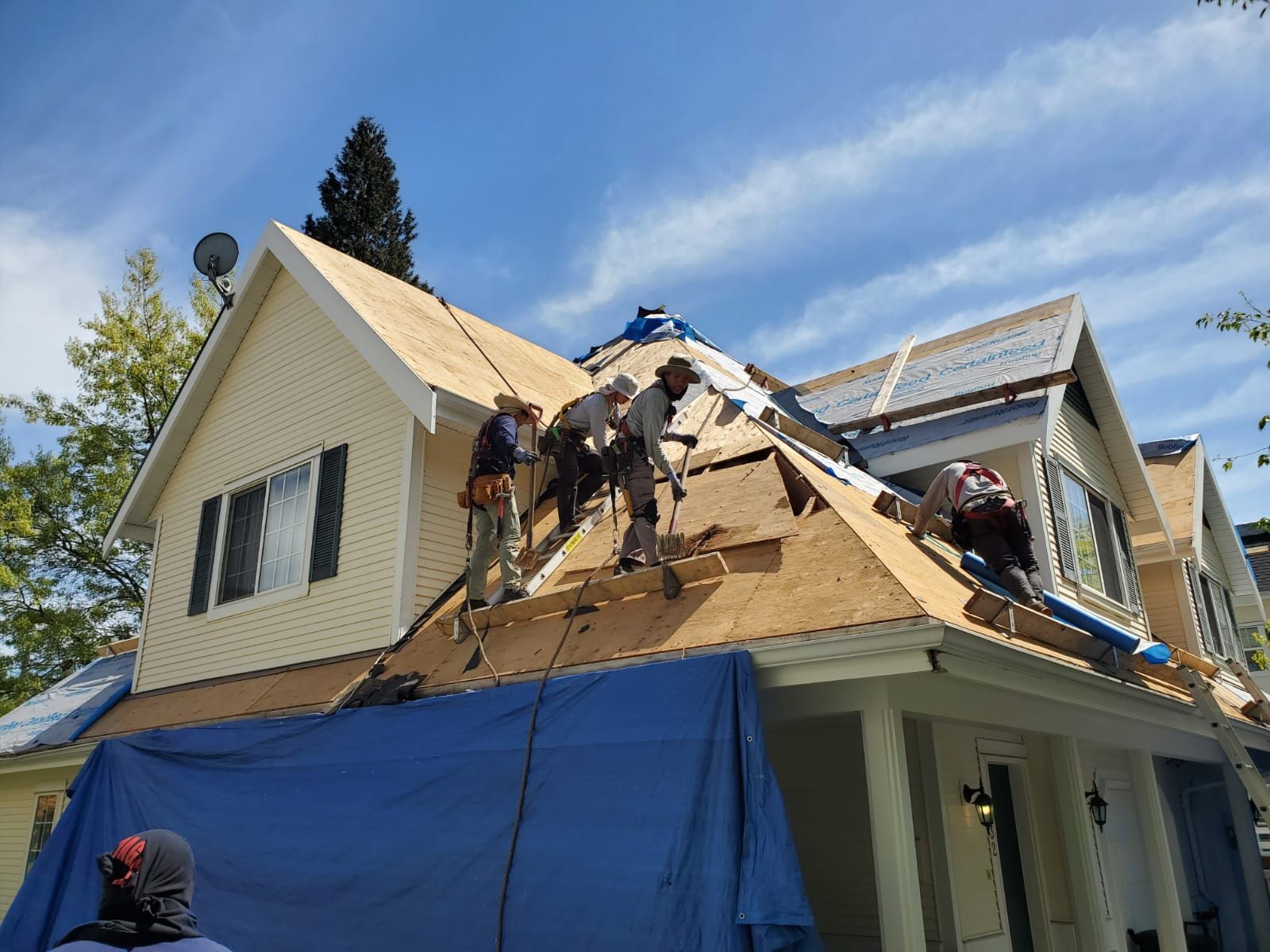
Safety plans, access, cranes and material staging
Multi-family roofing in Delta often involves tight lanes, raised parkades, shared courtyards and limited access. We handle the logistics upfront:
- Safety plans that account for residents moving under and around work areas
- Crane or boom-lift scheduling for moving materials and debris safely
- Designated staging zones for shingles, membranes, bins and equipment
- Clear signage and barriers where needed to keep people out of hazard areas
Good technical roofing is only half the job; the other half is executing it in a way that keeps everyone safe and the site organized from day one to final cleanup.
Final walkthrough, documentation and warranty handover
When the last section is complete, we don’t just pull the bin and disappear. We:
- Walk the completed areas with the property manager or designated council rep
- Confirm that agreed details have been completed and any punch-list items are handled
- Provide documentation of materials used, installation dates and warranty terms
- Outline recommended maintenance schedules so the new system actually reaches its intended lifespan
The result is a strata roof that isn’t just “new,” but documented, explainable and future-proofed —with councils, managers and owners all clear on what was done and how to look after it going forward.
Roof Repairs vs Full Replacement for Delta Townhouse Complexes
When targeted repairs make sense for strata budgets
In Delta townhouse and strata complexes, you don’t always have to jump straight to a six-figure roof replacement. There is a place for targeted, surgical repairs—especially when:
- The roof system is younger than its expected lifespan and most areas are still performing well.
- Leaks are clearly tied to specific details: a cracked flashing, a failed valley, a poorly sealed penetration, a bad tie-in at a wall or chimney.
- The strata is actively building a contingency or CRF plan and needs a few more years of safe service life before committing to full replacement.
Good candidates for repairs:
- Isolated leaks that correspond to visible defects.
- Localized membrane damage near a drain, scupper, skylight or HVAC curb.
- Small sections of aging shingles on an otherwise decent roof—where exposure (sun/wind) is clearly worse than the rest.
In those cases, we’ll often recommend:
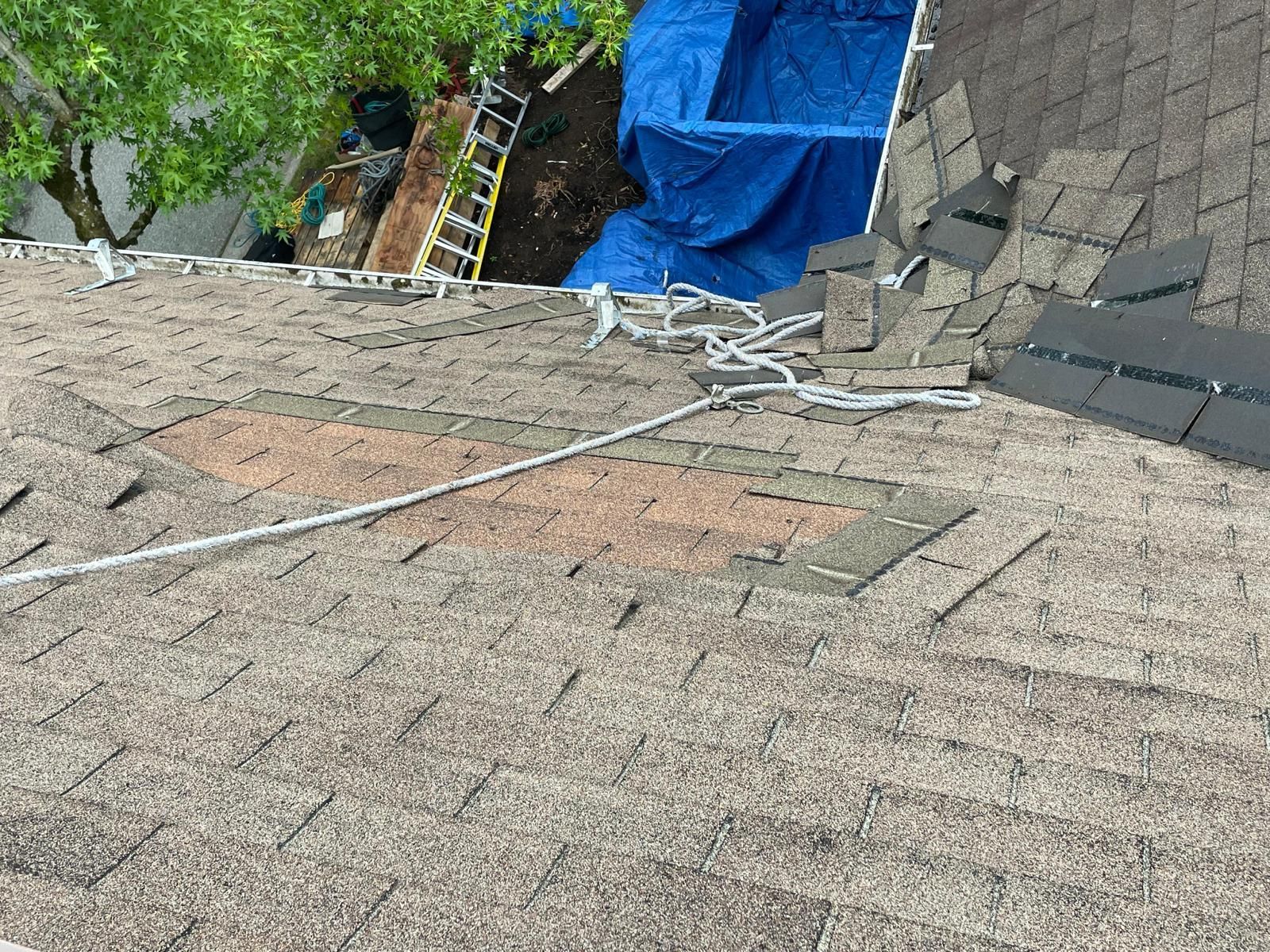
- Targeted shingle or membrane replacement in the affected area.
- Re-doing weak flashings or details to today’s standard.
- Short-term maintenance plans (especially on flat roofs) to keep things stable while the strata builds reserves.
The key is honesty: repairs should buy predictable time, not kick a failing system down the road and pretend it’s fine.
Red flags that indicate it’s time for full replacement
On the other hand, there’s a point where repairs stop being smart and start becoming expensive band-aids. For Delta townhouse roofs, full replacement is usually on the table when:
- You’re seeing recurring leaks in multiple units, often in different locations.
- Shingles across large areas are curled, brittle, cracked or heavily granule-worn.
- Flat/low-slope sections show widespread ponding, blistering or soft spots.
- Cedar shakes are thin, split and patched everywhere with random shingles and tar.
- Decking is failing: soft spots, spongy areas, or attic signs of long-term moisture.
Red flags also include:
- Insurance concerns or conditions related to roof age.
- Repeated “emergency” calls after big storms, often to the same general areas.
- Quotes for repairs starting to feel like throwing good money after bad.
When we assess a Delta complex, we’re clear about where the line is: this portion is still worth repairing; this other portion is now in full-replacement territory. That clarity helps councils make decisions that hold up over the next 10–20 years, not just the next winter.
Planning multi-year roofing programs for larger complexes
Most large townhome sites in Delta don’t replace every roof in one shot. Instead, the smart approach is a multi-year roofing program that matches reserve funding, urgency and building condition.
A typical plan might:
- Prioritize the worst-performing blocks first —where leaks, age and exposure are the most severe.
- Group work by logical sections(e.g., Block A this year, Block B and amenity roofs next year, remaining blocks after that).
- Combine flat and pitched work strategically so that shared details (walls, transitions, parapets) are upgraded together.
- Spread cost over 3–5 years while still moving the entire site towards a consistent, modern roofing standard.
We back this with:
- Condition reports and photos by block/building.
- Clear phasing recommendations.
- Budget ranges per phase so councils can align this with their CRF planning.
This turns roofing from a “surprise crisis” into a planned asset management strategy, which is exactly what insurers, engineers and lenders like to see on multi-family properties. For an overview of how we structure these programs across the Lower Mainland, see our page on strata and multifamily roofing services.
Flat & Low-Slope Roofing for Delta Strata & Townhouse Buildings
Torch-on and membrane options for townhouse blocks & common areas
Delta complexes often have a mix of sloped townhouse roofs and flat or low-slope areas: over garages, corridors, stair cores, amenity rooms or top-floor suites. Those low-slope zones can’t rely on shingles—they need dedicated flat roofing systems.
Common systems we install on Delta strata properties include:
- SBS torch-on membranes
- Great for large, continuous roofs and high-traffic service areas.
- Multiple plies, robust seams and proven durability in coastal climates.
- Single-ply membranes (TPO/EPDM)
- Useful where design, weight, or specific detailing benefits from a single-ply approach.
- Can be paired with cover boards and insulation for a full protected assembly.
System choice depends on:
- Existing roof design and structure.
- Insulation needs and code requirements.
- How residents and maintenance teams will interact with the roof (access, traffic, units up top).
The main objective is simple: create a membrane system that drains well, resists ponding, and handles Delta’s coastal weather without constant repair calls.
Improving drainage with added slope, drains, scuppers & overflows
Most flat roof problems in Delta start with one underlying issue: water has nowhere good to go.
To fix that, we focus on the full drainage picture:
- Slope packages – adding tapered insulation or re-sloping sections so water moves to drains instead of sitting in shallow lakes.
- Proper drain placement – ensuring drains are in low spots by design , not accidentally higher than the surrounding roof.
- Functional scuppers and overflows – giving water a safe path out if primary drains are overwhelmed or clogged.
- Edge and parapet detailing – preventing water from curling back under membranes, fascias and walls.
A well-designed drainage system doesn’t just reduce leaks. It extends membrane life, protects insulation and structure, and cuts down on emergency calls every time Delta gets hit with a big rain system.
Insulation upgrades to meet code and improve comfort
When a flat roof is open, it’s the perfect moment to solve more than just water issues. Many older Delta townhouse and low-rise buildings are under-insulated by modern standards, which means:
- Hot, stuffy top-floor rooms in summer.
- Heat loss and higher energy bills in winter.
- Greater condensation risk inside assemblies.
During replacement, we can:
- Bring insulation levels up to current energy code where required or recommended.
- Use combinations of rigid insulation and cover board to create a warmer, more stable assembly.
- Improve comfort in top-floor units and reduce load on heating/cooling systems.
Insulation upgrades are one of those decisions that don’t just “check a code box”—they make the building noticeably more comfortable for residents over the long term.
Cedar Roof Conversions for Delta Townhouses & Duplexes
Replacing aging cedar shakes on older Delta townhome sites
Many of Delta’s older townhouse and duplex sites were originally built with cedar shakes. They looked fantastic at the start, but after decades of storms, moss and UV, we’re often called to complexes where:
- Shakes are thin, cracked, curled and missing in places.
- Decking has soft spots from long-term slow leaks.
- Random patches of asphalt shingles, metal and tar have been layered over the years.
At this stage, another “repair” doesn’t actually restore the system; it just hides symptoms. A planned cedar conversion gives the whole complex a reset: new sheathing where needed, modern underlayments, and a roofing system that matches current expectations for lifespan, fire performance and maintenance.
For many Delta homeowners, this is the moment where the complex finally moves from “we’re constantly chasing leaks” to “we have a predictable, modern roof.” A good starting point for understanding our overall Delta approach is our Delta roofing services overview.
Converting cedar to asphalt, metal or synthetic systems
Once the old cedar and strapping are removed and fresh sheathing is in place, you’re no longer locked into shakes. Delta townhouses and duplexes typically choose among three main conversion paths:
- Architectural asphalt shingles
- Most common for budget-balanced projects.
- Good lifespan when combined with proper underlayments and ventilation.
- Wide colour and profile options to match existing siding and neighbourhood character.
- Metal roofing (standing seam or panel systems)
- Higher upfront cost, longer expected lifespan.
- Great for highly exposed sites (open areas, near water, wind-prone zones).
- Crisp, modern lines that can instantly refresh an older complex.
- Synthetic “cedar-look” systems
- Ideal for complexes wanting to maintain a cedar aesthetic without cedar maintenance.
- Lighter weight, engineered profiles and strong warranty options.
The right choice depends on budget, aesthetic targets, long-term ownership plans, and how the complex wants to position itself in the market over the next couple of decades.
Handling shared rooflines, firebreaks and architectural details
Cedar conversions on townhouses aren’t just about swapping one material for another. You’re working on shared rooflines, firebreaks and architectural details that tie multiple units together.
We pay special attention to:
- Party walls and firewalls – ensuring new systems respect separation requirements and detailing doesn’t compromise fire protection.
- Step transitions and height changes – where one unit’s roof steps up/down from the next; these are common leak points if not handled correctly.
- Dormers, sidewalls and chimneys – many cedar roofs were originally built with details that don’t meet today’s expectations in a coastal climate.
- Gutter alignment and drainage – making sure the new roof planes feed existing or upgraded gutter systems properly.
A well-executed cedar conversion on a Delta townhouse or duplex site doesn’t just fix old problems; it simplifies future maintenance, clarifies detailing, and gives the complex a clean, modern roofing baseline to build on for years.
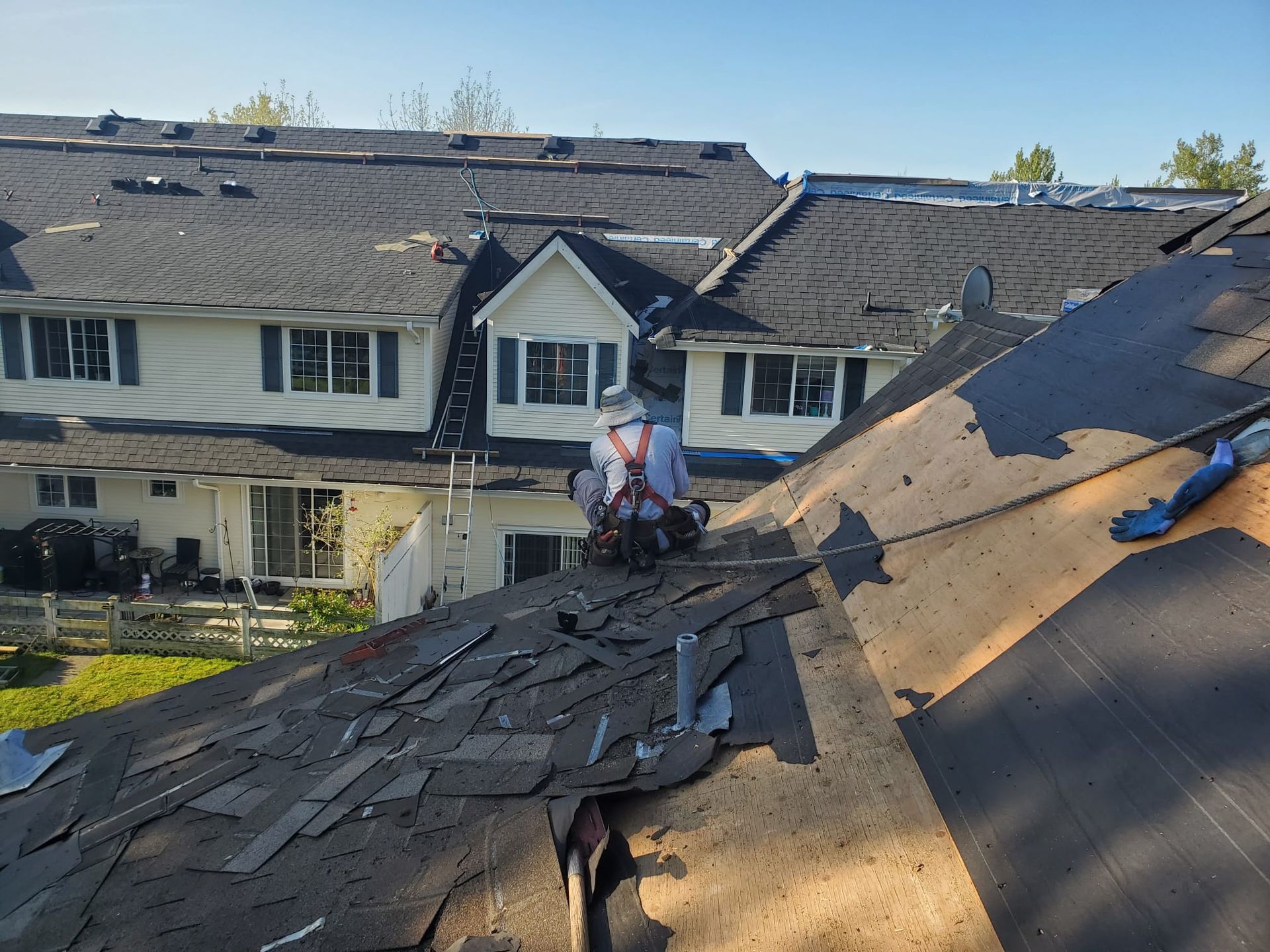
Roofing Costs for Townhouse & Strata Projects in Delta
Key cost drivers – access, height, layout & roof type
Townhouse and strata roofing in Delta comes with its own pricing DNA. Unlike a simple single-family home, multi-unit buildings combine shared structures, varied roof types and challenging access, all of which influence cost. The biggest drivers are:
- Access & staging: Tight lanes, shared driveways, limited bin placement and restricted crane access all increase labour hours.
- Height & safety: Three-storey walk-ups require additional fall protection, lift equipment and time for safe movement.
- Roof complexity: Long valleys, multiple party walls, extensive flashing, skylights, parapets and transitions increase installation time.
- Roof type: Membrane systems, pitched shingle systems, metal upgrades and cedar conversions all sit in different cost ranges.
- Condition of existing materials: Rotten sheathing, old cedar strapping, saturated insulation or failing torch-on membranes increase prep work.
In strata settings, the pricing conversation is never just about square footage. It’s about building design, history, drainage, detailing—and how the entire complex performs as one roof system, not dozens of isolated patches.
Cost differences: pitched shingle roofs vs flat torch-on systems
Strata complexes in Delta usually have two kinds of roofs: pitched townhouse roofs and flat/low-slope sections over garages, corridors or common areas. Their costs reflect completely different installation processes:
Architectural asphalt shingle roofs
- Lower upfront cost
- Fast to install compared to membranes
- Lower material cost than metal or synthetics
- Great for townhouse rows with consistent slopes
SBS torch-on & membrane systems
- Higher labour and safety requirements
- More complex detailing around drains, parapets and transitions
- Require proper slope, insulation, flashing and multi-ply membranes
- Longer lifespan when properly built
- More technically demanding installation process
It’s normal for a strata complex to have both—and to budget for them separately.
Budgeting for phased roofing across multiple buildings
Most strata corporations don’t replace all buildings at once. Instead, they adopt multi-year phased roofing plans that match reserve funding, urgency and building condition.
A phased plan makes sense when:
- Some buildings are failing faster (sun/wind exposure, older repairs, weaker drainage).
- CRF funds aren’t ready for a full complex-wide replacement.
- Council wants predictable, manageable yearly spending rather than one massive levy.
- Roof sections can be grouped logically—Block A this year, Block B next year, flat roofs afterward.
We build plans that include:
- Condition reports for each block
- Estimated lifespan by building
- Priority levels based on leak history and structural risk
- Cost projections across 2–6 years
This turns a looming six-figure project into a strategic, financially manageable roadmap. For councils needing a broader understanding of how these projects scale, our overview of strata roofing services outlines typical multi-building workflows.
Helping councils compare quotes and avoid “cheap” mistakes
Cheap roofing quotes cost strata corporations more than expensive ones—just not right away. The real danger is in missing details such as:
- Missing or improper underlayments
- No ice & water protection in valleys and walls
- Weak flashing details at party walls and chimneys
- No plan for sheathing repairs
- No allowance for drains, scuppers or slope correction
- Incomplete membrane systems (one ply instead of two)
- Unclear cleanup, staging and safety plans
A low number on paper almost always means corners are being cut in the roof assembly, not because the material is cheaper—but because entire critical steps are removed.
We help strata councils compare apples to apples by reviewing proposals, scopes and assumptions so the community avoids costly mistakes that show up years later, not during installation.
You can also reference our Delta-focused service overview at Delta roofing services when educating owners on what proper roofing actually entails.
Warranties, Maintenance & Annual Inspections for Strata Roofs
Workmanship and manufacturer warranties for strata roofing
Townhouse and strata roofs must be protected not only by materials, but by documentation. On multi-building sites, we provide:
- Written workmanship warranties for installation quality
- Registered manufacturer warranties when full system components are used
- Membrane warranties for torch-on and single-ply systems
- Final documentation packages for council records
The stronger the documentation, the easier it becomes to navigate future insurance claims, resale questions and maintenance decisions.
Setting up annual or bi-annual inspection programs
Delta’s climate is hard on multi-family roofs, so waiting five years between inspections is a guaranteed way to miss early problems. We set up:
- Annual inspections for complexes with significant flat roofing
- Bi-annual inspections for properties with heavy tree cover, moss issues or wind exposure
- Post-storm inspections after major coastal wind/rain events
These small checkups catch things early—open seams, clogged drains, slipped shingles, damaged flashings—and keep long-term costs down.
Cleaning drains, gutters and addressing minor issues early
Flat and low-slope strata roofs fail early when drains clog, gutters back up or small membrane defects go unnoticed. Preventative maintenance includes:
- Clearing roof drains, strainers and scuppers
- Cleaning gutters and verifying downspout flow
- Re-securing loose flashings, vents or skylight details
- Treating moss early before it burrows under shingles
- Checking parapets, HVAC stands and lap seams
These tasks take little time—but save thousands in repairs and emergency calls when the rainy season hits.
Delta Neighbourhoods We Service for Townhouse & Strata Roofing
North Delta townhomes and duplex developments
We work across all major townhouse corridors in North Delta, handling both sloped shingle roofs and mixed flat/low-slope assemblies. Areas include:
- Scottsdale
- Sunshine Hills
- Annieville
- Nordel
- Kennedy Heights
These communities often have older complexes that benefit from cedar-to-asphalt conversions, new ventilation plans, or upgraded drainage.
Ladner strata complexes and riverside communities
Ladner’s low-lying, riverside setting means roofs face extended moisture, shade and wind exposure. We’ve completed full replacements and phased roofing programs throughout:
- Ladner Village
- West Ladner
- Neighbourhoods near the river and farmland
- Condos and low-rise strata on the water
Torch-on upgrades, slope corrections and improved drainage are common needs here.
Tsawwassen and Beach Grove multi-family buildings
Tsawwassen is windier and more exposed than the rest of Delta, making roofing systems work harder. We service:
- Beach Grove
- Pebble Hill
- Tsawwassen Central
- Townhomes near the golf courses and coastline
These areas often benefit from stronger wind-rated shingles, metal upgrades and reinforced flashing details to combat coastal conditions.
Let's Chat Roofing!
Paragon Res Roof #2
We will get back to you as soon as possible.
Please try again later.
Why Delta Strata Councils & Property Managers Choose Us
Experience with complex townhouse and strata roofing projects
Townhouse and strata roofing isn’t just “more squares on a roof.” It’s politics, logistics, budgets, timelines and resident expectations—all layered on top of the technical work. We live in that world every day.
We’ve worked on sites with:
- Mixed roofing types (pitched shingles + flat torch-on + balconies)
- Aging cedar that needs conversion across multiple phases
- Active leak histories in multiple units, all telling slightly different stories
- Tight lanes, shared courtyards and limited crane/bin access
Because we’ve seen the full spectrum—from small duplex strata to large multi-building complexes—we know how to:
- Prioritize roofs that are truly urgent vs. those that can safely wait
- Create multi-year programs that align with CRF and special levy realities
- Communicate risk clearly so councils can justify decisions to owners
- Design systems that fit Delta’s wind, rain and coastal exposure rather than generic “one-size-fits-all” specs
This isn’t guesswork. It’s a repeatable, strata-focused process tuned to how Delta buildings are actually built and how they age in this climate.
Clear communication, meeting attendance and detailed reporting
Strata roofing fails when communication fails. Councils don’t just need a quote; they need a story they can retell to 20, 50, or 100 owners.
That’s why we:
- Join council and AGM/SGM meetings when requested to explain findings, options and costs in plain language
- Provide photo-heavy condition reports that show owners exactly what’s happening on their roofs
- Break proposals into clear scopes and phases—no vague “roofing package” lines that no one understands
- Outline pros and cons of repair vs. replacement vs. staged work, so boards can make informed choices
The goal is simple: by the time owners vote, they feel like they’re saying “yes” to a clear plan, not an expensive mystery.
Respectful crews, clean sites and minimal disruption
Townhouse and strata roofing in Delta happens in people’s real lives—kids heading to school, residents leaving for work shifts, deliveries arriving, older owners navigating walkways. We take that seriously.
On-site, we focus on:
- Clear staging and bin placement to keep driveways, fire lanes and walkways usable
- Daily cleanup of nails, caps and debris in parking and entry areas
- Communication with property managers about which blocks/rows are active and when
- Respectful crews who understand they’re working where people live, not on an empty jobsite
The result: roofs get replaced or repaired without the complex feeling like a construction site war zone for weeks on end.
Townhouse & Strata Roofing FAQs in Delta
How long should townhouse roofs last in Delta?
It depends on the system, exposure and how honest the original build was. As a rough guide for Delta:
- Architectural asphalt shingles on properly ventilated townhouse roofs can often last 20–30 years in good conditions—but south/west exposures or poor ventilation can knock that down.
- Flat and low-slope torch-on or membrane roofs might deliver 20+ years if they’re drained properly and maintained, but standing water and neglected drains can cut that life in half.
- Original cedar shakes on older complexes are usually at the end of their reliable life by the 25–35 year mark—often earlier if they’ve been patched and neglected.
We look at age, condition, leak history and attic performance together before giving a realistic expectation of what’s left. For individual unit owners wanting more detail on replacement timelines and system choices, our page on roof replacement in Delta walks through typical lifespans and upgrade paths.
Can roofing be done while residents stay in their homes?
Yes. Almost all townhouse and strata roofing in Delta is done with residents still living in their homes. It’s noisy, but it’s manageable with good planning.
We:
- Give advance notice for each block or building
- Clarify which days will be the loudest (tear-off, sheathing repairs, etc.)
- Coordinate garbage bins, material drops and crane times around key access needs
- Keep entry/exit routes safe and clearly marked
Most residents can carry on with daily life—work, school, errands—while we work overhead, with only short-term adjustments for parking or direct access as specific sections are being done.
How do you handle leaks between shared unit walls?
Leaks at shared walls and party walls are some of the trickiest issues in Delta townhouses. Water can:
- Enter at one unit’s roof detail
- Travel along a shared wall or framing member
- Finally show up inside a different unit entirely
We approach these leaks by:
- Inspecting the entire shared detail (party wall, step flashing, siding/stucco tie-ins)
- Checking both sides of the wall, not just the unit where water appears
- Reviewing attic spaces where accessible to see the actual water path
- Testing with targeted water runs if needed
The solution is rarely a bit of caulking on “the side that’s leaking.” It’s usually rebuilding the shared flashing and waterproofing detail so multiple units benefit and the problem doesn’t simply move sideways.
What’s the best way for a strata council to start a roofing project?
The smartest starting point isn’t “get three quotes.” It’s get one clear condition assessment that councils can trust. From there, everything becomes easier.
The best first steps are:
- Arrange a professional on-roof and, where possible, attic inspection of all affected buildings.
- Get a written report with photos, clear descriptions and priority rankings (urgent, near-term, longer-term).
- Have a conversation with your roofing contractor about phasing options, not just an all-or-nothing price.
- Decide whether you’re aiming for repairs, partial replacements or a multi-year program—and align that with your CRF and engineering reports.
Once that picture is clear, additional quotes (if desired) can be compared on equal footing. For councils wanting to educate owners ahead of time, it can also help to point them to a general resource like our roofing FAQs, so basic questions are answered before meetings and votes.
Starting with information—not panic—means your next roofing project in Delta feels like a controlled plan, not a rushed reaction to the latest leak.
Where We Go.
Proudly serving our local community & focused on being the best Vancouver roofers possible.
Vancouver
Acadia Park, Arbutus Ridge, Burrard Indian Reserve, Cambie, Capilano Indian Reserve 5, Cedar Cottage, Champlain Heights, Chinatown, Coal Harbour, Collingwood, Commercial Drive, Creekside, Davie Village, Downtown, Downtown Eastside, Downtown South, Downtown Vancouver, Dunbar Southlands, East Hastings, English Bay, Fairview, False Creek Flats, False Creek North, False Creek South, Fraser, Fraserview, Gastown, Grandview - Woodland, Granville, Granville Entertainment District, Granville Island, Greektown, Hastings - Sunrise, Hastings Crossing, Hastings East, Hillcrest, Historic Japan Town, Hogans Alley, Kensington - Cedar Cottage, Kerrisdale, Killarney, Kits Point, Kitsilano, Knight, Langara, Little Ginza, Little India, Little Mountain, Lost Lagoon, Lower Hudson, MacKenzie Heights, Main, Marpole, Metro Vancouver, McMillan Island 6, Mole Hill, Mount Pleasant, Mt. Pleasant, Musqueam, Musqueam Indian Reserve 2, Norquay Village, North Vancouver, Oak, Oakridge, Olympic Village, Quilchena, Renfrew - Collingwood, Renfrew Heights, Riley Park, Seymour Creek Indian Reserve, Shaughnessy, Shaughnessy Heights, South Cambie, South False Creek, South Granville, South Hill, South Vancouver, Southlands, Southwest Marine, Stanley Park, Stanley Park Subdivision, Strathcona, Sunrise, Sunset, The Drive, Tsawwassen Indian Reserve, University Endowment Lands, University Hill, Victoria - Fraserview, West Broadway, West End, West Point Grey, West Vancouver, Westbrook Village, White Rock, Woodland, Yaletown - Stadium District
West Vancouver
Altamont, Ambleside, Ambleside Beach, Bayridge, British Properties, Cammeray, Canerbury, Caulfeild, Cedardale, Chartwell, Chelsea Park, Cypress, Cypress Bowl, Cypress Park, Cypress Park Estates, Deer Ridge, Dundarave, Dundarave Village, Eagle Harbour, Eagle Ridge, Furry Creek, Gleneagles, Glenmore, Horseshoe Bay, Howe Sound, Lions Bay, Olde Caulfeild, Panorama, Panorama Village, Park Royal, Porteau Cove, Queens, Rockridge, Sandy Cove, Sentinel Hill, Sunset Beach, Upper Caulfeild, Upper Levels Highway, Wentworth, West Bay, Westhill, Westmount, Whitby Estates, Whytecliff
North Vancouver
Blueridge, Boundary, Braemar, Canyon Heights, Capilano, Carisbrooke, Cedar Village, Central Lonsdale, Central Lynn, Cleveland, Cove Cliff, Deep Cove, Delbrook, Dollarton, Edgemont Village, Grand Boulevard, Grouse Woods, Handsworth, Highlands, Indian River, Keith Lynn, Kirkstone, Lions Gate, Lower Capilano, Lower Capilano Marine, Lower Lonsdale, Lower West Lynn, Lynn Canyon, Lynn Creek, Lynn Valley, Lynn Valley Centre, Lynnmour North, Lynnmour South, Mahon, Main Street, Maplewood, Marine-Hamilton, McCartney Woods, Mission IR#1, Moodyville, Norgate, Northlands, Norwood Queens, Parkgate, Parkway, Pemberton Heights, Riverside East, Riverside West, Roche Point, Seymour Heights, Tempe, Upper Capilano, Upper Delbrook, Upper Lonsdale, Upper Lynn, Upper West Lynn, West Lynn Terrace, Westview, Windridge, Windsor Park
Port Moody
April Road, Barber Street, Belcara, College Park, Coronation Park, Glenayre, Harbor Heights, Heritage Mountain, Heritage Woods, Inlet Centre, Ioco, Moody Centre, Mountain Meadows, Noons Creek, North Shore, Pleasantside, Port Moody Centre, Seaview, Twin Creeks
Lions Bay
Alberta Bay, Kelvin Grove, Brunswick Beach, Oceanview Road, Panorama Road, Bayview, Sunset Drive, Stewart Road
Pitt Meadows
Central Pitt Meadows, North Pitt Meadows, Pitt Meadows City Centre, Pitt Polder, West Pitt Meadows
Bowen Island
Apodaca Park, Arbutus Point, Artisan Square, Bluewater, Bowen Bay, Cates Hill, Collins Road, Cove Bay, Cowan Point, Davies Orchard, Deep Bay, Eagle Cliff, Fairweather, Fairweather Point, Galbraith Bay, Grafton Bay, Hood Point, Hood Point West, Josephine Lake, King Edward Bay, Miller's Landing, Mount Gardner, Mt Gardner, Ocean view, Queen Charlotte Heights, Scarborough, Sealeigh Park, Seven Hills, Seymour Bay/Alder Cove, Snug Cove, Snug Point, Sunset Park, Sunset Park Estates, The Cape, The Holdings, The Valley, Timber Grove, Tunstall Bay, Union Bay, Valhalla, Village Square
Delta
Annieville, Beach Grove, Boundary Beach, Cliff Drive, Delta Manor, East Delta, English Bluff, Hawthorne, Holly, Ladner, Neilson Grove, Nordel, Pebble Hill, Port Guichon, Scottsdale, Sunshine Hills, Tsawwassen Central, Tsawwassen East, Tsawwassen North, Annacis Island, Ladner Village, Holly Park, Ladner Rural, Westham Island, Ladner Central, Marina Garden Estates, Canoe Pass Village, Country Woods, Elliot, Riverside Industrial Park, Whitelaw, Mountain View, Tilbury Industrial Park, Tilbury North, Tilbury East, Westridge Industrial Park, Delta Heritage Airpark, Delta Port Industrial Park, Tilbury Business Park, West Ladner Industrial Park, Tilbury Auto Mall, Tsawwassen Heights, Boundary Bay, Tsawwassen Shores, Annacis Island Industrial Park, Kennedy, Sunshine Woods, The Highlands, Imperial Village, Forest-by-the-Bay, Sunbury
Belcarra
Belcarra Village, Belcarra Bay, Bedwell Bay, Coombe, Cosy Cove, Woodhaven, Belvedere, Twin Islands
Surrey
Alluvia, Aloha Estates, Amble Green, Anniedale - Tynehead, Bear Creek Green Timbers, Campbell Heights, Clayton, Cloverdale, Cloverdale Town Centre, Crescent Beach, Crescent Beach – Ocean Park, Douglas, East Clayton, East Clayton North, East Clayton West, East Newton, East Newton North, East Newton South, East Panorama Ridge, Elgin, Elgin - Chantrell, Elgin Chantrell, Fleetwood, Fleetwood Enclave, Fleetwood Town Centre, Fraser Heights, Grandview Heights, Guildford, Guildford Town Centre, Highway 99 Corridor, King George Corridor, Morgan Creek, Morgan Heights, Mud Bay, Newton, Newton Town Centre, North Cloverdale East, North Cloverdale West, North Grandview Heights, North Surrey, Ocean Park, Orchard Grove, Panorama Ridge, Queen Mary Park, Rosemary Heights Central, Rosemary Heights West, Saint Helen’s Park, Semiahmoo Town Centre, South Newton, South Port Kells, South Surrey, South Westminster, South Westminster Heights, Sullivan, Sunnyside Heights, Surrey Metro Centre, Surrey Newton, West Clayton, West Cloverdale North, West Cloverdale South, West Newton, West Newton - Highway 10, West Newton North, West Newton South, Whalley
Richmond
Aberdeen Village, Acheson-Bennett, Ash Street, Boyd Park, Boyde Park, Brideport Village, Bridgeport, Brighouse, Brighouse South, Brighouse Village, British Columbia Packers, Broadmoor, Capstan Village, Central West, Dover Crossing, East Cambie, East Livingstone, East Richmond, Garden City, Gilmore, Golden Village, Granville, Hamilton, Historic Steveston Village, Ironwood, Lackner, Lansdowne Village, Laurelwood, London - Princess, McLennan, McLennan North, McLennan South, McNair, Mitchell Island, Moffatt, North Granville, Oval Village, Quilchena, Riverdale, Saunders, Sea Island, Seafair, South Arm, St Albans, Steveston North, Steveston South, Steveston Village, Sunnymeade North, Terra Nova, West Cambie, Westwind, Woodwards
Burnaby
Ardingley-Sprott, Big Bend, Brentwood, Brentwood Park, Buckingham Heights, Burnaby Heights, Burnaby Lake, Capitol Hill, Cariboo, Cariboo-Armstrong, Cascade-Schou, Central Burnaby, Central Park, Clinton-Glenwood, Deer Lake, Deer Lake Place, Douglas-Gilpin, East Burnaby, Edmonds, Englewood Mews, Forest Glen, Forest Hills, Garden Village, Government Road, Highgate, Kingsway-Beresford, Lake City, Lakeview-Mayfield, Lochdale, Lougheed, Lyndhurst, Marlborough, Maywood, Metrotown, Montecito, Morley-Buckingham, North Burnaby, Oakalla, Oaklands, Parkcrest, Parkcrest-Aubrey, Richmond Park, Second Street, Simon Fraser Hills, Simon Fraser University, South Burnaby, South Slope, Sperling-Broadway, Sperling-Duthie, Stride Avenue, Stride Hill, Sullivan Heights, Suncrest, Sussex-Nelson, The Crest, Upper Deer Lake, Vancouver Heights, West Central Valley, Westridge, Willingdon Heights, Windsor
Langley & Langley Township
Aldergrove, Alice Brown, Anderson Creek, Bedford Landing, Belair Estates, Bell Park, Blacklock, Brookswood, Brookswood Homes, Brookswood-Fernridge, Campbell Valley, Campvell Valley, Carvolt, Carvolth, Cedar Ridge, Cedar Ridge Estates, Civic Center District, Country Line Glen Valley, Country Woods, County Line Glen Valley, Derby Hills, Douglas, Downtown Langley, Eaglecrest, East Brookwood, Entertainment District, Fairview Estates, Fern Ridge, Fern Ridge Park, Fernridge East, Fernridge Estates, Fernridge Meadow, Fernridge North, Fernridge Place, Fernridge South, Fernridge West, Forest Hills, Forest Knolls, Fort Langley, Fraserview, Glen Valley, Glen Valley Estates, Glen Valley Farms, Glen Valley North, Glen Valley Regional Park, Glen Valley South, Glen Valley Terrace, Glen Valley Woods, Gloucester, Gloucester Industrial Estates, Gould / Poplar Grove, Grasslands, Greenwood Estates, High Point, Hopington, Jericho, Jericho Ridge, Kensington Circle, Langley City, Langley Meadows, Langley Meadows Park, Logan Creek, Manor Park, Meadowbrook, Milner, Milner Heights, Milner Village, Mossey Estates, Mount Lehman, Murray's Corner, Murrayville, Murrayville Village, Newlands, Nicomeki, Nicomekl, North Blackburn, North East Gordon, North Otter, North West Yorkson, Northwest Langley, Otter, Otter District, Park Avenue, Poppy Estate, Port Kells, Routley, Salmon River, Salmon River Area, Salmon River Estate, Salmon River Heights, Salmon River Meadows, Salmon River Place, Salmon River Ranch, Salmon River Road, Salmon River Uplands, Simonds, Smith, South East Gordon, South Langley, South Thornton, South West Murrayville, Strawberry Hills, Surrey Bend, Tall Timbers, Trinity, Trout Lake, Uplands, Uplands / Latimer Heights, Upper Murrayville, Walnut Grove, Walnut Grove Estates, Walnut Grove Park, Walnut Ridge, West Latimer, West Willoughby, Williams, Willoughby, Willoughby - Willowbrook, Willoughby Central, Willoughby East, Willoughby Heights, Willoughby Park, Willoughby West, Willow Edge, Willowbrook, Willowbrook Estates, Willowbrook Gardens, Willowbrook Gate, Yorkson
Aldergrove
Aldergrove North, Aldergrove South, Alderwood Manor, Bertram Estates, Cedar Park Estates, Creekside Villas, Lions Grove Estate, Northeast Aldergrove, Parkside Village, Southwest Aldergrove, Twin Firs, Willow Creek Estates
Anmore
Alder Way, Alpine Drive, Anmore Creek Way, Barber Street, Bedwell Bay Road, Birch Winde, Black Bear Way, Blackberry Drive, Buntzen Creek Road, Canterwood Court, Charlotte Crescent, Chestnut Crescent, Creekside Place, Crystal Creek Drive, Deerview Lane, Dogwood Drive, Eaglecrest Drive, East Road, Elementary Road, Evergreen Crescent, Fern Drive, Fir Court, Forestview Lane, Hemlock Drive, Heron Way, Highland Crescent, Hummingbird Drive, Lancaster Court, Lanson Crescent, Ludlow Lane, Ma Murray Lane, Madley Place, Magnolia Way, Mainland Road, Maple Court, Mountain Ayre Lane, None, Oak Court, Pondside Road, Pumphouse Road, Ravenswood Drive, Robin Way, Seymour View Road, Sparks Way, Spence Way, Strong Road, Sugar Mountain Way, Summerwood Lane, Sunnyside Road, Sunset Ridge, Thomson Road, Uplands Drive, Valley Crescent, Westridge Lane, Wollny Court, Wyndham Crescent
Maple Ridge
Albion, Cottonwood, East Central Maple Ridge, East Haney, Hammond, Haney, North Maple Ridge, Northeast Maple Ridge, Northwest Maple Ridge, Port Haney, Ruskin, Silver Valley, Southwest Maple Ridge, The Ridge, Thornhill, Webster’s Corners, West Central Maple Ridge, Whonnock, Yennadon
Mission
Cedar Valley, Dewdney Deroche, Downtown Mission, Hatzic, Hemlock, Lake Errock, Mission, Mission West, Silverdale, Silverhill, Squamish Nation, Stave Falls
Coquitlam
Anmore, Austin Heights, Burke Mountain, Canyon Springs, Cape Horn, Central Coquitlam, Chineside, Coquitlam East, Coquitlam West, Eagle Ridge, East Coquitlam, Harbour Chines, Harbour Place, Heritage Woods, Hockaday, Laurentian Belaire, Lincoln Park, Lower Hyde Creek, Maillardville, Meadow Brook, Meadow Brooks, Mary Hill, New Horizons, North Coquitlam, Oxford Heights, Park Ridge Estates, Partington Creek, Ranch Park, River Heights, River Springs, Scott Creek, Smilling Creek, Summit View, The Foothills, Town Centre, Upper Eagle Ridge, Upper Hyde Creek, Westwood, Westwood Plateau, Westwood Summit
Port Coquitlam
Birchland Manor, Central Port Coquitlam, Citadel, Glenwood, Lincoln Park, Lower Mary Hill, Mary Hill, Oxford Heights, Riverwood, Sun Valley, Woodland Acres
Abbotsford
Abbotsford Centre, Abbotsford East, Abbotsford West, Aberdeen, Arnold, Auguston, Babich, Bateman, Bradner, Central Abbotsford, Clayburn, Clearbrook Centre, Downes, Eagle Mountain, East Abbotsford, East Townline, Fairfield, Huntingdon, Kilgard, Lower Ten Oaks, Matsqui, Matsqui Prairie, Matsqui Village, McMillan, Mill Lake, Mount Lehman, North Clearbrook, North Poplar, Old Clayburn, Pepin Brook, Poplar, Sandy Hill, South Clearbrook, South Poplar, Straiton, Straiton - Auguston, Sumas Mountain, Sumas Prairie, Townline Hill, University District, Upper Ten Oaks, West Abbotsford, West Clearbrook, West Townline, Whatcom
New Westminster
Brow of the Hill, Brunette Creek, Connaught Heights, Downtown New Westminster, Eastburn, Glenbrooke North, Glenbrooke South, Kelvin, North Arm North, North Arm South, Queen's Park, Queensborough, Sapperton, Uptown, Victory Heights, West End
White Rock
Marine Drive, Town Centre Commercial Area, Town Centre Residential Area, Lower Town Centre, West Beach Business Area, East Beach Business Area, Terry Road, Malabar, Blackburn, Coldicutt, Landcaster, Cory, North Bluff, Chestnut, Bergstrom
Chilliwack
Atchelitz, Barrowtown, Bridal Falls - Popkum, Camp River, Chilliwack Lake/Radium Valley, Chilliwack Mountain, Chilliwack Proper Village West, Chilliwack River Valley, Columbia Valley, Cultus Lake, Downtown Chilliwack, East Chilliwack, East Young-Yale, Eastern Hillsides, Evans, Fairfield, Fairfield Island, Garrison Crossing, Greendale, Little Mountain, Majuba Hill, Minto Landing, North Yale-Well, Promontory, Rosedale, Rosedale Popkum, Ryder Lake, Sardis, Sardis East Vedder Road, Sardis West Vedder Road, Tzeachten, Veddar South Watson-Promontory, Vedder, Vedder Crossing, Village West, West Young-Well, Yale Road West, Yarrow
Furry Creek
Collector, Howe Sound, Marina, Mountain, North East Furry Creek, North West Furry Creek, Oliver's Landing, Porteau Cove, Resort Hotel, Uplands North, Uplands South, Upper Benchlands, Village Center, Village Commercial, Waterfront
Squamish
Brackendale, Brennan Center, Britannia Beach, Business Park, Central Squamish, Cheakamus, Cheekye, Crumpit Woods, Dentville, Downtown, Downtown Squamish, Eagle Run, Garibaldi Estates, Garibaldi Highlands, Hospital Hill, Kowtain, Loggers East, Minaty Bay, North Yards, Northridge, Oceanfront, Paradise Valley, Plateau, Ring Creek, Rural Squamish, Seaichem, Stawamus, Squamish Valley, Tantalus, University Heights, University Highlands, Upper Squamish, Valleycliffe, Waiwakum, Yeakwapsem
Whistler
Adara, Alpenglow, Alpha Lake Village, Alpine Meadows, Alta Lake, Alta Vista, Alta Vista 2, Aspens, Athletes' Village, Bayshores, Benchlands, Black Tusk, Black Tusk Estates, Blackcomb Benchlands, Blackcomb Springs Suites, Blacktusk, Blueberry, Blueberry Hill Whistler, Brio, Callaghan, Cheakamus, Cheakamus Crossing, Creekside, Cypress, Delta Whistler, Eagle Ridge, Emerald Estates, Evolution, Four Seasons, Function Junction, Function Junction Industrial and Commercial zone, Gables, Garibaldi, Glaciers Reach, Granite Court, Green Lake Estates, Hilton Whistler, Kadenwood, Kadenwood Estates, Lagoons At Stoney Creek, Lake Placid Lodge, Le Chamois, Legends, Lost Lake Lodge, Marquise, McGuire's – Northair, Mons, Montebello, Mount Currie, Nesters, Nicklaus North, Nordic, Nordic Estates, Nordic Estates Official - Club Cabins, Nordic Estates Official - Rimrock, Northern Lights, Owl Creek, Paralympic Village, Pemberton, Pemberton Valley Lodge, Pinecrest, Pinecrest Estates, Pinnacle Ridge, Rainbow – Baxter Creek, Rainbow Estates, Rainbow Lodge, Snowy Creek, Solana, Southern Whistler, Spring Creek, Sproatt, Spruce Grove, Squamish Lillooet Regional District, Stonebridge, Tamarisk, Tamarisk Estates, Tantalus Lodge, The Benchlands Whistler, Treeline, Upper Village, Vale Inn, Wedge Woods, West Side Road, Westin Resort, Westside, Whistler Cay, Whistler Cay Estates, Whistler Cay Heights, Whistler Creek, Whistler Creekside, Whistler Highlands, Whistler Upper Village, Whistler Village, Whistler Village North, White Gold
We let our reviews do the talking.
Brands you know and trust.





Roofing Installs Designed By You
Let us help you select the right roofing material for your home.
Experience The Paragon Roofing BC Difference
Perfection in roofing. Because we're different.
Your satisfaction is guaranteed. Throughout the whole process, from the initial onsite consult to the final roof install, our friendly and knowledgeable team members will work with you to maintain open communication.
Frequently Asked Questions.
Roofing is an investment into your property. Here are some FAQs to help navigate making that choice.
What are signs I need roof repairs?
Roof leaks cause stains on walls and ceilings which make them visually obvious. If your insulation is compromised, you’ll likely smell moist air that could be from water coming in through a leaky roof.
How long can I expect my roof repair or new roof to last?
A new roof will last longer than a repair or patch job. However, you might not need a completely new roof installed because some repairs are small enough to prevent larger issues from getting worse.
How much do roofing services cost?
All roofing projects are different. The scope of the roofing service will be unique to each home. If it’s a small repair or a full roof replacement, you’ll see much different bottom lines on the estimates. With Paragon Roofing BC, we always provide transparent pricing that you’ll be able to rely on.
Here's What Our Existing Clients Think.
Home and business owners we've served across the greater Vancouver area.
Our Google Reviews
Edit Google Reviews Widget
Related Services & Resources for Townhouse & Strata Roofing in Delta
- Roof Materials & Systems Overview
- Asphalt Shingle Roofing Services
- Cedar Conversion – From Cedar to Modern Systems
- Cedar Shake Roofing Services
- Best Metal Roofing Services – Lower Mainland
- Composite Roofing Services
- Synthetic Slate Roofing Services
- Cool Roofing & Energy-Efficient Systems
- Rubber & Single-Ply Roofing Services
- Roof Replacement – Ryall Crescent, Delta
- Roof Replacement #2 – Ryall Crescent, Delta
- Roof Replacement – Southridge Rd, Delta
- Roofing Project – Bond Blvd, Delta
- Roofing Project – Hyland Dr, Delta
- Roofing Project – Chateau Wynd, Delta
- Roofing Project – Chateau Ct, Delta
- Roofing Project – Duncan Dr, Delta
- Expert Roofing Solutions for Townhouses – Coquitlam (Townhouse Guide)
- Best Roofing in Delta – Top Materials & Contractor (2025)
- Cheap Roofing in Delta – How to Save Without Sacrificing Quality
- How to Detect Flat Roof Leaks Before They Cause Damage in Delta
- Choosing a Delta Roofer – Top Questions to Ask
- Roofing Insurance Claims in Delta – What’s Covered & What Isn’t
- Delta Weather Roof Maintenance – Seasonal To-Do Checklist
- Estimating Roof Lifespan in Delta’s Coastal Weather
- Signs It’s Time to Replace Your Roof in Delta
- Roof Inspection Checklist for Delta Homebuyers
Core Vancouver Roofing Hubs
- Paragon Roofing BC – Home
- Vancouver Roofing Overview
- All Vancouver Roofing Services
- Residential Roofing – Vancouver
- Commercial Roofing – Vancouver
- Strata & Multi-Family Roofing – Vancouver
- Roofing Materials – Vancouver
Key Vancouver Service Pages
- Roof Installation – Vancouver
- Roof Replacement – Vancouver
- Roof Repair – Vancouver
- Roof Maintenance – Vancouver
- Commercial Roof Installation – Vancouver
- Commercial Roof Repair & Maintenance – Vancouver
- Roof Ventilation – Vancouver
- Skylight Repair & Installation – Vancouver
- Chimney Repair & Flashing – Vancouver
Metal Roofing in Vancouver
- Metal Roof Ventilation & Condensation in Vancouver
- Metal Roof Fasteners vs Concealed Clips – Vancouver
- Metal Roof Warranty & Strata Rules – Vancouver
- Metal Roofing for Low-Slope Roofs in Vancouver
- Metal vs Asphalt in Vancouver Rain
- Metal Roof Temperature & Insulation – Vancouver
- Do Vancouver Roofs Need Ice & Water Shield?
- Standing Seam vs Metal Shingles – Vancouver
- Do Metal Roofs Rust Near Vancouver’s Ocean Air?
- Are Metal Roofs Noisy in Vancouver Rain & Wind?
- How Long Do Metal Roofs Last in Vancouver?
- Installing Metal Over Shingles in Vancouver
- Metal Roof Cost – Vancouver 2025 Guide
- Expert Insights on Metal Roofing in Vancouver
- Standing Seam Metal Roofing – Ultimate Vancouver Guide
Roofing Materials & Systems in Vancouver
- Ultimate Guide to Roofing Materials in Vancouver
- Practical Guide to Asphalt Shingles in Vancouver
- Roof Insulation in Vancouver – Everything You Need to Know
- Attic Insulation & Ventilation – Vancouver R-Values, Moisture & Mould
- Asphalt Shingles vs Metal in Rainy Vancouver
- Flat Roofs in Vancouver – Managing Rainwater & Drainage
- Converting a Flat Roof to Low-Slope – Vancouver
- Drainage on Commercial Flat Roofs – Vancouver
Vancouver Climate, Weather & Roof Maintenance
- Flat Roofing in Vancouver’s Coastal Climate
- Common Vancouver Roof Maintenance Mistakes
- Impact of Coastal Winds on Vancouver Roofs
- Handling Roofing During Vancouver’s Rainy Season
- Moss Growth on Vancouver Roofs – Causes & Control
- How Coastal Weather Affects Vancouver Roofing
- Preparing Vancouver Roofs for Winter & Rainy Seasons
- Why Roof Ventilation Is Non-Negotiable in Vancouver
- Maximizing the Lifespan of Vancouver Roofs
- How Long Do Roofs Last in Vancouver?
Cost, Financing & Roof Replacement Decisions – Vancouver
- How Much Does a Roof Replacement Cost in Vancouver? (2025)
- No-Nonsense Roof Replacement Cost Guide – Vancouver
- Roof Replacement vs Roof Repair – Making the Right Choice
- When to Replace Your Roof in Vancouver
- Timeframe for Roof Installation Projects – Vancouver
- Roofing Costs & Financing Options – Vancouver
- Roofing Insurance & Claims – Vancouver
Choosing a Vancouver Roofer & Why Paragon
- Choosing a Roofing Contractor in Vancouver
- Why Choose Paragon Among Vancouver Roofing Companies
- Raising the Bar in Roofing Vancouver, BC
- Answering Roofing Questions & Debunking Myths – Vancouver
Installation, Repair & General Vancouver Roofing Guides
- All You Need to Know – Roof Installation & Replacement in Vancouver
- When to Replace Your Roof in Vancouver
- Preparing Your Vancouver Roof for Winter & Rain
- (Cross-regional) How Roofing Enhances Home Value – Paragon Perspective
Energy Savings & Eco Roofing in Vancouver
- Maximizing Energy Savings Through Roofing in Vancouver
- Eco-Friendly Roofing Options in Vancouver – Honest Take
Metro Vancouver & North Shore Related Guides
North Delta has the highest concentration of strata townhouse complexes in all of Delta. Depreciation reports, special levies, phased replacement, and per-unit costs. Plus the North Delta neighbourhood guide with Scott Road strata detail.
We look forward to helping you.
For all your roofing needs, give us a call, text, or email. 604-358-3436
Paragon Res Roof #3
We will get back to you as soon as possible.
Please try again later.