Role of Roofing Materials in BC Homes – Efficiency, Value, and Protection
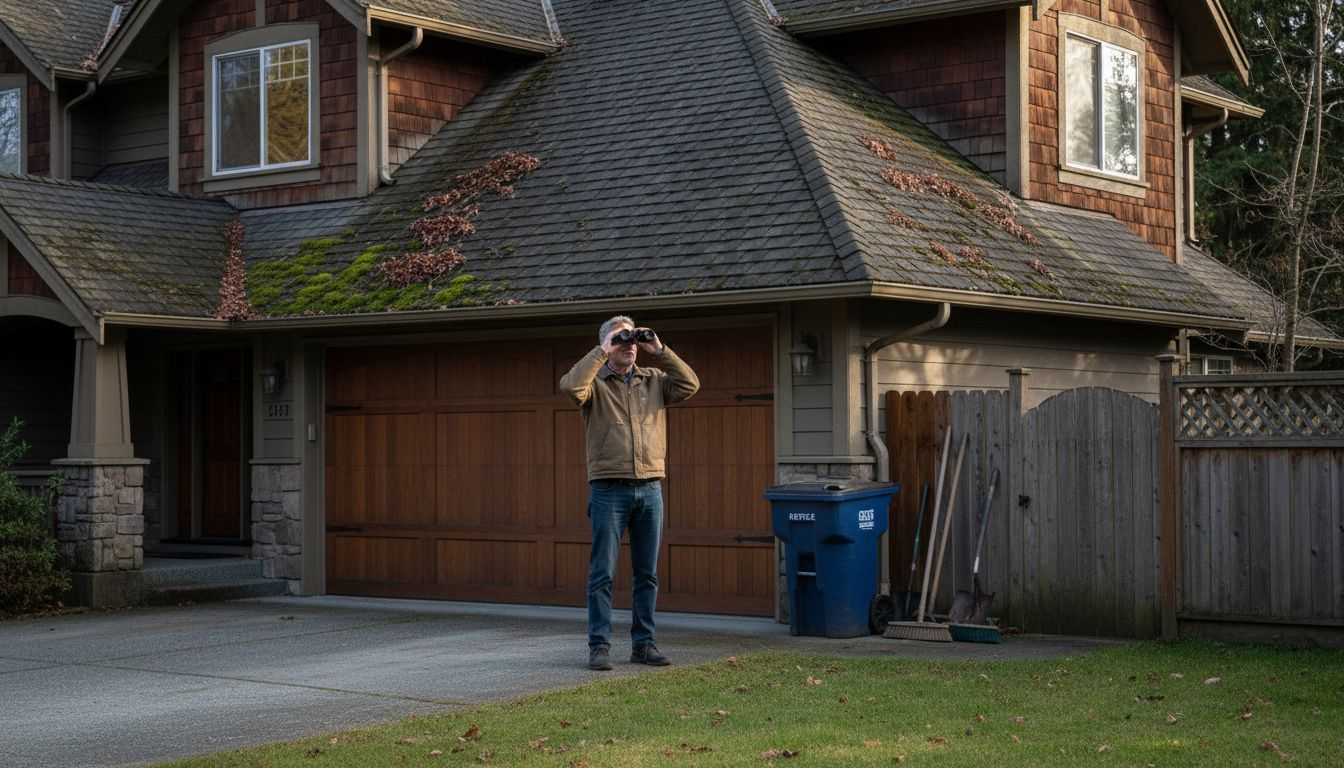
Most Canadian homes lose up to 25 percent of their heat through the roof every winter. In a city like Vancouver, where heavy Pacific storms and unexpected cold snaps are common, choosing the right roofing material is more than just a style decision. The right selection improves energy efficiency, boosts curb appeal, and helps your roof handle British Columbia’s challenging climate for years to come.
Table of Contents
- Understanding Roofing Materials In BC’s Climate
- Common Roofing Material Types And Their Performance
- Energy Efficiency And Weather Resistance Explained
- Aesthetic Appeal And Property Value Impact
- Long-Term Costs, Maintenance, And Mistakes To Avoid
Key Takeaways
| Point | Details |
|---|---|
| Roofing Material Selection | Choose roofing materials based on BC’s diverse climatic conditions to enhance durability and energy efficiency. |
| Professional Consultation Importance | Consult local specialists to select materials suited to specific microclimates for optimal performance. |
| Long-Term Cost Considerations | Weigh upfront costs against long-term maintenance and replacement needs when selecting roofing materials. |
| Aesthetic and Value Impact | Consider the visual appeal of roofing materials, as they significantly influence property value and market perception. |
Understanding Roofing Materials in BC’s Climate
British Columbia’s unique coastal climate demands strategic roofing material selection that goes far beyond aesthetic considerations. Our region experiences dramatic weather variations - from intense Pacific rainstorms to freezing winter conditions - which means homeowners must carefully evaluate roofing materials for durability, energy efficiency, and long-term protection.
The performance of roofing materials in BC is directly influenced by complex environmental factors. Climate resilience standards from Canada’s National Research Council demonstrate that our roofing choices must account for extreme weather projections, including increased precipitation, temperature fluctuations, and potential wind events. Key considerations include moisture resistance, thermal performance, and structural integrity under challenging conditions.
Most residential roofing materials in BC fall into several primary categories: asphalt shingles, metal roofing, cedar shakes, synthetic composites, and tile. Each material offers distinct advantages tailored to specific microclimates within our province. Metal roofing, for instance, provides excellent snow-shedding capabilities in mountain regions, while cedar shakes offer natural insulation properties ideal for coastal zones. Synthetic materials increasingly bridge performance gaps, offering enhanced durability and weather resistance.
Pro tip: Consult a local roofing professional who understands BC’s specific regional variations before making your final material selection, as microclimatic differences can significantly impact long-term roofing performance.
Common Roofing Material Types and Their Performance
British Columbia’s diverse climate demands a nuanced approach to selecting roofing materials that can withstand our region’s challenging environmental conditions. Understanding the performance characteristics of different roofing materials is crucial for homeowners seeking long-lasting protection and energy efficiency.
The primary roofing material categories in BC include asphalt shingles, metal roofing, cedar shakes, synthetic composites, and tile. Each material offers unique advantages and challenges. Residential roof installation professionals often recommend materials based on specific regional microclimates. Asphalt shingles remain the most popular choice due to their affordability and versatility, with modern variants offering improved durability and wind resistance. Metal roofing has gained significant traction in mountain and coastal regions, providing exceptional snow-shedding capabilities and extended lifespan.
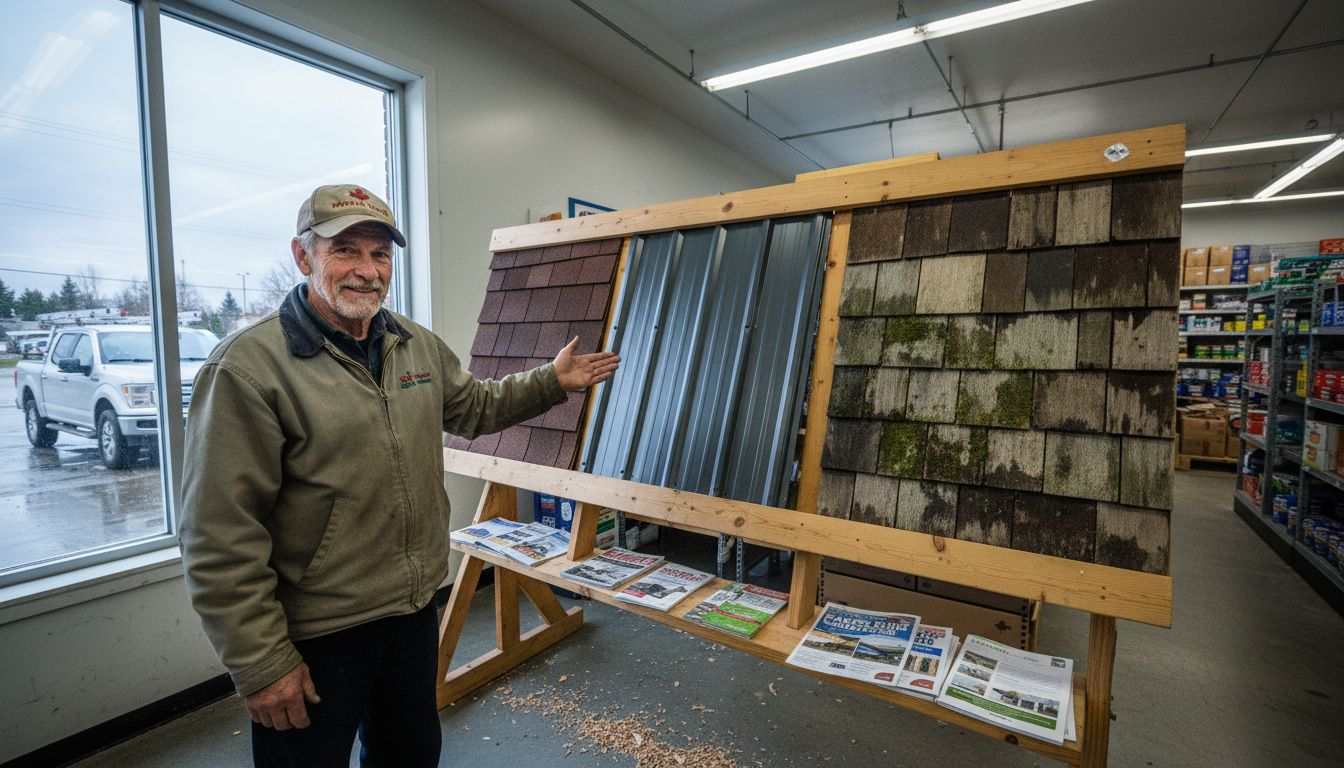
Cedar shakes represent a traditional roofing option particularly well-suited to British Columbia’s landscape. These natural wood shingles offer excellent insulation properties and blend beautifully with our province’s forested environments. Synthetic composite materials are emerging as a high-performance alternative, engineered to mimic traditional materials while providing superior moisture resistance and thermal performance. Tile roofing, though less common, provides remarkable durability and aesthetic appeal in specific architectural contexts.
Pro tip: Consider consulting a local roofing specialist who understands BC’s specific microclimatic variations to determine the most suitable roofing material for your specific location and home design.
Here’s a summary comparing key features of common roofing materials used in British Columbia:
| Material Type | Lifespan Estimate | Climate Resilience | Typical Maintenance Needs |
|---|---|---|---|
| Asphalt Shingles | 15–25 years | Moderate wind/rain | Occasional inspection |
| Metal Roofing | 40+ years | Excellent snow, wind | Rare cleaning, checks |
| Cedar Shakes | 20–30 years | Good insulation | Annual treatments needed |
| Synthetic Composite | 30–50 years | Superior moisture | Minimal regular checks |
| Tile | 50+ years | High durability | Individual tile repair |
Energy Efficiency and Weather Resistance Explained
British Columbia’s extreme weather conditions demand sophisticated roofing solutions that provide more than just basic protection. Homeowners must consider how roofing materials interact with thermal performance, moisture management, and structural resilience to ensure long-term energy efficiency and weather resistance.
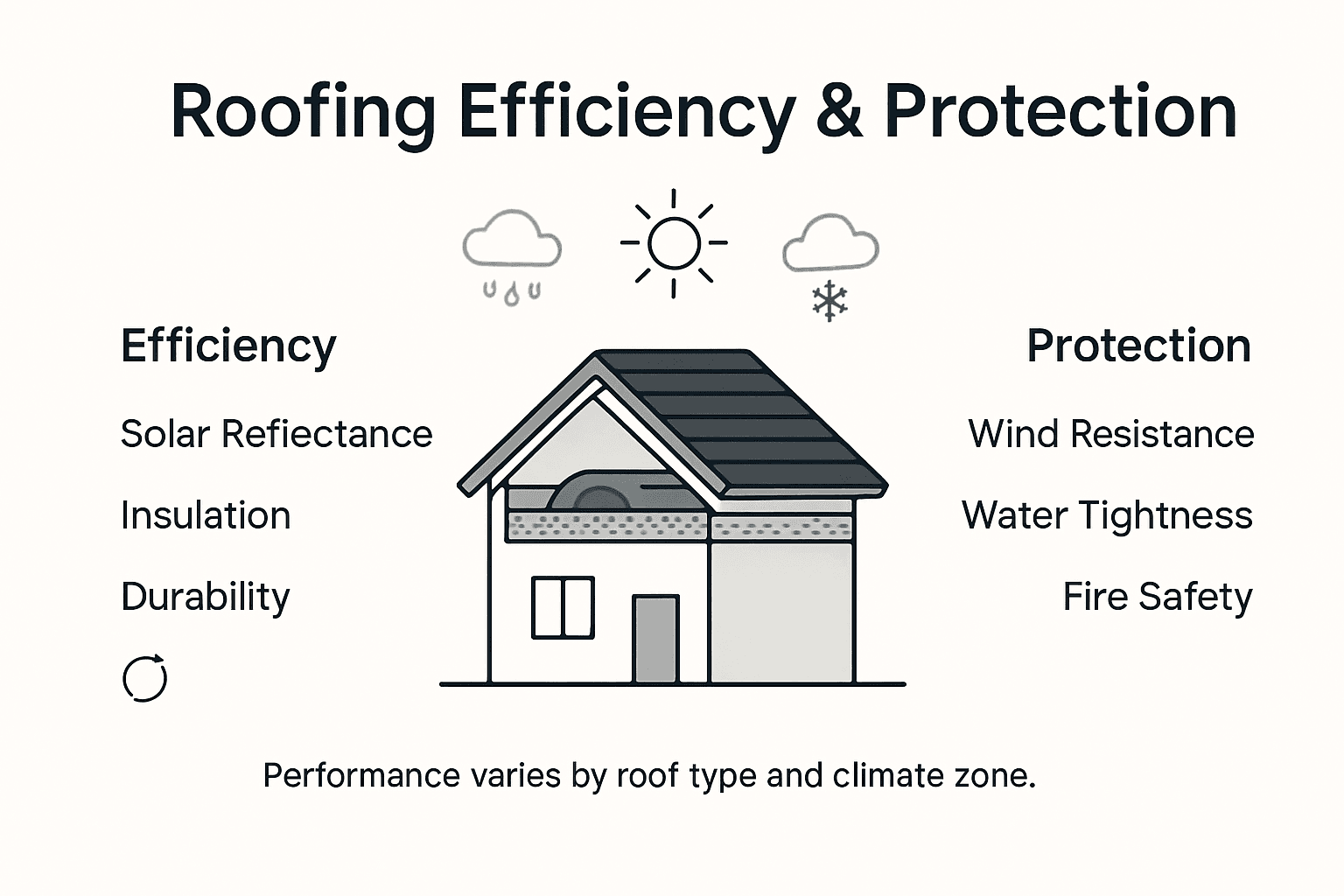
Research on climate-resilient building envelopes from the National Research Council highlights the critical importance of integrated roofing systems that can adapt to British Columbia’s challenging environmental dynamics. Thermal performance goes beyond simple insulation - it involves a complex interaction between roofing materials, attic ventilation, and underlying structural components. Modern roofing technologies incorporate advanced materials designed to reflect solar radiation, reduce heat absorption, and maintain consistent indoor temperatures.
The performance of roofing materials in BC is significantly influenced by factors such as solar reflectance, thermal emittance, and moisture resistance. Metal roofing, for instance, offers exceptional heat reflection properties, while synthetic composites provide enhanced moisture barrier capabilities. Cedar shakes and modern asphalt shingles have evolved to include enhanced thermal resistance treatments that help regulate indoor temperatures more effectively. Understanding these nuanced performance characteristics allows homeowners to make informed decisions that balance energy efficiency, durability, and long-term cost-effectiveness.
Pro tip: Invest in a professional energy audit to precisely assess your current roof’s thermal performance and identify specific opportunities for improving energy efficiency through strategic material selection.
Aesthetic Appeal and Property Value Impact
Roofing is more than just a protective layer - it’s a critical design element that significantly influences a home’s visual character and market perception in British Columbia’s diverse architectural landscape. Homeowners must recognize that roofing materials serve as a powerful aesthetic statement that can dramatically enhance or detract from overall property value.
Comprehensive roofing material guides for Canadian homeowners reveal that aesthetic choices extend far beyond simple colour selection. In British Columbia’s varied neighbourhoods - from Vancouver’s modern urban settings to coastal island communities and mountain town landscapes - roofing materials must harmonize with regional architectural styles while maintaining functional integrity. Metal roofing offers sleek, contemporary lines ideal for minimalist designs, while cedar shakes provide a rustic, west coast aesthetic that resonates with our province’s natural environment.
The relationship between roofing aesthetics and property valuation is nuanced and complex. Premium materials like architectural asphalt shingles or high-end metal roofing can increase home values by creating visual interest and signalling quality construction. Colour coordination, material texture, and architectural compatibility play crucial roles in creating a cohesive exterior design that attracts potential buyers. Regional preferences in British Columbia tend to favour materials that reflect our unique landscape - earthy tones that complement surrounding natural environments, and designs that showcase craftsmanship and durability.
Pro tip: Consider consulting a local design professional who understands BC’s architectural styles to select roofing materials that not only protect your home but also enhance its unique character and market appeal.
For reference, here are typical cost and property value impacts of BC roofing materials:
| Material | Approximate Installed Cost* | Potential Property Value Effect | Maintenance Cost Pattern |
|---|---|---|---|
| Asphalt Shingles | Low | Modest boost | Frequent small repairs |
| Metal Roofing | High | Significant increase | Infrequent expense |
| Cedar Shakes | Moderate | Medium boost | High routine costs |
| Synthetic | Moderate–High | Strong visual impact | Low ongoing costs |
| Tile | High | Premium boost | Challenging repairs |
*Costs can vary by region, home size, and installer.
Long-Term Costs, Maintenance, and Mistakes to Avoid
Navigating the complex landscape of roofing investments requires a strategic approach that balances upfront costs with long-term performance and maintenance requirements. British Columbia homeowners must look beyond initial price tags and consider the comprehensive financial implications of their roofing material selections.
Roofing myths that could potentially increase expenses highlight critical misconceptions that can lead to premature roof failure and unexpected financial burdens. The most common mistakes include improper installation, neglecting regular maintenance, and choosing materials unsuited to our region’s unique climate conditions. Metal roofing, while initially more expensive, often provides superior long-term value through reduced maintenance costs and extended lifespan. Asphalt shingles, though more affordable upfront, require more frequent replacement and can become significantly more expensive over time.
Maintenance strategies differ dramatically across roofing materials. Cedar shakes demand regular treatments to prevent moisture damage and decay, while synthetic composites offer more predictable maintenance cycles. Homeowners should budget not just for initial installation, but for ongoing care, potential repairs, and eventual replacement. Factors like material durability, local weather exposure, and installation quality dramatically impact long-term costs. Professional inspections every 2-3 years can identify potential issues early, preventing minor problems from escalating into expensive structural repairs.
Pro tip: Create a dedicated roofing maintenance fund that sets aside 1-2% of your home’s value annually to ensure you’re financially prepared for routine maintenance and potential unexpected repairs.
Protect Your BC Home with Expert Roofing Solutions
Choosing the right roofing materials is essential to withstand British Columbia’s varied climate and protect your home efficiently. Whether you are considering metal roofing for snow shedding, cedar shakes for natural insulation, or synthetic composites for superior moisture resistance, Paragon Roofing BC understands these critical factors like no other. We help you avoid costly mistakes by guiding you through durable, energy-efficient options tailored for BC’s unique weather challenges.
Take control of your roof’s performance and boost your property value with our trusted residential roof installation and maintenance services. Visit Paragon Roofing BC to schedule your free inspection today and ensure your home stays secure and beautiful year after year. Explore our comprehensive roof installation services and discover expert roofing solutions designed for BC homeowners who demand quality and reliability.
Frequently Asked Questions
What types of roofing materials are commonly used in BC homes?
Most residential roofing materials in BC include asphalt shingles, metal roofing, cedar shakes, synthetic composites, and tile. Each type offers unique advantages suited to different climates and homeowner preferences.
How does climate in BC affect roofing material performance?
BC’s climate demands roofing materials that can withstand extreme weather conditions, such as heavy rain, snow, and temperature fluctuations. Materials must be moisture resistant, thermally efficient, and structurally sound to ensure long-term protection.
What are the energy efficiency benefits of different roofing materials?
Materials like metal roofing reflect solar radiation, reducing heat absorption, while synthetic composites offer superior moisture resistance. Understanding the thermal performance of each material can help homeowners improve energy efficiency in their homes.
How do roofing materials impact property value?
Premium roofing materials such as architectural asphalt shingles or high-end metal roofing can enhance a home’s visual appeal, signaling quality construction and potentially increasing property value. Aesthetic choices that harmonize with the architectural style of the home also play an important role.