Essential industrial roof safety tips for facility compliance
TL;DR:
- Falls on industrial roofs in BC result in significant fines and injuries due to non-compliance.
- Proper hazard assessment, compliant equipment, and staff training are essential for safety and legal adherence.
- Investing in safety systems and cultivating safety culture reduces costs and improves operational stability.
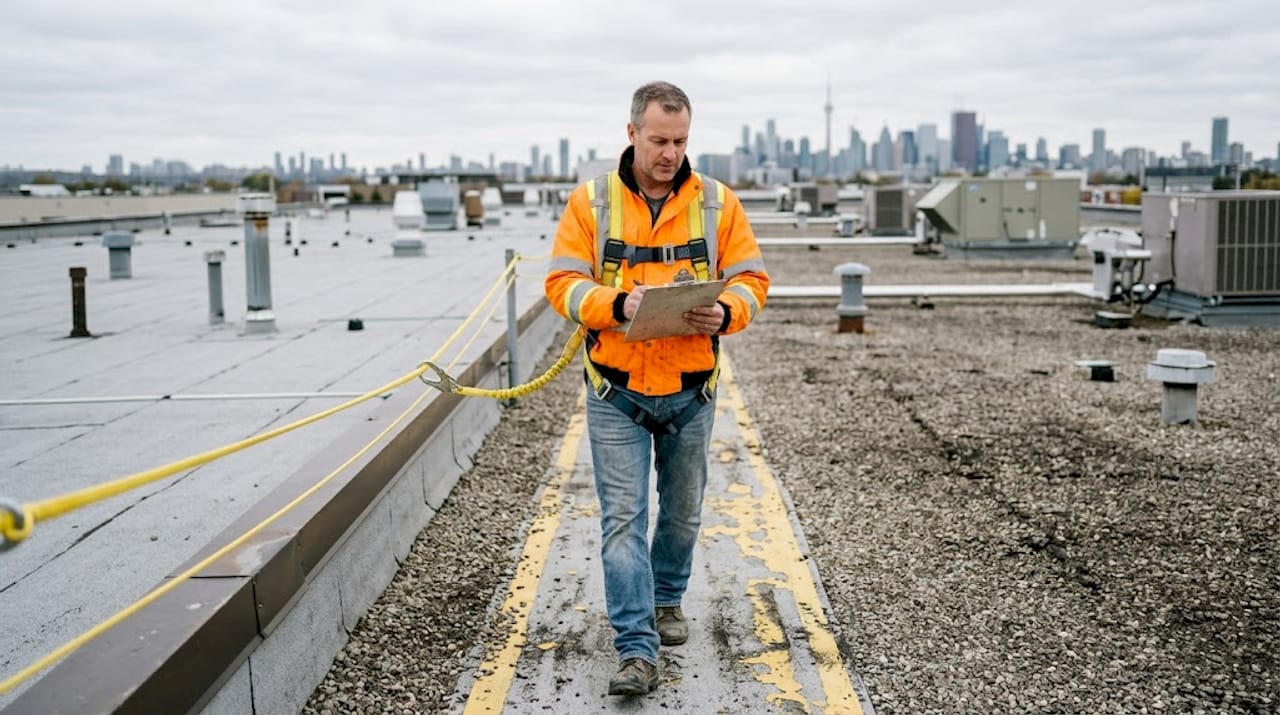
Falls on industrial roofs in British Columbia are not a distant risk. They are a documented, costly reality. In 2024 alone, WorkSafeBC issued 152 penalties for fall protection failures, totalling over $1.07 million in fines, with more than 5,400 claims, 1,900 serious injuries, and 35 fatalities recorded over a five-year span. If you manage an industrial facility or commercial property in BC, those numbers should sharpen your focus. This article walks you through the regulatory requirements, hazard assessment process, fall protection systems, and training practices that keep your workers safe and your operation compliant.
Table of Contents
- Know your regulatory requirements
- Assess roof hazards and make a plan
- Implement effective fall protection systems
- Train staff and maintain vigilance
- Why shortcuts in roof safety cost more than you think
- Take your roof safety to the next level
- Frequently asked questions
Key Takeaways
| Point | Details |
|---|---|
| Follow BC regulations | WorkSafeBC and CSA standards set strict rules for fall protection on industrial roofs in British Columbia. |
| Assess hazards proactively | Regular, detailed inspections help identify and mitigate roof risks before accidents happen. |
| Choose the right equipment | Select and maintain CSA-approved fall protection systems based on your facility’s unique needs. |
| Make training ongoing | Consistent staff training and a safety-focused culture reduce incidents and improve compliance. |
Know your regulatory requirements
Understanding the legal baseline is not optional. In BC, the rules are clear, and the penalties for ignoring them are steep. Let’s start there.
The WorkSafeBC OHS Regulation requires fall protection whenever workers are exposed to a fall of 3 metres (10 feet) or more, or where any fall could cause injury regardless of height. That second part catches many facility managers off guard. It means that even a fall onto equipment or machinery at a lower height can trigger compliance obligations. The regulation is not just about elevation.
Equipment used for fall protection must meet the CSA Z259 series standards , which cover harnesses, lanyards, self-retracting lifelines, and anchor points. These standards apply across most Canadian jurisdictions, and WorkSafeBC enforces them firmly in BC. Using non-certified gear, even temporarily, puts you on the wrong side of the law.
Here is what non-compliance can cost you:
- Monetary penalties ranging from thousands to over $100,000 per violation
- Stop-work orders that halt operations and cause significant revenue loss
- Legal liability if a worker is injured and your documentation is incomplete
- Increased insurance premiums following an incident or audit finding
- Reputational damage with clients, tenants, and future contractors
Documentation matters as much as the equipment itself. WorkSafeBC inspectors look for written fall protection plans, records of equipment inspections, and proof that workers received proper training. If you cannot produce those records, you are exposed.
“A written fall protection plan is not just a regulatory box to tick. It is your first line of defence if something goes wrong and your practices are ever questioned.”
For a deeper look at how these rules apply to your specific building type, our industrial roof compliance guide breaks down the requirements by facility category. Getting familiar with the law is the foundation. Everything else builds on it.
Assess roof hazards and make a plan
Once you understand the regulations, the next step is pinpointing risks on your own roof. Every industrial building in BC has a unique hazard profile, and a generic checklist will only take you so far.
In 2024, WorkSafeBC issued 152 penalties specifically for fall protection failures, which tells us that many facilities are still missing obvious risks. A proper hazard assessment changes that.
Here is a practical step-by-step process for assessing your roof:
- Walk the perimeter first. Note all unguarded edges, parapet heights, and any areas where the roof surface drops unexpectedly.
- Identify all openings. Skylights, roof hatches, and mechanical penetrations are common fall hazards. Check whether they are covered, guarded, or marked.
- Look for trip hazards. Raised curbs, conduit runs, HVAC equipment, and drainage lips can all catch a worker off balance.
- Assess surface conditions. Ponding water, moss growth, and worn membrane surfaces create slip risks, especially after BC’s wet winters.
- Map anchor point locations. Confirm that existing anchors are certified, properly installed, and accessible for the tasks being performed.
- Review access routes. Ladders, hatches, and stairwells all need to meet current standards. A compliant roof means nothing if the access to it is hazardous.
Pro Tip: Do not conduct your hazard assessment alone. Bring in a worker who regularly accesses the roof. They will spot practical risks that a manager walking up for the first time might miss entirely.
Once you have identified the hazards, create a written risk assessment specific to your building. This document should outline each hazard, its risk level, the control measure in place, and the person responsible for maintaining it. Review it annually and after any roof modification or significant weather event.
Our guides on commercial roof inspection protocols and industrial roofing safety explained offer additional frameworks for structuring your inspections. When in doubt, bring in a qualified roofing professional to conduct the assessment with you.
Implement effective fall protection systems
Hazard identification leads into selecting the right safety solutions for your site. Not all fall protection systems are equal, and the best choice depends on your roof’s layout, how often it is accessed, and the type of work performed there.
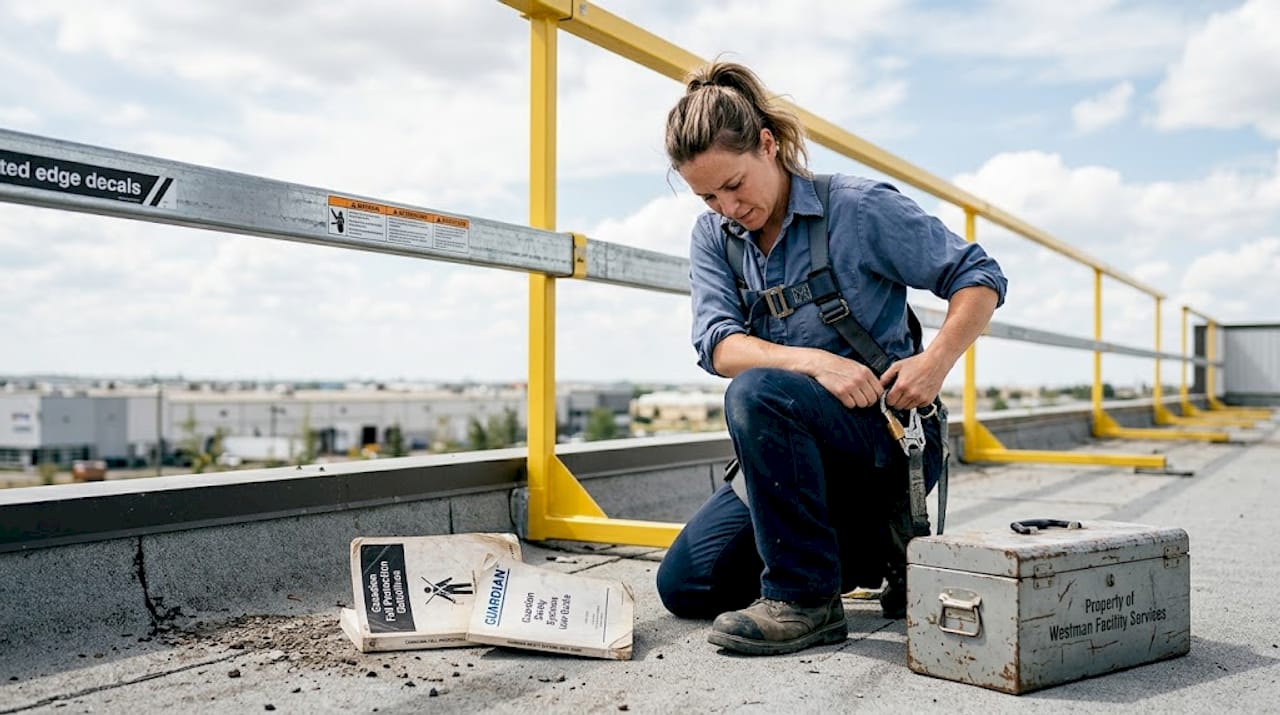
All equipment must meet CSA Z259 series standards, and WorkSafeBC mandates fall protection at 3 metres or more. Beyond that, you have several practical options.
| Protection system | Best for | Maintenance needs | Key limitation |
|---|---|---|---|
| Permanent guardrails | Frequently accessed roofs | Low, annual inspection | Fixed cost, less flexible |
| Temporary guardrails | Short-term projects | Moderate, setup each use | Must be re-installed correctly |
| Horizontal lifeline systems | Linear work paths | Moderate, biannual checks | Requires trained users |
| Anchor points with harnesses | Spot access tasks | High, per-use inspection | User error risk |
| Safety nets | High-risk edge work | High, regular load testing | Expensive to install |
Here is what to keep in mind when choosing and maintaining your system:
- Permanent guardrails are the most reliable option for roofs accessed regularly for maintenance. They require no setup and eliminate the risk of workers skipping PPE (personal protective equipment) steps.
- Lifeline systems work well for roofs with complex layouts, but every worker using them must be trained on proper connection and movement techniques.
- Anchor points must be engineered and load-tested. Never assume an existing anchor is adequate without documentation from a qualified installer.
- Harnesses and lanyards should be inspected before every use. Look for fraying, damaged buckles, and expired certifications. Remove any questionable gear from service immediately.
For guidance on how these systems align with current roofing industry standards , that resource covers BC-specific compliance benchmarks in practical detail.
Train staff and maintain vigilance
The best equipment only works if your team is educated and alert. A harness sitting in a storage room does not protect anyone.
In 2024, more than 1,900 serious injuries and 35 fatalities resulted from falls in BC workplaces. Behind most of those incidents is a gap in training, awareness, or accountability. That is the part you can control.
A strong safety training programme for industrial roof access should include:
- Initial orientation covering your site-specific fall protection plan before any worker accesses the roof
- Hands-on equipment training so workers can properly fit harnesses, connect to anchor points, and inspect gear themselves
- Emergency rescue procedures because a suspended worker is a medical emergency and your team needs a plan
- Refresher training at least annually, or whenever procedures or equipment change
- Incident reporting protocols so near-misses are documented and investigated, not quietly forgotten
Pro Tip: Schedule at least one unannounced roof safety check per quarter. It is not about catching workers out. It is about reinforcing that safety standards apply every single time, not just during formal inspections.
Safety meetings should not be a formality. Keep them short, specific, and tied to real events. If a near-miss happened on a similar site in BC, bring it to your team. If a piece of equipment failed inspection, explain why. Connecting training to real consequences makes it stick.
Building a culture of reporting is equally important. Workers who fear blame will not report near-misses. Those reports are your early warning system. Protect them. Our resource on training for commercial roofing safety offers a solid framework for structuring your programme across multiple access points and crew sizes.
Update your written procedures after every incident, near-miss, or equipment change. A living safety document is far more valuable than a polished one that sits unchanged for three years.
Why shortcuts in roof safety cost more than you think
Here is something we see regularly in this industry. A facility manager skips a guardrail installation because it feels expensive upfront. A few months later, a worker has a close call, operations are disrupted, and the investigation costs more than the guardrail ever would have. That is the real maths of cutting corners on roof safety.
The fines and injury costs are visible. What is harder to see is the downstream damage. Your insurance premiums climb after a claim. Your best workers start questioning whether they want to be on that roof. Clients and tenants notice when your facility has a safety incident on record. These are real costs, and they compound.
We have also seen the opposite. Facilities that invest in strong safety cultures, documented procedures, and regular professional inspections tend to have lower staff turnover, smoother regulatory audits, and better relationships with their insurers. Safety is not a cost centre. It is a business asset.
Our perspective on industrial roofing solutions best practices reflects years of working with BC facility managers who have learned this the hard way. The ones who treat safety as a genuine priority rather than a compliance exercise are the ones who sleep better at night.
Take your roof safety to the next level
If you are ready to move from awareness to action, Paragon Roofing BC is here to help. We work with industrial facility managers and commercial property owners across BC to assess roof conditions, identify compliance gaps, and implement safety-focused solutions that hold up under WorkSafeBC scrutiny.
Our team provides professional roof maintenance programmes tailored to industrial and commercial buildings, along with thorough industrial roof inspections that document hazards and recommend corrective action. If you are in the Lower Mainland, our Burnaby roof inspections service is a practical starting point. Reach out today for a consultation and let us help you build a roof safety programme that protects your people and your bottom line.
Frequently asked questions
What are the legal fall protection requirements for industrial roofs in BC?
WorkSafeBC mandates fall protection whenever workers face falls of 3 metres or more, or where any fall could cause injury. This applies to all industrial and commercial rooftop work in BC.
How often should industrial roof safety inspections be done?
Inspections should be conducted at least twice a year and immediately after any major weather event, roof modification, or reported incident. More frequent checks are advisable for roofs with regular worker access.
What is the most common cause of industrial roofing accidents?
Inadequate or missing fall protection systems are the leading cause, particularly around roof edges and openings. WorkSafeBC issued 152 penalties in 2024 alone for fall protection failures, underscoring how widespread this gap remains.
Are guardrails or lifeline systems better for industrial roofs?
Guardrails are permanent, low-maintenance, and ideal for frequently accessed roofs, while lifelines offer flexibility for complex layouts but require trained users and regular inspection. CSA Z259 standards apply to both, so compliance is non-negotiable either way.
Recommended
- Industrial Roof Compliance in BC | Safety, Documentation & Risk
- Industrial Roofing Explained: Durability, Safety, Compliance
- Industrial Roofing Explained: Solutions, Types, and Impact
- Commercial Roofing Safety Guide for Vancouver Projects
- DIN-Normen im Dachdeckerhandwerk: Sicherheit und Effizienz
- Industriebedachung vom Dachdecker | BHB Krakow Ihr Profi