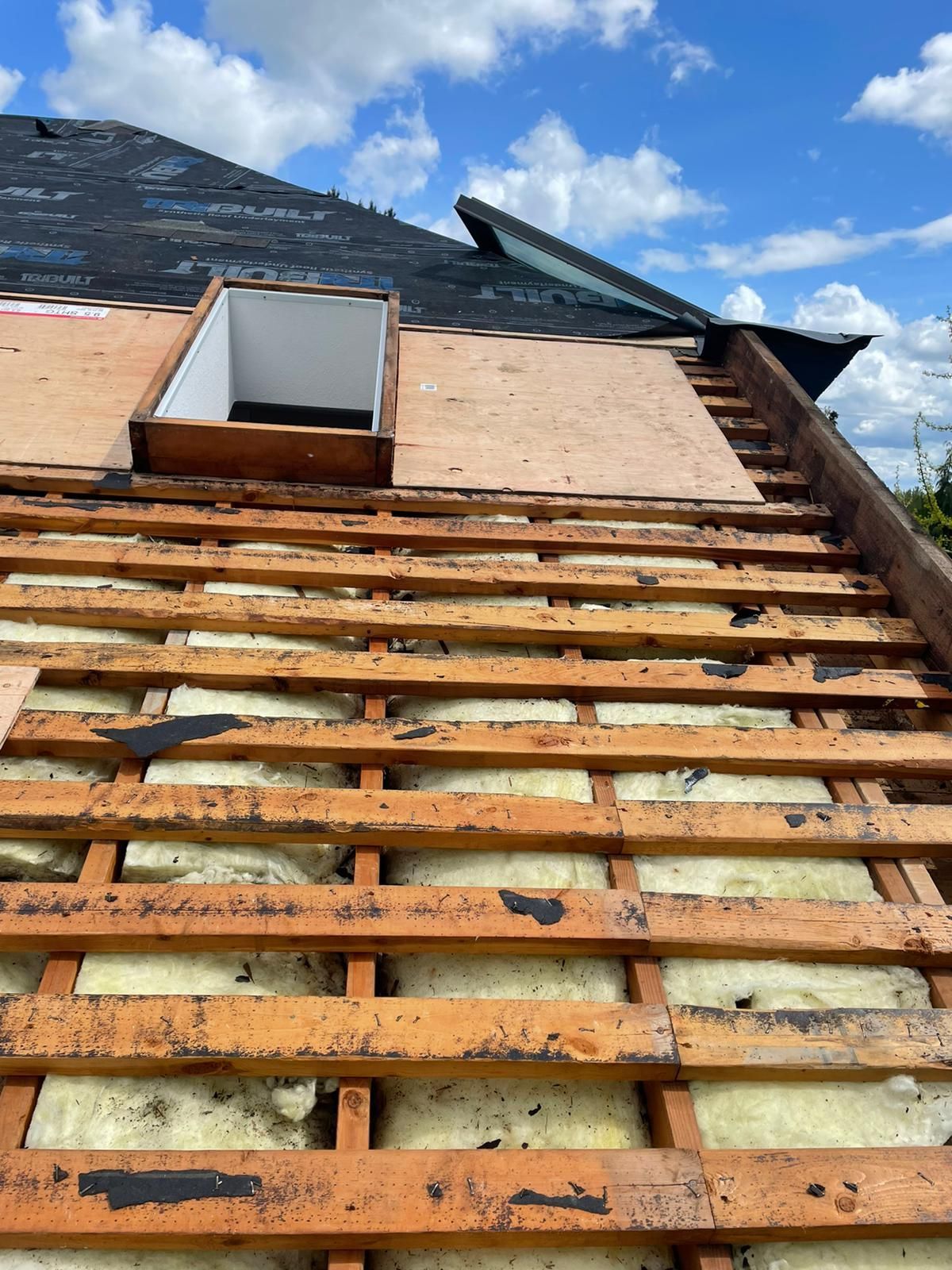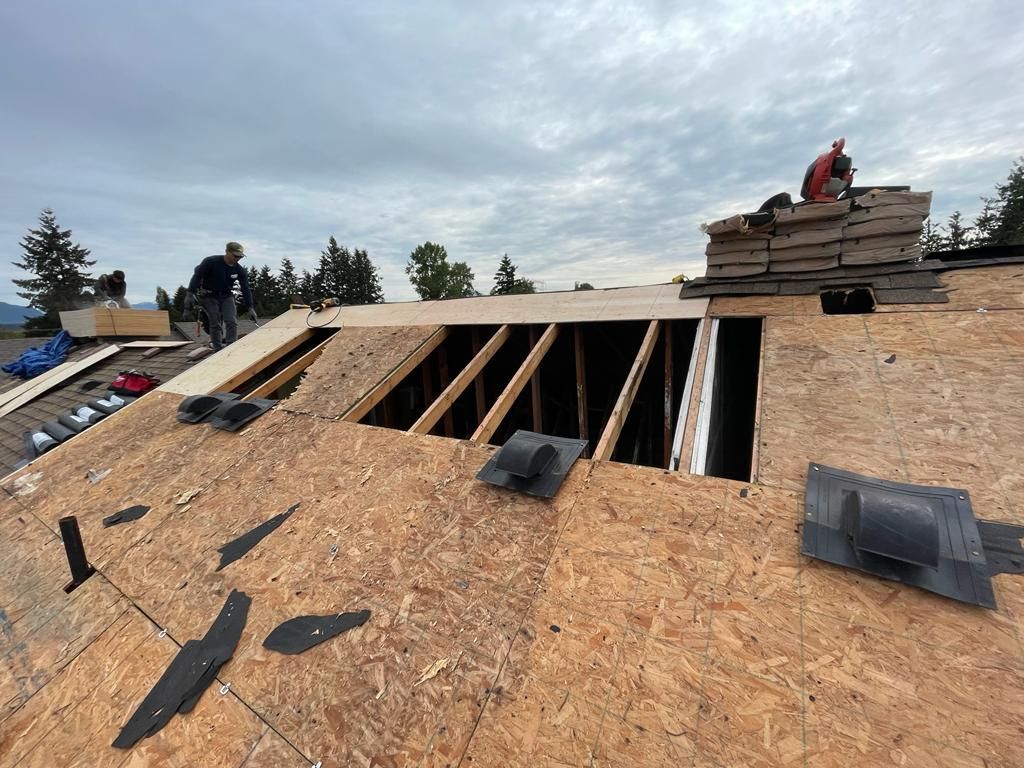
Better ventilation and curb appeal with soffits
TL;DR:
- Many BC homeowners overlook soffits, yet their proper installation is crucial for attic ventilation and moisture control. Vented soffits enable balanced airflow, reducing moisture buildup and heat stress in damp climates, thereby preventing costly roof damage. Regular inspection and maintenance of soffits ensure long-term roof health and efficiency.
Most BC homeowners spend a lot of time thinking about shingles, gutters, and flashing, but the soffits sitting quietly under the eaves rarely make the list. That’s a costly oversight. Your roof might have ridge vents, power exhausts, and a brand-new shingle layer, yet if the soffit intake is blocked or poorly installed, the attic essentially suffocates. Moisture builds, heat spikes in summer, and damage creeps in without a single visible warning sign on the outside. This article covers what soffits actually do, why they matter so much in BC’s wet climate, how to choose the right design, and how to keep them working year after year.
Table of Contents
- What are soffits and why do they matter?
- How soffits enable ventilation and moisture control
- Different soffit designs and alternatives for BC homes
- Maintaining and troubleshooting soffits for long-lasting roof performance
- A fresh perspective: Why soffits are more than just a design feature
- Explore expert roofing solutions for BC homes
- Frequently asked questions
Key Takeaways
| Point | Details |
|---|---|
| Ventilation starts at the soffit | Blocked soffits undermine attic air flow even if other vents are present. |
| Moisture risks are real | Properly vented soffits prevent condensation, mould, and rot under your roof. |
| Design affects performance | Vented, solid, and alternative eave designs require tailored solutions for BC homes. |
| Regular maintenance is key | Routine soffit inspection ensures sustained ventilation and roof lifespan. |
| Soffits enhance curb appeal | The right soffit design adds cosmetic value and protection to your property. |
What are soffits and why do they matter?
The word “soffit” comes from the Latin for “fixed underneath,” and that’s a fair description. A soffit is the material that covers the underside of your roof’s overhang, bridging the gap between the exterior wall and the roof edge. Think of it as the ceiling of your eave, the part you’d see if you stood at the corner of your house and looked up.
Soffits do three important jobs at once:
- Ventilation: Vented soffits draw fresh, cool air into the attic space from outside. This air travels up through the attic and exits through ridge vents or roof vents, creating the balanced airflow your roof needs.
- Moisture prevention: That steady airflow keeps relative humidity in check, reducing the chance of condensation forming on the roof deck and rafters.
- Curb appeal: Soffits finish off the underside of the eave cleanly, hiding the rough structural framing and giving the roofline a polished, intentional look that adds visual value to your home.
A common misconception is that exhaust vents alone handle attic air quality. They don’t. Exhaust vents only work effectively when there’s a sufficient source of fresh air entering from below. As soffit intake issues demonstrate, correct roof ventilation depends on the balanced system: soffit intake that is blocked, mismatched, or poorly distributed can starve the attic even when exhaust vents are present.
You can read more about soffits and fascia roles if you want a closer look at how these two components work together to protect your roof’s edge and structure. The short version: soffits and fascia are partners, and neglecting one tends to cause problems for the other.
“A roof ventilation system is only as strong as its weakest intake point. No matter how good your exhaust vents are, a starved soffit will defeat the entire system.” This is worth keeping in mind every time you consider skipping a soffit inspection.
How soffits enable ventilation and moisture control
BC’s climate is famously damp. Metro Vancouver averages well over 1,100 millimetres of rain per year, and places like the North Shore and parts of the Fraser Valley see even more. That constant moisture load puts real pressure on every part of your roof assembly, and the attic is no exception.
Here’s how a vented soffit system actually works in practice:
- Air enters through the soffit vents along the lower edge of the roof overhang. These small perforations or mesh panels are often the only designated intake point in the system.
- The air rises through the attic as warmer air near the ridge pushes outward through exhaust vents, pulling cooler fresh air up from below. This is passive stack ventilation in action.
- The airflow removes moisture that would otherwise condense on the cold underside of the roof deck, particularly on cold BC mornings and winter nights.
- In summer, the same airflow reduces heat buildup, keeping attic temperatures closer to outside air temperature and reducing thermal stress on shingles.
When soffits are blocked, painted over, or stuffed with insulation, this whole cycle breaks. Moisture risks under the roof deck include condensation, rot, mould growth, and even ice dams in colder BC regions like Abbotsford or Chilliwack. These aren’t minor inconveniences. A single season of poor soffit ventilation can cause rot in the roof deck that costs thousands to fix.
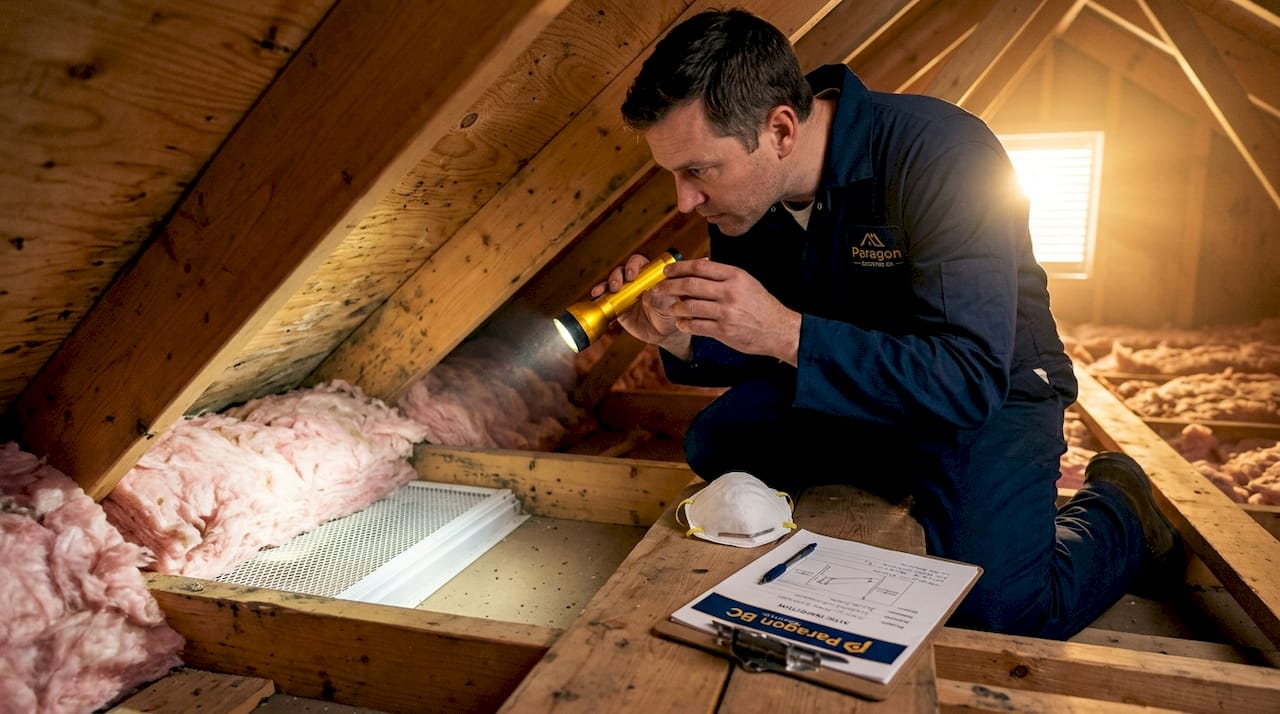
Statistic callout: Industry observations suggest that a significant portion of premature attic deterioration in BC homes traces back to inadequate soffit intake, often because vents were unintentionally blocked during insulation upgrades or painting projects.
| Soffit condition | Ventilation effectiveness | Moisture risk level |
|---|---|---|
| Clean, open vented soffit | High | Low |
| Partially blocked soffit | Moderate | Medium |
| Fully blocked or painted over | Very low | High |
| No soffit installed | Depends on design | Variable |
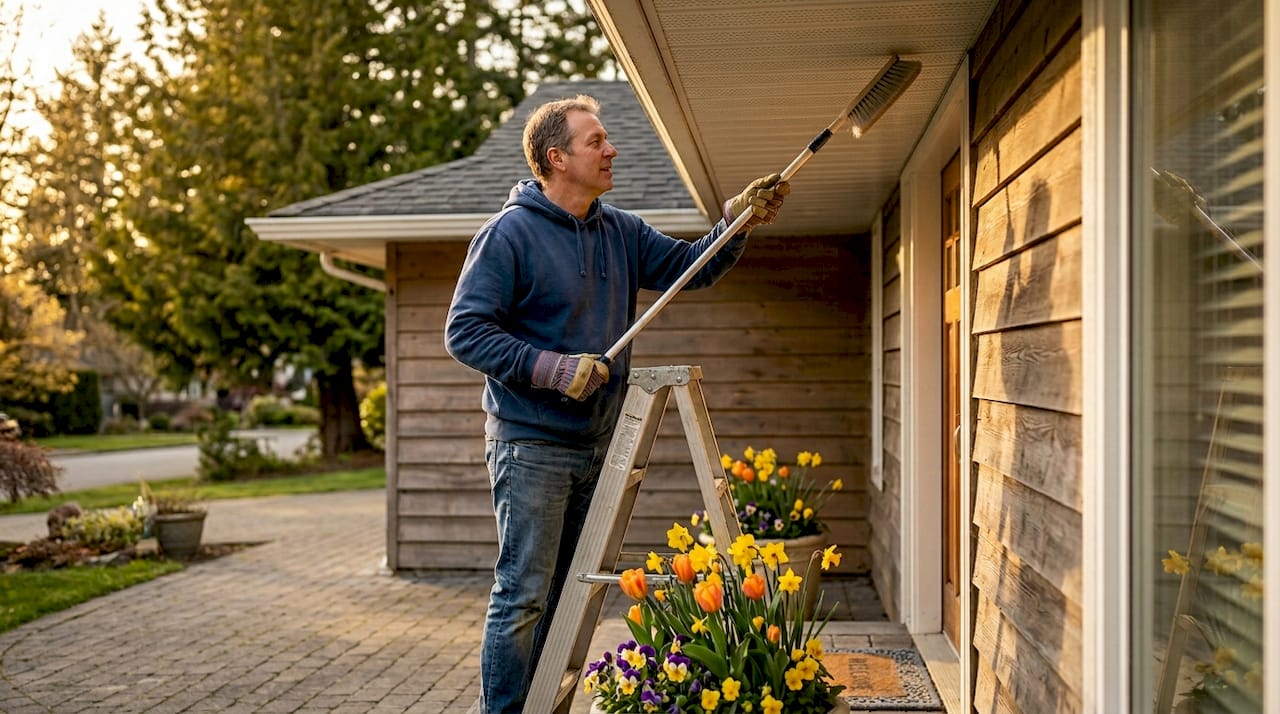
Pro Tip: Walk around your home and look up at the underside of your eaves every spring. If you see paint clogging the vent holes, debris packed against the mesh, or insulation visible through the gaps, your soffit intake is compromised. A quick clean or repair job done early is far cheaper than dealing with the rot that comes later.
Getting the intake right also shapes what comparing vent types makes sense for your specific roof. And if you’re already seeing moisture issues, ventilation repair in Vancouver is worth looking into before the problem spreads. Homeowners in BC’s wet regions will also benefit from understanding ventilation in wet climate conditions specifically.
Different soffit designs and alternatives for BC homes
Not all soffits are the same, and choosing the right design matters more than most people realise. The two main categories are vented soffits and solid soffits, and each has its place depending on your roof assembly and the part of the home they cover.
| Feature | Vented soffit | Solid soffit |
|---|---|---|
| Air intake | Yes, perforated or mesh panels allow airflow | No airflow |
| Best use | Eaves directly below vented attic spaces | Soffits over conditioned spaces or garages |
| Common materials | Vinyl, aluminium, wood, fibre cement | Same materials, no perforations |
| Maintenance needs | Periodic cleaning to keep vents clear | Inspect for damage, rot, or gaps |
| Curb appeal | Clean, finished look | Also clean, used in combination with vented panels |
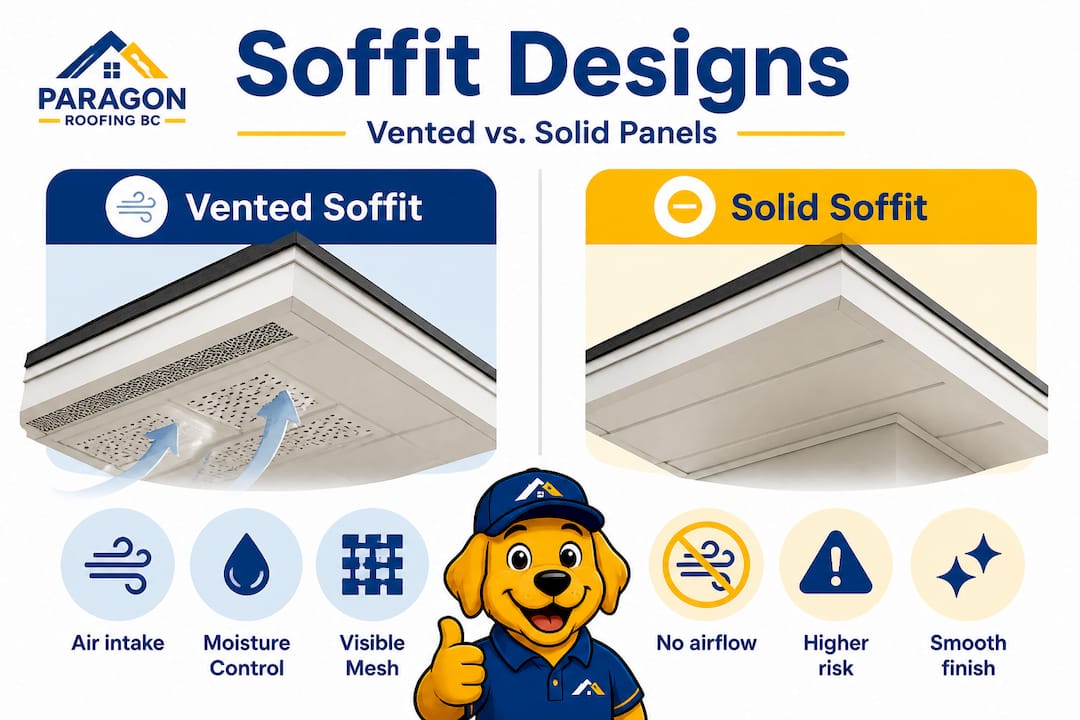
Most BC homes use a combination: vented panels along the main eave run and solid panels at corners or over non-attic spaces. This hybrid approach keeps ventilation where it’s needed while giving the roofline a consistent visual finish.
Some design options worth knowing:
- Vinyl soffits are popular in BC because they resist moisture well, don’t rot, and come in a wide range of colours to match the trim.
- Aluminium soffits are durable and hold up well in coastal and high-rainfall zones. They’re also fire resistant, which matters in some strata communities.
- Wood soffits are traditional and beautiful but require more maintenance to prevent rot and warping in BC’s climate.
- Fibre cement soffits offer a wood-like appearance with better moisture resistance, a solid choice for homes in the Lower Mainland.
There is one important edge case. Some homes effectively don’t need a traditional vented soffit if the roof design provides an alternative eave condition, such as open-rafter or exposed eaves. However, a soffit still requires a proper eave condition to exist, so the need depends entirely on the roof assembly, not simply the presence of an overhang. Homes with flat roofs, low-slope assemblies, or exposed timber framing may handle ventilation through different pathways altogether.
Pro Tip: If your home has an unusual roof structure, like a shed dormer, a cathedral ceiling, or a flat roof over an addition, don’t just assume standard vented soffits are the right call. Have a qualified roofer assess the assembly before any soffit work is done. Getting it wrong can create moisture traps instead of preventing them. Metal roofs especially have specific condensation management needs, which you can learn more about through metal roof ventilation practices in Vancouver.
Maintaining and troubleshooting soffits for long-lasting roof performance
Choosing the right soffit design is only part of the solution; keeping them maintained is just as critical for roof health over the years. Soffits are easy to forget precisely because they work quietly in the background. But a little attention each year goes a long way.
Here’s a simple maintenance routine worth following:
- Inspect visually from the ground at least twice a year. Look for sagging panels, cracks, gaps at the joints, or obvious debris blocking vent holes.
- Use a soft brush or low-pressure hose to clear dirt, spider webs, wasp nests, and leaves that accumulate in the vent perforations. Don’t use high-pressure water, which can force moisture behind the panels.
- Check for pest entry points. Birds, wasps, and squirrels love to nest in soffit gaps. Even small openings can become significant if left unaddressed.
- Inspect the junction between soffit and fascia. Water can pool here if the fascia is pulling away from the rafter tails, leading to rot at both the soffit edge and the top of the exterior wall below.
- Check that attic insulation hasn’t crept over the soffit vents from the inside. This is one of the most common and easily missed problems after an attic insulation upgrade.
Signs your soffits need attention:
- Paint peeling or bubbling on the soffit panels
- Visible staining or watermarks on the soffit surface
- Soft or spongy feel when pressed, indicating rot in wood soffits
- Gaps where panels have separated at joints
- Animals or insects entering the roofline area
- Higher than normal energy bills in summer (sign of poor attic ventilation)
- Frost or condensation visible inside the attic in winter
Pro Tip: Never paint over vented soffit panels with a solid, non-breathable paint to freshen up the look. It’s one of the most common ways homeowners accidentally block their intake without realising it. If you want to refresh the colour, use a breathable exterior coating and apply it carefully around, not over, the vent openings.
Good soffit maintenance is directly connected to ventilation and roof lifespan because a well-ventilated attic keeps shingles cooler in summer and drier in winter. The balanced system approach is non-negotiable: blocked intake undoes the work of every exhaust vent on your roof. When problems are beyond a basic clean-up, it’s worth getting roof ventilation guidance from a local expert who understands BC’s specific climate and building conditions.
A fresh perspective: Why soffits are more than just a design feature
Here’s something I’ve observed time and again working across BC roofing projects: homeowners are usually surprised when soffit issues turn out to be the root cause of problems they assumed were shingle or flashing failures. The mould in the attic corner, the frost buildup in January, the shingles failing a decade early, these often trace back to a soffit system that was blocked, mismatched, or simply forgotten during a renovation.
The contrarian view worth sharing is this: perfect exhaust ventilation means almost nothing if the intake side is choked. You could install a top-of-the-line ridge vent across the full roof length, and it would still underperform with blocked soffits below. The attic can’t pull air out of thin air. Ventilation is a through-system, and the soffit is where that system begins.
What makes this particularly tricky in BC is that soffit blockage often happens gradually and invisibly. An insulation contractor blows in extra attic insulation and doesn’t realise it’s now covering the intake baffles (the channels that keep soffits clear). A painter gives the exterior trim a fresh coat and fills in half the soffit vent holes. A wasp nest gets established in a corner soffit and nobody notices for two seasons. By the time the damage is visible, the rot or mould is already well established.
I’d also push back gently on the idea that newer homes are automatically safe here. Modern builds in BC are actually tighter and better insulated than older stock, which means moisture-laden air that enters the building envelope has fewer escape routes. A compromised soffit on a 2015 build can cause damage as fast as on a 1985 rancher. The code compliance at time of construction doesn’t protect against the gradual changes that happen over the first decade of a home’s life.
The broader lessons around roof performance come back to one core idea: a roof is a system, and every component in that system matters. Soffits happen to be the one that gets the least attention while doing some of the most important work.
Explore expert roofing solutions for BC homes
If this article has made you take a second look at your eaves, that’s a good instinct to follow through on. At Paragon Roofing BC, we help homeowners across the province understand and address exactly these kinds of hidden vulnerabilities before they become expensive repairs.

Whether you’re considering a full roof installation in Coquitlam or simply need a ventilation assessment to find out if your soffits are doing their job, we’ve got the local knowledge and hands-on experience to guide you. We also work with premium asphalt shingles in Vancouver and can pair your roofing upgrade with proper intake ventilation from the start. For targeted issues, our roof vent services cover everything from blocked soffit cleaning to full vent repair and replacement. Reach out and let’s make sure your roof is actually breathing.
Frequently asked questions
How do I know if my soffits are blocked or need cleaning?
Look for visible debris, peeling paint, or signs of poor attic airflow like frost in winter or excessive heat in summer; blocked soffit intake can starve the attic even when exhaust vents are present and working correctly.
Is it safe to paint over vented soffits?
Painting directly over vented soffit panels can seal the air intake holes and disrupt the balanced ventilation system; a blocked ventilation system creates moisture and mould risks that far outweigh any cosmetic benefit.
Can all homes in BC use vented soffits or are there alternatives?
Some homes with open rafters or specific roof assemblies may not use traditional vented soffits, but they still need a proper eave condition for airflow; the right solution depends on your specific roof design, not just whether an overhang exists.
How do soffits help prevent moisture and mould?
Soffits allow a steady intake of fresh air that keeps attic humidity low, and without that airflow, condensation and moisture risks including rot, mould, and ice dams can develop under the roof deck over time.