Commercial Roofing Explained for BC Businesses
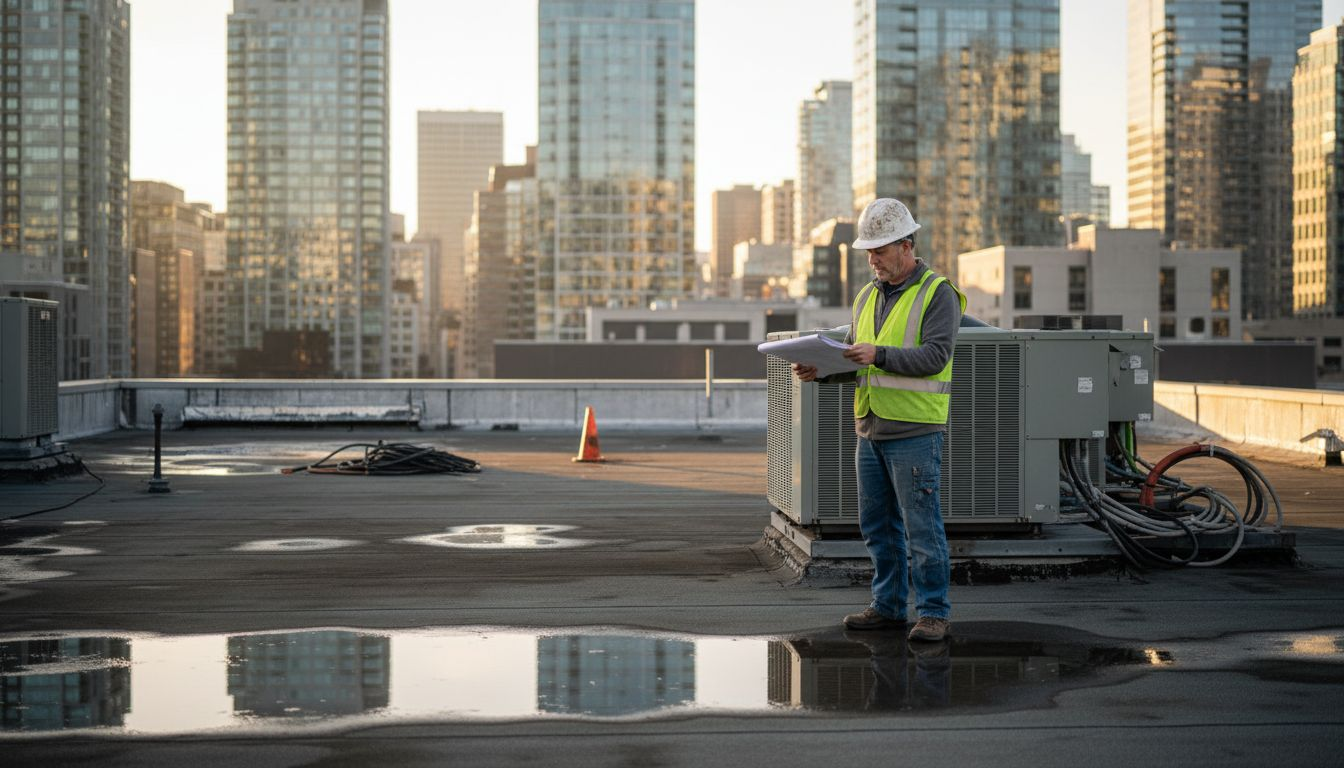
Commercial roofs in Vancouver and Burnaby face unique demands, with Canadian standards requiring strict durability and weather resistance. Nearly every business property relies on advanced systems that go far beyond residential roofing. Navigating building codes, climate challenges, and material choices becomes critical for maintaining safety and minimizing costly repairs. This guide clarifies how commercial roofing is defined in British Columbia and breaks down the options, risks, and compliance steps needed to protect your investment.
Table of Contents
- What Defines Commercial Roofing in BC
- Major Types of Commercial Roofing Systems
- Material Choices and Functional Features
- Code Compliance and Legal Responsibilities
- Maintenance, Inspection and Safety Protocols
- Costs, Common Risks and What to Avoid
Key Takeaways
| Point | Details |
|---|---|
| Commercial Roofing Complexity | Commercial roofing in British Columbia involves sophisticated systems designed to resist extreme weather and meet strict building codes. Specialist knowledge is crucial for installation and maintenance. |
| Variety of Roofing Systems | Different roofing systems such as single-ply membranes and built-up roofing offer distinct advantages for durability and performance in challenging climates. Careful selection is essential. |
| Importance of Compliance | Strict adherence to BC Building Code and other regulations is vital to avoid legal issues and ensure long-term structural integrity. Accurate documentation is key. |
| Proactive Maintenance | Regular inspections and maintenance can prevent costly repairs and extend the lifespan of the roofing system. Developing a structured maintenance log is highly recommended. |
What Defines Commercial Roofing in BC
Commercial roofing in British Columbia represents a specialized discipline that goes far beyond simple shelter. Unlike residential roofing, commercial systems must withstand the province’s extreme weather conditions while meeting stringent building code requirements. Commercial roofing standards are meticulously defined by provincial regulations that account for our unique geographic challenges.
In British Columbia, commercial roofing encompasses complex systems designed for industrial, institutional, and large-scale commercial structures. These roofing solutions must address multiple critical performance factors: exceptional durability, superior moisture resistance, and the ability to handle significant snow and wind loads typical in our coastal and mountain regions. The materials and installation techniques differ dramatically from residential roofing, requiring specialized expertise and advanced engineering.
Key defining characteristics of commercial roofing in BC include low-slope or flat roof designs, extensive square footage coverage, and robust membrane systems that can withstand prolonged moisture exposure. Professional commercial roofs often incorporate multiple layers, including specialized underlayment, waterproofing membranes, insulation, and protective coatings engineered specifically for our challenging Pacific Northwest climate. The complexity demands precise engineering and professional installation to ensure long-term structural integrity.
Pro tip: Always engage a certified commercial roofing specialist who understands British Columbia’s specific building codes and environmental challenges before planning any roofing project.
Major Types of Commercial Roofing Systems
British Columbia’s commercial roofing landscape offers several sophisticated systems designed to meet the province’s challenging environmental conditions. Commercial roofing standards encompass multiple membrane and structural approaches tailored to different building requirements, with each system offering unique advantages for performance and durability.
The primary commercial roofing systems in BC include single-ply membranes, built-up roofing (BUR), modified bitumen, and metal roofing. Single-ply membranes like TPO (Thermoplastic Polyolefin), EPDM (Ethylene Propylene Diene Monomer), and PVC provide excellent waterproofing and heat-reflective properties. Built-up roofing systems, composed of multiple layers of bitumen and reinforcing fabrics, remain popular for their proven track record of durability and resistance to extreme weather conditions.
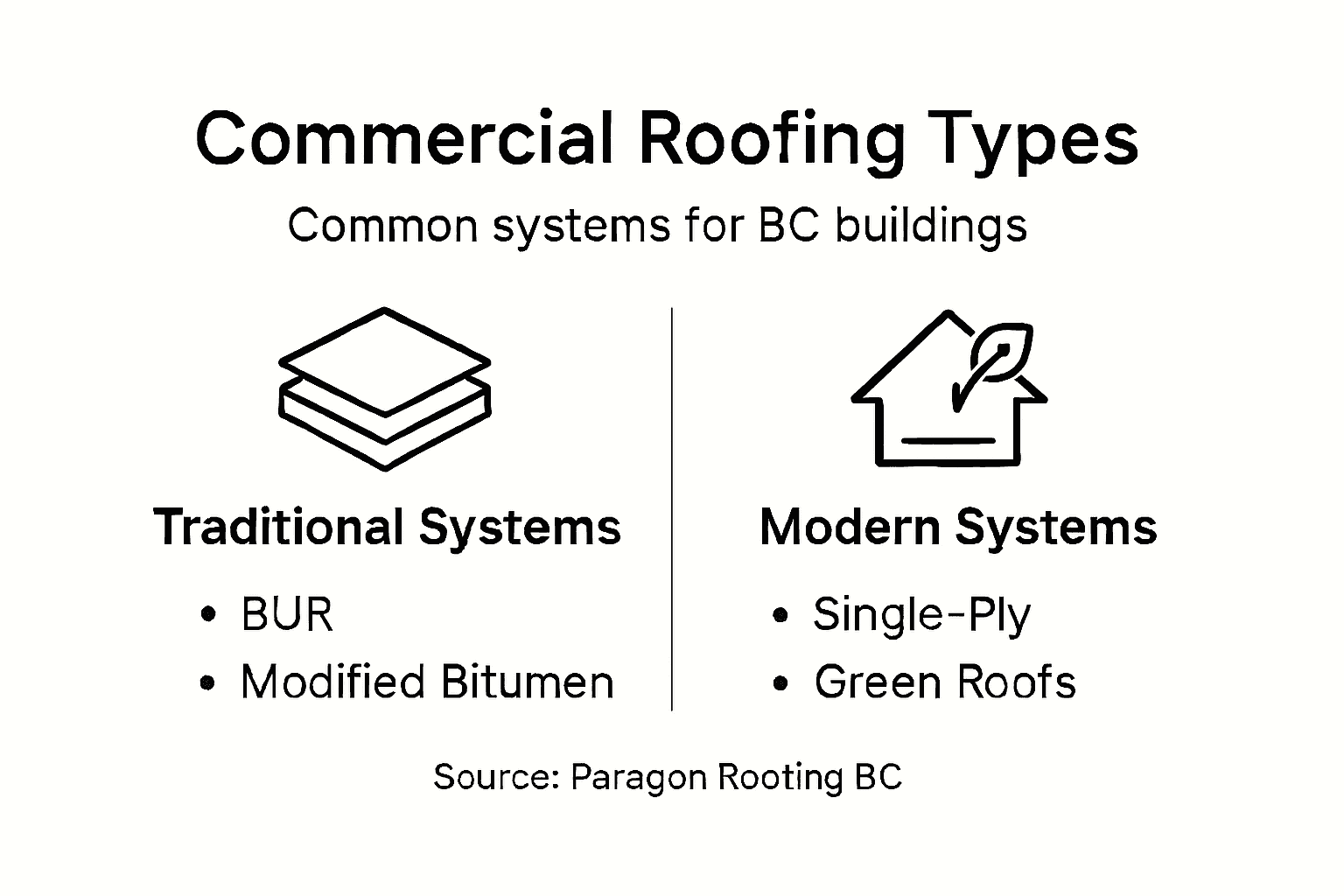
Modern commercial roofing technologies also include advanced solutions like green roofing systems and inverted roof assemblies. These innovative approaches not only provide exceptional waterproofing but also contribute to energy efficiency and environmental sustainability. Metal roofing systems, particularly standing seam and corrugated designs, offer remarkable longevity and are especially suitable for industrial and large commercial structures in British Columbia’s diverse climatic zones.
Here is a comparison of major commercial roofing system types commonly used in British Columbia:
| Roofing System Type | Typical Lifespan | Key Strength | Common Application |
|---|---|---|---|
| Single-Ply Membrane | 20–30 years | Heat reflectivity | Warehouses, retail stores |
| Built-Up Roofing (BUR) | 20–30 years | Weather resistance | Schools, hospitals |
| Modified Bitumen | 15–25 years | Puncture resistance | Apartments, offices |
| Metal Roofing | 30–50 years | Long-term durability | Industrial, large-scale |
| Green Roofing System | 30+ years | Environmental value | Institutional, eco-buildings |
Pro tip: Consult a professional roofing specialist to assess your specific building’s requirements and determine the most appropriate roofing system based on local climate conditions, building usage, and long-term performance expectations.
Material Choices and Functional Features
Selecting the right roofing materials involves complex considerations beyond simple surface protection. BC Building Code standards mandate rigorous performance requirements that guide material selection for commercial roofing systems, ensuring durability and environmental resilience in our challenging Pacific Northwest climate.

Commercial roofing materials must address multiple critical functional features, including water resistance, thermal performance, and structural integrity. Advanced membranes like TPO and EPDM offer superior waterproofing capabilities, while metal panels provide exceptional durability and wind resistance. Reflective coatings can significantly improve energy efficiency, reducing cooling costs for commercial buildings by minimizing heat absorption and creating a more sustainable roofing solution.
The functional requirements for commercial roofing in British Columbia extend beyond basic protection. Materials must demonstrate exceptional moisture management, accommodate significant temperature variations, and provide robust protection against wind uplift and potential snow loading. Innovative solutions like green roofing systems and high-performance insulated membranes represent cutting-edge approaches that combine environmental sustainability with advanced building performance, addressing both structural and ecological considerations for modern commercial properties.
Pro tip: Prioritize materials that offer comprehensive performance characteristics rather than focusing solely on initial cost, considering long-term durability, maintenance requirements, and energy efficiency in your roofing selection process.
Code Compliance and Legal Responsibilities
Commercial roofing in British Columbia operates within a complex legal framework that demands strict adherence to established standards. Building Act requirements create a comprehensive regulatory environment that governs every aspect of commercial roofing installation, maintenance, and documentation.
The legal responsibilities for commercial roofing extend far beyond simple construction practices. Building owners and contractors must obtain precise permits, maintain detailed inspection records, and ensure that all roofing systems meet the rigorous performance standards outlined in the BC Building Code. This includes comprehensive documentation of material selections, installation processes, and ongoing maintenance efforts. Non-compliance can result in significant legal consequences, including potential liability for structural failures, safety violations, and financial penalties.
Key compliance requirements involve multiple layers of oversight, including professional certification, adherence to provincial building standards, and ongoing maintenance documentation. Roofing professionals must demonstrate technical competence, understand local building regulations, and maintain current knowledge of evolving building code modifications. This requires a proactive approach to understanding technical specifications, safety protocols, and legal obligations that govern commercial roofing projects across British Columbia’s diverse architectural landscape.
Pro tip: Maintain comprehensive documentation of all roofing installations, repairs, and inspections, creating a detailed paper trail that demonstrates ongoing compliance with provincial building regulations.
Maintenance, Inspection and Safety Protocols
Commercial roofing maintenance in British Columbia demands a systematic and comprehensive approach that goes beyond routine inspections. WorkSafeBC workplace inspection guidelines establish critical protocols that ensure both structural integrity and worker safety across commercial roofing environments.
The maintenance cycle for commercial roofs involves multiple critical stages, beginning with regular professional assessments that identify potential vulnerabilities. Inspections must comprehensively evaluate membrane conditions, drainage systems, structural connections, and potential moisture intrusion points. These evaluations are particularly crucial in British Columbia’s challenging climate, where heavy rainfall, snow loads, and rapid temperature fluctuations can accelerate roofing system deterioration. Professional inspectors typically recommend detailed assessments at least twice annually, with additional emergency inspections following extreme weather events.
Safety protocols for commercial roofing maintenance represent a complex framework of regulatory requirements and best practices. Workers must be equipped with appropriate fall protection systems, receive specialized training in hazard identification, and follow strict procedural guidelines that minimize risk during inspections and repairs. Documentation becomes crucial, with comprehensive records tracking every inspection, repair, and maintenance activity. These records not only demonstrate regulatory compliance but also provide a critical historical reference for understanding the roofing system’s long-term performance and potential future maintenance needs.
Pro tip: Develop a structured maintenance log that tracks every inspection, repair, and environmental condition, creating a comprehensive historical record that can help predict and prevent potential roofing system failures.
Costs, Common Risks and What to Avoid
Commercial roofing investments in British Columbia demand comprehensive risk management strategies that balance initial expenses with long-term performance. Commercial roofing risk assessments reveal multiple financial and structural vulnerabilities that can dramatically impact a business’s operational sustainability.
The most significant cost factors in commercial roofing extend beyond initial installation, encompassing ongoing maintenance, potential repair expenses, and the critical risk of premature system failure. Common risks include water infiltration, membrane degradation, inadequate drainage, and structural compromises caused by British Columbia’s extreme weather conditions. Businesses frequently underestimate the financial implications of poor roofing decisions, with substandard materials or improper installation potentially leading to exponential repair costs that far exceed initial investment thresholds.
Preventing costly roofing failures requires a proactive approach that prioritizes quality materials, professional installation, and rigorous maintenance protocols. Key strategies involve selecting robust roofing systems engineered for the Pacific Northwest’s challenging climate, working exclusively with certified professional contractors, and implementing a structured inspection and maintenance regime. Avoiding risks means recognizing potential warning signs early, such as membrane cracking, ponding water, loose fasteners, and compromised flashings that can escalate into substantial structural damage if left unaddressed.
Below is a summary of major risk factors and how to mitigate them in BC commercial roofing:
| Risk Factor | Impact on Building | Recommended Mitigation |
|---|---|---|
| Water Infiltration | Interior damage/mould | Ensure watertight membrane |
| Membrane Degradation | Shortened roof lifespan | Use high-quality materials |
| Inadequate Drainage | Ponding, leaks | Regular drain maintenance |
| Structural Compromise | Major safety hazard | Frequent structural inspections |
Pro tip: Invest in a comprehensive annual roofing assessment that identifies potential vulnerabilities before they transform into expensive emergency repairs, potentially saving thousands in unexpected maintenance costs.
Protect Your Commercial Investment with Expert Roofing Solutions in British Columbia
Understanding the complexities of commercial roofing in BC requires more than general knowledge. From stringent building code compliance to choosing the right materials that withstand heavy snow loads and moisture, businesses face real challenges protecting their buildings. If you want to prevent costly risks such as water infiltration or membrane degradation the insights in this article are crucial—but professional guidance is essential to ensure your roof meets provincial standards and delivers lasting durability.
Paragon Roofing BC is your trusted partner for navigating these challenges with confidence. We specialize in commercial roofing services tailored to British Columbia’s unique climate and building codes. Whether you need expert installation, thorough inspections, or scheduled maintenance, our certified professionals use high-quality materials designed for long-term performance. Avoid expensive repairs by choosing an experienced contractor who understands your roofing needs. Visit Paragon Roofing BC now to request a free inspection or learn more about how we protect your commercial property with tailored solutions. Take control of your roofing investment today.
Explore our services and expert guidance at Paragon Roofing BC and ensure your commercial roof stands strong against BC’s toughest weather conditions.
Frequently Asked Questions
What are the main types of commercial roofing systems?
The primary types of commercial roofing systems include single-ply membranes, built-up roofing (BUR), modified bitumen, and metal roofing. Each type has its advantages in durability and weather resistance, tailored for different building requirements.
How do material choices impact commercial roofing performance?
Material choices affect critical aspects such as water resistance, thermal performance, and structural integrity. High-quality materials like TPO and EPDM provide superior waterproofing and energy efficiency, while metal panels are known for their durability and wind resistance.
What are the key compliance requirements for commercial roofing in BC?
Compliance requirements include obtaining permits, maintaining detailed inspection records, and ensuring adherence to the BC Building Code. It is essential for building owners and contractors to follow these standards to avoid legal consequences and ensure safety.
How often should commercial roofs be inspected and maintained?
Commercial roofs should be inspected at least twice a year, with additional assessments after extreme weather events. Regular professional assessments help identify vulnerabilities and ensure the roof’s performance and longevity.