Replace Your Roof Now vs Waiting Until Summer (The Vancouver Weather Reality)
Table of Contents
- Why This Question Comes Up Every Year in Vancouver
- What Actually Happens to a Failing Roof If You Wait
- When Replacing a Roof Right Away Makes Sense
- When Waiting Until Summer Can Be Reasonable
- The Reality of Roofing in Vancouver’s Rainy Season
- The Risks of Waiting Too Long
- How to Decide What’s Right for Your Roof
- Recommended links
Key Takeaways
| Decision point | Vancouver reality | Best move |
|---|---|---|
| Waiting doesn’t “pause” roof damage | Persistent wet weather extends wet-time and accelerates hidden moisture issues | If leaks or moisture exist, prioritize controlled replacement over hoping for summer |
| Rainy-season roofing is possible when sequenced properly | Dry-in stages and daily protection are standard practice for Vancouver crews | Choose a contractor who plans dry-in first, not one who “wings it” |
| Summer brings scheduling bottlenecks | Demand spikes, lead times extend, and emergencies push planned jobs back | Book early if you’re planning a summer project |
| Inspection beats guessing | Leaks can travel and show up far from the entry point | Base timing on deck moisture, flashing, and ventilation condition—not appearance |
Why This Question Comes Up Every Year in Vancouver
This question comes up every year because Vancouver homeowners live in a climate that feels perpetually unsuitable for exterior work. Long stretches of rain create the impression that roofing should only happen during a narrow summer window, even though that assumption doesn’t match how roofs actually perform or fail here. Book your Vancouver roof replacement today
Vancouver’s extended wet season naturally creates hesitation. When rain is frequent and skies are overcast for months, homeowners worry about exposure, delays, and workmanship quality. There’s a fear that crews will be forced to rush between storms or that materials will be installed in less-than-ideal conditions.
Many homeowners also assume roofing is strictly “summer-only” work. This idea is usually borrowed from interior BC or colder regions where snow and deep freezes genuinely shut roofing down. Vancouver’s challenge isn’t extreme cold—it’s persistent moisture. Roofing practices here are built around managing rain, not waiting for perfect dryness.
Concerns about rain delays and poor workmanship are common. Homeowners imagine torn-off roofs sitting open under grey skies, tarps blowing in the wind, and corners being cut to beat the next weather system. In reality, experienced Vancouver roofers plan sequencing, dry-in stages, and daily progress specifically around rain exposure.
Timing matters more in Vancouver than in dry climates because roofs don’t get long recovery periods. Materials stay damp longer, small leaks are exposed repeatedly, and moisture has time to migrate deeper into the roof system. That’s why the decision to replace now or wait isn’t just about convenience—it’s about how water behaves here compared to other regions.
What Actually Happens to a Failing Roof If You Wait
When a roof is already compromised, waiting doesn’t freeze its condition in place. In Vancouver’s climate, deterioration continues quietly and often accelerates.
Small leaks rarely remain small. What might show up as a faint ceiling mark or occasional drip during heavy rain is usually the visible end of a much larger moisture pathway. Water travels along framing, fasteners, and insulation, often appearing far from the original entry point. Each additional rain event pushes more moisture through the same weakened details.
Moisture buildup in decking and insulation is one of the biggest risks of waiting. Roof assemblies here don’t dry out quickly. Insulation can absorb and retain water, losing effectiveness and creating a damp environment above ceilings. Roof decking—especially OSB—can slowly absorb moisture, swell, and lose fastener holding strength long before rot is visible.
Repeated temporary repairs often create a false sense of progress. Spot caulking, surface patches, or resealing flashings may slow a leak briefly, but they rarely address underlying moisture paths. Over time, these fixes add more fasteners, more penetrations, and more disruption to already vulnerable areas.
Winter and spring rain accelerate hidden damage because there are few opportunities for drying. Moisture accumulates rather than evaporates. Decking stays damp. Fasteners corrode faster. Ventilation problems become more severe. By the time summer arrives, what could have been a straightforward replacement often involves additional deck repairs, insulation replacement, or structural correction.
In Vancouver, waiting doesn’t simply delay the work—it often increases the scope of what eventually needs to be done.
When Replacing a Roof Right Away Makes Sense
The immediate replacement of a roof becomes necessary when water starts to gain control of the structure. The roof system in Vancouver allows moisture to spread throughout the system after it first enters.
The main reason for leaks becomes apparent when leaks stay active or when they produce continuous leaks. The presence of leaks which seem small or occur occasionally shows that water keeps following the same route through the roofing structure. The paths between buildings experience repeated use during rainy events which extend over time thus creating escalating damage from each subsequent storm.
The presence of decking moisture or rot indicates that any delay in maintenance will lead to additional damage. The presence of soft spots and spongy floor areas and attic moisture stains indicates that water has penetrated through the roofing material to reach the building structure. The process of decking saturation leads to a prolonged drying period which results in decreased fastener holding power that becomes difficult to detect.
The system needs to activate right away when flashing or valley failures start to happen. The roof receives its most significant water pressure at the points where valleys meet walls and at chimneys and penetrations. Water follows lateral paths instead of straight descent when system details become insufficient which results in damage to distant areas from the original issue. These failures never fix themselves automatically and their condition usually deteriorates as time passes.
The appearance of interior staining together with attic moisture indicates that a problem exists at this stage. The presence of ceiling stains together with damp insulation odors indicates that moisture has been present in the space for an extended time. The current delay in replacement work will result in additional repair requirements which might need insulation removal and deck replacement and framing repair.
The delay of roof replacement operations leads to increased future maintenance requirements instead of protecting the roof structure. A controlled planned project will evolve into an extensive costly repair when moisture begins to spread.
When Waiting Until Summer Can Be Reasonable
The decision to wait until summer becomes acceptable only when the roof maintains its structural integrity and operates properly. The assessment needs further evidence verification because its outcome does not relate to how someone looks.
A roof which does not experience active leaks or show any signs of moisture problems requires no urgent replacement. The appearance of shingles or membranes will deteriorate with time but their operational ability will stay functional. The inspection process needs to check for dry decking and secure fasteners and working flashings to establish if short-term deferral becomes available.
Monitoring must be in place if waiting is the plan. The system requires periodic inspection checks and roof attic examinations following rainy weather and complete understanding of storm-related roof behavior. The practice of waiting without any form of monitoring constitutes a risk-based approach rather than a deliberate strategy.
Short-term protection measures must also be done correctly. Temporary repairs which receive proper documentation will extend the time period but they need to stop water entry points instead of hiding problems. The installation of poorly executed patches leads to new system problems.
The main requirement is that someone needs to monitor the process of waiting. The weather conditions of winter and spring will cause Vancouver roofs to deteriorate rapidly when owners fail to monitor them. People need to stay informed about the system because they need to prepare themselves for safe waiting before summer begins.
The Reality of Roofing in Vancouver’s Rainy Season
Professional roofing operations can safely perform their work during rainy conditions in Vancouver when workers receive proper training about local weather conditions.
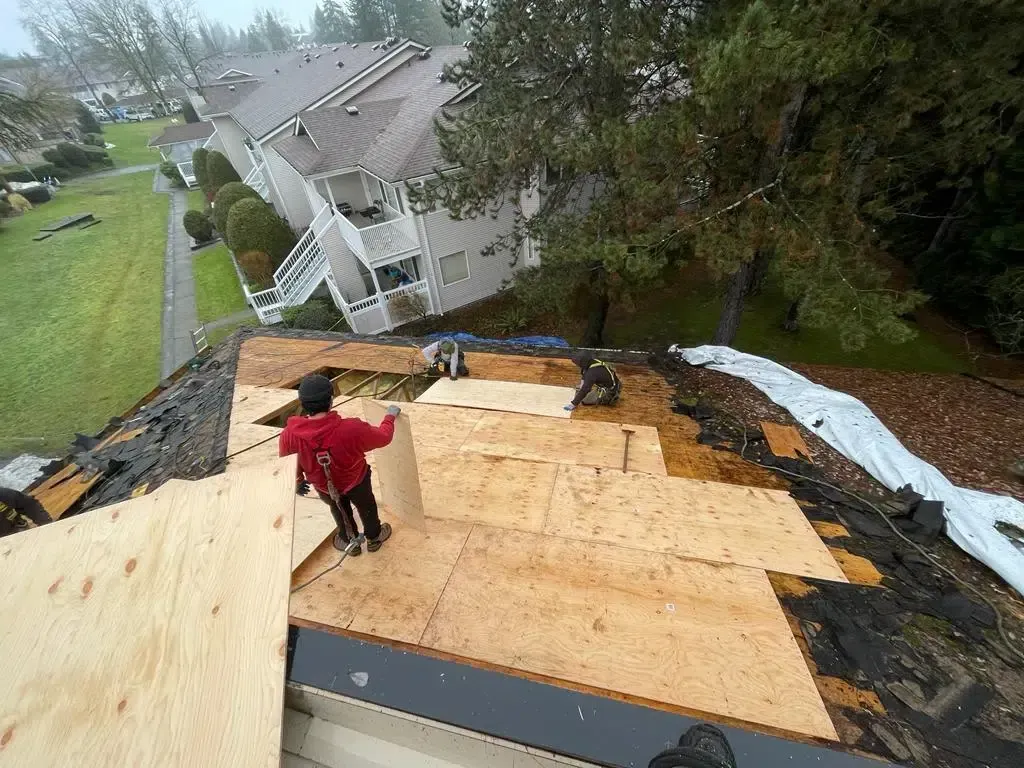
The current roofing methods of today include provisions for handling wet weather conditions. The tear-off installation requires workers to apply waterproof membranes right away while they protect all areas which become exposed to the environment. Roofs are not left open to the elements without protection.
The process of staging and drying and protection takes precedence over any specific dates that appear on a calendar. The storage of materials follows proper procedures while workers prepare all surfaces with care and they follow a work sequence which reduces their time in hazardous areas. Rain itself does not affect installation quality but inadequate planning methods do.
The level of experience which crew members possess becomes more vital than their seasonal employment status. Roofers who work in Vancouver understand how to interpret weather forecasts and they use this knowledge to create work schedules and they focus on completing the dry-in stages first. They recognize the actual locations of moisture risks and they know how to stop them from happening.
Weather-aware planning prevents exposure issues by controlling timing and scope each day. Teams with experience base their operations on real weather conditions instead of waiting for conditions which may never occur.
The Risks of Waiting Too Long
Homeowners face unexpected risks when they delay their response to potential issues.
Scheduling bottlenecks in peak summer are common. The market experiences increased customer demand after dry weather conditions become prevalent. Homeowners who postponed their roof replacement needs to wait for an extended period before they can install a new roof.
Emergency leaks which occur during storm events present a significant threat to the system. The roofs which appeared to be under control will experience unexpected collapse when rain or wind becomes too intense. Emergency repairs operate as reactive solutions which provide restricted fixes that usually do not meet optimal standards.
The system requires expensive maintenance because its complete structure becomes affected by the expanding damage. Moisture penetration through time requires homeowners to perform multiple replacement tasks which eventually lead to decking and insulation and structural repair needs.
The need for instant solutions creates barriers which limit our ability to adapt in such situations. Homeowners lose their ability to plan and compare options and schedule work at their convenience when their roof fails without warning.
How to Decide What’s Right for Your Roof
The right decision requires inspection-based decision making instead of depending on assumptions.
The assessment of your roof's present state through decking moisture checks and flashing evaluation and ventilation and insulation condition assessment will help you understand the situation. The absence of this data makes all timing choices based on random speculation.
Risk management for organizations requires them to evaluate present disruptions against their expected effects when dealing with cost factors and time constraints. The process of replacing equipment becomes unnecessary when done prematurely but it becomes expensive when performed at a late stage.
The best results emerge when people receive authentic direction which does not include any form of coercion. Homeowners can make budget-friendly decisions about their property maintenance through detailed explanations which show operational success and system failures and safe delay options.