Roof Replacement vs New Gutters: What to Prioritize First
Table of Contents
- Why Homeowners Often Face This Decision at the Same Time
- What Each System Is Actually Responsible For
- When Roof Replacement Should Be the Priority
- When New Gutters May Be the Priority
- Proper Drip Edge and Gutter Integration
- Gutter Replacement Without Damaging the Roof
- Roof Edge-to-Gutter Relationship
- Common Mistakes When Choosing What to Replace First
- How We Help Homeowners Choose the Right Sequence
- Planning the Work Sequence When Both Need Maintenance
- Recommended links
Key Takeaways
| What matters most | Vancouver reality | What to do about it |
|---|---|---|
| Roof and gutters handle different jobs | Wind-driven rain makes edge issues look like “everything is leaking” | Separate responsibilities, then trace the water path |
| Most sequencing mistakes happen at the roof edge | Drip edge + fascia + gutter alignment decide whether water goes in or out | Evaluate edge metal before replacing gutters or roofing |
| Replacing one system in isolation can create rework | New gutters can get removed/bent during re-roofing, or roofing can get damaged by retrofits | Coordinate scope, attachment points, and sequence |
| Cost-based decisions often become performance problems | Water ignores budget and follows physics | Prioritize the first failure point, not the cheapest item |
Homeowners in Vancouver often reach a point where both the roof and the gutters are showing signs of age or failure, and deciding which one to replace first isn’t always obvious. Because both systems deal with water, problems frequently overlap—and that overlap is exactly where costly mistakes get made. Understanding what each system is responsible for, how they interact, and where failures actually start is key to making the right decision. Ask our team about replacement priorities
Why Homeowners Often Face This Decision at the Same Time
Roofs and gutters typically age together. A standard asphalt roof may last 20–30 years, while aluminum or steel gutters often begin failing in the same general window due to corrosion, sagging, or joint separation. When water problems show up around the home—stains on siding, fascia rot, leaks near walls—homeowners are forced to ask: Is this the roof, or is it the gutters?
In Vancouver, this confusion is amplified by long wet seasons and wind-driven rain. Water doesn’t just fall straight down. It moves sideways, backs up, overflows, and finds weak points. A failing roof can dump excessive water behind gutters. Poorly installed gutters can trap water against fascia and roof edges, making a healthy roof look like it’s failing.
Another common issue is replacing one system in isolation. New gutters installed on an aging roof may need to be removed again during a roof replacement. Conversely, a new roof installed without addressing sagging or poorly pitched gutters can still lead to water damage. That’s why homeowners often face this decision together—and why prioritization matters.
What Each System Is Actually Responsible For
To decide what comes first, it’s important to clearly separate responsibilities.
The Roof’s Role
The roof’s job is to shed water off the structure. This includes:
- Managing rainfall and snowmelt across the roof surface
- Directing water safely toward edges and drainage points
- Preventing water intrusion through shingles, membranes, flashings, valleys, and penetrations
If the roof fails at any of these points, water enters the building envelope before gutters ever come into play.
The Gutter’s Role
Gutters do not waterproof the house. Their job is to:
- Catch water once it leaves the roof edge
- Control where that water goes
- Direct it away from foundations, walkways, and walls via downspouts
Gutters manage runoff—but they can only work with the water they’re given.
Where Responsibilities Overlap
The overlap happens at the roof edge. Drip edge, fascia, and gutter alignment all affect how water transitions from roof to gutter. Problems here are often misdiagnosed. For example:
- Water behind gutters may be blamed on gutters, when the real issue is missing or poorly installed drip edge.
- Overflowing gutters may be blamed on roof runoff, when the issue is undersized or improperly sloped gutters.
What They Can’t Fix for Each Other
- Gutters cannot fix roof leaks, failing flashings, or deteriorated underlayment.
- A roof cannot compensate for gutters that are undersized, clogged, or pitched incorrectly.
Understanding this division is critical when deciding what to replace first.
When Roof Replacement Should Be the Priority
In most cases, roof replacement should come before new gutters, especially when any of the following conditions exist.
Active or Recurring Roof Leaks
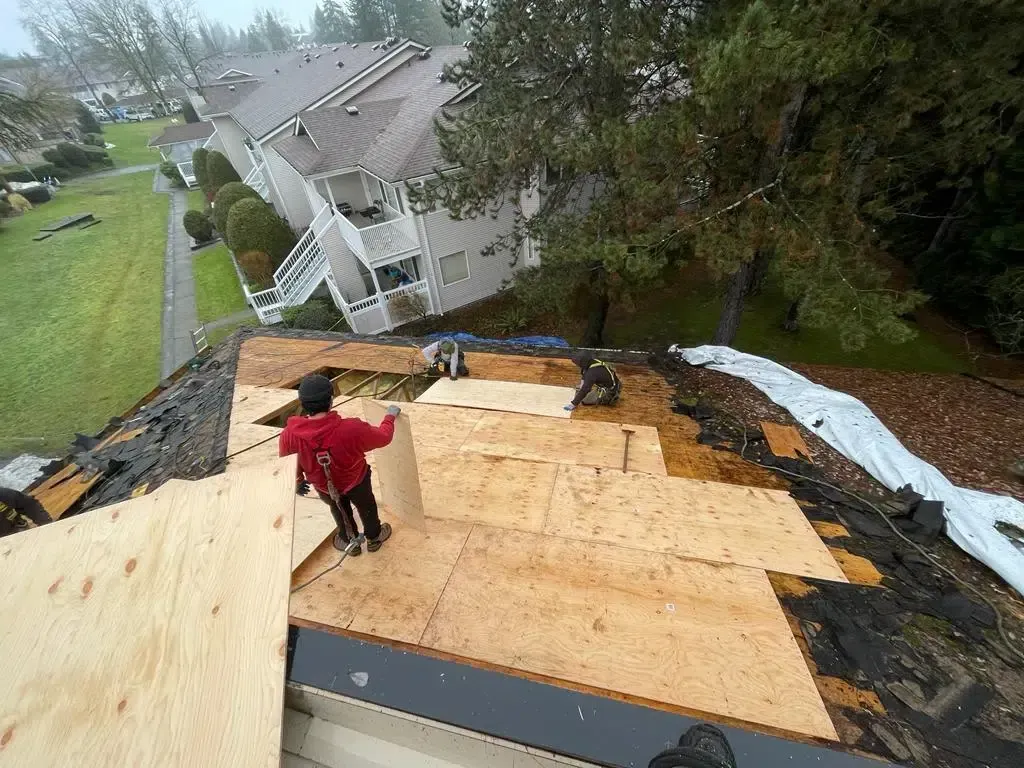
If water is entering the home—through ceilings, walls, or attic spaces—the roof system has already failed. Gutters won’t stop water that’s getting in higher up through valleys, penetrations, or flashings.
Failing Underlayment, Flashing, or Penetrations
Even if shingles look acceptable from the ground, failures often occur below the surface:
- Cracked or improperly detailed flashings
- Deteriorated underlayment
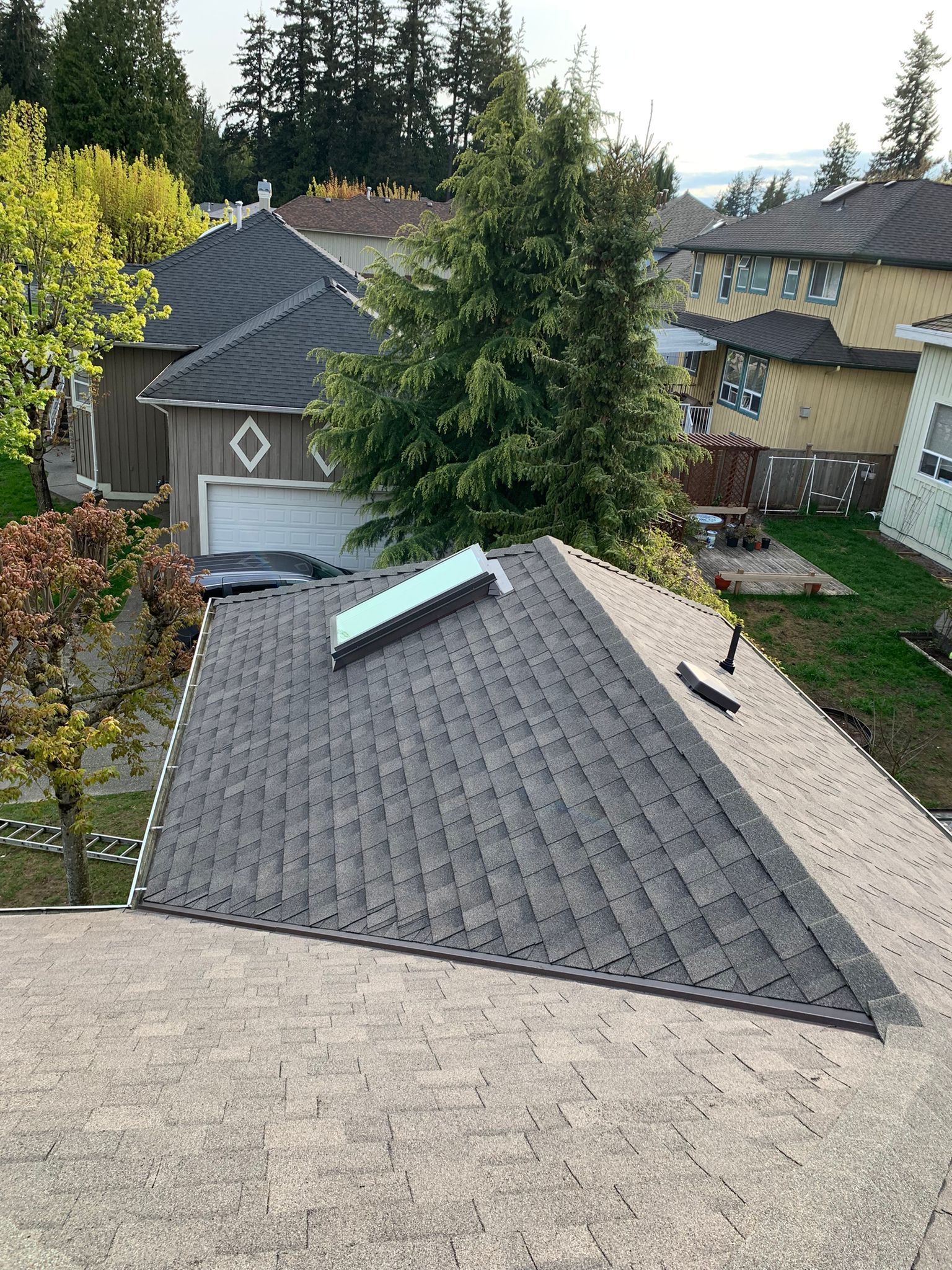
- Aging vent boots or skylight seals
These issues allow water into the structure before it ever reaches the gutter line.
Widespread Shingle or Membrane Deterioration
Curling shingles, granule loss, membrane cracking, or seam failures indicate that the roof’s ability to shed water consistently is compromised. Installing new gutters on a roof that’s already near the end of its service life only delays the inevitable—and may add unnecessary cost later.
Decking or Structural Concerns
During inspections, roofers often uncover:
- Soft or rotting sheathing
- Sagging roof lines
- Poor fastener holding
These are structural concerns. Gutters cannot mitigate structural moisture damage caused by a failing roof system.
Why Gutters Can’t Compensate for a Failing Roof
A gutter system only manages water after it leaves the roof. If the roof is:
- Allowing water underneath materials
- Dumping water behind fascia due to missing edge metal
- Channeling excessive runoff due to poor valley design
Then new gutters may actually make symptoms worse, concentrating water where the roof system is weakest.
When New Gutters May Be the Priority
While the roof often comes first, there are scenarios where gutters deserve immediate attention.
If the roof is relatively young, structurally sound, and free of leaks—but gutters are:
- Sagging or pulling away
- Overflowing due to poor pitch or undersizing
- Leaking at seams and corners
- Causing water to pool near foundations
Then replacing or correcting the gutter system can resolve visible water issues without touching the roof.
This is especially true when water damage is isolated to:
- Lower siding
- Fascia boards
- Soil erosion or basement moisture
In these cases, the roof may be doing its job correctly, but water is not being managed once it reaches the edge.
---
stem. High-quality materials fail to achieve their best performance because their planning stage operates independently from their installation stage. The Vancouver climate requires unified action because this area faces regular heavy rainfall and water events that wind forces into the area.
Proper Drip Edge and Gutter Integration
Drip edge is designed to control how water leaves the roof and enters the gutter. When installed correctly:
The water stream needs to enter the gutter system through its back edge instead of passing by it.
The roof decking edge is protected from moisture absorption
The system reduces capillary action which causes water to move backward under shingles.
The installation of new gutters without proper evaluation of drip edge dimensions and positioning will result in water overflow past the gutters and subsequent fascia rot which makes people believe the new gutters are leaking.
The process of gutter replacement needs to be done without causing any harm to the newly installed roofing system.
The process of gutter replacement involves securing the gutters to fascia boards while simultaneously making adjustments to their position along the roof perimeter. If this is done after a new roof is installed—without coordination—it can:
The edge section reveals damage which affects both the new shingles and the membrane materials.
Compromise underlayment or edge metal
The installation of products without following manufacturer instructions will result in warranty voidance.
The coordination of roofing and gutter work requires developers to establish specific points for attachment and determine proper spacing and work sequence which protects both systems from damage.
The system needs its different components to stay in their correct positions while maintaining proper distance between them.
The vertical and horizontal relationship between the roof edge and gutter matters more than most homeowners realize.
Proper spacing ensures:
The gutter system receives water drops which enter it during periods of heavy rainfall.
Snow or debris shedding doesn’t overload the gutter edge
Future maintenance doesn’t disturb the roof system
The installation of gutters at any angle less than perfect will result in three major problems which include continuous water backup and gutter discoloration and early system breakdown.
Most homeowners fail to understand that home sequencing represents a critical factor which surpasses their current level of awareness.
The sequence of system operation decides whether systems will work together as a single entity or compete against each other. In most cases:
The document starts by presenting information about roof structure and decking and edge details.
Drip edge and flashing are installed correctly
Gutters are then fitted to the finished roof edge
The reverse sequence of operations results in additional work requirements and increased expenses and prolonged water system issues which could have been prevented.
Common Mistakes When Choosing What to Replace First
Homeowners base their choices on what they can see and the immediate expenses they need to pay instead of understanding water circulation patterns in their plumbing system. These represent the main errors which produce the most expensive results.
The installation of new gutters proved to be an insufficient solution for stopping roof leaks.
The system of gutters functions to direct water which flows from the roof surface. If water is entering through:
Flashings
Valleys
Penetrations
Failing underlayment
New gutters won’t stop the leak. The actual problem remains concealed by these individuals until the interior damage reaches more severe stages.
Installing New Gutters Before Roof Replacement (and Damaging Them)
New gutters installed on an aging roof are often:
Removed or bent during roof replacement
Reinstalled incorrectly to accommodate new roof thickness
Scratched, dented, or improperly re-fastened
The process requires homeowners to purchase gutters twice because they need to replace their existing system with a new one.
Edge Metal and Fascia Conditions Remain Unaddressed.
Fascia rot, peeling paint, or soft wood at the roof edge is often blamed on gutters alone. In reality, the root cause is usually:
Missing or poorly installed drip edge
The water stream runs along the outside edge of the gutter.
Old edge metal reused during past roof work
Replacing gutters without addressing these details locks the problem in place.
Choosing Based on Cost Alone Instead of Performance
The cost of gutters remains lower than what it takes to replace a roof so people tend to view them as their simplest solution. The selection of systems based on initial expenses instead of operational performance results in:
Repeated repairs
Accelerated roof edge damage
Higher long-term expenses
Water operates independently of price considerations because it follows physical laws and gravitational forces and naturally takes the path which requires the least amount of resistance.
Our company helps homeowners to pick the best solution which fulfills their requirements.
The selection of suitable solutions demands more than basic system choice between alternatives. The process requires identifying water system origins to establish proper work sequence.
The process requires simultaneous evaluation of roof structures and gutter systems.
We look at the entire water path:
Roof surface, flashings, and penetrations
Edge metal, drip edge, and fascia
Gutter alignment, pitch, and downspout flow
The full assessment process enables doctors to detect wrong medical diagnoses while preventing them from replacing medical equipment unnecessarily.
Identifying the True Source of Water Problems
The signs of water stains and leaks and rotting wood do not directly indicate their original source. We trace issues back to:
The highest entry point
The first failure in the system
Areas where design or sequencing broke down
The system addresses specific issues through its solution process instead of making fundamental changes to the system.
Explaining Options Clearly Without Pressure
Homeowners need to understand their situation instead of facing unclear circumstances. We explain:
What must be done now
What can be deferred
What should be coordinated together
No scare tactics. No vague recommendations. The system operates based on its performance which forms the basis for this straightforward analysis.
The process of planning work sequence requires proper order when both systems need maintenance.
When both the roof and gutters are nearing the end of their service life, we:
The roofing process requires edge detailing to begin with proper execution of established procedures.
Design gutter installation to match the finished roof
The system prevents work from being repeated while it also protects equipment from harm and reduces unnecessary expenses.
The system connects roof elements to gutters which form a water management system that handles Vancouver's worst weather events.
The process of selecting roofing materials and gutters as a single unit prevents recurring issues while directing water to its intended path.