
Find Coquitlam B vent leaks in 10 minutes with roof and HVAC checks
Find Coquitlam B vent leaks in 10 minutes with roof and HVAC checks
If water is showing up between the walls of your furnace or water heater’s vent pipe, or you’re seeing rust streaks and staining near the roof cap, the B-vent is very likely your leak source, not the roof itself. If a carbon monoxide alarm is sounding or anyone in the home has a headache, nausea, or dizziness, evacuate immediately and call emergency services. Otherwise, your first move is a quick attic check and a controlled hose test to confirm where water is actually getting in.
TL;DR:
- Water between the walls of the vent pipe typically indicates a split seam or failed cap, not a roof leak, especially when rust streaks are visible near the roof cap.
- Common causes in Coquitlam include loose storm collars, corroded inner liners, mismatched caps, or degraded flashing, worsened by wind-driven rain and freeze-thaw cycles.
- A leaking B-vent poses a serious carbon monoxide risk if it has perforations or joint failures, requiring immediate professional inspection and testing.
- Temporary fixes, like roofing cement or matching caps, are only short-term solutions, and never patch the inner flue or ignore active leaks or CO alarms.
- Professional repairs should address the entire system, including flashing, caps, and vent assembly, with clear documentation and proper scope before any work begins.
Table of Contents
- Quick visual checklist for spotting Coquitlam B-vent leaks
- How do I tell a B-vent leak from a roof or plumbing vent leak?
- Common causes of B-vent issues in Coquitlam
- Is a leaking B-vent a carbon monoxide risk?
- Temporary fixes for a leaking vent pipe, and what to avoid
- When should you call a professional for B-vent repair?
- Local practitioner view: what we see going wrong in Coquitlam
- How a professional roofing contractor can help with vent leak repairs
- Sources
- FAQ
Quick visual checklist for spotting Coquitlam B-vent leaks
Grab a flashlight and a phone camera before you climb anywhere. Most B-vent problems leave visible clues within ten minutes if you know where to look.
Start outside, then move to the attic:
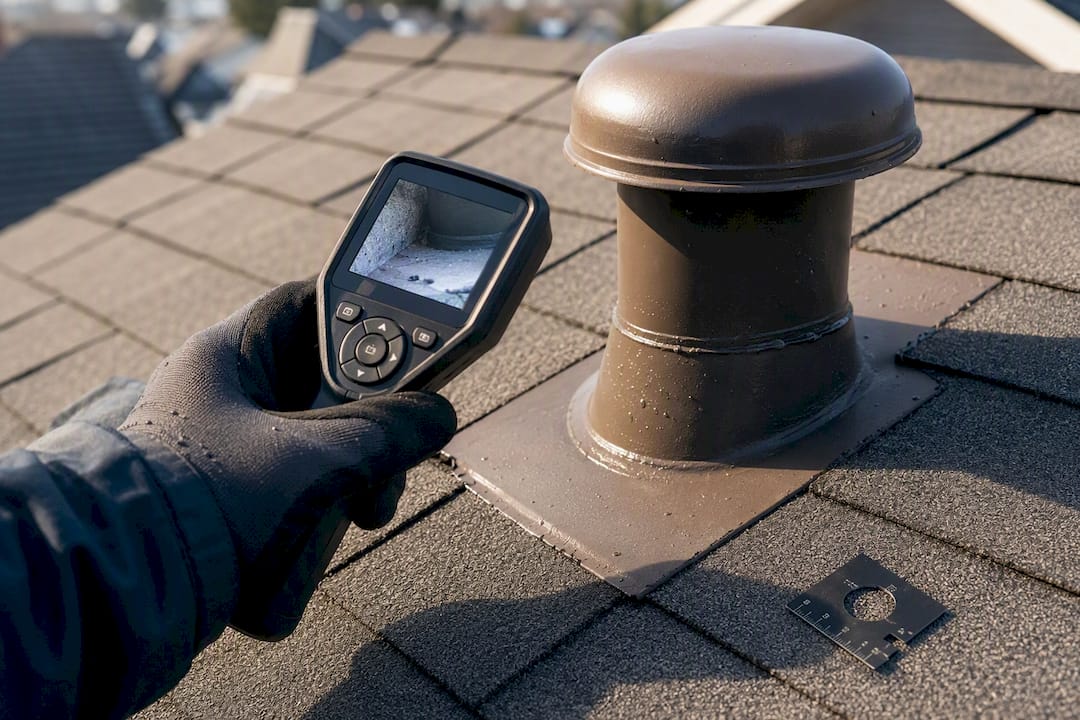
- Exterior: damaged or missing rain cap, rust streaks running down the outer pipe, a loose or missing storm collar, cracked flashing where the vent meets the roof.
- Attic: wet or matted insulation near the vent, drip trails on the inner pipe, visible gaps between the inner flue and outer jacket, or old caulking, which suggests a previous patch job.
- Verification: a hose test, sprayed low first and worked upward, tends to pinpoint the exact entry point better than guessing.
Photograph everything you find, close and wide, before you touch anything. Those images become the evidence a roof leak detection contractor or your insurer will want to see.
Pro Tip: Number your photos in the order you took them and jot a one-line note for each. Contractors quoting jobs sight unseen can often narrow down the fix from a well-organized photo set alone.
How do I tell a B-vent leak from a roof or plumbing vent leak?
Water tracing is part detective work, part patience. Work through it in order rather than jumping straight to conclusions.
- Inspect the cap and storm collar for splits, gaps, or a collar that’s simply sitting loose instead of clamped tight.
- Check the attic directly below the vent for a staining trail, and note whether it follows the pipe or spreads toward a nearby roof penetration.
- Run a hose test on a dry day, starting at the base of the flashing and working up toward the cap, pausing at each stage to check the attic for new moisture.
What you find tells you where to look next:
- Water pooling between the inner and outer pipe walls usually means a split seam or a failed cap.
- Water running down the inner flue often points to condensation or a cap that’s letting rain straight down the pipe.
- Staining concentrated at the flashing collar, rather than the pipe itself, usually means the roof integration is the actual problem.
Shoot photos in a wide-to-close sequence, and include a tape measure or your phone for scale. That single habit, backed by inspection guidance from Jaspector, speeds up contractor decisions and cuts down on return visits.
Common causes of B-vent issues in Coquitlam
Coquitlam’s weather and its housing stock create a fairly predictable set of failure points. Wind-driven rain off the Fraser Valley forces water sideways under storm collars that would otherwise shed it fine in a straight downpour. Sustained heavy rain saturates the membrane around the vent penetration until it simply gives up. Freeze-thaw cycles through the colder months expand joints just enough to open a gap that never fully closes again.
On the materials side, inspectors regularly find:
- Corroded inner liners from years of condensation cycling
- Split seams or cracked caps, sometimes from age, sometimes from a poor original installation
- Mismatched cap and vent brands that were never designed to seal against each other
- Missing or degraded flashing and storm collars at the roof line
Blocked gutters and ponding water make all of this worse. When water can’t drain off the roof properly, it backs up against flashings and finds the vent penetration as the path of least resistance. Local practitioners see storm-collar failures and improperly matched cap replacements as recurring patterns in Lower Mainland strata buildings, and B-vent inspections often turn up loose hoods, missing screws, and improper sidewall clearances as the underlying failure modes, according to Summerville Home Inspection.
Is a leaking B-vent a carbon monoxide risk?
Yes, and this is the one part of B-vent troubleshooting where you should never wait for a second opinion. A B-vent that’s corroded, perforated, or has a separated joint doesn’t just let rain in. It can also let combustion gases, including carbon monoxide, escape into your attic or living space.
Health Canada’s guidance is unambiguous here: any detectable carbon monoxide reading near a suspected vent leak signals a serious system failure that needs immediate professional attention, not a wait-and-see approach, according to the residential indoor air quality guideline on carbon monoxide.
If an alarm sounds, or anyone develops a headache, nausea, or dizziness, get everyone out and call emergency services before you do anything else. Even without an alarm going off, a suspected vent leak is reason enough to schedule a professional CO check alongside your roofing inspection. Skipping that step to save a service call is not a gamble worth taking.
Temporary fixes for a leaking vent pipe, and what to avoid
While you’re waiting for a contractor, a few safe steps limit the damage without making the underlying problem worse.
- Photograph and log the leak’s location, size, and any changes after rain, before you touch anything.
- A small bead of roofing cement around a minor flashing gap can hold for a short stretch in dry weather.
- If a cap is missing and you can safely access the roof, a matching replacement cap is a reasonable stopgap, provided it’s the same type and size.
What you should never do is seal the inner flue itself, run the appliance if you suspect back-drafting, or slap a cosmetic patch over what’s clearly a deeper failure. Those moves either trap combustion gases or simply hide a problem that keeps getting worse underneath. A rough patch job usually buys you a few weeks at best, and good documentation now saves arguments with an insurance adjuster later.
Pro Tip: Keep the receipt or packaging for any patch material you use. Adjusters and contractors both want to know exactly what went on the roof and when.
When should you call a professional for B-vent repair?
Some situations don’t leave room for a wait-and-see approach.
- Call immediately if a CO alarm sounds, water is actively entering the living space, you see a visible perforation, or a leak returns after you’ve already patched it once.
- Expect a coordinated inspection covering the roof penetration and flashing, the cap and storm collar, the inner flue’s condition, and an appliance draft test to rule out back-drafting.
- Expect a written scope of work , photo documentation, and a firm cost estimate before any repair begins.
| Repair type | Typical trigger |
|---|---|
| Flashing replacement only | Staining at collar, roof-side leak |
| Cap and storm collar replacement | Rust, missing cap, loose collar |
| Partial B-vent section replacement | Corroded or split pipe section |
| Full B-vent replacement with HVAC coordination | Multiple failure points, older system |
Corrosion, debris buildup, and joint fatigue are common enough reasons for full replacement that flue pipe specialists flag them as standard triggers for professional intervention rather than another round of patching.
Local practitioner view: what we see going wrong in Coquitlam
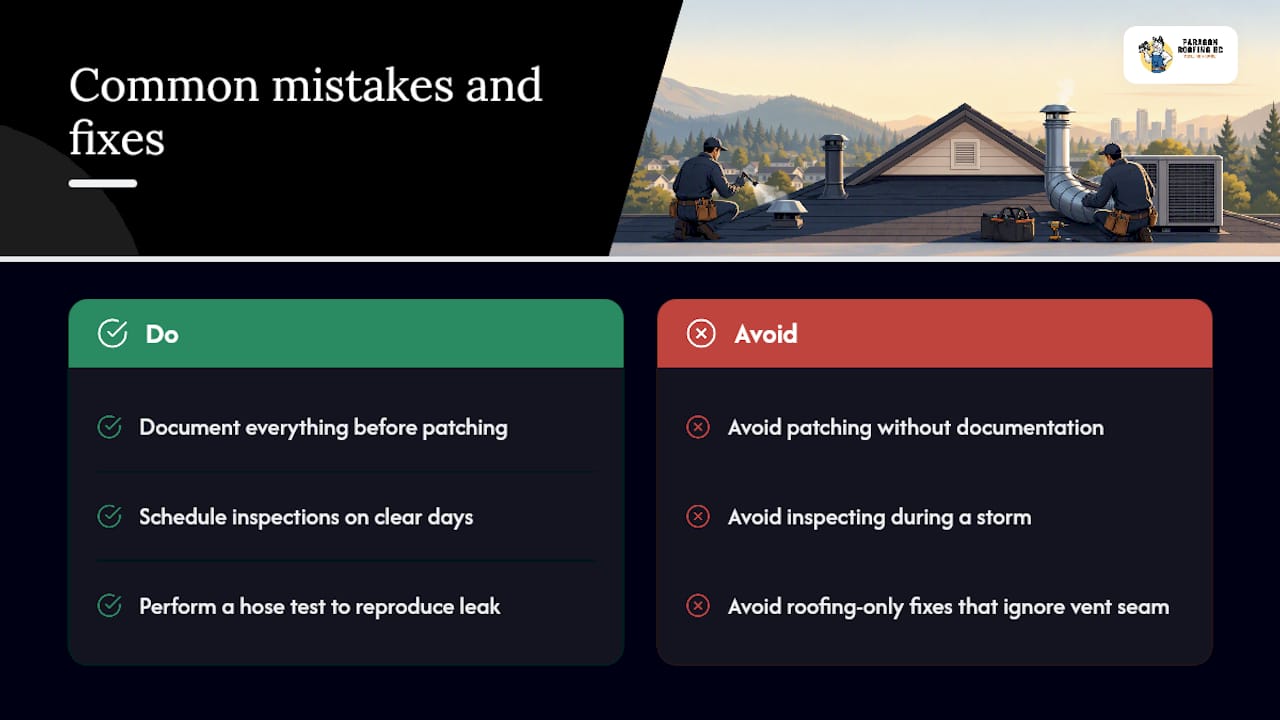
The pattern we run into most often in Coquitlam is a storm collar that was never properly seated, paired with a cap swap that used the wrong part number. Both fail quietly until a windy, wet week exposes them all at once. The second most common mistake is a roofing-only repair that ignores a vent seam that’s actually the real source, which just means the same call comes in again next season.
Our advice is simple: document everything before you patch anything, and schedule your inspection for a clear day so a hose test can reproduce the leak safely instead of guessing at it during a storm.
— Harman
How a professional roofing contractor can help with vent leak repairs
Diagnosing a B-vent leak properly means treating the roof penetration, the flashing, and the vent assembly as one connected system, not three separate problems. That’s exactly how Paragon Roofing BC approaches these calls across Coquitlam and the rest of Metro Vancouver: one inspection, one photo record, one scope of work, instead of a roofer and an HVAC tech each blaming the other’s trade.

When you book an inspection, expect an on-site safety check first, including CO awareness, followed by a documented walk-through of the cap, storm collar, flashing, and inner flue. You’ll get a written scope and a fixed quote before any work starts, and full photo documentation you can hand straight to your insurer if needed. Our roof flashing repair work often pairs directly with vent repairs on the same visit, since the two failures usually show up together.
If you’re dealing with an active leak or a triggered CO alarm right now, don’t wait for a scheduled slot. Call for emergency response, or book a residential roof inspection through our site to get a technician out and get eyes on the problem before the next rain.
Sources
FAQ
What should I do if my roof vent leaks during heavy rain?
Photograph the leak, check for CO alarms first, and avoid running the appliance if you suspect back-drafting. Once it’s safe and dry, a hose test sprayed low to high on the vent usually confirms whether the cap, collar, or a seam is letting water in.
Why is my furnace vent leaking water when it rains?
Wind-driven rain often forces water under a loose storm collar or through a split seam that stays hidden in calm weather. Corroded inner liners and mismatched cap replacements are also common culprits in older Coquitlam homes.
How do I fix seepage in a vent pipe during heavy rain?
Roofing cement around a minor flashing gap can hold as a short-term fix, and a matching cap replacement works if you can access the roof safely. Anything beyond that, especially a split seam or corroded section, needs a professional vent repair rather than a patch.
My roof vent boot is leaking. How can I fix it?
A leaking vent boot or collar usually needs full replacement rather than a patch, since a torn boot rarely reseals reliably. Document the damage with photos first, then book an inspection so a contractor can confirm whether the flashing or the vent assembly itself is the actual failure point.
Is a B-vent leak always a carbon monoxide risk?
Not always, but it’s serious enough to check every time. A leak that lets rain in through a perforation or separated joint can also let combustion gases escape, so Health Canada guidance recommends a professional CO check any time a vent leak is suspected.
Recommended
Our Roofing Blog
Have more questions about roofing?
Check out our FAQs or give us a call today to speak to an expert roofer in Vancouver Lower Mainland, BC. We're here to help our neighbours make educated decisions about their roof. For our team, we value helping clients save money while making their roofs last.