Cedar Shake Roofing in Vancouver: Maintenance, Moisture & Longevity
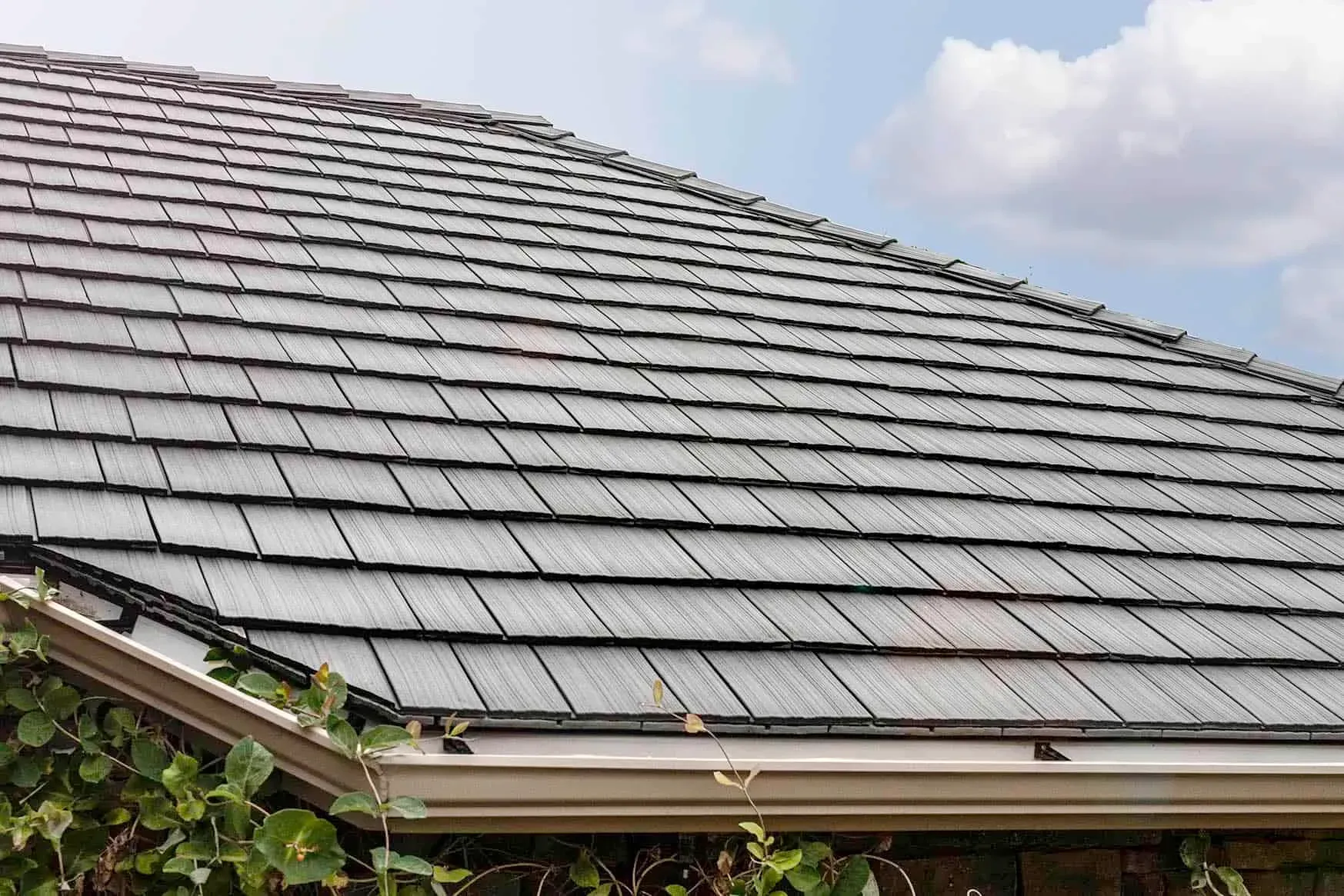
Cedar shake roofing represents Vancouver's architectural heritage. The material's natural beauty, rich warmth, and texture blend perfectly with our coastal rainforest setting. Character homes throughout Kitsilano, Mount Pleasant, Shaughnessy, and heritage districts showcase cedar shake roofs that define West Coast aesthetics.
But Vancouver's 1,189mm annual rainfall presents cedar shakes' greatest challenge. Wood absorbs moisture, creating conditions for moss growth, rot, and premature deterioration. Cedar that lasts 40-50 years in dry climates may only survive 15-25 years in constant dampness without aggressive maintenance. Properties in shaded areas beneath mature trees or north-facing slopes experience even faster degradation.
Cedar shake roofing success in Vancouver depends entirely on three factors: proper installation with adequate ventilation, regular maintenance including moss treatment and preservative application, and realistic expectations about lifespan and care requirements. This guide provides an honest assessment of cedar shake performance in coastal climates, maintenance realities, and costs, and helps determine whether cedar suits your property and lifestyle.
Why Cedar Shake Roofing Is Both Beautiful and Challenging in Vancouver
Cedar Shake Roofing in Vancouver's Coastal Climate
Understanding how our specific weather affects wood roofing helps set accurate expectations.
Constant Moisture & Prolonged Wet Conditions
Water absorption in natural wood: Cedar is hygroscopic, absorbing and releasing moisture in response to humidity and rainfall. In Vancouver's persistently damp climate (October through March especially), cedar remains wet for extended periods.
Slow drying cycles: Unlike materials that shed water instantly (metal, synthetics), cedar holds moisture in its cellular structure. Between rain events, inadequate sun exposure prevents complete drying. This chronic dampness creates ideal conditions for biological growth and rot.
The damage progression: Moisture-saturated cedar swells, causing dimensional changes that stress fasteners. As wood repeatedly swells and contracts, it shakes cup, warp, and split. Water infiltrating cracks reaches underlayment and deck sheathing, eventually causing structural damage requiring expensive repairs beyond simple shake replacement.
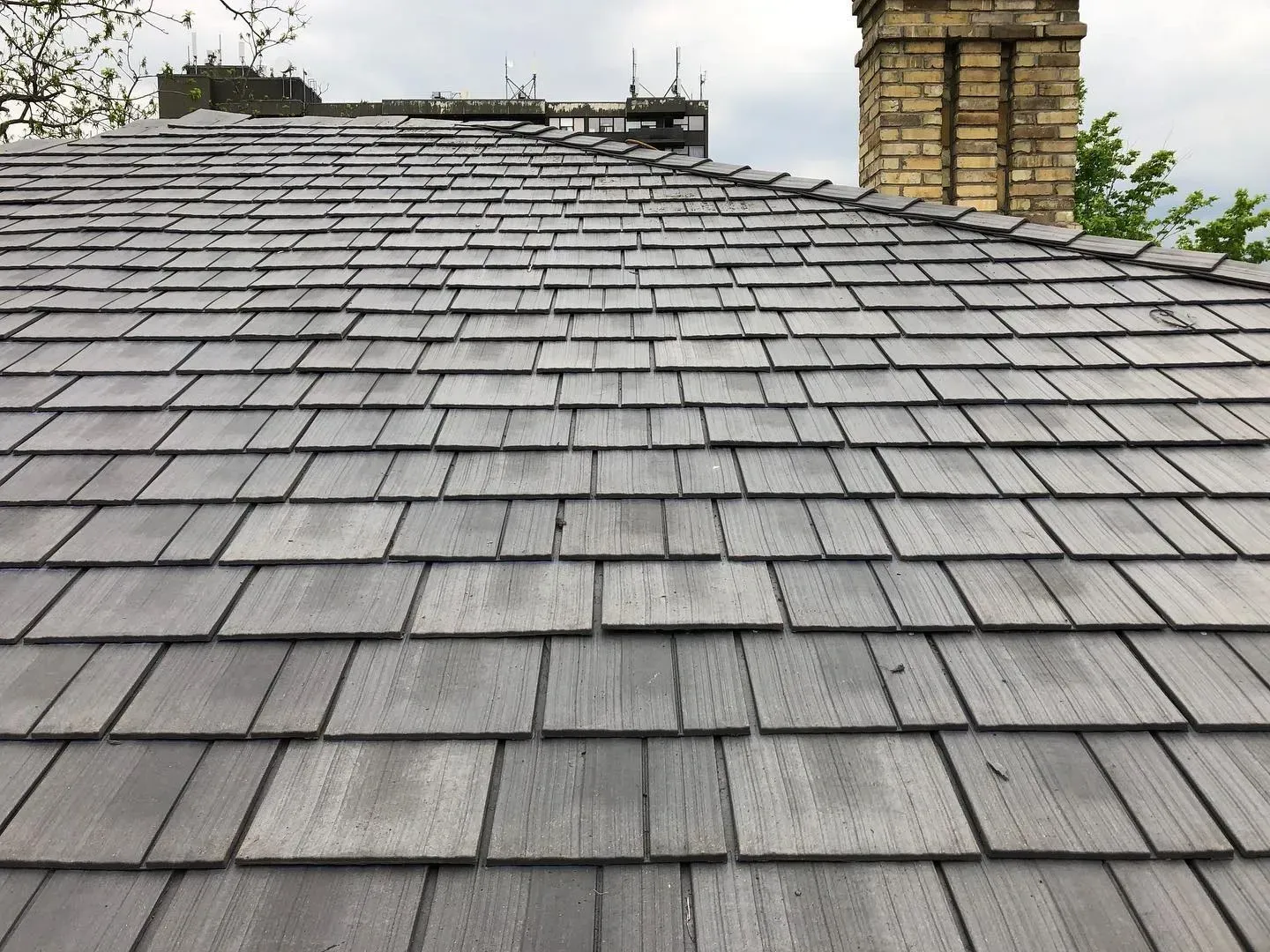
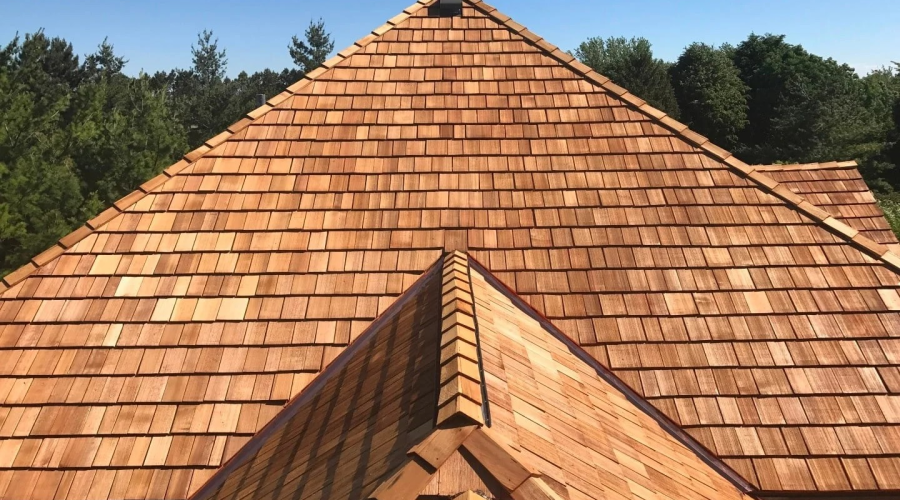
Moss, Algae & Organic Growth
Shaded neighborhood reality: Properties in Dunbar, Kerrisdale, areas near Pacific Spirit Park, and heavily forested West Vancouver locations experience aggressive moss colonization. Green growth appears within 1-2 years on north-facing slopes or shaded areas.
Accelerated surface breakdown: Moss doesn't just look unsightly. Root structures penetrate wood grain, holding moisture against the surface and accelerating rot. Moss-covered cedar deteriorates 2-3x faster than clean surfaces receiving direct sunlight.
Maintenance intensity: Controlling moss requires professional cleaning every 1-2 years on shaded roofs, biocide application, and preservative treatments. This ongoing expense and attention become part of the total ownership cost. Neglecting moss allows it to establish deeper roots, making removal more difficult and wood damage more severe.
Wind-Driven Rain & Seasonal Storms
Exposure at edges: Cedar shake edges along eaves, rakes, and ridges receive direct wind-driven rain. These areas deteriorate first, requiring piece replacement or section repairs before the bulk of the roof reaches the end of life.
Installation detail importance: Proper starter courses, drip edges, and ridge cap installation determine whether wind can lift shakes or drive water beneath overlaps. Professional installation following building code requirements prevents premature edge failure.
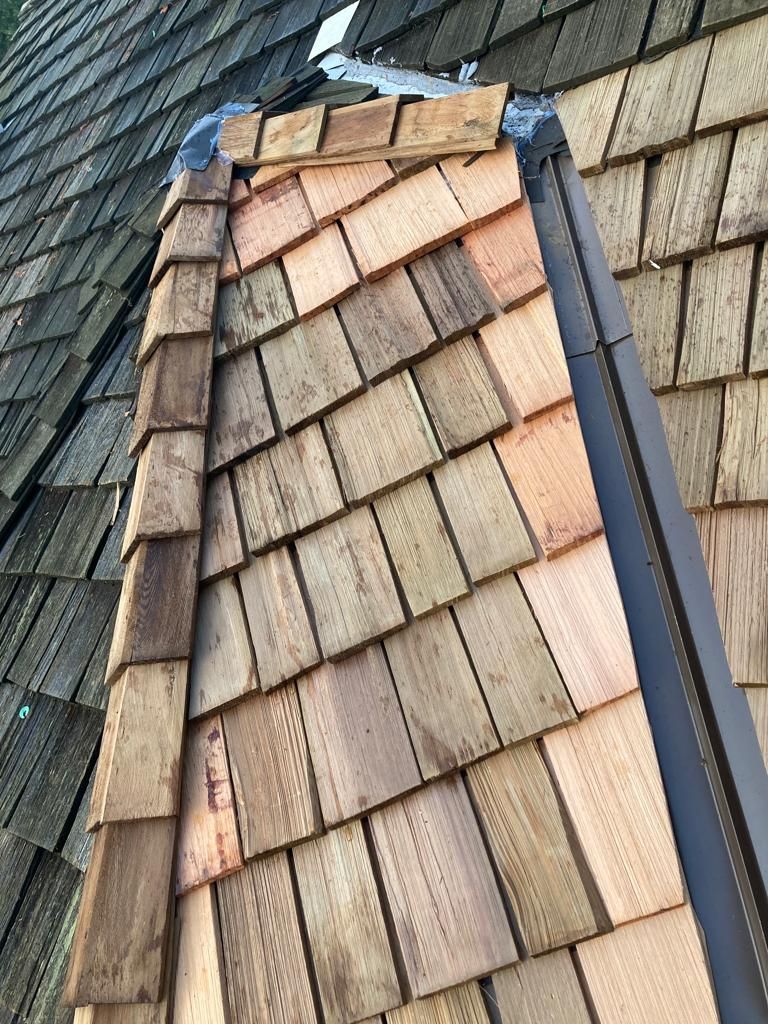
Understanding Cedar Shake Roofing Systems
Before deciding whether cedar suits your needs, understanding the material and types provides context.
Cedar Shakes vs Cedar Shingles
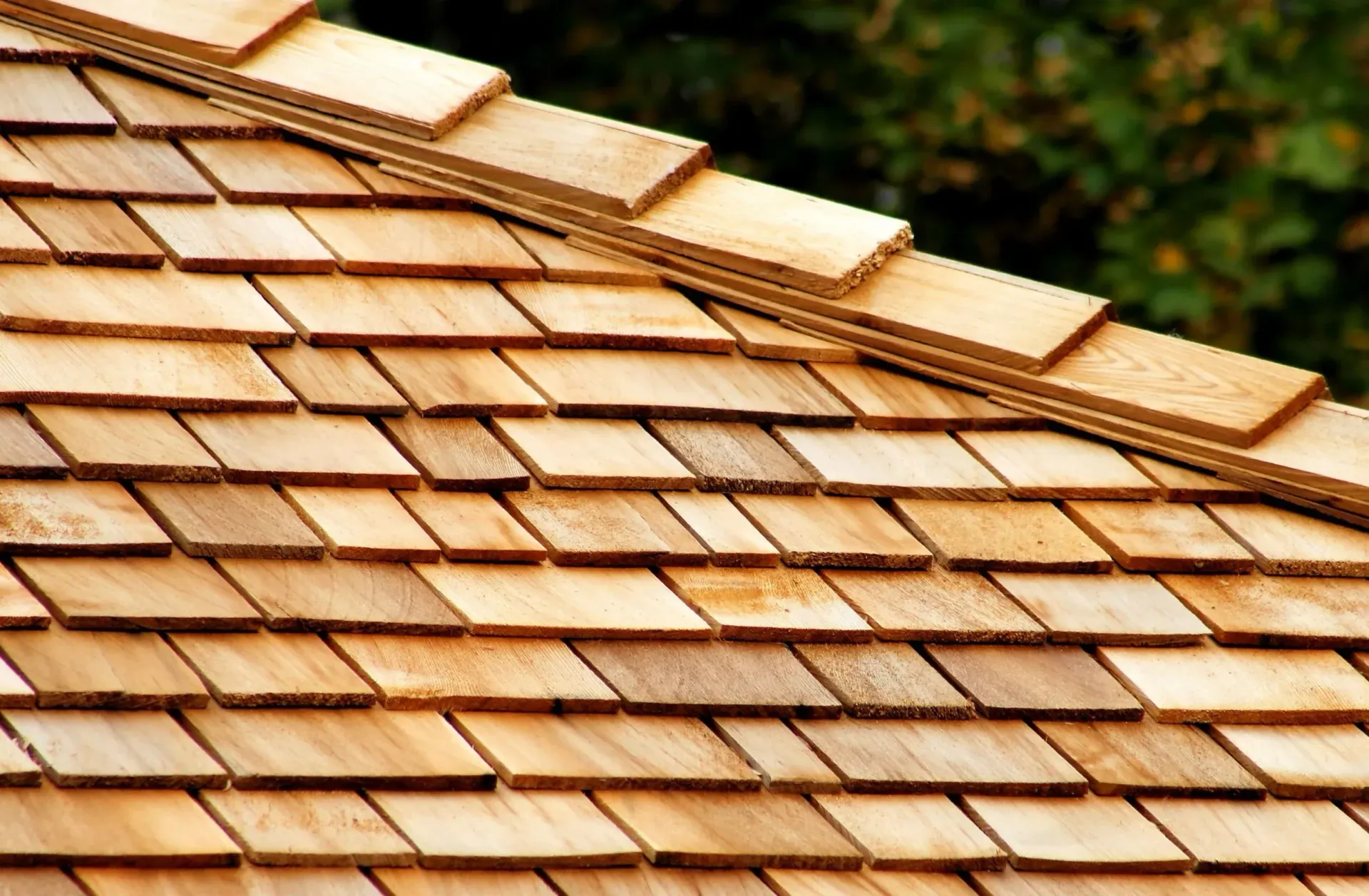
Cedar shakes: Hand-split or taper-sawn with rough texture, typically 3/4 to 1-1/4 inches thick at butt end. The irregular surface creates an authentic rustic appearance, matching heritage home aesthetics. Better durability from increased thickness. Natural grain splits create authentic character and enhanced weather resistance. The premium option costs more but performs better in wet climates.
Cedar shingles: Machine-sawn smooth on both sides, thinner (typically 1/2 inch), with a more uniform appearance, delivering a cleaner contemporary look. Less expensive than shakes (typically 20-30% lower cost), but shorter lifespan and less resistance to moisture penetration. Suitable for budget-conscious projects or modern architectural styles.
For Vancouver's wet climate, thicker shakes handle moisture exposure significantly better than thin shingles. The investment in premium material pays off through extended service life and reduced replacement frequency.
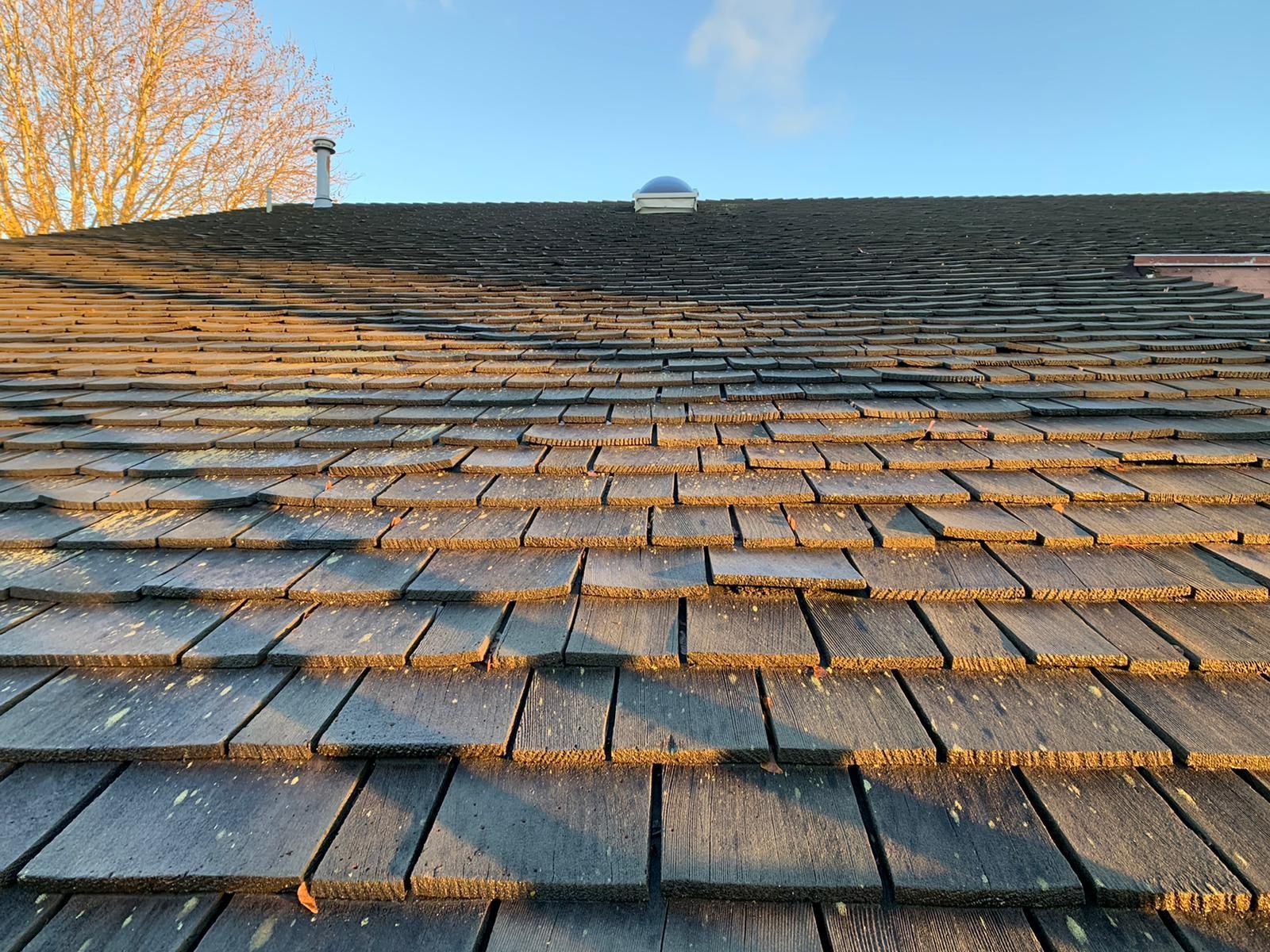
Types of Cedar Materials
Western Red Cedar: Natural oils (thujaplicins) provide inherent insect and decay resistance superior to most other woods. Locally sourced in BC, reducing material costs and environmental impact. Lightweight and workability make it ideal for roofing applications. Standard choice for 90% of Vancouver cedar shake installations.
Cedar grading: Select-grade straight-grain shakes (premium), #1 grade (standard quality), #2 grade (economy with knots and defects). Premium grades cost 30-50% more but last significantly longer in wet conditions. Common-grade random-cut products save money upfront but fail faster, requiring premature replacement.
Treated vs untreated: Fire-retardant pressure treatment achieves Class B or Class A ratings versus untreated Class C. Treatment adds $1-2 per square foot but may be required by insurance or building codes. Wood preservatives factory-applied extend lifespan but add cost.
Installation Requirements
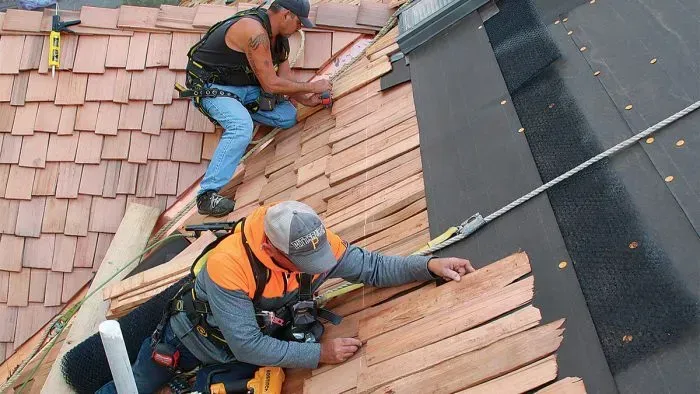
Breathable underlayment: Cedar requires synthetic underlayment (not solid membranes), allowing moisture vapor to escape while providing secondary weather protection. Trapped moisture causes rot from beneath.
Proper spacing: 1/4 to 3/8 inch gaps between shakes allow expansion when wood absorbs moisture and provide drainage pathways. Tight installation without spacing causes warping, cupping, and premature failure within 5-10 years.
Ventilation critical: Adequate soffit intake and ridge exhaust prevent moisture accumulation in attic spaces. Poor ventilation traps humidity, causing cedar to deteriorate from beneath while condensation rots the deck sheathing. Attic temperatures and moisture levels directly affect cedar lifespan.
Fastening technique: Proper nail type (corrosion-resistant), length (penetrating deck adequately), and placement (avoiding splitting) prevent shake displacement and water infiltration.
How Much Does Cedar Shake Roofing Cost in Vancouver?
Cedar represents a premium investment requiring realistic budget expectations.
Vancouver installed costs (2026):
Premium installation (hand-split select-grade):
- Material: $10-15/sq ft
- Labor: $10-15/sq ft
- Premium details, copper flashing: $4-6/sq ft
- Total: $24-36/sq ft
- 2,000 sq ft roof: $48,000-72,000
Basic installation (taper-sawn, moderate complexity):
- Material: $6-9/sq ft
- Labor: $8-12/sq ft
- Tear-off, underlayment, flashing: $3-5/sq ft
- Total: $17-26/sq ft
- 2,000 sq ft roof: $34,000-52,000
Ongoing maintenance costs: $500-1,500 annually for treatments, cleaning, and minor repairs. Factor this into lifetime ownership calculations. Over 25 years, maintenance adds $12,500-37,500 to the total cost.
How Long Do Cedar Shake Roofs Last in Vancouver?
Honest lifespan expectations prevent disappointment.
Manufacturer expectations vs reality: Manufacturers claim 30-50 years. Vancouver's wet climate shortens this significantly.
Realistic Vancouver lifespan:
- With excellent maintenance: 25-30 years
- With good maintenance: 20-25 years
- With minimal maintenance: 12-18 years
Factors affecting longevity:
- Solar exposure (south/west-facing roofs last longer)
- Tree shading (heavily shaded roofs degrade faster)
- Ventilation quality (poor ventilation accelerates rot)
- Maintenance frequency (annual treatments extend life)
- Installation quality (proper spacing and fastening is critical)
Comparison: Metal roofing lasts 50-70 years. Asphalt lasts 20-25 years. Cedar with aggressive maintenance matches asphalt lifespan at significantly higher total cost.
Maintaining Cedar Shake Roofs in Vancouver
Maintenance determines whether cedar reaches its potential lifespan or fails prematurely.
Essential Maintenance Tasks
Biannual inspections: Check shake condition, moss growth, missing pieces, flashing integrity. Spring and fall timing allows repairs before heavy winter rains.
Moss control (annually):
- Soft brushing or professional treatment
- Zinc or copper-based biocides
- NEVER pressure washing (damages wood fibers)
Preservative application (every 1-2 years): Wood-specific preservatives protect against UV, moisture, and biological growth. Professional application costs $500-1,000, depending on roof size.
Debris removal: Clear valleys, gutters, and roof surface of leaves and branches. Organic accumulation traps moisture, accelerating rot.
Minor repairs: Replace split or missing shakes promptly. Early intervention prevents water infiltration and structural damage.
Maintenance Cost Reality
Annual budget: $500-1,500 covering inspections, treatments, and minor repairs
Over 25 years: $12,500-37,500 in maintenance expenses
Total lifecycle cost: $47,000-110,000 (install + maintenance) for a typical home
Compared to asphalt ($14,000 + two replacements = $42,000-56,000 over 50 years) or metal ($30,000 one-time install lasting 50+ years).
Common Cedar Shake Roofing Problems
Moss-related deterioration: Green growth penetrates grain, holds moisture, and accelerates rot. Requires immediate professionalmaintenance.
Rot & moisture damage: Soft spots, discoloration, and crumbling edges indicate advanced decay. Isolated rot can be repaired. Widespread rot requires replacement.
Split, warped, or missing shakes: Wind, thermal cycling, and moisture cause splitting along grain. Missing shakes need immediate replacement, preventing water infiltration.
Leaks at penetrations: Flashing failures at
chimneys,
skylights, and valleys cause interior damage. Professional repair prevents escalation.
Pros & Cons of Cedar Shake Roofing in Vancouver
Pros
✓ Natural beauty - Timeless West Coast aesthetic
✓
Architectural character - Suits heritage and character homes
✓
Insulating properties - Better thermal performance than asphalt
✓
Environmentally friendly - Renewable, biodegradable
✓
Increases home value - Premium material appeals to buyers
Cons
✗ High maintenance - Annual treatments and inspections required
✗
Moisture sensitivity - Constant dampness accelerates rot.
✗
Shortened lifespan - 20-30 years with care vs 40-50 in dry climates
✗
Fire concerns - Class C rating without treatment
✗
Ongoing costs - $500-1,500 annually for 20-30 years
✗
Insurance challenges - Some carriers restrict or surcharge cedar
When Cedar Shake Roofing Makes Sense
Cedar works for specific property types and owner situations. Understanding ideal applications prevents disappointing mismatches.
Heritage & character homes: Properties in Strathcona, Mount Pleasant, Kitsilano character districts often require historically appropriate materials. Cedar shake satisfies heritage guidelines while providing an authentic West Coast appearance impossible to replicate with synthetics.
Owners committed to maintenance: Success requires treating cedar as a living material needing regular care. Property owners who enjoy maintaining their homes, have budgets for ongoing treatments, and understand maintenance prevents premature failure, find cedar rewarding.
Properties with good solar exposure: South or west-facing roofs receiving direct sunlight dry quickly between rain events. Properties in open areas without heavy tree canopy experience less moss growth and longer cedar lifespan (approaching 25-30 years vs 15-20 for shaded roofs).
Budgets accommodating maintenance: Annual treatments ($500-1,500), biannual inspections, and prompt repairs represent real ongoing costs. Property owners comfortable with these expenses as part of cedar ownership succeed where those expecting maintenance-free performance face disappointment.
Aesthetic-driven projects: When appearance justifies investment and homeowners prioritize authentic materials over cost or convenience, cedar delivers unmatched beauty. Some applications demand cedar regardless of maintenance requirements.
Realistic Expectations Matter
Cedar is beautiful but demanding. It requires attention similar to maintaining a wood deck or wooden boat rather than install-and-forget roofing. Property owners understanding this reality and embrace the maintenance relationship succeed. Those expecting asphalt-like neglect tolerance experience frustration and premature failure.
When Cedar Shake Roofing Is Not Recommended
Cedar presents challenges, making it unsuitable for many Vancouver properties and situations.
Low-maintenance expectations: Property owners seeking install-and-forget roofing should choose metal, synthetic slate, or quality asphalt products. Cedar's demanding $500-1,500 annual maintenance makes it inappropriate for hands-off ownership.
Heavily shaded properties: Locations beneath mature trees (common in Dunbar, West Vancouver, near Pacific Spirit Park) experience aggressive moss growth requiring intensive treatments. North-facing roofs receiving limited direct sunlight remain damp longer, accelerating rot. Cedar's lifespan drops to 12-18 years in these conditions, even with good maintenance.
Tight long-term budgets: Total lifecycle cost ($50,000-110,000 over 25-30 years, including maintenance) exceeds alternatives delivering equal or better longevity. Metal at $30,000 lasting 50+ years or synthetic slate at $35,000 lasting 40-50 years provides better value without ongoing treatments.
Insurance restrictions: Some carriers won't cover cedar roofs or charge significant surcharges due to fire risk. Others restrict coverage on roofs over 15-20 years old, regardless of condition. Verify insurance availability before investing in cedar.
Unwillingness to perform regular inspections: Annual or biannual roof inspections identify problems early. Property owners unable or unwilling to schedule regular professional inspections risk missing deterioration until expensive damage occurs.
Synthetic Alternatives Worth Considering
Modern synthetic shake products replicate cedar appearance convincingly while eliminating moisture concerns, moss problems, and maintenance requirements. Products from established manufacturers cost similarly to cedar upfront but require minimal maintenance and last 40-50 years. For properties where cedar's challenges outweigh aesthetic benefits, synthetics deserve serious consideration.
Is Cedar Shake Roofing Right for Your Vancouver Home?
Decision framework based on property characteristics and ownership realities.
Ask yourself honestly:
- Can I commit to annual treatments? Cedar requires $500-1,500 yearly for preservatives, moss control, and inspections. Over 25 years, this totals $12,500-37,500 beyond initial installation.
- Does my property have adequate sun exposure? South or west-facing roofs with minimal tree shading perform better. Heavily shaded or north-facing locations accelerate deterioration.
- Am I prepared for 20-30 year ownership? Cedar's investment makes sense for long-term ownership. Selling within 10 years means paying premium costs without realizing the aesthetic benefits fully.
- Do I value aesthetics over convenience? Cedar demands attention but delivers unmatched beauty. Property owners prioritizing appearance over ease succeed.
- Is my budget flexible for unexpected repairs? Despite maintenance, windstorms, falling branches, or concentrated moss can require section replacements costing $2,000-5,000. Budget flexibility prevents financial stress.
The honest answer: Cedar suits heritage home enthusiasts, character property owners, and those viewing roof maintenance as part of home stewardship rather than a burden. It disappoints people expecting modern roofing convenience with traditional aesthetics.
Cedar Shake Roofing in Vancouver – FAQs
Is cedar shake roofing suitable for Vancouver’s climate?
Cedar shake roofing can work in Vancouver, but only with proper installation, ventilation, and ongoing maintenance due to high rainfall and persistent moisture.
How long do cedar shake roofs last in Vancouver?
In Vancouver, cedar shake roofs typically last 20–30 years with consistent maintenance, and 12–18 years if maintenance is minimal or shading is heavy.
Why does cedar shake roofing require more maintenance?
Cedar is a natural wood that absorbs moisture, making it prone to moss growth, rot, and splitting without regular cleaning and preservative treatment.
How often does cedar shake roofing need maintenance?
Most cedar shake roofs require annual moss control, biannual inspections, and preservative treatments every 1–2 years in Vancouver’s climate.
Are cedar shake roofs a good choice for shaded properties?
No. Heavily shaded or north-facing roofs stay damp longer, accelerating moss growth and reducing cedar’s lifespan significantly.
Does cedar shake roofing increase property value?
Cedar shake roofing can increase curb appeal and value on heritage or character homes when properly maintained, but neglected cedar can reduce buyer confidence.
When is cedar shake roofing not recommended?
Cedar shake roofing is not ideal for owners seeking low-maintenance solutions, properties with heavy tree cover, or budgets that cannot support ongoing upkeep.
Next Steps for Cedar Shake Roofing in Vancouver
Interested in cedar despite challenges? Here's how to proceed:
- Property assessment - Evaluate solar exposure, shading, and roof pitch
- Budget reality check - Calculate total lifecycle costs (install + 20-30 years maintenance)
- Contractor research - Find experienced cedar installers with local references
- Maintenance planning - Budget annual treatments and inspections
- Consider alternatives - Explore a synthetic shake if maintenance concerns exist
Working with Paragon Roofing BC
Paragon Roofing BC provides honest guidance on cedar shake roofing throughout Metro Vancouver. We help property owners understand whether cedar suits their situation or if alternatives would better serve their needs.
Resources:
- Residential roofing services
- All roofing options
- Contact us for consultation
Cedar shake roofing delivers unmatched beauty for Vancouver heritage and character homes. When aesthetic priorities align with maintenance commitment and realistic lifespan expectations, few materials match its authentic West Coast character.
Pricing is provided for general informational purposes only and is subject to change. Cedar shake roofing costs in Vancouver vary based on roof size, complexity, material grade, access, maintenance requirements, and market conditions. All cost ranges are estimates; final pricing is determined after an on-site inspection and a written scope of work.
Here's What Our Existing Clients Think.
Home and business owners we've served across the greater Vancouver area.
Our Google Reviews
Edit Google Reviews Widget
We look forward to helping you.
For all your roofing needs, contact Paragon Roofing BC — call, text, or email us at 604-358-3436
Paragon Res Roof Install #2
We will get back to you as soon as possible.
Please try again later.