Metal Roofing in Vancouver: Durability, Noise & Long-Term Value
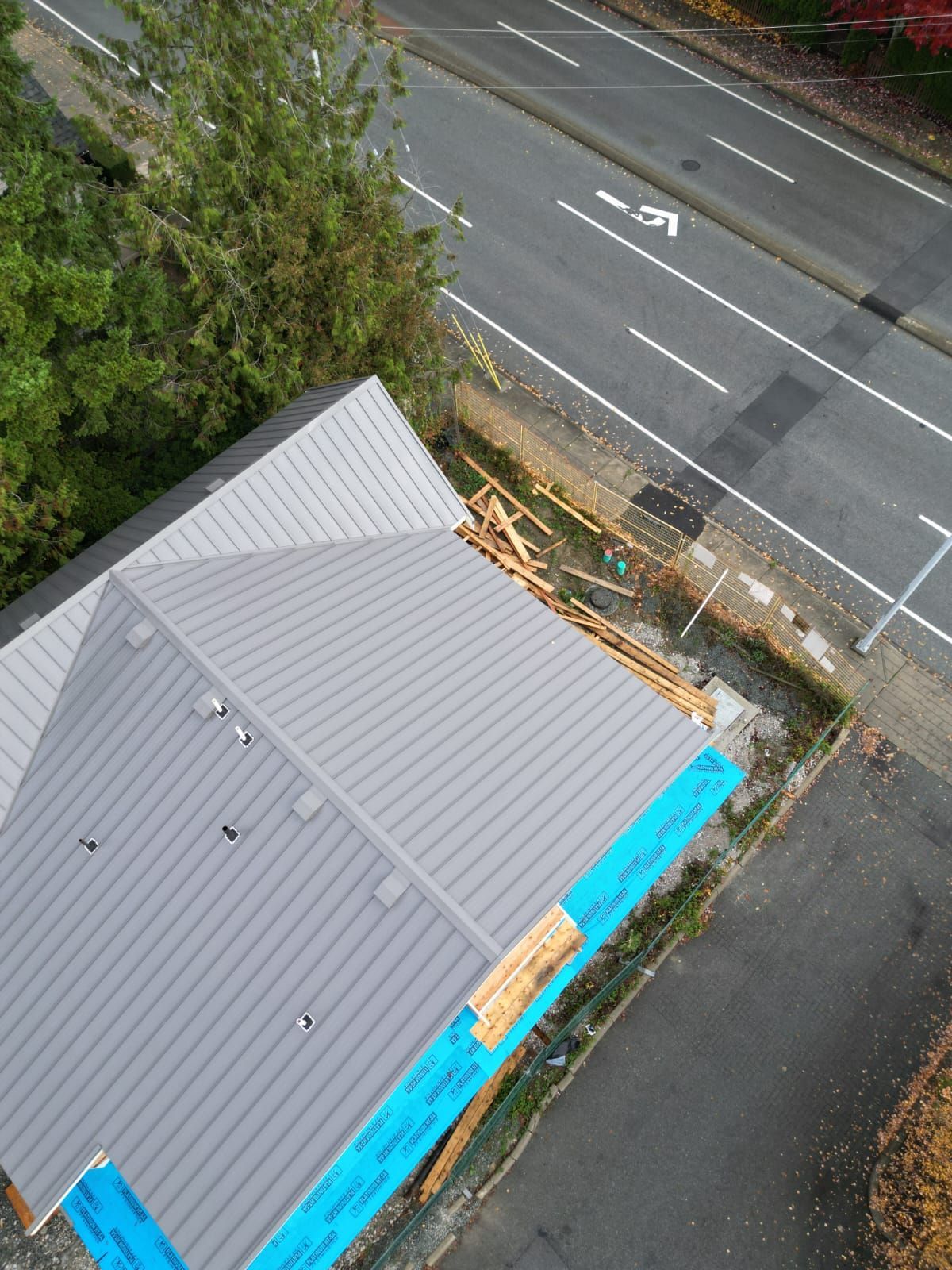
Vancouver's coastal climate presents specific roofing challenges: 1,189mm annual rainfall, persistent dampness, moss growth on shaded properties, and occasional winter windstorms. Traditional asphalt shingles last 15-25 years in these conditions, requiring frequent replacement. Cedar shake rots in constant moisture despite biannual treatments. Property owners increasingly seek materials that perform reliably for decades without extensive maintenance.
Metal roofing addresses these needs directly. The material lasts 40-70 years, sheds water instantly without absorbing moisture, resists organic growth, and withstands wind better than individual shingles or tiles. Modern metal roofing includes standing seam systems (premium concealed fastener panels), metal shingles (residential-friendly profiles), and ribbed panels (cost-effective commercial options).
Common concerns include noise during rain, condensation beneath panels, and a higher upfront cost. These are valid considerations, but often based on misunderstandings about modern metal roofing systems. This guide explains how metal performs in Vancouver's climate, addresses noise and condensation concerns, provides realistic costs, and helps determine whether metal roofing suits your property.
Why Metal Roofing Is Gaining Popularity in Vancouver
How Metal Roofing Performs in Vancouver's Coastal Climate
Understanding performance in our specific weather patterns helps evaluate practical suitability.
Heavy Rain & Water Shedding
Smooth surface advantages: Metal panels shed water instantly through gravity. Unlike granular asphalt shingles or porous cedar that retain moisture, smooth metal allows immediate runoff. This prevents water accumulation that leads to rot, moss establishment, or material degradation.
Interlocking systems: Standing seam panels connect through raised ribs with mechanical seaming or snap-lock joints. This creates a continuous weather barrier with minimal seams compared to individual shingles. Water flows down panel faces and off the roof without finding infiltration points.
Performance in downpours: Properties throughout Metro Vancouver experience intense rainfall events. Metal roofing handles these conditions without the swelling, lifting, or damage that affects organic materials. The material itself can't be damaged by water exposure, regardless of duration or intensity.
Moss, Algae & Organic Growth Resistance
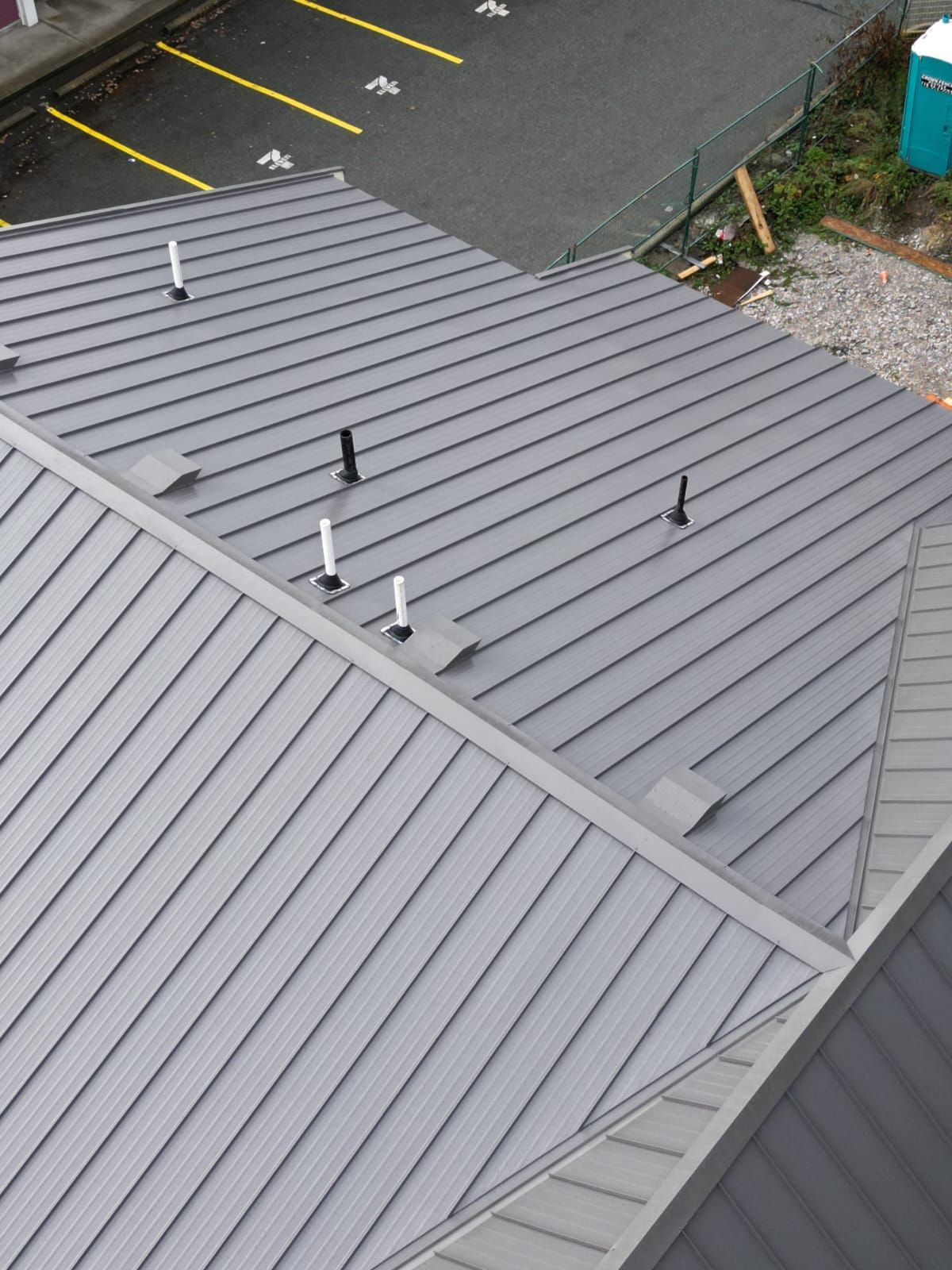
Why metal resists moss: Moss and algae need porous surfaces with retained moisture to establish. Metal's smooth, non-porous surface provides no foothold for biological growth. While debris may accumulate in valleys or behind chimneys, the panels themselves remain clean.
Comparison advantage: Properties in shaded areas of Dunbar, Kerrisdale, or heavily forested West Vancouver neighborhoods experience aggressive moss growth on asphalt shingles and cedar shake. These materials require annual or biannual moss treatment. Metal roofing eliminates this maintenance entirely as moss won't colonize the surface.
Maintenance simplicity: Debris removal from gutters and valleys prevents any organic accumulation. Beyond this basic upkeep, metal roofing requires no moss treatment, biocide application, or surface cleaning that asphalt and cedar demand.
Wind & Storm Performance
Fastening systems: Standing seam panels attach through concealed clips, allowing thermal expansion while providing wind resistance exceeding 140 mph. Exposed fastener systems use screws with rubber washers penetrating panels into purlins or deck sheathing every 12-18 inches.
Wind ratings: Properly installed metal roofing withstands winds far beyond Vancouver's typical storm conditions. While we occasionally experience 80-90 km/h gusts during winter storms, metal systems rated for 110-140 mph provide a substantial safety margin.
Real-world advantage: After windstorms that lift asphalt shingles or displace tiles, metal roofs typically show no damage. The unified panel system distributes wind loads across the entire roof rather than stressing individual pieces.
Common Metal Roofing Systems in Vancouver
Different metal roofing types suit various applications and budgets.
Standing Seam Metal Roofing
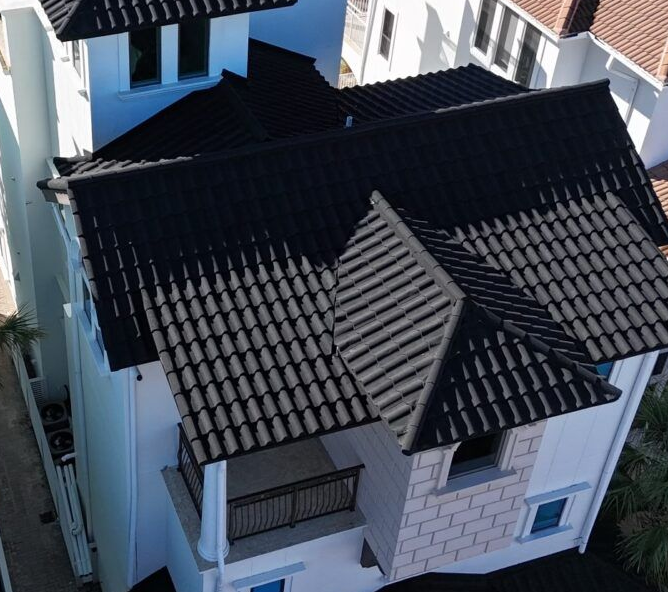
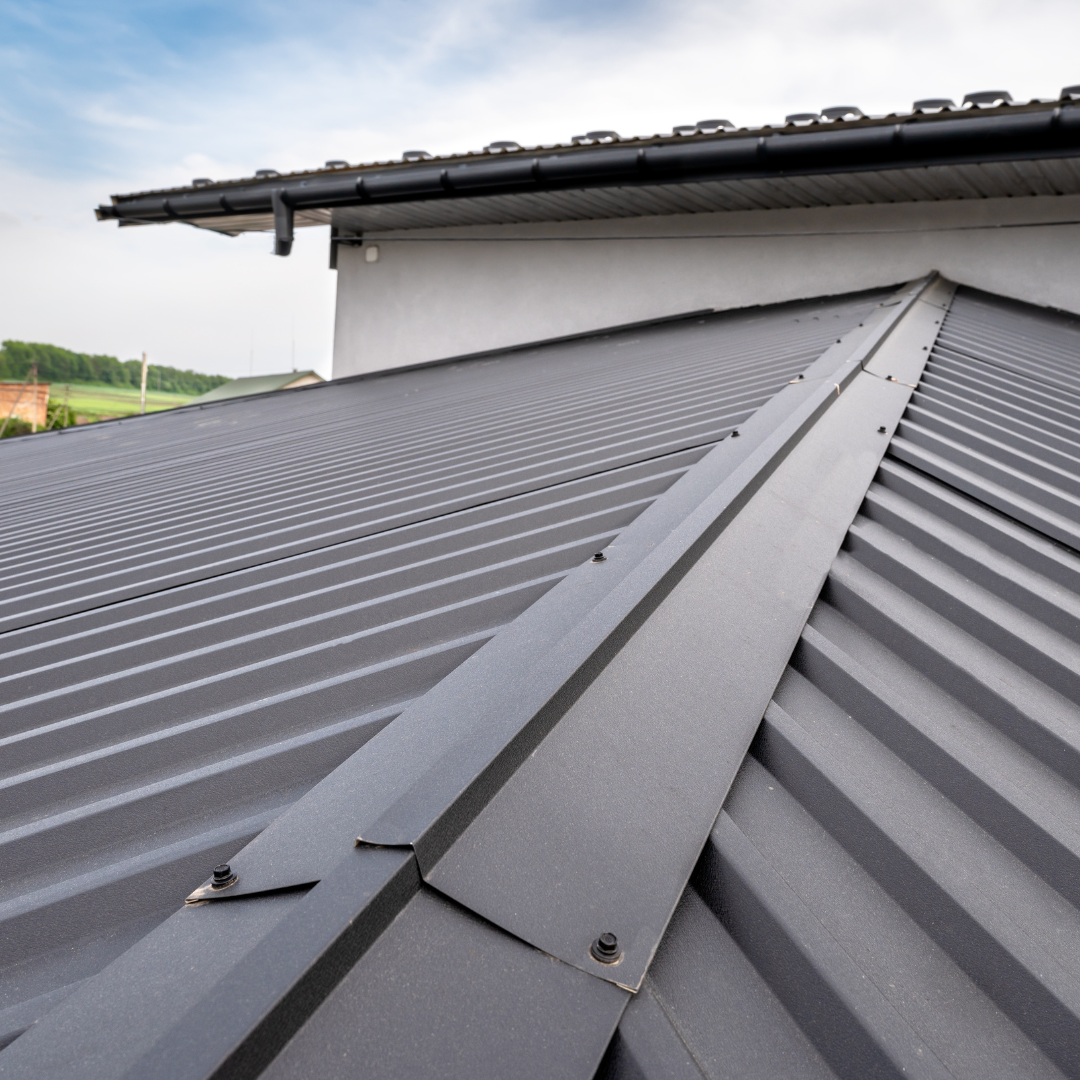
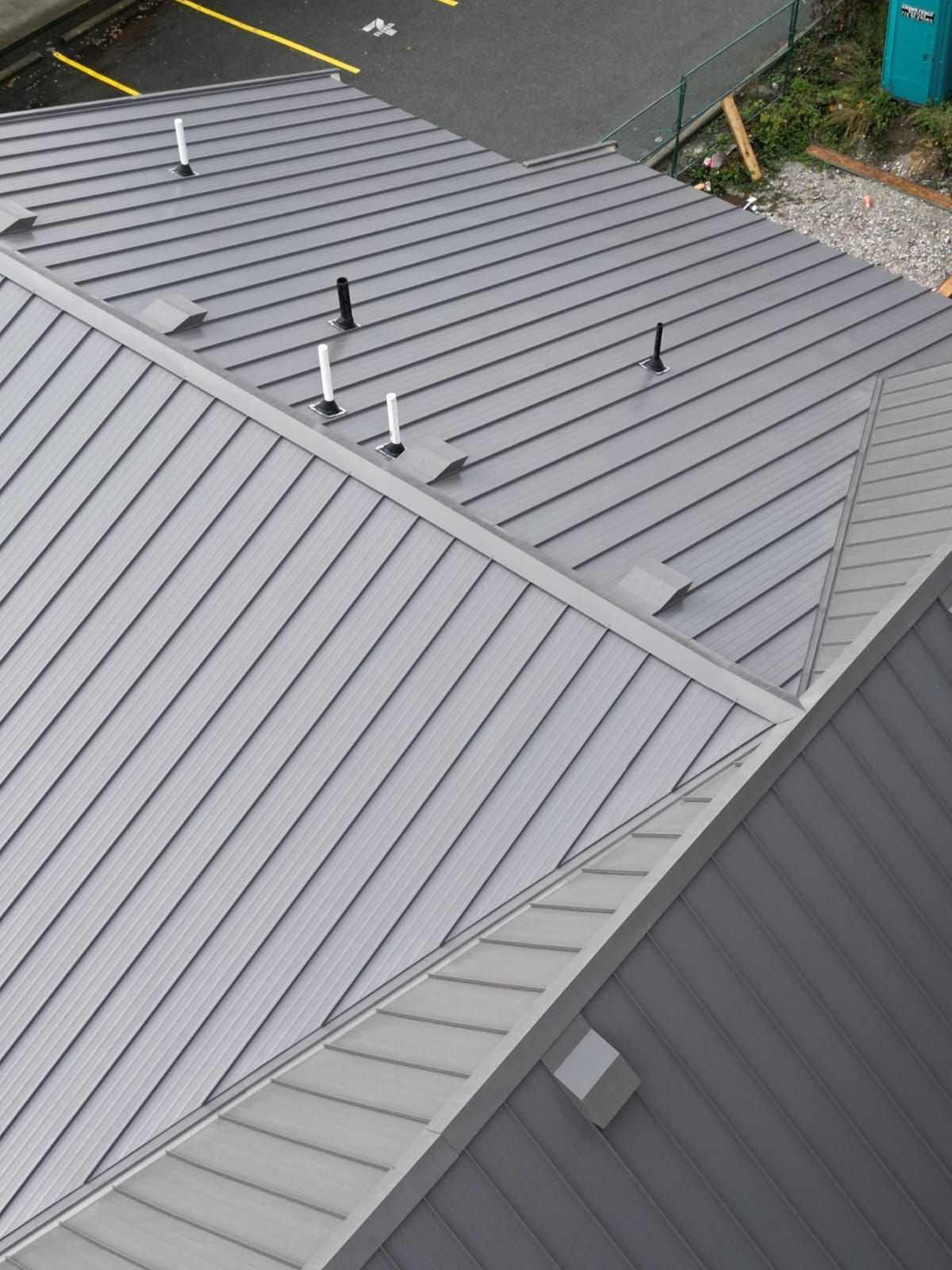
Long panels: Continuous panels run from ridge to eave (or eave to eave on low slopes) without horizontal seams. Panel widths typically range from 12-18 inches with 1-2 inch raised seams between panels.
Concealed fasteners: Clips attach to deck sheathing and engage panel edges. Subsequent panels snap or mechanically seam over clips, hiding all fasteners from weather exposure. This eliminates the fastener degradation that affects exposed fastener systems.
Premium option: Standing seam costs $12-20 per square foot installed in Vancouver. The investment delivers superior weather protection, modern appearance, and the longest service life (50-70+ years). Ideal for residential homes prioritizing aesthetics and performance.
Metal Shingles & Tiles
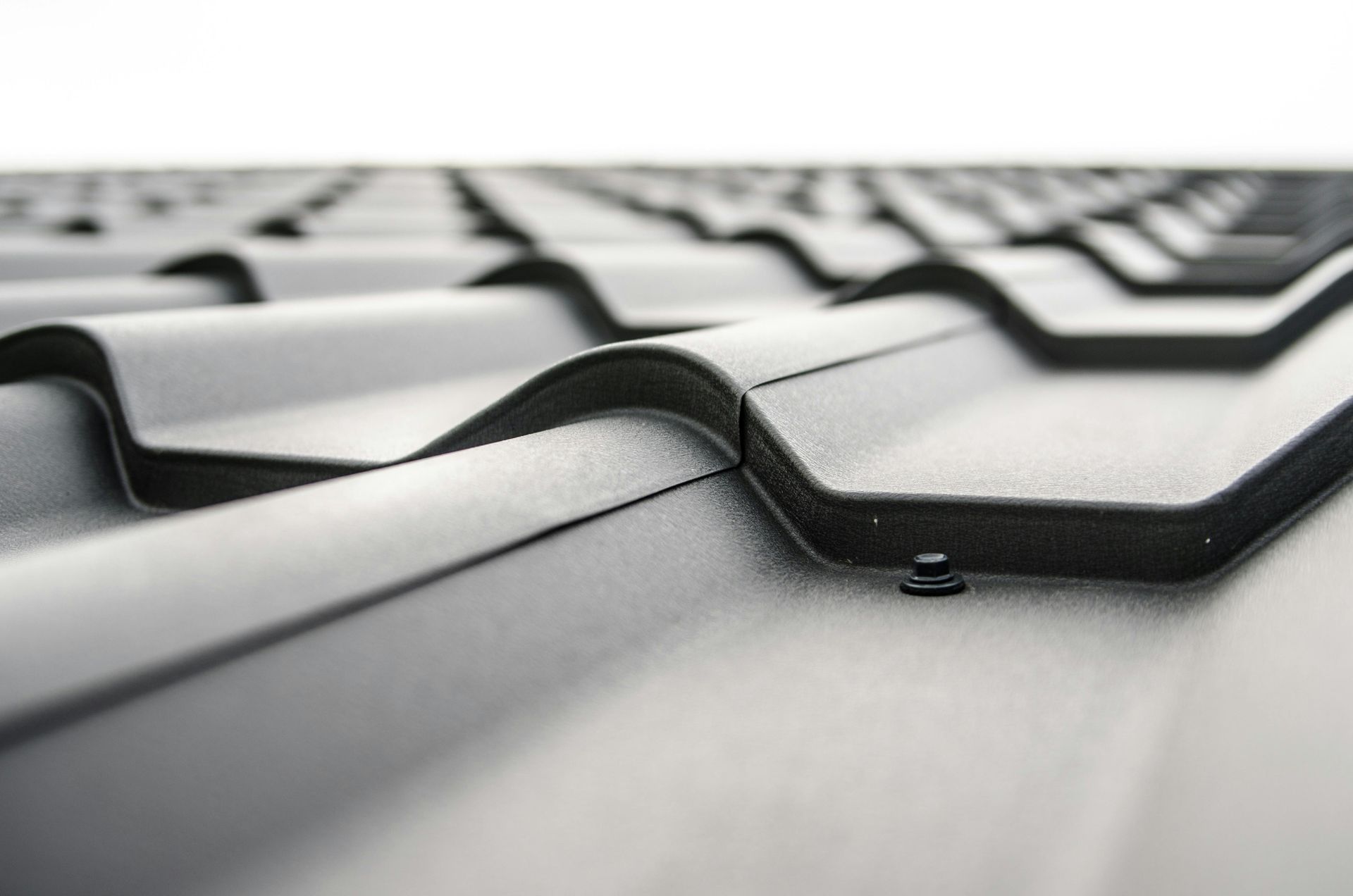
Shingle-style appearance: Stamped metal panels interlock to replicate traditional shake, slate, or shingle aesthetics. Individual units measure 12-16 inches square, creating a dimensional appearance similar to authentic materials.
Residential appeal: Property owners wanting metal performance with traditional aesthetics choose metal shingles. The products suit character homes, heritage neighborhoods, and properties where exposed panel systems wouldn't match architectural style.
Cost positioning: Metal shingles install for $10-16 per square foot, positioning them between standard asphalt ($5-9/sq ft) and standing seam systems ($12-20/sq ft). Good balance of cost and performance.
Corrugated & Ribbed Metal Panels
Cost-effective: Exposed fastener ribbed panels cost $7-12 per square foot installed. The economy makes them practical for shops, garages, agricultural buildings, and budget-conscious residential applications.
Common applications: Commercial and industrial buildings throughout Vancouver use ribbed panels for reliable protection at an accessible cost. The appearance is utilitarian but increasingly accepted in residential markets, prioritizing function over aesthetics.
Material Comparisons
Steel: Most common choice. Galvanized or Galvalume coating provides corrosion resistance. Costs $3-7 per square foot material only. Works well in inland and suburban Vancouver locations.
Aluminum: Superior corrosion resistance near saltwater. Properties in waterfront areas (Coal Harbour, North Vancouver marinas, beachfront locations) benefit from aluminum's resistance to salt exposure. Costs $4-9/sq ft material.
Zinc & Copper: Premium materials developing protective patina over decades. Copper turns green-blue; zinc develops grey patina. Both last 75-100+ years. Costs $15-30/sq ft material. Reserve for luxury properties, heritage applications, or architectural statements.
How Much Does Metal Roofing Cost in Vancouver?
Metal roofing represents a premium investment with a long-term value proposition.
Factors That Affect Metal Roofing Costs
Metal type: Steel (most affordable), aluminum (moderate), copper/zinc (premium). Gauge thickness affects cost within each material category.
Panel system: Exposed fastener ribbed panels cost the least. Metal shingles mid-range. Standing seam is most expensive due to concealed fastening and a premium appearance.
Roof complexity: Simple gable roofs install efficiently. Multiple valleys, dormers, skylights, hips, and pitch changes increase material waste and labor time. Each penetration (chimneys,skylights,vents) requires custom flashing details.
Tear-off requirements: Removing existing roofing adds $1-3/sq ft. Metal often installs over existing asphalt (with proper ventilation strapping), reducing this cost, though a full tear-off allows deck inspection.
Typical Metal Roofing Cost Ranges
Vancouver installed costs (2026):
Ribbed/corrugated panels (exposed fasteners):
- Material: $3-5/sq ft
- Labor: $4-7/sq ft
- Total: $7-12/sq ft
- 2,000 sq ft roof: $14,000-24,000
Metal shingles:
- Material: $5-8/sq ft
- Labor: $5-8/sq ft
- Total: $10-16/sq ft
- 2,000 sq ft roof: $20,000-32,000
Standing seam (concealed fasteners):
- Material: $6-10/sq ft
- Labor: $6-10/sq ft
- Total: $12-20/sq ft
- 2,000 sq ft roof: $24,000-40,000
Comparison context:
- Asphalt shingles: $10,000-18,000
- Metal roofing: $14,000-40,000
- Cedar shake: $24,000-40,000
Metal costs 1.5-2.5x more than asphalt upfront but lasts 2-3x longer, making lifecycle costs favorable for long-term ownership.
How Long Does Metal Roofing Last in Vancouver?
Expected lifespan ranges from 40-70+ years, depending on material and system type.
Why metal lasts in wet climates:
- No rot or organic degradation
- Zero water absorption
- Corrosion-resistant coatings (galvanized, Galvalume, PVDF paint systems)
- UV-resistant finishes
- Non-combustible (Class A fire rating)
Material-specific lifespans:
- Steel with quality coating: 40-60 years
- Aluminum: 50-70 years
- Zinc: 60-100+ years
- Copper: 75-100+ years
What affects longevity:
- Coating quality: PVDF paint systems (Kynar) last longer than polyester. Galvalume outperforms galvanized steel in coastal environments.
- Installation quality: Proper fastening, flashing integration, and underlayment prevent premature failure
- Maintenance: Periodic debris removal and fastener checks extend lifespan
- Salt exposure: Waterfront properties need aluminum, zinc, or high-quality coated steel
Vancouver's moderate climate actually favors metal longevity. We avoid the extreme heat that accelerates coating breakdown in desert climates and the heavy snow loads that stress panels in mountain regions.
Is Metal Roofing Noisy in Vancouver Rain?
This represents the most common concern about metal roofing. Understanding noise realities helps set accurate expectations.
Why People Think Metal Roofs Are Loud
Barn associations: Uninsulated agricultural buildings with bare metal over open rafters amplify rain noise. This creates the perception that all metal roofing is loud.
Exposed fastener myths: Older installations without proper underlayment or insulation transmitted more sound than modern systems.
How Modern Systems Reduce Noise
Roof decking: Solid OSB or plywood sheathing beneath metal panels provides a first sound barrier. This differs from agricultural buildings with metal applied directly over purlins.
Underlayment layers: Synthetic underlayment (required for waterproofing) provides sound dampening. Some products include enhanced acoustic properties specifically for metal applications.
Attic insulation: Standard attic insulation (R-40 typical in Vancouver) blocks sound transmission into living spaces. Combined with roof sheathing and underlayment, most homeowners notice minimal difference between metal and asphalt during rain.
Real-world Vancouver experience: Properties with proper installation report rain noise comparable to or slightly louder than asphalt, but not objectionable. Many homeowners appreciate the gentle drumming sound during rainfall.
Metal vs Asphalt Noise Comparison
Properly installed metal roofing with standard underlayment and attic insulation produces minimal noise increase over asphalt. Properties with finished attic spaces or cathedral ceilings benefit from additional insulation for optimal acoustic control.
Moisture, Condensation & Ventilation
Metal's conductive properties require proper design to prevent condensation.
Why condensation occurs: Warm interior air meets cold metal surfaces. Temperature differential causes moisture to condense on panel undersides.
Importance of proper ventilation: Balanced intake (soffit vents) and exhaust (ridge vents) maintain airflow, preventing moisture accumulation. Cold roof design keeps metal panels at outdoor temperature through continuous ventilation.
Underlayment & vapor barriers: High-temperature synthetic underlayment prevents condensation from reaching deck sheathing. Proper vapor barrier placement controls moisture migration from living spaces.
Vancouver's moderate humidity requires attention to ventilation details, but it isn't as challenging as extreme climates. Professional installation following building code ventilation requirements prevents condensation issues.
Pros & Cons of Metal Roofing in Vancouver
Pros
✓ Long lifespan - 40-70+ years (2-3x longer than asphalt)
✓
Excellent rain performance - Instant water shedding, zero absorption
✓
Low maintenance - No moss treatment, no regular repairs
✓
Fire resistant - Class A rating (highest available)
✓
Energy efficient - Reflective coatings reduce heat gain
✓
Lightweight - 40-150 lbs/sq (less than most materials)
✓
Wind resistant - Withstands 110-140 mph winds
✓
Environmentally friendly - Often 25-95% recycled content, fully recyclable
Cons
✗ Higher upfront cost - $14,000-40,000 vs $10,000-18,000 for asphalt
✗
Installation complexity - Requires experienced metal roofing contractors
✗
Slight noise increase - Minimal with proper installation, but perceptible to some
✗
Condensation management - Requires proper ventilation design
✗
Denting potential - Hail or falling branches can dent panels (aluminum especially)
Common Myths About Metal Roofing
Myth: "Metal roofs are too noisy."
Reality: Modern installations with sheathing, underlayment, and insulation produce minimal noise. Most homeowners notice little difference between asphalt during rain.
Myth: "Metal roofs attract lightning."
Reality: Metal doesn't attract lightning. If struck, metal roofing safely disperses energy and won't ignite (unlike combustible materials). Metal provides superior lightning protection.
Myth: "Metal roofs rust easily."
Reality: Modern coatings (galvanized, Galvalume, PVDF paint) prevent rust for decades. Quality products in Vancouver last 40-70 years without corrosion when properly maintained.
Myth: "Metal roofing looks industrial."
Reality: Metal shingles replicate traditional aesthetics. Standing seam offers contemporary, clean lines suited to modern architecture. Wide range of colors and finishes available.
Myth: "You can't walk on metal roofs."
Reality: Metal roofing tolerates foot traffic when walked on properly (avoid panel centers, step near fasteners or seams). Less risky than brittle slate or tile.
Is Metal Roofing a Good Long-Term Investment?
Metal makes sense if you:
- Plan long-term ownership (20+ years to realize value)
- Prioritize low maintenance and minimal replacement frequency
- Want superior weather performance for Vancouver's wet climate
- Value modern aesthetics or need traditional appearance (metal shingles available)
- Own commercial or strata property requiring durable roofing
Consider alternatives if:
- Ownership timeline is 10 years or less
- Budget constraints make a $15,000-40,000 investment difficult
- Traditional asphalt aesthetics preferred
- Noise sensitivity is of extreme concern
The economics: Metal costing $30,000 lasts 50 years. Asphalt costing $14,000 requires 2-3 replacements over 50 years, totaling $42,000-56,000 (in today's dollars, excluding inflation). Metal delivers lower total cost with superior performance and less disruption.
Metal Roofing in Vancouver – FAQs
Is metal roofing suitable for Vancouver’s wet climate?
Yes. Metal roofing performs exceptionally well in Vancouver because it sheds water instantly, does not absorb moisture, and resists moss and rot.
How long does metal roofing last in Vancouver?
Most metal roofs in Vancouver last 40–70+ years, depending on material type, coating quality, and installation.
Does metal roofing rust in Vancouver’s coastal environment?
Modern metal roofing uses corrosion-resistant coatings, and aluminum or premium steel performs reliably in Vancouver, including coastal and high-moisture areas.
Is metal roofing noisy during rain?
No. When installed over solid roof decking with proper underlayment and attic insulation, metal roofing produces minimal noise similar to asphalt shingles.
Does metal roofing cause condensation problems?
Not when properly designed. Adequate ventilation, vapor control, and synthetic underlayment prevent condensation under metal roofing systems.
Is metal roofing more expensive than asphalt?
Yes upfront, but metal roofing typically costs 1.5–2.5× more initially while lasting 2–3× longer, often resulting in lower lifetime cost.
When is metal roofing a good long-term investment?
Metal roofing is ideal for long-term owners (20+ years), low-maintenance priorities, high-rainfall exposure, and properties seeking durability and reduced replacement cycles.
Next Steps for Metal Roofing in Vancouver
Ready to explore metal roofing? Here's how to proceed:
- Research systems - Review standing seam, metal shingles, ribbed panels
- Get multiple quotes - Compare proposals from metal roofing specialists
- Verify contractor experience - Confirm metal-specific installation expertise
- Review warranties - Understand material and workmanship coverage
- Plan timing - Spring through fall offers optimal installation conditions
Working with Paragon Roofing BC
Paragon Roofing BC provides guidance on metal roofing throughout Metro Vancouver. We help property owners evaluate whether metal suits their needs, budget, and architectural style.
Our team discusses system options, provides accurate cost estimates, and connects you with information needed for informed decisions about premium roofing materials.
Resources:
- Residential roofing services
- Commercial roofing solutions
- All roofing services
- Contact us for consultation
Metal roofing delivers exceptional longevity and performance in Vancouver's coastal climate. When initial investment aligns with long-term ownership plans, few materials match its combination of durability, low maintenance, and weather resistance.
Pricing is provided for general informational purposes only and is subject to change. Metal roofing costs in Vancouver vary based on roof size, complexity, material type, access, and market conditions. All cost ranges are estimates; final pricing is confirmed only after an on-site inspection and a written scope of work.
Here's What Our Existing Clients Think.
Home and business owners we've served across the greater Vancouver area.
Our Google Reviews
Edit Google Reviews Widget
We look forward to helping you.
For all your roofing needs, contact Paragon Roofing BC — call, text, or email us at 604-358-3436
Paragon Res Roof Install #2
We will get back to you as soon as possible.
Please try again later.