Residential Roof Repair in Vancouver: Leaks, Damage & What to Do Next

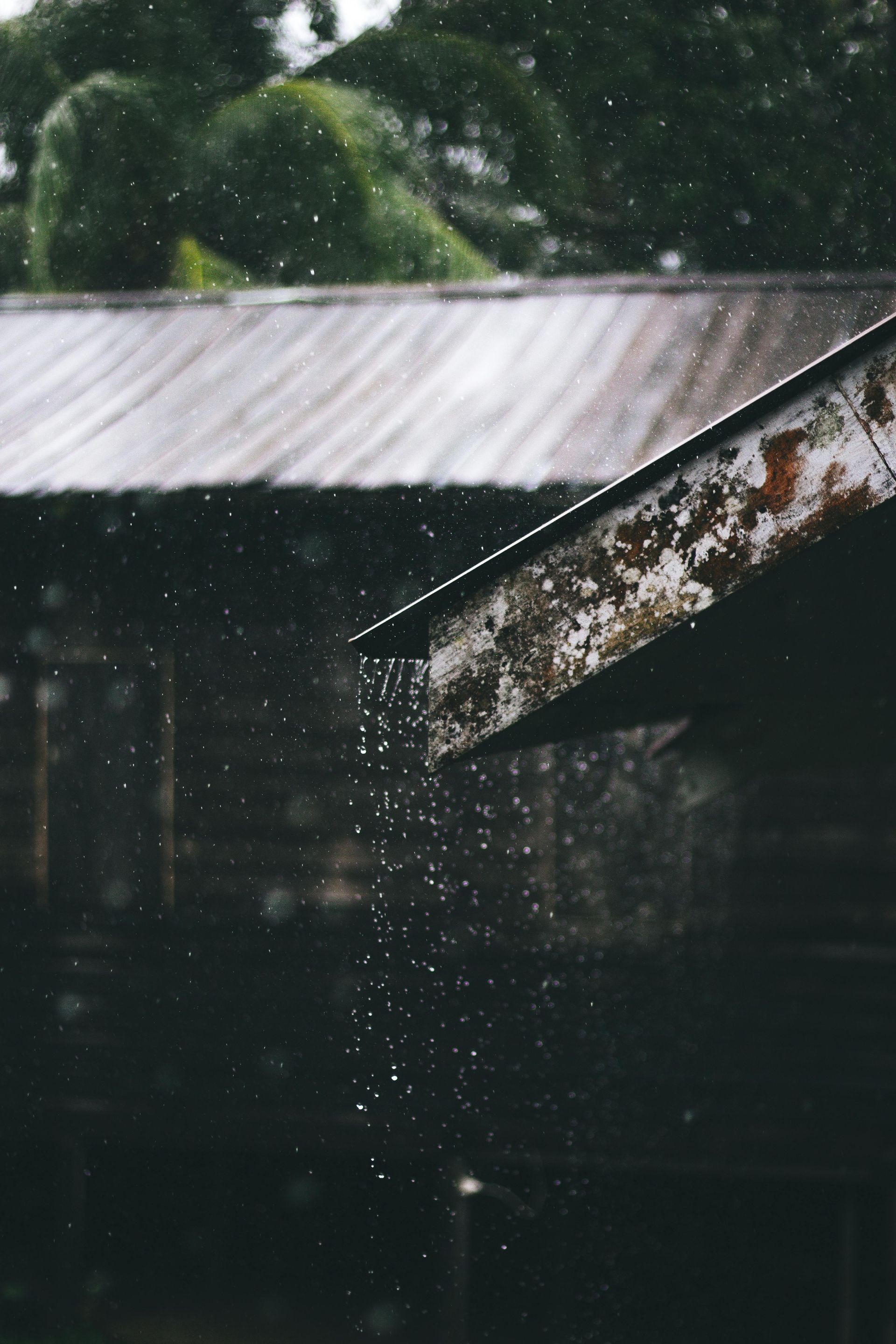
Residential roof repairs occur more frequently in Vancouver than in interior regions due to our rain-heavy coastal climate. With 1,189mm annual rainfall spread across 170 precipitation days, roofing systems experience persistent stress testing of seals, flashings, and material integrity.
Vancouver's aging housing stock compounds repair frequency. Many properties built pre-1980 have original or aged roofing approaching or exceeding the expected lifespan.
This guide explains what damages Vancouver roofs, how to identify problems early, repair options available, costs, emergency procedures, prevention strategies, and contractor selection criteria.
Why Roof Repairs Are So Common in Vancouver Homes
What Causes Roof Damage in Vancouver Homes?
Heavy Rain, Moisture & Prolonged Wet Conditions
Seal degradation: Caulk around penetrations (vents, skylights, chimneys) deteriorates from UV exposure combined with constant moisture. What appears adequately sealed during installation fails within 5-10 years, requiring reapplication or proper mechanical flashing replacement.
Hidden leaks: Water infiltrating through small deficiencies (lifted shingle edges, tiny flashing gaps) travels along the roof framing before dripping into visible locations. Homeowners often discover leaks weeks or months after water entry begins, allowing extensive hidden damage before detection.
Moss, Algae & Organic Growth
Shingle lifting: Moss root structures penetrate between granules, breaking the bond with the underlying asphalt. As moss grows, it physically lifts shingle edges, creating pathways for wind-driven rain infiltration.
Granule loss acceleration: Biological growth holds moisture against surfaces, accelerating granule detachment. Once granules are lost, bare asphalt deteriorates rapidly from UV exposure, requiring shingle replacement rather than simple moss removal.
Wind & Storm Damage
Lifted or missing shingles: Vancouver's winter windstorms (80-90 km/h gusts) test shingle adhesion. Aging seal strips or improper installation allow wind to lift shingles during storm events. Each lift-and-reset cycle weakens materials. Eventually, shingles blow off completely, requiring emergency repairs.
Flashing displacement: Wind-driven rain creates uplift forces on flashing components. Improperly fastened or aged flashings at chimneys, walls, and penetrations can lift or shift position, compromising waterproof integrity.
Aging Roofing Materials
Natural wear: Asphalt shingles approaching 18-22 years show brittleness, curling, and reduced flexibility. Cedar shake develops splits and cupping. Flat roof membranes crack and blister. Each material has specific aging patterns requiring different repair approaches.
Material-specific vulnerabilities: Asphalt loses granules and flexibility. Cedar becomes brittle and prone to splitting. Metal develops coating breakdown or fastener corrosion. Understanding material-specific aging helps predict repair needs.
Professional maintenance programs identify problems before they escalate, while proper replacement timing prevents repeated emergency repairs.
Most Common Types of Roof Leaks in Vancouver Homes
Understanding leak patterns helps identify sources and appropriate repairs.
Skylight Leaks
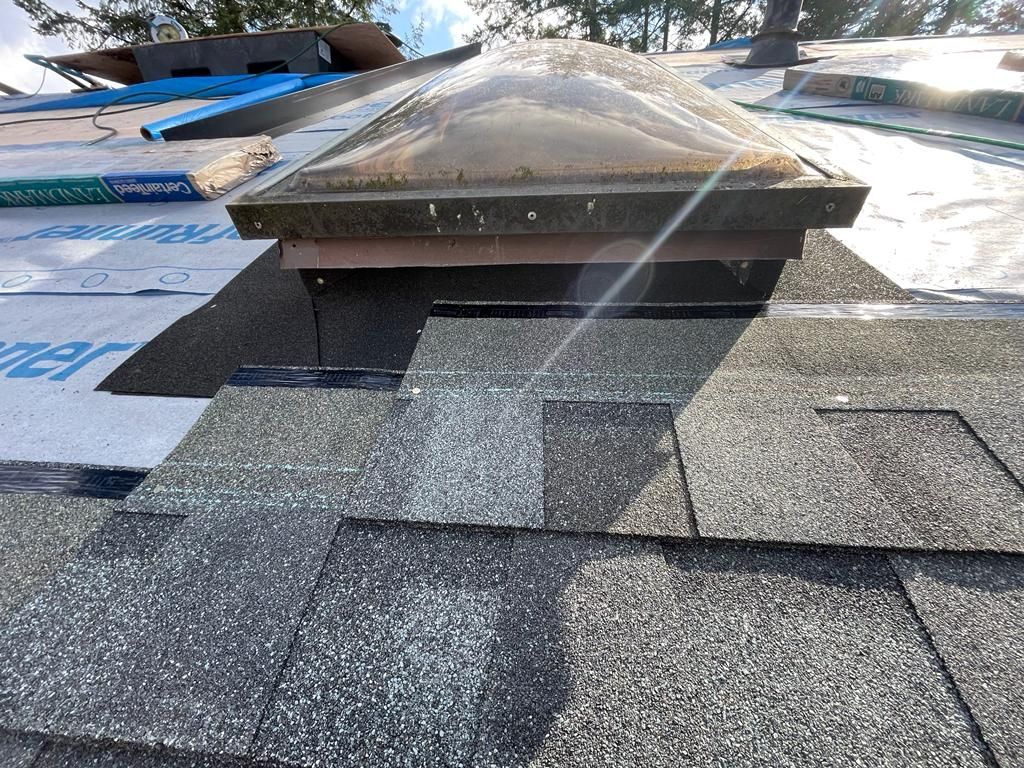
Failed seals: Rubber gaskets around skylight glass deteriorate in 15-20 years from UV and temperature cycling. Water infiltrates around the glass perimeter,s appearing as moisture on interior skylight frames or dripping down adjacent walls.
Poor flashing: Curb flashings installed improperly or degraded from age allow water behind skylight bases. Leaks appear during heavy rain as water runs down interior walls near skylights.
Professional skylight repair services address both seal and flashing issues.
Chimney & Flashing Leaks
Masonry cracking: Mortar joints deteriorate from freeze-thaw cycles and persistent moisture. Cracks allow water infiltration into chimney interiors, causing interior wall staining near fireplaces.
Metal flashing failure: Step and counter flashings deteriorate through corrosion (galvanized steel) or improper installation (caulked rather than embedded). These represent 70% of chimney-related leaks.
Chimney repair services address masonry and flashing issues comprehensively.
Valley & Roof Penetration Leaks
Valley failures: Improperly installed valley flashings or woven valleys without adequate underlayment fail under heavy water concentration. Leaks appear in rooms beneath valley locations during rainfall.
Vent penetrations: Plumbing vents, bathroom exhausts, and attic vents use rubber boots or metal flashings, creating watertight seals. Boots deteriorate in 12-18 years, requiring replacement. Leaks appear near or directly below penetration locations.
Pipe penetrations: Older homes sometimes have exposed pipe penetrations with inadequate flashing. Water infiltrates around pipes, causing ceiling stains in bathrooms or utility rooms.
Flat & Low-Slope Roof Leaks
Ponding water: Inadequate slope or settling creates low spots where water accumulates. Standing water exceeding 48 hours accelerates membrane deterioration, leading to eventual leaks.
Drain issues: Clogged drains cause water backup, and finding infiltration points at membrane seams, penetrations, or compromised areas. Regular drain cleaning prevents most issues.
Signs You Need Roof Repair (Interior, Exterior & Attic Clues)
Interior Warning Signs
Ceiling stains: Water damage visible on ceilings indicates active or past leaks. Brown or yellow staining, bubbling paint, or sagging drywall all signal moisture infiltration requiring source identification and repair.
Dripping water: Active leaks during rainfall require immediate attention. Note locations and timing (during rain, shortly after, days later), helping contractors diagnose sources.
Musty smells: Mold odors indicate sustained moisture exposure even without visible ceiling damage. Attic or wall cavity moisture often produces smells before interior surface damage appears
Exterior Warning Signs
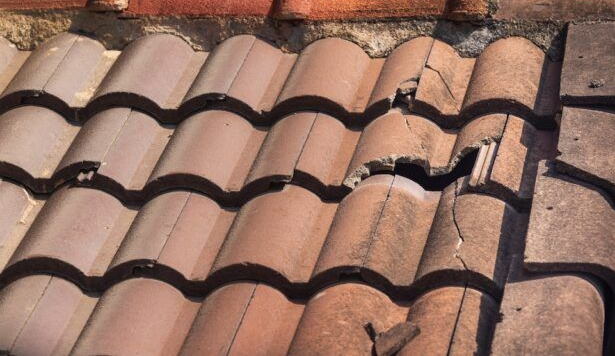
Missing or damaged shingles: Gaps in roofing, curled shingle edges, or cracked materials visible from ground level indicate repair needs. Missing shingles expose the underlayment or deck to direct weather.
Moss buildup: Heavy moss growth (covering 20%+ of the roof area) indicates both moisture retention and potential shingle damage beneath. Treatment prevents further deterioration, but existing damage may require repair.
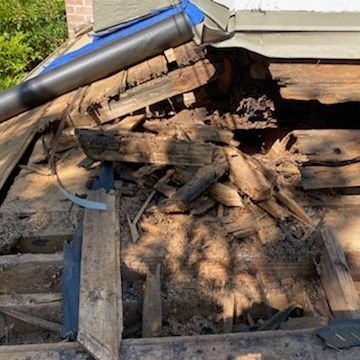
Sagging areas: Visible dips or depressions suggest structural problems (deck rot, inadequate support). These require immediate professional assessment as they indicate potential failure risk.
Attic & Ventilation Indicators
Moisture buildup: Damp insulation, water stains on rafters, or visible condensation on roof sheathing indicate either roof leaks or inadequate ventilation allowing moisture accumulation.
Mold growth: Black or green biological growth on framing lumber or sheathing indicates sustained high humidity from leaks or ventilation deficiencies. Mold spreads spores into living spaces, affecting air quality.
Residential Roof Repair Options in Vancouver
Understanding available solutions helps homeowners make informed decisions.
Shingle Repair & Replacement
Individual shingle replacement: Isolated damage (blow-offs, cracks, missing pieces) is repaired by replacing affected shingles. Matching existing colors sometimes challenges older roofs, but repairs restore weather protection. Cost: $300-1,200 depending on extent and access.
Spot repairs: Small sections (5-15 shingles) repair economically when damage is localized to specific areas. Storm damage, tree impact, or installation deficiencies affecting limited zones warrant targeted repairs rather than complete replacement.
Flashing & Seal Repairs
Chimney flashings: Replacing deteriorated step and counter flashings addresses most chimney leaks. Proper installation embeds counter flashings into mortar joints rather than relying on caulk. Cost: $800-2,500, depending on chimney size and complexity.
Skylight reflashing: Complete curb flashing replacement integrates with surrounding shingles and underlayment, creating a lasting watertight seal. Often combined with skylight replacement if units are approaching the end of life. Cost: $600-2,000 per skylight.
Vent penetrations: Replacing rubber boots or metal flashings around plumbing vents, exhaust fans, and attic vents. Simple repairs costing $150-400 per penetration, preventing water infiltration.
Leak Detection & Targeted Repairs
Tracing hidden leaks: Professional leak detection uses water testing, moisture meters, or infrared scanning, identifying entry points when visual inspection proves insufficient. A systematic approach prevents trial-and-error repairs, addressing symptoms rather than sources.
Moisture assessment: Comprehensive evaluation determines the extent of hidden damage (saturated insulation, rotted framing) beyond visible leak manifestations. This reveals true repair scope, preventing inadequate fixes, leaving underlying problems unaddressed.
Flat Roof & Membrane Repairs
Patching: Small membrane punctures, tears, or blisters are patched using compatible materials, creating weather-tight seals. Proper preparation (cleaning, priming) ensures lasting adhesion. Cost: $400-1,500, depending on accessibility and extent.
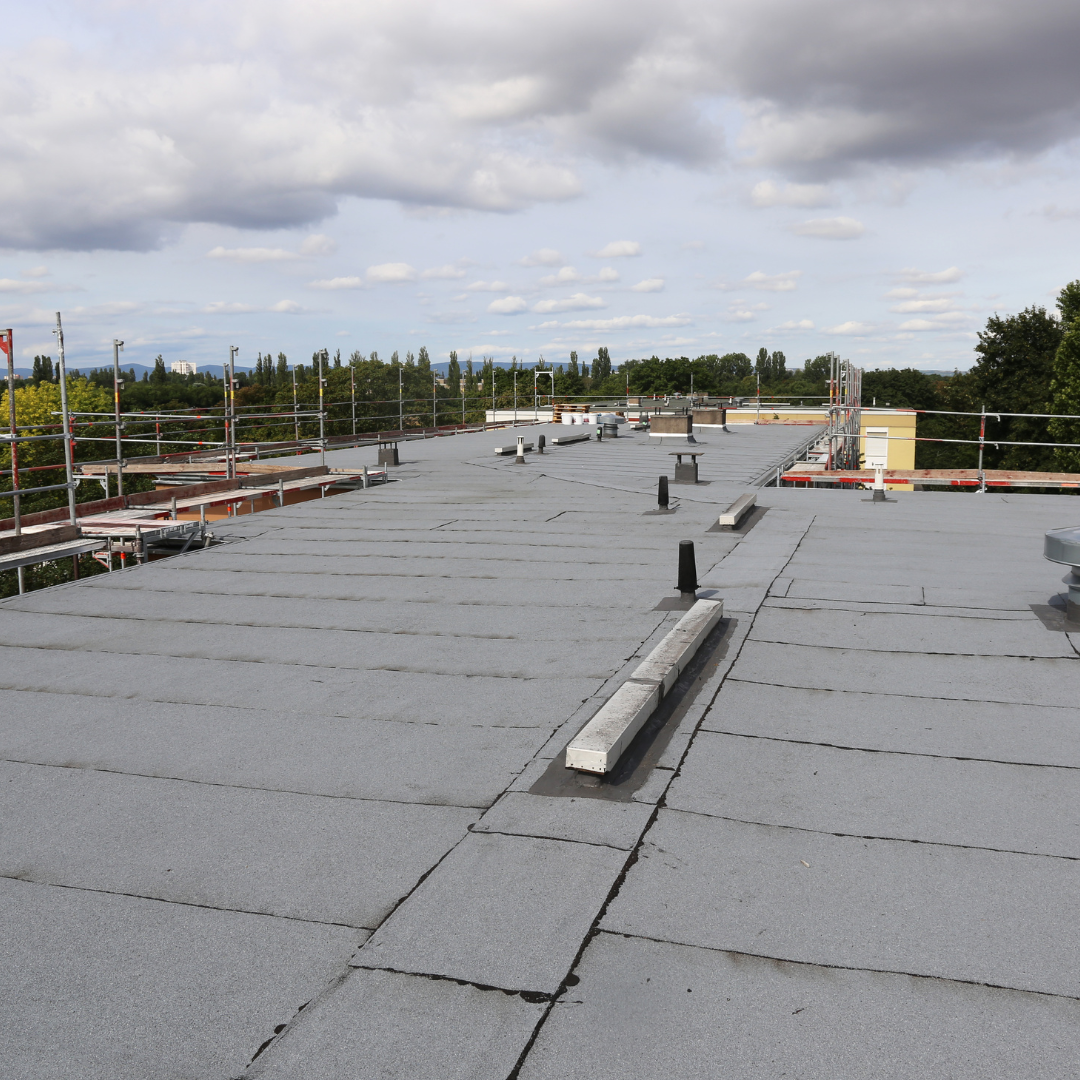
Resealing: Seams, penetrations, and edge details reseal when original sealants deteriorate. Preventative resealing extends membrane life 3-5 years when the base material remains sound.
Drain improvements: Clearing blocked drains, enlarging undersized drains, or adding overflow scuppers address drainage deficiencies, preventing ponding water damage.
Roof Repair vs Replacement: How to Choose the Right Path
When Roof Repair Is the Right Choice
Localized damage: Issues affecting small areas (under 10% of the roof) can be repaired economically. Storm damage, specific component failures, or isolated deterioration warrant targeted fixes costing $500-3,000 versus $12,000-40,000 for complete replacement.
Younger roofs: Systems under 12-15 years old with adequate overall condition justify repairs extending serviceable life 5-10 years. Quality repairs defer expensive replacement, allowing budget accumulation.
No structural issues: Roofs with sound deck sheathing, adequate ventilation, and proper drainage repair successfully when only surface materials or components show damage. Structural problems require more comprehensive intervention.
When Roof Replacement May Be Necessary
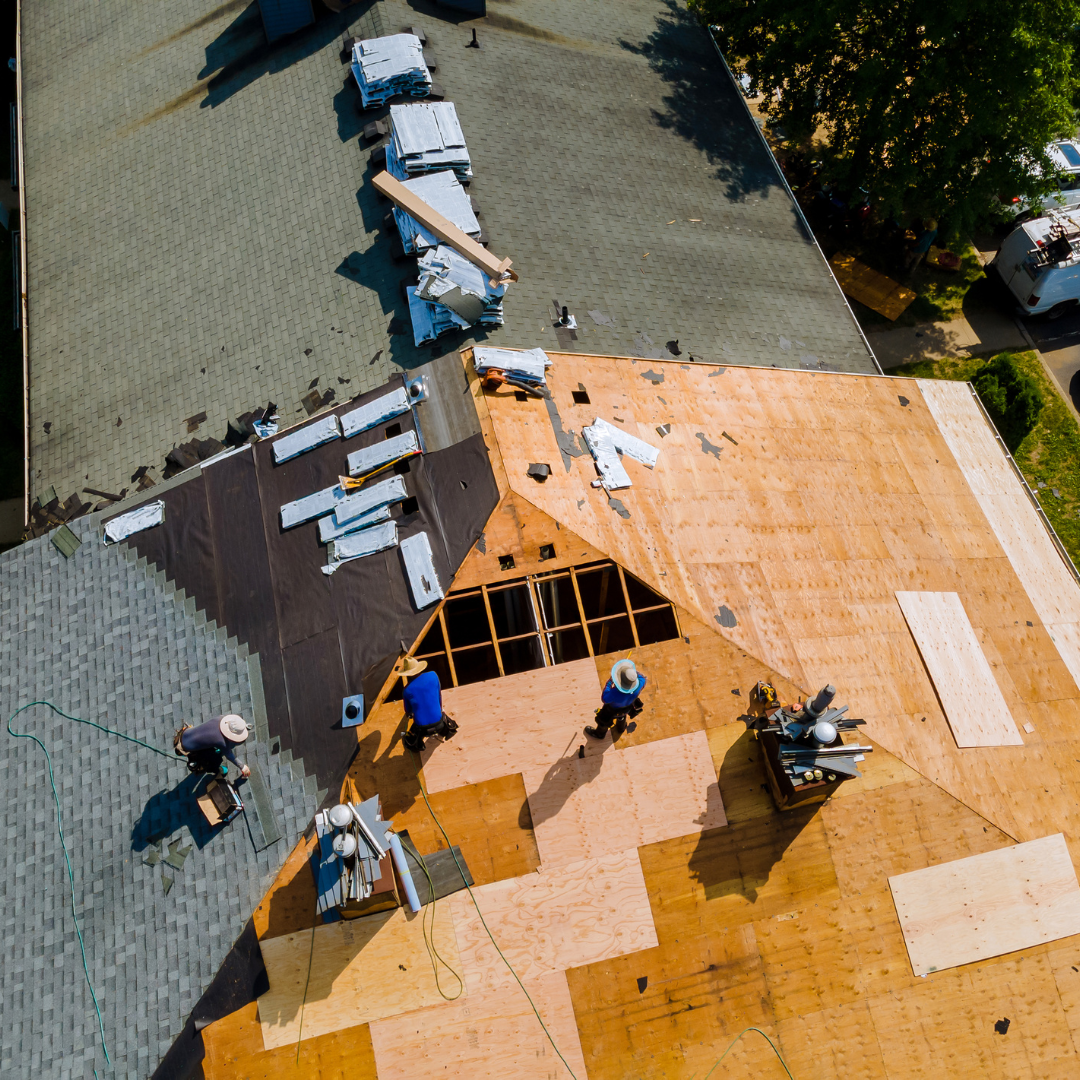
Widespread damage: Deterioration affecting 25-30%+ of the roof area often costs more to repair comprehensively than replace. The multiple simultaneous repairs approach replaces costs without providing fresh warranty coverage.
Aging roofs (18-25+ years): Materials approaching or exceeding expected Vancouver lifespan warrant replacement consideration, even if current repairs are possible. Continued patching of failing systems becomes economically inefficient.
Repeated repairs: Annual repair expenses exceeding $4,000-6,000 signal approaching end-of-life. Properties requiring 3-4 repair callouts yearly essentially finance replacement while enduring ongoing problems.
Comprehensivereplacement services provide long-term solutions when repair economics no longer justify continued patching.
How Much Does Residential Roof Repair Cost in Vancouver?
Understanding typical costs helps budget appropriately and evaluate proposals.
Factors That Affect Roof Repair Costs
Leak complexity: Simple component replacement (rubber boot, few shingles) costs less than leak detection, requiring extensive investigation and multiple access points. Hidden leaks requiring exploratory work add diagnostic time.
Roof access: Ground-level accessible repairs cost less than steep or high roofs requiring extensive safety equipment, scaffolding, or lift equipment. Urban properties with access challenges add complexity.
Material type: Asphalt shingle repairs straightforward and economical. Metal, cedar, or tile require specialized skills and matching materials, increasing costs. Flat membrane repairs vary by system type.
Emergency repairs: After-hours or urgent service commands premium rates (40-60% higher than scheduled work). Emergency tarping, temporary protection, and expedited scheduling add costs but prevent secondary damage.
Typical Roof Repair Cost Ranges (Vancouver 2026)
Minor repairs:
- Shingle replacement (5-10 shingles): $300-700
- Single vent boot replacement: $150-350
- Small flashing reseal: $200-500
- Moss treatment: $300-800
Moderate repairs:
- Chimney reflashing: $800-2,500
- Skylight reflashing: $600-2,000
- Valley repair (20-30 linear feet): $1,000-2,500
- Flat roof patching (small area): $500-1,500
Extensive repairs:
- Multiple leak sources: $2,000-5,000
- Section replacement (15-20% of roof): $3,000-8,000
- Structural deck repairs: $2,000-6,00
Emergency repairs:
- Emergency tarping: $400-1,200
- Urgent leak stoppage: $500-1,500
- Storm damage temporary protection: $600-2,000
Emergency Roof Repairs in Vancouver: What to Do & Who to Call
Knowing how to respond during roofing emergencies prevents panic and minimizes damage.
What Qualifies as a Roofing Emergency
Active leaks during storms: Water actively infiltrating, creating interior damage, requires immediate response. Even small active leaks during heavy rain can cause extensive secondary damage if not addressed promptly.
Storm damage exposing interior: Blown-off sections leaving the deck or underlayment exposed to weather constitute emergencies. Immediate temporary protection prevents water infiltration and interior damage.
Structural concerns: Sagging, visible deflection, or sections showing imminent failure risk require immediate professional assessment, even without active leaks. Structural emergencies present safety hazards.
Temporary Protection Measures
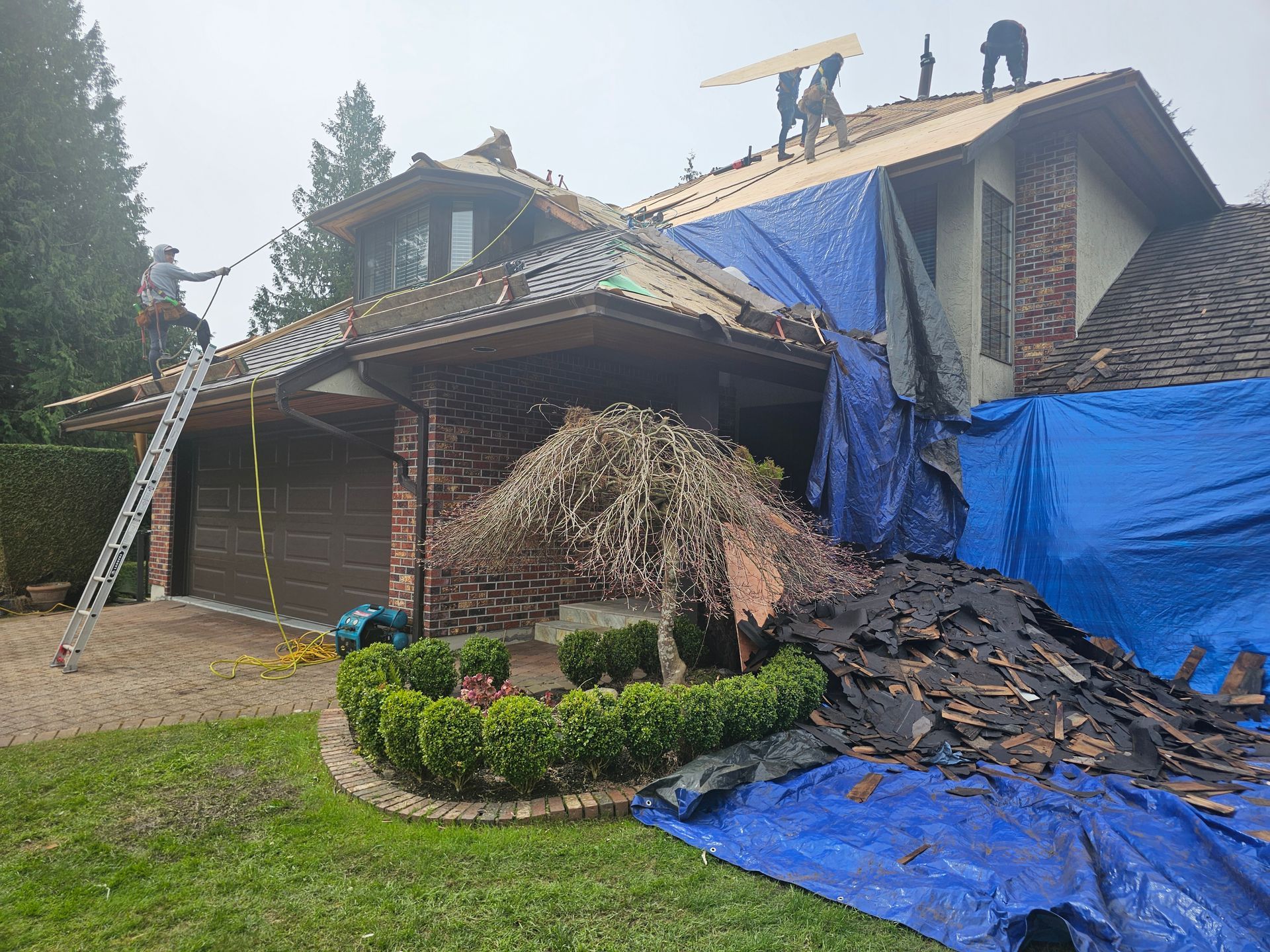
Emergency tarping: Heavy-duty tarps secured over damaged areas provide temporary weather protection until permanent repairs are possible. Proper installation requires securing tarps, preventing wind displacement while avoiding additional roof damage from fastening.
Damage containment: Moving valuables away from active leak areas, placing buckets to catch drips, and removing water-saturated insulation or ceiling materials prevents mold establishment and limits damage extent.
Documentation: Photograph damage immediately for insurance claims. Document water infiltration, damaged materials, and affected areas before emergency repairs alter conditions.
Why Fast Repairs Matter in Vancouver
Rapid moisture damage: Vancouver's humidity means wet materials rarely dry completely between rain events. Saturated insulation, drywall, and framing develop mold within 24-48 hours of sustained dampness.
Mold risk: Biological growth establishes quickly in persistent moisture. Addressing leaks within hours rather than days prevents mold remediation costs ($2,000-10,000+), adding substantially to total repair expenses.
Secondary damage compounding: Small leaks causing minor ceiling staining today become rotted framing, destroyed insulation, and extensive interior damage within weeks if unaddressed during continued rainfall.
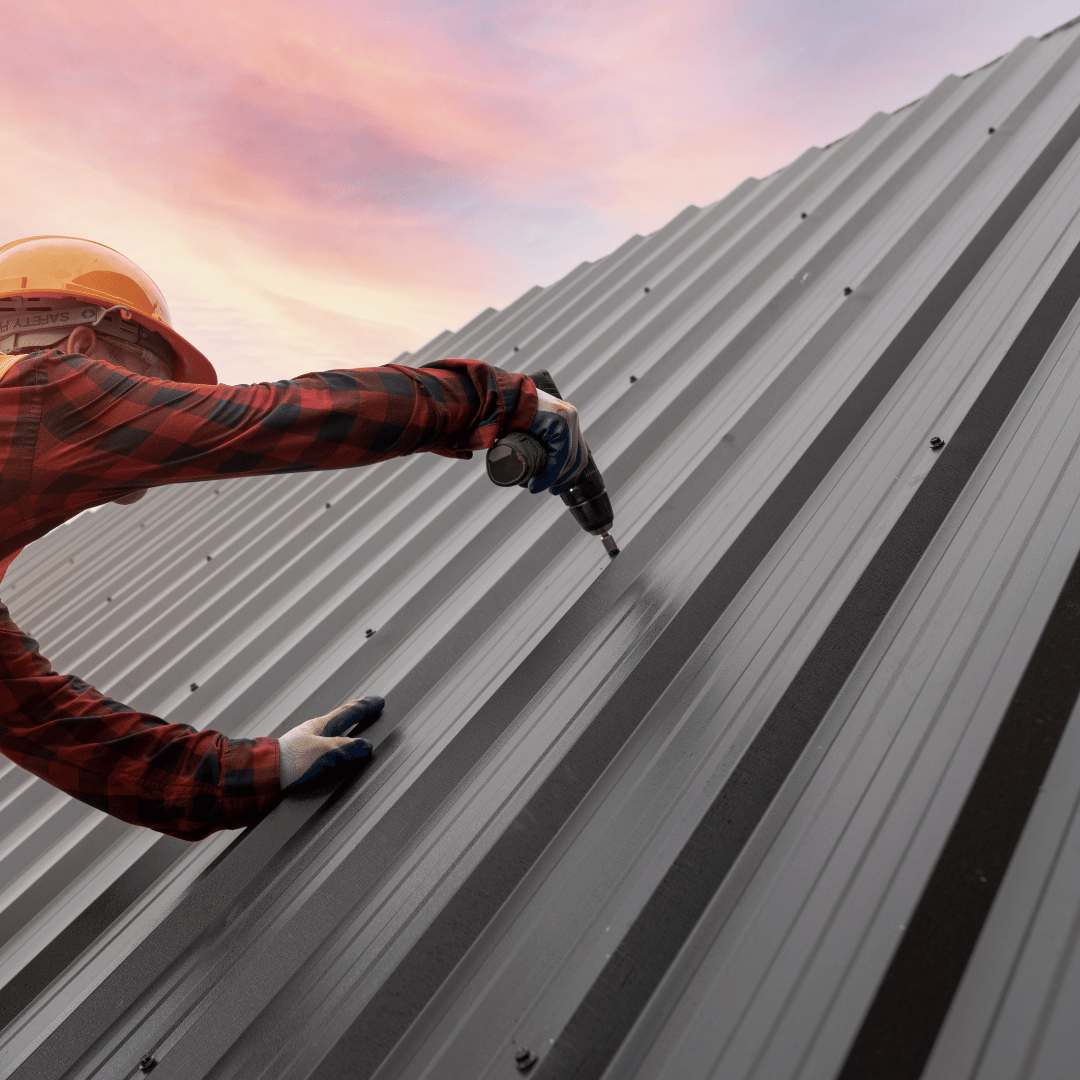
Annual professional inspections: Systematic assessment by experienced contractors identifies developing problems requiring $300-1,500 repairs before they become $5,000-15,000 emergencies.
Post-storm self-checks: After significant weather events (windstorms, heavy snow, extreme rainfall), homeowners should walk the property
perimeter, checking for:
- Missing or damaged shingles are visible from the ground
- Debris accumulation in valleys or gutters
- Flashing displacement at chimneys or walls
- Signs of water infiltration (ceiling stains, attic moisture)
Early detection allows prompt repairs, preventing extensive damage.
Seasonal Maintenance
Spring maintenance (April-May):
- Clear accumulated winter debris from gutters, valleys, roof surface
- Inspect flashings for winter weather damage
- Address moss growth before summer dormancy
- Check the attic for condensation or moisture signs
- Schedule identified repairs during dry weather
Fall maintenance (September-October):
- Clear gutters and drains before the heavy rain season
- Remove accumulated leaves, needles, and organic material
- Verify all penetration seals are intact
- Check for summer UV damage or thermal stress
- Apply moss treatments on shaded roofs
Year-round monitoring:
- After significant storms, check for visible damage
- Note any new interior moisture signs immediately
- Clear debris regularly in heavily-treed locations
- Maintain clear drainage (gutters, downspouts)
Proper Ventilation & Drainage
Ventilation adequacy: Balanced intake (soffit vents) and exhaust (ridge vents) prevent moisture accumulation, causing deck rot, insulation deterioration, and premature roof aging. Proper ventilation extends roof lifespan 5-10 years beyond inadequately ventilated systems.
Signs of ventilation problems include:
- Condensation in the attic during winter
- Extreme attic heat during summer
- Mold growth on attic framing
- Premature shingle deterioration
Professionalventilation services correct deficiencies, preventing expensive moisture-related repairs.
Drainage maintenance: Quarterly gutter cleaning in heavily-treed areas prevents blockages, causing overflow situations. Water backing up under shingles from clogged gutters creates edge deterioration and interior infiltration. Ensuring downspouts direct water away from the foundation (minimum 6 feet) prevents building envelope moisture problems.
How to Prevent Roof Damage & Costly Repairs
Proactive measures reduce repair frequency and extend the roof's lifespan significantly.
Regular Roof Inspections
How to Choose a Roof Repair Contractor in Vancouver
Selecting appropriate repair contractors ensures quality work and fair pricing.
Licensing & insurance requirements:
WorkSafeBC coverage: Even small repair jobs require proper worker coverage. Request clearance letters confirming contractor registration. This protects homeowners from liability if injuries occur during repairs.
Liability insurance: Minimum $2 million coverage protects against property damage during repair work. Verify current certificates, especially for repairs involving significant access or multiple workers.
Municipal licensing: Legitimate contractors maintain business licenses demonstrating established operations versus fly-by-night operators.
Repair-specific experience:
General replacement contractors sometimes lack diagnostic skills for complex leak tracing. Quality repair contractors demonstrate:
- Systematic leak investigation methodology
- Understanding of water travel patterns in roof assemblies
- Experience with various material types and ages
- Knowledge of common Vancouver-specific failure modes
Transparent estimates & pricing:
Detailed proposals specify:
- Identified problem sources (based on inspection findings)
- Proposed repair approach and materials
- Labor and material cost breakdown
- Timeline for completion
- Warranty on repair work
Red flags indicating problems:
- Vague "we'll fix the leak" descriptions without diagnostic findings
- Pressure for immediate work without proper assessment
- Significantly lower pricing than competitors (suggesting inadequate scope)
- Unwillingness to provide a written, detailed proposal
Warranty on repairs:
Quality contractors provide warranties on repair work:
- Minimum 1 year on minor repairs
- 2-5 years on substantial repairs (flashing replacements, section repairs)
- Coverage includes both materials and labor
Communication & diagnostic capability:
Problem explanation: Quality contractors explain:
- What caused the leak (root cause, not just symptoms)
- Why does their proposed repair address the source
- What homeowners can expect regarding durability
- Whether additional related issues warrant attention
Diagnostic transparency: Contractors should show homeowners identified problems when safe and practical. Photos documenting issues help homeowners understand the necessity and scope. Beware contractors claiming problems without evidence or preventing homeowner verification.
Alternative approaches: Professional contractors sometimes present multiple repair options with different cost-benefit tradeoffs. This transparency helps homeowners make informed decisions, balancing budget constraints and long-term considerations.
Repair vs replacement honesty:
Ethical contractors advise replacement when appropriate: Pushing repairs on roofs better served by replacement indicates prioritizing quick revenue over client interests. Conversely, recommending unnecessary replacement when repairs suffice suggests similar ethical problems.
Quality contractors provide an honest assessment:
- When repairs make economic sense
- When replacement becomes more appropriate
- How repair costs compare to replacement benefits
- Expected durability of proposed repairs, given the roof age and condition
This honest guidance builds trust even when not resulting in immediate large projects.
Post-repair support:
Warranty service commitment: Verify the contractor will address warranty issues if repairs don't resolve problems. Some operators become difficult to reach after payment despite warranty promises.
Follow-up inspection offers: Quality contractors offer a brief post-repair inspection (6-12 months later), verifying repairs are holding up through seasonal weather cycles.
Emergency availability: Established local contractors provide reliable emergency support if problems recur. Response reliability matters more than the absolute lowest pricing.
Local reputation verification:
Online reviews: Check Google, Better Business Bureau, and HomeStars for repair-specific feedback. Note patterns in complaints (shoddy work, communication problems, warranty avoidance) rather than isolated negative reviews.
References: Contact provided references, asking specifically:
- Did repairs solve the problem?
- Were there return visits for warranty work?
- How responsive was the contractor to concerns?
- Would they use a contractor again?
Longevity: Companies operating 5-10+ years locally demonstrate stability and commitment to reputation versus transient operators.
Residential Roof Repair FAQs in Vancouver
Why are roof repairs so common in Vancouver?
Roof repairs are common in Vancouver because heavy rainfall (about 1,189 mm across ~170 wet days) accelerates seal, flashing, and shingle deterioration. Many older homes also have aging roofing materials near or past their expected lifespan.
What usually causes roof leaks in Vancouver homes?
Most Vancouver roof leaks come from failing details like chimney and skylight flashing, valleys, vent boots, and penetration seals. Water can enter through tiny gaps and travel along framing before showing up as ceiling stains.
What are the most common warning signs you need roof repair?
Common warning signs include ceiling stains, active dripping during rain, musty odors, missing or curled shingles, heavy moss coverage, and damp insulation or mold in the attic. Any sagging areas should be treated as urgent structural risk.
How much does residential roof repair cost in Vancouver in 2026?
Typical 2026 Vancouver repair costs range from $150–$700 for small fixes like vent boots or minor shingle repairs, $800–$2,500 for chimney reflashing, and $2,000–$8,000+ for larger section repairs or multiple leak sources.
When is roof repair a good idea instead of replacement?
Roof repair is usually the right choice when damage is localized (typically under 10% of the roof), the roof is relatively young (often under 12–15 years), and there are no structural or widespread moisture issues.
What should you do during a roofing emergency in Vancouver?
During a roofing emergency, contain interior water (move valuables, use buckets), document damage for insurance, and arrange professional temporary protection like tarping. In Vancouver’s humidity, wet materials can develop mold within 24–48 hours, so fast response matters.
How can Vancouver homeowners prevent roof leaks and reduce repair costs?
Prevention in Vancouver comes from annual inspections, seasonal gutter and valley cleaning, moss control on shaded roofs, and ensuring proper attic ventilation and drainage. Regular maintenance catches small issues early and reduces emergency repair risk.
Next Steps for Residential Roof Repair in Vancouver
Dealing with roof damage or leaks?
Get help now:
Understanding common Vancouver roof problems, available repair options, and appropriate response timing helps protect your home from water damage while managing costs effectively through targeted interventions rather than expensive emergency situations.
Disclaimer:
Pricing and cost ranges on this page are provided for general informational purposes only. Actual residential roof repair costs in Vancouver vary based on roof height and access, slope, material type, leak complexity, extent of hidden moisture damage, and whether service is scheduled or emergency. All figures reflect typical Vancouver-area ranges at the time of writing and do not represent fixed quotes or guarantees. A professional on-site inspection is required for accurate pricing.
Here's What Our Existing Clients Think.
Home and business owners we've served across the greater Vancouver area.
Our Google Reviews
Edit Google Reviews Widget
We look forward to helping you.
For all your roofing needs, contact Paragon Roofing BC — call, text, or email us at 604-358-3436
Paragon Res Roof Install #2
We will get back to you as soon as possible.
Please try again later.