A SURREY HOMEOWNER’S GUIDE

Residential roof
replacement
in Surrey

Residential roof replacement in Surrey starts with the condition of your home and a clear written scope.

A leak does not automatically call for a new roof. Compare the evidence for repair or replacement, then choose the roof assembly, preparation and project arrangements together.

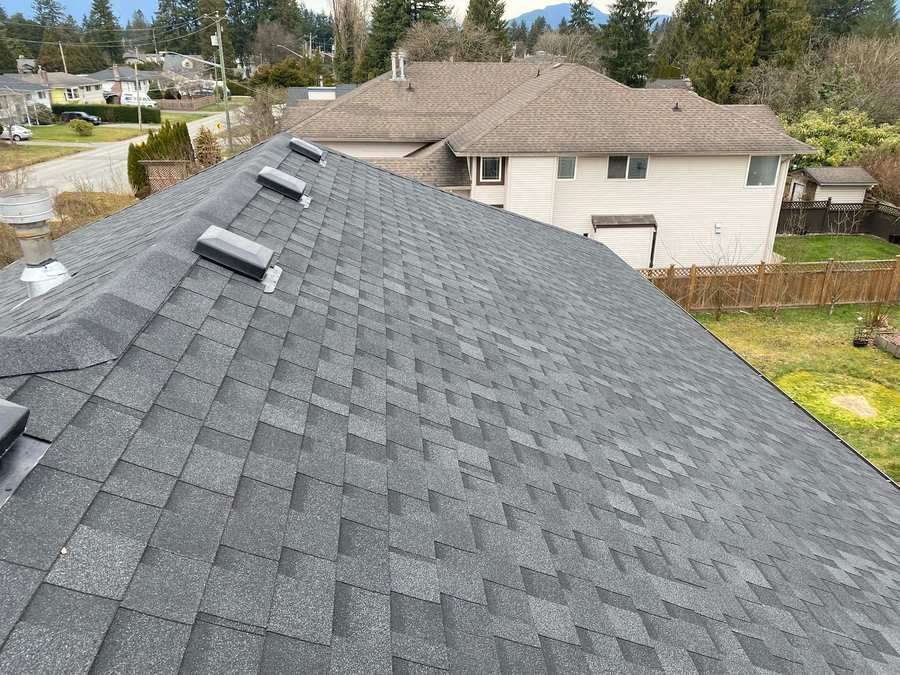
Grey shingle roof with box vents and a chimney
The covering is one part of the roof. Decking, ventilation, flashing and drainage belong in the same assessment.

FIRST, ESTABLISH WHAT IS WRONG

Does your roof need repair or replacement?

The useful distinction is between a problem that can be isolated and a roof with broader deterioration or unresolved connections. Ask what was observed, what remains uncertain and how the recommended work addresses the cause.

What you notice What the assessment establishes Possible next step
A local leak or damaged area The source, surrounding condition and whether a compatible repair can connect reliably to retained roofing. A defined repair, with its limits explained. See Surrey roof repair.
Widespread wear or recurring problems The extent of deterioration, previous repairs and whether more than one roof component is involved. Compare a replacement scope with further repairs. Separate the main roof, garage and additions where appropriate.
A stain, sag or condition with an uncertain cause What can be inspected safely, whether an opening is needed and which specialist input is appropriate. Investigate before choosing a remedy. Agree the access, reporting and any fee first.

A roof inspection in Surrey can help define the next decision. Bring leak dates, repair invoices and photographs taken safely from the ground. Roof age is useful history, but neither an age threshold nor a percentage rule settles the decision.

GET YOUR HOME INTO THE CONVERSATION

Tell us what you have noticed

Share the address, the roof areas involved and whether you need an estimate, condition assessment or leak investigation. Confirm the visit scope, any fee and the information you will receive.

We're Excited To Serve YOU!

Paragon Res Roof #1

SIX REASONS TO ARRANGE AN ASSESSMENT

Which warning signs deserve attention?

Damaged or displaced covering

Cracked, curling, missing or displaced pieces need context. Check whether the damage is isolated or widespread and whether the surrounding material can support a repair.

Leaks or ceiling stains

Record when water appears and which rooms are affected. The visible stain may not identify the entry point. Several stains do not prove that the whole roof covering has failed.

A history of repeated repairs

Collect earlier scopes and photographs. Ask whether repairs addressed separate events or repeatedly treated the same unresolved connection.

Suspected sagging or deck damage

Do not walk onto the roof to test its firmness. Have apparent movement, deterioration or unsafe areas assessed by an appropriate professional.

Moss, debris or blocked drainage

These conditions deserve inspection and a compatible care plan. Surface growth alone is not a replacement diagnosis, and cleaning cannot restore damaged roofing.

Attic moisture or comfort concerns

Discuss moisture, air leakage, insulation and ventilation together. Higher energy bills alone do not establish roof failure or prove that a new covering will solve the problem.

CHOOSE AN ASSEMBLY, NOT JUST A FINISH

Which roof material suits your home?

Start with the roof slope, support, shape and the appearance you want. Compare the exact product, preparation, details and written coverage. A material name by itself does not establish a service life, fire classification or installation price.

01

Asphalt shingles

A familiar option for a suitable sloping roof, with different profiles and colours. Compare the specified shingle with the starter, ridge, underlayment, ventilation and flashing work. A photograph of several roof vents does not establish balanced attic ventilation.

Explore asphalt shingles in Surrey
02

Metal roofing

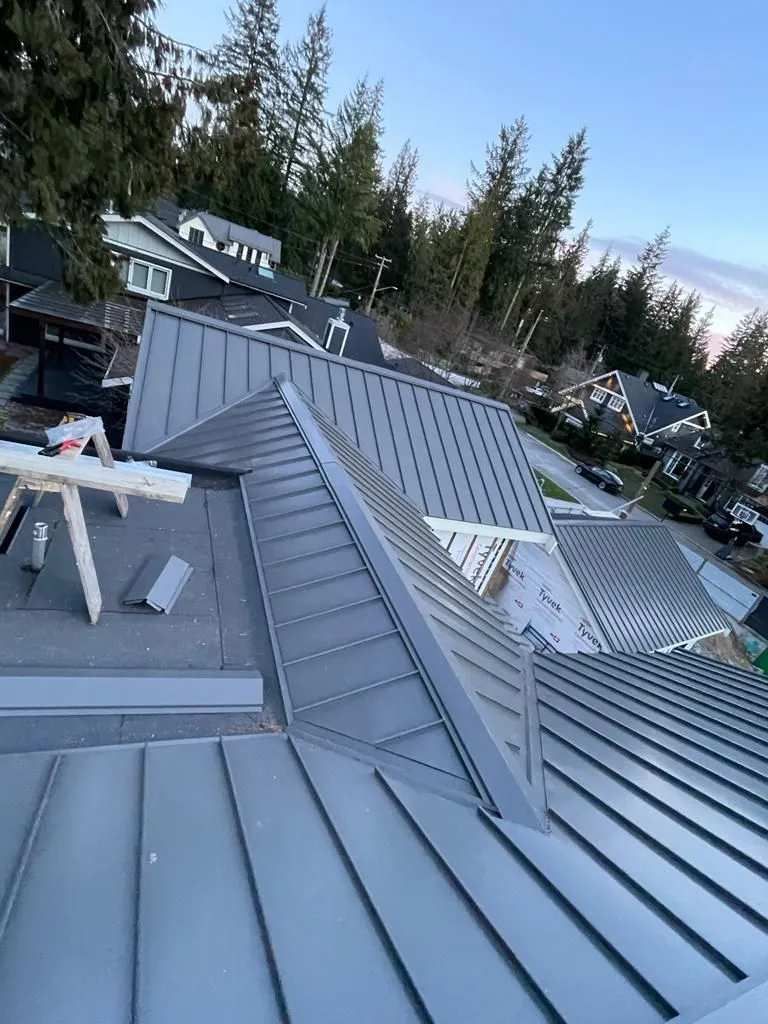
Consider metal when its panel appearance and system requirements suit the property. A proposal should identify the metal, finish, profile, attachment and trim. Roof geometry, penetrations and any needed snow management affect the details. Metal still needs inspection and appropriate care.

Explore metal roofing in Surrey
03

Synthetic shake, slate and tile profiles

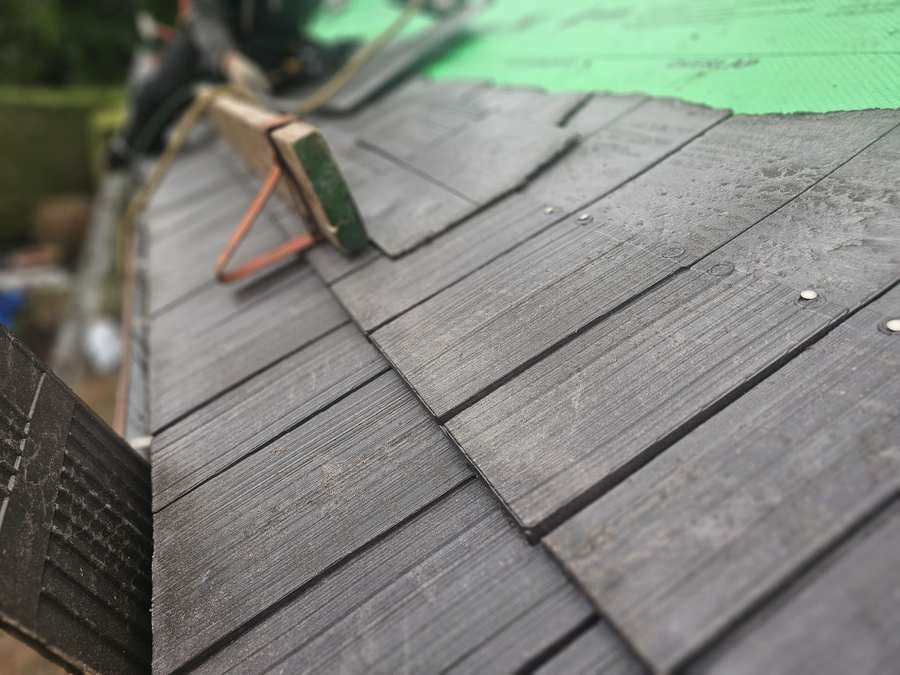
These products can offer a patterned appearance with a different assembly from natural cedar or tile. Compare the exact product, layout, accessories and supporting deck. Fire and impact classifications describe different tests and must match the specified product and assembly.

Explore synthetic slate roofing in Surrey
04

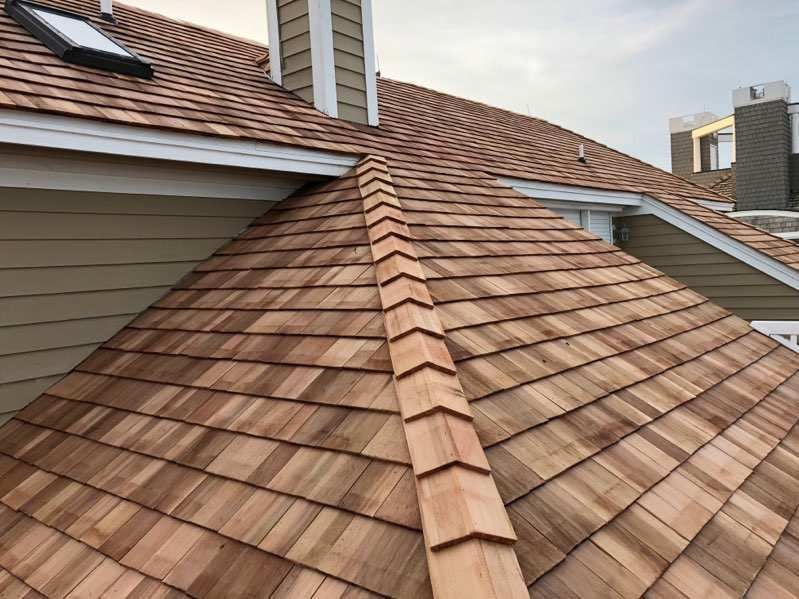
Cedar roofing

For homeowners considering a natural wood appearance, assess the existing roof and the selected cedar system. Repair feasibility and care depend on actual condition and exposure. If converting from cedar, establish what support will be needed after removal; do not assume the existing boards suit the new covering.

Explore cedar roofing in Surrey
05

Tile repair or conversion

An existing tile roof deserves a repair assessment before conversion is assumed. Identify the profile, compatible replacement pieces, underlayment and flashing condition. When comparing a different roof system, clarify removal, deck preparation, support and the new junction details.

Explore clay tile roofing in Surrey
06

Low slope sections

An addition or porch may need a different assembly from the main sloping roof. A suitable membrane system requires defined seams, wall turn ups, penetrations and outlets. Assess where water arrives from the upper roof as well as how it leaves the lower section.

Explore flat roofing in Surrey

MAKE THE QUOTATION COMPARABLE

What should your replacement proposal include?

A useful proposal describes the work beneath and around the finished roof. It should identify included items, exclusions and decisions that depend on opening the existing assembly.

Scope item What to put in writing
Protection, access and removal Which roof areas and existing layers are included; where materials and debris equipment go; protection for entrances, gardens, vehicles and neighbouring property; disposal arrangements.
Deck and concealed repairs The proposed deck and preparation, what can be assessed before removal, and how damage will be photographed, priced and authorized. Thickness, support and fastening must suit the assembly. A plywood preference is not a universal prohibition on other accepted sheathing.
Underlayment and water protection The specified underlayment and any self adhering membrane areas at eaves, valleys, transitions and penetrations as applicable. State the coverage and installation requirements rather than a generic number of courses.
Edges, walls and penetrations New versus retained flashing at walls, chimneys, valleys, skylights and pipes. Clarify any siding or masonry work and who restores opened components.
Ventilation and the roof covering The exact covering and accessories, plus the proposed intake, exhaust and available air paths. Address relevant moisture or air leakage concerns instead of assuming extra vents resolve them.
Cleanup and closeout Daily debris handling, final cleanup, a review of completed work, care instructions and the warranty or registration documents that apply to the project.

Give each retained component a decision

A new roof does not automatically include a new skylight, repaired chimney or new gutters. List what stays, what changes and who is responsible for the connection. Use a marked roof sketch or photograph when the work is only on part of the house.

UNDERSTAND THE PRICE BEFORE COMPARING IT

What drives the cost of replacing your roof?

The building and the work

Measured roof area, slope, access, valleys, dormers and penetrations shape the installation scope. Removal and disposal vary with the existing covering and layers. Deck damage, flashing work, ventilation changes and coordination with other trades can change the work required.

A house’s floor area or neighbourhood does not establish its roof price. Ask for the measured roof areas and a clear distinction between included work, allowances and optional items.

The products and written terms

Compare the specified roof assembly and accessories alongside tax, exclusions, payment stages and the process for additional work. A lower total may describe a different scope; a higher total alone does not prove a better installation.

Our guide to why roof quotes vary in BC explains how to compare proposals beyond the headline number.

Financing, insurance and incentives

Confirm any roofing financing arrangement with the provider, including eligibility, total borrowing cost and repayment terms. Check insurance coverage and incentives directly against the applicable policy or programme. A material choice does not automatically qualify the project for reimbursement or a rebate.

Keep assessment photographs, repair records and written proposals. Confirm payment arrangements in the accepted contract before work begins.

PLAN FOR THE PEOPLE BENEATH THE ROOF

How will the work affect your household?

Keep essential access clear

Walk through entrances, driveways, side paths and the proposed staging area. Discuss children, pets, working from home and any access needs. For a home with a suite or shared occupancy, agree who gives notices and who has authority to approve work and changes.

A lane, shared driveway or neighbour’s land is not automatically available for equipment. Confirm permission before including it in the access plan.

Make the plan property specific

Surrey homes differ in roof shape, additions, tree cover and available space. These conditions matter more than assumptions about an entire neighbourhood. Include garages and lower additions in the assessment when they drain or connect differently.

Discuss any tree work separately before removal starts, including applicable permissions. Establish who checks requirements for street space, bins and deliveries with the City of Surrey.

Ask about noise, vibration, daily cleanup and how schedule changes will reach you. Agree which areas must remain clear and when a final walkthrough can take place.

FROM ASSESSMENT TO HANDOVER

What happens during a roof replacement?

  1. Define the work and dependencies

    Confirm the roof areas, system, access, project contact and written terms. Check any required approvals for the full scope, including structural work or changes to the roof form. Agree who coordinates other trades and obtains necessary permissions.

  2. Prepare and protect the property

    Arrange deliveries, staging and debris removal around the agreed access plan. Discuss the removal sequence and temporary weather protection before the existing covering is opened.

  3. Remove, inspect and document

    Once the covering is removed, inspect the exposed deck and connections. Document concealed damage and obtain authorization for additional work under the agreed change process.

  4. Install the specified assembly

    Complete the approved support work, underlayment, flashing and selected covering in the appropriate sequence. Coordinate roof edges, walls, penetrations, ventilation and drainage as part of that assembly.

  5. Review and close out

    Complete cleanup, review the agreed scope and record any outstanding items. Collect care information and the applicable warranty documents, and confirm who to contact with a concern.

Discuss a sequence, not a guaranteed finish date

Weather, safe working conditions, material lead times, access and concealed repairs affect timing. Ask how a change in conditions will be communicated and how opened areas will be protected. No single month or fixed duration suits every Surrey roof.

BEFORE YOU SIGN

Which documents and responsibilities should be clear?

  • The contractor and coverage. Request current business licence information covering the Surrey work, WorkSafeBC clearance and insurance evidence. Match the contractor named on the proposal to the documentation.
  • The agreed scope and price. Confirm roof boundaries, materials, exclusions, allowances, tax, payment stages and how changes are approved.
  • Permits and coordination. Describe the entire project when checking requirements. Identify who obtains any necessary approvals and who manages adjoining trades or property access.
  • Separate warranty responsibilities. Manufacturer and workmanship coverage address different matters. Read the actual terms, exclusions, registration requirements and claim contacts for the proposed project.

See our roofing warranty information as a starting point for the project specific documents. A product label or an unsupported certification claim is not a substitute for those terms.

YOUR QUESTIONS ANSWERED

Residential roof replacement FAQs

Does one leak mean I need a new roof?

No. The leak source, surrounding roof condition and the feasibility of a compatible repair need assessment. Ask which findings support repair, further investigation or replacement, and which conditions remain uncertain.

How do I compare roof replacement quotes for my Surrey home?

Compare measured roof areas, removal, disposal, deck preparation, underlayment, flashing, ventilation and the exact covering. Check tax, allowances, exclusions and the approval process for concealed repairs so each quotation describes comparable work.

Which roofing material is right for my house?

Start with roof slope, support, shape, appearance and care expectations. Compare the specific product and complete assembly, including accessories and written coverage. No material name alone establishes a lifespan, installed price or suitability for every roof section.

Will a new roof include new decking, skylights and gutters?

Only the accepted scope establishes what is included. Confirm deck preparation and the process for concealed damage. Make separate retain or replace decisions for skylights, gutters, chimneys and other components, including their connections to the new roof.

Can my household remain at home during the work?

Discuss occupancy with the contractor before scheduling. Essential access, noise, debris handling and any unsafe areas must be considered for the actual property. Agree notices and access arrangements for all occupants, including separate suites.

How long will my roof replacement take?

The proposed schedule depends on the measured work, selected system, access, material availability, weather and concealed conditions. Ask for a sequence and a process for communicating changes rather than treating a generic duration as a guarantee.

Do I need a permit for roof replacement in Surrey?

Confirm requirements with the City of Surrey for the complete scope before scheduling. Include structural repairs, roof form changes and any wider renovation. Also clarify street space and staging arrangements, and who obtains any required approvals.

Can financing or insurance help pay for the roof?

Confirm financing eligibility, total borrowing cost and repayment terms directly with the provider. Insurance coverage and incentives depend on the applicable policy or programme and the circumstances of the work. A roof material choice does not automatically qualify the project.

TURN THE INFORMATION INTO A PLAN

Discuss the next step for your Surrey roof

Visit our Surrey residential roof replacement service to discuss the work, or start with a roof inspection if the condition is still uncertain.

Send your address, concerns and any previous repair information. Call 604 358 3436 or use the form below.

Paragon Res Roof #3

KEEP THE RIGHT INFORMATION TO HAND

More help for your roofing decision

Browse the Surrey roofing guides, explore past roofing projects or return to Surrey roofing services.

BBB Accredited Business

Check our BBB profile

View the business details on Paragon Roofing BC’s BBB profile.

Here's What Our Existing Clients Think.

Home and business owners we've served across the greater Vancouver area.

Reviews