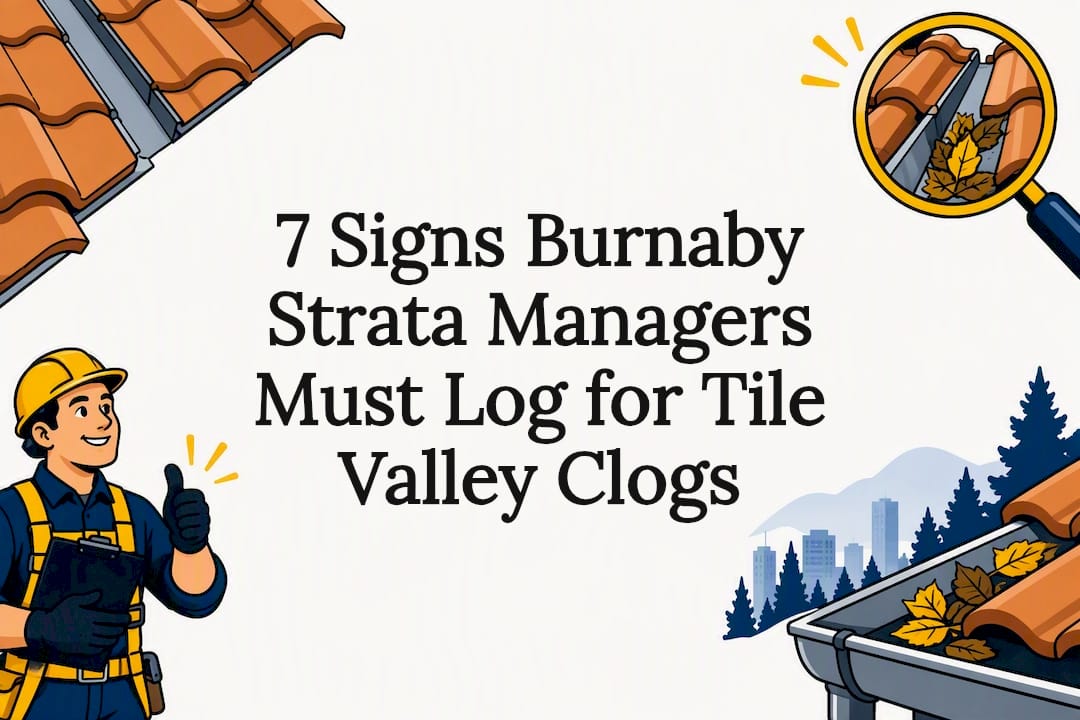
7 Signs Burnaby Strata Managers Must Log for Tile Valley Clogs
7 Signs Burnaby Strata Managers Must Log for Tile Valley Clogs
If your tile roof valley in Burnaby is mossy, keeps clogging every season, or you’ve spotted a stain on the ceiling below it, call a professional now. A short, ground-level check for loose leaves is the only safe DIY step. Climbing onto tile or blasting it with a pressure washer risks cracked tiles and a bigger repair bill than the clog itself.
TL;DR:
- Most clogged valleys in Burnaby result from debris, moss, and shading that cause moisture retention and accelerate tile and flashing deterioration.
- Visual signs of damage include moss bands, standing water, ceiling stains, and interior dampness, which indicate water is bypassing the flashing.
- DIY clearing is limited to small debris; professional help is essential for complex, steep, or damaged valleys to avoid tile cracking and improper repairs.
- Regular inspections after storms and seasonal cleaning, along with trimming trees and installing guards, can significantly reduce recurring clogs.
- Repair costs vary widely based on access and damage extent, with price estimates only provided after a thorough roof inspection by professionals.
Table of Contents
- Why roof valleys clog in Burnaby and why tile valleys are vulnerable
- What signs mean a clogged valley is already causing damage?
- When should you call a professional instead of doing it yourself?
- What does a professional tile valley inspection and repair include?
- How can you prevent valley clogs before they start?
- Harman’s perspective on recurring valley failures in Burnaby
- How Paragon Roofing BC handles tile valley clogs in Burnaby
- Sources
- FAQ
Why roof valleys clog in Burnaby and why tile valleys are vulnerable
A roof valley is the V-shaped channel where two roof slopes meet, and it carries far more water than any other part of the roof during a West Coast downpour. When a storm dumps heavy rain on a typical Burnaby home, the valley is doing double duty, funnelling runoff from both roof planes into one narrow path toward the gutters.
That narrow path is exactly where debris piles up fastest. Local culprits show up every season, and Burnaby’s tree cover makes the list longer than most cities:
- Autumn leaf drop from maples and alders
- Cedar and fir needles that wash down in sheets
- Moss encouraged by coastal humidity and shade
- Sediment and grit carried off gutters and hillside runoff
Tile profiles have ridges and overlaps that catch debris more readily than a flat metal panel does, and the valley flashing underneath sits low, right where water and grit collect first. Once debris traps moisture against the tile and flashing, that dampness accelerates corrosion and rot underneath. A north-facing valley shaded by a stand of cedars is the classic Burnaby trouble spot. It rarely dries fully between rains, so moss takes hold and the clog rebuilds itself faster than a sunnier valley across the street.
What signs mean a clogged valley is already causing damage?
Some signs are easy to catch from the ground; others need a look from inside the attic. Check for these in order after the next heavy rain:
- Visible debris sitting in the valley or spilling over the tile edges
- Standing water still pooled in the valley an hour or more after rain stops
- A green or black moss band running down the centre of the valley
- Missing, cracked, or shifted tiles near the valley line
- Ceiling stains or a damp patch directly below the valley’s interior run
- Insulation that feels damp or smells musty in the attic near the roof edge
- A leak that reappears every time it rains hard, rather than once
Any one of the interior signs points to water already getting past the flashing, and debris trapped in a valley prevents proper flow and can rot decking, lift shingles, and deteriorate underlayment long before you notice a drip indoors. Burnaby’s wet season doesn’t give a damaged valley much recovery time between storms, so a small leak in October can become a soaked sheathing repair by January. The best time to inspect is right after a heavy rain, while you can still see water actively pooling or draining, rather than days later when the evidence has dried up.
When should you call a professional instead of doing it yourself?
Height and tile fragility are the two reasons most homeowners should stop at the ladder and pick up the phone instead. A steep, multi-storey tile roof puts you at real fall risk, and one misplaced step on clay or concrete tile can crack it outright.
Professionals know how to walk a tile roof without breaking it, and more importantly, how to lift, reseat, and re-bed individual tiles once the valley underneath is cleared. That’s a skill set most homeowners simply haven’t built, and it’s the main reason DIY tile work tends to cost more in replacement tiles than it saves in labour.
Call a contractor without delay when you see:
- A valley that clogs again within one season of clearing it
- Any visible flashing damage, gaps, or rust staining
- An interior leak, even a small or intermittent one
- A steep slope or a roof section you can’t safely reach from a ladder
Strata councils and commercial property managers carry an added layer of responsibility here. Coordinate valley work with existing strata maintenance records, confirm the contractor is insured and bonded before work starts, and keep a copy of every inspection report and repair invoice. That paperwork trail matters if a warranty claim or insurance question comes up later, and a Burnaby roof inspection is the easiest way to start that record.
What does a professional tile valley inspection and repair include?
A proper inspection starts with watching the roof do its job, not just looking at it dry. The most reliable read on a clogged valley comes from observing active water flow right after a rainfall, since a dry-day inspection can miss pooling that only shows up under load. From there, a technician moves into the attic to trace any leak trails back to their source, then checks the valley flashing, the underlayment condition, and how securely the tiles are bedded.
Clearing itself is deliberately gentle on a tile roof. Manual removal of debris, soft brushing, and targeted moss treatment do the job without risking cracked tiles, and combining physical clearing with moss control and improved flashing stops the problem from simply rebuilding itself by next winter.

Pro Tip: Never let anyone pressure wash a tile valley. High-pressure water can dislodge tiles and drive moisture under the underlayment, which turns a cleaning job into a repair job.
Depending on what the inspection finds, repair options typically include:
- Flashing replacement where metal has corroded or pulled away
- An ice-and-water barrier or valley liner added beneath the tile
- Reseating or re-bedding individual tiles that have shifted
- Re-sheathing sections where the decking underneath has rotted through
Cost drivers include roof complexity, how hard the valley is to access, material costs for flashing or tile, and whether strata approval is needed before work begins. Repair costs vary widely by roof complexity, from a modest patch to a full valley rebuild on a larger commercial roof. A contractor worth hiring will use fall protection on any steep section, dispose of debris properly, and hand you before-and-after photos as part of the paperwork.
How can you prevent valley clogs before they start?
Prevention is cheaper than repair every single time, and most of it is scheduling rather than skill. Run through this checklist each year:
- Clear valleys and gutters in spring after seed drop and again in fall after leaves come down
- Walk the roof edge (or have it walked) after any major windstorm
- Clean gutters twice yearly and confirm downspouts extend at least one metre from the foundation to keep runoff away from crawl spaces
- Trim overhanging branches back from the roofline to cut down on needle and leaf drop
- Remove any moss seed sources nearby, including damp mulch beds close to the foundation
- Ask about discreet leaf guards, upgraded valley flashing, or professional moss control if your valley clogs more than once a year
- Log every inspection, photo, and contractor report in one place for strata or insurance purposes
Gutter overflow at valleys is rarely caused by a single factor. It’s usually a combination of ageing components, imperfect installation, and debris load working together, which is exactly why a one-time cleaning rarely fixes a chronically bad valley on its own.
Harman’s perspective on recurring valley failures in Burnaby

Almost every stubborn valley clog I see traced back to the same three culprits: moss, hillside runoff feeding down from a neighbour’s slope, and a shaded valley that never gets a chance to dry between storms. Managers often want a quick clean and move on, but that’s treating a symptom.
If you’re a strata manager, do a visual check from the ground after the first hard rain of the season and flag anything pooling for a proper inspection. And when you hire someone, demand they address the flashing and drainage path, not just the debris sitting on top. A clean valley that still slopes wrong will clog again within a year.
— Harman
How Paragon Roofing BC handles tile valley clogs in Burnaby
A professional roofing company works directly with Burnaby homeowners, strata councils, and commercial property owners on problems like clogged valleys, moss buildup, and flashing failures that follow. Our services relevant to a tile valley issue include full roof inspections, manual valley clearing, moss removal and treatment, flashing replacement, and coordinated strata project work when a building needs sign-off before repairs begin.

Before you call, have a few things ready: your property address, a couple of photos of the affected valley or any interior staining, strata documents if the building requires approval, and a window of preferred times for a technician to come out. That short prep saves a back-and-forth and gets a real assessment scheduled faster.
For homeowners, the residential roofing services page covers inspections, repairs, and maintenance in one place. Strata councils and property managers handling a multi-unit building can go straight to the strata and multifamily roofing services page to start a conversation about scheduling and approvals. If you’re troubleshooting rooftop equipment or ventilation issues alongside a valley clog, it’s also worth checking how poor exhaust maintenance can affect rooftop condition on commercial buildings. Whichever situation fits, the next step is the same: reach out with your address and photos, and we’ll get an inspection on the calendar.
Sources
FAQ
Can I clear a clogged tile valley myself?
You can safely remove small, loose debris from the ground using a rake with a long handle or a leaf blower on a low setting. Climbing onto the tile itself, or using a pressure washer, risks cracking tiles and should be left to a professional.
How much does professional tile valley repair cost in Burnaby?
Costs vary by roof complexity and access, and can range from a modest patch to a full valley rebuild on larger or more complex roofs, according to industry cost estimates. A specific quote is provided after an inspection through the residential roofing services page.
How often should a Burnaby tile roof valley be inspected?
A seasonal check in spring and fall covers most homes, with an added look after any major storm or windstorm. Paragon Roofing BC recommends regular professional inspections to catch drainage problems before they cause interior damage.
What’s the difference between a clog and a dead valley?
A clog is debris blocking water flow, while a dead valley is a chronically poor-draining section caused by low slope, bad flashing, or repeated blockages that were never properly fixed. A dead valley usually needs flashing replacement or a valley liner, not just a cleaning.
How long does a tile valley clog repair take?
A straightforward clearing and moss treatment visit can often be completed in a single day. Repairs involving flashing replacement, re-bedding tiles, or re-sheathing rotted decking typically take longer, and a technician will confirm the timeline once the inspection identifies the full scope of work.
Recommended
Our Roofing Blog

Have more questions about roofing?
Check out our FAQs or give us a call today to speak to an expert roofer in Vancouver Lower Mainland, BC. We're here to help our neighbours make educated decisions about their roof. For our team, we value helping clients save money while making their roofs last.