How roofing impacts property value for BC homeowners
Your roof represents just 2 to 5 percent of your home’s total value, yet it wields disproportionate influence over buyer decisions and sale outcomes. In British Columbia’s competitive real estate markets, a compromised roof can derail negotiations, trigger price reductions, or extend listing times, even when the rest of your property shines. For homeowners and property managers evaluating investment returns, understanding how roofing condition, material choices, and maintenance strategies affect property value is essential. This guide explores the mechanisms through which roofing decisions shape your financial outcomes and provides actionable frameworks to maximise returns.
Table of Contents
- Key takeaways
- How roof condition affects property value in British Columbia
- Roof maintenance vs replacement: maximising ROI and lifespan
- Choosing roofing materials to enhance property value
- Strategic roofing investments to maximise sale price and speed
- Explore roofing services to protect and boost your property value
- What role does roofing play in property value?
Key Takeaways
| Point | Details |
|---|---|
| Roof condition drives value | In British Columbia markets, visible wear or leaks can derail negotiations and trigger price reductions despite other property strengths. |
| Maintenance extends roof life | Preventative maintenance on roofs defers replacement by three to five years and yields seven to ten percent ROI. |
| Premium materials attract luxury buyers | Premium materials appeal to luxury markets, enhancing perceived value and sale outcomes. |
| Maintenance under eighty percent lifecycle | Prioritising maintenance while the roof is under eighty percent of its lifecycle maximises ROI and delays costly replacements. |
How roof condition affects property value in British Columbia
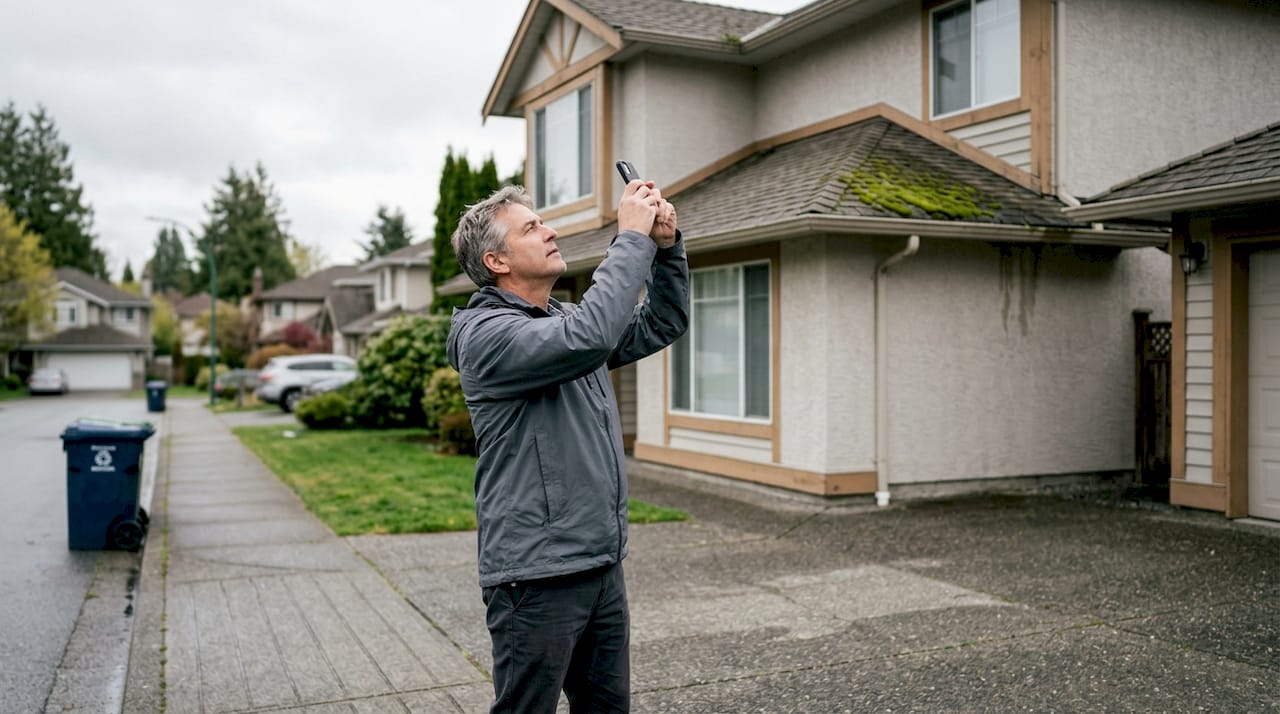
In markets where median home prices exceed $1 million, buyers scrutinise every detail. A roof showing visible wear, sagging sections, or active leaks sends immediate red flags, regardless of your property’s other strengths. Contact our Vancouver team for insurance claim support Leaking and sagging roofs can kill property deals in Vancouver’s high-value market, where buyers have abundant alternatives and little tolerance for deferred maintenance.
Roof costs occupy a small fraction of overall home value, typically 2 to 5 percent, but their condition carries outsized weight in buyer confidence and deal closure. When prospective buyers encounter roofing issues during inspections, they immediately calculate replacement costs and factor those into their offers. A $15,000 roofing concern can translate into $25,000 in price reductions once buyers pad estimates and account for disruption.
Cheaper base replacements may fail quicker, risking lower returns over time. Opting for minimum-spec materials to save upfront costs often backfires when roofs underperform within 10 to 12 years instead of the expected 20 to 25. This premature failure forces another capital outlay precisely when you might be preparing to sell, eroding the financial advantage you sought initially.
Well-maintained roofs add tangible resale appeal by signalling responsible ownership and reducing buyer anxiety. Properties with documented maintenance records and recent professional inspections command stronger offers because buyers perceive less risk. Listing homes with sagging or leaking roofs often face price reductions or longer market times, as sellers struggle to compete against move-in-ready alternatives.
Consider these buyer perception factors:
- Visual curb appeal diminishes when roofs show moss growth, missing shingles, or discolouration
- Inspection reports highlighting roofing defects trigger renegotiation or deal cancellations
- Homes requiring immediate roofing work attract investor-grade offers rather than premium residential buyers
- Properties with best roof options for home value consistently outperform comparable listings with deferred roofing issues
“In Vancouver’s competitive market, a compromised roof shifts buyer focus from your property’s strengths to its liabilities, fundamentally altering negotiation dynamics and sale outcomes.”
Roof maintenance vs replacement: maximising ROI and lifespan
Deciding between maintenance and replacement hinges on your roof’s current lifecycle stage, your budget constraints, and your property’s sale timeline. Maintenance defers expensive replacements significantly, preserving capital for other investments or operational needs. For property managers overseeing multiple buildings, this capital retention strategy proves especially valuable.
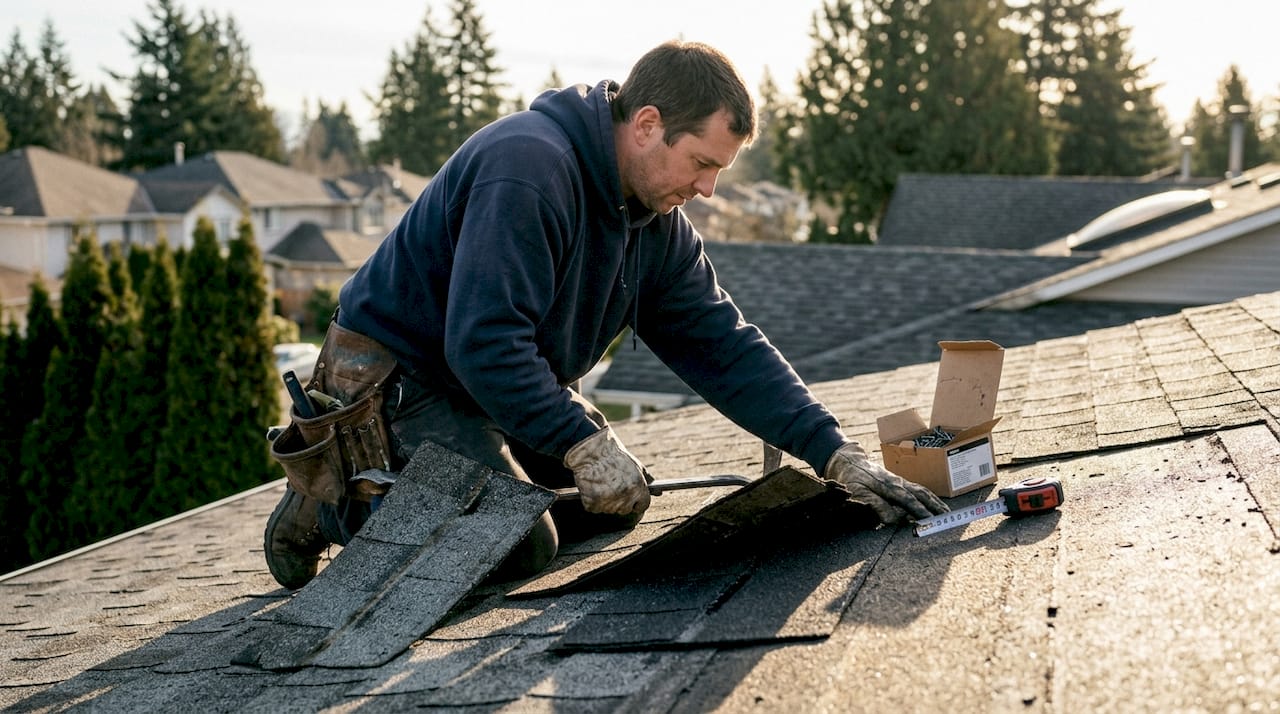
Preventative maintenance on flat roofs defers replacement by 3 to 5 years and saves $150,000 to $350,000 in capital expenditures, yielding 7 to 10 percent ROI. These figures reflect commercial flat roof scenarios but translate proportionally to residential contexts where maintenance costs range from $500 to $2,000 annually compared to $8,000 to $25,000 for full replacements.
Maintenance yields strong ROI via capital retention and extends roof lifespan when executed strategically. Regular inspections identify minor issues like damaged flashing, clogged gutters, or isolated shingle failures before they cascade into structural problems. Addressing these small repairs costs hundreds rather than thousands and preserves your roof’s protective integrity.
Replacement offers higher upfront costs but becomes necessary when roof condition exceeds 80 percent of expected lifespan. At this threshold, repair costs escalate rapidly, and the risk of catastrophic failure increases. Investing in maintenance for a roof nearing end-of-life yields diminishing returns compared to replacement.
| Strategy | Typical Cost | Lifespan Extension | ROI Potential |
|---|---|---|---|
| Annual maintenance | $500 to $2,000 | 3 to 5 years | 7 to 10% |
| Targeted repairs | $1,000 to $5,000 | 2 to 4 years | 5 to 8% |
| Full replacement | $8,000 to $25,000 | 20 to 30 years | Variable, sale-dependent |
| Deferred action | $0 upfront | Negative impact | Negative, reduces property value |
Maintenance is the preferred strategy when roof health is moderate to good, typically within the first 60 to 70 percent of expected lifespan. During this window, proactive care maximises your investment by extending usable life at minimal cost. Once roofs enter the final 20 to 30 percent of lifespan, replacement planning becomes prudent.
Key maintenance activities include:
- Biannual inspections to identify wear patterns and emerging issues
- Gutter cleaning to prevent water backup and ice damming
- Moss and algae treatment to preserve shingle integrity
- Flashing repairs around chimneys, vents, and skylights
- Immediate leak response to prevent interior damage
Pro Tip: Schedule roof preventative maintenance inspections in spring and autumn to optimise timing and avoid premature replacement. These seasonal checks catch winter damage and prepare roofs for heavy rainfall, maximising your maintenance investment.
Understanding roof maintenance vs replacement trade-offs helps you allocate capital efficiently and preserve property value through strategic decision-making.
Choosing roofing materials to enhance property value
Material selection influences durability, aesthetic appeal, and buyer perception, making it a critical value driver. Different materials vary in lifespan, cost, and buyer appeal, requiring careful alignment with your property’s market positioning and neighbourhood standards.
| Material | Lifespan | Cost Range | Aesthetic Appeal | Best For |
|---|---|---|---|---|
| Asphalt shingles | 15 to 25 years | $3,500 to $8,000 | Moderate, versatile colours | Standard residential markets |
| Metal roofing | 40 to 70 years | $10,000 to $20,000 | Modern, clean lines | Contemporary homes, coastal areas |
| Cedar shakes | 20 to 30 years | $12,000 to $18,000 | Natural, rustic charm | Heritage properties, upscale neighbourhoods |
| Synthetic slate | 30 to 50 years | $15,000 to $25,000 | Premium, authentic appearance | Luxury markets, architectural homes |
Premium roofing materials are preferred in luxury markets for boosting home value, as discerning buyers in upscale neighbourhoods expect materials that match the property’s overall quality. Installing synthetic slate or copper accents on a heritage home in Shaughnessy justifies higher asking prices, whilst asphalt shingles suit middle-market properties where cost efficiency matters more.
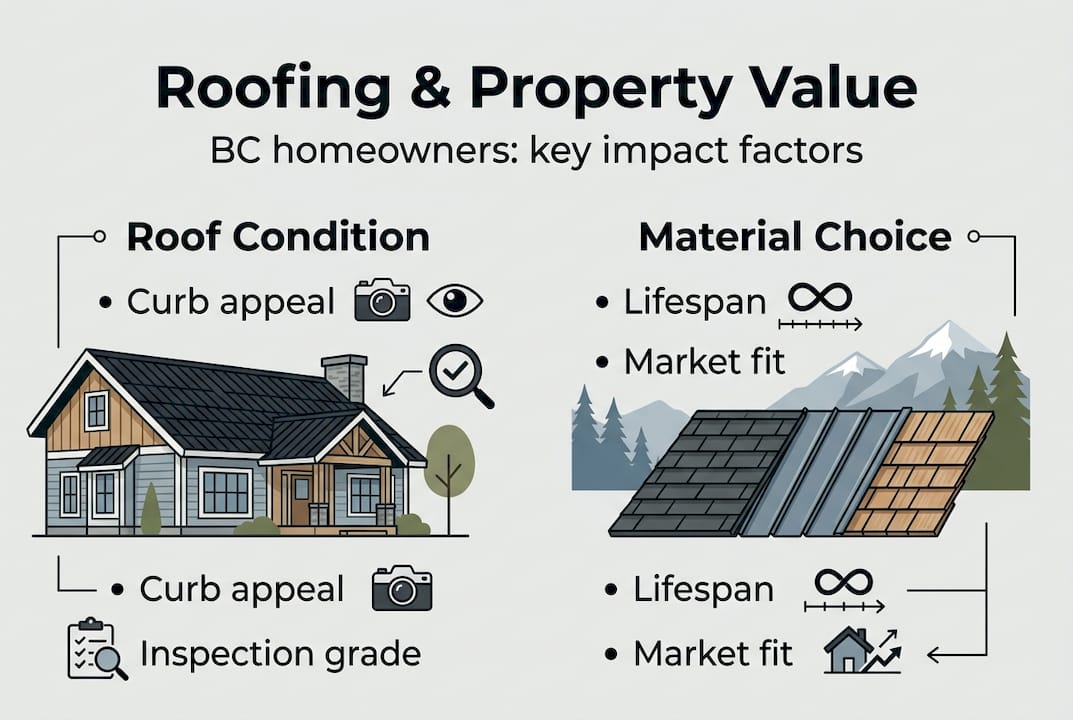
Premium materials justify higher price tags in upscale neighbourhoods by signalling quality and longevity. Buyers paying $2 million or more expect roofing that complements architectural details and requires minimal maintenance. Metal roofing’s 50-year lifespan appeals to investors and homeowners seeking long-term value, whilst cedar shakes provide the authentic West Coast aesthetic that defines certain BC markets.
Factors influencing material selection include:
- Climate considerations, especially BC’s wet winters and UV exposure in summer
- Budget constraints balanced against long-term value and maintenance costs
- Resale market expectations and neighbourhood material standards
- Architectural style compatibility and historical designation requirements
- Energy efficiency goals and potential utility savings
Comparing roofing materials in 2026 reveals performance differences that affect both immediate appeal and long-term returns. Metal roofing’s fire resistance and energy efficiency attract environmentally conscious buyers, whilst asphalt shingles’ lower upfront costs suit budget-focused renovations.
Pro Tip: Select materials that match neighbourhood standards to maximise perceived value. Installing premium materials in a modest neighbourhood rarely recovers costs, whilst budget materials in upscale areas undermine your property’s competitive position. Research comparable sales and consult local real estate professionals to align material choices with market expectations.
Exploring best roofing materials for value helps you balance aesthetics, durability, and cost to optimise your investment returns.
Strategic roofing investments to maximise sale price and speed
Timing and execution of roofing investments directly influence buyer perception and negotiation dynamics. Roof replacement or maintenance impacts buyer perception and negotiation leverage by removing obstacles and shifting focus to your property’s strengths rather than its liabilities.
Follow this decision process to optimise roofing investments:
- Evaluate current roof life and condition through professional inspection
- Assess market demand and typical buyer expectations in your neighbourhood
- Calculate budget availability and financing options for repairs or replacement
- Determine sale urgency and timeline for listing your property
- Prioritise investments that address visible defects and inspection red flags
- Document all work with receipts, warranties, and professional certifications
Strategic investment means balancing cost, market conditions, and timing to maximise returns. Replacing a roof six months before listing prevents last-minute negotiations and allows you to market the new roof as a selling feature. Conversely, investing $20,000 in roofing when you plan to hold the property for another decade may not optimise capital allocation.
Roof upgrades may not yield dollar-for-dollar ROI but assist in faster sales and less negotiation. Whilst you might spend $15,000 on replacement and only recoup $10,000 in sale price, the intangible benefits include reduced days on market, fewer inspection contingencies, and stronger buyer confidence.
Benefits of strategic roofing investments include:
- Faster offers from buyers who perceive move-in-ready condition
- Reduced renegotiations after inspections reveal no roofing concerns
- Enhanced curb appeal that attracts more showings and competitive bidding
- Stronger appraisal values when comparable properties have inferior roofing
- Marketing advantage through professional photos showcasing new roofing
Implementing a roof replacement workflow ensures property managers coordinate projects efficiently, minimising tenant disruption and maximising value preservation across portfolios.
“In Vancouver’s competitive market, a new roof transforms your property from a fixer-upper into a premium listing, fundamentally altering buyer psychology and sale outcomes.”
Consider market conditions when timing investments. In seller’s markets with limited inventory, buyers tolerate minor roofing issues more readily. In buyer’s markets with abundant choices, even small roofing concerns provide negotiation leverage. Adjust your investment strategy accordingly, prioritising roofing work when market conditions favour buyers and competition intensifies.
Explore roofing services to protect and boost your property value
Protecting your property investment requires expert guidance and professional execution. Whether you’re planning preventative maintenance, evaluating replacement options, or preparing for a sale, partnering with experienced roofing professionals ensures optimal outcomes.
Paragon Roofing BC offers comprehensive roofing solutions across Vancouver and surrounding areas, tailored to homeowners and property managers seeking to maximise value. Our roof maintenance services include scheduled inspections, preventative repairs, and documentation that supports resale value. For properties requiring replacement, our roof replacement services deliver quality installations with materials matched to your market positioning. New construction and additions benefit from our roof installation services that ensure long-term performance and aesthetic appeal. Consult our team to develop a roofing strategy aligned with your property goals and investment timeline.
What role does roofing play in property value?
How does roof condition affect buyer confidence in BC markets?
Roof condition directly influences buyer confidence by signalling overall property maintenance and reducing perceived risk. Buyers in competitive markets like Vancouver prioritise move-in-ready homes, making compromised roofs significant deterrents that trigger price reductions or extended listing periods.
Why does regular maintenance delay costly replacements?
Regular maintenance identifies and addresses minor issues before they escalate into structural problems requiring full replacement. Preventative care extends roof lifespan by 3 to 5 years and saves $150,000 to $350,000 in capital expenditures, yielding strong returns through capital preservation.
Which roofing materials provide the best long-term value?
Material selection depends on neighbourhood standards and market positioning. Premium materials like metal or synthetic slate justify higher prices in luxury markets, whilst asphalt shingles suit standard residential properties where cost efficiency matters more than longevity.
When should I replace my roof before selling?
Replace your roof when it exceeds 80 percent of expected lifespan or shows visible defects that inspection reports will flag. Timing replacement six months before listing allows you to market the new roof as a feature and prevents negotiation obstacles.
How do roofing investments speed up property sales?
New or well-maintained roofs eliminate buyer concerns, reduce inspection contingencies, and enhance curb appeal. Properties with documented roofing work attract faster offers and stronger prices because buyers perceive less risk and fewer immediate capital requirements.