What is Cedar Roofing? Lasting Value for BC Homes
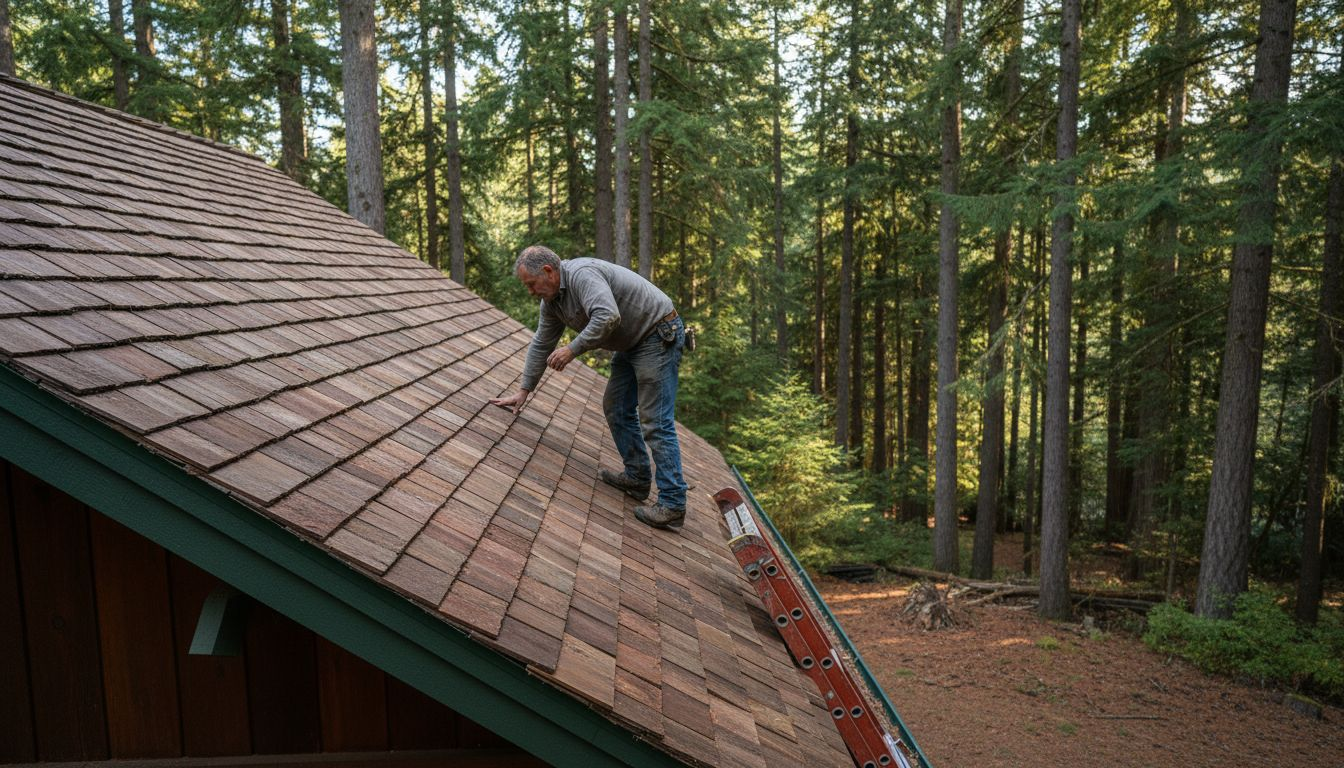
Every year, more Canadian homeowners in Vancouver choose cedar roofing to protect their homes and boost curb appeal. Many are surprised to learn that properly maintained cedar roofs last 25 to 30 years even in British Columbia’s wet climate. Understanding the true performance and style benefits of cedar can help you make an informed decision and avoid common misconceptions about this iconic Vancouver roofing choice.
Table of Contents
- Cedar Roofing Defined And Common Misconceptions
- Main Types: Shingles Versus Shakes
- Key Features And How Cedar Roofs Work
- Typical Lifespan And Performance In BC Climate
- Costs, Maintenance, And Common Challenges
- Cedar Roofing Versus Other Materials
Key Takeaways
| Point | Details |
|---|---|
| Cedar Roofing Longevity | With proper installation and regular maintenance, cedar roofing can last 25 to 30 years in British Columbia’s climate. |
| Shingles vs. Shakes | Cedar shingles provide a smoother, more structured look, while cedar shakes offer a rustic and textured appearance, both have unique installation and performance characteristics. |
| Maintenance Importance | Regular professional inspections and treatments are essential to prevent moisture issues and extend the lifespan of cedar roofing. |
| Cost Considerations | Cedar roofing is a significant investment, with initial costs higher than conventional materials, but offers long-term value through durability and performance benefits. |
Cedar Roofing Defined and Common Misconceptions
Cedar roofing represents a premium natural wood roofing solution uniquely suited to British Columbia’s challenging coastal climate. Crafted from Western red cedar, these roofing materials offer exceptional durability and aesthetic appeal for homeowners seeking a robust and environmentally integrated roof covering. Western red cedar’s natural properties make it an outstanding choice for residential roofing across the Lower Mainland.
Traditionally, cedar roofing comes in two primary formats: cedar shakes and cedar shingles. Shakes are hand-split wooden panels with a more rustic, textured appearance, while shingles are precisely machine-cut for a smoother, more uniform look. Both formats leverage the wood’s inherent moisture resistance and natural oils that protect against decay, insect damage, and environmental degradation. The wood’s lightweight nature combined with excellent insulation qualities further enhances its performance in British Columbia’s variable weather conditions.
Despite its reputation, cedar roofing is often misunderstood. Common misconceptions include beliefs that cedar roofing requires excessive maintenance or deteriorates quickly. In reality, properly installed cedar roofing can last decades when maintained appropriately. Homeowners should understand that regular treatments, proper installation, and periodic inspections are key to preserving the roof’s integrity and extending its functional lifespan.
Pro tip: Schedule professional cedar roof inspections every 3-5 years to identify potential moisture vulnerabilities and apply protective treatments that significantly extend your roof’s durability.
Main Types: Shingles Versus Shakes
Cedar roofing in British Columbia offers two distinctive styles: shingles and shakes, each with unique characteristics that impact aesthetic appeal, installation, and long-term performance. Wood roofing materials represent a nuanced choice for homeowners seeking both functionality and visual charm in their roof covering.
Cedar shingles are precisely machine-cut, featuring a smooth, uniform appearance that provides a clean and refined look. These shingles are typically thinner, more consistent in shape, and offer a more structured aesthetic ideal for modern and traditional home designs. In contrast, cedar shakes are hand-split wooden panels that deliver a more rustic, textured appearance. Thicker and less uniform, shakes create a more organic, natural look that complements heritage or rural architectural styles.
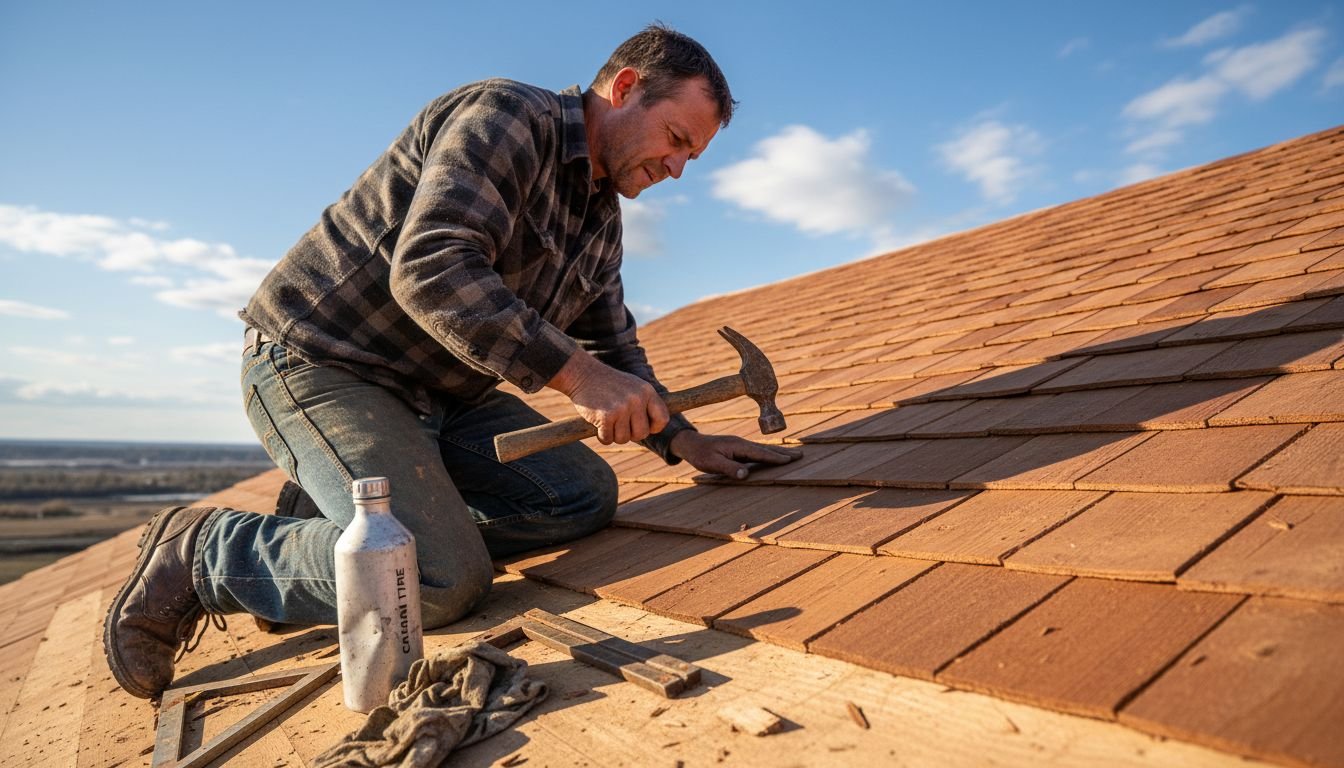
Beyond aesthetic differences, shingles and shakes vary in their installation requirements and performance characteristics. Historic wood roofing practices demonstrate that both formats demand meticulous wood selection, precise installation techniques, and ongoing maintenance to ensure optimal durability. Shingles generally provide better water shedding due to their smoother surface, while shakes offer enhanced insulation and a more pronounced dimensional appearance.
Here’s a side-by-side comparison of cedar shingles and shakes commonly used in British Columbia:
| Attribute | Cedar Shingles | Cedar Shakes |
|---|---|---|
| Appearance | Smooth, uniform finish | Rustic, textured look |
| Thickness | Typically thinner | Thicker panels |
| Installation | More precise, structured | Allows some irregularity |
| Best for | Modern, traditional homes | Heritage, rural designs |
| Water Shedding | Superior due to smooth surface | Good, but less consistent |
| Insulation | Moderate | Enhanced thermal protection |
Pro tip: Consult a professional roofer to assess your specific home’s architectural style and local climate conditions before selecting between cedar shingles and shakes to ensure the best long-term roofing solution.
Key Features and How Cedar Roofs Work
Cedar roofing is a sophisticated system of natural protection that leverages the extraordinary properties of Western red cedar, designed specifically to withstand British Columbia’s challenging coastal environment. Western red cedar’s unique characteristics make it an exceptional roofing material, offering unparalleled durability and performance that goes far beyond traditional roofing solutions.
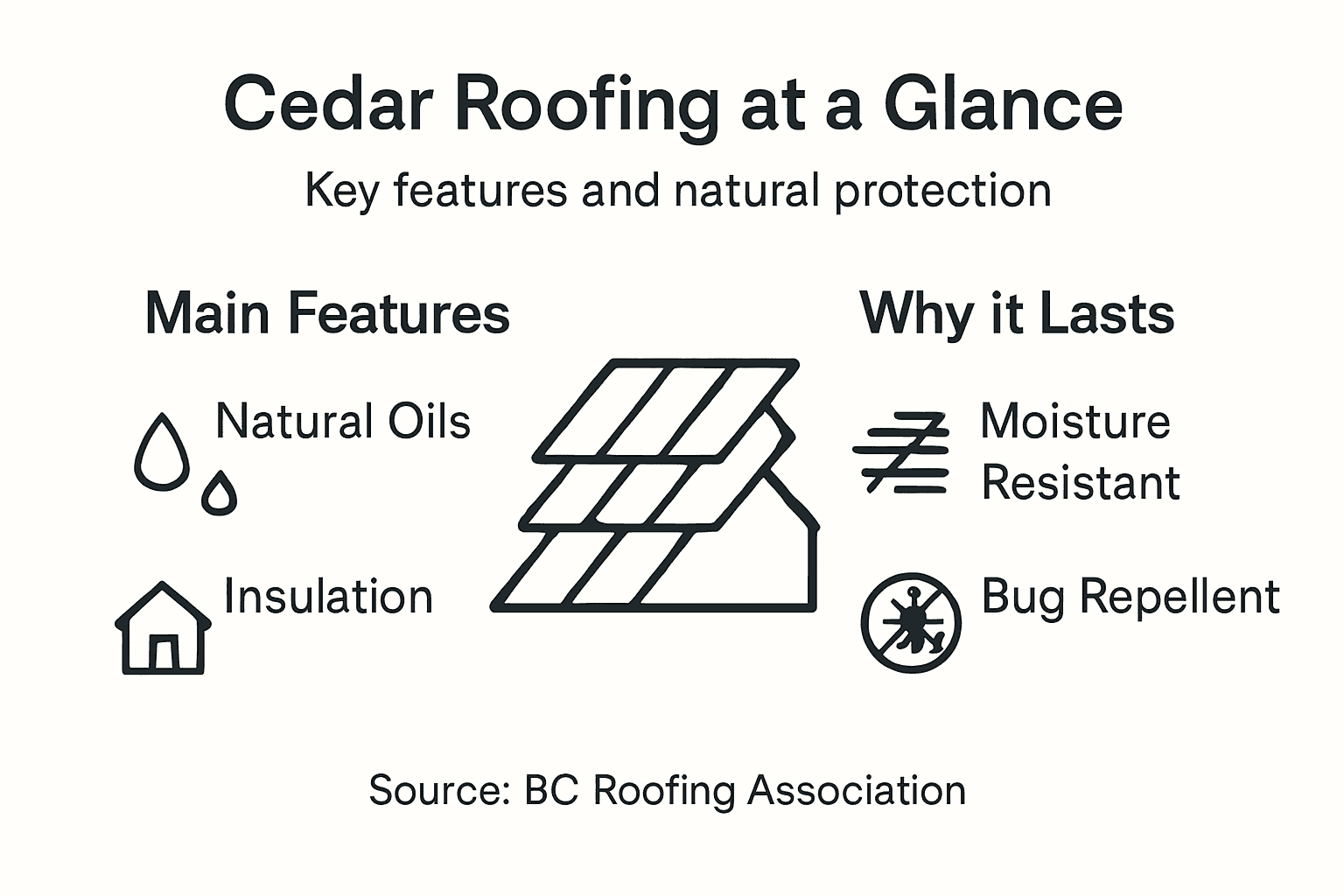
At its core, cedar roofing works through a remarkable combination of natural defence mechanisms. The wood contains special extractives and natural oils that provide inherent resistance to moisture, decay, and insect infestation. These protective compounds create a robust barrier that repels water while simultaneously allowing the roof to breathe, preventing moisture accumulation that could compromise structural integrity. The wood’s cellular structure enables excellent thermal regulation, providing natural insulation that helps maintain consistent indoor temperatures throughout Vancouver’s variable climate.
The performance of cedar roofing depends critically on precise installation and ongoing maintenance. Cedar roofing’s protective mechanisms rely on proper overlap, adequate ventilation, and periodic treatments that enhance the wood’s natural protective qualities. Each cedar shake or shingle acts like an individual shield, with its grain pattern and natural oils working in concert to redirect water, resist UV degradation, and maintain structural resilience against wind, rain, and temperature fluctuations typical in British Columbia’s coastal regions.
Pro tip: Schedule annual roof inspections with a professional who understands cedar’s unique characteristics to identify and address potential moisture vulnerabilities before they become significant problems.
Typical Lifespan and Performance in BC Climate
Cedar roofing in British Columbia represents a robust and sophisticated roofing solution that typically delivers between 25 to 30 years of exceptional performance when properly maintained. Western red cedar’s durability allows homeowners to invest in a roofing material specifically adapted to the Lower Mainland’s challenging moisture-rich and variable climate conditions.
The performance of cedar roofing depends critically on multiple environmental factors unique to British Columbia’s coastal regions. Wind exposure, persistent rainfall, temperature fluctuations, and humidity levels all play significant roles in determining the roof’s longevity. Our local climate presents specific challenges, including rapid moisture absorption, potential moss and algae growth, and intense UV exposure during summer months. These conditions demand a roofing material that can breathe, flex, and resist degradation - qualities that make cedar an exceptional choice for Vancouver area homes.
Professional installation and proactive maintenance are paramount to maximizing cedar roofing’s lifespan. Roof performance assessment tools from the National Research Council help roofers understand the precise environmental stresses impacting roof integrity. Strategic treatments, regular inspections, and prompt repairs can extend a cedar roof’s functional life well beyond standard expectations, transforming it from a mere protective covering into a long-term investment in your property’s structural resilience.
Pro tip: Implement a biannual roof maintenance schedule that includes professional cleaning, treatment, and thorough inspection to proactively address potential moisture vulnerabilities and extend your cedar roof’s functional lifespan.
Costs, Maintenance, and Common Challenges
Cedar roofing represents a significant investment for British Columbia homeowners, with initial installation costs ranging between $12 to $25 per square foot - substantially higher than conventional roofing materials. This premium pricing reflects the exceptional durability, aesthetic appeal, and natural performance characteristics of Western red cedar, making it a strategic long-term investment for property owners who prioritize quality and environmental resilience.
Maintenance is crucial for preserving cedar roofing’s integrity and extending its functional lifespan. Effective maintenance strategies involve regular professional inspections, proactive treatments, and prompt addressing of potential vulnerabilities. Typical maintenance challenges in the Lower Mainland include managing moss growth, preventing moisture penetration, replacing damaged shakes, and ensuring proper roof ventilation. Homeowners should budget approximately 1-2% of the roof’s initial installation cost annually for professional maintenance and treatments.
Common challenges specific to cedar roofing in British Columbia’s coastal climate include rapid moisture absorption, accelerated wood deterioration, potential fungal growth, and increased susceptibility to wind damage during storm seasons. These environmental stressors demand a nuanced maintenance approach that goes beyond standard roofing care. Professional roofers recommend comprehensive treatments using specialized water-resistant sealants, fungal inhibitors, and UV protectants to mitigate these region-specific challenges and preserve the roof’s structural and aesthetic qualities.
Pro tip: Invest in an annual professional inspection and maintenance contract that includes comprehensive treatment and preventative repairs to maximize your cedar roof’s longevity and protect your significant roofing investment.
Cedar Roofing Versus Other Materials
When comparing roofing materials in British Columbia, cedar stands apart as a premium solution offering unparalleled natural performance and aesthetic appeal. Western red cedar’s distinctive advantages make it a superior choice compared to conventional materials like asphalt, metal, and synthetic alternatives, particularly in the Pacific Northwest’s challenging climate conditions.
Asphalt shingles, while more affordable initially, cannot match cedar’s environmental credentials or long-term value. Cedar roofing provides superior thermal insulation, natural resistance to rot and insect damage, and a unique visual warmth that synthetic materials cannot replicate. Unlike metal roofing, which can be noisy during rainfall and prone to temperature-related expansion, cedar offers excellent sound dampening and natural temperature moderation, creating a more comfortable living environment.
The table below highlights the main differences between cedar roofing and other popular materials in BC:
| Criteria | Cedar Roofing | Asphalt Shingles | Metal Roofing |
|---|---|---|---|
| Durability | 25–30 years, with maintenance | 15–20 years | 30–50 years |
| Climate Adaptability | Excellent moisture resistance | Susceptible to moss, algae | Can rust, expands/contracts |
| Environmental Impact | Biodegradable, renewable | Petroleum-based, recyclable | Recyclable, but energy-intensive |
| Thermal Insulation | Superior, natural wood | Moderate insulation | Poor, unless insulated |
| Sound Dampening | Very good | Poor | Poor during rain |
| Aesthetic Value | Distinctive, natural finish | Standard appearance | Modern, industrial look |
Green roofing technologies demonstrate that sustainable materials like cedar play a crucial role in urban heat management. Cedar roofs contribute to reducing heat island effects through their natural insulating properties and ability to moderate surface temperatures. While emerging roofing technologies continue to evolve, cedar remains a time-tested, culturally significant material that balances environmental performance, aesthetic quality, and structural integrity in a way that few alternative materials can achieve.
Pro tip: Consider consulting a professional who can conduct a comprehensive cost-benefit analysis specific to your property, taking into account local climate conditions, architectural style, and long-term maintenance requirements.
Protect Your Investment with Expert Cedar Roofing Solutions in British Columbia
Cedar roofing offers exceptional beauty and durability that matches the unique challenges of British Columbia’s coastal climate. However, as the article explains, achieving lasting value requires professional installation, regular maintenance, and expert care to combat moisture, moss growth, and wood deterioration. At Paragon Roofing BC, we understand these specific demands and are committed to helping you preserve the integrity and elegance of your cedar roof through trusted roofing services such as installation, maintenance, and thorough inspections.
Don’t let common cedar roofing challenges reduce your home’s protection and curb appeal. Visit Paragon Roofing BC today to schedule your free inspection and learn how our skilled team uses proven techniques and regionally tailored treatments to extend the lifespan of your roof. Take the next step to safeguard your property with cedar roofing expertise you can rely on.
Frequently Asked Questions
What are the main types of cedar roofing?
Cedar roofing primarily comes in two types: cedar shakes and cedar shingles. Cedar shakes are hand-split and offer a rustic, textured look, while cedar shingles are machine-cut for a smoother appearance and more uniformity.
How long does cedar roofing typically last?
With proper maintenance, cedar roofing can last between 25 to 30 years, depending on factors such as installation quality and local environmental conditions.
What maintenance is required for cedar roofing?
Cedar roofing requires regular inspections, treatments to prevent moisture and fungal growth, and prompt repairs of any damaged shingles or shakes to maintain its integrity and longevity.
What are the benefits of using cedar roofing over other materials?
Cedar roofing offers superior thermal insulation, natural resistance to decay and insects, aesthetic appeal, and environmental sustainability compared to traditional materials like asphalt or metal roofing.