Why roofing sustainability matters for BC homes
TL;DR:
- Most property owners overlook the environmental impact of their roofs, focusing mainly on initial costs or leaks.
- Choosing durable, properly designed roofing systems tailored to BC’s climate can significantly lower energy use, waste, and stormwater runoff.
- Consistent maintenance and smart material selection are essential for sustainable roofing that enhances performance and reduces environmental footprints.
Most property owners think about their roof twice: when they buy the building and when it leaks. That passive approach carries a real cost, and not just the financial kind. Understanding why roofing sustainability matters changes how you evaluate every material choice, every repair decision, and every replacement you make. In BC’s climate — heavy rainfall, freeze-thaw cycles from the Fraser Valley to the North Shore, and coastal moisture that never fully quits — roofing is one of the biggest contributors to a building’s energy use and environmental footprint. It deserves a lot more attention than it gets.
Table of Contents
- Key takeaways
- How roofing affects energy use and environmental footprint
- The environmental advantages of green and sustainable roofing materials
- Lifecycle impacts: why longevity and recyclability matter
- Choosing sustainable roofing in BC: a practical guide
- My honest take on roofing sustainability in BC
- Ready to explore sustainable roofing for your BC property?
- FAQ
Key takeaways
| Point | Details |
|---|---|
| Roofing affects energy use directly | Roof material and design significantly influence heating and cooling demand year-round. |
| Green roofs reduce stormwater load | Vegetated roofing systems can cut runoff by 60 to 100%, which matters in BC’s wet coastal regions. |
| Longevity beats upfront cost | A roof lasting 50 years produces far less waste and resource use than two 25-year roofs. |
| Material end-of-life counts | Metal roofs recycle infinitely; asphalt shingle recycling is growing but still limited across BC. |
| BC climate requires tailored choices | Cool roofs that work in warmer climates can create a heating penalty in milder coastal BC winters. |
How roofing affects energy use and environmental footprint
Here is something most people do not realise: a conventional dark roof on a sunny day can reach surface temperatures above 150°F. That heat does not stay outside. It bleeds through your roofing assembly, forces your HVAC system to work harder, drives up electricity demand, and adds unnecessary load to BC Hydro’s grid during peak periods. Cool roofs stay over 50°F cooler than conventional roofs on those same sunny days, which directly translates to reduced cooling demand and lower energy bills.
The two metrics that matter here are solar reflectance and thermal emittance. Solar reflectance measures how much sunlight a surface bounces back rather than absorbing. Thermal emittance measures how efficiently a roof releases absorbed heat. A product that scores well on both keeps roof surfaces cool, which is exactly what you want during Metro Vancouver’s warmer summers. ENERGY STAR cool roof thresholds require a minimum solar reflectance of 0.65 initially, plus an aged reflectance of 0.50 after three years, because performance that fades fast is not really sustainable performance.
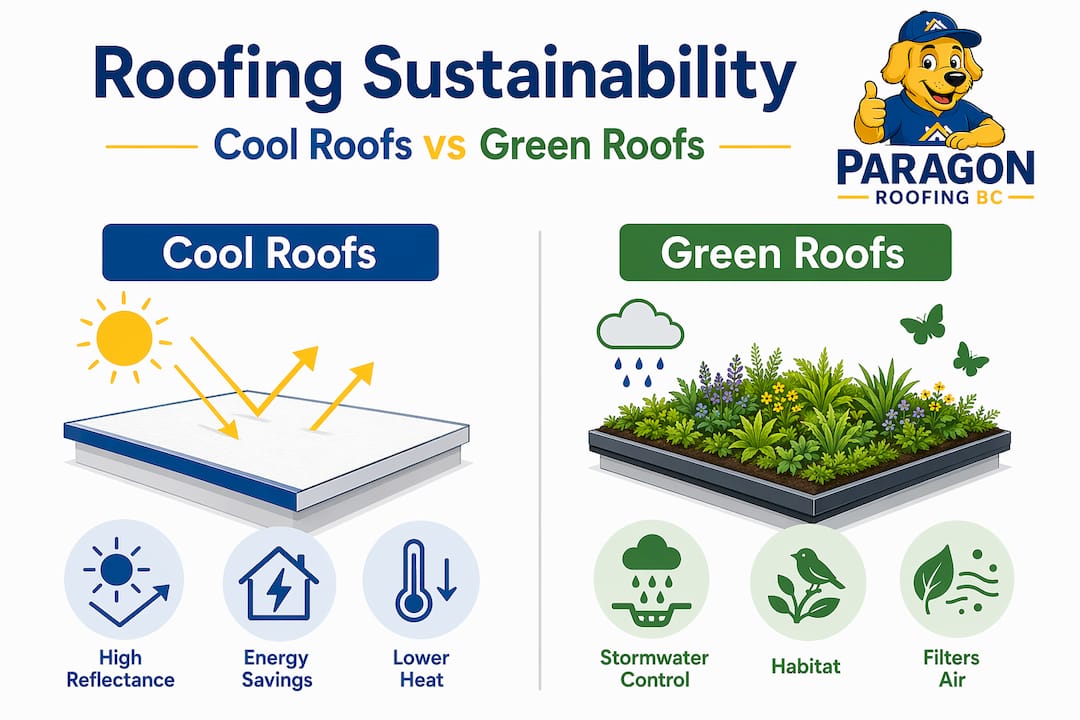
Now, here is the nuance that matters specifically for BC. Cool roofs can create a winter heating penalty by reflecting solar heat away during cold months when you actually want passive solar warmth. In a climate like Metro Vancouver’s, where winters are mild but damp rather than bitterly cold, this trade-off is manageable. But in higher-elevation BC communities with significant snowfall and longer cold seasons, you need to weigh both sides. Sustainable roofing lowers HVAC load and extends service life, but the right choice depends on your specific location within the province, your building orientation, and your existing insulation levels.
Pro Tip: Before selecting a cool roof product, request the aged reflectance data, not just the initial specs. A product with strong initial reflectance that degrades to 0.35 after three years gives you a fraction of the long-term benefit you were counting on.
Key reasons why roofing choices affect your environmental footprint in BC:
- A poorly insulated or heat-absorbing roof increases annual energy consumption, boosting your carbon footprint.
- Frequent repairs and early replacements due to moisture damage generate significant construction waste.
- Urban heat island effects from conventional dark roofing elevate neighbourhood temperatures, increasing cooling demand for surrounding buildings.
- Drainage failures from poor roofing design contribute to stormwater overflow in Metro Vancouver’s already-stressed municipal drainage systems.
The environmental advantages of green and sustainable roofing materials
Green roofs are one of the most compelling arguments in the sustainable roofing conversation, and they are especially relevant in BC’s coastal cities. Green roofs can reduce stormwater runoff by 60 to 100% depending on their design and local rainfall patterns. That is a significant benefit in places like Surrey or Burnaby, where intense autumn and winter rainfall regularly challenges municipal drainage infrastructure.
Beyond stormwater, green roofs filter airborne pollutants, sequester CO2, and create urban habitat for pollinators and bird species. The evapotranspiration from rooftop plants cools both roof surfaces and the surrounding air, which reduces the urban heat island effect. Green roofs can reduce building cooling load by 70% and lower indoor air temperatures measurably compared to conventional roofs, making them a genuinely multi-functional investment.
For BC specifically, green roof stormwater retention depends on design depth and planting choices suited to local rainfall patterns. A shallow extensive green roof with drought-tolerant sedums will perform differently than a deep intensive system with soil depth and varied plantings. In a wet coastal climate, the design has to account for saturation events and proper drainage layers. Getting that wrong does not just reduce environmental performance; it risks structural damage from water loading.
Here is a practical comparison of the two main sustainable roofing approaches:
| Feature | Cool roofs | Green roofs |
|---|---|---|
| Energy savings | High, especially cooling seasons | High, year-round thermal buffering |
| Stormwater management | Minimal direct benefit | High, 60 to 100% runoff reduction |
| Urban heat island reduction | Moderate via reflectance | High via evapotranspiration and insulation |
| Upfront cost | Lower | Higher |
| Maintenance requirements | Low to moderate | Moderate to high |
| Biodiversity support | None | Significant |
| Suitability for BC coastal climate | Good with seasonal caveats | Excellent when designed for wet conditions |
For property owners interested in eco-friendly roofing options that address BC’s specific drainage and moisture challenges, green roofs offer the broadest environmental return. Cool roofs make the most sense when stormwater management is already addressed and energy efficiency is the primary goal.
Lifecycle impacts: why longevity and recyclability matter
The importance of sustainable roofing cannot be honestly discussed without talking about what happens from production through disposal. Most homeowners focus on what a roof costs to install and what it looks like. The more important question is: how much environmental load does this material generate from the moment it is mined or manufactured to the day it gets torn off and hauled away?
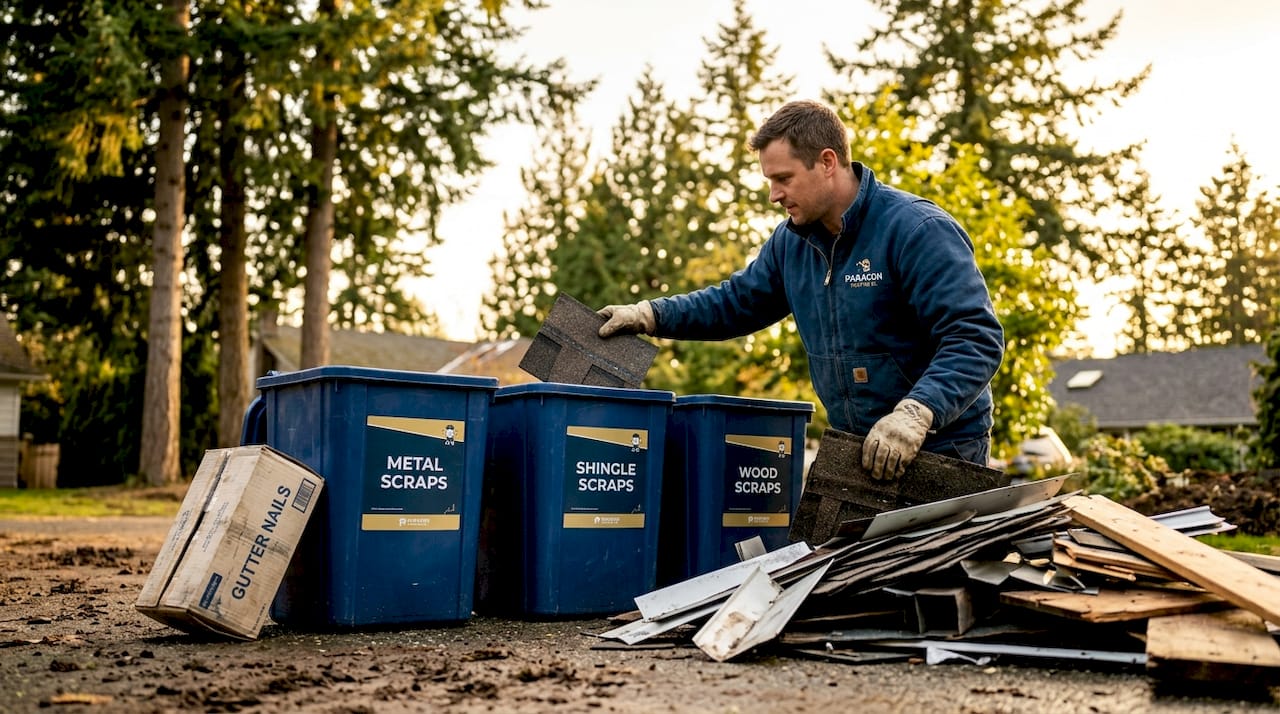
A 50-year roof is inherently more sustainable than two 25-year roofs. Every re-roofing event involves raw material extraction, manufacturing energy, transportation to your site in Coquitlam or Maple Ridge, installation labour, and disposal of the old material. When you extend a roof’s life by even ten years through proper maintenance and quality materials, you eliminate one full cycle of that environmental load.
Metal roofing contains high recycled content and can be recycled infinitely at end of life, making it one of the lowest-waste options available. Asphalt shingles are the other side of that story. They dominate the residential market across BC, but they also dominate roofing landfill waste. The good news is that asphalt shingle recycling into pavement materials is growing, with more BC-based programmes emerging each year. It is not a perfect solution yet, but it is improving.
| Roofing material | Typical lifespan in BC | Recyclability | Key sustainability note |
|---|---|---|---|
| Metal (steel, aluminium) | 40 to 70 years | Excellent, infinite recycling | High recycled content at manufacturing |
| Asphalt shingles | 20 to 30 years | Limited, growing recycling programmes | Dominant waste contributor |
| Cedar shakes | 25 to 40 years | Biodegradable | Sustainably harvested sources preferred |
| Synthetic roofing | 40 to 50 years | Variable by product | Often made from recycled materials |
| Tile (clay or concrete) | 50 to 100 years | Limited but durable | Very low replacement frequency |
Check the roofing material lifecycle comparison at Paragonroofingbc for a detailed breakdown of how different products perform over time in BC conditions specifically.
Pro Tip: When evaluating roofing materials, ask your contractor for the manufacturer’s warranty against both weather damage and performance degradation. A 50-year warranty with poor maintenance support is worth less than a 30-year warranty backed by an accessible service network in your area.
Maintenance is one of the most underrated sustainable roofing practices available to you right now. Cleaning gutters, replacing flashing promptly, and catching minor issues before they become full-scale repairs can add years to any roof’s life. From a sustainability standpoint, that is the cheapest and most immediate thing you can do.
Choosing sustainable roofing in BC: a practical guide
Knowing why sustainable roofing matters is one thing. Applying it in the real world of BC construction, mixed climates, and tight property budgets is another. Here is a practical sequence for making sustainable roofing decisions that actually hold up over time.
-
Assess your climate zone first. A property in Tsawwassen faces different conditions than one in Abbotsford or Squamish. Coastal properties near the water deal with salt-laden air and persistent moisture. Higher-elevation properties face freeze-thaw stress and snow load. Your material and design choices must match those realities, not just a general sustainability checklist.
-
Prioritise performance retention over initial specs. Look for products with aged reflectance certifications and established track records in wet climates. A product that performs brilliantly in Arizona but degrades under BC’s persistent rain and moss growth is not a sustainable choice for your building.
-
Factor in drainage as a sustainability variable. Green roofs in particular require properly designed drainage layers to function well in high-rainfall zones. Work with a contractor who understands how coastal moisture interacts with roofing assemblies, not just one who can install the product.
-
Explore local incentives and regulations. Some Metro Vancouver municipalities have programmes supporting green roofs and energy-efficient roofing upgrades. Checking with your local planning department before choosing a system can uncover rebates or streamlined permitting that changes the financial picture.
-
Build maintenance into the plan from day one. Scheduling annual roof inspections in BC extends the life of any sustainable roofing system. The upfront investment in a maintenance plan pays back significantly in avoided emergency repairs and prolonged material lifespan.
-
Think about energy savings through roofing alongside the environmental return. Better insulated, better reflecting, longer-lasting roofs reduce your monthly energy bills and your property’s carbon output at the same time. Those two goals are not in competition. When the roofing is right for your BC climate, they reinforce each other.
My honest take on roofing sustainability in BC
Hey, it’s Harman here. I have inspected roofs from Richmond to North Vancouver for years, and I can tell you with confidence that most property owners underestimate how much their roof is doing, or failing to do, for their building’s energy performance and environmental impact.
What I see most often is this: someone makes a sustainable-sounding material choice, installs it on a poorly ventilated roof deck with inadequate drainage for BC’s rainfall volumes, and then wonders why the benefits never materialise. The product was fine. The system was wrong. Sustainability is not a material you buy. It is a system you design and maintain.
The other thing I want to be direct about is greenwashing. There are products on the market with eco-friendly branding that do not survive five wet BC winters in good condition. I have pulled off “sustainable” shingles at fifteen years that looked like they were thirty. Look for products with actual performance data in climates similar to ours, not just marketing language from warmer US markets.
My real advice: invest in the longest-lasting product your budget allows, keep up with maintenance, and think about what happens to the material when it finally does come off your roof. Those three things, consistently applied, do more for roofing sustainability than any trend or certification programme. The roof over your head is one of the most visible commitments your property makes to the environment. Make it count.
— Harman
Ready to explore sustainable roofing for your BC property?
The gap between understanding why roofing sustainability matters and actually getting a system that delivers on it comes down to professional installation by someone who knows BC’s climate from the inside out.
At Paragonroofingbc, we work with property owners across the Lower Mainland to install, replace, and inspect roofs using materials and methods suited to real BC conditions. Whether you are looking at a full roof installation in Vancouver or planning a roof replacement in Delta, our team brings hands-on knowledge of what works in this province’s unique climate. Get in touch with us for a free inspection and let us help you make a roofing choice that holds up, performs, and genuinely reduces your building’s environmental footprint.
FAQ
What is the biggest environmental impact of conventional roofing?
Conventional dark roofing absorbs heat, increases building cooling demand, contributes to urban heat island effects, and generates significant landfill waste at end of life.
Do cool roofs work well in BC’s climate?
Cool roofs reduce cooling demand effectively during BC’s warmer months, but can create a winter heating penalty by reducing passive solar gain. Coastal BC properties generally see a net positive benefit when insulation is adequate.
How much can a green roof reduce stormwater runoff?
Green roofs can reduce runoff by 60 to 100% depending on the roof design, soil depth, and local rainfall intensity. Proper design for BC’s coastal wet climate is critical to achieving that range.
Which roofing material has the lowest lifecycle environmental impact?
Metal roofing typically has the lowest lifecycle impact because it lasts 40 to 70 years and can be recycled infinitely at end of life, generating far less landfill waste than asphalt shingles.
How does regular maintenance support sustainable roofing practices?
Routine inspections, gutter cleaning, and prompt flashing repairs extend a roof’s functional life by years, reducing the frequency of replacements and the resource consumption that comes with each one.