
North Vancouver shingle granule loss: examples to know
North Vancouver shingle granule loss: examples to know
TL;DR:
- Shingle granule loss indicates roof deterioration and appears as granules in gutters or shiny patches on shingles.
- In North Vancouver’s wet climate, constant moisture and moss accelerate granule shedding, leading to faster roof failure.
Shingle granule loss is defined as the shedding of ceramic granules from the surface of asphalt shingles, exposing the raw asphalt core beneath. For North Vancouver homeowners and property managers, this is one of the most telling signs that a roof is failing. The examples of North Vancouver shingle granule loss you see locally are shaped by constant rain, heavy moss growth, and freeze-thaw cycles that simply do not exist in drier parts of Canada. Catching these signs early can mean the difference between a targeted repair and a full roof replacement. This guide walks you through exactly what to look for, where to look, and what it means.
1. Common visual examples of shingle granule loss in North Vancouver
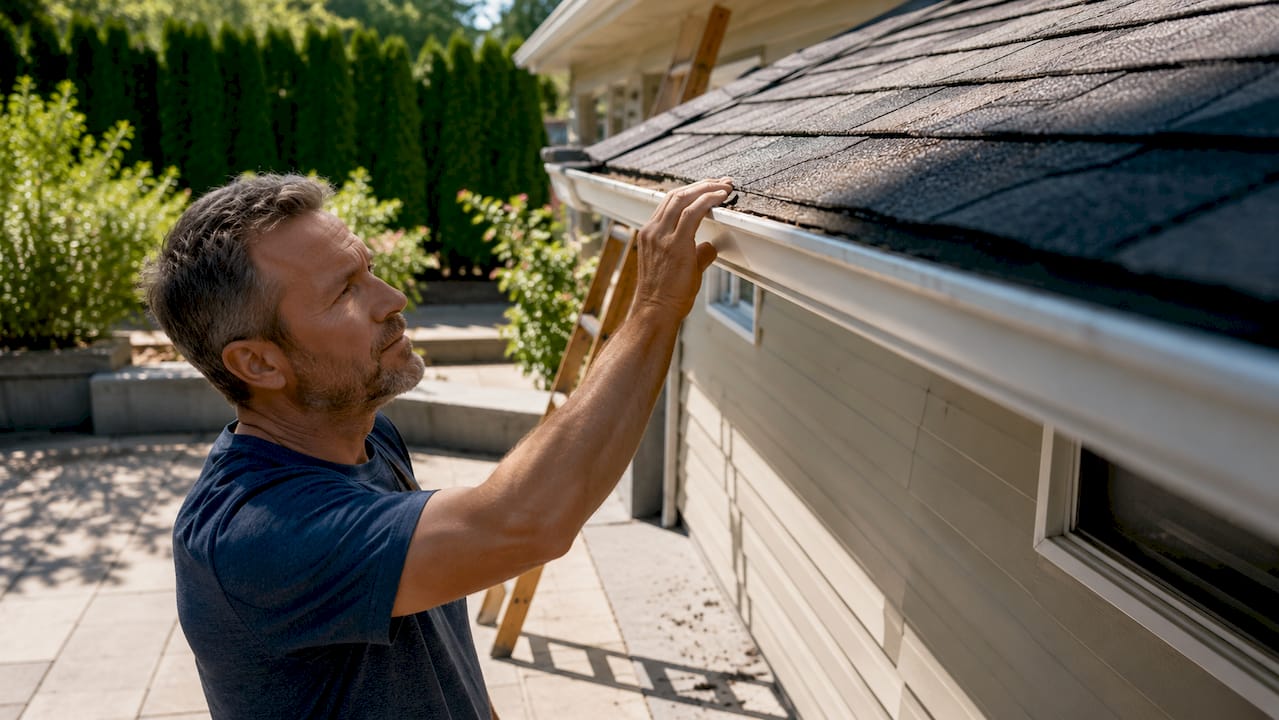
The most recognisable examples of shingle granule loss are visible without climbing onto the roof. Knowing where to look saves time and helps you act before small problems become expensive ones.
- Granule buildup in gutters and at downspouts. After a heavy rain, check your gutters. Granule buildup in gutters after storms is a meaningful wear indicator. The granules look like coarse, uniform sand, grey or black in colour, collecting in the gutter trough or washing out at the downspout base.
- Bald or shiny patches on shingle surfaces. Standing at ground level and looking up at a low-slope section, you may see patches that catch the light differently. Shiny metallic patches signal that the ceramic coating is mostly gone and rapid failure will follow.
- Curling or brittle shingle edges. Curling edges and dark staining often accompany granule loss and indicate advanced shingle damage. On North Vancouver roofs, these signs frequently appear before the manufacturer’s warranty expires.
- Dark streaks from moss and algae. Moss holds moisture against shingles and accelerates granule shedding by degrading the asphalt binder. The dark streaks you see on shaded north-facing slopes are a direct result of this process.
- Thinning at valleys and eaves. Roof valleys and eaves are the first spots to show severe granule loss because concentrated water flow and debris abrasion strip granules faster than on flat field shingles.
Pro Tip: Run your hand along a shingle edge near the eave after a dry spell. If you feel a rough, sandpaper-like texture, granules are still present. A smooth or slick surface means the coating is gone.
2. How North Vancouver’s climate drives granule loss faster
North Vancouver’s climate is not kind to asphalt shingles. The combination of persistent moisture, biological growth, and seasonal temperature swings creates conditions that strip granules far faster than in drier Canadian cities.
- Constant moisture and slow drying. Roofs in North Vancouver rarely get the extended dry periods that allow shingles to recover. Granule loss effects are more urgent here than in dry climates like Arizona because shingles stay wet, softening the asphalt binder that holds granules in place.
- Moss and algae pressure. Shaded slopes, particularly north-facing ones, accumulate moss year-round. Moss roots physically lift granules off the shingle surface while retaining moisture that speeds up chemical breakdown.
- Freeze-thaw cycles. In january and february, temperatures in North Vancouver fluctuate around freezing. Water trapped under granules expands and contracts, popping granules loose. This is especially visible in valleys and along eaves where ice can form.
- Wind-driven rain. Storms from the Pacific push rain sideways across roof surfaces. This lateral force wears granules off exposed edges and ridges at a much higher rate than vertical rainfall alone.
- Debris abrasion. Cedar trees and conifers common in North Vancouver drop needles, cones, and branches. This debris collects in valleys and on shingles, acting like sandpaper during wind events.
“In North Vancouver, the same level of granule loss that would give a homeowner in Calgary five more years on their roof can mean they need a replacement within two seasons. The moisture never lets up.”
Understanding how Vancouver’s rain affects roof lifespan puts the local urgency into perspective. Shingles that look acceptable in october can deteriorate sharply by march after a wet winter.
3. Top 5 situations where granule loss signals an urgent problem
Some granule loss is normal aging. These five scenarios are different. Each one points to a problem that needs a professional assessment soon.
- Ice dam damage in valleys. Granule loss localized to valleys after winter reflects acute mechanical damage from ice dams. Ice formations grind granules off the shingle surface beneath, leaving visible bald strips that expose the asphalt directly to spring rains.
- Moss-covered shaded slopes. A slope that is more green than grey has a serious problem. Moss growth on shaded slopes significantly increases granule shedding rate. By the time moss is thick enough to see from the ground, granule loss underneath is already advanced.
- Eaves and edges after wind storms. After a major Pacific storm, check the lower edges of your roof. Wind-driven rain strips granules from exposed eave shingles faster than any other section. Granule piles at the base of downspouts after a storm are a direct sign of this.
- Storm-damaged areas with missing shingles. When a shingle is dislodged or cracked by a falling branch, the surrounding shingles often lose granules from the impact. These adjacent shingles look intact but are compromised. A granule loss indicator like this signals that asphalt shingles are approaching the end of their lifespan.
- Areas near flashing and penetrations. Granule loss around chimneys, skylights, and vent pipes is a red flag. Water pools at these transitions, and the constant wet-dry cycle strips granules from shingles that are already under stress from flashing movement.
Pro Tip: After any major storm between october and march, do a quick ground-level walk around your property. Look at the downspout outlets and the base of the house. A fresh pile of sand-like granules means something significant happened on the roof above.
4. Chronic aging vs. acute injury: a comparison of granule loss types
Not all granule loss looks the same, and the difference matters for deciding whether you need maintenance or a full replacement. Here is a clear breakdown.
| Type | Visual signs | Typical location | Urgency |
|---|---|---|---|
| Chronic aging | Uniform thinning, faded colour across whole roof | Field shingles, entire slope | Plan replacement within 2–5 years |
| Acute injury | Localized bald spots, sharp edges, exposed black asphalt | Valleys, eaves, impact zones | Inspect and repair immediately |
| Moss-driven loss | Patchy loss under moss colonies, dark staining | Shaded north-facing slopes | Remove moss and assess urgency |
| Ice dam scouring | Bald strips along valley lines after winter | Valleys and lower eave edges | Inspect in spring, repair before next winter |
| Flashing zone loss | Granule loss in a ring around penetrations | Chimneys, skylights, vents | Inspect flashing and shingles together |
Uniform granule loss across a roof indicates chronic aging and approaching shingle end-of-life. Consistent thinning and fading suggests chemical breakdown rather than mechanical damage. Acute injury loss, by contrast, is concentrated and sharp-edged. It tells you something specific happened, and that spot is now the weakest point on your roof.
Understanding asphalt shingle lifespan in Vancouver helps you place your roof on that timeline and decide whether you are managing aging or repairing damage.
5. How to monitor and document granule loss on your North Vancouver roof
Monitoring granule loss does not require a ladder or special equipment. A consistent routine catches problems early and gives you solid documentation for insurance claims or contractor consultations.
- Inspect gutters after every major storm. Clean your gutters in the fall and again in spring. Look for sand-like granule accumulation. Persistent granule accumulation in gutters is a reliable indicator of roofing chemical failure, and it is often overlooked by homeowners.
- Do a ground-level visual check twice a year. Walk the perimeter of your home in good light, ideally on an overcast day when glare is reduced. Look for shiny patches, dark streaks, or colour inconsistencies on shingle surfaces.
- Distinguish granules from other debris. True granule loss debris is uniform and sand-like, whereas biological debris includes mixed shapes with asphalt chunks. If what you find in the gutter looks like coarse, consistent sand, it is granule loss. Fir needles and dirt look completely different.
- Photograph what you find. Take dated photos of gutter contents and any visible shingle damage. These photos are useful when talking to a roofing contractor and can support an insurance claim if storm damage is involved.
- Call a professional when you see shiny patches or valley bald spots. Ground-level checks have limits. A roofing professional can walk the roof safely, probe shingle flexibility, and assess whether you are dealing with isolated damage or widespread wear.
Pro Tip: Keep a simple folder on your phone with dated roof photos taken from the same spots each year. Year-over-year comparison is the fastest way to see whether granule loss is accelerating. If the shiny patches are noticeably larger than last year, it is time to call someone.
Reviewing roof life expectancy in BC alongside your own observations gives you a realistic sense of where your roof sits in its lifespan.
Key takeaways
Shingle granule loss in North Vancouver accelerates faster than in drier climates, making early identification of visual signs the most effective way to protect your roof investment.
| Point | Details |
|---|---|
| Gutters reveal the truth | Sand-like granule buildup in gutters after storms is the clearest early sign of shingle surface breakdown. |
| Location tells the story | Valleys, eaves, and shaded slopes show granule loss first due to concentrated water flow and moss pressure. |
| Chronic vs. acute matters | Uniform fading signals aging; localized bald spots signal mechanical damage needing immediate attention. |
| North Vancouver is higher risk | Constant moisture means the same granule loss that is manageable elsewhere leads to faster roof failure here. |
| Document and act early | Dated photos and regular gutter checks give you the evidence to plan repairs before leaks start. |
What I see on North Vancouver roofs that most homeowners miss
Hey, it’s Harman here. After inspecting roofs across North Vancouver for years, the pattern I see most often is homeowners who noticed something odd two or three years before they called us. They saw the granules in the gutter. They noticed a dark patch on the north slope. They just did not know what it meant.
The thing that surprises most people is how fast a roof can go from “looks a bit worn” to “actively leaking” in this climate. A shingle that has lost its granule coating does not get a chance to dry out and stabilize here. It stays wet, the asphalt softens, and by the next freeze cycle, you have cracking and curling that was not there six months ago.
The other thing I want property managers to hear is this: moss is not cosmetic. I have pulled back moss mats on North Vancouver roofs and found shingles underneath that crumble in your hand. The moss looked manageable from the street. The shingles were done. If you are managing a strata or a rental property, a shaded roof with visible moss needs a professional eye, not just a pressure wash.
My honest advice is to schedule a roof inspection every two years in North Vancouver, not every five. The climate earns that extra attention. And if you see bald spots in your valleys after this winter, do not wait until spring is over to deal with it.
— Harman
Paragonroofingbc can assess your North Vancouver roof
Paragonroofingbc works with North Vancouver homeowners and property managers who have spotted the signs and want a clear, honest assessment. Whether you are seeing granule buildup in the gutters, shiny patches on the shingles, or moss taking over a north-facing slope, the team at Paragonroofingbc can tell you exactly what you are dealing with and what it will take to fix it.

Paragonroofingbc offers local roof inspections tailored to the specific wear patterns common in North Vancouver’s wet climate. The team understands the difference between a roof that needs monitoring and one that needs action now. If you manage residential roofing in Vancouver or a nearby community, getting a professional set of eyes on your shingles before the next rainy season is the most practical step you can take.
FAQ
What does shingle granule loss look like in gutters?
Granule loss in gutters appears as a uniform, sand-like accumulation of small grey or black particles. True granules are consistent in size and shape, unlike fir needles or dirt, which look irregular.
Are valleys the first place granule loss shows up?
Roof valleys are typically the first area to show significant granule loss because concentrated water flow and debris abrasion strip granules faster than on flat field shingles. Bald strips along valley lines after winter often indicate ice dam scouring.
How urgent is granule loss on a North Vancouver roof?
Granule loss is more urgent in North Vancouver than in drier climates because constant moisture prevents shingles from drying out, accelerating asphalt breakdown after the ceramic coating is gone. Localized bald spots or shiny patches warrant a professional inspection promptly.
Can I tell the difference between normal aging and storm damage?
Chronic aging produces uniform, gradual thinning across the whole roof surface. Acute storm or ice damage produces localized bald spots with sharp edges, usually concentrated in valleys, eaves, or near impact zones.
How often should I check my roof for granule loss?
Inspect gutters after every major storm and do a ground-level visual check twice a year, in spring and fall. In North Vancouver’s climate, a professional roof inspection every two years is a practical standard for catching granule loss before it leads to leaks.
Recommended
Our Roofing Blog


Have more questions about roofing?
Check out our FAQs or give us a call today to speak to an expert roofer in Vancouver Lower Mainland, BC. We're here to help our neighbours make educated decisions about their roof. For our team, we value helping clients save money while making their roofs last.