
Residential Roofing Services in Delta – Reliable Roofing for Local Homes
PARAGON ROOFING BC
Protecting Your Home.
Building Your Family’s Future.

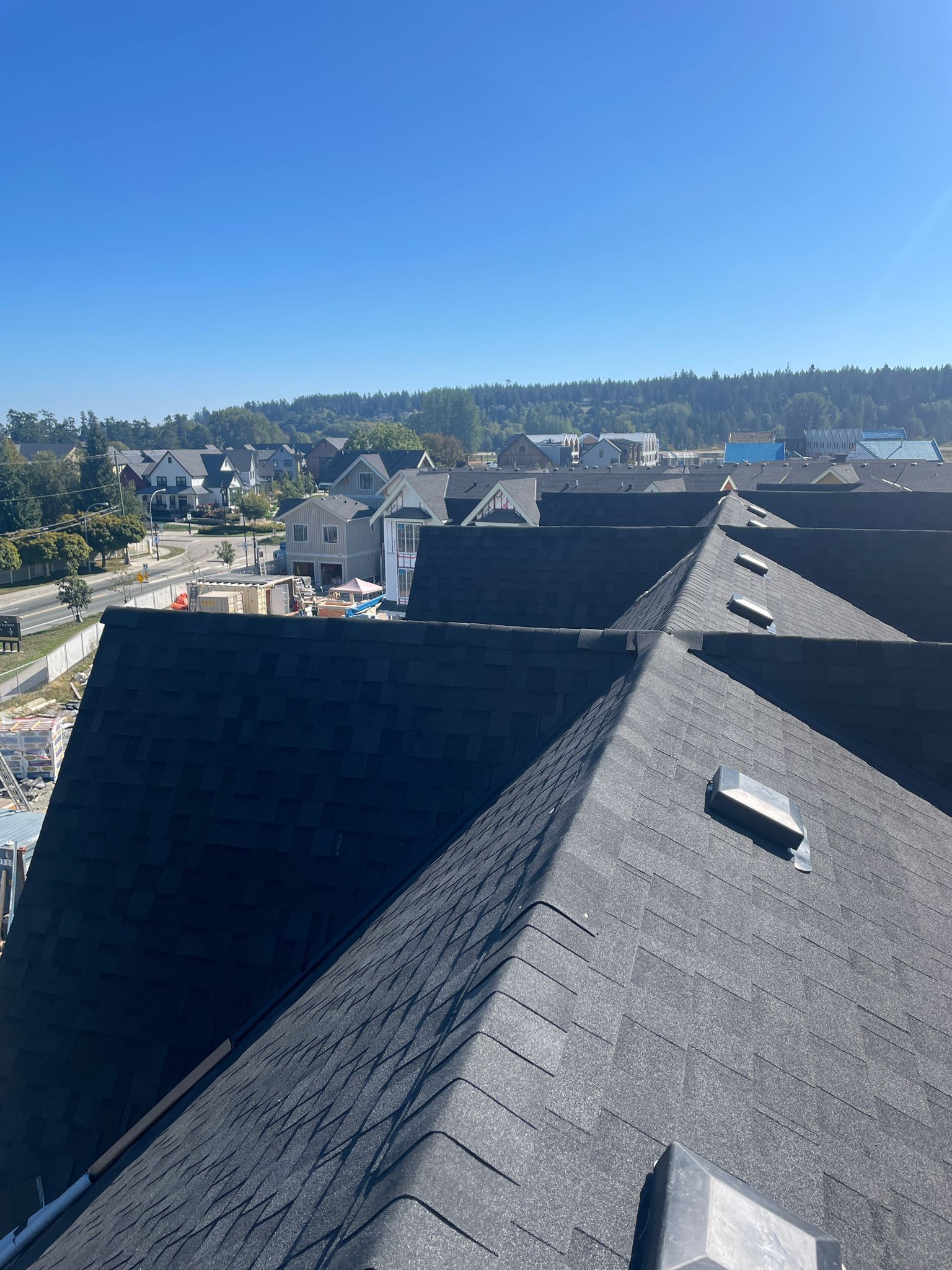
Residential roofing in Delta, BC
Residential roofing in Delta, BC isn’t just about shingles, underlayment, and nails — it’s about understanding how three very different micro-climates collide in one municipality. North Delta, Ladner, and Tsawwassen each present their own roofing challenges, shaped by wind corridors, ocean exposure, shade, moss growth, and the varied ages of the homes. A roof that performs well in Tsawwassen’s salt-heavy air won’t automatically thrive under the shaded canopies of North Delta, and a venting strategy that works in Ladner’s open fields may fall short in the dense neighbourhood pockets near Scottsdale. When Delta homeowners hire a roofer, they’re not just paying for labour; they’re paying for someone who understands these subtle but significant regional differences — and how they affect long-term roof durability.
Our residential roofing services are built around that reality. We treat every home as a unique combination of materials, structure, weather exposure, and homeowner goals. Whether it’s a simple repair, a full roof replacement, or a detailed inspection of a system installed 15–20 years ago, we take a clear, methodical approach grounded in what Delta roofs truly need to survive the next decade of West Coast weather.
Complete roofing services for Delta homeowners
Delta homeowners deserve roofing services that actually match the conditions their homes face — not generic recommendations copied from another city. The marine climate along the Boundary Bay shoreline brings more wind uplift, more UV exposure, and more salt-related material wear. Inland parts of North Delta deal with heavy tree coverage, deep shade, and longer periods of moisture retention, which dramatically speeds up moss growth and granule loss. That’s why our services span the full spectrum of what a homeowner might need, crafted with this hyper-local knowledge built in.
We begin with an inspection that doesn’t just look at shingles; it looks at airflow, attic temperatures, sheathing condition, moisture patterns, flashing integrity, and how the home’s architecture influences water movement. This lets us identify whether the roof needs a tune-up, a targeted repair, or a complete system overhaul. For some Delta roofs, a careful re-sealing of penetrations and a ventilation upgrade can add years of service life. For others — especially older homes in Annieville or Sunshine Hills — the plywood and underlay may be at the end of their life long before the shingles visibly fail.
Our goal is simple: give Delta homeowners clarity. No pressure tactics, no upselling. Just honest assessments and the roofing solution that fits the home’s actual condition.
Roof replacement, repairs, inspections and maintenance
Delta’s climate demands roofing work that’s not only technically correct but climate-aware. Roof replacements require attention to both the visible and hidden components — the underlayment chosen for moisture-heavy environments, the flashing details that control water flow during long rainfall events, and the ventilation pathways that keep the attic dry even during high-humidity winters. We replace roofs with durability in mind, selecting materials and installation methods that perform exceptionally well in Delta’s mix of marine air and prolonged wet seasons.
Repairs, on the other hand, need precision. Many Delta homes experience leaks not because the roof has failed overall, but because one detail was executed poorly years ago — a weak valley, an aging skylight curb, a misaligned flashing, or deteriorating pipe boots. Our repair work isolates the real cause, fixes it cleanly, and preserves the remaining roof life.
Inspections are another essential part of our service, especially for homeowners managing older roofs or planning future upgrades. A professional inspection in Delta can reveal early indicators of moisture intrusion, attic condensation, weak venting, or moss-related granule loss — issues that often go unnoticed until they become expensive.
Maintenance ties all of this together. With Delta’s moss pressure, unpredictable storms, and constant moisture cycles, proactive maintenance can easily extend a roof’s lifespan by several years.
Working in North Delta, Ladner, Tsawwassen and surrounding areas
Each part of Delta behaves like its own roofing ecosystem.
North Delta — Shade-heavy neighbourhoods with taller trees, multiple rooflines, and long periods of moisture retention. Here, ventilation and moss prevention aren’t optional; they’re the backbone of a long-lasting roof. Roofs need strong airflow and high-quality underlayments to combat trapped humidity.
Ladner — Open exposure and strong winds across flat landscapes create uplift challenges and drainage demands. Flashing integrity becomes critical, and cheaper materials wear down quickly under constant wind stress. Homes here benefit from secure fastening patterns and top-tier shingle systems.
Tsawwassen — Salt air, UV exposure, and wind make this one of the harshest roofing environments in the Lower Mainland. Materials age differently here. Metal, synthetic, and premium asphalt systems outperform budget options — and installation must be flawless to withstand storms and sea air.
We’ve worked extensively across all three regions, giving us an intimate understanding of how roofs fail, how they survive, and how to build systems that thrive long-term.
We're Excited To Serve YOU!
Paragon Res Roof #1
We will get back to you as soon as possible.
Please try again later.
Roof Replacement for Delta Homes
Replacing a roof in Delta isn’t just a matter of installing new shingles — it’s a matter of understanding how three distinct microclimates shape the lifespan, performance, and vulnerabilities of every roofing system. North Delta’s shaded subdivisions age differently than the wide-open fields of Ladner. Tsawwassen’s salt-air exposure breaks down materials at a pace that surprises homeowners who’ve never lived close to the ocean. A proper roof replacement in Delta requires a roofer who knows how these forces work, what they do to underlayments and plywood over time, and how to build a system that won’t just look new — but stay resilient through decades of wind, moisture, UV exposure, and coastal weather cycles.
A full roof replacement is one of the biggest investments a Delta homeowner will make, and the difference between a roof that lasts 12 years and one that lasts 30 often comes down to two things: the materials chosen and the detailing applied during installation. Flashing strategy, ventilation configuration, underlayment selection, and the quality of the tear-off process matter just as much as the shingles themselves. When you replace a roof in Delta, you’re not simply “re-roofing” — you’re rebuilding the outer shell that protects the structure of your home from some of the most weather-intense conditions in the Lower Mainland.
Signs your Delta home needs a full roof replacement
Delta’s weather provides very clear warnings when a roof system is nearing failure — if you know how to read them. Homeowners often notice the symptoms late: ceiling stains, attic moisture, or obvious missing shingles after a storm. But the real signs usually appear earlier and more subtly.
Granule loss on shingles, especially on the south-facing slopes, is a major early indicator. Delta’s mix of UV exposure and persistent moisture strips the granule layer faster than many homeowners expect, leaving the asphalt underneath unprotected. Moss growth is another serious signal: not just surface moss, but deep patches that lift shingles and hold water in place. In North Delta’s shaded streets, this often progresses quietly until the roof begins to rot from beneath.
Curling or cupping shingles are visual warnings that asphalt oils have dried out — often from age, poor ventilation, or excessive attic heat. In Ladner, high winds can break sealant bonds on older shingles, allowing uplift even when the roof still “looks” acceptable from the ground. Tsawwassen homes see additional stress: salt air accelerates shingle aging, corrodes exposed fasteners, and degrades cheaper metal components.
Inside the home, moisture in the attic, darkened plywood, mould growth along rafters, or frost in winter are all critical red flags. These are signs of ventilation problems, failing underlayments, or aging shingles no longer shedding water effectively. When multiple symptoms appear together, a full roof replacement becomes the safest, most cost-effective path forward.
Asphalt shingles, metal roofing and synthetic options
Choosing the right roofing material for your Delta home means understanding how each performs under coastal and inland conditions. Asphalt shingles remain the most popular choice because they balance affordability, durability, and aesthetic versatility. High-quality laminated shingles perform well in Delta, provided they’re installed with proper ventilation and high-performance underlayments to resist moisture intrusion.
Metal roofing, on the other hand, has become increasingly attractive for homes in Tsawwassen and Boundary Bay, where windstorms, UV exposure, and salty air can prematurely age asphalt systems. Metal offers superior longevity, storm resistance, and energy efficiency. It sheds rain effortlessly and handles low-slope sections better than many homeowners expect — provided the correct profile and gauge are selected.
Synthetic options — like composite shakes and rubber roofing — offer another layer of durability. These materials resist moss growth, maintain colour longer, and hold up exceptionally well under Delta’s freeze-thaw cycles. For homes surrounded by tall cedars or pines, synthetic systems can outperform traditional shingles and reduce long-term maintenance.
The best material is always the one that matches the home’s pitch, sun exposure, wind load, and homeowner goals. There is no universal answer — only the right answer for the specific Delta property.
Cedar shake roof replacement and cedar-to-asphalt conversions
Delta still has hundreds of homes built with cedar shake roofs, especially in older North Delta neighbourhoods. While beautiful, traditional cedar struggles in today’s climate. The region’s high moisture cycles, combined with modern forestry practices that produce faster-grown cedar, mean shake roofs no longer last as long as they once did. Many homeowners now reach the point where cedar replacement becomes unavoidable.
A full cedar shake replacement involves more than swapping material — it often requires removing old strapping, installing proper sheathing, upgrading ventilation, adding high-performance underlayment, and building a structural base strong enough for modern roofing systems.
Cedar-to-asphalt conversions are one of the most common projects in North Delta and Ladner. Homeowners love the improved durability, lower maintenance requirements, and broader colour/style options provided by modern asphalt roofing. When done correctly, these conversions dramatically improve energy efficiency, attic airflow, and long-term roof stability.
Synthetic shakes are another upgrade path, offering the heritage look of cedar without the rapid aging that Delta’s weather inflicts on natural wood. They’re especially popular in Tsawwassen, where wind and sun punish real cedar far more aggressively than inland neighbourhoods.
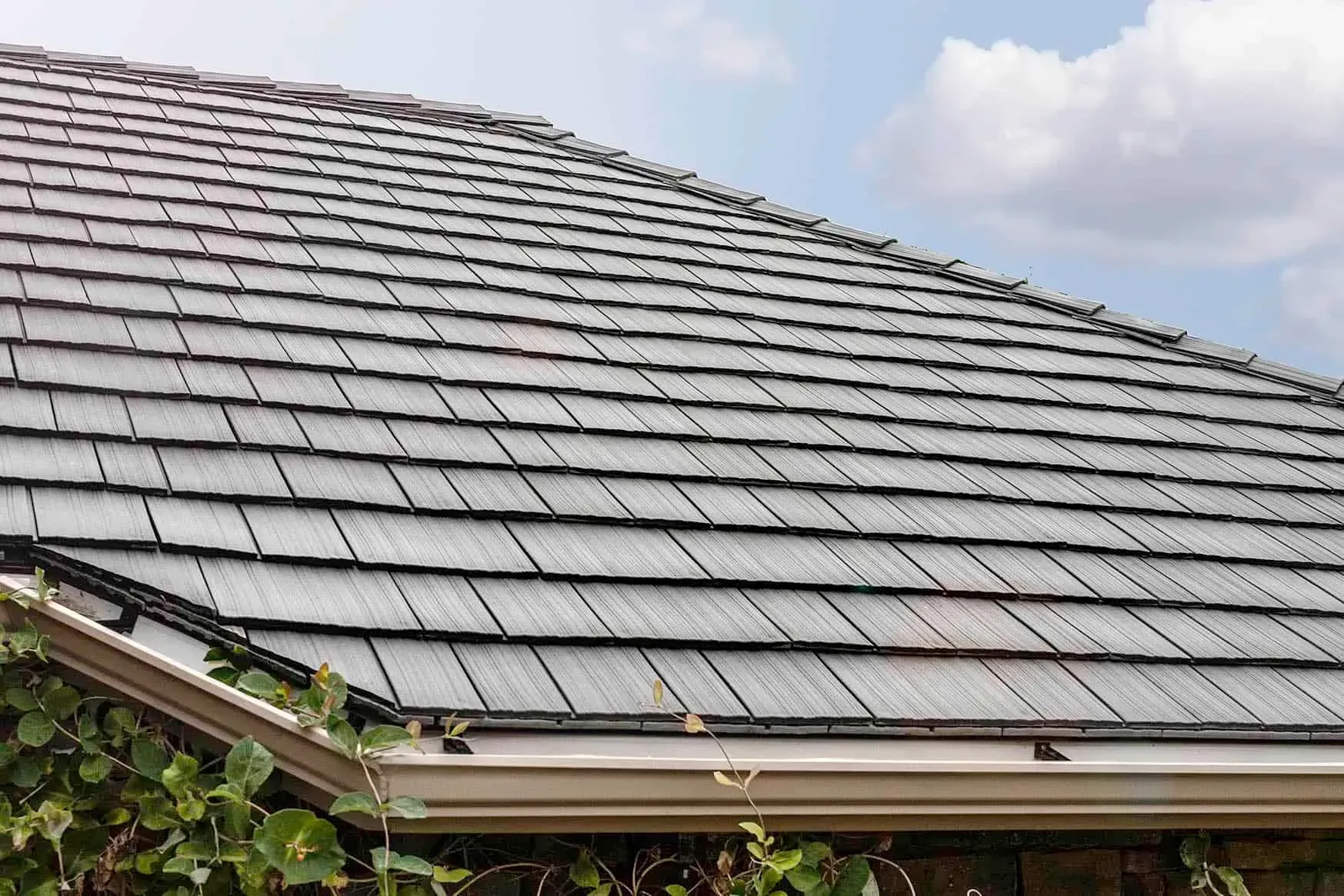
Roof Repairs & Leak Troubleshooting in Delta
Roof repairs in Delta demand a level of precision that goes far beyond “patching a leak.” The climate here exposes weak points mercilessly—persistent rain, long wet seasons, heavy moss zones, ocean wind, and architectural quirks all combine to create vulnerabilities that show up first around penetrations and transitions. A proper repair requires a roofer who knows how these failures develop, how moisture travels inside a roofing system, and how Delta’s micro-climates influence what kind of fix will actually hold. Whether the issue shows up after a storm, a slow attic leak, or a sudden drip during a winter downpour, the key is diagnosing the cause, not just the symptom.
Fixing leaks around chimneys, skylights, vents and walls
Most leaks in Delta don’t happen in the middle of the roof—they happen where different materials meet and where water is forced to change direction. Chimneys, skylights, plumbing stacks, wall junctions, dormers, and roof-to-wall transitions are the usual suspects. These features break the smooth path water would normally take, creating pockets where debris builds, water slows, and flashing becomes the only line of defense.
In Ladner and North Delta, older homes often have chimney flashings that were never updated when the last roof was replaced. Mortar cracks, loose counter-flashing, and deteriorated step flashing create a slow leak that can go unnoticed for months. Skylights—especially older acrylic domes—can leak from lifted curbs, failed gaskets, or improperly sealed flanges. Even vents, which seem simple, can turn into major leak sources when the rubber boots dry out or when wind-driven rain hits from a specific angle during a storm.
A real repair means removing shingles around the penetration, rebuilding the flashing system correctly, and ensuring the underlayment pathways are directing water downward, not trapping it. The goal isn’t just to stop today’s leak—it’s to eliminate the conditions that will cause the next one.
Emergency temporary repairs after storms or sudden leaks
Delta sees its share of fast-moving windstorms, especially along the Tsawwassen coastline, where gusts can rip shingles, open seams, and push water laterally into places it normally wouldn’t reach. When these events happen, a temporary repair is sometimes the only immediate option—tarping, sealing, and securing compromised sections to prevent further damage until the weather calms and permanent repairs can be performed.
Temporary fixes aren’t pretty, but they’re essential. A well-placed patch or emergency membrane can buy homeowners days or weeks of protection, preventing attic saturation, drywall damage, and expensive mould remediation. Once the weather stabilizes, we return to complete the proper repair—removing damaged shingles, assessing underlying plywood, and re-building the detail so it’s future-proof, not just weather-proof for the moment.
When a focused repair is enough vs when replacement is smarter
Delta homeowners often ask the same question: “Can we just repair it, or do we need a full replacement?” The answer depends on the roof’s age, the pattern of failure, the condition of the underlying structure, and the long-term cost implications.
A focused repair is usually enough when:
- The roof is under 15–18 years old and most shingles still have life left.
- The problem is isolated—one chimney, one vent, one valley, or one poorly flashed wall.
- Ventilation and attic conditions are healthy.
- The roof has no widespread granule loss or curling.
A full replacement becomes smarter when:
- Multiple leaks appear in different areas.
- Shingles are heavily weathered or brittle.
- Moss has lifted large sections of shingles.
- The underlayment is failing across wide areas.
- Repairs start adding up to the point where replacement becomes more cost-effective.
Delta’s climate is relentless. A good roofer reads the signs and gives you honest guidance—not a sales pitch—so you invest in the right solution at the right time.
Roofing Systems We Install on Delta Homes
Architectural asphalt shingles for most family homes
Architectural laminated shingles remain the most popular choice in Delta for good reason—they balance price, durability, appearance, and performance in wet climates. They handle wind well, stand up to moss better than 3-tab shingles, and offer strong manufacturer warranties when installed to spec. For North Delta’s tree-covered neighbourhoods, proper underlayment and ventilation are essential to keep attic humidity under control and prevent premature aging.
Metal roofing upgrades for long-term durability
Metal roofing is becoming increasingly common in Tsawwassen and Ladner, especially on homes looking for a 40–70+ year solution. Metal sheds rain and snow effortlessly, resists wind uplift, and performs extremely well under heavy UV exposure. It’s ideal for low-slope sections, complex rooflines, or homeowners who want a premium, long-term system with minimal maintenance. In salt-air environments, choosing the right gauge and coating is critical—something many cheaper installers overlook.
Synthetic shakes and slate for higher-end and character homes
For homeowners who want the aesthetic of cedar or natural slate without the downsides, synthetic roofing products offer exceptional performance. They resist moss, maintain colour for decades, and deliver a heritage look that suits many older North Delta and Ladner homes. These systems also weigh less than real slate or tile, making them structurally suitable for most homes without reinforcement. They’re a premium choice—but one that pays off in longevity and appearance.
Torch-on and membrane systems for flat & low-slope sections
Delta has many homes—especially in Tsawwassen and Ladner—with flat or low-sloped sections where shingles simply won’t perform. Torch-on and modern membrane systems are the standards in these areas. They provide watertight protection, withstand ponding, and handle the humidity swings that come with Delta’s climate. Installing these systems requires precision, proper base preparation, and knowledge of how water moves across low-slope transitions.
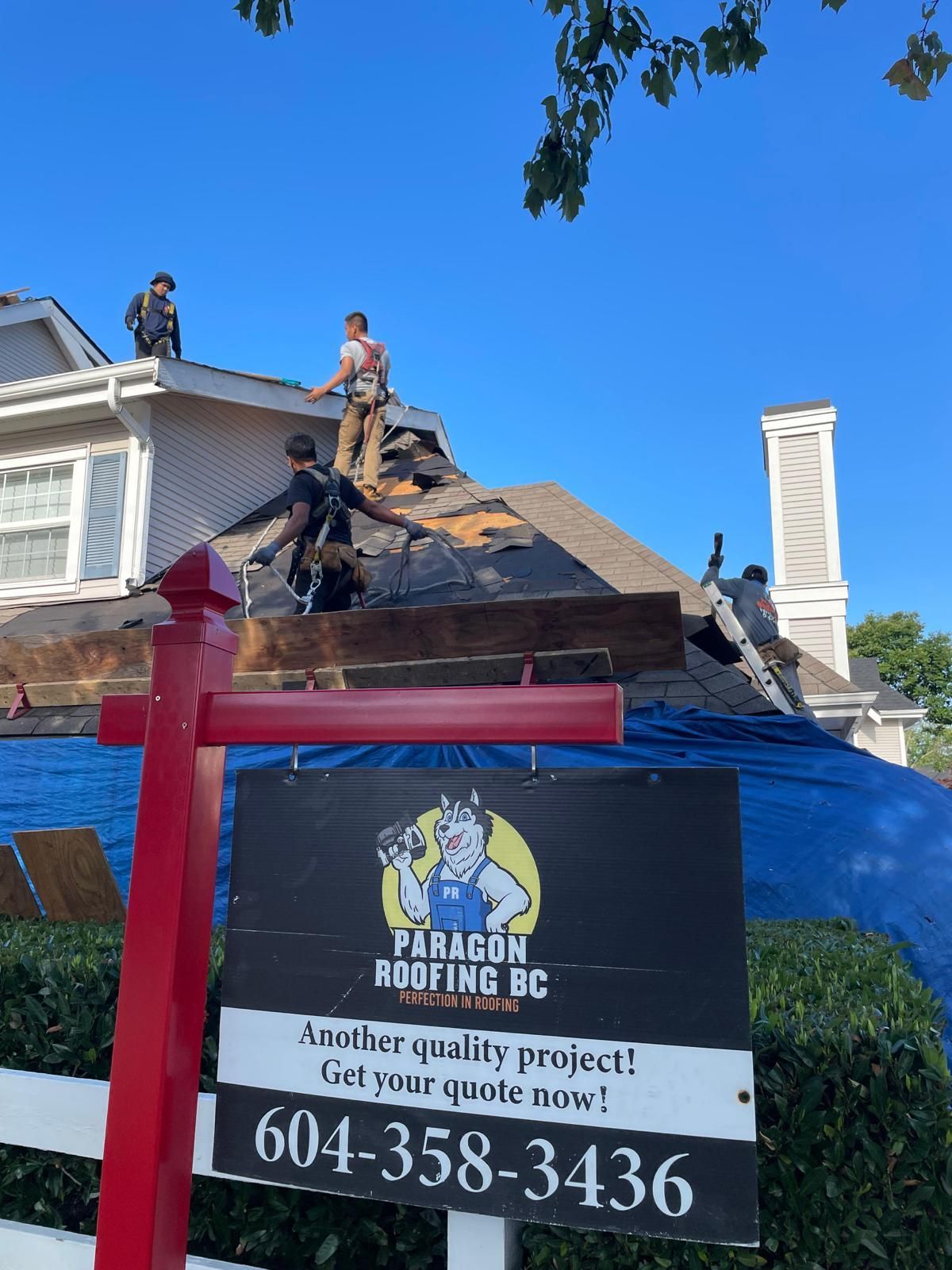


Cedar Shake Roofs & Cedar Conversions in Delta
Cedar shake roofs are a defining feature of many older homes in North Delta, Ladner and Tsawwassen—especially the properties built between the late 70s and early 2000s. Back then, cedar was considered the premium standard: natural, attractive, and capable of lasting decades when installed with high-quality old-growth wood. But today’s homeowners are facing a different reality. Modern cedar simply doesn’t perform the way older shakes once did, and Delta’s unique climate accelerates their aging in ways that surprise many homeowners.
North Delta’s tree-covered streets create long periods of shade, trapping moisture on cedar surfaces and giving moss the perfect conditions to take root. In Ladner, strong winds pull at aging shakes and allow water to slip beneath weakened layers. And Tsawwassen’s salt air, high UV exposure and coastal winds break down cedar faster than nearly anywhere else in the Lower Mainland. By the time a cedar roof reaches 20–25 years in Delta, it often shows signs of widespread fiber loss, cupping, thinning, and splitting—signals that the system is nearing the end of its safe lifespan.
Aging cedar roofs in North Delta, Ladner and Tsawwassen
Aging cedar follows a predictable pattern. The shakes lose thickness, becoming brittle and vulnerable to cracking. Moss forms dense clusters that lift shingles, holding moisture against the wood and accelerating decay. As cedar thins, the gaps widen and the roof becomes increasingly susceptible to wind-driven rain. Residents of Beach Grove and Boundary Bay often report leaks that appear suddenly during storms—because weakened cedar no longer repels water effectively.
In many cases, the most serious issues are hidden beneath the shakes. Years of moisture intrusion can cause plywood rot, inadequate ventilation can trap attic humidity, and poor insulation from older builds can create condensation cycles that mimic roof leaks. By the time a homeowner notices ceiling staining, the underlying structure is often in worse condition than the cedar itself.
Converting cedar to asphalt, metal or synthetic “cedar-look” systems
As aging cedar becomes harder to justify—both in cost and performance—Delta homeowners increasingly choose cedar-to-asphalt conversions or upgrades to metal or synthetic shake systems. Each option serves a different purpose.
Asphalt shingles remain the most cost-effective and practical choice for most Delta families. Modern architectural shingles outperform older cedar systems in durability, wind resistance and water shedding. They also pair perfectly with improved underlayments, ice and water membranes, and modern ventilation systems.
Metal roofing is growing popular in Tsawwassen and ocean-exposed areas because of its long lifespan, exceptional wind resistance, and ability to shed water instantly during heavy rains. For homeowners wanting a premium, long-term solution, metal is one of the best conversions from cedar.
Synthetic shakes offer the closest appearance to real cedar while eliminating the weaknesses of natural wood. These systems resist UV degradation, moss growth, rot and cracking. In Nordel and Sunshine Hills—where homeowners want to maintain a heritage aesthetic—synthetic cedar-look systems strike the perfect balance between performance and style.
Replacing rotten plywood, fixing ventilation and upgrading details
A real cedar conversion is more than switching materials. Cedar roofs are typically installed on spaced sheathing or skip boards, which means the structure must be rebuilt before asphalt, metal or synthetic products can be installed. This includes:
- Installing full plywood decking
- Replacing sections with rot or delamination
- Adding modern underlayments designed for the rainy Delta climate
- Upgrading attic ventilation to meet current standards
- Ensuring proper intake and exhaust airflow
- Rebuilding flashing systems around chimneys, skylights and transitions
These upgrades transform the roof from a vulnerable old cedar system into a modern roofing assembly designed to handle wet seasons, strong winds and Delta’s long moisture cycles.
Our Residential Roofing Process in Delta
On-site roof and attic inspection with photos and report
Every project begins with a detailed assessment—both above and below the roof. We examine shingle condition, flashing integrity, plywood health, venting pathways and moisture levels. Attic inspections reveal the story the roof can’t always tell from the outside: humidity patterns, insulation gaps, mold risk, ventilation problems and signs of long-term leaks. Homeowners receive clear photos and a written summary so they know exactly what’s happening.
Clear written quotes with scope, materials and options
Delta homeowners appreciate transparency, especially when roofing involves structural considerations. Our quotes outline every component: tear-off, plywood needs, underlayment, flashing upgrades, venting corrections and material choices. We provide options so homeowners can choose between good, better and best solutions depending on their budget and long-term plans.
Tear-off, deck repairs and underlayment installation
A proper tear-off is controlled, clean and methodical. We remove old materials, expose the deck, check every square foot for rot, and replace damaged plywood. Once solid, we install moisture-resistant underlayment designed for Delta’s rain-heavy climate, ensuring every valley, penetration and edge has the right protection.
Flashings, ventilation upgrades and detail work done right
Details are where roofs fail—and where great roofing stands apart. We rebuild flashings, reinforce transition points, upgrade attic ventilation, and install materials according to manufacturer specifications. By addressing airflow and moisture management, we ensure the roof performs long after installation.
Cleanup, magnet sweep and final walkthrough with the homeowner
We leave every Delta home cleaner than we found it—full debris removal, magnet sweeps for nails, and a careful check of landscaping and pathways. Finally, we walk the homeowner through the finished system, explain upgrades, show photos, and answer every question. The result is confidence, clarity and a roof built to last.
Let's Chat Roofing!
Paragon Res Roof #2
We will get back to you as soon as possible.
Please try again later.
Roof Ventilation & Attic Health for Delta Homes
Roof ventilation is one of the most misunderstood components of residential roofing in Delta — yet it’s the invisible force that determines whether a roof lasts 12 years or 30. Delta’s climate creates the perfect storm for attic problems: long wet seasons that trap moisture, cold snaps that freeze condensation, and warm summers that overheat upper floors. Without proper intake and exhaust ventilation, roofs in North Delta, Ladner and Tsawwassen experience premature aging, mold, plywood rot and dramatic temperature swings that affect the entire home. Good ventilation isn’t optional here; it’s essential for performance, comfort and long-term durability.
Solving hot rooms, moisture and frost in the attic
Homeowners often describe symptoms before they realize the cause: one bedroom that’s always hotter, moisture on attic nails, “damp attic smell,” or frost forming during winter cold spells. These aren’t random problems — they’re ventilation failures.
In North Delta, shaded roofs and dense tree cover keep attics cool but damp, especially when warm indoor air pushes into the attic and has nowhere to escape. In Ladner, wide-open roofs can heat quickly in summer, causing severe attic heat buildup. And in Tsawwassen, coastal humidity mixes with UV exposure to create dramatic temperature fluctuations. If the attic can’t breathe, moisture condenses on cold surfaces, turning into frost and eventually dripping back into insulation or onto ceilings.
Proper ventilation reduces these risks by allowing continuous airflow. Fresh air enters low (through soffits or intake vents) and exits high (through ridge vents or roof vents). This movement equalizes the attic temperature, removes trapped humidity, and prevents the freeze–thaw cycles that destroy plywood over time.
Ridge vents, roof vents and intake ventilation balanced properly
Many Delta roofs have vents — but not balanced ventilation. A roof with too many exhaust vents and not enough intake can actually pull conditioned air from inside the home, worsening both energy loss and moisture issues. A roof with too much intake and weak exhaust traps warm air inside. The key is balance.
Ridge vents are ideal for many Delta homes because they provide continuous exhaust along the entire roof peak. However, they only work if paired with strong intake vents at the eaves. Traditional roof vents are still effective in certain roof designs, especially where ridges are short or broken by architecture. In older homes where soffits are blocked by paint or insulation, intake vents must be opened or added to restore airflow.
A balanced system prevents ice buildup, reduces attic temperature spikes, and ensures shingles are not overheated from underneath — a major factor in premature aging.
How better ventilation extends shingle life in Delta’s climate
Ventilation directly affects shingle lifespan. When an attic overheats, shingles bake from below, causing them to lose oils, curl prematurely and shed granules faster. When an attic stays damp, plywood rots, nails rust, and mold forms — all issues that weaken the structural deck and shorten the lifespan of the entire roof system.
In Delta’s damp coastal climate, good ventilation provides three major benefits:
- Cooler attic temperatures in summer prevent asphalt softening and granule loss.
- Lower humidity year-round protects plywood, underlayment and insulation.
- Fewer freeze–thaw cycles during winter reduce stress on materials and nails.
A properly ventilated roof lasts longer, performs better, and holds its warranty conditions more reliably.
Residential Roofing for Delta Townhomes & Duplexes
Roofing services for duplexes, fourplexes and small strata sites
Delta’s multifamily homes — duplexes, triplexes, fourplexes and small strata complexes — require specialized planning. These buildings often share roof surfaces, drainage paths, and ventilation systems, meaning a repair or replacement affects more than one household. Older townhomes in North Delta often have mixed low-slope and pitched sections that demand both shingle and membrane expertise. Meanwhile, Ladner and Tsawwassen complexes frequently deal with aging skylights, failing flashings and membrane transitions that must be addressed as a whole system.
We tailor our approach to these unique configurations, ensuring the entire roof is addressed cohesively rather than piecemeal.
Coordinating with owners, property managers and councils
Multifamily roofing succeeds only when communication is clear. We coordinate directly with owners, property managers, and strata councils to review findings, prepare options and set expectations. That includes photo reports, written scopes, material recommendations and scheduling considerations for residents. Whether the project is a full replacement or targeted repairs, everyone gets clarity on timelines and impact.
Phasing work to reduce disruption to residents and parking
Townhome and duplex projects must be staged carefully. Parking access, visitor spots, walkways, pet areas and noise windows all factor into planning. Phased work allows residents to maintain normal routines, ensuring sections are completed in manageable stages without overwhelming the property. This approach is especially useful in dense complexes like those found throughout North Delta and Ladner.
Residential Roofing Costs in Delta
What drives pricing – roof size, pitch, access and material choice
Delta’s roofing costs follow clear patterns. Roof size, roof pitch and accessibility remain the primary drivers. Steeper roofs — common in North Delta — require slower, more technical labour. Homes with difficult access, tight driveways, heavy landscaping or limited disposal routes affect pricing as well. Material type also has a major impact: asphalt shingles remain the most cost-efficient, while metal and synthetic systems sit at the higher end due to their longevity and installation precision.
Budget ranges for roof replacement vs major repairs
A full roof replacement generally involves tear-off, plywood evaluation, underlayment, new vents, flashings and the chosen roof system. This is significantly different from targeted repairs, which address specific issues like skylight leaks, failing valleys or chimney flashing breakdowns. Repairs can range from small interventions to more complex structural corrections. Choosing wisely depends on the age of the roof, the pattern of failures and the long-term goals of the homeowner.
Why choosing the right system matters in Delta’s wet, coastal climate
Delta’s coastal weather punishes weak roofing systems. Constant moisture, windstorms, long rainy seasons and ocean exposure in Tsawwassen all accelerate wear. The right roofing system — properly ventilated, properly flashed and built with durable materials — pays for itself through longevity and protection. Cheap materials fail fast here; smart choices endure.
Where We Go.
Proudly serving our local community & focused on being the best Vancouver roofers possible.
Vancouver
Acadia Park, Arbutus Ridge, Burrard Indian Reserve, Cambie, Capilano Indian Reserve 5, Cedar Cottage, Champlain Heights, Chinatown, Coal Harbour, Collingwood, Commercial Drive, Creekside, Davie Village, Downtown, Downtown Eastside, Downtown South, Downtown Vancouver, Dunbar Southlands, East Hastings, English Bay, Fairview, False Creek Flats, False Creek North, False Creek South, Fraser, Fraserview, Gastown, Grandview - Woodland, Granville, Granville Entertainment District, Granville Island, Greektown, Hastings - Sunrise, Hastings Crossing, Hastings East, Hillcrest, Historic Japan Town, Hogans Alley, Kensington - Cedar Cottage, Kerrisdale, Killarney, Kits Point, Kitsilano, Knight, Langara, Little Ginza, Little India, Little Mountain, Lost Lagoon, Lower Hudson, MacKenzie Heights, Main, Marpole, Metro Vancouver, McMillan Island 6, Mole Hill, Mount Pleasant, Mt. Pleasant, Musqueam, Musqueam Indian Reserve 2, Norquay Village, North Vancouver, Oak, Oakridge, Olympic Village, Quilchena, Renfrew - Collingwood, Renfrew Heights, Riley Park, Seymour Creek Indian Reserve, Shaughnessy, Shaughnessy Heights, South Cambie, South False Creek, South Granville, South Hill, South Vancouver, Southlands, Southwest Marine, Stanley Park, Stanley Park Subdivision, Strathcona, Sunrise, Sunset, The Drive, Tsawwassen Indian Reserve, University Endowment Lands, University Hill, Victoria - Fraserview, West Broadway, West End, West Point Grey, West Vancouver, Westbrook Village, White Rock, Woodland, Yaletown - Stadium District
West Vancouver
Altamont, Ambleside, Ambleside Beach, Bayridge, British Properties, Cammeray, Canerbury, Caulfeild, Cedardale, Chartwell, Chelsea Park, Cypress, Cypress Bowl, Cypress Park, Cypress Park Estates, Deer Ridge, Dundarave, Dundarave Village, Eagle Harbour, Eagle Ridge, Furry Creek, Gleneagles, Glenmore, Horseshoe Bay, Howe Sound, Lions Bay, Olde Caulfeild, Panorama, Panorama Village, Park Royal, Porteau Cove, Queens, Rockridge, Sandy Cove, Sentinel Hill, Sunset Beach, Upper Caulfeild, Upper Levels Highway, Wentworth, West Bay, Westhill, Westmount, Whitby Estates, Whytecliff
North Vancouver
Blueridge, Boundary, Braemar, Canyon Heights, Capilano, Carisbrooke, Cedar Village, Central Lonsdale, Central Lynn, Cleveland, Cove Cliff, Deep Cove, Delbrook, Dollarton, Edgemont Village, Grand Boulevard, Grouse Woods, Handsworth, Highlands, Indian River, Keith Lynn, Kirkstone, Lions Gate, Lower Capilano, Lower Capilano Marine, Lower Lonsdale, Lower West Lynn, Lynn Canyon, Lynn Creek, Lynn Valley, Lynn Valley Centre, Lynnmour North, Lynnmour South, Mahon, Main Street, Maplewood, Marine-Hamilton, McCartney Woods, Mission IR#1, Moodyville, Norgate, Northlands, Norwood Queens, Parkgate, Parkway, Pemberton Heights, Riverside East, Riverside West, Roche Point, Seymour Heights, Tempe, Upper Capilano, Upper Delbrook, Upper Lonsdale, Upper Lynn, Upper West Lynn, West Lynn Terrace, Westview, Windridge, Windsor Park
Port Moody
April Road, Barber Street, Belcara, College Park, Coronation Park, Glenayre, Harbor Heights, Heritage Mountain, Heritage Woods, Inlet Centre, Ioco, Moody Centre, Mountain Meadows, Noons Creek, North Shore, Pleasantside, Port Moody Centre, Seaview, Twin Creeks
Lions Bay
Alberta Bay, Kelvin Grove, Brunswick Beach, Oceanview Road, Panorama Road, Bayview, Sunset Drive, Stewart Road
Pitt Meadows
Central Pitt Meadows, North Pitt Meadows, Pitt Meadows City Centre, Pitt Polder, West Pitt Meadows
Bowen Island
Apodaca Park, Arbutus Point, Artisan Square, Bluewater, Bowen Bay, Cates Hill, Collins Road, Cove Bay, Cowan Point, Davies Orchard, Deep Bay, Eagle Cliff, Fairweather, Fairweather Point, Galbraith Bay, Grafton Bay, Hood Point, Hood Point West, Josephine Lake, King Edward Bay, Miller's Landing, Mount Gardner, Mt Gardner, Ocean view, Queen Charlotte Heights, Scarborough, Sealeigh Park, Seven Hills, Seymour Bay/Alder Cove, Snug Cove, Snug Point, Sunset Park, Sunset Park Estates, The Cape, The Holdings, The Valley, Timber Grove, Tunstall Bay, Union Bay, Valhalla, Village Square
Delta
Annieville, Beach Grove, Boundary Beach, Cliff Drive, Delta Manor, East Delta, English Bluff, Hawthorne, Holly, Ladner, Neilson Grove, Nordel, Pebble Hill, Port Guichon, Scottsdale, Sunshine Hills, Tsawwassen Central, Tsawwassen East, Tsawwassen North, Annacis Island, Ladner Village, Holly Park, Ladner Rural, Westham Island, Ladner Central, Marina Garden Estates, Canoe Pass Village, Country Woods, Elliot, Riverside Industrial Park, Whitelaw, Mountain View, Tilbury Industrial Park, Tilbury North, Tilbury East, Westridge Industrial Park, Delta Heritage Airpark, Delta Port Industrial Park, Tilbury Business Park, West Ladner Industrial Park, Tilbury Auto Mall, Tsawwassen Heights, Boundary Bay, Tsawwassen Shores, Annacis Island Industrial Park, Kennedy, Sunshine Woods, The Highlands, Imperial Village, Forest-by-the-Bay, Sunbury
Belcarra
Belcarra Village, Belcarra Bay, Bedwell Bay, Coombe, Cosy Cove, Woodhaven, Belvedere, Twin Islands
Surrey
Alluvia, Aloha Estates, Amble Green, Anniedale - Tynehead, Bear Creek Green Timbers, Campbell Heights, Clayton, Cloverdale, Cloverdale Town Centre, Crescent Beach, Crescent Beach – Ocean Park, Douglas, East Clayton, East Clayton North, East Clayton West, East Newton, East Newton North, East Newton South, East Panorama Ridge, Elgin, Elgin - Chantrell, Elgin Chantrell, Fleetwood, Fleetwood Enclave, Fleetwood Town Centre, Fraser Heights, Grandview Heights, Guildford, Guildford Town Centre, Highway 99 Corridor, King George Corridor, Morgan Creek, Morgan Heights, Mud Bay, Newton, Newton Town Centre, North Cloverdale East, North Cloverdale West, North Grandview Heights, North Surrey, Ocean Park, Orchard Grove, Panorama Ridge, Queen Mary Park, Rosemary Heights Central, Rosemary Heights West, Saint Helen’s Park, Semiahmoo Town Centre, South Newton, South Port Kells, South Surrey, South Westminster, South Westminster Heights, Sullivan, Sunnyside Heights, Surrey Metro Centre, Surrey Newton, West Clayton, West Cloverdale North, West Cloverdale South, West Newton, West Newton - Highway 10, West Newton North, West Newton South, Whalley
Richmond
Aberdeen Village, Acheson-Bennett, Ash Street, Boyd Park, Boyde Park, Brideport Village, Bridgeport, Brighouse, Brighouse South, Brighouse Village, British Columbia Packers, Broadmoor, Capstan Village, Central West, Dover Crossing, East Cambie, East Livingstone, East Richmond, Garden City, Gilmore, Golden Village, Granville, Hamilton, Historic Steveston Village, Ironwood, Lackner, Lansdowne Village, Laurelwood, London - Princess, McLennan, McLennan North, McLennan South, McNair, Mitchell Island, Moffatt, North Granville, Oval Village, Quilchena, Riverdale, Saunders, Sea Island, Seafair, South Arm, St Albans, Steveston North, Steveston South, Steveston Village, Sunnymeade North, Terra Nova, West Cambie, Westwind, Woodwards
Burnaby
Ardingley-Sprott, Big Bend, Brentwood, Brentwood Park, Buckingham Heights, Burnaby Heights, Burnaby Lake, Capitol Hill, Cariboo, Cariboo-Armstrong, Cascade-Schou, Central Burnaby, Central Park, Clinton-Glenwood, Deer Lake, Deer Lake Place, Douglas-Gilpin, East Burnaby, Edmonds, Englewood Mews, Forest Glen, Forest Hills, Garden Village, Government Road, Highgate, Kingsway-Beresford, Lake City, Lakeview-Mayfield, Lochdale, Lougheed, Lyndhurst, Marlborough, Maywood, Metrotown, Montecito, Morley-Buckingham, North Burnaby, Oakalla, Oaklands, Parkcrest, Parkcrest-Aubrey, Richmond Park, Second Street, Simon Fraser Hills, Simon Fraser University, South Burnaby, South Slope, Sperling-Broadway, Sperling-Duthie, Stride Avenue, Stride Hill, Sullivan Heights, Suncrest, Sussex-Nelson, The Crest, Upper Deer Lake, Vancouver Heights, West Central Valley, Westridge, Willingdon Heights, Windsor
Langley & Langley Township
Aldergrove, Alice Brown, Anderson Creek, Bedford Landing, Belair Estates, Bell Park, Blacklock, Brookswood, Brookswood Homes, Brookswood-Fernridge, Campbell Valley, Campvell Valley, Carvolt, Carvolth, Cedar Ridge, Cedar Ridge Estates, Civic Center District, Country Line Glen Valley, Country Woods, County Line Glen Valley, Derby Hills, Douglas, Downtown Langley, Eaglecrest, East Brookwood, Entertainment District, Fairview Estates, Fern Ridge, Fern Ridge Park, Fernridge East, Fernridge Estates, Fernridge Meadow, Fernridge North, Fernridge Place, Fernridge South, Fernridge West, Forest Hills, Forest Knolls, Fort Langley, Fraserview, Glen Valley, Glen Valley Estates, Glen Valley Farms, Glen Valley North, Glen Valley Regional Park, Glen Valley South, Glen Valley Terrace, Glen Valley Woods, Gloucester, Gloucester Industrial Estates, Gould / Poplar Grove, Grasslands, Greenwood Estates, High Point, Hopington, Jericho, Jericho Ridge, Kensington Circle, Langley City, Langley Meadows, Langley Meadows Park, Logan Creek, Manor Park, Meadowbrook, Milner, Milner Heights, Milner Village, Mossey Estates, Mount Lehman, Murray's Corner, Murrayville, Murrayville Village, Newlands, Nicomeki, Nicomekl, North Blackburn, North East Gordon, North Otter, North West Yorkson, Northwest Langley, Otter, Otter District, Park Avenue, Poppy Estate, Port Kells, Routley, Salmon River, Salmon River Area, Salmon River Estate, Salmon River Heights, Salmon River Meadows, Salmon River Place, Salmon River Ranch, Salmon River Road, Salmon River Uplands, Simonds, Smith, South East Gordon, South Langley, South Thornton, South West Murrayville, Strawberry Hills, Surrey Bend, Tall Timbers, Trinity, Trout Lake, Uplands, Uplands / Latimer Heights, Upper Murrayville, Walnut Grove, Walnut Grove Estates, Walnut Grove Park, Walnut Ridge, West Latimer, West Willoughby, Williams, Willoughby, Willoughby - Willowbrook, Willoughby Central, Willoughby East, Willoughby Heights, Willoughby Park, Willoughby West, Willow Edge, Willowbrook, Willowbrook Estates, Willowbrook Gardens, Willowbrook Gate, Yorkson
Aldergrove
Aldergrove North, Aldergrove South, Alderwood Manor, Bertram Estates, Cedar Park Estates, Creekside Villas, Lions Grove Estate, Northeast Aldergrove, Parkside Village, Southwest Aldergrove, Twin Firs, Willow Creek Estates
Anmore
Alder Way, Alpine Drive, Anmore Creek Way, Barber Street, Bedwell Bay Road, Birch Winde, Black Bear Way, Blackberry Drive, Buntzen Creek Road, Canterwood Court, Charlotte Crescent, Chestnut Crescent, Creekside Place, Crystal Creek Drive, Deerview Lane, Dogwood Drive, Eaglecrest Drive, East Road, Elementary Road, Evergreen Crescent, Fern Drive, Fir Court, Forestview Lane, Hemlock Drive, Heron Way, Highland Crescent, Hummingbird Drive, Lancaster Court, Lanson Crescent, Ludlow Lane, Ma Murray Lane, Madley Place, Magnolia Way, Mainland Road, Maple Court, Mountain Ayre Lane, None, Oak Court, Pondside Road, Pumphouse Road, Ravenswood Drive, Robin Way, Seymour View Road, Sparks Way, Spence Way, Strong Road, Sugar Mountain Way, Summerwood Lane, Sunnyside Road, Sunset Ridge, Thomson Road, Uplands Drive, Valley Crescent, Westridge Lane, Wollny Court, Wyndham Crescent
Maple Ridge
Albion, Cottonwood, East Central Maple Ridge, East Haney, Hammond, Haney, North Maple Ridge, Northeast Maple Ridge, Northwest Maple Ridge, Port Haney, Ruskin, Silver Valley, Southwest Maple Ridge, The Ridge, Thornhill, Webster’s Corners, West Central Maple Ridge, Whonnock, Yennadon
Mission
Cedar Valley, Dewdney Deroche, Downtown Mission, Hatzic, Hemlock, Lake Errock, Mission, Mission West, Silverdale, Silverhill, Squamish Nation, Stave Falls
Coquitlam
Anmore, Austin Heights, Burke Mountain, Canyon Springs, Cape Horn, Central Coquitlam, Chineside, Coquitlam East, Coquitlam West, Eagle Ridge, East Coquitlam, Harbour Chines, Harbour Place, Heritage Woods, Hockaday, Laurentian Belaire, Lincoln Park, Lower Hyde Creek, Maillardville, Meadow Brook, Meadow Brooks, Mary Hill, New Horizons, North Coquitlam, Oxford Heights, Park Ridge Estates, Partington Creek, Ranch Park, River Heights, River Springs, Scott Creek, Smilling Creek, Summit View, The Foothills, Town Centre, Upper Eagle Ridge, Upper Hyde Creek, Westwood, Westwood Plateau, Westwood Summit
Port Coquitlam
Birchland Manor, Central Port Coquitlam, Citadel, Glenwood, Lincoln Park, Lower Mary Hill, Mary Hill, Oxford Heights, Riverwood, Sun Valley, Woodland Acres
Abbotsford
Abbotsford Centre, Abbotsford East, Abbotsford West, Aberdeen, Arnold, Auguston, Babich, Bateman, Bradner, Central Abbotsford, Clayburn, Clearbrook Centre, Downes, Eagle Mountain, East Abbotsford, East Townline, Fairfield, Huntingdon, Kilgard, Lower Ten Oaks, Matsqui, Matsqui Prairie, Matsqui Village, McMillan, Mill Lake, Mount Lehman, North Clearbrook, North Poplar, Old Clayburn, Pepin Brook, Poplar, Sandy Hill, South Clearbrook, South Poplar, Straiton, Straiton - Auguston, Sumas Mountain, Sumas Prairie, Townline Hill, University District, Upper Ten Oaks, West Abbotsford, West Clearbrook, West Townline, Whatcom
New Westminster
Brow of the Hill, Brunette Creek, Connaught Heights, Downtown New Westminster, Eastburn, Glenbrooke North, Glenbrooke South, Kelvin, North Arm North, North Arm South, Queen's Park, Queensborough, Sapperton, Uptown, Victory Heights, West End
White Rock
Marine Drive, Town Centre Commercial Area, Town Centre Residential Area, Lower Town Centre, West Beach Business Area, East Beach Business Area, Terry Road, Malabar, Blackburn, Coldicutt, Landcaster, Cory, North Bluff, Chestnut, Bergstrom
Chilliwack
Atchelitz, Barrowtown, Bridal Falls - Popkum, Camp River, Chilliwack Lake/Radium Valley, Chilliwack Mountain, Chilliwack Proper Village West, Chilliwack River Valley, Columbia Valley, Cultus Lake, Downtown Chilliwack, East Chilliwack, East Young-Yale, Eastern Hillsides, Evans, Fairfield, Fairfield Island, Garrison Crossing, Greendale, Little Mountain, Majuba Hill, Minto Landing, North Yale-Well, Promontory, Rosedale, Rosedale Popkum, Ryder Lake, Sardis, Sardis East Vedder Road, Sardis West Vedder Road, Tzeachten, Veddar South Watson-Promontory, Vedder, Vedder Crossing, Village West, West Young-Well, Yale Road West, Yarrow
Furry Creek
Collector, Howe Sound, Marina, Mountain, North East Furry Creek, North West Furry Creek, Oliver's Landing, Porteau Cove, Resort Hotel, Uplands North, Uplands South, Upper Benchlands, Village Center, Village Commercial, Waterfront
Squamish
Brackendale, Brennan Center, Britannia Beach, Business Park, Central Squamish, Cheakamus, Cheekye, Crumpit Woods, Dentville, Downtown, Downtown Squamish, Eagle Run, Garibaldi Estates, Garibaldi Highlands, Hospital Hill, Kowtain, Loggers East, Minaty Bay, North Yards, Northridge, Oceanfront, Paradise Valley, Plateau, Ring Creek, Rural Squamish, Seaichem, Stawamus, Squamish Valley, Tantalus, University Heights, University Highlands, Upper Squamish, Valleycliffe, Waiwakum, Yeakwapsem
Whistler
Adara, Alpenglow, Alpha Lake Village, Alpine Meadows, Alta Lake, Alta Vista, Alta Vista 2, Aspens, Athletes' Village, Bayshores, Benchlands, Black Tusk, Black Tusk Estates, Blackcomb Benchlands, Blackcomb Springs Suites, Blacktusk, Blueberry, Blueberry Hill Whistler, Brio, Callaghan, Cheakamus, Cheakamus Crossing, Creekside, Cypress, Delta Whistler, Eagle Ridge, Emerald Estates, Evolution, Four Seasons, Function Junction, Function Junction Industrial and Commercial zone, Gables, Garibaldi, Glaciers Reach, Granite Court, Green Lake Estates, Hilton Whistler, Kadenwood, Kadenwood Estates, Lagoons At Stoney Creek, Lake Placid Lodge, Le Chamois, Legends, Lost Lake Lodge, Marquise, McGuire's – Northair, Mons, Montebello, Mount Currie, Nesters, Nicklaus North, Nordic, Nordic Estates, Nordic Estates Official - Club Cabins, Nordic Estates Official - Rimrock, Northern Lights, Owl Creek, Paralympic Village, Pemberton, Pemberton Valley Lodge, Pinecrest, Pinecrest Estates, Pinnacle Ridge, Rainbow – Baxter Creek, Rainbow Estates, Rainbow Lodge, Snowy Creek, Solana, Southern Whistler, Spring Creek, Sproatt, Spruce Grove, Squamish Lillooet Regional District, Stonebridge, Tamarisk, Tamarisk Estates, Tantalus Lodge, The Benchlands Whistler, Treeline, Upper Village, Vale Inn, Wedge Woods, West Side Road, Westin Resort, Westside, Whistler Cay, Whistler Cay Estates, Whistler Cay Heights, Whistler Creek, Whistler Creekside, Whistler Highlands, Whistler Upper Village, Whistler Village, Whistler Village North, White Gold
Delta Neighbourhoods We Service for Residential Roofing
Roofing in Delta isn’t a one-size-fits-all operation — each neighbourhood behaves like its own micro-environment, shaped by wind patterns, proximity to the ocean, tree cover, humidity cycles, and the age of the homes. The roofing system that thrives in one part of Delta may struggle just a few kilometres away. That’s why our residential roofing approach shifts subtly from North Delta to Ladner to Tsawwassen, adapting methods, materials and construction details to the homes and weather they face. Roofing here is personal, local and climate-specific — exactly the kind of environment where experience matters most.
North Delta family neighbourhoods and established streets
North Delta is filled with long-established family neighbourhoods, many built between the 70s and early 2000s. These homes often feature steeper roofs, interconnected rooflines, dormers, skylights, cedar shake conversions and mature trees that cast heavy shade for much of the year. All that shade traps moisture, which accelerates moss growth, granule loss and shingle aging. Attic ventilation is also a recurring issue in North Delta because older insulation and blocked soffits create warm, humid attic spaces — a perfect recipe for condensation, plywood damage and early roof failure.
When we work in North Delta, we pay close attention to ventilation balance, underlayment selection and moss-resistant installation practices. Many homes here benefit from full cedar-to-asphalt upgrades, reinforced flashings and attic airflow corrections that dramatically extend the life of the roofing system. These neighbourhoods require a roofer who understands how to navigate mature landscaping, sloped driveways, limited disposal access and homeowner expectations in long-established communities.
Ladner riverside and farmland-area homes
Ladner presents a completely different challenge. Wide-open farmland creates powerful wind corridors that test shingles and flashings during the fall and winter storm seasons. Riverside properties and heritage-style homes near the village require refined detail work, reliable water management and systems built to resist lateral rain. Some areas of Ladner see more wind-driven moisture than steady rainfall — meaning flashings, valleys and membranes must be installed with a higher tolerance for uplift and wind pressure.
Homes built on flatter landscapes may include low-slope or hybrid roof sections, making torch-on or membrane systems an essential part of Ladner roofing. Skylights, chimneys and older architectural transitions also appear frequently here, requiring leak-proof detailing and precision installation. Ladner’s environment rewards careful craftsmanship, correct venting, and materials selected specifically for wind and exposure.
Tsawwassen, Beach Grove and Boundary Bay coastal properties
Roofing along the Tsawwassen peninsula is unlike roofing anywhere else in Metro Vancouver. Coastal winds, salt-laden air, stronger UV exposure and intense sun conditions break down cheaper roofing systems far faster than homeowners expect. Shingles age faster, metal corrodes if not correctly coated, and cedar shakes dry, split and thin long before their “expected lifespan.”
Beach Grove and Boundary Bay homes, many of which sit steps from the shoreline, require roofing systems built for durability, uplift resistance, and long-term weatherproofing. Ventilation upgrades are common here because attics heat up under steady sun exposure, and salt air shortens the lifespan of low-quality vents and flashings. Homeowners in these areas often choose higher-end asphalt, metal or synthetic shake systems to withstand the coastal environment. The key is knowing how ocean weather shapes the life of a roof — and how to build a system that stays stable through decades of storms and salty winds.
Why Delta Homeowners Choose Us for Residential Roofing
Local experience with Delta weather, roof styles and bylaws
Delta’s climate is a mix of coastal influence, agricultural wind patterns and inland humidity — a combination few roofing companies truly understand. We’ve spent years working on North Delta cedar conversions, Ladner wind-exposed homes, and Tsawwassen coastal properties, giving us the kind of hands-on local knowledge that directly shapes roof design and installation methods. We also navigate Delta’s building bylaws, strata rules, skylight codes and ventilation standards, ensuring every project aligns with the municipality’s expectations and long-term safety requirements.
Manufacturer-approved installs and written workmanship warranties
The longevity of a roof depends not just on the materials but on whether the installation meets manufacturer specifications. We follow those specifications precisely — including fastener patterns, underlayment types, venting requirements and flashing details — so homeowners receive fully valid manufacturer warranties plus our own written workmanship guarantee. Delta’s climate demands above-standard roofing practices, and our installations reflect that.
Transparent communication, photos and updates during the job
Delta homeowners want clarity: What’s happening on the roof? Why is plywood being replaced? What does the attic look like? We communicate through daily updates, photos, explanations and walkthroughs so homeowners understand every stage of the project. No surprises, no guesswork — just clean, honest roofing backed by full visibility.
Clean job sites, respectful crews and responsive after-care
A roofing company’s professionalism shows in how they treat the home. We keep work sites organized, protect landscaping, perform full magnet sweeps, and maintain respectful communication with neighbours — especially important in tight North Delta cul-de-sacs or Ladner townhome complexes. After-care is equally important: if homeowners need support, have questions or want seasonal maintenance advice, we respond quickly and thoroughly.
We let our reviews do the talking.
Brands you know and trust.





Roofing Installs Designed By You
Let us help you select the right roofing material for your home.
Experience The Paragon Roofing BC Difference
Perfection in roofing. Because we're different.
Your satisfaction is guaranteed. Throughout the whole process, from the initial onsite consult to the final roof install, our friendly and knowledgeable team members will work with you to maintain open communication.
Frequently Asked Questions.
Roofing is an investment into your property. Here are some FAQs to help navigate making that choice.
What are signs I need roof repairs?
Roof leaks cause stains on walls and ceilings which make them visually obvious. If your insulation is compromised, you’ll likely smell moist air that could be from water coming in through a leaky roof.
How long can I expect my roof repair or new roof to last?
A new roof will last longer than a repair or patch job. However, you might not need a completely new roof installed because some repairs are small enough to prevent larger issues from getting worse.
How much do roofing services cost?
All roofing projects are different. The scope of the roofing service will be unique to each home. If it’s a small repair or a full roof replacement, you’ll see much different bottom lines on the estimates. With Paragon Roofing BC, we always provide transparent pricing that you’ll be able to rely on.
Here's What Our Existing Clients Think.
Home and business owners we've served across the greater Vancouver area.
Our Google Reviews
Edit Google Reviews Widget
Core Vancouver Roofing Hubs
- Paragon Roofing BC – Home
- Vancouver Roofing Overview
- All Vancouver Roofing Services
- Residential Roofing – Vancouver
- Commercial Roofing – Vancouver
- Strata & Multi-Family Roofing – Vancouver
- Roofing Materials – Vancouver
Key Vancouver Service Pages
- Roof Installation – Vancouver
- Roof Replacement – Vancouver
- Roof Repair – Vancouver
- Roof Maintenance – Vancouver
- Commercial Roof Installation – Vancouver
- Commercial Roof Repair & Maintenance – Vancouver
- Roof Ventilation – Vancouver
- Skylight Repair & Installation – Vancouver
- Chimney Repair & Flashing – Vancouver
Metal Roofing in Vancouver
- Metal Roof Ventilation & Condensation in Vancouver
- Metal Roof Fasteners vs Concealed Clips – Vancouver
- Metal Roof Warranty & Strata Rules – Vancouver
- Metal Roofing for Low-Slope Roofs in Vancouver
- Metal vs Asphalt in Vancouver Rain
- Metal Roof Temperature & Insulation – Vancouver
- Do Vancouver Roofs Need Ice & Water Shield?
- Standing Seam vs Metal Shingles – Vancouver
- Do Metal Roofs Rust Near Vancouver’s Ocean Air?
- Are Metal Roofs Noisy in Vancouver Rain & Wind?
- How Long Do Metal Roofs Last in Vancouver?
- Installing Metal Over Shingles in Vancouver
- Metal Roof Cost – Vancouver 2025 Guide
- Expert Insights on Metal Roofing in Vancouver
- Standing Seam Metal Roofing – Ultimate Vancouver Guide
Roofing Materials & Systems in Vancouver
- Ultimate Guide to Roofing Materials in Vancouver
- Practical Guide to Asphalt Shingles in Vancouver
- Roof Insulation in Vancouver – Everything You Need to Know
- Attic Insulation & Ventilation – Vancouver R-Values, Moisture & Mould
- Asphalt Shingles vs Metal in Rainy Vancouver
- Flat Roofs in Vancouver – Managing Rainwater & Drainage
- Converting a Flat Roof to Low-Slope – Vancouver
- Drainage on Commercial Flat Roofs – Vancouver
Vancouver Climate, Weather & Roof Maintenance
- Flat Roofing in Vancouver’s Coastal Climate
- Common Vancouver Roof Maintenance Mistakes
- Impact of Coastal Winds on Vancouver Roofs
- Handling Roofing During Vancouver’s Rainy Season
- Moss Growth on Vancouver Roofs – Causes & Control
- How Coastal Weather Affects Vancouver Roofing
- Preparing Vancouver Roofs for Winter & Rainy Seasons
- Why Roof Ventilation Is Non-Negotiable in Vancouver
- Maximizing the Lifespan of Vancouver Roofs
- How Long Do Roofs Last in Vancouver?
Cost, Financing & Roof Replacement Decisions – Vancouver
- How Much Does a Roof Replacement Cost in Vancouver? (2025)
- No-Nonsense Roof Replacement Cost Guide – Vancouver
- Roof Replacement vs Roof Repair – Making the Right Choice
- When to Replace Your Roof in Vancouver
- Timeframe for Roof Installation Projects – Vancouver
- Roofing Costs & Financing Options – Vancouver
- Roofing Insurance & Claims – Vancouver
Choosing a Vancouver Roofer & Why Paragon
- Choosing a Roofing Contractor in Vancouver
- Why Choose Paragon Among Vancouver Roofing Companies
- Raising the Bar in Roofing Vancouver, BC
- Answering Roofing Questions & Debunking Myths – Vancouver
Installation, Repair & General Vancouver Roofing Guides
- All You Need to Know – Roof Installation & Replacement in Vancouver
- When to Replace Your Roof in Vancouver
- Preparing Your Vancouver Roof for Winter & Rain
- (Cross-regional) How Roofing Enhances Home Value – Paragon Perspective
Energy Savings & Eco Roofing in Vancouver
- Maximizing Energy Savings Through Roofing in Vancouver
- Eco-Friendly Roofing Options in Vancouver – Honest Take
Metro Vancouver & North Shore Related Guides
We look forward to helping you.
For all your roofing needs, give us a call, text, or email. 604-358-3436
Paragon Res Roof #3
We will get back to you as soon as possible.
Please try again later.