Stop West Vancouver Skylight Noise: DIY Fixes, Pro Checklist & Bylaw Steps
Stop West Vancouver Skylight Noise: DIY Fixes, Pro Checklist & Bylaw Steps
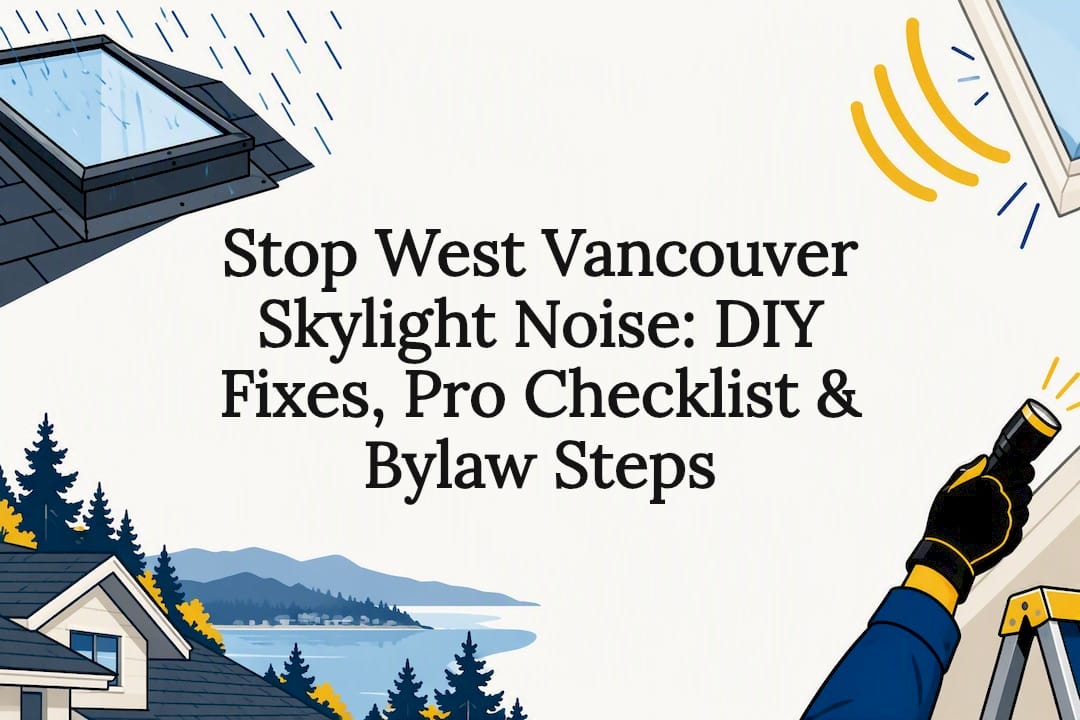
Most skylight noise in West Vancouver homes is fixable, and the fix depends on what’s actually vibrating. Try interior treatments first: check visible seals for gaps, add a cellular blind or acoustic insert, and see if the pinging or rattling settles down. If the noise persists, involves rattling hardware, or comes with any sign of a leak, that’s your cue to call a professional. Professional roofing contractors inspect skylights and handle everything from resealing to full glazing replacement.
TL;DR:
- Most skylight noise problems in West Vancouver homes are fixable by identifying whether vibration comes from glazing, hardware, or structural issues.
- Interior remedies like soundproofing, acoustic blinds, and sealant can reduce perceived noise but may not fully solve persistent or structural vibrations.
- Long-term fixes involve restoring flashing integrity, decoupling the shaft with insulation, and replacing aging or resonant glazed panels with laminated or double-glazed units.
- Contractors recommend a detailed roof inspection covering glazing condition, flashing, gasket integrity, and shaft insulation before expensive repairs or replacements.
- Noise complaints during rainstorms should be documented and reported with photos and videos, especially if noise persists despite interior treatments.
Table of Contents
- Why skylights sound louder in West Vancouver homes
- Interior fixes that cut perceived noise fast
- Construction fixes that actually last
- When to call a roofing contractor: the inspection checklist
- West Vancouver noise rules and how to report ongoing problems
- How we diagnose skylight noise across the Lower Mainland
- Book a skylight inspection or repair with Paragon Roofing BC
- Sources
- FAQ
Why skylights sound louder in West Vancouver homes
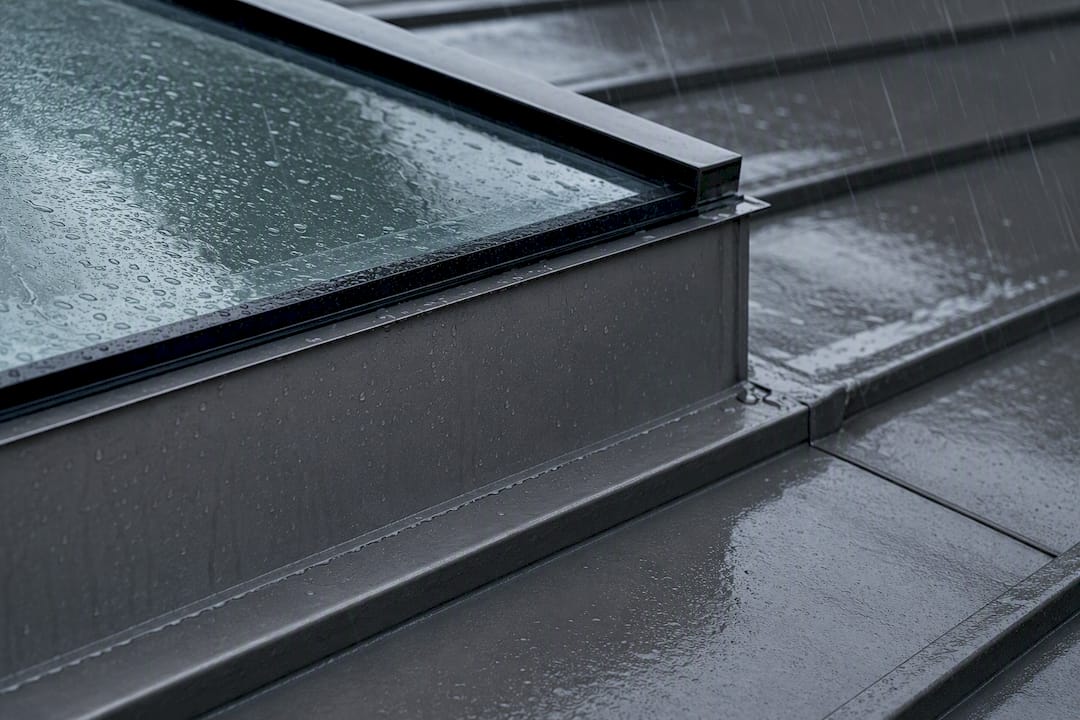
Rain hits a skylight and the glazing vibrates. That vibration travels through the frame, down the shaft, and radiates into your ceiling as sound. It’s the same physics as a drum: thin material flexes more, transmits more, and turns rain into a soundtrack you can hear from the kitchen.
Not all skylights vibrate equally. Single-pane glass and, especially, acrylic domes flex easily under impact and produce that sharp, high-pitched pinging homeowners complain about during a storm. Double-glazed units perform better. Laminated and triple-glazed configurations perform best, because laminated inner panes, cavity gas fill, and mixed pane thicknesses force sound to cross multiple layers of differing density, which damps vibration instead of letting it pass straight through.
West Vancouver’s geography makes this worse than it would be inland. You’re dealing with coastal exposure, wind-driven rain that hits roofs at an angle rather than falling straight down, and a housing stock that mixes metal roofing with cedar and asphalt. Wind-driven rain also stresses roof penetrations and flashing details, and a skylight curb is one of the most exposed penetrations on any roof. On a standing-seam metal roof, the roof deck itself has a livelier acoustic signature than asphalt shingles, so a lightweight acrylic dome sitting on that roof often becomes the loudest single element in the house during a storm, and replacing that dome with laminated glass typically produces the largest single improvement homeowners will notice.
You can narrow down the cause yourself with a bit of listening. A sharp, high-pitched pinging usually points to thin acrylic or a single pane of glass. A hollow, drum-like boom suggests the shaft itself is resonating, amplifying sound as it travels down to the room below. A rattle that comes and goes with wind gusts often means a loose fastener, a degraded gasket, or flashing that’s lifted slightly at one edge. Each of these symptoms points toward a different fix, and getting the diagnosis right matters more than jumping straight to the most expensive option.
Interior fixes that cut perceived noise fast
Before calling anyone, there’s a handful of things you can try from inside the house. None of these solve a genuine leak or structural rattle, but for perceived noise, they can make a real difference.
- Soft furnishings below the skylight. An area rug, upholstered furniture, or even heavy curtains absorb reflected sound in the room. This won’t stop the skylight from vibrating, but it reduces how much of that noise bounces around and gets amplified by hard floors and bare walls.
- Cellular or insulated blinds fitted to the skylight itself. Skylight-specific honeycomb blinds add a layer of trapped air between the glazing and the room, which knocks down some airborne noise. Expect a light trade-off: less daylight when closed, and you’ll need occasional access for cleaning.
- Retrofit acoustic inserts or secondary glazing panels. Acoustic inserts and rigidly fitted secondary glazing can meaningfully reduce incoming airborne noise when they’re well sealed, though they work best as a supplement, not a replacement for a genuinely defective unit.
- Acoustical sealant or weatherstripping around interior trim. If you can see daylight or feel a draft at the frame’s edge, sealing that gap does double duty: less noise transmission and better protection against condensation and minor leaks.
Pro Tip: Test soft furnishings and blinds during an actual rainstorm, not on a dry day. A quiet afternoon tells you nothing about how the skylight behaves under wind-driven rain, which is the condition that actually bothers most West Vancouver homeowners.
Expect mild reduction from rugs and curtains, moderate reduction from cellular blinds, and the strongest interior-only results from a well-fitted acoustic insert. None of these will fully quiet an old, thin acrylic dome on a metal roof. That’s a glazing problem, not a soft-furnishing problem.
Construction fixes that actually last
When interior measures don’t move the needle, the noise is usually coming from the building envelope itself, not the room. Fixing it properly means addressing the skylight’s structure, not just what’s around it.
- Restore perimeter and flashing integrity. Degraded gaskets and lifted flashing let wind and vibration into the frame, and they’re often the reason a rattle appears only during storms. Replacing the gasket and re-securing flashing frequently resolves both the noise and an early-stage leak in one visit.
- Insulate and decouple the shaft. A bare drywall shaft acts like a speaker cabinet, amplifying whatever noise reaches it. The better approach uses resilient channel, mineral wool, and a sealed air barrier to decouple the shaft from the frame and absorb vibration rather than transmit it. Simply stuffing insulation into the cavity is a common shortcut that often traps moisture instead of solving the acoustic problem.
- Upgrade the glazing itself. For an old acrylic dome, especially one sitting on a metal roof, replacement with a laminated or double-glazed insulated glass unit is usually the only fix that produces a lasting change. Sealing and interior measures help when the main issue is edge leakage or conduction, but once the panel itself is resonant, replacement is the sensible long-term move.
- Rebuild the curb to match the new glazing. A new insulated glass unit on a poor curb will still rattle or leak. Contractors need to check curb vertical tolerance, flashing continuity, and fastener torque before setting new glazing, otherwise the upgrade underperforms.
Roof type changes the calculus. On standing-seam metal, curb detailing and thermal movement matter more, and acrylic domes tend to be the weak link. On cedar or asphalt roofs, flashing age and shaft construction are usually the bigger factors. A typical resealing and gasket job can often be done in a single day. A full glazing and curb rebuild, by comparison, usually runs one to two days depending on roof access and weather windows, since crews won’t open a roof during active rain.
When to call a roofing contractor: the inspection checklist
Some symptoms mean it’s time to stop experimenting with blinds and get someone on the roof. Call a contractor if you notice any leak, however small, alongside the noise. Persistent rattling that doesn’t respond to interior sealing is another clear trigger, as is visible flashing damage, an aging acrylic dome (particularly on a metal roof), or ongoing complaints from neighbours or family members that point to a recurring pattern.
A proper inspection should cover the following, and you’re entitled to ask for a written report on each point:
- Glazing type and condition (single pane, double, laminated, acrylic dome)
- Fastener security around the frame and curb
- Flashing condition at all four sides and any step details
- Gasket integrity and age
- Curb mounting and vertical tolerance
- Shaft insulation and any signs of past moisture intrusion
- Condensation history inside the shaft or at the frame
Bring what you can to the appointment. Photos of the exterior and interior, a short audio or video recording taken during a rainstorm, the roof material, and a rough age estimate for the skylight all speed up diagnosis considerably. A documented, time stamped recording of a noise event gives a contractor something concrete to reference rather than relying on your description of “a weird sound” three weeks later.
Cost bands in Metro Vancouver vary by scope. A standalone inspection is a modest, fixed cost. Minor repair work, such as gasket replacement or flashing resealing, sits in a moderate range. Full skylight replacement with a new glazing unit and curb rebuild costs considerably more but addresses the root cause rather than a symptom. Scheduling for inspections typically runs a matter of days; full replacements are best planned around dry weather windows, which narrows availability in the wetter months.
West Vancouver noise rules and how to report ongoing problems
If the noise you’re dealing with involves ongoing construction, such as roofing work happening near your property, West Vancouver’s Noise Control Bylaw No. 4404, consolidated to Amendment Bylaw 5310 2024, sets the permitted hours. Construction is allowed weekdays from 7:30 a.m. to 5:30 p.m. and Saturdays from 8 a.m. to 5 p.m.; power tools are permitted Monday through Saturday from 7 a.m. to 6 p.m. Neither construction nor power tools are permitted on Sundays or statutory holidays.
The bylaw defines objectionable noise broadly, and enforcement leans on a 15-minute continuous threshold: noise that persists for 15 minutes or more, measured from a specified point of reception, can trigger enforcement action. That threshold matters if you’re dealing with a neighbour’s contractor working outside permitted hours rather than your own skylight.
To file a complaint, log the date, time, and duration of each event, note the weather conditions, and record audio or video if you can. Then submit a private-property concern through the District’s online form, which asks for the property address, a short description, and optional photos.
- Log date, time, duration, and weather for each noise event
- Record audio or video where possible
- Submit the District’s private-property concern form with those details attached
- Call West Vancouver Police non-emergency at 604-925-7300 for noise disturbances outside bylaw hours that need immediate attention
- Reserve 911 strictly for genuine emergencies
A contractor’s written inspection report can strengthen a complaint, particularly when the noise stems from a construction defect rather than routine weather.
How we diagnose skylight noise across the Lower Mainland
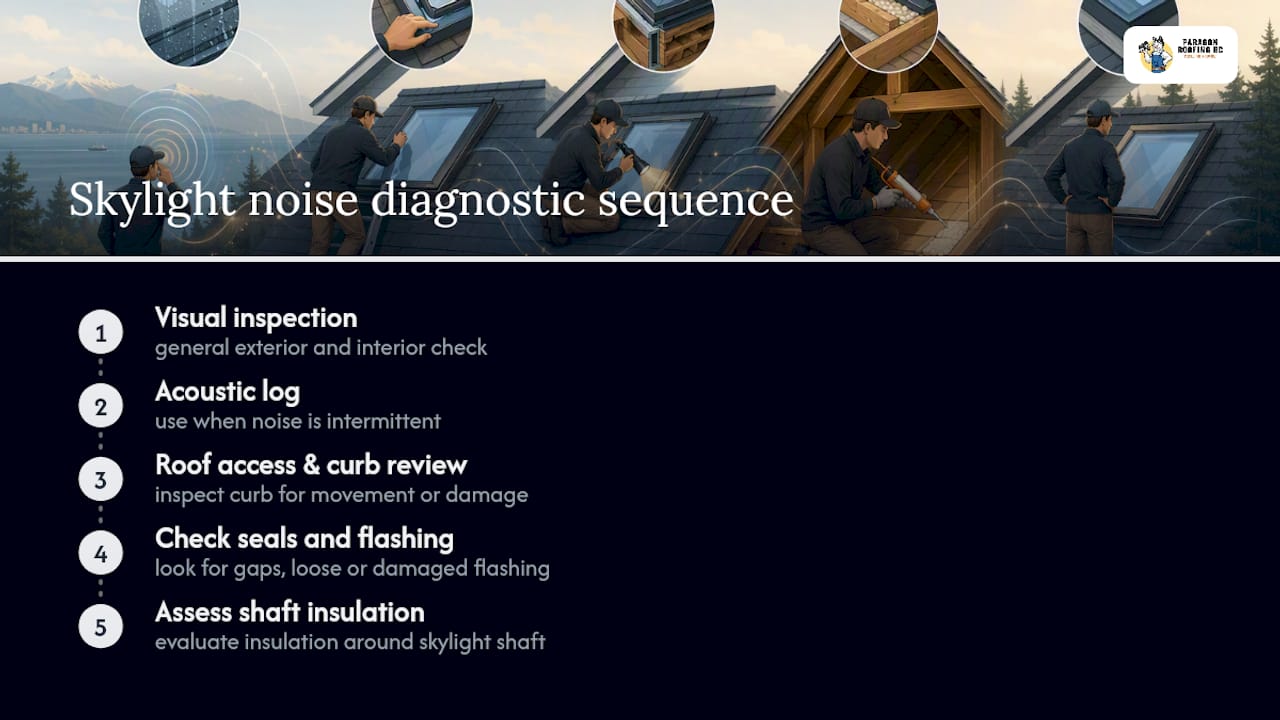
At Paragon Roofing BC, we run a consistent sequence when a homeowner calls about skylight noise: visual inspection first, then an acoustic log if the pattern is intermittent, followed by roof access to review the curb, a check of seals and flashing, and finally an assessment of shaft insulation. That order matters because jumping straight to glazing replacement on a skylight with a bad curb just moves the rattle somewhere else.
Lower Mainland conditions push us toward specific fixes more often than generic advice would suggest. Wind-driven rain off Howe Sound stresses flashing differently than a sheltered inland lot. Metal roofs amplify impact noise in ways cedar doesn’t. Strata buildings add another layer entirely, since one noisy skylight often means a dozen identical units on the same roof are due for the same fix. Recognizing that pattern early saves a strata council from paying for the same repair one unit at a time.
— Harman
Book a skylight inspection or repair with Paragon Roofing BC
Professional roofing services provide West Vancouver homeowners with a direct path from “why is my skylight so loud” to an actual fix, without guessing your way through blinds and sealant first. The skylight is inspected, and clients are told plainly whether the fix is sealing, shaft insulation, or full glazing replacement, with a quote provided before any work begins.
Here’s what a booked visit typically includes:
- A full skylight inspection covering glazing, fasteners, flashing, gaskets, curb mounting, and shaft condition
- Flashing and gasket repair where degraded seals are causing noise or early leaks
- Shaft insulation and lining work using resilient decoupling methods, not just packed insulation
- Skylight replacement with laminated or double-glazed units when the existing glazing is the source of the noise
You’ll get a written report after the inspection with recommended fixes and a realistic timeline, so there’s no mystery about what happens next. Start with our residential roofing services page to see the full scope of what’s covered, or head straight to our skylight repair and installation page to request an inspection for your property.
FAQ
What is the noise bylaw in West Vancouver?
The Noise Control Bylaw No. 4404, consolidated to Amendment Bylaw 5310 2024, regulates objectionable noise and sets permitted construction hours. Construction is allowed weekdays 7:30 a.m. to 5:30 p.m. and Saturdays 8 a.m. to 5 p.m., with no construction or power tools permitted on Sundays or holidays.
What are the noise curfew hours in Vancouver?
For West Vancouver specifically, power tools are permitted Monday through Saturday from 7 a.m. to 6 p.m., and general construction follows the tighter weekday and Saturday windows above. Outside those hours, and on Sundays and holidays entirely, construction noise is restricted.
How do I file a bylaw complaint in West Vancouver?
Log the date, time, duration, and weather for each noise event, record audio or video if possible, and submit those details through the District’s private-property concern form. For urgent disturbances outside bylaw hours, call West Vancouver Police non-emergency at 604-925-7300; reserve 911 for true emergencies only.
Is skylight noise from rain actually fixable, or do I have to live with it?
Most skylight noise is fixable once you identify the cause. Interior fixes like acoustic blinds and sealing help with mild to moderate noise, while replacing an aging acrylic dome with laminated or double-glazed units resolves the loudest, most persistent cases.
Does Paragon Roofing BC inspect skylights for noise problems, not just leaks?
Yes. Paragon Roofing BC’s skylight services cover inspection, sealing, flashing repair, shaft insulation, and full replacement, and noise complaints are one of the more common reasons West Vancouver homeowners book an inspection.
Recommended
Our Roofing Blog
Have more questions about roofing?
Check out our FAQs or give us a call today to speak to an expert roofer in Vancouver Lower Mainland, BC. We're here to help our neighbours make educated decisions about their roof. For our team, we value helping clients save money while making their roofs last.