
West Vancouver wind driven rain roof leaks: causes and fixes
West Vancouver wind driven rain roof leaks: causes and fixes

TL;DR:
- Wind-driven rain in West Vancouver causes leaks by forcing water into roof gaps during storms, especially at flashings and penetrations. Proper inspection, regular maintenance, and durable materials are essential for prevention and repair to address these specific coastal conditions. Focused repairs at vulnerable points help prevent costly interior water damage and extend roof lifespan.
Wind-driven rain roof leaks are defined as water intrusion caused by strong winds forcing rain sideways and upward into roof junctions, flashings, and penetrations that would otherwise stay dry. West Vancouver sits directly in the path of Pacific storms, and its combination of coastal winds, heavy rainfall, and 40–50 freeze-thaw cycles per winter creates conditions that expose even well-built roofs. The result is leaks that appear during storms, disappear when the rain stops, and leave homeowners chasing water stains that have nothing to do with where the water actually entered. If you manage or own property in West Vancouver, understanding how these leaks work is the first step to stopping them.
What causes west Vancouver wind driven rain roof leaks?
Wind-driven rain exploits any gap that a vertical downpour would simply run past. Wind pushes moisture sideways and upward into junctions that were never designed to handle that direction of water pressure. This is the defining characteristic of wind-driven rain intrusion, and it explains why a roof can pass a garden hose test but fail completely in a November storm.
The most common failure points in West Vancouver homes include:
- Flashing gaps at roof-to-wall junctions. Step flashings and counter-flashings rely on tight overlaps. Wind pressure forces water up behind even a 5mm gap.
- Roof valleys. Water volume concentrates in valleys during heavy rain. Wind accelerates that flow and drives it under shingles or membrane edges.
- Skylight flashings and sealants. UV exposure and freeze-thaw movement degrade sealants and create micro-gaps that open up under storm conditions. A west Vancouver skylight leak during storms almost always traces back to failed perimeter sealant or lifted flashing.
- Moss and debris dams near penetrations. Moss and debris buildup over winter dam water around skylight bases and vent pipes, forcing moisture under flashings that would otherwise shed water cleanly.
- Blocked gutters, drains, and scuppers. Internal drains blocked even 60% cause water to back up on flat or low-slope roofs, turning a drainage problem into a leak problem fast.
- Roof terminations and parapet caps. Wind hits parapet walls directly. Any loose cap flashing or failed termination bar becomes a direct water entry point.
Pro Tip: Check your skylight perimeter sealant every autumn before storm season. If the sealant is cracked, chalky, or pulling away from the frame, replace it before the first major wind event.
Freeze-thaw cycles compound every one of these vulnerabilities. Moisture trapped in a small gap freezes, expands, and widens the gap. By spring, what started as a hairline crack in sealant becomes a real opening. This mechanical process is why West Vancouver wind driven rain leak causes often feel like they appeared out of nowhere after a mild winter.
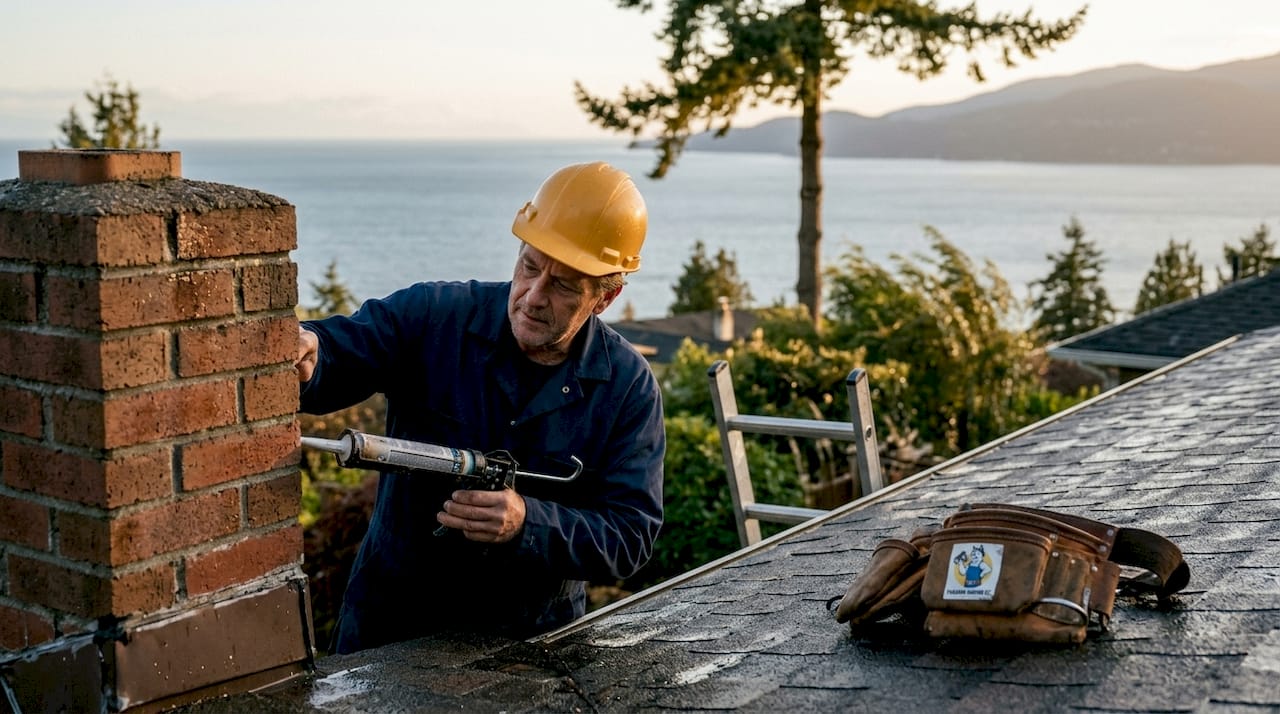
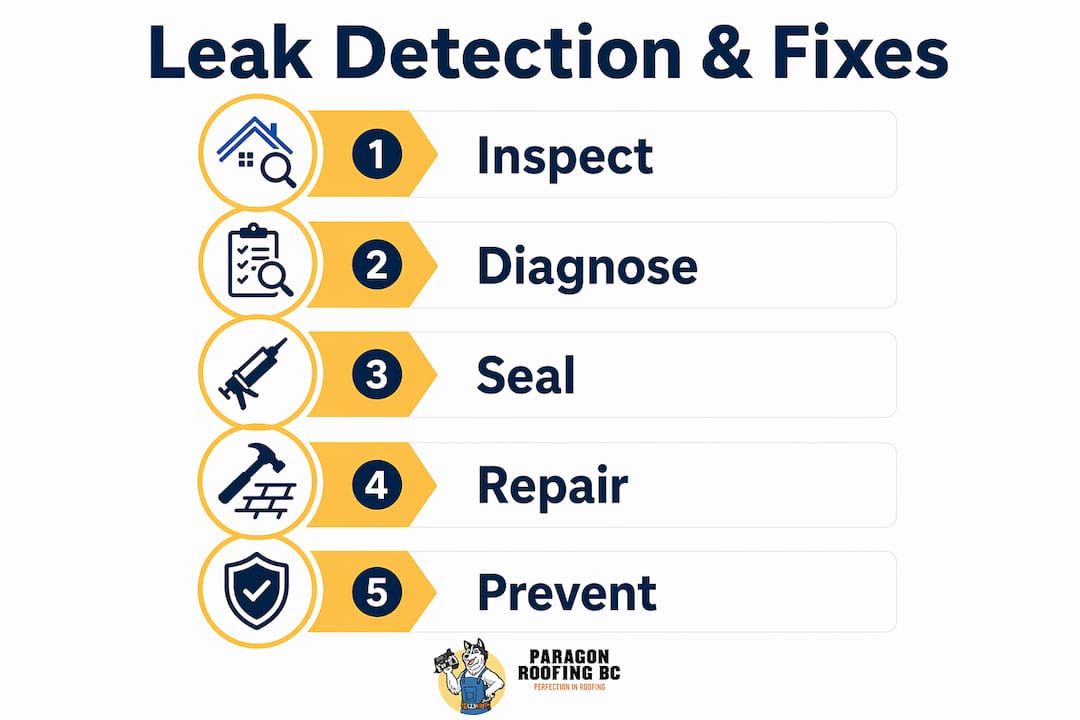
How do you detect and diagnose a wind-driven rain leak?
Diagnosing a wind-driven rain leak is harder than finding a standard leak because the entry point and the damage location are rarely in the same place. Water travels along rafters, sheathing, and insulation for several feet before it drips through a ceiling. That interior stain above your dining room may have entered through a flashing gap near the chimney, three metres away.
A reliable diagnosis follows this sequence:
- Document when leaks appear. Note whether water shows up only during heavy storms with wind, or also during steady rain. Wind-driven intrusion typically appears only under high wind and rain combined.
- Inspect interior surfaces first. Look for water stains, blistering paint, and soft drywall. Trapped moisture under membranes causes blistering that appears days after a rain event, not during it.
- Check the attic or roof cavity. Bring a flashlight and look for wet insulation, dark staining on sheathing, and daylight through gaps. Wet insulation near a specific rafter run points toward the entry zone.
- Inspect flashings, skylights, and penetrations from the roof. Look for lifted edges, cracked sealant, and debris dams. A north Vancouver skylight leak in heavy rain and a West Vancouver one share the same root causes: failed perimeter details.
- Use a moisture metre. A basic pin-type moisture metre confirms wet areas in sheathing or framing that look dry to the eye. This narrows the search zone significantly.
- Call for a professional inspection. Infrared thermal imaging identifies moisture pockets inside roof assemblies without cutting anything open. Paragonroofingbc uses this approach for properties where the leak source is not obvious from a visual inspection.
Pro Tip: Never assume the leak entry point is directly above the interior stain. Trace water stains uphill and toward the nearest roof penetration or flashing before you start any repair work.
Leaks that appear only during storms almost always point to a flashing or sealant gap that handles normal rain but floods under concentrated storm volume and wind pressure. That pattern alone narrows the diagnosis considerably.
Prevention strategies for West Vancouver’s coastal climate
Prevention in West Vancouver means designing and maintaining a roof that handles wind pressure, not just vertical rain. The two are very different engineering problems.
- Install flashings correctly from the start. Step flashings at wall junctions need a minimum 100mm overlap and must be mechanically fastened, not just sealed. Sealant alone fails within a few years in coastal conditions.
- Choose materials rated for wind and moisture. For material selection in Vancouver rain, standing seam metal and modified bitumen membranes outperform standard three-tab shingles in wind-driven conditions. Architectural shingles with a high wind rating are the minimum for sloped roofs in exposed West Vancouver locations.
- Clean gutters and drains twice a year. Autumn leaf fall and winter debris are the main culprits for blocked drainage. A blocked gutter in a West Vancouver winter storm becomes a water reservoir that backs up under the roof edge.
- Size scuppers and drains for peak flow. Flat and low-slope roofs need drainage capacity that accounts for the heaviest rainfall events, not average rainfall. Undersized scuppers are a common oversight on older West Vancouver properties.
- Seal and inspect all roof penetrations annually. Vent pipes, exhaust fans, and skylights all need fresh sealant and tight flashing. West Vancouver wind-driven rain skylight sealing is one of the most cost-effective preventive steps a homeowner can take.
- Prepare for freeze-thaw before winter. Clear debris from valleys and low points before temperatures drop. Standing water that freezes in a valley expands and lifts shingles or membrane edges, creating the gaps that wind-driven rain exploits in the next storm.
Pro Tip: Schedule a pre-winter roof inspection in september or early october. Catching a lifted flashing before the first storm costs a fraction of what a water-damaged ceiling costs to repair.
Proper flat roof drainage management is especially relevant for West Vancouver properties with low-slope roofs or rooftop decks. These surfaces hold water when drains are blocked, and wind-driven rain adds volume faster than undersized drains can handle.
Repair options for wind-driven rain roof leaks
Repairing a wind-driven rain leak means fixing the actual entry point, not just patching the interior damage. Leaks during or after heavy rain involve damaged flashings, cracked sealants, or wind-lifted coverings. Each requires a different repair approach.
- Flashing repair or replacement. Bent, lifted, or corroded flashings need to be reset and mechanically fastened. Applying sealant over failed flashing is a short-term fix that fails again within one or two seasons.
- Sealant replacement at penetrations. Old sealant around skylights, vent pipes, and exhaust fans should be fully removed and replaced with a polyurethane or silicone product rated for UV and freeze-thaw exposure.
- Addressing underlying rot or wet insulation. Water that has been entering for more than one season often saturates insulation and begins to rot sheathing. Wet insulation loses its thermal value and holds moisture against wood framing. Both need to be replaced, not dried out and left in place.
- Patch repairs versus full system updates. A patch repair makes sense when the roof is less than ten years old and the damage is isolated. When flashings are failing across multiple locations, or when the membrane or shingles are at end of life, a full system update delivers better long-term value. The repair versus replace decision depends on roof age, damage extent, and material condition.
- Material upgrades for better durability. Homes in exposed West Vancouver locations benefit from upgrading to higher-wind-rated shingles or a fully adhered membrane system. These materials cost more upfront but reduce the frequency of storm-related repairs significantly.
- Timing repairs correctly. Roofing repairs in West Vancouver are best completed between may and september when dry weather allows proper adhesion and curing. Emergency repairs in winter use temporary materials that must be revisited in spring.
| Repair type | Best suited for | Typical lifespan of repair |
|---|---|---|
| Sealant replacement | Skylights, penetrations, small gaps | 5–8 years with quality product |
| Flashing reset and fasten | Wall junctions, valleys, parapets | 10–15 years |
| Patch repair | Isolated membrane or shingle damage | 3–7 years |
| Full system replacement | Aged roof with multiple failures | 20–30 years |
Using a local contractor familiar with West Vancouver’s specific wind exposure and rainfall intensity matters. A roofer who works primarily in drier inland areas may underspecify flashing details that coastal conditions demand. Paragonroofingbc inspects and repairs wind-driven rain leaks across West Vancouver and understands the local failure patterns that repeat season after season.
Key takeaways
Wind-driven rain roof leaks in West Vancouver require targeted repairs at flashings, sealants, and penetrations, not just interior patching, because wind forces water into gaps that vertical rain never reaches.
| Point | Details |
|---|---|
| Wind direction changes everything | Wind forces rain upward and sideways into gaps that shed vertical rain without issue. |
| Freeze-thaw cycles worsen gaps | 40–50 freeze-thaw cycles per winter mechanically widen small cracks into real leak paths. |
| Leaks appear far from entry points | Water travels along rafters and insulation, so interior stains rarely mark the actual entry point. |
| Prevention beats emergency repair | Annual flashing and sealant inspections cost far less than repairing water-damaged ceilings and insulation. |
| Repair scope depends on roof age | Isolated damage on a newer roof warrants a patch; multiple failures on an aged roof call for a full system update. |
What I’ve learned diagnosing these leaks in West Vancouver
Hey, it’s Harman here. After inspecting roofs across West Vancouver for years, the pattern I see most often is this: a homeowner calls after a big storm, convinced their roof is failing. We get up there and the shingles look fine. The problem is almost always a flashing detail that was installed correctly ten years ago but has since been compromised by freeze-thaw movement, UV degradation, or debris buildup.
The misconception I run into constantly is that a roof either leaks or it doesn’t. Wind-driven rain breaks that logic completely. A roof can be watertight in 90% of conditions and still fail badly in a 60 km/h wind with heavy rain. That’s not a failing roof in the traditional sense. It’s a roof with one or two details that weren’t built for coastal wind exposure.
Property managers ask me all the time whether they should repair or wait. My honest answer is that waiting costs more. A wet insulation batt that gets dried out and left in place holds moisture against the sheathing for months. By the time you see rot, you’re looking at a much larger repair bill than the original flashing fix would have been.
The other thing I tell homeowners: don’t skip the autumn inspection because the summer was dry. West Vancouver winters are not forgiving. One missed flashing gap in october becomes a ceiling stain by january. Routine maintenance is genuinely the most cost-effective roofing decision you can make on the North Shore.
— Harman
Paragonroofingbc’s approach to wind-driven rain leaks in West Vancouver
Paragonroofingbc specialises in exactly this kind of problem: leaks that only show up in storms, entry points that don’t match interior damage, and flashings that look fine until they’re not.

The team at Paragonroofingbc serves West Vancouver homeowners and property managers with on-site leak detection and repair that goes beyond surface patching. Every inspection traces the actual water path, identifies all compromised flashings and sealants, and delivers a repair plan that addresses root causes rather than symptoms. For properties with skylights, penetrations, or flat roof sections, Paragonroofingbc also handles roof penetration sealing as part of a complete weatherproofing service. Reach out to book an inspection before the next storm season arrives.
FAQ
What are the most common causes of wind-driven rain roof leaks in West Vancouver?
Failed flashings at wall junctions and skylights, cracked sealants around penetrations, and blocked gutters or drains are the leading causes. West Vancouver’s coastal winds force rain into gaps that vertical rainfall never reaches.
Why does my roof only leak during heavy storms?
Flashing or sealant gaps that are too small to leak under normal rain flood under the concentrated water volume and wind pressure of a major storm. The gap exists year-round, but only heavy storm conditions expose it.
How far can water travel inside a roof before it drips through the ceiling?
Water can travel several feet along rafters, sheathing, or insulation before appearing as an interior stain or drip. This is why the visible damage location rarely matches the actual entry point.
How often should West Vancouver homeowners inspect their roof flashings?
A professional inspection once a year, ideally in september or october before storm season, is the minimum for coastal West Vancouver properties. Skylight sealants and valley flashings deserve a close look every autumn.
Is a patch repair enough, or do I need a full roof replacement?
A patch repair works well on roofs under ten years old with isolated damage. When flashings are failing in multiple locations or the roof membrane and shingles are near end of life, a full system update delivers better long-term protection and lower total cost.
Recommended
Our Roofing Blog


Have more questions about roofing?
Check out our FAQs or give us a call today to speak to an expert roofer in Vancouver Lower Mainland, BC. We're here to help our neighbours make educated decisions about their roof. For our team, we value helping clients save money while making their roofs last.