Architectural roofing: reliable options for BC homes
TL;DR:
- Architectural roofing in BC is an engineered solution that offers superior wind resistance, impact protection, and moisture management in our demanding climate. Proper installation, code compliance, and regular maintenance are essential to ensure longevity and optimal property value. Trusted brands like IKO and GAF provide high-performance products suited to BC’s weather, supported by certified local contractors.
Many BC homeowners assume architectural roofing is simply a style upgrade, a way to add curb appeal before listing a property. That’s only part of the story. In British Columbia, where rain, wind, hail, and freeze-thaw cycles are a way of life depending on the season and region, architectural roofing is an engineered solution that can mean the difference between a roof that weathers decades gracefully and one that’s leaking by year eight. This guide covers what architectural roofing actually is, how it performs under BC’s building code and climate, what installation details truly matter, and how to choose products and contractors you can trust.
Table of Contents
- What is architectural roofing and how does it differ?
- Architectural roofing for BC: weather, code and property value
- Making architectural roofing last: moisture, insulation, and ventilation in BC
- Top architectural roofing choices and service providers in BC
- What most guides miss about architectural roofing for BC properties
- Get expert help for your architectural roofing project
- Frequently asked questions
Key Takeaways
| Point | Details |
|---|---|
| Superior durability | Architectural roofing offers multi-layered protection, outperforming basic shingles in BC’s tough climate. |
| Code and climate fit | Proper architectural roofing selection and install ensures compliance with BC Building Code and handles challenging weather. |
| Expert install matters | Real-world longevity depends on qualified installers and attention to ventilation, underlayment, and moisture control. |
| Local products excel | Canadian-made brands like IKO and GAF are engineered for BC weather and offer high impact and wind ratings. |
| Qualified services add value | Choosing certified BC roofers and maintaining your roof regularly preserves value and warranty coverage. |
What is architectural roofing and how does it differ?
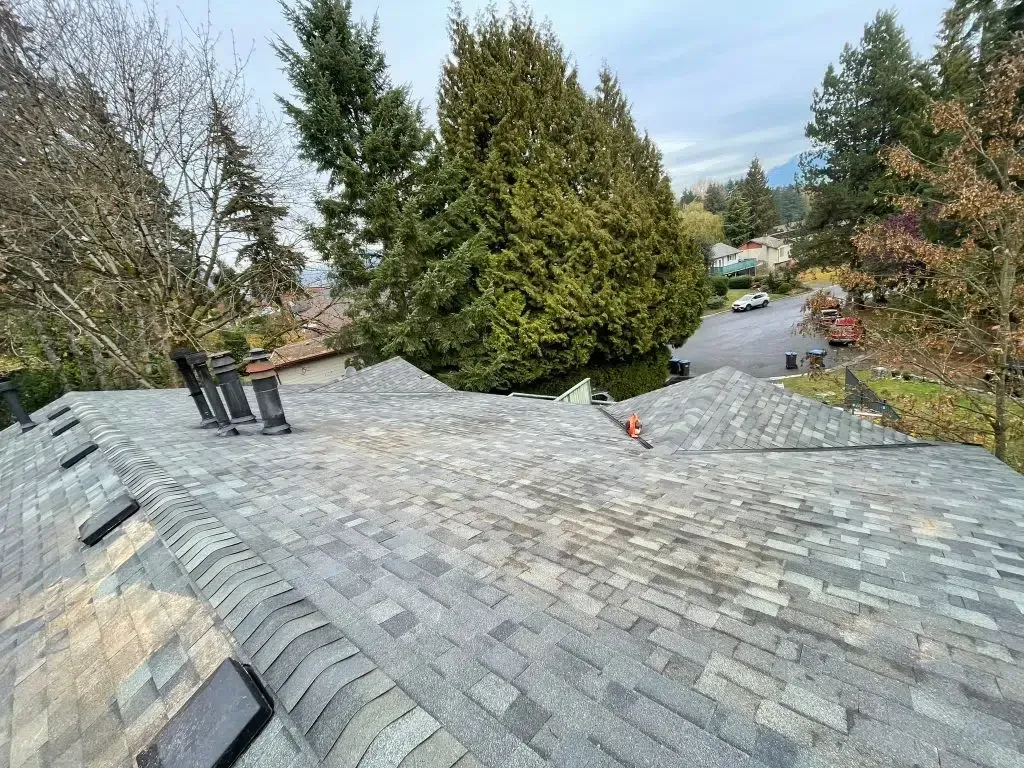
Think of standard 3-tab asphalt shingles as the basic sedan of roofing: functional, affordable, and perfectly fine on a quiet road. Architectural shingles are the fully loaded SUV. They’re laminated (meaning multiple layers of asphalt bonded together), heavier, thicker, and designed to create a three-dimensional profile that mimics the look of wood shake or slate without the weight or maintenance burden.
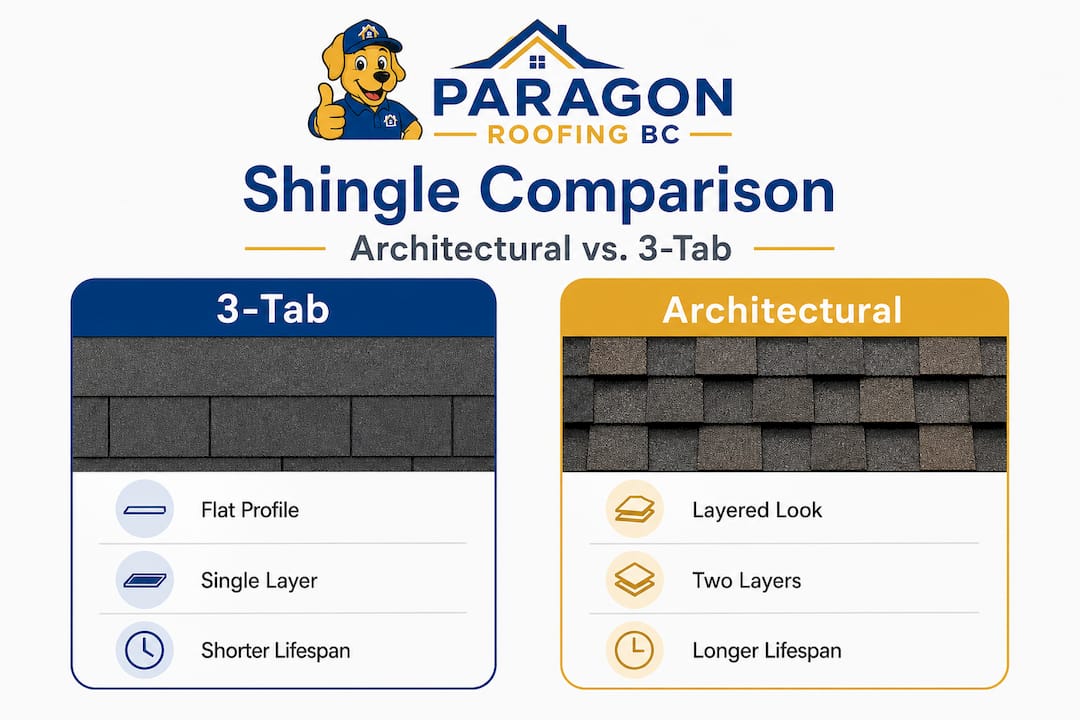
The core engineering difference matters a lot in BC’s climate. Architectural shingles typically weigh between 240 and 400 lbs per square (100 sq. ft.), versus the roughly 150 to 175 lbs for a 3-tab shingle. That added mass means better resistance to wind uplift, impact from hail, and thermal cycling (the repeated expansion and contraction that cracks lighter shingles over time).
Here’s a quick side-by-side comparison to make the difference concrete:
| Feature | 3-tab shingles | Architectural shingles |
|---|---|---|
| Profile | Flat, uniform | Dimensional, layered |
| Weight per square | 150-175 lbs | 240-400 lbs |
| Wind resistance | Up to 60-70 mph | Up to 130-150 mph |
| Lifespan (installed correctly) | 15-20 years | 25-40 years |
| Impact rating | Typically Class 1-2 | Up to Class 4 |
| Cost (installed, CAD) | Lower upfront | Moderate to high |
| BC climate suitability | Marginal | Excellent |
For BC properties specifically, the best BC roofing materials share a few traits: wind resistance, moisture management, and some degree of flexibility in cold temperatures. Architectural shingles check every one of those boxes.
Key benefits for BC’s environment at a glance:
- Wind resistance: Tested to withstand severe gust events common in coastal BC
- Impact protection: Class 4 rating guards against hail damage during shoulder-season storms
- Moisture resistance: Multi-layer construction resists water infiltration better than single-ply options
- Visual versatility: Wide range of profiles and colours suits BC’s mix of heritage homes and modern builds
- Longer warranty coverage: Most architectural products carry 30-year to lifetime limited warranties
Brands like IKO (Canadian-made) and GAF Timberline ArmorShield II offer high wind resistance rated to 150 mph under ASTM D7158 Class H testing, Class 4 impact resistance, and SBS-modified asphalt formulas that stay flexible in cool climates. SBS (styrene-butadiene-styrene) modification is important: it keeps the shingle from becoming brittle during BC’s cold, wet winters, which is exactly when older standard shingles start to crack and curl.
A note on product ratings: Those Class 4 and 150 mph numbers come from controlled lab environments. Real-world performance also depends on proper installation, roof slope, and the specific wind and hail exposure at your property. Products and architect tools overview used in planning can only do so much if the execution on your roof falls short.
Architectural roofing for BC: weather, code and property value
BC’s weather is genuinely varied and often aggressive. The Lower Mainland gets soaking rain from October through April. The Interior sees heavy snowfall and sharp freeze-thaw swings. Coastal areas face relentless wind-driven moisture. Architectural roofing, when installed to code, addresses all of these threats in a way that standard shingles simply can’t match.
According to BC roofing code requirements, installation must meet the following baseline standards:
- Roof pitch: Minimum 4:12 for standard application; slopes between 2:12 and 4:12 require a double layer of underlayment
- Ventilation ratio: At least 1:300 (one square foot of vent for every 300 square feet of attic space)
- Fire rating: Minimum Class B for most residential applications
- Energy efficiency: Insulation must meet R-40 or above in most BC climate zones
These aren’t suggestions. They’re code. A renovation or new roof that skips any of these requirements can void your warranty, fail inspection, and create expensive moisture or energy problems down the road. For a deeper look at what proper insulation standards in BC look like in practice, it’s worth reading up before your project starts.
Here’s how architectural roofing addresses each code requirement:
| BC code requirement | How architectural roofing helps |
|---|---|
| 4:12+ pitch standard | Designed for standard and steep-slope applications |
| Double underlayment at 2:12-4:12 | SBS-modified products work well with ice-and-water barriers |
| 1:300 ventilation ratio | Pairs with ridge and soffit vents for balanced airflow |
| Class B fire rating minimum | Most architectural products exceed Class B |
| R-40 insulation minimum | Architectural roofing works in tandem with attic insulation systems |
If you’re planning a renovation, here are the steps to achieve full compliance:
- Verify your roof pitch before specifying any shingle product. A contractor can measure this quickly.
- Inspect your existing underlayment and ice-and-water barrier to confirm proper coverage, especially at eaves and valleys.
- Audit your attic ventilation using the 1:300 ratio. Your attic insulation and ventilation guide is a helpful starting point.
- Confirm your product’s fire rating meets or exceeds Class B. Many architectural products are Class A, giving you an added buffer.
- Check ventilation requirements for BC roofs with your contractor and confirm insulation is up to R-40 minimum before closing up the attic.
- Get a written confirmation from your contractor that the completed work meets current BC Building Code.
Beyond compliance, architectural roofing genuinely boosts property value. Buyers in BC’s competitive real estate market notice a quality roof. A dimensional, visually appealing roof signals that a property has been well maintained. Appraisers frequently cite roof age and condition as a direct factor in assessed value. Fire compliance in construction is another dimension that sophisticated property managers track, since a code-compliant, fire-rated roof can also affect insurance premiums.
Making architectural roofing last: moisture, insulation, and ventilation in BC
Here’s something a lot of roofing articles skip over: the product is almost never the weak link. The installation is. We see this consistently in BC. A homeowner invests in a premium architectural shingle, the crew installs it in a hurry or without proper attention to the details, and within a few years there are leaks, mould in the attic, and ice damming along the eaves.
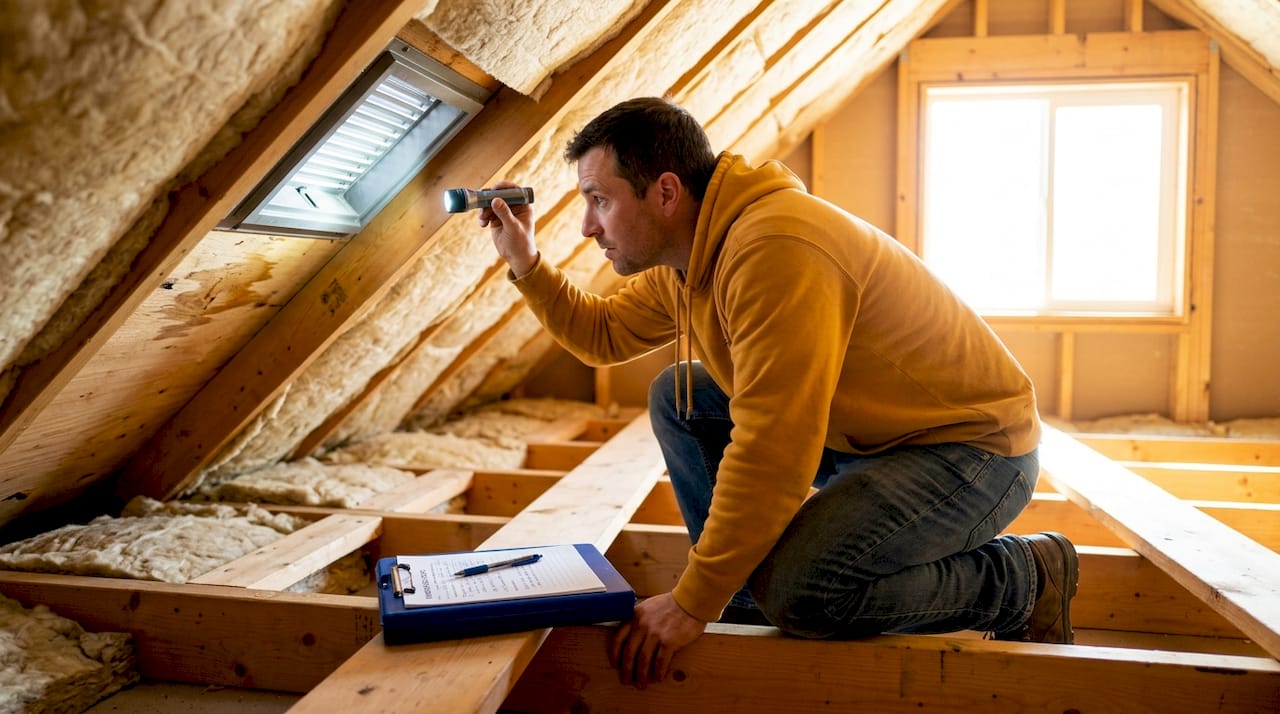
As one industry study found, real-world shingle performance depends on installation quality, roof slope, wind-driven hail exposure, and ageing. A Class 4 shingle installed without proper underlayment or ventilation will underperform a Class 2 shingle installed carefully by a skilled crew. That’s just the reality.
Essential installation practices for BC conditions:
- Ice-and-water barrier at eaves and valleys: In BC, the first three feet from the eave edge should be protected with a self-adhered membrane, not just felt paper.
- Double underlayment on low-slope sections: Anywhere between 2:12 and 4:12 pitch needs this by code and common sense.
- Ridge and soffit venting that’s actually connected: We’ve seen plenty of roofs with vents installed but not properly linked, meaning air stalls and moisture builds up anyway.
- Proper starter strip at rakes and eaves: This small detail prevents wind-driven rain from lifting the first course of shingles.
- Correct fastening patterns: Nailing too high or too low on the shingle dramatically reduces wind resistance.
Common moisture problems in BC roofs include condensation in poorly ventilated attics, water infiltration at roof-to-wall flashings, and ice dams in colder interior regions. The BC roof maintenance checklist is a practical resource for catching these issues before they become expensive. If you’re curious about the most common failure points, the roof leak causes BC guide lays them out clearly.
Pro Tip: Always ask your contractor for proof of CSA or ASTM certification for the products they’re installing. Many manufacturer warranties are tied to certified installation by a recognised installer. If the crew isn’t certified, your long-term warranty protection may be voided before the job is even finished.
The role of roofing materials in overall home efficiency is also bigger than most people realise. A properly installed architectural roof, paired with solid attic insulation and balanced ventilation, can meaningfully reduce heating costs in BC’s wet, cool winters. The building fire risk types discussion is also relevant for multi-family property managers who need to think about fire-rated assemblies as a system, not just individual product ratings.
Top architectural roofing choices and service providers in BC
When it comes to products, two names consistently come up in BC roofing circles: IKO Cambridge and GAF Timberline ArmorShield II. IKO is a Canadian company with deep roots in northern climates, making their products particularly well-suited for BC’s temperature swings and moisture load. GAF’s ArmorShield II adds SBS polymer modification for flexibility and carries a Class 4 impact rating.
What to look for when hiring a roofer in BC:
- CSA and ASTM certified installers: This protects your warranty and confirms the crew knows the code.
- Documented warranty coverage: Both product and workmanship warranties should be in writing.
- Verifiable local reviews: Google ratings and BBB profiles give you a realistic sense of how a company performs post-installation.
- BC-specific experience: A crew that regularly works in the Lower Mainland or Interior understands local moisture, wind exposure, and code nuances.
- Clear scope of work in writing: Every quote should specify underlayment type, ventilation plan, and flashings. If it’s vague, ask questions.
Reputable Vancouver-area firms, including companies like Absolute Roof Solutions (4.8/5, over 337 reviews) and Paragon Roofing BC, demonstrate what certified, BC-experienced installation looks like. High review scores are encouraging, but always dig a level deeper: read the actual reviews for mentions of code compliance, clean-up, and how issues were handled after installation.
Pro Tip: When reviewing quotes, ask each contractor to confirm explicitly how they’ll meet the current BC Building Code on pitch, ventilation, and energy compliance. A contractor who can answer that question in plain language is one who’s done it correctly before. One who deflects or gives vague answers is a red flag.
For homeowners in specific areas, prepping Vancouver roofs for winter is a great seasonal reference before any roofing project wraps up in late summer or fall.
What most guides miss about architectural roofing for BC properties
Here’s an honest take after working in BC’s roofing industry: the biggest threats to a roof’s long-term performance aren’t storms or hail. They’re the small decisions made during installation that nobody thinks about until water is dripping through a ceiling.
Out-of-sight moisture is the silent killer of BC roofs. A tiny gap in a valley flashing, an improperly sealed pipe boot, or a single missing piece of ice-and-water barrier can allow water to track sideways under the shingles for months before it shows up inside the home. By that point, the damage to sheathing and framing is already done. This is why “set-and-forget” thinking about roofs is genuinely dangerous in BC’s wet climate.
What actually makes the difference long-term isn’t just the product you buy. It’s the annual habit of getting up there (or having someone do it for you) and looking carefully. Check your Vancouver roof insulation overview every few years to make sure nothing has shifted or settled. Even high-end materials fail when they’re installed without local expertise, and even mediocre materials can last surprisingly long when the details are right.
Our honest advice: build annual roof checks into your property maintenance routine. A 30-minute inspection every autumn, before the heavy rain season hits, catches 90% of small problems before they become big ones. That’s not a sales pitch. That’s just what the data, and experience on hundreds of BC rooftops, consistently shows.
Get expert help for your architectural roofing project
If you’ve worked through this guide and you’re now looking at your roof with fresh eyes, that’s exactly the right outcome. Architectural roofing done well is one of the best long-term investments a BC property owner can make. But “done well” means certified installers, code-compliant materials, and proper ventilation and insulation working together as a system.
At Paragon Roofing BC, we specialise in architectural roofing installation, replacement, and inspection across the Lower Mainland and surrounding communities. Our teams are well-versed in BC Building Code requirements, certified to install leading architectural shingle products, and backed by strong local reviews. Whether you need a roof installation in Vancouver, a Coquitlam roof installation, or a Delta roof replacement, we’re ready to assess your property and give you an honest, code-compliant quote. Reach out to schedule a free inspection and let’s make sure your roof is ready for whatever BC’s weather has planned.
Frequently asked questions
What is the lifespan of architectural roofing in BC’s climate?
Properly installed architectural roofing lasts 25 to 40 years in BC, but moisture control and regular maintenance are essential for reaching the upper end of that range.
Are architectural shingles allowed on low-slope roofs in BC?
Yes, on slopes between 2:12 and 4:12 they’re permitted with a double layer of underlayment to meet code and provide adequate moisture protection.
Do architectural roofs need special ventilation in BC?
Yes, at least a 1:300 vent ratio is required by BC Building Code, and it’s especially critical for moisture and energy performance in our wet climate.
How do I know if my installer is BC building code compliant?
Look for CSA or ASTM certification, and ask your contractor to explain specifically how they meet current code on pitch, ventilation, and insulation. Certified firms like those serving Vancouver should answer that question confidently and in plain language.
Is there a benefit to using Canadian-made architectural shingles?
Absolutely. Brands like IKO are engineered for Canadian weather extremes and, alongside products like the GAF Timberline ArmorShield II, offer high wind and Class 4 impact resistance that’s specifically relevant for BC’s storm and hail exposure.