Reduce risk with industrial roof safety practices in BC
TL;DR:
- Falls from roofs in BC industrial facilities are an ongoing safety concern, with costly penalties and severe injuries occurring despite documented safety programs. Effective compliance requires thorough hazard assessments, prioritized controls, continuous training, rigorous supervision, and real-time verification, as inspectors focus on actual site conditions over paperwork. Partnering with experts like Paragon Roofing BC can help facilities implement practical safety measures that meet regulatory standards and prevent avoidable falls.
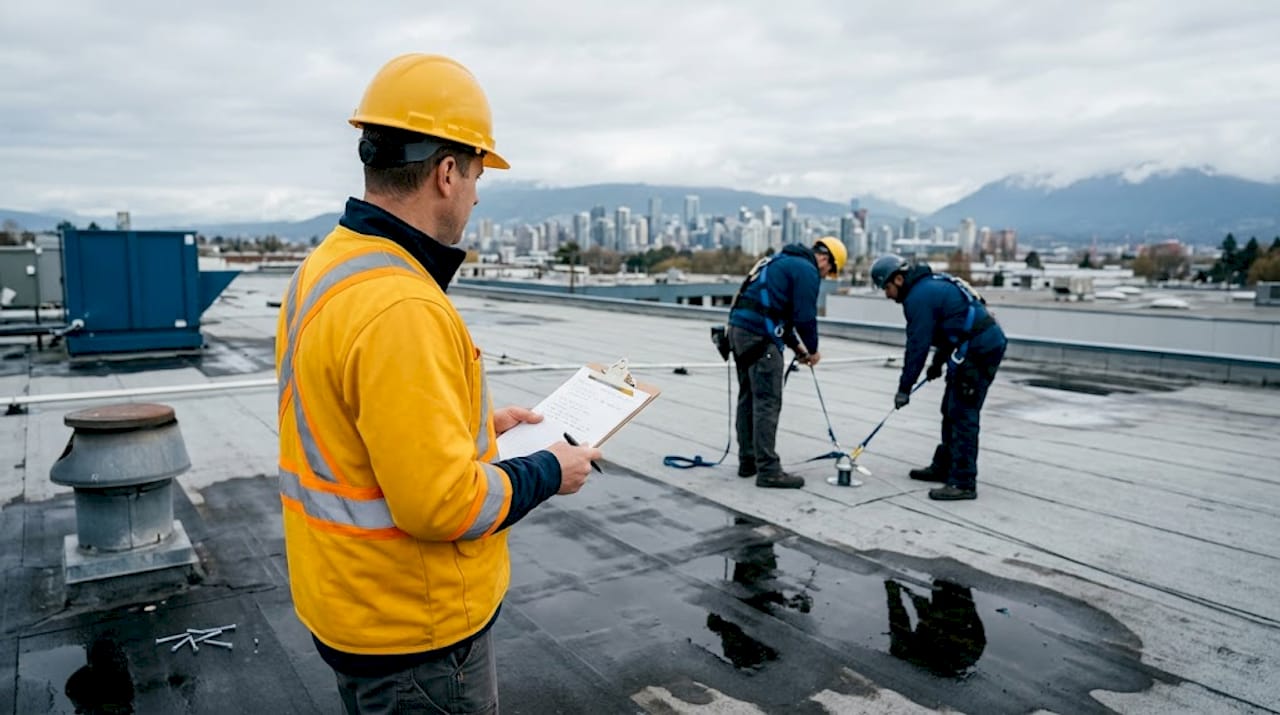
Falls from roofs are not a distant risk for BC industrial facility managers — they are a present and costly reality. In 2024, over $1.07 million in penalties were issued by WorkSafeBC for inadequate fall protection, alongside more than 1,000 construction worker injuries that year alone. The uncomfortable truth is that many of these incidents happened at facilities where a safety programme existed on paper. The gap between having documentation and having real protection in place is exactly where injuries happen and where inspectors are now focusing their attention. This guide cuts through the paperwork maze and delivers practical, actionable strategies that will hold up under real-world scrutiny.
Table of Contents
- Why industrial roof safety matters in BC
- Assessing roof-specific hazards: The foundation for compliance
- Matching controls to risks: The WorkSafeBC hierarchy
- Training, planning, and supervision: Sustaining high standards
- A deeper look: Why practical verification beats paperwork every time
- How Paragon Roofing BC supports safer, compliant industrial facilities
- Frequently asked questions
Key Takeaways
| Point | Details |
|---|---|
| Hazard assessment first | Start every project with a detailed, site-specific fall hazard assessment. |
| Show real-world controls | Focus on implementing and demonstrating practical fall protection, not just producing paperwork. |
| Use the control hierarchy | Engineer risks out whenever possible, use administrative controls, and rely on PPE only as a last resort. |
| Sustain training and review | Keep your safety culture strong by prioritising regular training and plan reviews. |
| Documentation supports—not replaces—action | Accurate records help, but real compliance depends on visible, verifiable safety measures. |
Why industrial roof safety matters in BC
By understanding the sobering local statistics and triggers, you can see why compliant, practical roof safety is non-negotiable for facility managers across British Columbia.
Falls from elevation consistently top the list of workplace injuries and fatalities in BC’s industrial and construction sectors. The numbers are stark: over 5,400 injury claims were filed in construction from falls from elevation between 2020 and 2024, resulting in 35 fatalities and nearly 1,900 serious injuries. These are not abstract statistics. Each one represents a worker who went up to a roof and came back with a life-altering consequence, or did not come back at all.
“Falls from elevation are a leading cause of serious injuries and fatalities in BC’s construction and industrial sectors. Between 2020 and 2024, WorkSafeBC recorded over 5,400 injury claims, 35 fatalities, and nearly 1,900 serious injuries from falls from elevation alone.”
WorkSafeBC’s regulatory triggers are worth knowing cold. The “3-metre rule” means that formal fall protection is mandatory whenever workers are at or above 3 metres from the lower level. But the rule also activates when there is a risk of serious injury at any height, such as falls onto machinery, sharp edges, or fragile skylights. This means that even low-slope industrial roofs with hazardous features require formal controls.
Enforcement is intensifying and it is moving away from paperwork reviews toward field-based verification. Inspectors are visiting sites unannounced and checking whether controls are physically in place, functional, and understood by workers. For a deeper look at how regulation shapes day-to-day decisions, the BC industrial roof compliance guide lays out the regulatory landscape clearly.
Here is why the stakes are so high for facility managers specifically:
- Regulatory penalties can exceed six figures per incident and are rising year-over-year.
- Operational downtime caused by stop-work orders can be far more costly than the fines themselves.
- Civil liability from injured workers or their families can extend well beyond workers’ compensation claims.
- Reputational damage affects contractor relationships, insurance rates, and future project approvals.
Understanding what industrial roofing in BC involves at a structural and operational level is also essential, because the specific features of your roof directly shape the risks you need to manage.
Assessing roof-specific hazards: The foundation for compliance
Recognising the importance of regulatory triggers sets the stage for the first actionable step: systematically assessing your site’s unique roof hazards. A site-specific fall hazard assessment is not just a regulatory formality. It is the foundation on which every other safety decision is built.
Compliance-oriented roof safety must begin with a thorough assessment that identifies every hazard and then matches controls to those specific risks. Generic checklists grabbed off the internet will not cut it when an inspector walks your roofline.
Here is a practical numbered approach to completing a meaningful hazard assessment:
- Map all roof access points. Identify every ladder, hatch, stairwell, and mechanical access route. Each one is a potential fall entry point.
- Identify all edge exposures. Note parapet heights, open edges, loading dock overhangs, and any area where a step in the wrong direction means a fall.
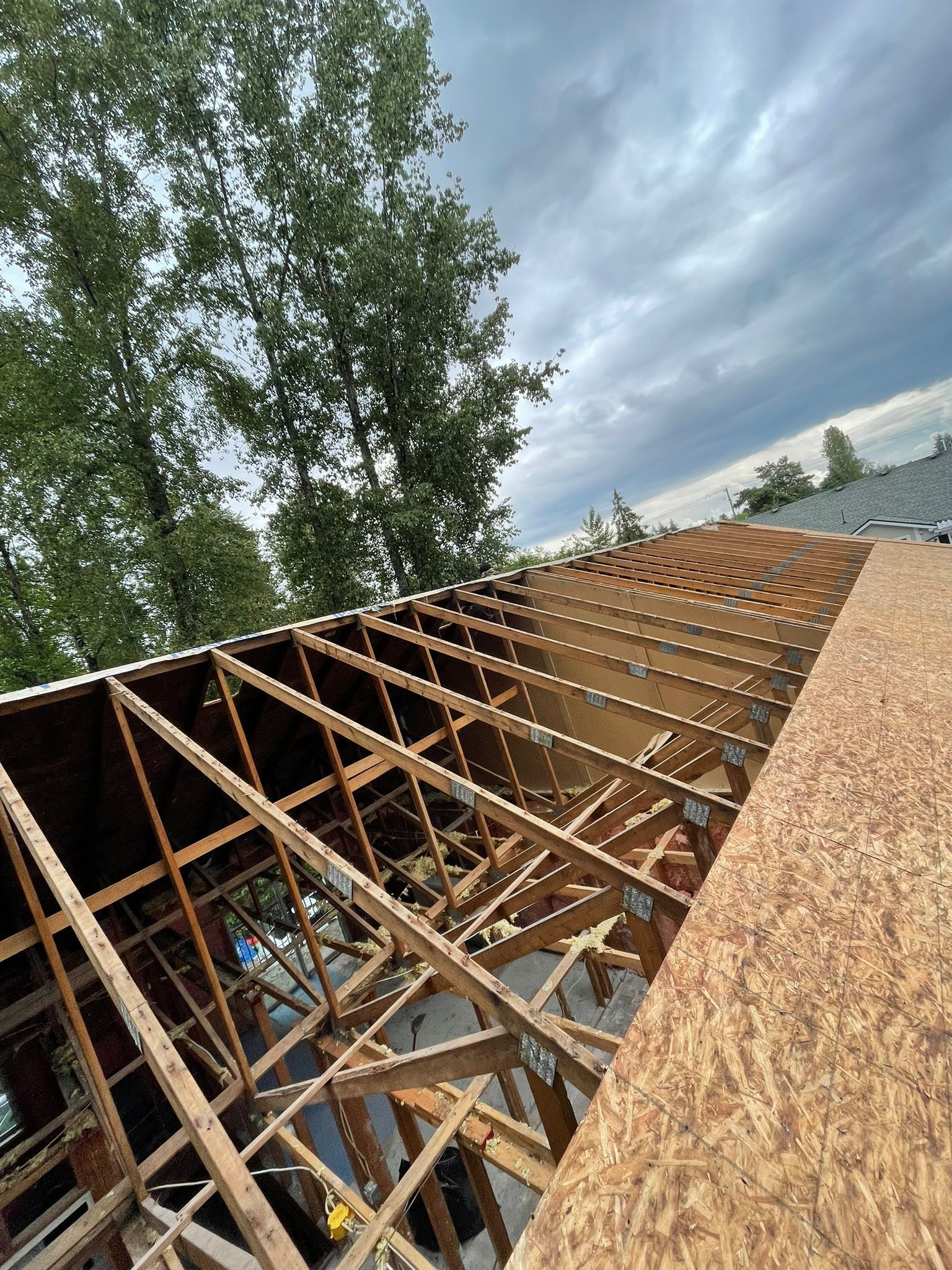
- Assess fragile and unreliable surfaces. Older industrial roofs often have fibreglass panels, rusted steel decking, or degraded membranes. Skylights are a particularly serious hazard — workers have fallen through them without any warning.
- Document mechanical hazards. HVAC units, cooling towers, exhaust stacks, and roof-mounted equipment all create trip, entanglement, and fall hazards.
- Account for seasonal and weather risks. BC winters bring ice accumulation, moss growth, and strong winds. Wet conditions on a low-slope membrane roof can be as dangerous as working at the edge.
Comparison: Paper-based reviews vs. practical walkthroughs
| Assessment type | Benefits | Limitations |
|---|---|---|
| Paper-based review | Quick, low disruption, easy to document | Misses hidden hazards, surface changes, and equipment shifts |
| Practical walkthrough | Identifies real conditions, catches recent changes | Takes more time, requires trained personnel |
| Combined approach | Maximises coverage, satisfies both regulatory and field needs | Requires coordination and formal sign-off |
Pro Tip: Institutional facilities like UBC require a formal sign-off before any fall protection system is used for roof replacement or renewal work. Borrowing this practice for your own facility raises governance quality significantly. It creates a clear accountability trail and signals to inspectors that your programme is living, not just documented. Linking your assessment directly to your roof compliance documentation process ensures nothing gets lost between the rooftop and the filing cabinet.
If your facility uses specialised roofing materials or has recently undergone upgrades, reviewing the available industrial roofing solutions can also inform which hazards to prioritise during assessment.
Matching controls to risks: The WorkSafeBC hierarchy
With a structured hazard assessment in hand, facility managers can now select and verify the right controls — a process that regulators are intensely scrutinising.
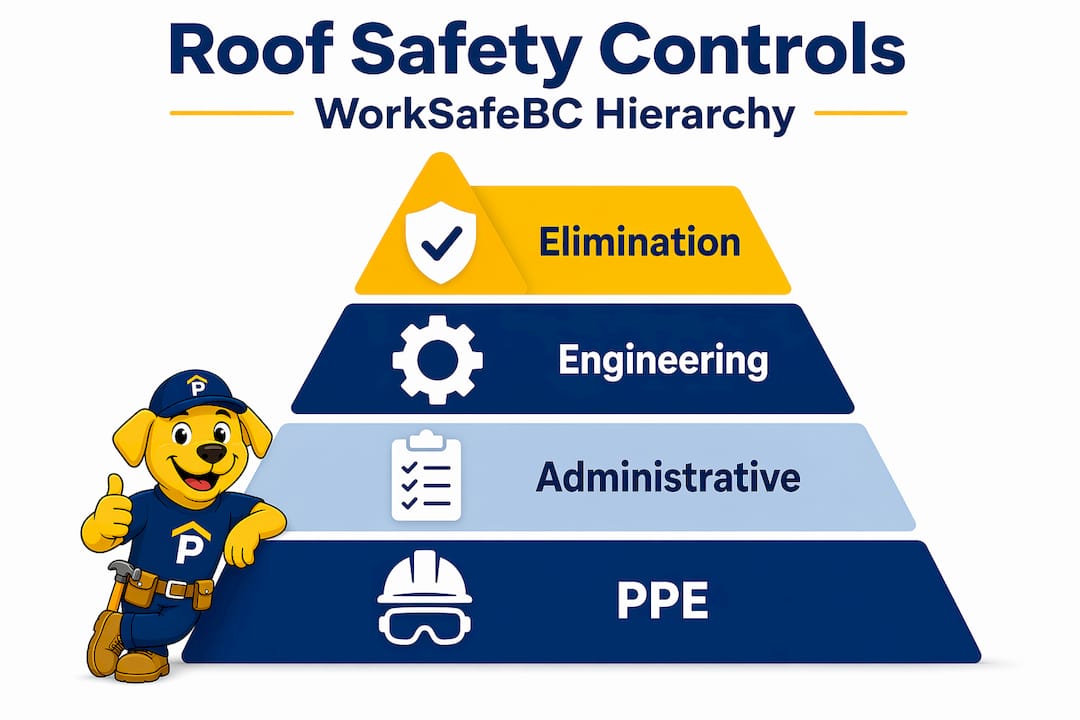
WorkSafeBC requires that controls be applied in a specific order of priority. Think of it as a ladder of effectiveness, where you always try to climb as high as possible before settling for a lower rung:
- Eliminate the hazard — Can you redesign the task so workers never need to go on the roof? Remotely monitored systems and drone inspections are increasingly viable options.
- Engineer the hazard out — Install permanent guardrails, parapet extensions, or roof hatches with self-closing gates. These controls work without depending on worker behaviour.
- Administrative controls — Implement permit-to-work systems, restricted access zones, and buddy systems. These rely on people following procedures consistently.
- Personal protective equipment (PPE) — Harnesses, lanyards, and self-retracting lifelines are the last line of defence, not the first.
Practical, verifiable fall protection is what regulators are checking. If your harness anchor points are corroded, your lanyards are frayed, or your guardrails wobble when pushed, no amount of policy documentation will protect you from a penalty.
Common control measures: Effectiveness and inspection readiness
| Control measure | Effectiveness | Inspection readiness |
|---|---|---|
| Permanent guardrails | Very high | High — visible and verifiable immediately |
| Roof edge warning lines | Moderate | Moderate — must be correctly placed and marked |
| Anchor points for harness | High | Moderate — requires load certification records |
| Administrative access restrictions | Moderate | Lower — relies on training records and supervision logs |
| PPE only | Lower | Low — requires documented fit testing and inspection logs |
When you are preparing for an inspection or a routine verification audit, focus on what an inspector can confirm in five minutes on the roof. Here is your practical checklist:
- Are anchor points load-certified and visibly labelled with certification dates?
- Are guardrails at the correct height (1 metre minimum) and structurally sound?
- Are warning line systems correctly placed at least 2 metres from the edge?
- Are all workers who access the roof listed in current training records?
- Are inspection logs for harnesses and lanyards available on-site, not just in the office?
Pro Tip: Think about your controls the way a visiting inspector does. They are asking: “If I were a worker on this roof right now, would I actually be protected?” Walk your roof with that question in mind before any scheduled or surprise visit. Combining this mindset with a solid understanding of industrial roof control methods and your roofing safety guide resources gives you a strong foundation for inspection readiness.
Training, planning, and supervision: Sustaining high standards
Even when controls are technically sound, the “human element” of planning, training, and monitoring decides whether safety practices succeed or fail over time.
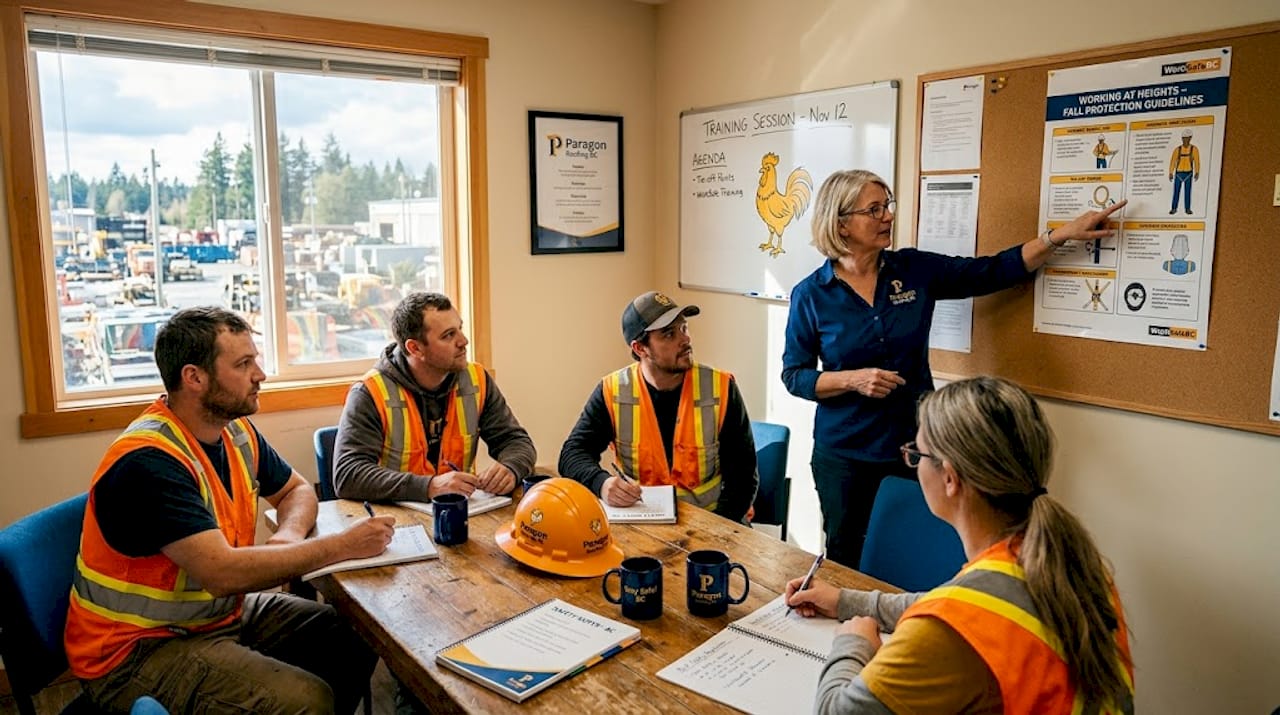
It is easy to run a solid onboarding session and then consider the training box ticked. But WorkSafeBC’s enforcement data shows that this approach consistently fails. Safety training, plan review, and documented supervision must be continuous processes built into your facility’s daily and seasonal rhythms.
Here is a best-practice framework for sustaining high standards over time:
- Conduct field-level risk assessments before every roof access event. A five-minute conversation at the base of the ladder, confirming conditions and controls, catches the risks that a once-a-year review misses.
- Schedule formal plan reviews at least annually and also after any near-miss event, structural change, or significant weather damage.
- Maintain a training register that records who was trained, by whom, on what date, and what was covered. Verbal assurances mean nothing under scrutiny.
- Assign a designated supervisor for every roof access event. This person is accountable for confirming that controls are in place before work begins.
- Review your fall protection plan after any equipment change. New HVAC units, solar arrays, or communication towers create new hazards that your existing plan may not address.
- Conduct unannounced internal audits. If your team only performs well when they know they are being watched, your safety culture has a serious gap.
“WorkSafeBC’s 2024 enforcement data is a clear signal: $1.07 million in penalties were issued for inadequate fall protection, demonstrating that paperwork alone is not enough. Ongoing training, supervision, and fall protection planning are critical to real compliance.”
The roofing materials your facility uses also affect training requirements. Workers accessing a roof with fragile fibreglass panels need different instruction than those on a fully reinforced concrete deck. Tailoring training to the actual surface conditions is a detail that separates good safety programmes from great ones. For facilities planning maintenance or upgrades, integrating safety reviews into your roof repair planning process keeps safety embedded in every project phase.
A deeper look: Why practical verification beats paperwork every time
Here is something that most safety guides will not say plainly: your binder of policies and your laminated checklists will not stop a fall, and they will not stop a penalty either.
We have seen facility managers across the Lower Mainland who genuinely believed their programmes were solid. They had hazard assessments signed and filed, fall protection plans reviewed annually, and training records in order. Then a WorkSafeBC inspector arrived unannounced, walked the roof, and found a guardrail that moved when pushed, anchor points with no certification dates, and a worker who could not explain what to do if a colleague fell. The 2024 enforcement data tells us this is not an isolated story — it is a pattern.
The enforcement model has shifted. WorkSafeBC is now running targeted blitz campaigns in industrial and construction sectors, specifically looking for the gap between what the paperwork says and what exists on the roof. Surprise visits are designed to expose exactly this. If you cannot show an inspector a working, anchored, correctly positioned control in real time, the documentation becomes irrelevant.
Borrowing governance practices from large institutional facilities is genuinely useful here. UBC’s approach of requiring a formal sign-off before any fall protection system is activated for roof work creates a moment of accountability that a routine annual review cannot replicate. It means a qualified person physically confirmed the system was ready before workers went up. That is a standard worth adopting, regardless of your facility’s size.
The practical takeaway is simple but demanding: treat every roof access as if an inspector is watching. Because increasingly, one might be. Aligning your day-to-day operations with the expectations outlined in the BC industrial roof compliance guide is the most reliable way to stay on the right side of both safety and regulation.
How Paragon Roofing BC supports safer, compliant industrial facilities
Implementing and sustaining robust roof safety is easier with support from sector experts who understand both the physical demands of industrial roofing and the regulatory expectations you are working within.
At Paragon Roofing BC, we work with industrial facility managers across British Columbia to deliver roof installations, replacements, and detailed inspections that align with WorkSafeBC compliance requirements. Whether you need a site-specific roof assessment, guidance on upgrading edge protection as part of a re-roofing project, or a full structural evaluation before your next maintenance cycle, our team brings the expertise and local knowledge to get it done right. We have supported facilities across Vancouver and the broader BC region with solutions that stand up to both BC’s climate and its regulatory scrutiny. Reach out today to discuss your facility’s needs and let us help you close the gap between your paperwork and your real-world protection.
Frequently asked questions
What is the WorkSafeBC 3-metre rule for roof safety?
The 3-metre trigger requires formal fall protection for any work at or above 3 metres from a lower level, or wherever a fall at any height could cause serious injury, such as onto machinery or fragile surfaces.
What is the most common reason for roof safety penalties in BC?
Penalties most often occur when fall protection is inadequate in practice, not simply missing from paperwork. In 2024, 152 penalties totalling over $1 million were issued specifically for this gap between documentation and real-world implementation.
How frequently should industrial roof controls and plans be reviewed?
Controls and plans should be reviewed at minimum annually, but also after any near-miss, structural change, or significant weather event. Institutional facilities like UBC require formal sign-off before activating fall protection systems for any roof replacement or renewal, which is a strong benchmark for ongoing review discipline.
Can I use only training and supervision instead of engineered controls for roof safety?
No. WorkSafeBC’s control hierarchy requires that engineering controls be implemented wherever feasible. Training and supervision alone do not meet the regulatory standard and will not satisfy an inspector.
What recordkeeping is expected for industrial roof safety compliance?
You need current hazard assessments, control verification records, equipment inspection logs, and individual training records all ready for immediate access on-site. Verifiable fall protection implementation means records that match what is physically on the roof, not just what the policy manual describes.