Reflective roofing: Reduce heat and save energy in BC homes
TL;DR:
- Many BC homeowners believe that simply painting roofs white or choosing light-colored shingles will cool buildings, but true energy savings depend on engineered materials and proper assembly. Reflective roofing, or cool roofing, is designed to bounce sunlight away, keeping structures up to 28°C cooler, reducing attic temperatures, and lessening HVAC strain. Success relies on a system approach that includes insulation, moisture control, and thermal bridging management, not just surface colour.
Many BC homeowners assume that painting a roof white or choosing a light-coloured shingle is all it takes to keep a building cooler in summer. That belief is understandable, but it skips over the real science and local building requirements that actually determine whether a roof performs as an energy-saving tool. True reflective roofing combines engineered materials, certified performance ratings, and code-compliant assemblies that go well beyond a simple colour choice. This guide walks you through exactly what reflective roofing is, which products suit BC properties, how local codes apply, and the concrete steps you can take to move forward confidently.
Table of Contents
- What is reflective roofing and how does it work?
- Main types of reflective roofing products
- How reflective roofing fits into BC building codes and energy design
- Benefits and limitations: What to expect from reflective roofing in BC
- How to get started: Next steps for BC homeowners and managers
- Why focusing on the entire roof system matters more than just colour
- Transform your property with expert reflective roofing solutions
- Frequently asked questions
Key Takeaways
| Point | Details |
|---|---|
| Reflective roofing defined | A reflective roof system is engineered to reflect sunlight and reduce heat build-up, not just to be light-coloured. |
| Benefits beyond colour | BC code and real energy performance require holistic roof assembly choices, not just a reflective surface. |
| Variety of solutions | Reflective roofing options include membranes, coatings, and shingles—each suitable for different property needs. |
| Regulatory compliance | All reflective roofs in British Columbia must meet local building envelope and energy standards. |
| Actionable next steps | To benefit from reflective roofing, check ratings, consult local experts, and address assembly details. |
What is reflective roofing and how does it work?
Reflective roofing, often called cool roofing, is a category of roofing systems specifically designed to bounce sunlight away from a building rather than absorbing it as heat. Think of the difference between wearing a dark cotton T-shirt versus a light, moisture-wicking athletic shirt on a sunny July afternoon in Kelowna. The physics are similar at the roof level, just scaled up dramatically.
Two numbers define a reflective roof’s performance. The first is solar reflectance, which measures how much sunlight a surface bounces back (a scale of 0 to 1, with 1 being a perfect mirror). The second is thermal emittance, which measures how well the surface releases any heat it does absorb. Both numbers need to be high for a roof to genuinely qualify as “cool.” A roof that reflects well but traps absorbed heat in the membrane is only doing half the job.
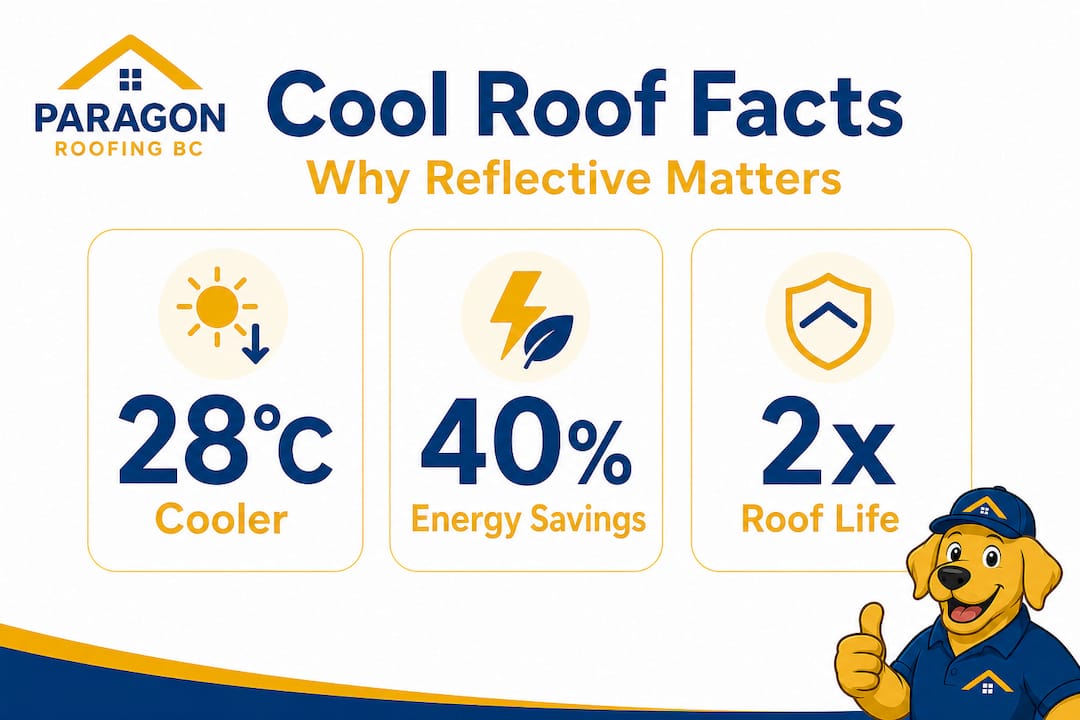
Here is why that matters in practice. Reflective roofs can stay about 28°C cooler than conventional roofs under the same sunlight conditions. That gap translates directly into lower attic temperatures, reduced strain on air conditioning or ventilation systems, and a more comfortable interior on those increasingly warm BC summers.
Key differences between reflective and conventional roofs:
- Conventional dark asphalt shingles typically have a solar reflectance below 0.10, meaning they absorb over 90% of sunlight as heat
- Certified cool roofing products often achieve solar reflectance of 0.65 or higher
- High thermal emittance (above 0.75) ensures absorbed heat is released rather than conducted inward
- Standard roof surface temperatures on a hot day can exceed 70°C; certified reflective surfaces often stay below 45°C
These are not trivial differences. An attic running 25°C cooler puts far less stress on your ceiling insulation and on your HVAC equipment. You can explore our cool roofing services to see how these principles apply to specific products we install across BC.
Main types of reflective roofing products
Once you understand the performance criteria, the next step is knowing which products are actually available for your building type. Reflective roofing covers a wide range, from special coatings to highly-engineered membranes, and the right choice depends heavily on your existing roof structure, slope, and budget.
| Product type | How it works | Best suited for | Key considerations |
|---|---|---|---|
| Reflective coatings | Applied over existing membrane or metal; high reflectance pigments | Low-slope commercial, flat roofs | Requires clean, sound substrate; reapplication every 5-10 years |
| Cool membranes (TPO, PVC) | Factory-engineered white or light membranes | Flat and low-slope residential and commercial | Durable, weld-sealed seams; excellent long-term reflectance |
| Reflective shingles | Asphalt shingles with embedded reflective granules | Sloped residential roofs | Must carry Cool Roof Rating Council (CRRC) certification |
| Metal roofing with cool finish | Pre-painted metal panels with reflective coatings | All slopes, residential and commercial | Long lifespan; check coating’s emittance rating, not just colour |
| Green/vegetative roofs | Soil and plant layer acts as insulation and evaporative cooler | Flat roofs with structural capacity | Separate assessment needed; excellent thermal performance |
Pro Tip: Not every white or light-coloured roof qualifies as a “cool” roof under performance standards or BC energy codes. Always ask the supplier for the CRRC-listed solar reflectance and thermal emittance values before purchasing. A roof that looks pale but has not been rated could still perform no better than a dark shingle.
For a broader comparison of materials suited to BC’s climate zones, ranging from the rainy Lower Mainland to the hotter Okanagan interior, the best roofing materials for BC guide is a useful companion resource.
How reflective roofing fits into BC building codes and energy design
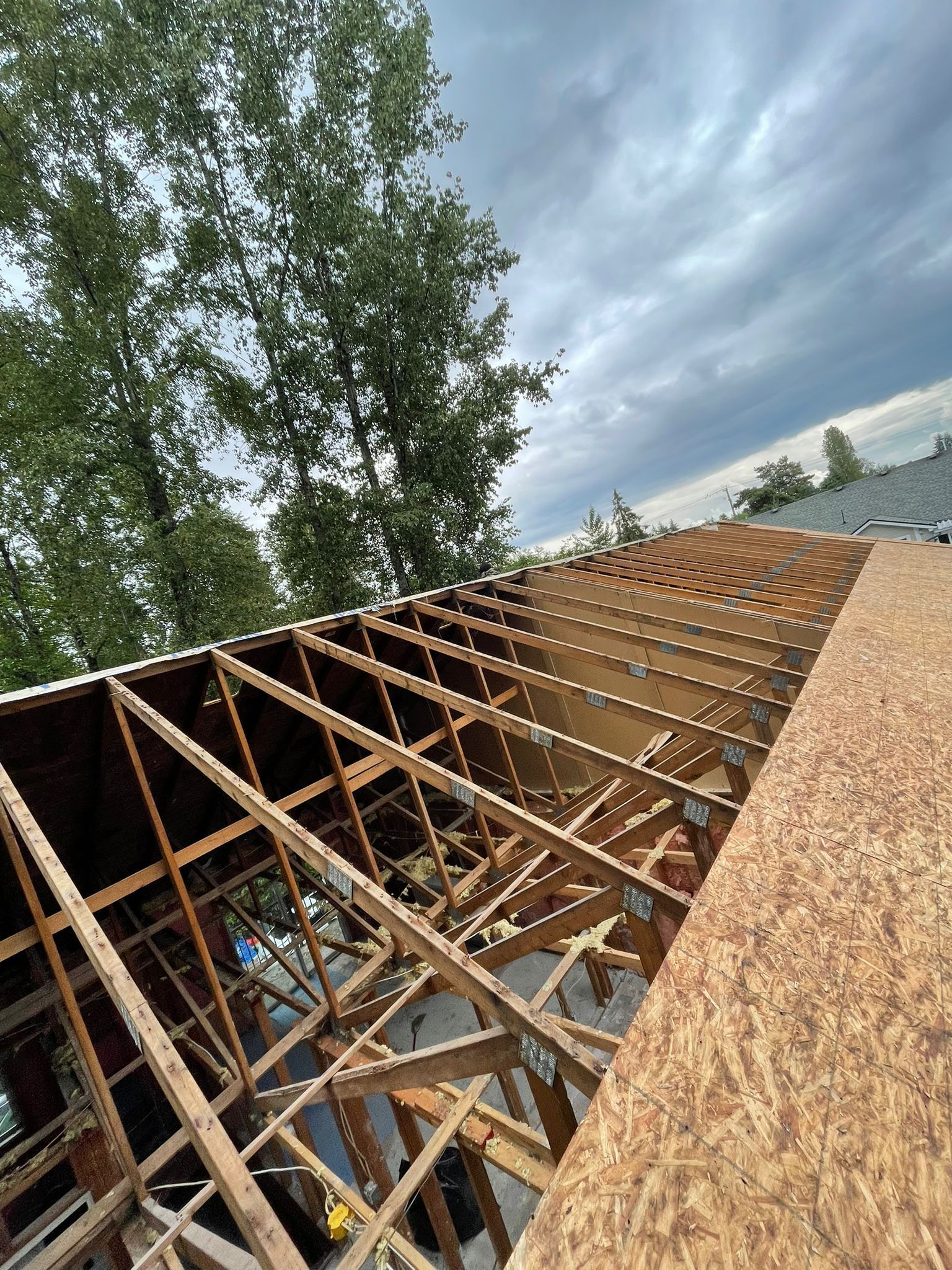
Here is where things get real for BC homeowners and property managers. You might choose the most reflective membrane on the market, but if the rest of your roof assembly is not built correctly, you will not see the energy savings you expect. In BC, reflective roofs are one part of energy-efficient roof assemblies required by code, involving insulation, moisture control, and thermal bridging management.
Thermal bridging, for example, happens when a structural element like a wood joist or steel beam conducts heat through your insulation layer, effectively creating a “shortcut” for energy loss or gain. A reflective surface reduces the solar load on the roof deck, but thermal bridging can still undermine your building’s overall thermal envelope performance.
Key code considerations for reflective roofing in BC:
| Code element | What it means for your roof | Why it matters |
|---|---|---|
| Effective thermal resistance (RSI) | Minimum insulation value for your climate zone | Reflective surface alone cannot compensate for under-insulated assemblies |
| Vapour control layer | Prevents moisture from condensing inside the roof assembly | Critical in BC’s wet climate; wrong placement ruins performance |
| Air barrier continuity | Seals the building against uncontrolled air movement | Air leaks can transfer more heat than a low-reflectance surface |
| Thermal bridging management | Continuous insulation above the deck reduces heat pathways | Required under BC Step Code for many new builds and major renovations |
Questions to ask your roofer before work begins:
- Does this assembly meet the effective RSI value required for my climate zone under the BC Energy Step Code?
- How will the vapour control layer be positioned given my roof slope and interior conditions?
- Is continuous insulation above the deck included, or are we relying solely on between-rafter insulation?
- What certified reflective products are you specifying and where are they listed?
- Will the completed assembly require any third-party verification or inspections?
“Overall energy performance depends on correct assembly, not just the roof surface. A reflective membrane installed over an inadequate insulation layer or with uncontrolled thermal bridges will deliver a fraction of the expected benefit.” This is a principle we reinforce on every project we touch, and it is exactly the message behind sustainable roofing in BC guidance. The cool roofing benefits are real, but only when the full system is designed correctly.
Benefits and limitations: What to expect from reflective roofing in BC
Let’s be straight with you. Reflective roofing is genuinely useful, but it is not a silver bullet for every BC property. Understanding what it actually delivers, and where it falls short, will save you from disappointment and help you invest your budget in the right places.
Main benefits for BC properties:
- Energy cost reduction. In the hotter months, particularly in the Fraser Valley, Okanagan, or southern interior, a reflective roof can meaningfully reduce air conditioning load. Some commercial buildings report 10-15% cooling energy savings after upgrading to cool membranes.
- Extended roof life. Surfaces that run cooler experience less thermal expansion and contraction, which is a major driver of membrane cracking and premature failure. A cooler roof simply ages more slowly.
- Improved interior comfort. Top-floor suites, loft spaces, and rooms directly below the roof deck are often noticeably warmer than the rest of a building. Reflective roofing is one of the most direct ways to address that specific problem.
- Reduced urban heat island effect. At the neighbourhood scale, clusters of reflective roofs lower ambient outdoor temperatures, a benefit that matters increasingly to Metro Vancouver and Kelowna planners.
When to consider reflective roofing:
- Your building is in a climate zone with warm to hot summers (Okanagan, Fraser Valley, southern coast)
- You are replacing an existing roof anyway and want to upgrade performance at minimal extra cost
- You have a flat or low-slope roof where cool membranes are the standard professional choice
- Your top-floor spaces are uncomfortably warm in summer
- You are pursuing BC Energy Step Code compliance for a new build or major renovation
When reflective roofing may be less impactful:
- Your property is in a predominantly cool, overcast coastal location where summer heat is not a primary concern
- Your roof assembly has significant insulation deficiencies that need to be fixed first
- The roof slope is too steep for coatings to adhere properly
- Budget is limited and you have not yet addressed air sealing or insulation gaps
Qualification for cool roofing incentives and rebates is programme-specific and verified through product directories, so check with BC Hydro, FortisBC, and municipal programmes before budgeting. The role of roofing materials in your home’s overall efficiency is broader than reflectance alone, and understanding the full picture helps you prioritise correctly.
Pro Tip: BC Hydro and FortisBC periodically offer rebates tied to energy-efficient upgrades. Before your project begins, confirm whether your chosen cool roofing product is listed in an approved directory, because uncertified products typically do not qualify regardless of their colour.
How to get started: Next steps for BC homeowners and managers
If you have made it this far, you are ready to move from theory to action. Here is a practical roadmap for transitioning to reflective roofing on your BC property.
Action steps for transitioning to reflective roofing:
- Assess your current roof. Determine the age, condition, and type of existing roof. Applying a reflective coating over a membrane that has five years of life left makes good financial sense. Applying it over a structurally failing roof wastes money.
- Identify your climate zone. BC spans a huge range of climates. A property in Penticton has very different solar load conditions than one in Prince Rupert. Your roofer should use climate zone data from the BC Energy Step Code to size and specify your assembly.
- Check for certified products. Reflective roofing must meet performance standards verified by product directories such as the CRRC (Cool Roof Rating Council). Ask your supplier for the listing number and confirm it covers both solar reflectance and aged thermal emittance values.
- Interview prospective roofers. Not all roofing contractors are familiar with cool roof assembly requirements or BC’s Step Code provisions. Ask specifically about their experience with continuous insulation, vapour control, and thermal bridging management.
- Plan for inspection and maintenance. Reflective coatings need periodic cleaning because dirt accumulation lowers reflectance significantly over time. Membranes should be inspected annually, particularly after winter, to catch any seam or flashing issues early.
- Explore available rebates. Research BC Hydro, FortisBC, and municipal green building incentive programmes. Some rebates require pre-approval before construction begins, so do not skip this step.
The roof maintenance checklist for BC homeowners is a practical resource to bookmark once your new reflective roof is installed, ensuring you protect that investment long-term.
Why focusing on the entire roof system matters more than just colour
Here is my honest take after working on roofs across British Columbia for years: the biggest mistake property owners make with reflective roofing is thinking the surface is the solution. It is not. The surface is the starting point.
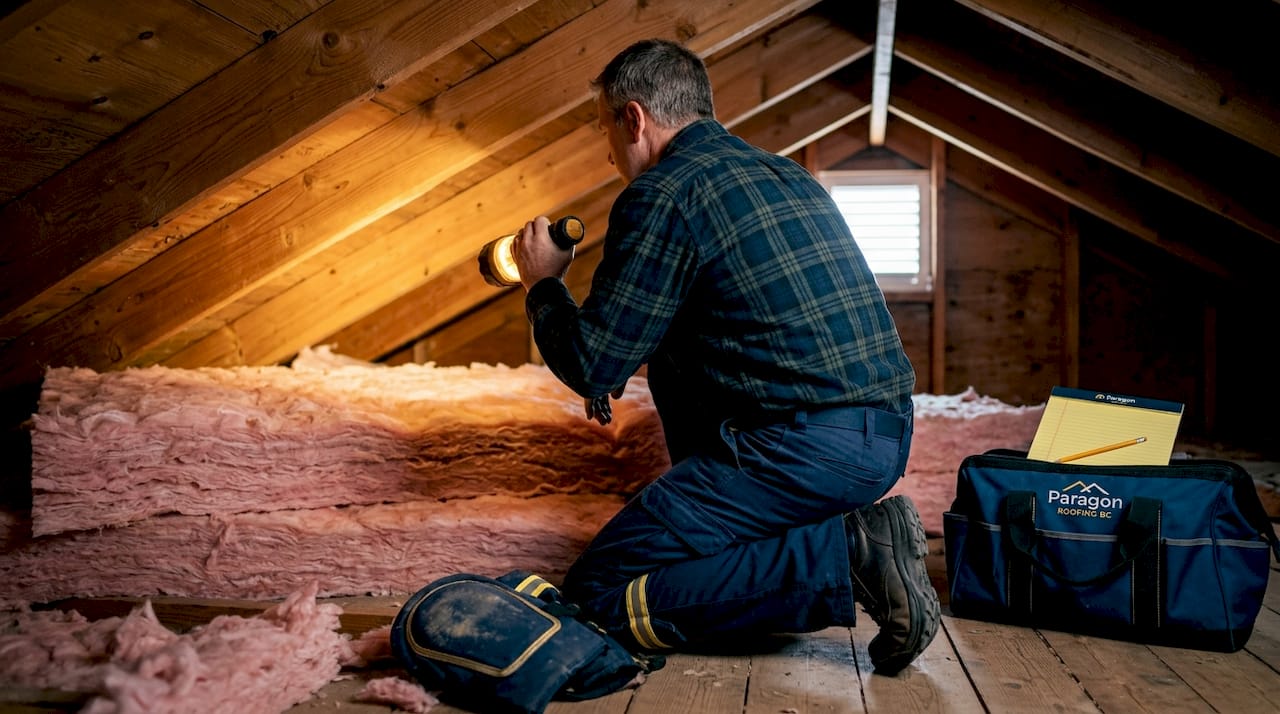
Even with reflective surfaces, performance depends on insulation, assembly details, and thermal-bridge management. I have seen homes in the Lower Mainland where the owner invested in a certified cool membrane but never addressed the inadequate R-value in the roof deck cavity below it. The result? Marginally better summer temperatures and a very disappointed homeowner who expected dramatic savings.
The roof is a system, like the drivetrain of a vehicle. You can put the best tyres on a car, but if the suspension is worn out and the alignment is off, those tyres are not going to give you the ride you paid for. Every component from the roof deck up through the vapour control layer, the continuous insulation, the cover board, the reflective membrane, and finally the flashing details around penetrations needs to work together as a coherent whole.
Spending a few hundred dollars more to get continuous insulation above the deck, or to properly detail the air barrier at parapet walls, can return years of genuine comfort and energy savings compared with cutting corners and relying purely on reflectance to do the work. That is not a sales pitch; it is the practical reality of building science in BC’s varied climate.
Work with roofers who ask about your insulation levels, your vapour barriers, and your Step Code targets before they talk about product colour. Those are the professionals who will deliver real results. You can find more detail on taking smarter choices for BC roofs that account for the whole assembly, not just the surface.
Transform your property with expert reflective roofing solutions
Ready to put this knowledge to work on your property? At Paragon Roofing BC, we design and install reflective roofing systems that meet BC Energy Step Code requirements, use CRRC-certified products, and account for the full roof assembly, not just the top layer.
Whether you are in Vancouver, Coquitlam, or anywhere across the province, our team brings local expertise to every project. We offer roof installation in Coquitlam and comprehensive roof installation services across Vancouver, along with ongoing roof maintenance and inspections to protect your investment over time. Contact us today for a consultation or no-obligation quote and start saving energy the right way.
Frequently asked questions
How much cooler does a reflective roof keep a building in BC?
Reflective roofs can stay up to 28°C cooler than conventional dark roofs under identical sunlight conditions, which translates into meaningfully lower attic temperatures and reduced cooling loads during warm BC summers.
Are all white or light-coloured roofs considered “reflective roofs” under code?
No. Only roofs meeting specific criteria for solar reflectance and thermal emittance qualify as cool or reflective roofs. Colour alone is not a performance guarantee, so always verify the CRRC product listing.
Can I install reflective roofing on any building in British Columbia?
Most building types can accommodate reflective roofing, but BC building envelope standards require compliance with insulation minimums, moisture control details, and proper installation specifications before any project can be considered code-compliant.
How do I check if a roofing product is truly “cool” or reflective?
Look for the product in the CRRC product directory, which lists verified solar reflectance and thermal emittance ratings for thousands of products. Ask your roofer to provide the listing number before work begins.
Will installing a reflective roof lower my energy bill in BC?
Reflective roofs can reduce cooling costs during warmer months, but total energy savings depend on the quality of insulation, air sealing, and the overall roof assembly rather than the reflective surface alone.