Roofing drainage challenges and expert solutions for BC
TL;DR:
- Proper roof slope and drainage are crucial in BC’s wet climate to prevent costly water damage. Design flaws, such as insufficient slope or clogged gutters, often cause most drainage failures, regardless of material quality. Regular inspections and appropriate system upgrades help maintain effective water runoff and extend roof lifespan.
You might spend a small fortune on premium asphalt shingles or a beautiful metal roof, and it can still leak, bubble, and deteriorate within a few years. That’s a reality we see far too often here in British Columbia. The RCABC emphasises that slope and drainage matter more than material choice when it comes to long-term roofing performance. If the water has nowhere to go, the best roofing product in the world won’t save you. This article walks you through the real drainage challenges facing BC homeowners and property managers, and what actually works to solve them.
Table of Contents
- Why drainage matters in British Columbia’s climate
- Common roofing drainage challenges for BC homes
- How design and materials influence drainage performance
- Expert solutions for effective roof drainage in BC
- Why most BC roofing drainage issues are design—not material—failures
- Get expert help for your BC roofing drainage needs
- Frequently asked questions
Key Takeaways
| Point | Details |
|---|---|
| Slope is critical | Proper roof slope prevents drainage problems in BC’s rainy climate. |
| Design over material | Smart drainage design matters more than shingles or roof type alone. |
| Regular maintenance needed | Inspections and gutter cleaning stop most drainage issues before they start. |
| Professional help pays off | Complex design or recurring problems require expert solutions for long-term peace of mind. |
Why drainage matters in British Columbia’s climate
British Columbia’s weather is unlike anywhere else in Canada. Vancouver regularly ranks among the wettest cities in the country, with some coastal communities receiving well over 1,500 millimetres of rain per year. The Lower Mainland alone can experience multi-week stretches of steady, heavy rainfall that push older or poorly designed drainage systems well past their limits.
The trouble isn’t just the volume of water. It’s the combination of heavy rain, variable temperatures, and the occasional freeze that creates a perfect storm for roofing failures. BC roofs face:
- Extended wet seasons that last from October through April
- Sudden temperature drops that can turn ponded water into ice overnight
- Mossy and debris-laden gutters that clog fast in our tree-heavy neighbourhoods
- Flat or low-slope commercial and multi-family roofs that are especially vulnerable
Local roofing conditions in BC make effective drainage design not just helpful but absolutely essential. When drainage fails, water finds its way under membranes, into fascia boards, and eventually into your living space. Repairs at that stage are never cheap.
Ponding water is one of the most damaging things that can happen to a roof. Standing water adds structural weight, accelerates membrane degradation, and creates the perfect growing conditions for algae and moss. Vancouver properties with flat rooftops are particularly prone to this. If you’re managing a commercial or multi-family building, rainwater management in Vancouver deserves your full attention, not just a line item on a maintenance checklist.
Now that you know why drainage can’t be ignored, let’s explore exactly what can go wrong on a BC roof.
Common roofing drainage challenges for BC homes
Walk through any neighbourhood in Burnaby, Surrey, or Delta after a heavy rainfall and you’ll spot the signs: overflowing gutters, water stains on soffits, dark streaks down siding walls. These aren’t cosmetic problems. They’re symptoms of drainage failures that get worse with every wet season.
Design oversights like insufficient slope and blocked gutters consistently top the list of drainage issues roofing professionals encounter. Here’s a closer look at what we see most often:
- Ponding on flat and low-slope roofs: Water pools in low spots, sometimes sitting for days. Every hour it sits, it’s softening membranes and adding unnecessary load.
- Clogged gutters: Leaves, pine needles, and moss fill gutters quickly in BC’s forested neighbourhoods. Blockages cause water to back up under the edge of the roof.
- Undersized downspouts: A gutter system designed for average rainfall can overflow completely during a BC storm event if the downspouts can’t handle peak flow.
- Improper roof slope: Roofs pitched below the minimum requirement for their material won’t shed water fast enough, leading to leaks and saturation.
- Ice damming in colder BC regions: In areas like Kelowna, Kamloops, or higher elevations around Metro Vancouver, heat escaping through the attic melts snow on the upper roof. That meltwater travels down and refreezes at the eaves, forming a dam that forces water backward under shingles.
“Most drainage failures we’re called to repair weren’t caused by material defects. They were caused by roofs that were never designed to handle what BC rain actually delivers.”
Understanding roof pitch and drainage is one of the most important steps any homeowner or property manager can take. Slope isn’t just a visual feature of your roof. It’s the engine that drives water away from your building.
Pro Tip: After any major rainstorm, do a quick walk around your property and look up at the gutters. If water is spilling over the edge rather than flowing out the downspout, you may already have a blockage or a sizing issue that needs attention before it causes interior damage.
With these risks in mind, it’s important to understand what design and material choices make the biggest difference.
How design and materials influence drainage performance
Here’s the part that surprises most homeowners. Choosing a premium shingle or a high-end membrane won’t protect your home if the underlying design is wrong. Think of it like buying a high-performance sports car but filling it with the wrong fuel. The car still won’t perform as intended.
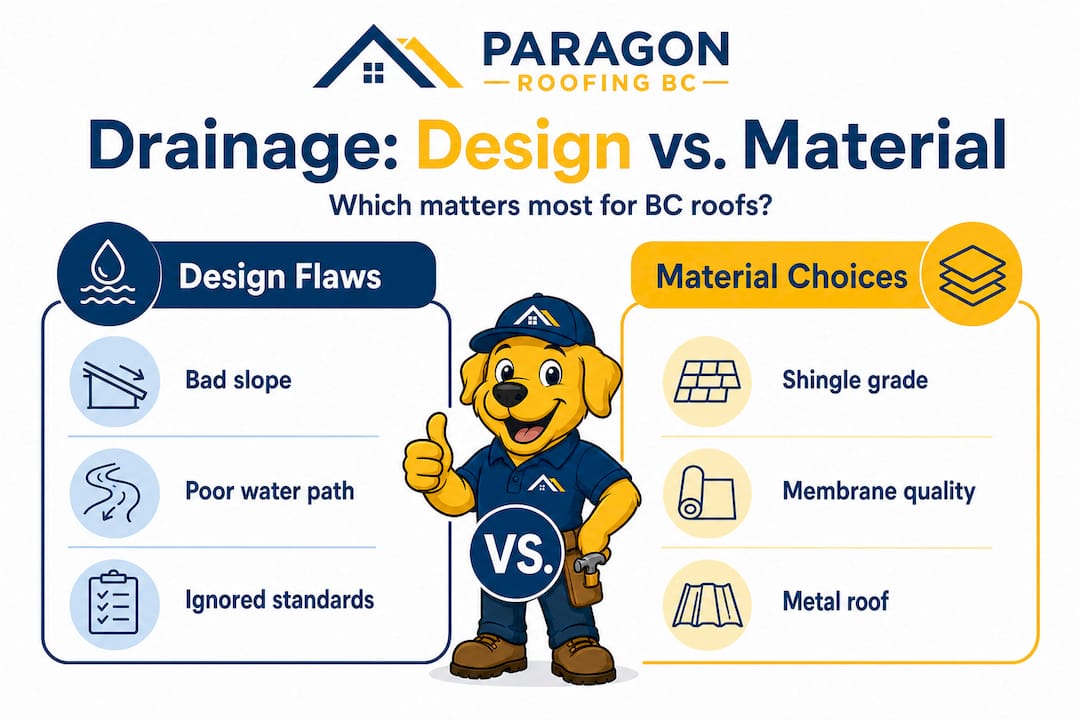
RCABC sets minimum slope requirements for every category of roofing material, and these thresholds exist for good reason. When a roof is installed below those minimum slopes, water lingers on the surface far longer than the material was designed to handle. The result is premature aging, membrane failure, and leaks.
Here’s a general comparison of how common materials perform at different slopes:
| Roofing material | Minimum recommended slope | Performance in heavy rain |
|---|---|---|
| Asphalt shingles | 4:12 or higher | Good at proper pitch, poor on low-slope |
| Metal roofing | As low as 1:12 (standing seam) | Excellent across most slopes |
| Modified bitumen | 1:50 to 1:4 | Suitable for flat and low-slope |
| EPDM membrane | Nearly flat acceptable | Strong when installed correctly |
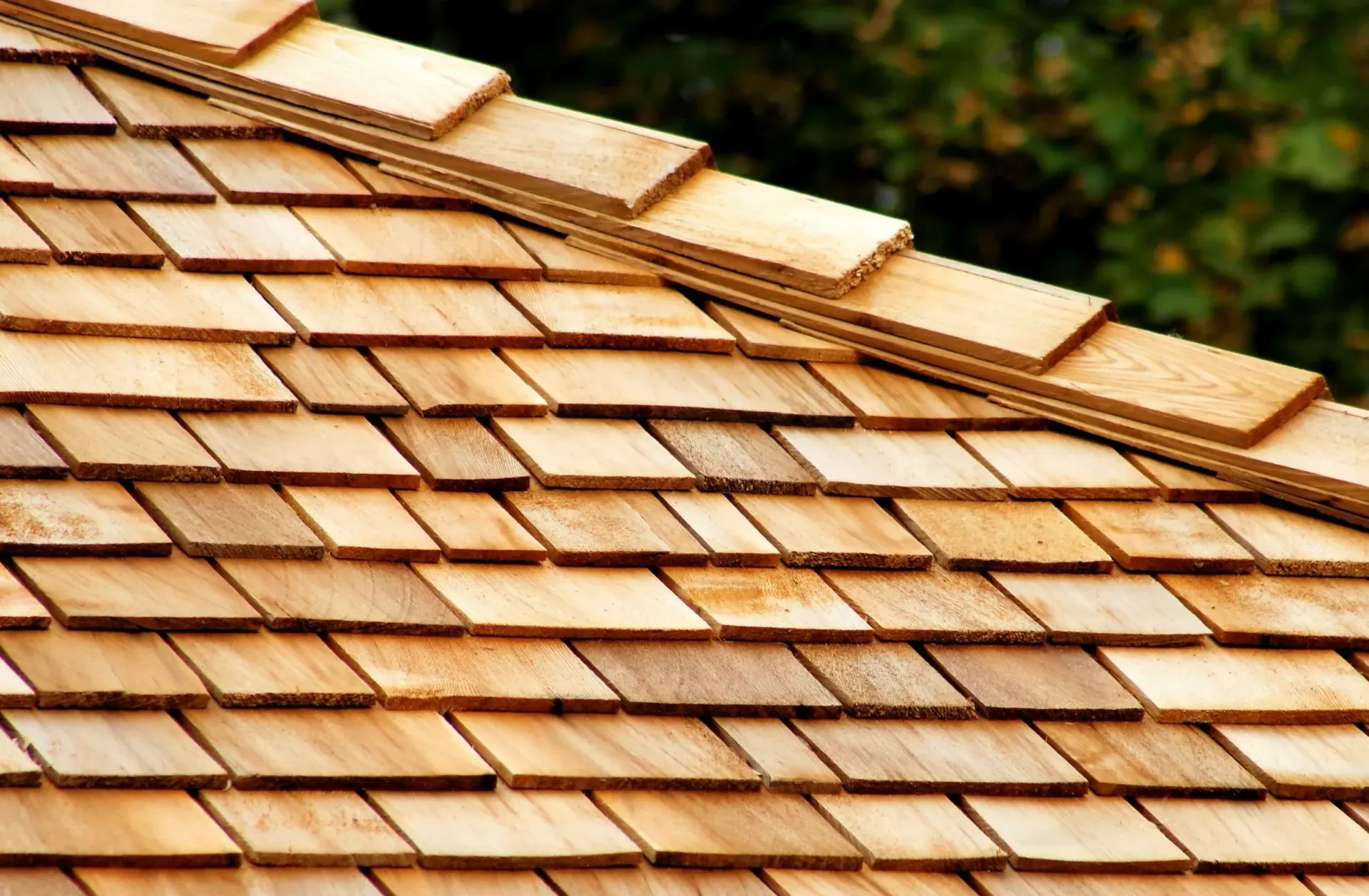
| Cedar shakes | 6:12 or steeper | Excellent on steep roofs only |
Metal roofing is a strong choice for BC’s conditions, and the performance difference between metal and asphalt in Vancouver rain is worth reviewing if you’re weighing options for a replacement or new build.
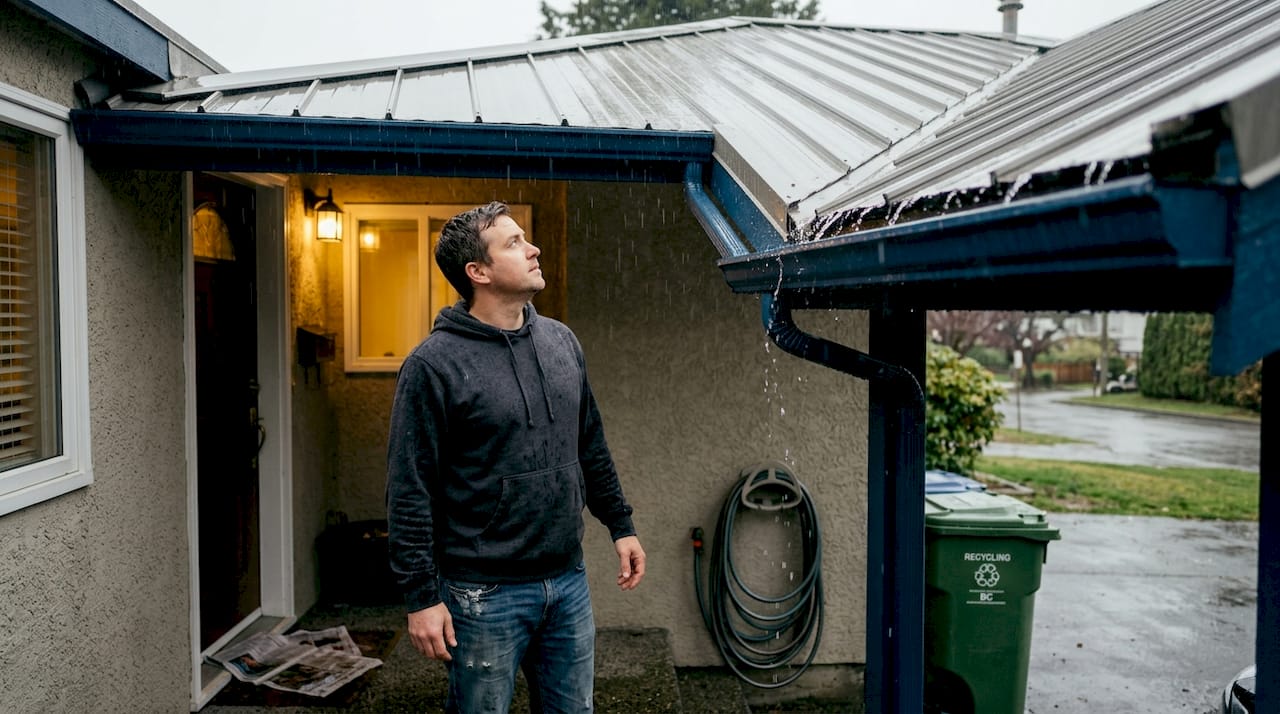
For large commercial roofs, siphonic drainage systems are increasingly used. Unlike traditional gravity-fed drains, siphonic systems use negative pressure to pull water off the roof at high velocity through smaller, horizontal pipes. This is especially useful on warehouse rooftops or large strata buildings where conventional downspouts would need to be placed every few metres. The upfront cost is higher, but the long-term drainage efficiency is significantly better.
Pro Tip: When reviewing quotes for a re-roof, always ask the contractor to specify the slope they’re designing to and how it aligns with RCABC guidelines for your chosen material. Any contractor who can’t answer that question clearly is a contractor worth avoiding. Exploring your roofing material choices ahead of time puts you in a much stronger position during that conversation.
Once you understand how slope and materials interact, it’s easier to see why certain solutions work best in BC. The next section covers practical ways to prevent and resolve the most common drainage problems.
Expert solutions for effective roof drainage in BC
So what can you actually do about it? Whether you’re dealing with an existing drainage problem or designing a new roof system, there’s a clear path forward. Here’s the practical action plan we recommend based on years of working across Metro Vancouver and the rest of BC.
-
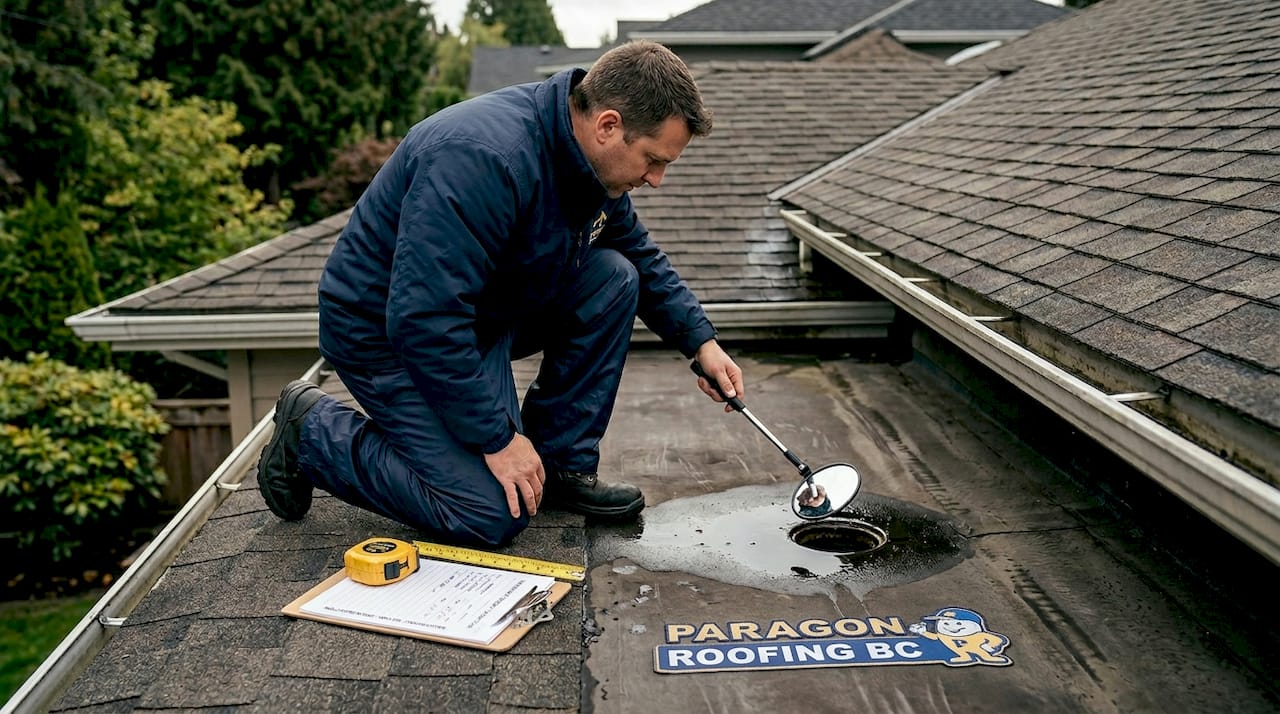
Schedule routine inspections twice a year. Spring and autumn are the ideal windows. A professional inspection catches early signs of debris buildup, slope settling, and membrane fatigue before they turn into full-on water intrusion. Maintenance and professional intervention are crucial to solving drainage problems that DIY approaches can’t safely address.
-
Clean gutters after every leaf-fall season. In BC’s urban and suburban environments, gutters can clog with leaves, needles, and organic matter in just a few weeks. Blocked gutters are the single most avoidable cause of water damage.
-
Upgrade undersized gutter systems. Standard 4-inch gutters are often insufficient for BC’s rainfall intensity. Upgrading to 5-inch or 6-inch gutters, along with matching downspouts, can dramatically reduce overflow risk during heavy storms.
-
Consult a professional for re-sloping. If your flat or low-slope roof has chronic ponding spots, re-sloping using tapered insulation is a highly effective long-term fix. It avoids a full tear-off while correcting the drainage path.
-
Explore siphonic or custom scupper solutions. For large flat roofs on commercial or multi-family buildings, conventional drains may not be enough. Custom scuppers (openings in the parapet wall that allow water to exit) or full siphonic systems can handle volumes that gravity drains can’t.
Here’s a quick reference for matching drainage solutions to common problem types:
| Problem identified | Recommended solution | Complexity level |
|---|---|---|
| Clogged gutters | Clean and inspect seasonally | Low (DIY possible) |
| Overflowing gutters | Upgrade gutter and downspout size | Medium |
| Ponding on flat roof | Tapered insulation re-slope | High (professional) |
| Ice dams at eaves | Improve attic insulation and ventilation | Medium to High |
| Large roof with slow drainage | Siphonic drain or scupper system | High (professional) |
Understanding drainage options in Vancouver for commercial flat roofs is especially valuable for property managers overseeing strata buildings or multi-unit complexes. And if your sloped roof has valley sections where water concentrates, it’s worth knowing that closed-cut vs. open metal valleys can make a meaningful difference in how effectively that water is channelled off your roof.
Pro Tip: If you notice dark water stains on your ceiling after a rainstorm, resist the urge to simply patch the interior. That stain often appears metres away from where the actual leak enters. Call a roofing professional to trace the source. Treating the symptom rather than the cause will cost you more in the long run.
You’re now equipped with a practical action plan, but what does this all mean for making smart choices in BC’s unpredictable weather? Here’s our expert perspective.
Why most BC roofing drainage issues are design—not material—failures
Here’s something we’ve noticed after years on rooftops across this province. When a homeowner calls us about a leaking or failing roof, the first question they almost always ask is, “Was it the wrong material?” Rarely. Almost never, in fact.
The uncomfortable truth is that most costly drainage problems stem from design failures. A roof that wasn’t pitched correctly from the start. Gutters that were sized for average rainfall in another province. Drainage pathways that were never planned around the actual water volume BC’s climate produces. These are decisions made at the design and installation stage, and no amount of premium material can fix them after the fact.
According to RCABC guidance, slope and the water path it creates are the core factors in long-term drainage performance. We’ve seen $30,000 metal roofs fail because the installer didn’t meet minimum slope requirements. We’ve also seen modest asphalt shingle roofs outlast their expected lifespan because the slope, drainage, and ventilation were all designed properly from day one.
The temptation to blame materials is understandable. It’s visible. It’s something you can point to. But the design flaws are hidden beneath the surface, in the angle of a deck, the placement of a drain, or the inadequate sizing of a downspout.
This is why following trusted industry standards matters so much. It’s not bureaucratic box-ticking. Those roof pitch insights and RCABC requirements are distilled from thousands of roofing failures and decades of lessons learned in BC’s specific climate. When a certified contractor follows those guidelines, they’re building in a margin of safety that protects your home for decades.
Peace of mind on a BC property comes from getting the design right the first time, not from paying more for a fancier product.
Get expert help for your BC roofing drainage needs
Ready to take the next step? Paragon Roofing BC works with homeowners and property managers across the Lower Mainland and throughout BC to design, install, and maintain roof systems that are built for this climate’s demands.
Our roof maintenance and inspections service is designed to catch drainage vulnerabilities before they become expensive problems. Annual inspections are one of the smartest investments you can make in your property. If you’re planning a new build or a complete replacement, our roof installation in Coquitlam service ensures your system is designed to current RCABC standards from the ground up. We also offer complete roof replacement in Delta for properties where ageing drainage systems are no longer up to the task. Contact us today for an honest assessment and a solution that’s right for your property.
Frequently asked questions
What is the most common cause of poor roof drainage in BC?
Improper roof slope is the most frequent cause, as even high-quality materials can’t compensate for a design that doesn’t direct water effectively off the roof surface.
How often should roof drainage systems be inspected?
Inspections are recommended at least once a year, and after any major storm or prolonged rainfall. Ongoing inspection and maintenance are required to catch blockages, slope settling, and membrane wear before they lead to interior damage.
Can I fix roof drainage problems myself?
Simple clogs can often be cleared by homeowners, but design fixes and major upgrades require professional expertise for lasting results. Re-sloping and advanced systems are not safe or effective DIY projects.
Are flat roofs riskier for drainage in BC?
Flat and low-slope roofs are more vulnerable to drainage failures, especially during heavy BC rainfall. Ponding is a top concern on these roof types, making specialised drainage design and regular professional maintenance essential.