Why upgrade your BC roof: safety, value, and efficiency
TL;DR:
- Most BC homeowners delay roof upgrades until visible problems arise, risking hidden moisture damage. A full assembly repair, including decking, waterproofing, and ventilation, is essential to combat BC’s wet climate and meet code standards. Investing early in comprehensive upgrades ensures durability, compliance, energy efficiency, and long-term home protection.
Most BC homeowners think about their roof only when something goes wrong — a leak after a heavy rain, a missing shingle after a windstorm, or a ceiling stain that appears out of nowhere. But a roofing upgrade is rarely just about replacing worn-out shingles. It touches on moisture management, structural safety, energy performance, and compliance with BC’s building regulations. If you’re weighing whether to patch things up or invest in a full upgrade, this guide is for you. We’ll walk through why upgrades matter in BC’s unique climate, what the code requires, how materials affect your energy bills, and how to make a confident, informed decision.
Table of Contents
- Why patching isn’t enough: Moisture, ventilation, and durability in BC
- Regulatory compliance and technical requirements: What BC homeowners must know
- Energy efficiency, comfort, and materials: The lasting benefits of upgrading
- Making the decision: Framework for BC homeowners’ roofing upgrade options
- The truth most BC homeowners miss about roofing upgrades
- Upgrade your BC roof safely and for the long term
- Frequently asked questions
Key Takeaways
| Point | Details |
|---|---|
| Assembly upgrades critical | Upgrading the full roof assembly prevents moisture, mould, and premature rot. |
| Compliance matters | Permits, inspections, and code requirements play a central role in BC roof upgrades. |
| Energy efficiency boost | Upgraded insulation and materials reduce energy costs and improve comfort. |
| Long-term value | Comprehensive roofing upgrades increase property value and reduce repair needs. |
| Local expertise essential | Expert guidance and skilled contractors ensure upgrades meet regulatory and climate demands. |
Why patching isn’t enough: Moisture, ventilation, and durability in BC
With misconceptions clarified, let’s explore why basic fixes are often insufficient for BC homes. Here’s the hard truth: slapping a fresh layer of shingles over an ageing roof assembly is like putting a new coat of paint on a rotting fence. It looks better for a season, but the real problem keeps getting worse underneath.
British Columbia’s climate is notoriously wet. Coastal areas like Vancouver, Burnaby, and the Fraser Valley deal with months of rain, persistent humidity, and the occasional freeze-thaw cycle that stresses roofing materials in ways most people don’t anticipate. When moisture infiltrates the roof assembly — the layers of decking, insulation, underlayment, and shingles working together — it can quietly cause rot, mould growth, and degraded indoor air quality long before you notice any visible damage.
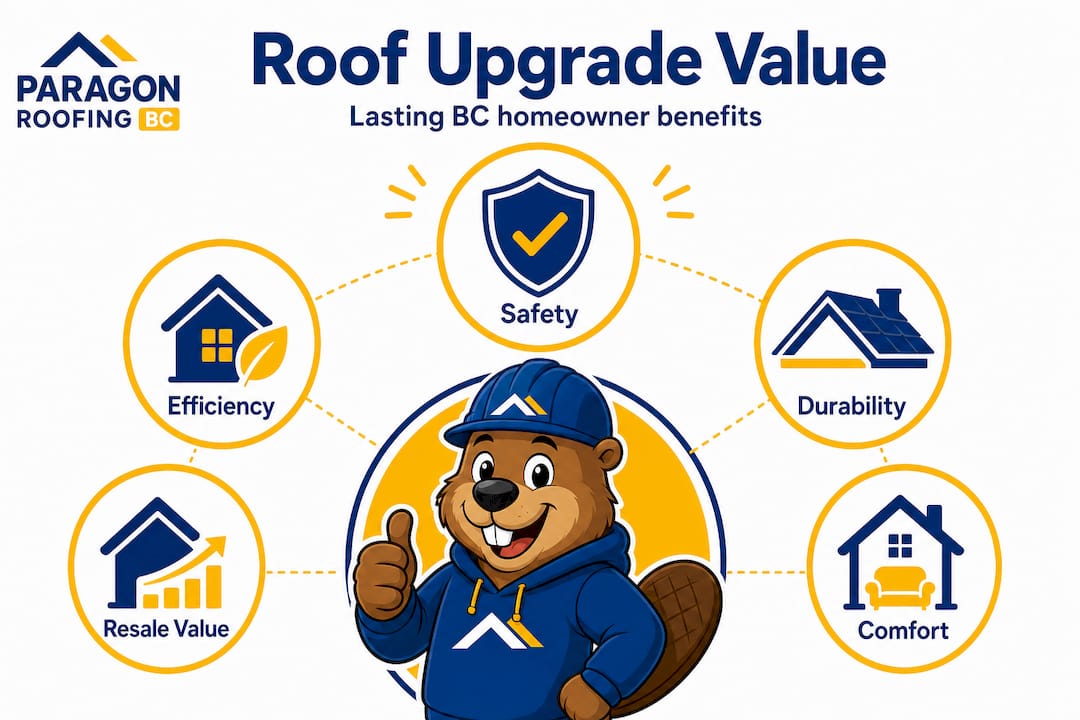
Proper moisture management through ventilation and code-compliant detailing is a key reason why BC building experts recommend upgrading or rebuilding the full roof assembly rather than simply patching shingles. Vented roof assemblies, for example, allow trapped moisture vapour to escape before it condenses inside the structure. Without adequate ventilation, that moisture has nowhere to go. The result? Rotted decking, compromised insulation, and mould that can spread into your living space.
Here’s what a proper roof assembly upgrade addresses, layer by layer:
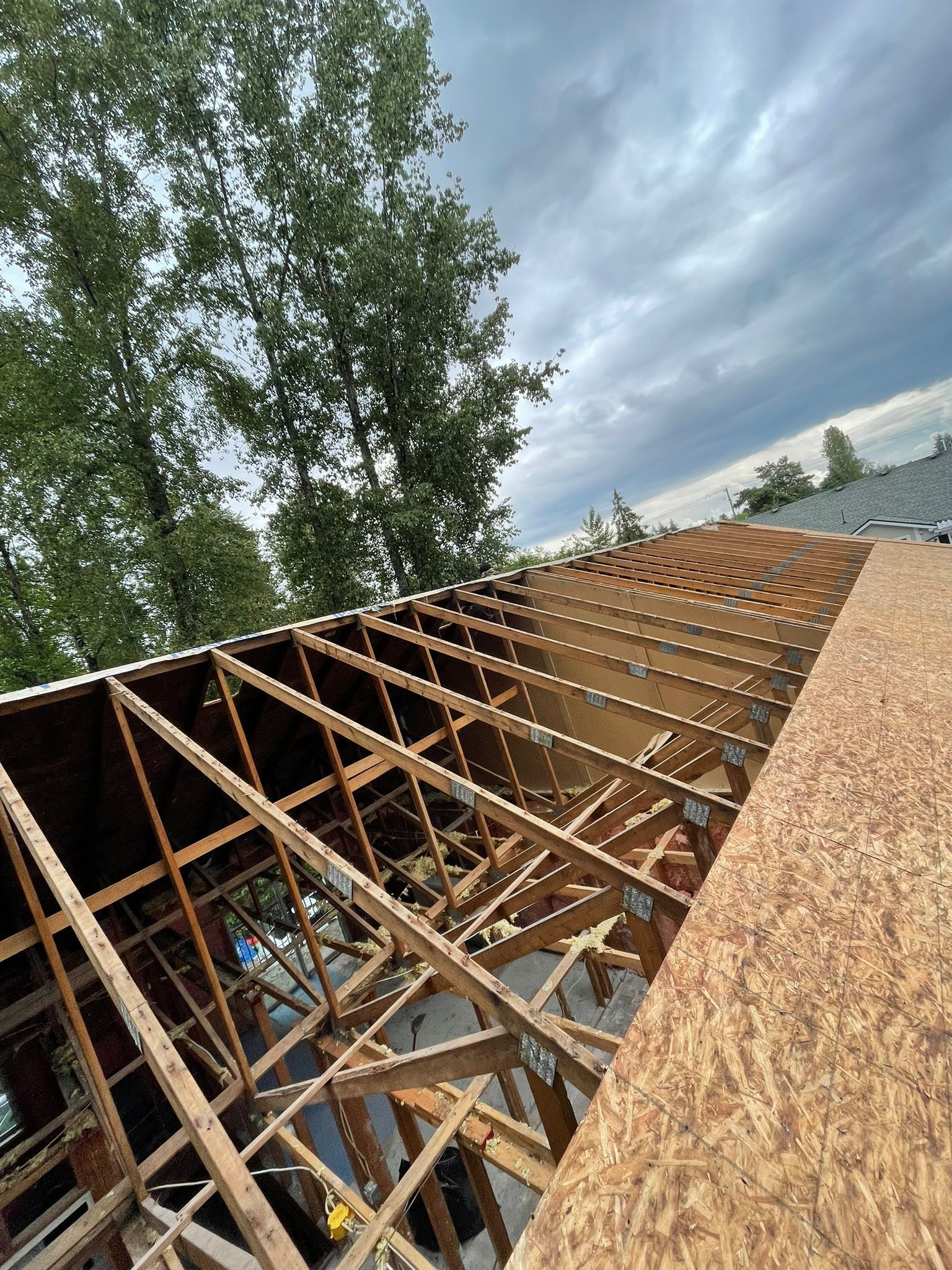
- Decking: The structural base (usually plywood or oriented strand board) must be inspected for rot and replaced where damaged before any new materials go on top.
- Waterproofing underlayment: Modern self-adhering waterproof membranes provide a critical barrier, particularly around valleys, eaves, and roof penetrations where leaks are most likely.
- Flashings: Metal flashings around chimneys, skylights, and dormers are common failure points. Upgrading them prevents water from sneaking into the wall assembly.
- Ventilation: The BC Building Code specifies minimum vent areas and clearances. Getting this right isn’t optional; it’s a safety and durability requirement.
“Rebuilding or retrofitting a vented roof assembly, rather than only patching, is the most reliable way to address moisture accumulation problems in BC’s climate. Drying potential — the roof’s ability to release moisture — is as important as keeping water out.” (BC Housing Builder Insight 21)
Understanding these layers is exactly why we recommend looking into roof retrofit benefits and the importance of roof ventilation before committing to a repair-only approach. You might also want to brush up on roofing insulation in BC to see how insulation choices affect moisture behaviour inside your roof system.
Regulatory compliance and technical requirements: What BC homeowners must know
Once homeowners understand durability concerns, compliance and technical requirements become the next key considerations. This is an area where a lot of well-meaning homeowners get caught off guard. You might assume that swapping shingles doesn’t require a permit. In most BC municipalities, however, a full roof replacement or major upgrade triggers permit and inspection requirements, and skipping that step can create serious problems at resale.
BC roofing upgrades intersect with regulatory compliance, including permits, inspections, wind-resistance standards, and technical waterproofing requirements. The Roofing Contractors Association of BC (RCABC) maintains technical updates that outline what qualifies a roof system for warranty and performance guarantees. Meeting those standards isn’t just about following rules — it directly affects your home insurance coverage and your property’s resale value.
Here’s a numbered overview of the compliance steps most BC homeowners should plan for:
- Check local permit requirements. Contact your municipality before work begins. Many areas in Metro Vancouver, the Fraser Valley, and Vancouver Island require permits for full roof replacements.
- Confirm wind-load design. Coastal and higher-elevation properties in BC face significant wind loads. Your roofing system must be specified and installed to meet local wind design criteria.
- Verify waterproofing standards. Modern roofing codes require specific underlayment products and installation methods, especially at eaves and valleys where ice damming or ponding water is a risk.
- Schedule inspections. Permitted work requires inspections at key stages. This protects you and ensures the work meets code before it’s covered up by finishing materials.
- Request documentation. Ask your contractor for copies of permits, inspection records, and any manufacturer warranties. These documents matter when you sell your home or make an insurance claim.
| Compliance factor | Why it matters | Common risk if ignored |
|---|---|---|
| Building permit | Legal requirement for most full replacements | Fines, order to remove work, issues at resale |
| Wind-resistance rating | Prevents uplift failure in BC storms | Roof failure during weather events |
| Waterproofing spec | Prevents moisture infiltration | Rot, mould, structural damage |
| Ventilation standards | Code-mandated minimums for airflow | Moisture buildup, ice damming |
| RCABC guarantee | Confirms installation quality standard | No warranty coverage on new roof |
Key statistic: Homes with fully compliant, documented roof upgrades in BC typically see stronger resale outcomes and fewer complications during home inspections. Buyers and their inspectors look specifically for permit records and warranty documentation.
If you want a deeper look at how permits affect your project, our guide on roof permit requirements walks through what to expect. And to understand how re-roofing decisions connect to both safety and property value, re-roofing cost and safety is a great resource.
Energy efficiency, comfort, and materials: The lasting benefits of upgrading
After compliance and technical requirements, homeowners want practical benefits. Here’s how upgrades actually pay off. The energy side of roofing tends to be underappreciated. Many BC homeowners focus on the visible surface — the shingles — without realising that the insulation, ventilation, and waterproofing layers underneath do a significant amount of heavy lifting when it comes to keeping heating and cooling costs in check.
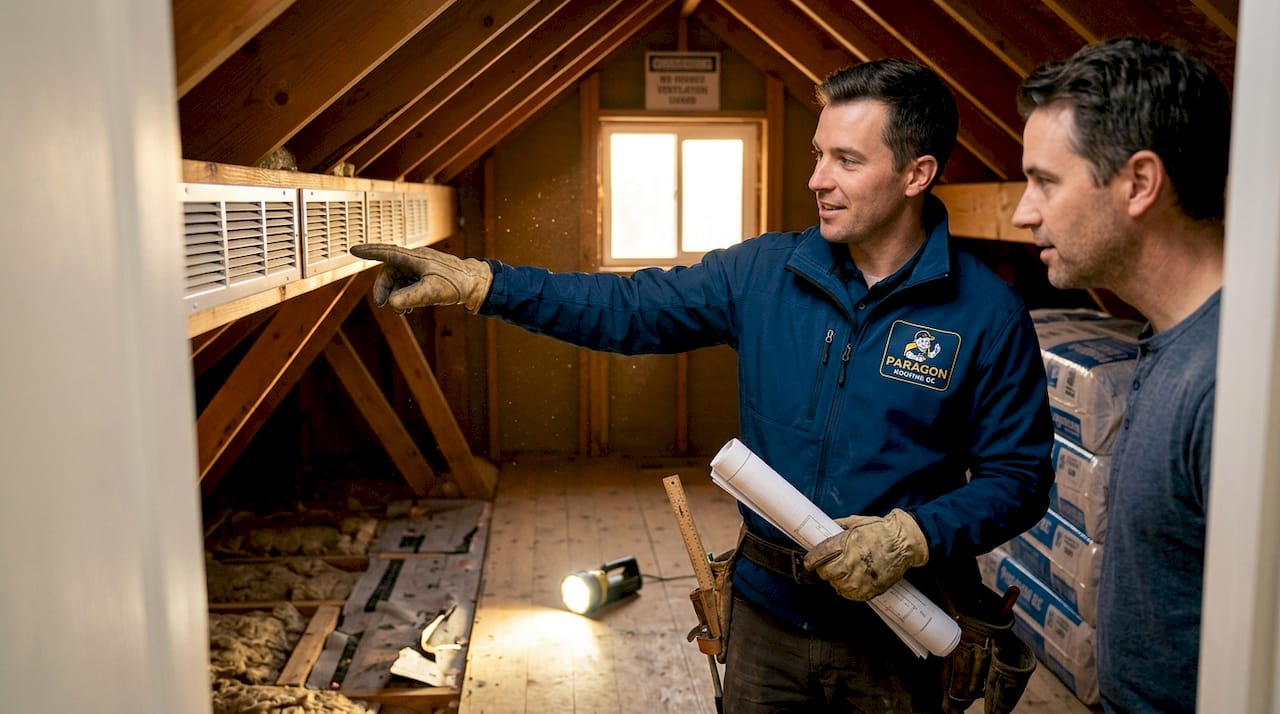
Upgrading the full assembly, including decking, underlayment, flashing, and ventilation clearances, ensures moisture control and maximises your roof’s drying potential, which in turn protects your insulation from becoming saturated and losing its thermal performance. Wet insulation can lose over 50% of its R-value (a measure of thermal resistance), meaning your heating system has to work much harder every winter.
| Roofing material | Typical lifespan in BC | Energy efficiency notes | Relative cost |
|---|---|---|---|
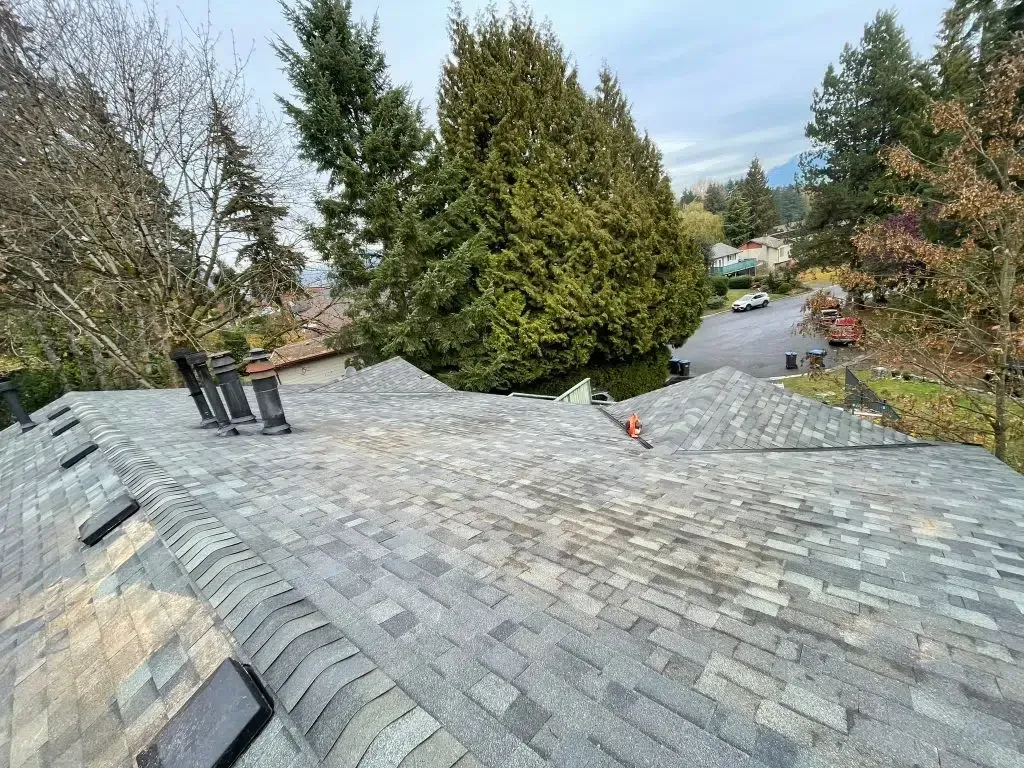
| Asphalt shingles | 20–30 years | Standard performance; light colours reflect some heat | Low to moderate |
| Metal roofing | 40–70 years | Excellent reflectivity; pairs well with ventilation upgrades | Moderate to high |
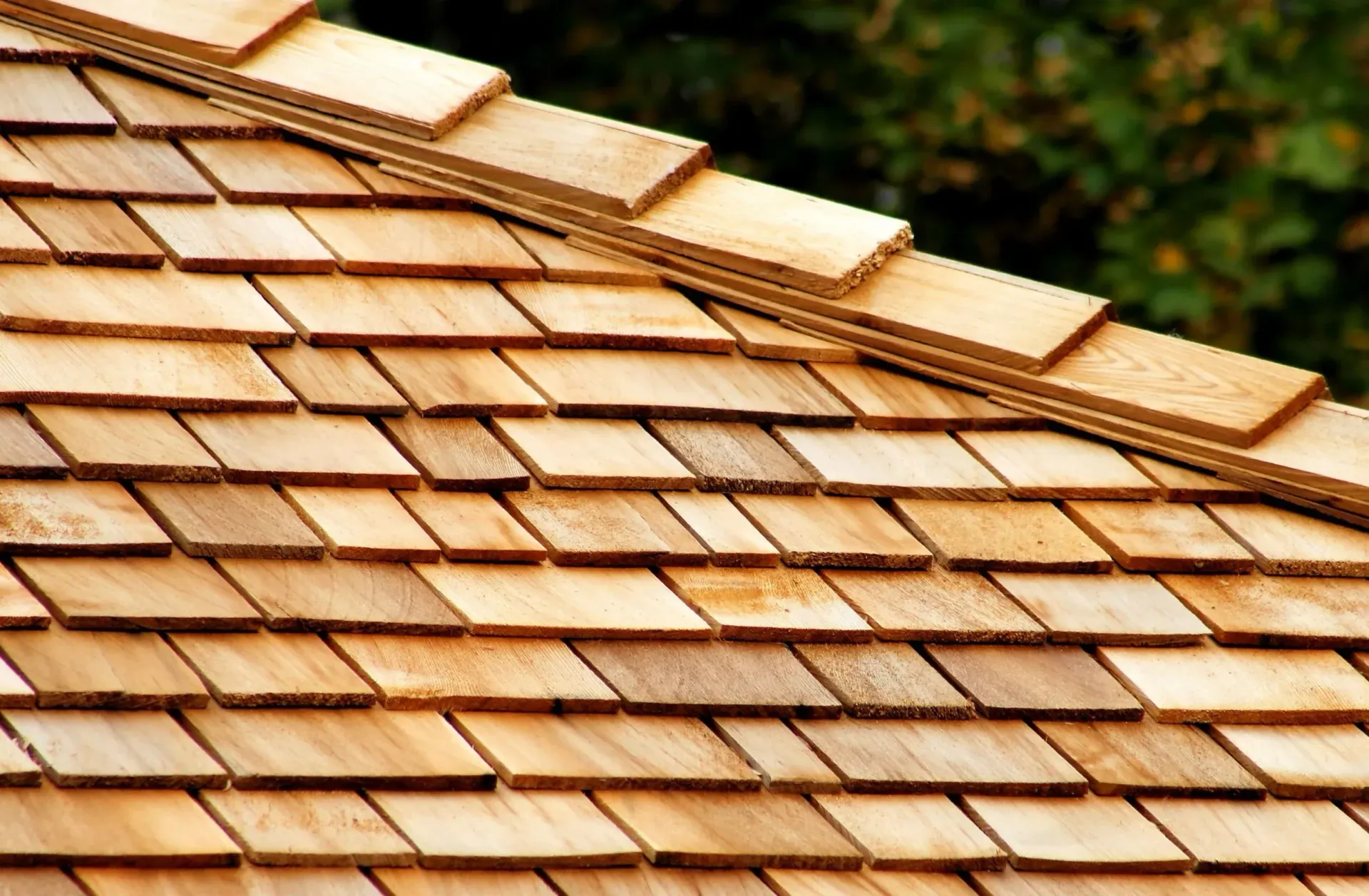
| Cedar shakes | 20–30 years | Natural insulation value; requires regular maintenance | Moderate |
| Synthetic/composite | 30–50 years | Lightweight; good performance in wet climates | Moderate to high |
| Cool roofing membranes | 20–30 years | Designed to reflect solar energy; reduces cooling loads | Moderate |
Each material has its strengths depending on your home’s location, roof pitch, and budget. A cedar-shake home in Whistler faces different demands than a flat-roof townhouse in Burnaby. The right material choice, combined with proper assembly, is what separates a roof that lasts from one that needs attention every few years.
Pro Tip: When you’re getting quotes, ask each contractor to specify exactly what underlayment product they’re using and how they’re handling ventilation. A contractor who can’t answer those questions clearly may only be thinking about the top layer of shingles — which, as we’ve covered, is only part of the story.
Upgrading also gives you the chance to explore material choices in BC that weren’t available or affordable a decade ago. Better attic insulation and moisture management pairs naturally with a roof assembly upgrade, as does exploring cool roofing in BC if you’re dealing with a flat or low-slope roof.
Making the decision: Framework for BC homeowners’ roofing upgrade options
With benefits clear, here’s a practical framework to help you make informed upgrade decisions. The first question most homeowners ask is: “Do I really need a full upgrade, or will repairs do the job?” Honest answer: it depends on your roof’s age, current condition, and what’s going on beneath the shingles.
Here’s a practical numbered checklist to help you evaluate your situation:
- Check the age of the roof. If your asphalt roof is approaching or past 20 years, you’re in replacement territory regardless of how it looks from the street. Older assemblies rarely meet current code standards.
- Look for moisture signs indoors. Staining on ceilings or upper walls, musty odours in the attic, or frost forming on rafters in winter are all indicators of moisture infiltration requiring assembly-level fixes.
- Inspect the decking (or ask your contractor to). If decking is soft, spongy, or shows dark staining, patching shingles won’t solve anything.
- Assess your ventilation setup. Is there adequate ridge and soffit ventilation? Is the airflow balanced? A re-roofing cost and safety review can help you decide whether your current setup meets BC code.
- Evaluate flashing condition. Failing flashings around chimneys, skylights, and pipe penetrations are among the most common sources of serious water damage. Upgrading these during a re-roof is both practical and cost-effective.
Top questions to ask your BC roofing contractor:
- Are you licensed and registered with the RCABC?
- Will you pull permits and schedule inspections for this project?
- What underlayment product do you use, and why?
- How do you handle ventilation as part of the new assembly?
- Do you provide a workmanship guarantee alongside the manufacturer warranty?
Pro Tip: Get at least two detailed written quotes, not just a price per square foot. A quality contractor will outline every component of the assembly. If a quote only mentions the shingle type and a total price, that’s a signal to keep asking questions.
Per the RCABC technical standards, properly upgraded roof systems that meet wind, waterproofing, and ventilation requirements are the benchmark for both safety and long-term ROI in BC.
The truth most BC homeowners miss about roofing upgrades
Here’s something most people — including some in the roofing industry — don’t say loudly enough: patching is often the most expensive long-term decision you can make.
It sounds counterintuitive. A repair costs less upfront, so it seems like the prudent choice. But in BC’s persistently wet climate, a partial fix rarely addresses the moisture and ventilation issues that are already quietly degrading the structure. You spend money on the patch, the hidden problem continues, and a year or two later you’re dealing with rotted decking, mould remediation costs, or a ceiling failure. The bills add up fast, and at that point a full upgrade becomes unavoidable anyway — except now you’re also paying to fix the damage that accumulated in the meantime.
What I’ve seen, working with BC homeowners across the Lower Mainland and beyond, is that the ones who invest in a full assembly upgrade early — even when it feels like a bigger commitment — rarely come back with moisture problems or structural issues. The ones who patch and wait often do.
The full assembly approach — addressing decking, underlayment, flashing, and ventilation clearances together — is what actually controls moisture and maximises drying potential. That’s not a luxury. In BC, it’s a necessity. Our climate doesn’t give partial solutions a fair chance.
If you want grounded, expert guidance on ventilation and why getting it right is genuinely non-negotiable in this part of the country, that’s a read worth your time. The bottom line: think of a roof upgrade less as a cost and more as a structural investment that protects everything underneath it.
Upgrade your BC roof safely and for the long term
Understanding the full scope of what a proper roof upgrade involves is the first step. Taking action is the next one. At Paragon Roofing BC, we work with homeowners across the province to plan and execute upgrades that meet BC Building Code requirements, stand up to local weather, and deliver genuine long-term value.
Whether you’re looking at roof installation in Coquitlam, a full roof replacement in Delta, or you simply want to explore your asphalt shingle options before committing to a direction, our team is ready to help. We pull permits, coordinate inspections, and ensure every layer of your roof assembly is built to last. Reach out to Paragon Roofing BC for a free inspection and honest, no-pressure advice tailored to your home and your budget.
Frequently asked questions
What is the difference between a roof repair and a full roof upgrade in BC?
A full upgrade involves replacing the decking, underlayment, flashing, and ventilation system as a complete assembly, while a repair typically only addresses surface materials like shingles. According to BC Housing guidance, looking beyond shingles to the full assembly is essential for effective moisture control.
How does BC’s Building Code affect roofing upgrades?
BC’s Building Code requires minimum ventilation clearances, waterproofing standards, and wind resistance specifications for upgraded roof assemblies, as outlined in BC Housing’s builder resources. Ignoring these requirements can affect your home insurance and create problems at resale.
Can upgrading roofing really improve my home’s energy efficiency?
Yes, and often significantly. Upgrading insulation and ensuring proper ventilation during a full assembly re-roof prevents moisture from saturating insulation, which can otherwise lose more than half its thermal resistance value over time.
Do I need a permit to upgrade my roof in BC?
Nearly all BC municipalities require permits and inspections for full roof replacements and major upgrades, as confirmed by RCABC technical standards. Skipping permits can lead to fines and complications during home sales.
What roofing materials are best for climate and durability in BC?
Asphalt shingles are the most popular choice for their cost-effectiveness and weather resistance, while metal roofing offers superior longevity — often 40 to 70 years — and excellent performance in BC’s wet and variable climate. The best choice depends on your roof pitch, location, and long-term budget.