Strata Roofing in BC: Ensuring Longevity and Compliance
Property managers in Vancouver know that caring for multi-family strata buildings is much more complex than managing stand-alone properties. The legal and maintenance requirements for strata roofing stretch far beyond the basics, involving both shared and individual responsibilities under the British Columbia Building Code and the Strata Property Act. This article offers clear insights into strata roofing obligations and common myths, helping you make informed decisions that protect both residents and the building’s value.
Table of Contents
- Strata Roofing Defined and Common Myths
- Core Roof Types for Strata Buildings
- Legal Duties and Regulatory Standards in B.C.
- Maintenance Approaches for Maximum Roof Lifespan
- Cost Allocation, Funding, and Common Pitfalls
Key Takeaways
| Point | Details |
|---|---|
| Understanding Strata Ownership | Strata ownership in British Columbia includes various residential forms, requiring owners to comprehend shared responsibilities according to the Strata Property Act. |
| Myth vs. Reality in Maintenance | Maintenance duties are delineated in strata bylaws, clarifying that responsibilities are shared rather than solely belonging to the corporation or individual owners. |
| Roofing Types and Benefits | Strata buildings need specialized roofing types like Built-Up Roofing and Single-Ply Membranes to withstand local climatic challenges. |
| Financial Planning Essentials | Effective financial management involves establishing contingency reserves and developing multi-year maintenance plans to prevent unexpected costs for owners. |
Strata Roofing Defined and Common Myths
Strata roofing in British Columbia represents a complex legal and maintenance framework that goes far beyond simple property ownership. Strata housing in the province encompasses multiple residential configurations including condominiums, townhouses, duplexes, and even mixed-use developments. A strata corporation legally manages shared property while individual owners maintain specific responsibilities for their designated units.
Contrary to popular misconception, strata is not exclusively a condominium concept. The Strata Property Act governs these unique living arrangements, defining precise legal boundaries and maintenance protocols. Each strata corporation collectively owns common areas while individual owners possess specific strata lots with distinct legal obligations. This nuanced ownership model requires comprehensive understanding to navigate effectively.
Common myths about strata roofing persist in the British Columbia property market. Many property owners mistakenly believe that roofing maintenance is entirely the corporation’s responsibility or conversely, that individual owners have complete autonomy. Strata ownership actually involves shared maintenance strategies where responsibilities are carefully delineated through bylaws and corporate agreements. Understanding these intricate details helps prevent potential conflicts and ensures proper property preservation.
Pro Tip: Always review your strata corporation’s specific bylaws and maintenance agreements to understand exact roofing maintenance and replacement responsibilities before making any significant decisions.
Here’s how key strata roofing myths contrast with actual facts in British Columbia:
| Myth | Reality | Importance for Owners |
|---|---|---|
| Strata roofing is only for condos | Applies to condos, townhouses, duplexes, and mixed-use | Owners in all forms must understand legal duties |
| Corporation always handles all roofing | Duties shared based on bylaws and agreements | Clarifies financial and repair responsibilities |
| Individual owners can act alone | Major work requires corporation approval | Prevents legal and financial disputes |
Core Roof Types for Strata Buildings
Strata buildings in British Columbia require specialized roofing solutions that balance durability, performance, and compliance with local building standards. Core roof types defined by building codes encompass several critical configurations designed to withstand the region’s challenging climate conditions. These roofing systems must effectively manage moisture, provide thermal protection, and resist the intense precipitation and temperature variations characteristic of British Columbia’s coastal and mountain environments.
The primary roof types for strata buildings include built-up roofing(BUR), single-ply membranes, and modified bitumen systems. Each type offers unique advantages depending on the specific architectural requirements and environmental challenges. Built-up roofing, traditionally composed of multiple layers of bitumen and reinforcing fabrics, provides exceptional waterproofing and durability. Single-ply membranes, such as EPDM or TPO, offer lightweight, flexible solutions with excellent weather resistance, while modified bitumen systems combine the strengths of traditional roofing with modern polymer technologies.
Roof assemblies for strata properties are carefully engineered to accommodate both sloped and near-horizontal configurations. The selection process involves meticulous consideration of factors including building design, local climate conditions, thermal performance requirements, and long-term maintenance expectations. Roofing contractors must navigate complex regulatory frameworks, ensuring that each installation meets the stringent standards outlined in the British Columbia Building Code and addresses the specific needs of multi-unit residential structures.
Pro Tip: Consult with a certified roofing professional who specializes in strata buildings to conduct a comprehensive roof assessment before making any replacement or major maintenance decisions.
Here is a summary of main strata roof types and their top advantages:
| Roof Type | Main Advantage | Common Use in Strata |
|---|---|---|
| Built-Up Roofing (BUR) | Superior waterproofing | Flat or low-slope buildings |
| Single-Ply Membrane | Lightweight, easy to install | Large multi-unit complexes |
| Modified Bitumen | High durability, flexible | Retrofits and harsh climates |
Legal Duties and Regulatory Standards in B.C.
Strata corporations in British Columbia operate within a comprehensive legal framework that defines precise responsibilities for property maintenance and governance. Strata Property Act regulations establish clear guidelines for how roofing maintenance, financial planning, and collective decision-making must be conducted. These legislative standards ensure that multi-unit residential properties maintain structural integrity, protect individual and collective investments, and comply with provincial building requirements.
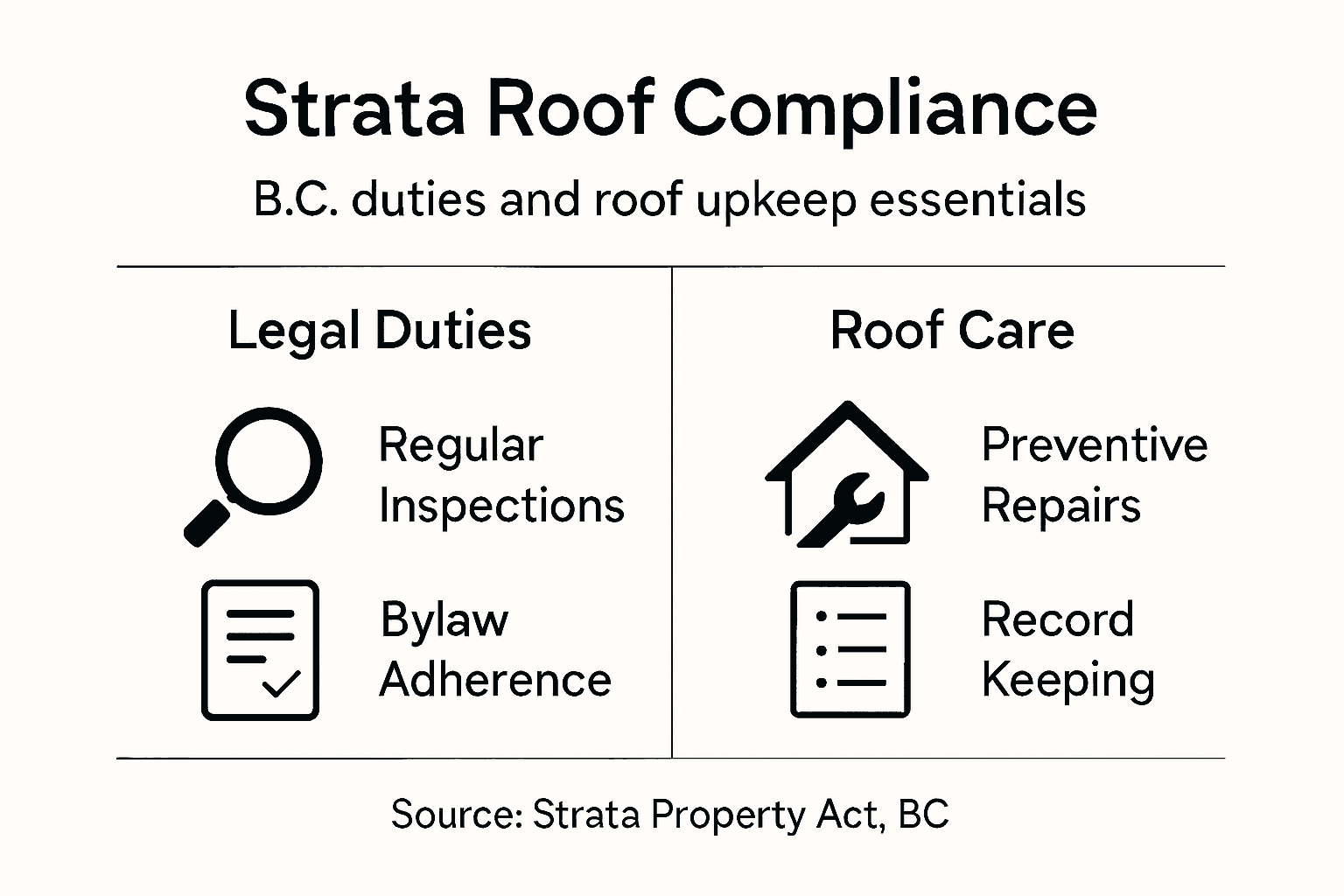
The Strata Property Act fundamentally outlines the legal obligations of strata councils, which include critical responsibilities such as managing common property infrastructure, including roofing systems. This includes developing and maintaining depreciation reports, establishing appropriate financial reserves, and ensuring regular professional inspections and maintenance. Strata councils must navigate complex legal requirements that balance individual owner rights with collective property management needs, making informed decisions about roof repairs, replacements, and long-term preservation strategies.
Comprehensive strata property management involves intricate legal mechanisms for dispute resolution, bylaw enforcement, and financial contributions. Roofing maintenance falls under these critical governance protocols, requiring transparent communication, democratic voting processes, and adherence to provincial building standards. Strata corporations must document maintenance activities, maintain detailed financial records, and ensure that all roofing interventions meet or exceed the British Columbia Building Code requirements.
Pro Tip: Maintain meticulous documentation of all roofing maintenance, repairs, and inspection reports to protect your strata corporation’s legal interests and ensure compliance with provincial regulations.
Maintenance Approaches for Maximum Roof Lifespan
Strata buildings in British Columbia require strategic, proactive roof maintenance to combat the region’s challenging environmental conditions. Preventive maintenance strategies are critical for extending roof longevity and protecting significant collective investments. Effective maintenance goes beyond simple repairs, encompassing comprehensive assessment, regular inspections, and systematic documentation of all roofing interventions.
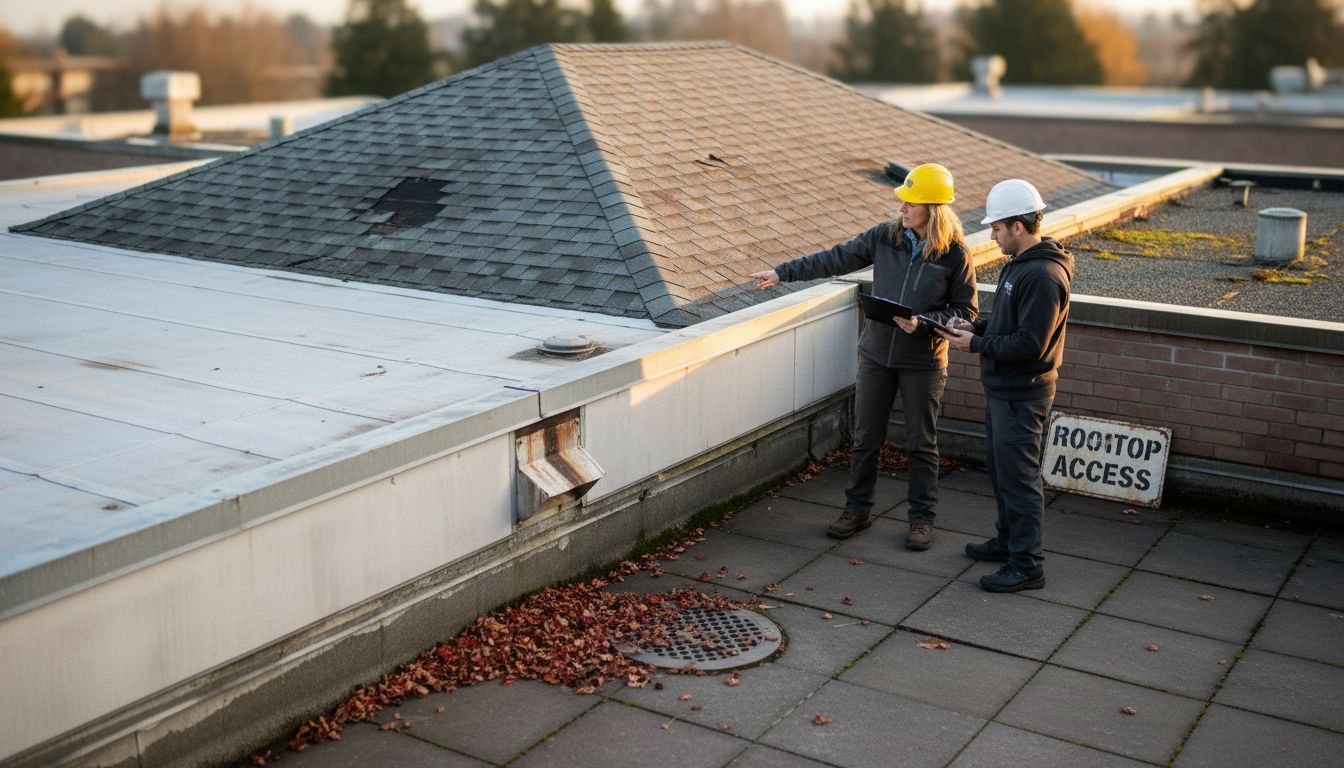
A comprehensive maintenance approach involves multiple critical components. Regular professional inspections should be conducted at least twice annually, focusing on identifying potential vulnerabilities such as membrane degradation, drainage issues, and early signs of water intrusion. Strata councils must prioritize timely repairs, addressing minor issues before they escalate into costly structural damage. Critical maintenance activities include clearing debris, checking and maintaining proper drainage systems, inspecting flashings, and assessing the roof’s overall structural integrity.
Strata maintenance obligations extend beyond reactive repairs to include strategic long-term planning. This involves developing detailed depreciation reports, establishing dedicated financial reserves for roofing maintenance and potential replacement, and implementing a structured maintenance schedule. Successful roof preservation requires a holistic approach that considers the specific roofing materials, local climate challenges, and the unique architectural characteristics of the strata property.
Pro Tip: Create a comprehensive digital maintenance log documenting every roof inspection, repair, and maintenance activity to track your roof’s condition and support future decision-making processes.
Cost Allocation, Funding, and Common Pitfalls
Strata roofing financial management requires strategic planning and transparent communication among property owners. Cost allocation strategies in British Columbia are typically structured around unit entitlement, where owners contribute to maintenance and repair costs proportionally to their ownership percentage. This approach ensures fair financial responsibility while maintaining the collective investment in the property’s structural integrity.
The Strata Property Act mandates comprehensive financial planning for major repairs and replacements. Effective funding mechanisms include establishing robust contingency reserves, implementing regular strata fee assessments, and creating clear protocols for special levies. Strata councils must develop detailed depreciation reports that forecast potential roofing expenses, allowing for proactive financial management and preventing sudden, unexpected financial burdens on individual owners.
Legal considerations for strata repairs play a critical role in financial decision-making. Court precedents in British Columbia emphasize the importance of proper voting procedures and financial approvals for significant roofing interventions. Common pitfalls include insufficient reserve funds, inadequate communication about proposed repairs, and failure to obtain the required voting thresholds for special assessments. Strata councils must navigate these legal complexities carefully to ensure compliance and maintain transparent decision-making processes.
Pro Tip: Develop a multi-year financial plan for roofing maintenance that includes contingency funds, schedules regular professional assessments, and clearly communicates potential future expenses to all strata owners.
Protect Your Strata Roof with Trusted Expertise in British Columbia
Navigating the complex legal duties and specialized maintenance requirements of strata roofing in British Columbia can feel overwhelming. The challenges of shared responsibility, strict compliance with the Strata Property Act, and the need for durable roofing systems that withstand BC’s demanding climate call for expert solutions you can rely on. Whether you face decisions about roof repairs, replacements, or maintenance planning, ensuring your strata building’s roof remains in optimal condition is essential to protecting your investment and preventing costly disputes.
Paragon Roofing BC understands these unique strata roofing needs. Our professional team offers comprehensive roofing services tailored to multi-family and strata properties. From expert inspections and preventative maintenance to high-quality roof replacements using materials suited for BC’s weather, we deliver dependable results while helping you stay fully compliant with local standards. Act now to secure a free roof inspection and get clarity on your strata roofing responsibilities. Learn more about our trusted solutions at Paragon Roofing BC. Take the first step toward long-lasting protection and peace of mind by contacting us today.
Frequently Asked Questions
What is strata roofing?
Strata roofing refers to the roofing systems utilized in strata properties, which include various residential configurations such as condominiums, townhouses, and duplexes, managed by a strata corporation.
What are the main types of roofs used in strata buildings?
The primary roof types for strata buildings include built-up roofing (BUR), single-ply membranes, and modified bitumen systems, each offering unique advantages for durability and weather resistance.
How do maintenance responsibilities work for strata roofs?
Maintenance responsibilities for strata roofs are shared among the strata corporation and individual owners, as outlined in the bylaws and agreements, requiring clarity on who handles specific tasks.
What should strata corporations consider for roof maintenance planning?
Strata corporations should implement regular professional inspections, develop depreciation reports, maintain financial reserves, and follow a structured maintenance schedule to ensure the longevity and compliance of roofing systems.