Stop Wasted Patching: Delta Barn Roof Leaks, Condensation or Rain?
Stop Wasted Patching: Delta Barn Roof Leaks, Condensation or Rain?
If your metal barn roof is leaking in Delta, the cause is almost always flashing failure, worn-out fasteners, or condensation dripping off the underside of the panels rather than a hole in the metal itself. Contain the interior water with buckets or a tarp right away, then get an inspection before the next heavy rain. If the leak keeps coming back, Paragon Roofing BC can track it down and give you a real fix, not another patch.
TL;DR:
- Most barn roof leaks in Delta are caused by flashing deterioration, worn fasteners, or condensation, often worsened by the area’s wet, windy climate.
- Immediate steps should focus on protecting interior belongings with tarps, buckets, and moisture control, avoiding walking on fragile panels or using harsh patches.
- For fastener issues on sheets under fifteen years old, resealing or replacing washers is cost-effective, but older roofs benefit from transitioning to standing seam panels for long-term durability.
- Regular inspections in spring and fall, combined with soft washing and gutter clearing, prolong roof life and prevent moss and algae buildup that trap moisture.
- Call a professional if leaks persist at multiple spots, attic moisture is detected, or leak repairs repeatedly fail, to get a precise diagnosis and effective long-term solution.
Table of Contents
- What causes delta bc barn roof leaks?
- How do you inspect a barn roof to find the leak?
- What should I do right after finding a leak?
- Which permanent repair actually stops the leak?
- How often should you maintain a barn roof in Delta?
- When should you call a professional roofer?
- What Delta barn owners get wrong about roof leaks
- Book a barn roof inspection in Delta with Paragon Roofing BC
- Sources
- FAQ
What causes delta bc barn roof leaks?
Most barn roof leaks around Delta trace back to a small handful of failure points, and the coastal climate here makes every one of them worse. Delta sits low, catches wind off the water, and gets soaked through the fall and winter, which mean metal panels expand and contract constantly and every fastener, seam, and flashing detail gets tested year-round.
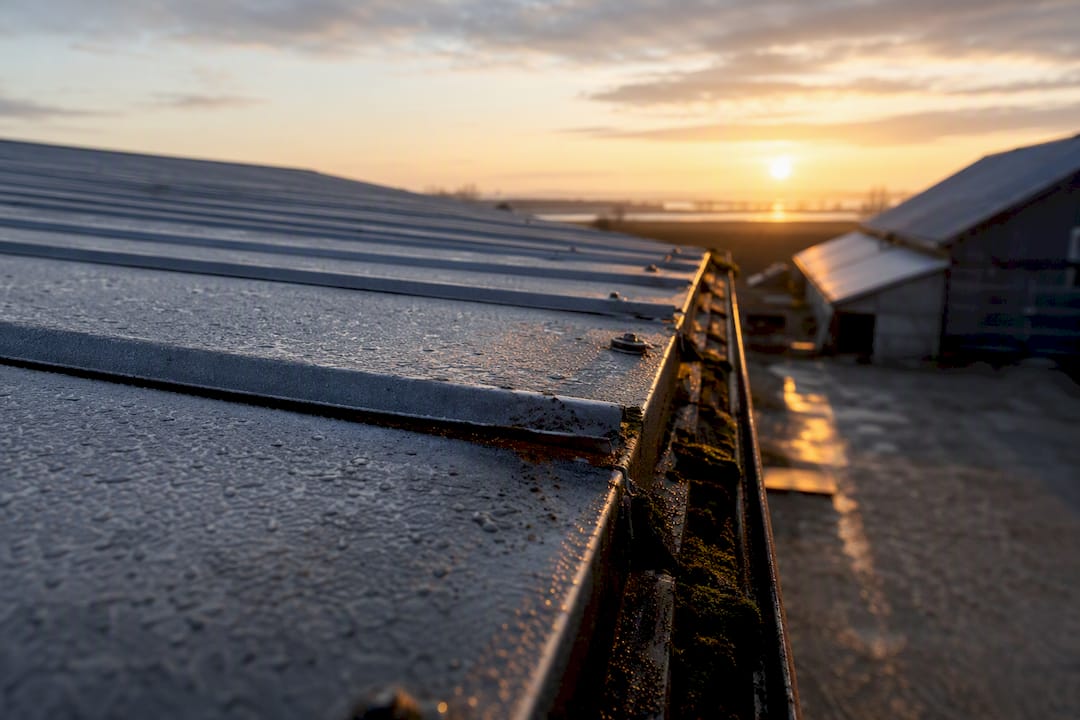
Flashing at ridges, eaves, and around penetrations (vents, skylights, chimney stacks) fails first on most older barns. It’s thin metal, often held with sealant that dries out and cracks after a few BC winters, and once it lifts even a few millimetres, wind-driven rain finds its way underneath.
Screw-down fasteners are the next big culprit. Every screw has a rubber washer meant to seal it, and those washers can harden and split with age and thermal cycling, sometimes within a decade or more. Common failure points include:
- Flashing deterioration at ridges, eaves, and penetrations, accelerated by coastal moisture and heavy rainfall
- Worn fastener washers and improperly seated screws , a well-documented cause of pole barn roof leaks
- Panel overlap and seam degradation , especially on older screw-down systems versus standing seam
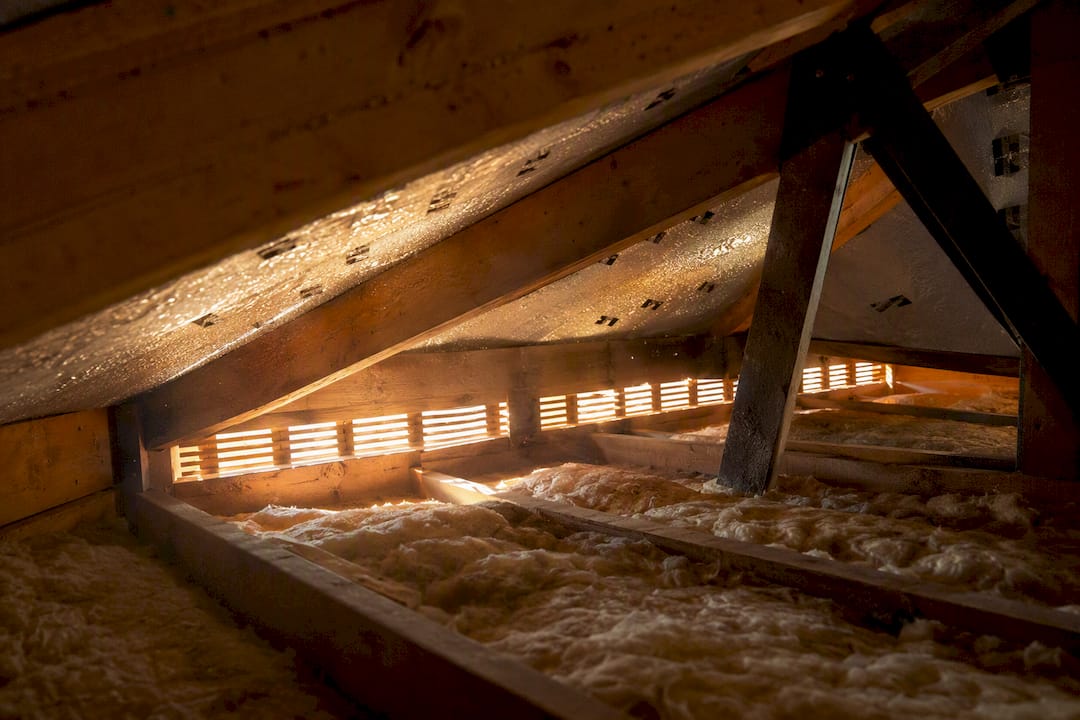
- Condensation from poor ventilation or missing underlayment, which mimics an external leak
- Clogged gutters and downspouts that back water up under the lowest panel course
- Storm and wind-driven rain damage , which can lift panel edges or tear loose flashing
How do you inspect a barn roof to find the leak?
Don’t climb a wet or icy metal roof to chase a leak. Metal panels are slippery even when they look dry, and a fall from a barn roof is a serious WorkSafeBC concern, not just an inconvenience. Wear boots with grip, use a properly secured extension ladder, and if the pitch is steep or the roof is wet, stop and call a professional instead.
- Start from the ground with binoculars. Look for lifted flashing, rust streaks below fasteners, and gaps at the ridge cap.
- If it’s safe to get on a ladder near the eave, check the lowest panel course for loose screws, split washers, and gutter overflow marks.
- Walk the attic or interior ceiling space with a flashlight and trace stains back to their highest point. Water often runs sideways along a purlin before it drips, so the wet spot on your ceiling is rarely directly under the leak.
- Check insulation for damp patches, which point to a slow, ongoing leak rather than a one-time storm event.
- For larger barns where the source isn’t obvious, a controlled water-trace test works well: have one person run a hose section by section over suspect areas while someone watches inside, timing each section so you know exactly where the water entered.
- Photograph everything, note the date, and record whether it was raining hard, misty, or dry when you noticed the leak. That detail matters more than most people expect.
Pro Tip: If the leak only shows up during a downpour and disappears in light rain, suspect wind-driven water forcing itself under a seam rather than a straightforward hole. That distinction changes the repair entirely.
What should I do right after finding a leak?
Your first job is protecting the inside of the barn, not fixing the roof. A quick, sensible response now can save you thousands in ruined feed, equipment, or insulation.
- Tarp exposed panels if a section is visibly torn or lifted, and weigh down every edge so wind doesn’t turn your tarp into a sail.
- Do not walk on thin, older panels to reach the damage yourself. Screw-down panels flex and can crease or crack under body weight, especially on colder mornings.
- Secure a loose screw only if it’s easily reachable , and replace the washer with a matching neoprene gasket rather than just tightening the old one down.
- Move stored belongings, hay, or equipment away from the drip line , and set buckets to catch water instead of letting it pool on a wood floor or ceiling.
- Run a dehumidifier or fan in the affected area to slow mould growth while you wait for a permanent fix.
- Skip the high-pressure washer and any harsh adhesive patch. Both can strip factory coatings and void a panel warranty, turning a small leak into a bigger bill.
Which permanent repair actually stops the leak?
The right fix depends on how old the roof is, how widespread the damage has spread, and whether you’re dealing with an external leak or condensation dressed up as one. Here’s how the main options compare for a Delta barn.
| Repair approach | Best for | What it involves | Expected lifespan gain |
|---|---|---|---|
| Fastener replacement and seam reseal | Isolated leaks, newer roofs | Swap corroded screws and washers, reseal exposed seams and flashing joints | Several years if done properly |
| Spot panel and flashing repair | Storm damage, one or two damaged panels | Replace the damaged section, install new flashing matched to the existing metal | Several years on the repaired section |
| Full re-panel or standing seam upgrade | Older roofs with repeated fastener failures | Remove old screw-down panels, install standing seam with concealed clips | Several decades, minimal thermal-cycle movement |
| Underlayment and ventilation upgrade | Condensation-driven “leaks,” poorly vented barns | Add synthetic underlayment and ridge or soffit ventilation | Helps control moisture buildup when combined with proper airflow |
For a roof under fifteen years old with a handful of failed washers, fastener replacement and a reseal is usually the sensible, budget-friendly move, and it’s often the same repair pole-barn guides across North America recommend as the first line of defence. After many years of exposure to Lower Mainland winters, thermal cycling can stretch screw holes slightly oval, and resealing alone may not prevent leaks for long. That’s when a full switch to standing seam panels makes sense: no exposed fasteners means no washers to fail, and it’s a durable upgrade for pole barn roof leaks over the long term.
If your “leak” only shows up on cold, still mornings and never during actual rain, you’re likely fighting condensation, not water intrusion. Adding proper ridge and soffit ventilation alongside a synthetic underlayment addresses the moisture at its source instead of chasing phantom leaks every winter.
How often should you maintain a barn roof in Delta?
Delta’s wet, mild climate means moss, algae, and organic buildup accumulate faster here than in drier parts of the province, and that buildup traps moisture against seams and fasteners.
- Inspect every spring and fall , plus after any major windstorm, checking fasteners, flashing, and gutter flow each time.
- Soft-wash the roof rather than pressure washing it. Low-pressure cleaning with the right solution removes moss and algae without stripping factory coatings, which keeps the roof cleaner for longer and protects any manufacturer warranty.
- Clear gutters and downspouts before the fall rains hit, and install leaf guards if your barn sits near trees.
- Check for snow or ice buildup at the eaves each winter, especially after a cold snap followed by a thaw.
- Keep a written record of every inspection, repair, and cleaning. Most roofing warranties require proof of routine maintenance to stay valid.
Pro Tip: Mark your calendar for late September and early March. Those two windows catch problems before the heaviest rain and before spring growth turns moss into a real drainage problem.
When should you call a professional roofer?
Call a contractor immediately if you see active leaks at more than one spot, soft or spongy wood in the attic, or a leak that keeps returning after you’ve already patched it. Those are signs the damage has spread past a simple fastener fix.
A qualified inspection should include:
- Photo documentation of every flashing joint, seam, and fastener condition
- Moisture readings taken inside the attic or ceiling cavity to confirm how far water has travelled
- A written diagnosis explaining the actual cause, not just the symptom
- A transparent quote with a clear timeline, since minor sealant repairs often take a few hours while a full panel replacement can run a day or two depending on weather
Have your photos and notes from your own inspection ready, and mention any access restrictions (livestock, equipment storage) so the crew can plan safely and efficiently.
What Delta barn owners get wrong about roof leaks
The mistake I see most often in Delta is homeowners chasing an external leak that’s actually condensation. Someone spots a wet ceiling on a cold, calm morning, assumes a panel is punctured, and pays for a repair that does nothing because the real problem is warm barn air hitting the cold underside of the metal.
The fixes that actually stop repeat callbacks are rarely dramatic. Matching new flashing metal to the existing panel type prevents galvanic corrosion between dissimilar metals, and swapping to synthetic underlayment with proper ridge ventilation solves more “mystery leaks” than any amount of resealing. I’ve walked plenty of Delta barns where three previous patch jobs failed because nobody checked whether the roof could actually breathe.
— Harman
Book a barn roof inspection in Delta with Paragon Roofing BC
Paragon Roofing BC gives Delta property owners a real diagnosis instead of another guess, and that’s the difference when a barn roof keeps leaking after two or three patch attempts. We inspect flashing, fasteners, seams, and ventilation together, so you get one clear answer on whether you’re dealing with wind-driven water, worn washers, or condensation, rather than paying for repairs that treat the wrong problem.
Have your recent photos and notes on when the leak shows up ready before your inspection. Our crews work to WorkSafeBC safety standards and follow RCABC-aligned installation practices, and every visit ends with a written scope and a straightforward quote, whether the fix is a fastener reseal or a full move to standing seam. If your barn or outbuilding needs more than a patch, our residential roofing services page covers repair and replacement options, and you can also see recent work on our Delta roofing services page. Call us to book a complimentary inspection before the next round of fall storms hits Delta.
Sources
Claims above draw on Paragon’s own Delta repair experience, pole-barn maintenance guidance from FBI Buildings, and metal roof cleaning practices from Shine City Pressure Washing. If a leak turns into an insurance claim, this repair versus replacement decision guide is a useful reference.
FAQ
What can I put on my shed roof to stop it leaking?
A temporary tarp secured with sandbags or straps over exposed panels stops water intrusion until a proper repair, but avoid caulking or foam adhesives that can trap moisture or void a panel warranty.
Where do most metal roofs leak?
Most leaks start at flashing around ridges, eaves, and penetrations like vents or skylights, followed by failed screw washers on screw-down panel systems.
Why does my roof only leak in heavy rain?
Heavy rain combined with wind pushes water sideways under seams and flashing that hold up fine in light rain, which is a classic sign of a flashing or overlap failure rather than a punctured panel.
How do I stop water running back under a corrugated roof?
Water running back under corrugated panels usually means insufficient overlap or a shallow roof pitch. Increasing panel overlap, adding closure strips at the ridge, and resealing lap joints typically solves it.
Is a barn roof leak usually condensation or an actual leak?
If the wet spot appears mainly on cold, calm mornings with no rain, it’s likely condensation from poor ventilation. Leaks tied to rain or wind point to flashing, fasteners, or seam failure instead.
Recommended
Our Roofing Blog

Have more questions about roofing?
Check out our FAQs or give us a call today to speak to an expert roofer in Vancouver Lower Mainland, BC. We're here to help our neighbours make educated decisions about their roof. For our team, we value helping clients save money while making their roofs last.