
Surrey roof moss damage: real examples and what to do
Surrey roof moss damage: real examples and what to do
TL;DR:
- Moss on Surrey roofs causes shingle damage, trapping moisture and promoting rot that can lead to leaks. Proper removal involves gentle cleaning with a diluted bleach solution and preventative measures like gutter cleaning and zinc strips. Timely, correct maintenance preserves roof integrity and warranty, especially in Surrey’s damp, shaded climate.
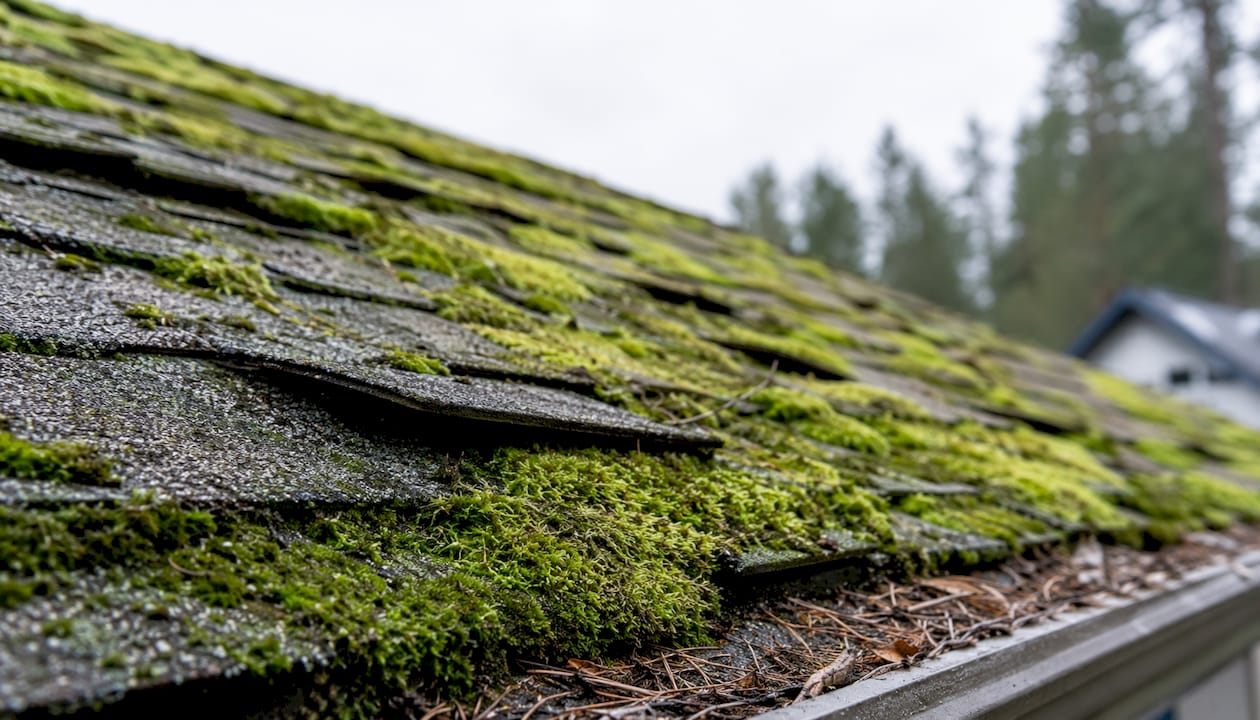
Moss on Surrey roofs causes far more than an eyesore. The most common examples of Surrey roof moss damage include shingle tabs lifting and curling as moss rhizoids pry underneath them, trapped moisture accelerating shingle decay and rot, water leaking through gaps where moss has broken adhesive seals, blocked valleys and gutters causing pooling water and fascia decay, and accelerated granule loss leaving shingles brittle and exposed. Surrey’s wet, shaded climate makes every one of these problems worse than they would be in a drier region.
Here is what that damage looks like in practice:
- Shingle tabs lifted and curled at the edges where moss has grown underneath, creating gaps for wind-driven rain
- Soft or spongy shingles that have absorbed prolonged moisture from moss acting like a wet sponge against the surface
- Dark water stains on attic ceilings or interior walls, traced back to gaps opened by lifted shingle tabs
- Rotted roof decking beneath shingles where trapped moisture has sat for months
- Granule buildup in gutters from shingles degrading under persistent moss patches
- Blocked roof valleys where moss has dammed water flow, forcing water sideways under the roofing
- Fascia boards showing rot or paint failure from chronic gutter overflow caused by moss-clogged downspouts
How moss grows and damages Surrey roofs
Moss takes hold on north-facing and tree-shaded roof slopes first, and Surrey’s coastal climate gives it everything it needs: frequent rain, mild temperatures, and canopy cover from cedar, fir, and maple trees. Once a spore lands on a damp shingle, it anchors using root-like structures called rhizoids. Those rhizoids do not just sit on the surface. They work their way under shingle tabs, physically prying the edges upward and breaking adhesive seals between overlapping shingles.
Once tabs lift, wind-driven rain finds a direct path to the underlayment and decking below. Moss also acts like a sponge, holding moisture against the shingle surface for days after rain stops. That constant dampness degrades the asphalt binder far faster than normal rainfall would, stripping granules and making shingles brittle. In Surrey winters, freeze-thaw cycling worsens the problem: moisture trapped by moss freezes, expands, and widens any existing cracks, then thaws and lets more water in. Each cycle compounds the damage.
Homes with shaded roofs and tree cover are especially vulnerable. Dense moss in valleys and along gutterlines acts like a dam, blocking water that should run cleanly off the roof. The result is hidden rot, mould in the attic, and staining on interior ceilings, often discovered only after the damage is already costly.
How to remove moss from a Surrey roof safely
Safe moss removal follows a specific sequence. Skipping steps or reaching for a pressure washer causes more damage than the moss itself.
- Inspect from the ground first. Walk the perimeter and note lifted tabs, debris-filled valleys, and any sagging areas before stepping onto the roof.
- Protect landscaping and gutters. Cover plants and block downspouts before applying any cleaning solution, since runoff can harm vegetation.
- Loosen heavy growth gently. Use a soft-bristled brush and work from the ridge downward. Never scrub upward against shingle laps, as that lifts edges and forces debris under the roofing.
- Apply a soft-wash solution. The Asphalt Roofing Manufacturers Association recommends a 50:50 mix of laundry-strength liquid chlorine bleach and water, applied with a low-pressure sprayer. Pressure washing strips granules and voids most shingle warranties.
- Allow 15–20 minutes of dwell time. Let the solution sit long enough to kill moss at the root. Do not let it dry completely before rinsing, as that prevents thorough removal.
- Rinse with low pressure only. A garden hose is the right tool. High-pressure water drives moisture under shingles and accelerates granule loss.
- Allow moss to weather off naturally. Dead moss loosens over subsequent weeks and washes away with rain. Forcing it off immediately risks tearing granules with it.
Pro Tip: Mossy roofs are slippery and steep pitches carry real fall risk. WorkSafeBC guidelines classify roof work as a fall hazard requiring compliant safety equipment. If the roof is steep, heavily covered, or the shingles show signs of brittleness, call a licensed contractor rather than attempting removal yourself.
Preventing moss from coming back on your Surrey roof
Removal without prevention is a short-term fix. Surrey’s climate means moss will return unless you address the conditions that let it establish in the first place.
- Clean gutters and valleys regularly. Debris buildup keeps surfaces damp and feeds moss growth. Clear them at least twice a year, and more often if your property has heavy tree cover.
- Trim overhanging branches. More sunlight reaching the roof surface means faster drying after rain. Even removing one or two large branches over a north-facing slope makes a measurable difference.
- Install zinc or copper strips at the ridge. When rain runs over these metal strips, trace ions wash down the roof and inhibit moss regrowth. This is one of the most cost-effective long-term deterrents available.
- Check roof ventilation and drainage. Poor attic airflow keeps the roof deck damp from below, which encourages moss from the underside. Proper ventilation is part of the roof maintenance checklist every Surrey homeowner should follow.
- Schedule annual professional inspections. Catching early-stage moss before it roots under shingles is far cheaper than dealing with lifted tabs and rotted decking.
What Paragonroofingbc sees on Surrey roofs
We inspect a lot of Surrey roofs, and the pattern is consistent. The worst damage we find is almost never from a single storm. It builds quietly over two or three years of untreated moss on a north-facing slope, usually on asphalt shingles that were otherwise in decent shape.
Thick moss on a Surrey roof is not just a surface problem. By the time you can see it clearly from the ground, the rhizoids have often already broken shingle seals and the decking underneath is holding moisture it was never designed to hold. We have opened up roofs where the sheathing looked fine from above but was soft and punky underneath a moss mat that had been there for years. The cost to repair that decking is always higher than the cost of a cleaning that could have prevented it. Timely removal, done with the right method and the right safety gear, is what keeps a 20-year roof lasting 20 years in Surrey’s climate.
Asphalt shingles are the most common roofing material in Surrey and also the most vulnerable to granule loss from improper cleaning. Cedar shakes hold moisture naturally and need a gentler approach. Moss removal done correctly preserves the warranty on both. When moss damage has already progressed to lifted tabs, soft decking, or interior leaks, those are signs the roof may need more than a cleaning. Paragonroofingbc assesses the full picture before recommending treatment versus roof replacement in Surrey.

If your Surrey roof has visible moss, do not wait for a ceiling stain to act. Contact Paragonroofingbc for a professional inspection and manufacturer-compliant moss treatment.
Key takeaways
Untreated moss on a Surrey roof causes structural damage that goes well beyond surface staining, and soft-wash removal with proper dwell time is the only method that protects both the shingles and the warranty.
| Point | Details |
|---|---|
| Moss lifts shingles physically | Rhizoids pry under shingle tabs, breaking seals and opening gaps for wind-driven rain. |
| Moisture retention accelerates decay | Moss holds water against shingles for days, degrading asphalt binder and stripping granules. |
| Soft-wash is the correct method | A diluted bleach solution applied at low pressure with proper dwell time kills moss without damaging shingles. |
| Prevention requires multiple steps | Zinc strips, branch trimming, gutter cleaning, and annual inspections together reduce regrowth. |
| Surrey’s climate makes this urgent | Shaded, north-facing slopes and coastal rainfall create near-ideal conditions for persistent moss. |
FAQ
Is it worth having moss removed from a Surrey roof?
Yes. Moss causes structural damage by lifting shingles, trapping moisture, and rotting decking. Removal protects the roof’s lifespan and keeps manufacturer warranties valid.
What does moss look like on a roof?
Moss appears as raised, green, spongy patches, often thickest on north-facing slopes and in shaded areas. Unlike algae, which shows as flat dark streaks, moss has visible thickness and bridges across shingle edges.
What damage can moss do to a roof?
Moss lifts shingle tabs, retains moisture that degrades asphalt, blocks valleys and gutters, and in freeze-thaw conditions expands cracks in shingles. Left unchecked, it leads to rotted decking and interior water damage.
What kills moss on a roof naturally?
Zinc and copper strips installed at the ridge release trace metal ions that inhibit moss growth over time. For active moss, a diluted bleach solution applied at low pressure is the method recommended by roofing manufacturers.
Recommended
Our Roofing Blog


Have more questions about roofing?
Check out our FAQs or give us a call today to speak to an expert roofer in Vancouver Lower Mainland, BC. We're here to help our neighbours make educated decisions about their roof. For our team, we value helping clients save money while making their roofs last.