
Surrey strata roof inspection process explained
Surrey strata roof inspection process explained
TL;DR:
- A qualified professional conducts a Surrey strata roof inspection to assess condition, remaining lifespan, and maintenance needs. The inspection is essential for accurate depreciation reports and effective reserve fund planning, helping owners avoid unexpected costs. Regular, proactive assessments are critical to maintaining building integrity and complying with legal requirements.
A strata roof inspection is a mandatory, professional assessment of the condition, remaining service life, and maintenance needs of a strata building’s roof system. For Surrey strata councils and homeowners, this process carries real legal weight. As of July 1, 2026, BC strata corporations with five or more lots must maintain current depreciation reports renewed every five years, with no deferral permitted. The roof is almost always the largest capital item in that report. Getting the inspection right protects your building, your budget, and every owner’s investment.
Who performs a Surrey strata roof inspection?
Professional strata roof inspections require qualified engineers, certified roofing technicians, or recognised consultants performing on-site visual assessments. That distinction matters. A basic walk-around by a strata manager or a council volunteer does not meet the standard set out under the Strata Property Regulation. The assessment must be conducted in person, by someone with the credentials to evaluate what they are looking at.
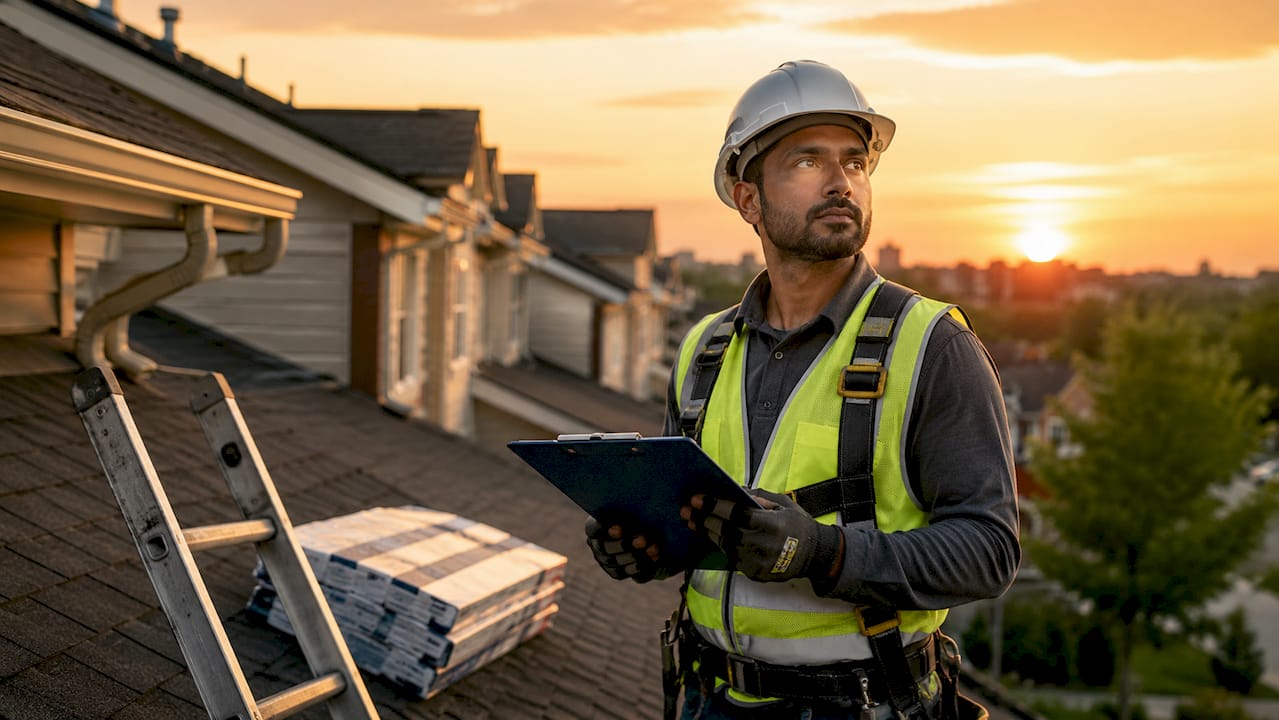
A qualified inspector does far more than check for missing shingles. They assess membrane condition, flashing integrity, drainage performance, ventilation, insulation, and the condition of penetration seals around vents, skylights, and mechanical curbs. These hidden trouble spots are where Surrey roofs fail most often, especially given the region’s heavy rainfall and freeze-thaw cycles through the winter months.
The inspector also produces a service life estimate. That estimate feeds directly into the depreciation report and the strata’s 30-year capital plan. Without it, your funding model is built on guesswork, and that puts every owner at risk of a special levy.
- Qualified inspectors: certified engineers, roofing technicians, or recognised consultants
- Inspection scope: membrane, flashing, drainage, ventilation, insulation, and penetration seals
- Output: written condition report with remaining service life estimate
- Regulatory basis: Strata Property Regulation, BC
Pro Tip: Ask any inspector for their credentials and a sample report before you engage them. A professional will have no hesitation providing both.
What are the key steps in the strata roof assessment process?
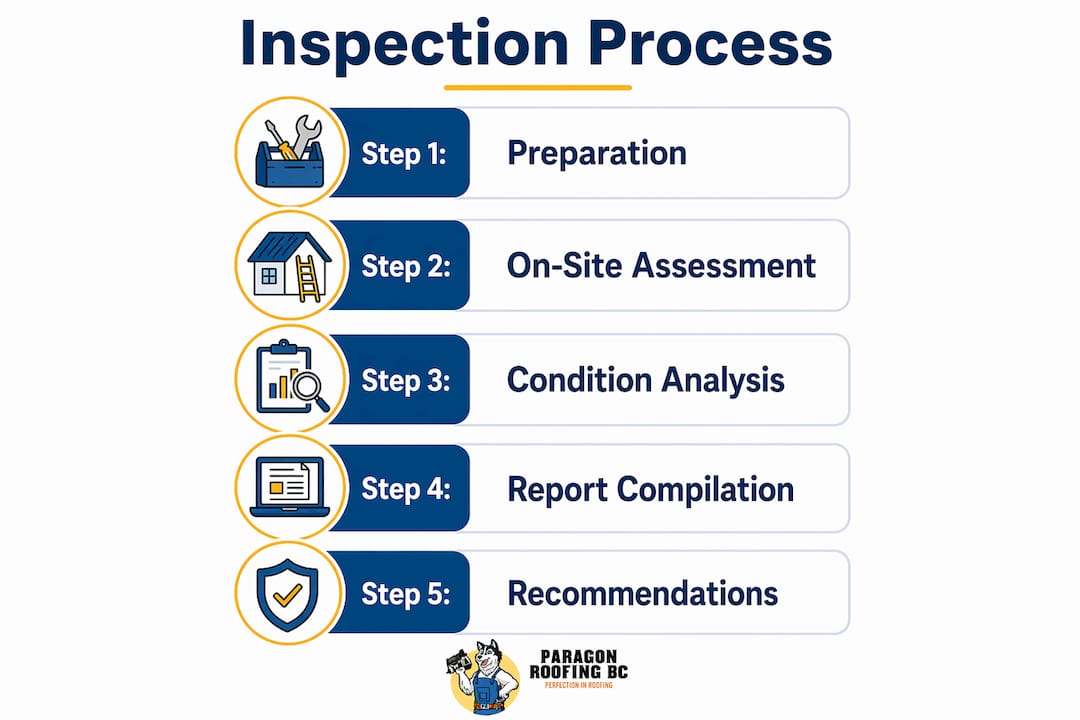
The strata roof assessment follows a clear sequence. Knowing each stage helps councils manage the process confidently and avoid the delays that push inspections past deadline.
-
Engage a qualified provider. The council or strata manager issues a scope-of-work document outlining the building size, roof type, number of units, and any known problem areas. This scope drives the quote and sets expectations for the final report.
-
Coordinate site access. Effective collaboration between strata managers and councils is the single biggest factor in inspection accuracy. Managers gather existing maintenance records, previous inspection reports, and warranty documents before the inspector arrives. Good documentation means the inspector spends less time estimating and more time assessing.
-
Conduct the on-site inspection. The inspector walks the full roof surface, photographs every component, and notes deficiencies. They record the roof system type, approximate age, visible wear patterns, drainage performance, and the condition of all flashings and penetrations. For flat or low-slope roofs common in Surrey townhouse complexes, they probe for soft spots that signal membrane failure or saturated insulation beneath.
-
Analyse the data. Back in the office, the inspector calculates remaining service life and estimates replacement costs. These figures must reflect current Surrey market pricing, not generic national averages. A report built on outdated cost assumptions will underserve your reserve fund.
-
Review the draft report. The council receives a draft and has the opportunity to flag errors, provide missing maintenance history, or question cost assumptions. Councils should critically review cost estimates rather than accept draft figures without scrutiny. If a replacement cost looks low compared to recent contractor quotes, push back before the report is finalised.
-
Finalise and integrate. The approved report feeds into the depreciation report and the strata’s annual budget cycle. Roof replacement timelines and reserve contributions are adjusted accordingly.
Pro Tip: Schedule your roof inspection at least six months before your depreciation report deadline. That buffer gives you time to review the draft, request revisions, and get council sign-off without rushing.
How does the roof inspection connect to depreciation reports and reserve funding?
The roof inspection and the depreciation report are inseparable. BC law requires depreciation reports every five years for strata corporations with five or more units. The roof condition data from your inspection is the primary input for the roof’s line item in that report.
The depreciation report models 30 years of capital expenditures. Roof replacement is typically the single largest item in that model. If the inspection finds the membrane has eight years of life remaining, the report schedules replacement in year eight and calculates the annual reserve contributions needed to fund it. If the inspection misses early membrane decay or underestimates replacement costs, the reserve fund falls short, and owners face a special levy.
Professional depreciation reports for small townhouse complexes cost approximately $4,000, while larger high-rise strata buildings can pay over $15,000. That cost is typically drawn from the strata’s operating budget or contingency reserve fund. The investment is modest compared to the cost of an unplanned roof replacement funded by emergency levy.
| Scenario | Impact on reserve fund |
|---|---|
| Accurate inspection, realistic cost estimates | Reserve contributions align with actual replacement costs; no levy needed |
| Inspection misses membrane decay | Replacement arrives earlier than planned; reserve fund is short |
| Cost estimates use outdated pricing | Reserve contributions are too low; gap grows over time |
| Council challenges and corrects draft assumptions | Report reflects current market; funding model is reliable |
The table above shows why the quality of the inspection directly determines the quality of your financial planning. A thorough inspection is not an expense. It is the foundation of a sound reserve fund.
What are best practices for strata councils managing roof inspections?
Strata councils hold legal responsibility under Section 72 of the Strata Property Act to maintain common property, and the roof is always common property. That legal duty means councils cannot delegate accountability, only the work itself.
Here are the practices that separate well-run strata roof programmes from reactive ones:
- Vet your vendors carefully. Verify that any roofing contractor or inspector carries valid insurance and a current WorkSafeBC clearance certificate before they set foot on your roof. A contractor without clearance exposes the strata to liability.
- Define the scope in writing. A clear scope-of-work document prevents disputes about what was inspected, what was excluded, and what the report is expected to cover.
- Document everything. Centralised records of inspection reports, warranties, service contracts, and repair approvals allow future councils and inspectors to build on real data rather than generic assumptions. A building operations manual is the most practical way to maintain this.
- Schedule inspections proactively. Annual or semi-annual roof inspections provide roughly three years of advance warning on major replacement needs. That lead time is the difference between a planned capital project and an emergency repair billed to owners overnight.
- Communicate with owners. After each inspection, share a plain-language summary with strata members. Owners who understand the roof’s condition and the funding plan are far less likely to resist reserve fund contributions.
Pro Tip: Keep a dedicated folder for each roof inspection cycle: scope of work, inspector credentials, draft report, council feedback, final report, and any follow-up repair invoices. Future councils will thank you, and so will your depreciation report preparer.
Key takeaways
A thorough Surrey strata roof inspection, conducted by a qualified professional and integrated into the depreciation report, is the most reliable way to protect your building and avoid unexpected special levies.
| Point | Details |
|---|---|
| Mandatory professional inspection | Only qualified engineers or certified technicians meet the Strata Property Regulation standard. |
| Six-step assessment process | Engagement, access coordination, on-site inspection, data analysis, draft review, and final integration. |
| Depreciation report link | Roof condition data drives 30-year capital planning and reserve fund contribution levels. |
| Council legal duty | Section 72 of the Strata Property Act places roof maintenance responsibility on the council. |
| Proactive scheduling | Annual or semi-annual inspections provide roughly three years of advance warning on replacement needs. |
What I’ve learned from Surrey strata roofs over the years
Hey, it’s Harman here. After inspecting and working on strata roofs across Surrey for years, the pattern I see most often is councils waiting for a leak before they call anyone. By that point, the membrane has usually been failing quietly for two or three seasons. Water has tracked under the flashing, soaked the insulation, and started working on the deck below. What could have been a $4,000 repair turns into a $40,000 emergency replacement, and the reserve fund is not ready for it.
The other thing I see regularly is councils accepting depreciation report cost estimates without question. I understand why. The report looks official, the numbers are specific, and challenging them feels awkward. But those estimates are sometimes built on regional averages that do not reflect Surrey’s current labour and material costs. A council that pushes back on a low replacement estimate before the report is finalised saves every owner money down the road.
The strata roof inspection process is not complicated, but it does require the council to stay engaged at every stage. Review the scope before the inspector arrives. Read the draft report carefully. Ask questions. The strata roofing compliance process rewards councils who treat it as an active responsibility, not a box to tick.
— Harman
Paragonroofingbc and Surrey strata roof inspections
Paragonroofingbc works directly with Surrey strata councils and property managers on roof inspections, condition reporting, and maintenance planning aligned with the 2026 depreciation report requirements.

Whether your strata needs a full condition assessment ahead of a depreciation report deadline or targeted repairs following an inspection finding, Paragonroofingbc provides clear documentation, accurate cost estimates, and hands-on coordination with your council and management team. The team understands Surrey’s specific roof challenges, from flat membrane systems on townhouse complexes to sloped roofs on larger strata buildings. For councils ready to get ahead of their next inspection cycle, Surrey strata roofing services from Paragonroofingbc are a practical starting point. You can also reach out directly to discuss scope, timing, and what to expect from the process.
FAQ
What triggers a mandatory strata roof inspection in BC?
BC strata corporations with five or more lots must renew their depreciation reports every five years, and the roof inspection is a required component of that report. The July 1, 2026 regulation eliminated the ability to defer this requirement by a three-quarter owner vote.
Can a strata council member conduct the roof inspection?
No. The Strata Property Regulation requires an on-site assessment by a qualified engineer, certified roofing technician, or recognised consultant. Internal visual checks do not meet the standard and cannot be used in a depreciation report.
How long does a strata roof inspection take?
Inspection time depends on building size and roof complexity. A small townhouse complex typically takes a few hours on-site, while a larger multi-storey strata building may require a full day. Report preparation adds additional time after the site visit.
What does a strata roof inspection actually cover?
A professional inspection covers the roof membrane, flashing, drainage, ventilation, insulation, and all penetration seals. The inspector also estimates remaining service life and replacement costs for inclusion in the depreciation report.
How often should a Surrey strata roof be inspected?
Annual or semi-annual inspections are best practice. That frequency provides roughly three years of advance warning on major replacement needs, supporting phased capital planning and avoiding emergency repairs.
Recommended
Our Roofing Blog


Have more questions about roofing?
Check out our FAQs or give us a call today to speak to an expert roofer in Vancouver Lower Mainland, BC. We're here to help our neighbours make educated decisions about their roof. For our team, we value helping clients save money while making their roofs last.