
Why Surrey homes get ice dam damage (and how to stop it)
Why Surrey homes get ice dam damage (and how to stop it)
TL;DR:
- Ice dams in Surrey result from attic heat escaping and melting snow, which refreezes at cold eaves, causing damage. Prevention requires proper insulation, ventilation, and sealing to eliminate thermal imbalance and stop ice dam formation. Timely inspections and maintenance from professionals help mitigate long-term damage and support insurance claims.
Surrey homes get ice dam damage because warm air escaping through the attic heats the roof deck, melts the snow sitting on top, and that meltwater runs down to the cold eaves where it refreezes into a growing ridge of ice. That ridge, the ice dam, backs water up under your shingles. The Insurance Bureau of Canada confirms the core trigger: the roof surface reaches or exceeds 0°C (32°F) while the outside air stays below freezing. The fix is not a heat cable. It’s stopping the heat loss at the source.
If you’re dealing with this right now, here’s where to start:
- Check your attic insulation depth and look for gaps at knee walls or ceiling junctions
- Confirm soffit vents and ridge vents are open and unblocked
- Clear your eavestroughs of leaves, moss, and debris before the next cold snap
- Use a long-handled roof rake from the ground to pull snow off the lower two metres of your roof after a heavy fall
- Call Paragonroofingbc for a professional inspection if you’ve had interior leaks or recurring icicle buildup
Pro Tip: Don’t wait for a ceiling stain to act. By the time water shows up inside, it’s already soaked through insulation, decking, or both.
Table of Contents
- What is an ice dam and how does it form?
- Why are Surrey homes especially prone to ice dam damage?
- How ice dams actually damage your home
- Long-term fixes that actually stop ice dams from forming
- Safe seasonal maintenance and short-term measures
- When should you call a licensed roofer?
- How Canadian home insurance handles ice dam claims
- Key takeaways
- What I keep seeing on Surrey roofs every winter
- Paragonroofingbc can help you get ahead of ice dam season
- Useful sources
- FAQ
What is an ice dam and how does it form?
An ice dam is a ridge of ice that builds up along the eaves of a sloping roof, blocking meltwater from draining off. It’s not just a winter nuisance — it’s a symptom of a thermal problem inside your home.
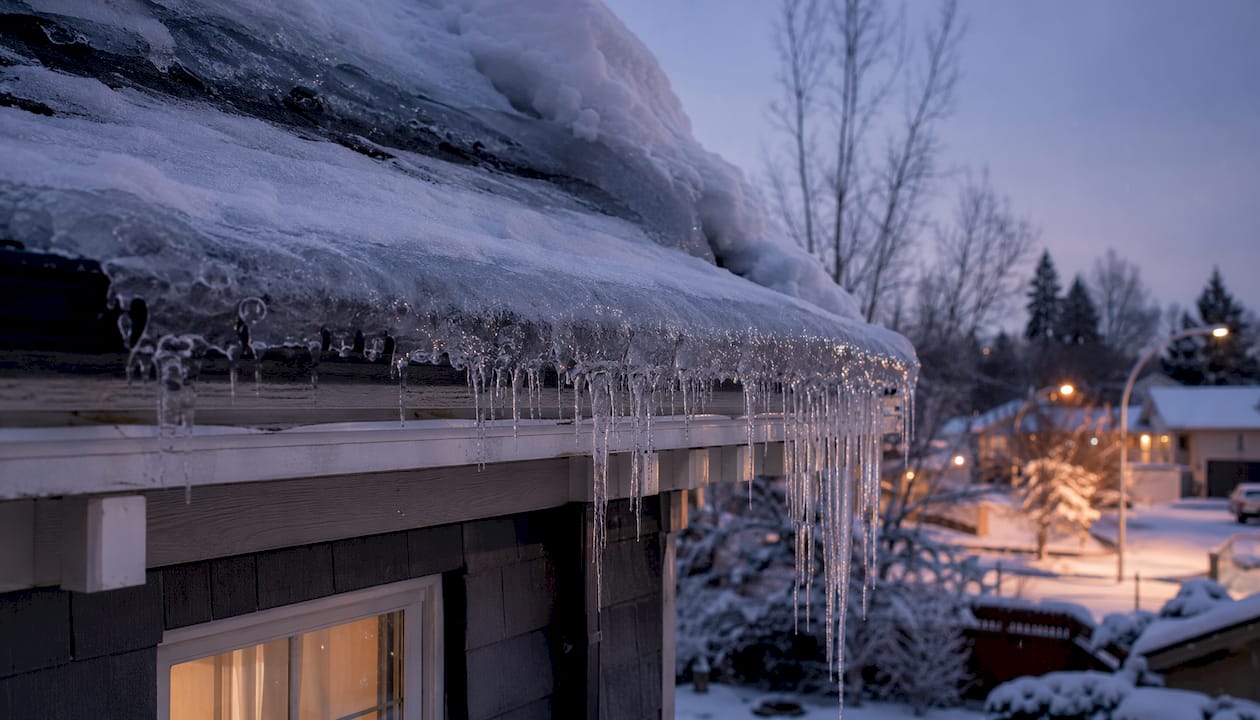
Here’s the chain of events, step by step:
| Stage | What happens |
|---|---|
| 1. Snow accumulates | A snowfall blankets the entire roof surface |
| 2. Attic heat warms the deck | Heat escaping from living spaces warms the roof deck above 0°C |
| 3. Snow melts from below | The bottom layer of snow liquefies and runs downslope |
| 4. Meltwater hits cold eaves | The eaves overhang the exterior wall and stay near air temperature |
| 5. Water refreezes | Meltwater freezes at the eave edge, building the dam |
| 6. Backup begins | New meltwater pools behind the dam and forces under shingle laps |
The meltwater that backs up behind the dam is the real threat. It finds every weak point: shingle laps, flashings around chimneys and skylights, and any penetration in the roof deck. Once it gets past the shingles, the damage compounds fast.
Why are Surrey homes especially prone to ice dam damage?
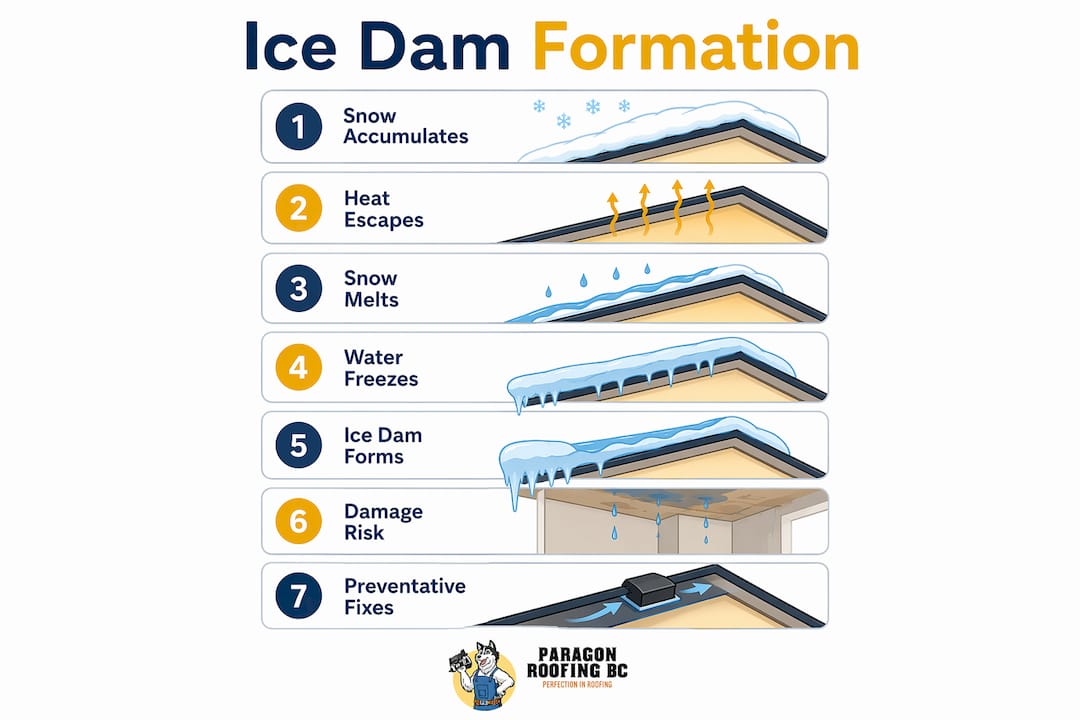
Surrey sits in a climate sweet spot for ice dams, and not in a good way. The Lower Mainland’s freeze–thaw cycles and heavy wet coastal snow create ideal conditions when combined with heat loss from buildings. A cold snap drops overnight temperatures below freezing, snow loads up the roof, then a mild afternoon warms above freezing. This cycle can repeat multiple times during January.
Local climate factors that raise the risk:
- Wet, dense snow from Pacific storms sits on roofs longer than dry interior snow and transfers heat more efficiently to the deck
- Sudden thaws after cold snaps accelerate melt before eaves have time to drain
- Overcast skies and high humidity slow evaporation, keeping moisture on the roof longer
- Heavy tree cover in older Surrey neighbourhoods drops additional snow and ice onto already-loaded eaves
Building and construction factors common in Surrey:
- Older two-storey homes with uninsulated attic knee walls, where the sloped ceiling meets a short vertical wall, are among the worst offenders
- Attic conversions that reduced ventilation pathways or added recessed lights punching through the ceiling plane
- Complex rooflines with multiple valleys, dormers, and intersecting pitches that create cold pockets and drainage dead zones
- Strata townhouse rows where shared roof sections have inconsistent insulation and ventilation across units
Operational and maintenance gaps:
- Eavestroughs packed with moss, leaf debris, and granules from aging shingles
- Deferred roof repairs on rental and strata properties where maintenance budgets get stretched thin
- Soffit vents blocked by insulation that was blown in without baffles, cutting off the air channel at the eave
Pro Tip: Property managers: before November, walk the perimeter of each building and look up at the soffits. If you can’t see vent slots or they’re painted over, that building is a high-risk candidate for ice dam damage this winter.
How ice dams actually damage your home
Water backed up behind an ice dam doesn’t knock politely. It finds the path of least resistance, and on most Surrey roofs that means shingle laps, step flashings at dormers, or the valley where two roof planes meet. Once past the shingles, water backup causes ceiling stains, wet insulation, mould, rotted decking, and damaged eavestroughs and soffits.
The most deceptive part of ice dam damage is that it often hides for weeks. Water soaks into the insulation, saturates the sheathing, and only shows up as a ceiling stain after a thaw cycle — by which point mould may already be growing in the dark.
Visible warning signs to look for:
- Large icicles hanging from eaves, especially if they’re growing horizontally inward
- A horizontal ridge of ice at the eavestrough line or just above it
- Attic condensation or frost on the underside of the roof deck when you check in winter
- Wet, compressed, or discoloured attic insulation
- Sagging or pulling eavestroughs, or sections that have separated from the fascia
- Ceiling stains on upper floors, particularly near exterior walls or below roof valleys
Quick visual survey checklist — photograph everything you find:
- Date-stamp photos of icicles, ice ridges, and any visible water entry points
- Check the attic for wet insulation, dark staining on sheathing, or frost buildup
- Look at eavestrough hangers and fascia boards for rust, rot, or separation
- Note which roof faces (north, east, south, west) show the most ice buildup
- Document any interior staining with photos and note the date of first appearance
That photo record matters enormously if you end up filing an insurance claim.
Long-term fixes that actually stop ice dams from forming
Temporary measures buy time. Permanent fixes address the thermal imbalance that creates the problem. The NRC’s technical guidance on ice formation points to design and construction details — gaps in insulation at knee walls, missing continuous soffit ventilation — as the underlying causes found during professional inspections.
Here’s the priority order for long-term prevention:
1. Insulation at the ceiling plane Add insulation to the attic floor to slow heat transfer from living spaces to the roof deck. Pay special attention to knee walls in two-storey homes and any area where the ceiling meets a sloped roof section.
2. Continuous soffit-to-ridge ventilation A cold, well-ventilated attic keeps the roof deck close to outdoor temperature, which stops the melt-from-below cycle. Install ventilation baffles at each rafter bay before adding insulation, so the air channel stays open from soffit to ridge.
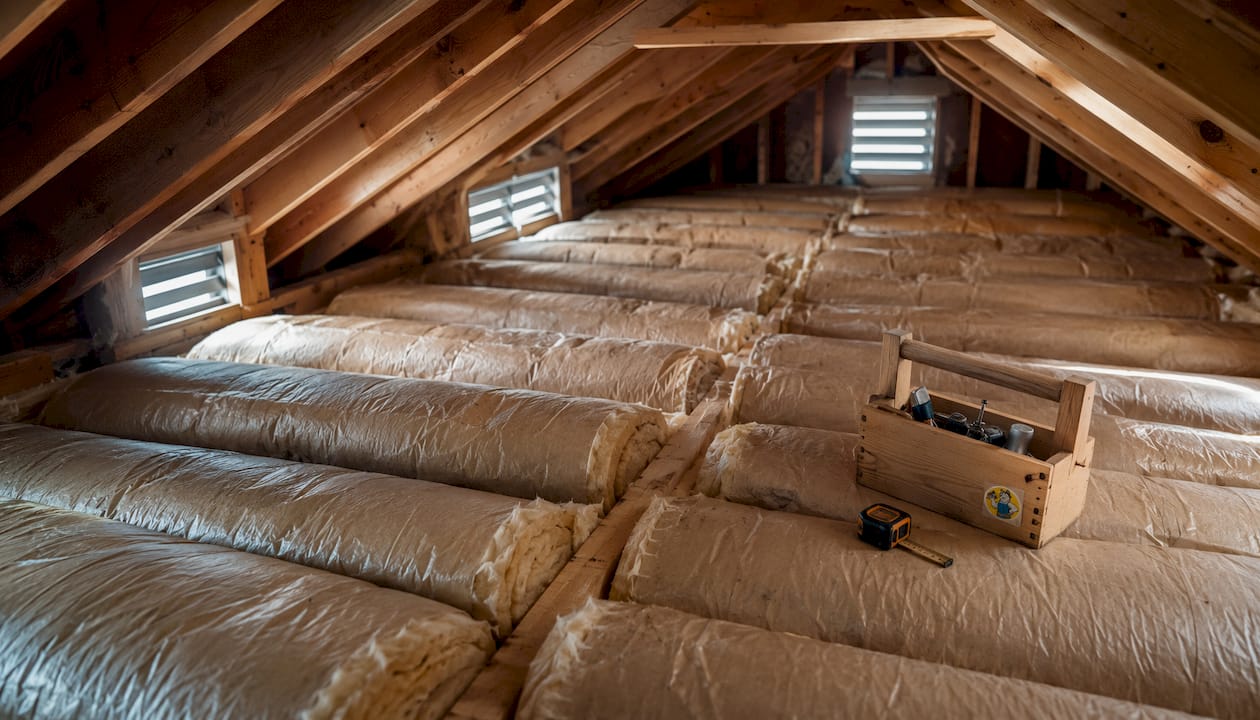
3. Seal attic air leaks Recessed lights, plumbing stacks, attic hatches, and dropped ceiling boxes are the biggest culprits. Warm moist air from the living space rises through these gaps and heats the deck directly. Air sealing is often the highest-return fix per dollar spent.
4. Ice and water shield at eaves and valleys When reroofing, ice and water shield extending at least 24 inches above the interior wall line at eaves and full coverage of valleys acts as a last-line defence. Even if a dam forms, the membrane stops meltwater reaching the deck.
Timeline and scope for homeowners and strata:
- Quick wins (this season): air sealing at attic penetrations, eavestrough cleaning, ventilation baffle installation
- Medium projects (off-season): insulation top-up, soffit vent upgrades, fascia and eavestrough replacement
- Major work (plan ahead): full reroof with ice and water shield, attic conversion remediation, complex flashing replacement
Checklist to hand your contractor when requesting quotes:
- Attic insulation R-value assessment and top-up to current code levels
- Soffit and ridge vent inspection and upgrade
- Air-leak audit at all ceiling penetrations
- Ice and water shield specification for eaves and valleys
- Eavestrough condition and drainage slope assessment
Pro Tip: When getting reroof quotes, ask specifically whether ice and water shield is included at the eaves and valleys. Some quotes leave it out to hit a lower price point. It’s not optional in a Surrey climate.
Safe seasonal maintenance and short-term measures
When a dam has already formed, your goal is to reduce immediate risk without making things worse. Here’s the right sequence:
- Remove snow from the lower eave zone using a long-handled roof rake, working from the ground. Pull snow down and away from the roof edge. Never climb onto a snow- or ice-covered roof.
- Clear eavestroughs and downspouts before and after each significant snowfall. Clean eavestroughs won’t stop ice forming on the roof, but they prevent meltwater from pooling and refreezing at the gutter, which worsens the dam.
- Check downspout discharge at the ground. A blocked outlet or ice plug at the base creates a secondary backup point that pushes water back up into the eavestrough channel.
- For stubborn dams , call a professional for steam removal. Steam cuts through ice without the impact damage that chipping causes.
- Manage interior leaks temporarily with tarps, buckets, and a dehumidifier while you arrange repairs. Dry the space as fast as possible to limit mould growth.
- Heat cables are a last resort only, and only when installed by a licensed contractor who can route them properly. Improperly installed cables can create new hot spots and worsen uneven roof temperatures.
What not to do:
- Never chip or hammer at an ice dam — it damages shingles and can send chunks of ice falling onto people below
- Don’t apply rock salt or calcium chloride directly to shingles; both accelerate granule loss and shorten roof life
- Don’t use a pressure washer on ice — the water refreezes immediately and adds weight
Pro Tip: When using a roof rake, work in short downward strokes and stay well clear of the fall zone. A chunk of ice sliding off a two-storey roof carries enough force to cause serious injury.
When should you call a licensed roofer?
Some situations are beyond a roof rake and a bucket. Call a qualified roofer when you see any of these:
- Active water entry through the ceiling or walls during or after a cold snap
- Recurring large ice dams in the same location year after year
- Wet, compressed, or dark-stained attic insulation
- Sagging eavestroughs or fascia boards showing rot or separation
- Any evidence of rot at the eave, soffit, or rafter tails
What a proper inspection covers:
- Attic insulation R-value, depth, and continuity at knee walls and ceiling junctions
- Soffit and ridge ventilation — whether the pathway is open and adequate
- Air-leak diagnostics at penetrations, hatches, and dropped ceilings
- Roofline flashings at chimneys, skylights, and dormers
- Presence and condition of ice and water shield at eaves
- Eavestrough condition, slope, and downspout discharge
Questions to ask your contractor:
- Can you provide a written inspection checklist with photos of problem areas?
- What are the root-cause fixes, prioritised by impact?
- Does your reroof scope include ice and water shield at eaves and valleys?
- What warranty covers the work, and what does it include?
A contractor who can’t answer those questions clearly isn’t the right fit for this kind of work.
Pro Tip: Book your inspection in September or October. By December, every roofer in Surrey is booked solid and you’re competing with emergency calls. Early booking means you get the work done before the first cold snap, not after.
How Canadian home insurance handles ice dam claims
Canadian homeowners’ insurance commonly covers sudden interior water damage from an ice dam — ceiling stains, damaged drywall, ruined flooring. RBC Insurance notes that policy treatment typically distinguishes sudden, accidental damage from gradual damage tied to a chronic lack of maintenance. If your insurer can show the damage built up over multiple seasons because eavestroughs were never cleaned or the roof was overdue for repair, they may limit or deny the claim.
Documentation checklist for a stronger claim:
- Date-stamped photos of the ice dam, icicles, and any visible damage taken as soon as you notice the problem
- Contractor inspection report with photos and written findings
- Receipts for recent maintenance: eavestrough cleaning, roof repairs, insulation work
- A written record of the immediate mitigation steps you took (tarping, drying, buckets)
- Repair quotes from licensed contractors
Practical steps after discovering damage:
- Notify your insurer promptly — most policies require timely notice
- Preserve damaged materials where safe (keep a section of stained drywall, for example)
- Don’t make permanent repairs until the adjuster has inspected, unless you need to prevent further damage
- Keep every receipt related to the event, including emergency service calls
Pro Tip: For strata and rental properties, coordinate the claim with your strata manager or property manager from day one. Strata policies and individual unit owner policies often overlap in ways that create coverage gaps if the claim isn’t filed correctly.
Key takeaways
Surrey homes get ice dam damage primarily because attic heat loss creates warm roof zones that melt snow, and that meltwater refreezes at cold eaves — fixing the thermal imbalance through insulation, ventilation, and air sealing is the only lasting solution.
| Point | Details |
|---|---|
| Root cause is thermal imbalance | Attic heat loss, not weather alone, drives ice dam formation on Surrey roofs. |
| Insulation and ventilation come first | Prioritise attic insulation top-up and continuous soffit-to-ridge ventilation before any other fix. |
| Document damage immediately | Date-stamped photos and a contractor report strengthen insurance claims and guide repairs. |
| Safe snow removal matters | Use a roof rake from the ground; never chip ice or climb on a frozen roof. |
| Paragonroofingbc inspections | Book a pre-winter inspection with Paragonroofingbc to assess insulation, ventilation, and flashings before ice dam season. |
What I keep seeing on Surrey roofs every winter
Hey, it’s Harman here. After years of inspecting and repairing roofs across Surrey and the Lower Mainland, the same three problems show up on almost every ice-dam call.
First: insulation that’s been compressed or pushed aside at the eave. Someone added blown-in insulation without installing baffles first, so the material piled up right at the soffit and blocked the only air channel the attic had. The roof deck above that zone runs warm all winter. Second: soffit vents that are painted over or stuffed with old fibreglass batts. I’ve pulled back insulation in attics and found the soffit vent opening completely sealed. No air moves, no cooling happens. Third: eavestroughs so full of moss and fir needles that water can’t drain even when the dam melts. The eavestrough becomes a trough of ice that pulls away from the fascia.
What actually produces long-term results is treating all three together. Air sealing the penetrations, installing proper baffles, topping up the insulation, and cleaning the drainage path. When we do that combination, the same roof that was generating ice dams every year stops doing it. The best time to schedule that work in Surrey is September through early October, before the wet season locks in and before the freeze-thaw cycles start. By November, you’re managing consequences instead of preventing them.
Paragonroofingbc can help you get ahead of ice dam season
Ice dam repairs after the fact cost far more than prevention work done in the fall. Paragonroofingbc offers roof leak detection and repair for Surrey homeowners dealing with active ice-dam leaks, plus the full range of prevention services: attic air sealing, insulation upgrades, soffit and ridge ventilation improvements, ice and water shield installation during reroofing, and eavestrough repair and replacement.

For strata councils and property managers, Paragonroofingbc’s strata roofing services cover multi-unit buildings where ice dam risk is concentrated at shared roof sections and complex intersections. Every inspection includes a written report, photos of problem areas, and fixes prioritised by root cause so you can plan and budget with confidence.
Book your pre-winter roof inspection with Paragonroofingbc before the first cold snap arrives. Call or use the contact form on the website to get on the schedule while spots are still available.
Useful sources
| Title | Publisher | Notes |
|---|---|---|
| Ice on roofs — NRC Publications Archive | National Research Council Canada | Technical reference on ice dam formation mechanics and construction-level remediation |
| Stay protected: Understanding and helping prevent ice dams | Insurance Bureau of Canada | Best for understanding the physical trigger (0°C threshold) and cause summary |
| What Homeowners Need to Know About Ice Damming | RBC Insurance | Best for insurance coverage questions and documentation guidance |
| What Causes Ice Dams On Roofs In BC | TRS Gutters | Local Lower Mainland climate context for freeze–thaw risk |
| Ice damming: cold snaps and roofing advice | Shoreline Roofing | Technical guidance on ventilation-first prevention and ice and water shield specifications |
| Top roofing maintenance tips to prevent ice dams in BC | Staxon | Practical maintenance steps including eavestrough care and safe ice removal |
FAQ
Why is my Surrey house getting ice dams every winter?
Your roof deck is staying warmer than the outside air because heat is escaping from the living space through the attic. Inadequate insulation, blocked soffit vents, and air leaks at ceiling penetrations are the most common causes in Surrey homes.
Does homeowners insurance cover roof leaks from ice dams?
Most Canadian policies cover sudden interior water damage from an ice dam, but coverage can be limited if the insurer determines the damage resulted from chronic neglect or deferred maintenance. Document all maintenance and report damage promptly.
What damage can ice dams cause if left untreated?
Ice dams force meltwater under shingles, leading to ceiling stains, wet and mouldy insulation, rotted roof decking, and damaged eavestroughs and soffits. The longer a dam sits, the deeper the water penetrates.
How do you prevent ice dams in an older Surrey home?
The most effective approach is a combination of attic insulation top-up, continuous soffit-to-ridge ventilation with baffles, and air sealing at all ceiling penetrations. Adding ice and water shield at eaves during any reroof provides a permanent backup layer of protection.
When should I call Paragonroofingbc about ice dam damage?
Call as soon as you see active interior leaks, recurring large ice dams, wet attic insulation, or sagging eavestroughs. Paragonroofingbc provides written inspection reports with prioritised fixes so you know exactly what needs to happen and in what order.
Recommended
Our Roofing Blog


Have more questions about roofing?
Check out our FAQs or give us a call today to speak to an expert roofer in Vancouver Lower Mainland, BC. We're here to help our neighbours make educated decisions about their roof. For our team, we value helping clients save money while making their roofs last.