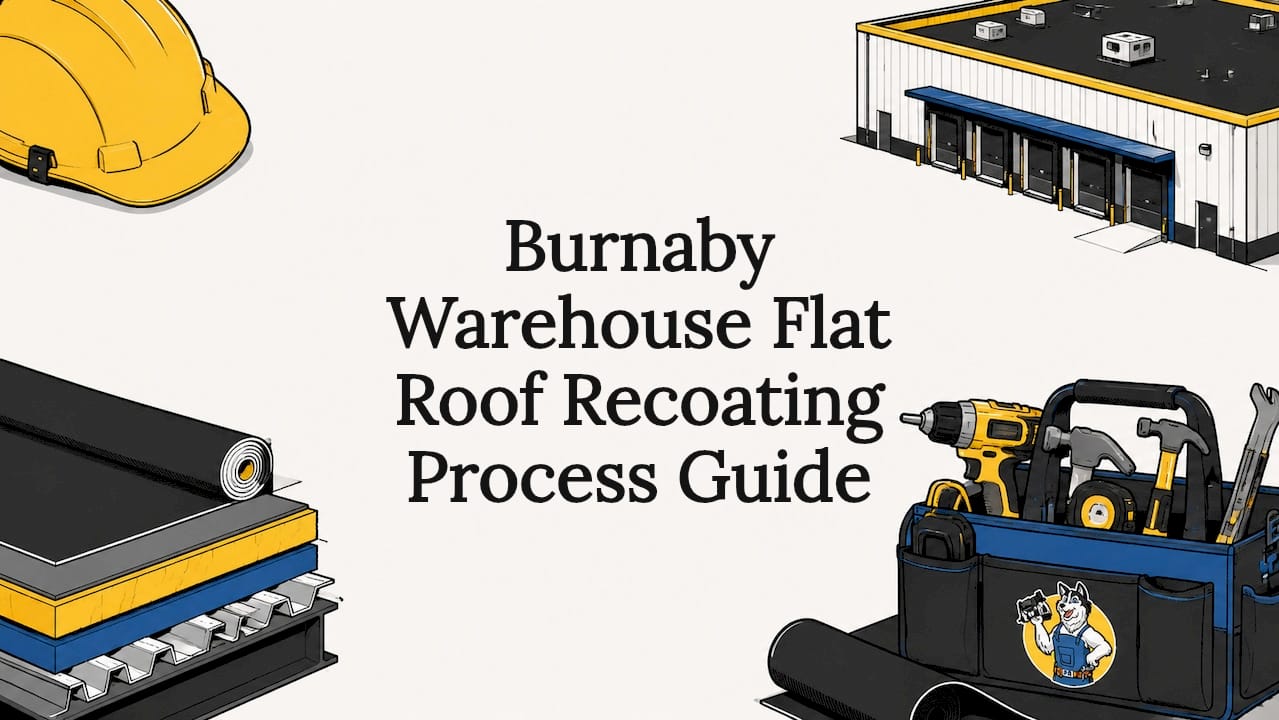
Burnaby warehouse flat roof recoating process guide
TL;DR:
- The Burnaby warehouse flat roof recoating process extends membrane life by 15-20 years through inspection, substrate repair, and silicone coating application. Proper preparation, moisture assessment, seam reinforcement, and safety compliance are essential for a successful, long-lasting restoration. Skipping crucial steps like infrared moisture scans or seam repairs risks voiding warranties and causing early failure.
The Burnaby warehouse flat roof recoating process is a structured restoration method that extends membrane life by 15–20 years through inspection, substrate repair, and multi-layer silicone coating application. In the industry, this is formally called fluid-applied roof restoration , and understanding both terms helps you communicate clearly with contractors and manufacturers. The process covers six distinct phases: moisture assessment, wet insulation replacement, seam and penetration reinforcement, priming, base coat application, and top coat application. Done correctly, it costs a fraction of a full re-roof and keeps your building compliant with BC building codes. Done incorrectly, it voids your existing membrane warranty and creates adhesion failures within two years.
What does the burnaby warehouse flat roof recoating process actually involve?
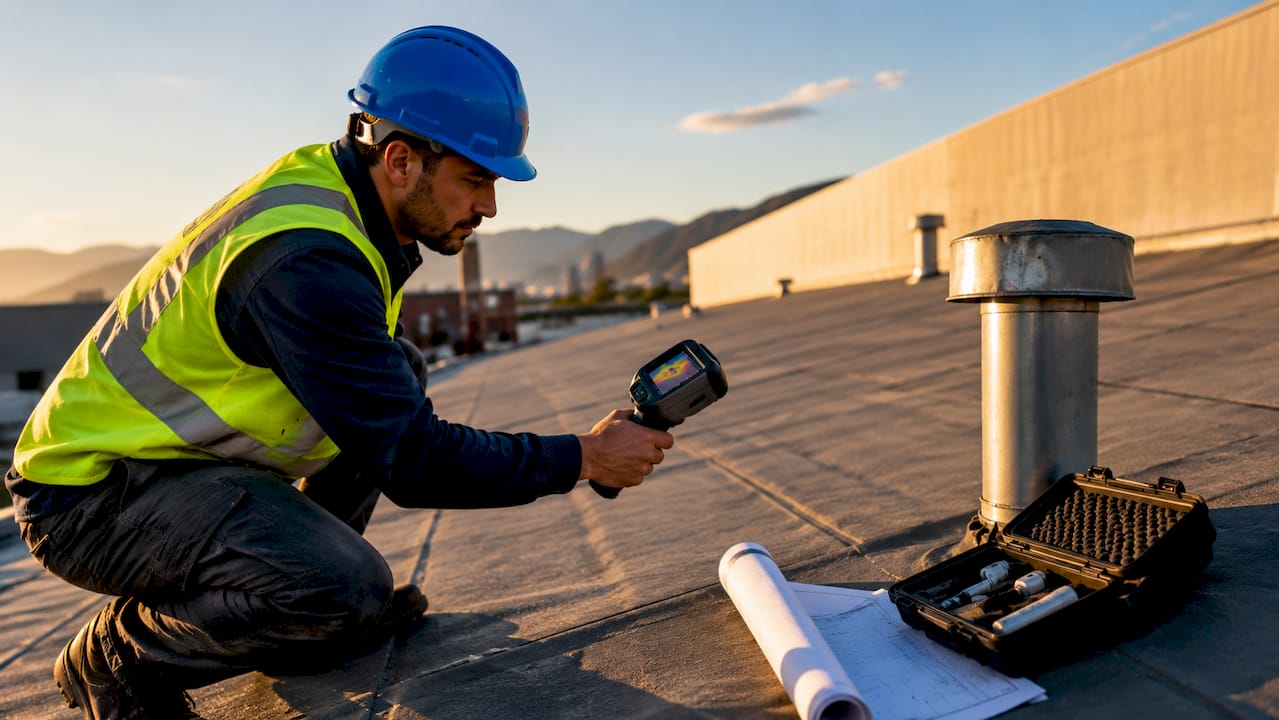
The Burnaby warehouse flat roof recoating process begins before a single drop of coating touches the membrane. A pre-project roof assessment including infrared moisture scan, core samples, drainage check, and membrane probe must happen before any coating work starts. Skipping this step is the single most common reason recoating projects fail within the first few years.
Infrared moisture scanning identifies wet insulation beneath the membrane without cutting it open. Core samples then confirm the scan findings and reveal the exact insulation type and condition. Both tools together give you a clear picture of how much substrate repair is needed before the coating crew ever mobilises.
Drainage and ponding water checks are especially relevant for Burnaby warehouses. Many older industrial buildings in the Willingdon, Brentwood, and Lougheed areas have undersized roof drains or blocked scuppers that create chronic ponding. Silicone coatings handle standing water well, but the underlying membrane and insulation must be sound before you coat over any wet areas.
Seam and penetration integrity checks complete the assessment. HVAC curbs, pipe boots, parapet walls, and expansion joints are the highest-risk areas on any warehouse flat roof. Your inspector should probe each one and document the findings in writing before the project scope is finalised.
Pro Tip: Request a written moisture survey report with thermal images before signing any recoating contract. If a contractor skips the infrared scan, that is a clear sign they are cutting corners on the most important step.
How is surface preparation and repair performed before coating?
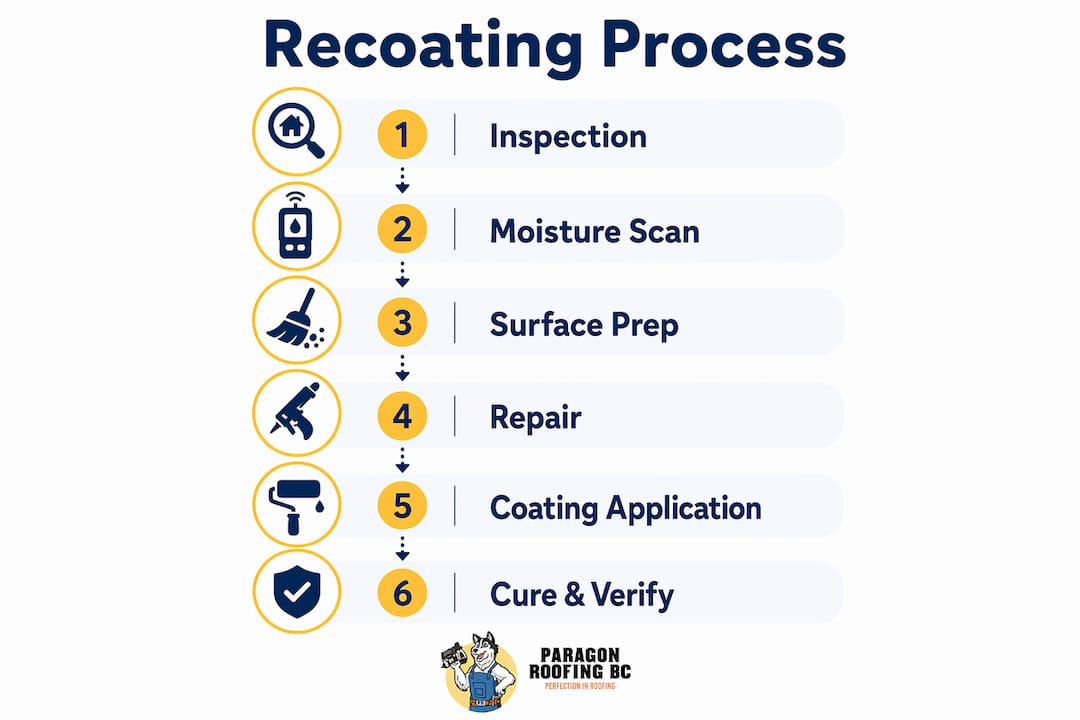
Surface preparation is where most of the real work happens, and it directly determines whether your coating lasts 15 years or peels off in 3. The recoating mobilisation order is moisture assessment first, wet insulation replacement second, and repairs and reinforcement third. The coating crew does not start until all three are complete.
Here is the standard sequence your contractor should follow:
- Pressure wash the entire roof surface using a detergent solution or tri-sodium phosphate (TSP) to remove chalk, biological growth, oils, and any loose coating material. Biofilm is common on Burnaby roofs due to the wet Lower Mainland climate, and it will destroy adhesion if left in place.
- Remove and replace wet insulation identified during the moisture scan. Coating over wet insulation traps moisture and accelerates membrane deterioration. This step is non-negotiable for warranty compliance.
- Cut out and repair delaminated or blistered membrane sections. Loose or delaminated coatings must be removed before recoating. Adhesion pull testing confirms whether the remaining surface is sound enough to coat.
- Reinforce seams and penetrations with embedded polyester mesh tape. This mesh is set into a wet coat of silicone at a specified wet mil thickness, typically 30–40 wet mils, to create a reinforced base layer at the highest-stress points.
- Apply primer based on substrate type. TPO, EPDM, modified bitumen, and aged silicone each require a different primer chemistry. Applying the wrong primer, or skipping it entirely, is a direct path to adhesion failure.
- Allow full drying before coating. Moisture trapped under a new coating layer causes blistering and delamination. In Burnaby’s climate, drying time after washing can extend to 48–72 hours depending on the season.
Pro Tip: If your existing membrane is cured silicone, the prep requirements change significantly. Recoating cured silicone requires an adhesion-promoting primer or adhesion wash. Without it, the new coating will not bond properly and will peel under thermal cycling.
What are the key steps for applying silicone coatings on warehouse flat roofs?
Silicone roof coating application follows a defined sequence with specific thickness targets at each stage. Silicone-based restoration requires reinforcement at seams and penetrations with embedded polyester mesh, primer application based on substrate, and base and top coats applied at specified wet and dry mil rates. Manufacturers like Momentive (GE Silicones) and Gaco publish detailed application guides, and your contractor must follow them to qualify for warranty registration.
Application methods and coverage rates
Silicone coatings can be applied by airless spray, roller, or squeegee. Spray is the fastest and most consistent method on large warehouse roofs. Rollers work well for detail areas and reinforcement work. Squeegees are used for filling low spots and ensuring even coverage on irregular surfaces.
- Base coat: Applied at 1.5–2 gallons per 100 square feet, targeting 20–30 dry mils
- Reinforcement areas (seams, penetrations, curbs): Applied at higher wet mil thickness, typically 40–60 wet mils, with polyester mesh embedded
- Top coat: Applied at 1.5–2 gallons per 100 square feet to reach the total specified dry mil thickness for the warranty tier
Cure times and thickness verification
Silicone coatings allow light foot traffic after 24–48 hours and reach full cure at approximately 7 days. Full cure timing matters because workers accessing the roof for HVAC maintenance or other trades can damage an uncured coating surface. Communicate this clearly to your building operations team before the project starts.
| Stage | Wet Mil Target | Dry Mil Target | Cure for Foot Traffic |
|---|---|---|---|
| Base coat | 20–30 wet mils | 15–20 dry mils | 24–48 hours |
| Reinforcement layer | 40–60 wet mils | 30–40 dry mils | 24–48 hours |
| Top coat | 20–30 wet mils | 15–20 dry mils | 24–48 hours |
| Full system | 60–80 wet mils total | 40–55 dry mils total | 7 days full cure |
Final dry mil thickness measurements must be documented and submitted to the manufacturer for warranty registration. Momentive and Gaco both require this documentation. Without it, you have a coated roof but no warranty backing.
What are common challenges during flat roof restoration in burnaby?
Burnaby’s climate creates specific challenges that do not show up in manufacturer application guides written for drier climates. Here are the most common issues and how to avoid them:
- Adhesion failure from contamination. Burnaby roofs accumulate moss, algae, and traffic oils faster than roofs in drier regions. Even a thin biofilm layer left after washing will prevent proper bonding. Require a TSP wash followed by a clean water rinse as a minimum standard.
- Recoating over cured silicone without proper prep. Cured silicone coatings set a strict limit for future recoats. Without an adhesion wash or primer, new coatings peel quickly under thermal cycling. This is a known failure mode that is entirely preventable.
- Weather timing. Silicone coatings require surface temperatures above 5°C and no rain in the forecast for at least 4–6 hours after application. Burnaby’s shoulder seasons (october through november and march through april) require careful scheduling. A 50,000 square foot coating project typically takes 5–10 working days, and weather delays can stretch that timeline significantly.
- Warranty voiding through incompatible products. Coating over a membrane still under manufacturer warranty can void that warranty unless the coating product is approved and registered. Always verify compatibility with your membrane manufacturer before selecting a coating system.
- Skipping seam and penetration repairs. Skipping required repairs and seam reinforcement is the primary cause of coating failure on industrial flat roofs. Coating over a failing seam is like painting over a crack in a wall. It looks fine for a season, then fails completely.
Planning the coating system from the start matters more than most property managers realise. Mechanical removal of existing coatings to switch coating chemistry is costly and slow. Choosing the right system on the first recoat shapes your maintenance strategy for decades.
How does safety compliance affect recoating work on burnaby warehouse roofs?
Safety compliance is not a checkbox item on a recoating project. It is a legal requirement that affects how the work is planned, staffed, and executed. WorkSafeBC requires fall protection for rooftop work at 3 metres or more from unguarded edges and when injury risk exceeds landing on a flat surface. Most Burnaby warehouse roofs qualify on both counts.
WorkSafeBC’s hierarchy of fall protection requires engineered controls first, before relying on personal protective equipment. That means guardrails and travel restraint systems take priority over harnesses alone. Your contractor must submit a fall protection plan before work begins.
Key safety considerations for warehouse recoating projects include:
- Guardrails or travel restraint systems at all unguarded roof edges, including parapet walls below 1.1 metres in height
- Skylight and roof hatch covers or guardrails, since these are fall-through hazards that are easy to overlook during coating work
- Weather-related surface hazards including wet coating, morning dew, and frost on membrane surfaces during early-season work
- Congested work areas around HVAC equipment, pipe clusters, and conduit runs that restrict worker movement and increase trip risk
- Controlled access zones to keep non-essential workers off the roof during active coating application
Safety planning also affects your commercial roofing safety documentation requirements as a building owner. If an incident occurs and your contractor cannot produce a fall protection plan, your liability exposure increases significantly. Require this documentation before any crew accesses your roof.
Key takeaways
The Burnaby warehouse flat roof recoating process succeeds only when moisture assessment, substrate repair, seam reinforcement, and safety compliance are completed in the correct sequence before any coating is applied.
| Point | Details |
|---|---|
| Moisture assessment is first | Infrared scans and core samples must confirm substrate condition before any coating work begins. |
| Seam reinforcement is non-optional | Polyester mesh embedded at specified wet mil thickness is required at all seams and penetrations for warranty compliance. |
| Cured silicone needs special prep | Recoating over cured silicone without adhesion primer or wash causes rapid bond failure under thermal cycling. |
| Weather timing affects scheduling | A 50,000 sq ft project takes 5–10 working days; Burnaby’s wet climate requires careful weather window planning. |
| Safety compliance protects everyone | WorkSafeBC fall protection requirements apply to all warehouse roof work at 3 metres or more from unguarded edges. |
What i’ve learned managing recoating projects on burnaby warehouse roofs
Hey, it’s Harman here. After inspecting and managing flat roof recoating projects on warehouses across Burnaby, Willingdon, and the Brentwood industrial corridor, the pattern I keep seeing is the same. Property managers get a quote, the price looks good, and the contractor skips the infrared scan because it adds time and cost to the mobilisation. Two years later, the coating is blistering because there was wet insulation sitting under it the whole time.
The moisture scan is not optional. It is the foundation of the entire project. I have seen buildings where the scan revealed wet insulation under 40% of the roof surface. That changes the repair scope completely, and it changes the budget. But it is far better to know that before you coat than after.
The other thing I want to flag is the long-term planning angle. Recoating every 15–20 years with a renewed warranty is a genuinely smart maintenance strategy for warehouse owners. But it only works if you choose a coating chemistry on the first application that you can recoat without mechanical removal. Silicone over silicone with proper adhesion prep is a clean, repeatable system. Mixing chemistries creates expensive problems down the road.
Set clear expectations with your building operations team about cure times and roof access restrictions after coating. The 7-day full cure window catches people off guard, especially when HVAC contractors need roof access. A quick heads-up to all trades before the project starts saves a lot of headaches.
— Harman
Paragonroofingbc handles burnaby warehouse roof recoating from start to finish
If you manage a warehouse in Burnaby and your flat roof is showing signs of wear, cracking seams, or chronic ponding, a professional recoating assessment is the right first step. Paragonroofingbc crews are trained in WorkSafeBC fall protection requirements and follow the full moisture-to-warranty sequence on every project.
Paragonroofingbc provides flat roofing services in Burnaby including infrared moisture surveys, wet insulation replacement, seam reinforcement, and silicone coating application backed by manufacturer warranty registration. Our commercial roofing services cover the full Greater Vancouver area, and we work directly with property managers and building owners to schedule around weather windows and operational requirements. Contact Paragonroofingbc to book a roof inspection and get a clear scope of work before any coating crew sets foot on your building.
FAQ
What is the difference between roof recoating and roof replacement?
Roof recoating, formally called fluid-applied roof restoration, applies new coating layers over an existing membrane to extend its life. Roof replacement removes the entire membrane system and installs a new one. Recoating costs significantly less and is appropriate when the substrate and insulation are structurally sound.
How long does a silicone roof coating last on a burnaby warehouse?
A properly applied silicone coating system lasts 15–20 years with routine maintenance. Recoating at the end of that cycle with a fresh silicone layer and renewed warranty is a cost-effective alternative to full replacement.
Can you recoat a flat roof in winter in burnaby?
Silicone coatings require surface temperatures above 5°C and dry conditions during and after application. Winter recoating in Burnaby is possible during dry weather windows but requires careful scheduling and daily temperature monitoring.
Does recoating a flat roof void the existing membrane warranty?
It can, if the coating product is not approved by the membrane manufacturer. Always verify coating compatibility and register the new coating system with the manufacturer to maintain warranty coverage on both the membrane and the new coating.
What does a burnaby flat roof inspection include before recoating?
A pre-recoating inspection includes an infrared moisture scan, core samples, drainage and ponding assessment, seam and penetration condition review, and adhesion testing. The findings determine the full repair scope before any coating work begins.