Roofing Industry Standards—Ensuring Compliance in BC
Every property manager in Vancouver eventually faces a renovation or repair where roofing choices feel more complex than expected. Roofing standards are not just technical guidelines but the rules that protect your building, reputation, and investment. Understanding Canadian roofing industry standards helps prevent costly compliance mistakes, ensures your insurance stays valid, and guarantees that your contractors use the right materials for Vancouver’s climate. This article gives you the key details and practical guidance you need to make confident roofing decisions.
Table of Contents
- Defining Roofing Industry Standards In Canada
- Types Of Roofing Standards And Classifications
- Certification, Insurance, And Legal Compliance
- Safety Codes, Building Permits, And Inspections
- Common Compliance Risks And How To Avoid Them
Key Takeaways
| Point | Details |
|---|---|
| Understand Roofing Classifications | Familiarize yourself with low-slope and steep-slope roofing standards to select appropriate materials and methods for your building’s requirements. |
| Verify Contractor Credentials | Always confirm that the roofing contractor has valid certifications, liability insurance, and Workers’ Compensation coverage before hiring them. |
| Obtain Necessary Permits | Ensure that all required building permits are secured and that inspections occur at key stages to comply with safety and legal standards. |
| Document Everything | Demand comprehensive documentation of materials used, inspections performed, and warranties provided to safeguard against compliance risks and future claims. |
Defining Roofing Industry Standards in Canada
[Content here]
Types of Roofing Standards and Classifications
Roofing standards in Canada fall into distinct categories based on the material type, installation method, and building slope. Understanding these classifications helps property managers and facility directors choose the right system for their specific climate and performance needs. The standards are designed to ensure every roofing system meets rigorous performance criteria, handles the unique challenges of our Lower Mainland environment, and delivers the lifespan you pay for.
Low-slope and steep-slope roofing represent the two primary roof configurations, each governed by different standards and installation protocols. Low-slope roofs, which are common in commercial and multi-family buildings across Vancouver, are typically protected by bituminous, liquid-applied, or single-ply membranes that are tested for water penetration resistance, flexibility, and durability under freeze-thaw cycles. Steep-slope roofs, found on residential homes and some commercial structures, use shingles, metal panels, or tiles and follow different wind uplift and impact resistance standards. Metal roofing systems occupy their own classification and must meet specific performance standards for fastening, panel seaming, and corrosion resistance, which is especially critical given the coastal moisture we experience here in BC.
Here’s a summary of key differences between low-slope and steep-slope roofing standards in Canada:
| Aspect | Low-Slope Roofing | Steep-Slope Roofing |
|---|---|---|
| Typical Use | Commercial & multi-family buildings | Residential homes & some commercial |
| Common Materials | Bituminous, TPO, PVC, EPDM membranes | Asphalt shingles, metal panels, tiles |
| Key Performance Focus | Water resistance, freeze-thaw durability | Wind uplift, impact resistance |
| Special Standards | Seam strength, ponding prevention | Fastener patterns, ventilation requirements |
Within these broad categories, roofing materials are further classified by composition and application method. The Roofing Application Standards Manual outlines detailed classifications for each system type, including thermoplastic membranes like TPO and PVC, elastomeric membranes like EPDM, and modified bitumen products. Each classification specifies minimum thicknesses, seam strength requirements, fire ratings, and installation tolerances. For instance, a TPO membrane used on a commercial building must meet specific tensile strength standards and UV resistance thresholds. In our wet climate, standards also address how each material handles water absorption, ponding prevention, and ventilation requirements to avoid moisture buildup that can compromise the roof structure over time.
Material specifications also include testing and certification standards. Products must be tested for wind resistance, impact resistance (particularly important after hail or falling debris), flame spread ratings, and smoke development. When you see a roof certified to CSA or ASTM standards, that certification means the material has undergone independent laboratory testing and meets established performance benchmarks. In British Columbia, builders and property managers must specify roofing materials that align with local building codes, which often reference these national standards. This is where compliance becomes real: if your roof doesn’t meet the classification standards for your roof type and building use, you may face insurance claims denial or permit violations.
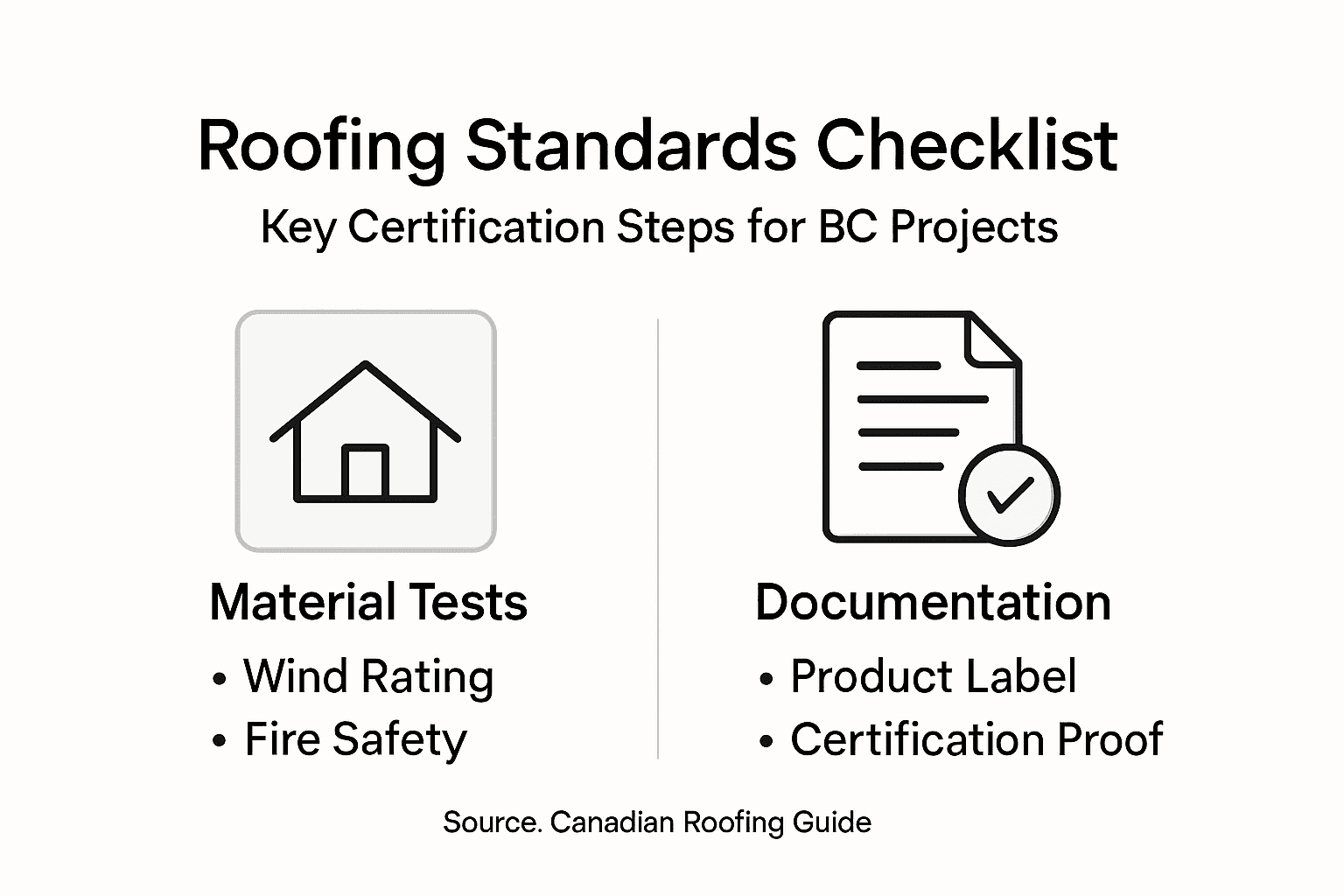
Pro tip: _When planning a roof replacement or maintenance program, request documentation showing that materials meet the appropriate Canadian and ASTM standards for your specific roof type and slope, and verify the installer understands the classification requirements for your system.
Certification, Insurance, and Legal Compliance
Certification and insurance form the backbone of legitimate roofing work in British Columbia. When you hire a roofer, you’re not just paying for labour and materials—you’re paying for accountability, protection, and legal standing if something goes wrong. A certified roofing contractor has demonstrated competency in their trade through formal training and examination, while insurance protects both you and the contractor if accidents occur or defects emerge after installation. In BC, roofing contractors must carry Workers’ Compensation coverage and liability insurance, which means if a worker gets injured on your property or the roof fails due to poor workmanship, you have a path to recovery rather than bearing the entire cost yourself.
The Canadian Roofing Contractors Association establishes standards around contractor certifications, insurance requirements, and warranty obligations that protect property owners and ensure consistent quality across projects. A certified roofing contractor in BC should carry current liability insurance of at least two million dollars, proof of Workers’ Compensation coverage, and valid certifications from recognized bodies such as the Roofing Contractors Association of BC or similar provincial organizations. When you’re vetting a contractor, ask for certificates of insurance and proof of certification before signing any contract. Many property managers make the mistake of hiring the cheapest quote without verifying credentials, only to discover later that the contractor had no insurance when problems arose. If an uninsured roofer causes damage to your building or a neighbouring property, you could face substantial liability claims.
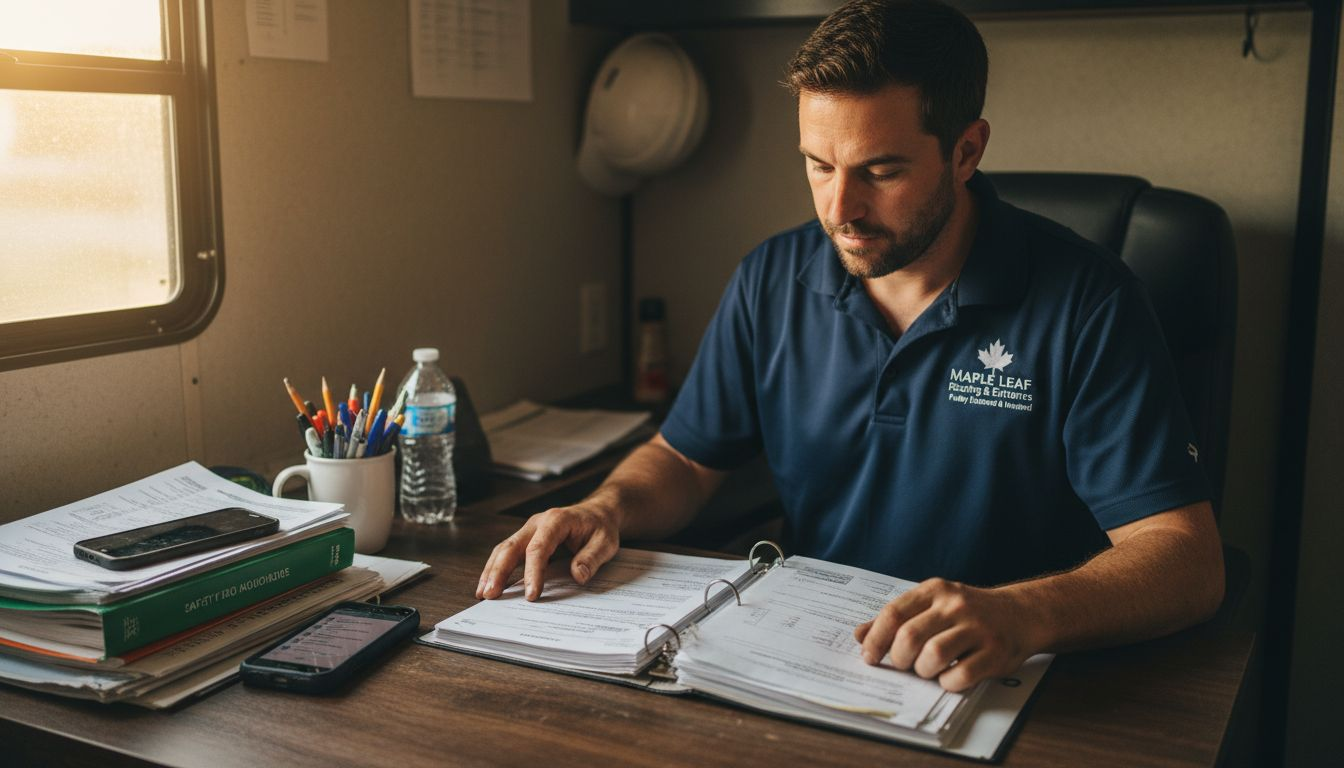
Legal compliance also means understanding your obligations as a property owner. Building permits are required for most roofing work in BC municipalities, and the permit process ensures the work meets current National Building Code standards and local bylaws. When you hire a contractor, they should handle permit applications and inspections as part of their service. If work is done without permits and later discovered, your insurance may deny claims related to that roof, and you might face fines from your municipality. Professional warranties typically cover materials and labour for a specified period, but these warranties are only valid if the work was done by a certified installer and meets all applicable standards. We’ve seen situations where property managers thought they had ten-year coverage, only to find the warranty was void because the installation didn’t follow proper procedures or didn’t meet code requirements.
Compliance also extends to safety standards on the job site. Roofing work involves fall hazards, and contractors must comply with WorkSafeBC regulations regarding fall protection, equipment inspection, and worker training. A legitimate contractor will have safety protocols in place, conduct pre-work safety briefings, and maintain documentation of worker certifications. If a contractor shows up without proper safety equipment or refuses to follow fall protection procedures, that’s a red flag that they’re cutting corners in ways you can’t see on the finished roof either.
Pro tip: _Before signing any roofing contract, request a Certificate of Insurance showing current liability and Workers’ Compensation coverage, verify the contractor holds valid roofing certifications, and confirm they’ll obtain all required building permits for your specific project.
Safety Codes, Building Permits, and Inspections
Building permits exist for one reason: to protect you. When a roofing project requires a permit in your BC municipality, that requirement isn’t bureaucratic red tape—it’s a safeguard ensuring the work meets current safety standards, fire codes, wind load requirements, and energy efficiency rules specific to your region. The permit process triggers mandatory inspections at key stages of the work, giving you an independent third-party verification that the contractor is following code. Here in the Lower Mainland, we see heavy rain, wind gusts that stress roof connections, and freeze-thaw cycles that can expose poor installation practices within months. Building codes account for these local conditions, and inspectors verify the contractor has addressed them properly.
Building codes and safety regulations mandate permits and inspections to ensure contractors comply with fire safety, wind resistance, and energy efficiency requirements. In British Columbia, residential roof replacements over a certain square footage typically require permits, as do most commercial roofing projects. The process involves submitting plans, paying permit fees, and scheduling inspections before work begins, during installation, and after completion. Some property managers try to avoid permits to save money or time, but this creates serious problems. If you later need to make an insurance claim related to unpermitted roof work, your insurer can deny coverage entirely. Similarly, if you sell the property and a title search reveals unpermitted work, buyers may demand you remediate it or take a price reduction. We’ve dealt with situations where a property manager saved two thousand dollars by skipping permits, only to spend fifty thousand later fixing unpermitted work to satisfy a buyer’s lender.
The inspection process typically occurs at three critical points. The first inspection happens before work starts, verifying that the site is properly prepared and the contractor has removed old roofing or prepared the substrate correctly. The second inspection occurs during installation, checking that flashings are properly sealed, fasteners are spaced correctly, and underlayment meets code specifications. The final inspection happens after the roof is complete, confirming that all seams are sealed, ventilation is adequate, and the finished product matches the approved plans. Each inspection creates a paper trail documenting compliance, which becomes invaluable if disputes arise later. The Roofing Contractors Association of BC emphasises that understanding local permit requirements and inspection procedures is essential for contractors to maintain standards and protect property owners throughout the project lifecycle.
Safety codes also govern how the work is performed, not just the finished product. Fall protection, equipment inspection, and worker certifications are all part of code compliance. A contractor working without proper scaffolding, harnesses, or safety training violates WorkSafeBC regulations, regardless of how good the final roof looks. If an accident occurs on an unsafe job site, you as the property owner could face liability claims even though you didn’t create the hazardous conditions. This is why verifying the contractor follows safety codes matters as much as verifying they follow installation codes.
Pro tip: Always confirm your roofing project requires a permit by contacting your local municipality or building department before accepting contractor quotes, and ensure your contract specifies the contractor will obtain the permit, schedule inspections, and provide copies of all inspection reports upon completion.
Common Compliance Risks and How to Avoid Them
Compliance failures in roofing projects don’t happen by accident. They result from skipped steps, poor communication, or cutting corners to save time and money. The most common risk we see is inadequate documentation. A contractor completes the work, hands you an invoice, and vanishes. Months later, you discover a leak or need warranty work, but you have no paperwork showing what materials were used, when inspections occurred, or whether the work met code. Without documentation, proving compliance becomes nearly impossible, and your insurance company may deny claims because they can’t verify the work was done properly. Improper installation and inadequate documentation are among the leading compliance risks that undermine roof system performance and create regulatory exposure for property owners.
Another major risk is hiring contractors without verifying their qualifications. A roofer might claim experience or certifications they don’t actually hold, or they might have years of experience but never completed formal training in current code requirements. Building codes change every few years, and a contractor who learned their trade fifteen years ago might not understand new energy efficiency standards, updated flashing requirements, or changes to ventilation rules. We’ve inspected roofs installed by experienced contractors who missed current code requirements simply because they weren’t staying current with standards. Similarly, failing to secure required permits is a high-risk decision. Some contractors will quote lower prices if you skip permits, but that savings evaporates the moment you need warranty work or face an insurance claim. Property managers sometimes believe they can avoid permits on routine maintenance or small repairs, but many jurisdictions classify even “routine” work as requiring permits if it affects the roof structure or covering.
Material substitution represents another serious compliance failure. A contractor might use lower-grade materials that technically meet minimum standards but don’t match the specifications in your approved plans or the manufacturer’s warranty requirements. Your roof might appear fine initially, but the substituted materials could fail prematurely under freeze-thaw stress or heavy wind loads. The Roofing Contractors Association of BC emphasises that systematic quality control procedures and verification of materials during installation are essential to prevent these failures and protect property owners.
The table below outlines common compliance risks and prevention strategies for roofing projects:
| Compliance Risk | Real-World Consequence | Prevention Strategy |
|---|---|---|
| Inadequate documentation | Insurance/warranty claims denied | Require complete paperwork at every stage |
| Unverified contractor credentials | Liability for property damage | Check insurance and certificates before hiring |
| Skipped permits/inspections | Fines and remediation costs | Always confirm and secure required permits |
| Material substitution | Premature roof failure | Insist on material invoices and inspections |
To avoid these risks, establish clear expectations in your contract. Specify that the contractor will obtain all permits, schedule inspections, and provide documented proof of completion. Require material invoices showing exactly what was installed, not just general descriptions. Request a detailed warranty that specifies coverage period, what is covered, and conditions that void coverage. Ask the contractor to provide a final inspection report from the municipality and copies of all inspection documentation. Most importantly, don’t accept “we’ll finish the paperwork later.” Legitimate contractors complete documentation as they work because proper procedures are built into their process, not added afterward.
Pro tip: Create a roofing project checklist that includes permit applications, inspection scheduling, material verification, and documentation requirements, then review it with the contractor before work begins and confirm all items are completed before final payment.
Ensure Your Roofing Project Meets All Standards with Trusted Expertise
Navigating the complexities of roofing industry standards in British Columbia can be overwhelming. From securing proper certification and insurance to obtaining building permits and passing inspections, every step is crucial to protect your investment and ensure compliance. We understand the risks of inadequate documentation, unverified contractors, and skipped permits that can lead to costly claims denials and liability issues.
At Paragon Roofing BC, we specialise in delivering roofing solutions that strictly adhere to Canadian and ASTM standards, tailored for BC climates and regulations. Whether you require commercial low-slope membrane systems or steep-slope residential shingles, our certified team provides full-service support including permit management, professional installation, and detailed inspection reports. Trust us to safeguard your property with meticulous attention to material specifications and legal requirements.
Take the stress out of your roofing project today. Visit Paragon Roofing BC for comprehensive roofing services and learn how we ensure compliance from start to finish. Contact us now to schedule a free inspection and secure your peace of mind.
Don’t leave your roofing investment to chance. Partner with Paragon Roofing BC and experience expert guidance, certified workmanship, and thorough compliance support. Explore our service offerings and book your consultation at our website today.
Frequently Asked Questions
What are the main types of roofing standards in Canada?
Roofing standards in Canada are primarily categorized into low-slope and steep-slope roofing, each governed by specific materials and performance criteria. Low-slope roofs often use bituminous, liquid-applied, or single-ply membranes, while steep-slope roofs typically utilize shingles, metal panels, or tiles.
Why is certification important for roofing contractors?
Certification ensures that roofing contractors have demonstrated competency in their trade through training and examination. It protects property owners by ensuring that qualified professionals are handling installations, which minimizes the risk of poor workmanship and potential liability issues.
What are the risks of not obtaining building permits for roofing work?
Failing to obtain building permits can lead to denied insurance claims, fines from municipalities, and may necessitate costly remediation if unpermitted work is discovered. It also jeopardizes the legality of the roofing project and can create problems during property sales.
How can I verify that roofing materials meet the required standards?
You should request documentation from your contractor showing that all materials comply with Canadian and ASTM standards specific to your roofing type. Ensure the installer understands the classification requirements and is willing to provide certification evidence for the materials used.