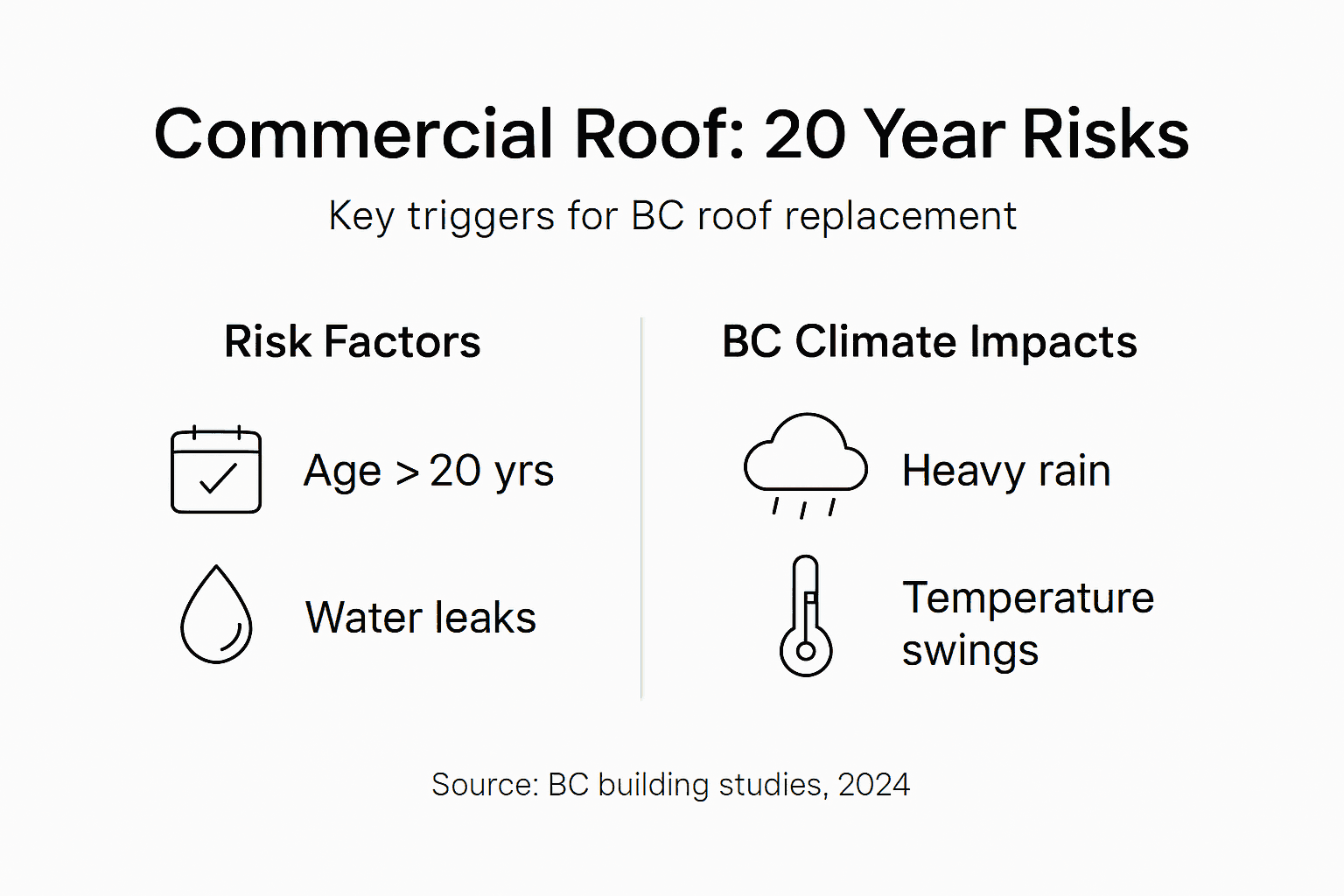
Why replace a commercial roof in BC? 70% risk by 20 years
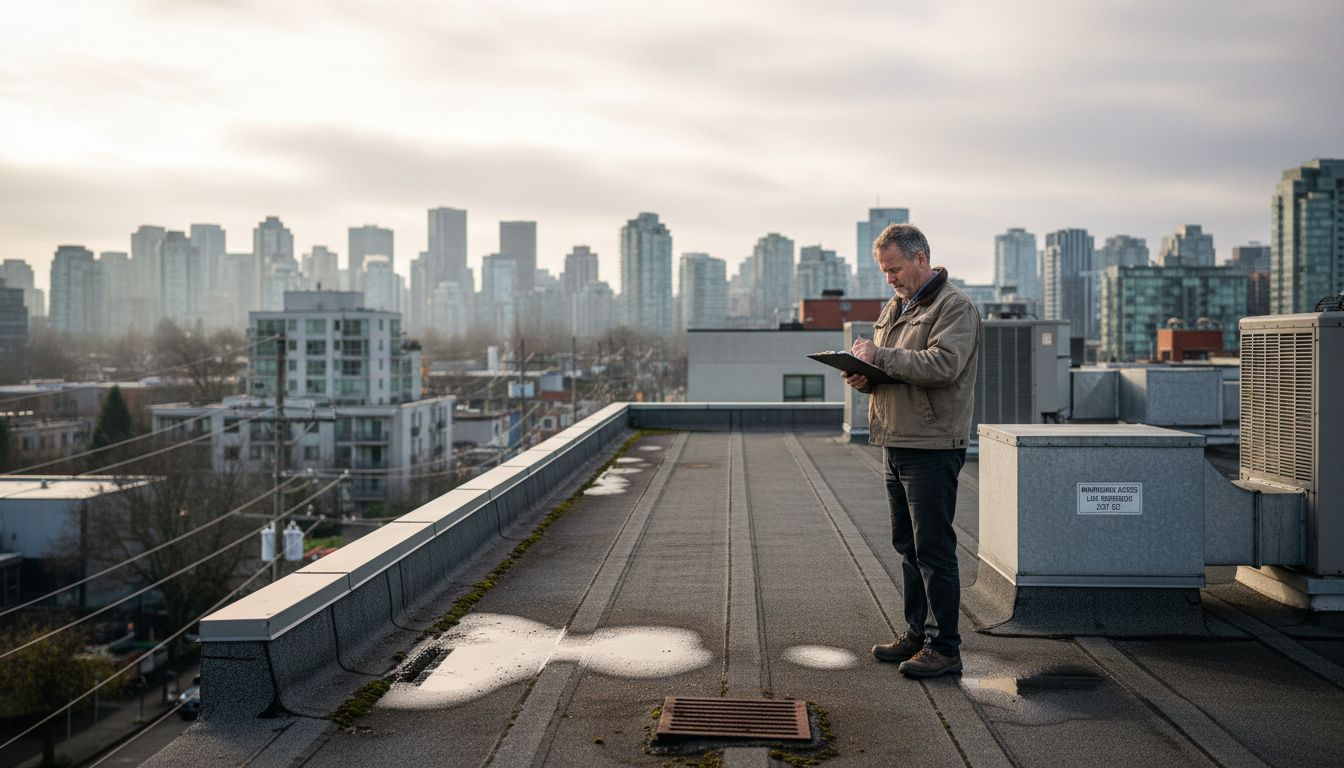
Roofs older than 20 years in British Columbia face a 70% increased risk of membrane cracking that demands replacement. For property managers and commercial owners, deciding when to replace a roof presents a complex challenge balancing immediate costs against safety risks and long-term value. This guide examines how age, damage severity, energy efficiency codes, and BC’s wet climate influence replacement decisions, helping you make informed choices that protect your property investment and tenant safety. See our Vancouver commercial roofing services
Table of Contents
- Understanding Commercial Roof Lifespan In British Columbia
- Common Damage Types Prompting Roof Replacement
- The Role Of BC Climate In Accelerating Roof Deterioration
- Energy Efficiency Considerations Driving Commercial Roof Replacement
- Common Misconceptions About Roof Replacement
- Comparing Repair Vs Replacement: Decision Framework For Property Managers
- Practical Steps To Plan For Roof Replacement
- Plan Your Commercial Roof Replacement With Paragon Roofing BC
- Why Replace A Commercial Roof? Frequently Asked Questions
Key takeaways
| Point | Details |
|---|---|
| Age threshold | Commercial roofs in BC typically last 15 to 30 years, with significant deterioration risks emerging after 20 years due to membrane fatigue. |
| Damage severity | Membrane damage exceeding 20% of roof area or structural decking rot generally necessitates full replacement rather than repairs. |
| BC climate impact | Vancouver’s 1610 mm annual rainfall and temperature swings accelerate moisture damage and material expansion cycles that shorten roof lifespan. |
| Energy code compliance | Since 2023, BC building code requires minimum R-30 insulation in commercial roofs, often triggering replacement for older structures. |
| Cost planning | Proactive replacement planning reduces emergency costs by up to 40% and ensures regulatory compliance while improving energy efficiency. |
Understanding commercial roof lifespan in British Columbia
British Columbia’s unique climate plays a decisive role in determining how long commercial roofs remain viable. Typical commercial roof lifespan in BC ranges from 15 to 30 years depending on material selection and maintenance quality. However, BC’s wet climate accelerates membrane cracking and material fatigue after 20 years, creating urgency for replacement planning.
Several factors influence this timeline:
- Material type: Single-ply membranes typically last 20 to 25 years, whilst built-up roofing systems may reach 30 years with proper care.
- Rainfall exposure: Vancouver’s heavy precipitation causes moisture accumulation beneath roofing membranes, weakening adhesion and promoting deterioration.
- Temperature cycling: BC’s seasonal temperature variations create expansion and contraction cycles that stress membrane seams and fastening points.
- Maintenance history: Regular inspections and minor repairs extend lifespan, whilst neglected roofs fail prematurely regardless of material quality.
Understanding these commercial roofing insights helps property managers establish realistic replacement timelines. Local conditions in coastal BC cities accelerate aging compared to drier climates, making the 20-year threshold particularly critical. Monitoring your roof’s condition relative to these roof life expectancy in BC benchmarks enables proactive decision-making before catastrophic failures occur.
Common damage types prompting roof replacement
Certain damage types exceed the threshold where repairs remain viable, necessitating full roof replacement. Membrane blistering and punctures exceeding 20% of roof area generally signal that replacement offers better long-term value than continued patching.
Key damage indicators include:
- Membrane blistering: Trapped moisture beneath roofing layers creates bubbles that compromise waterproofing integrity across large sections.
- Punctures and tears: Physical damage from debris, foot traffic, or equipment creates entry points for water that spread deterioration.
- Decking rot: When moisture penetrates to underlying structural decking, rot compromises building integrity and requires complete replacement.
- Seam separation: Failed adhesive bonds along membrane seams allow water infiltration that repairs cannot adequately address in aged systems.
- Surface erosion: Granule loss on modified bitumen or weathering of single-ply membranes indicates material breakdown beyond surface treatment.
Professional inspections quantify damage extent using visual assessment and moisture detection technology. When damage concentration exceeds the 20% threshold or involves structural decking, replacement becomes the prudent choice. Understanding these roof damage thresholds in BC helps property managers distinguish between repairable isolated issues and systemic failure requiring complete roof renewal.
The role of BC climate in accelerating roof deterioration
British Columbia’s distinctive weather patterns create unique challenges for commercial roof longevity. Vancouver receives approximately 1610 mm of rainfall annually, contributing to persistent moisture exposure that tests roofing system resilience.
Climate factors accelerating deterioration include:
- Rainfall intensity: Prolonged wet periods allow moisture to penetrate minor membrane defects, accumulating beneath roofing layers where it promotes rot and mould growth.
- Temperature fluctuations: BC’s seasonal swings from freezing winters to warm summers create material expansion and contraction cycles that contribute to membrane fatigue.
- Humidity levels: Coastal regions experience high ambient humidity that slows drying, keeping roofing materials in prolonged wet states that accelerate breakdown.
- Winter freeze cycles: Water trapped in membrane defects expands when frozen, widening cracks and separating seams progressively each season.
These conditions demand vigilant maintenance and realistic replacement planning. Properties in high-rainfall zones like Vancouver, Burnaby, and Surrey face accelerated aging compared to interior BC locations. Understanding these rain effects on roofs in Vancouver and factors for roof longevity in BC enables accurate lifespan prediction.
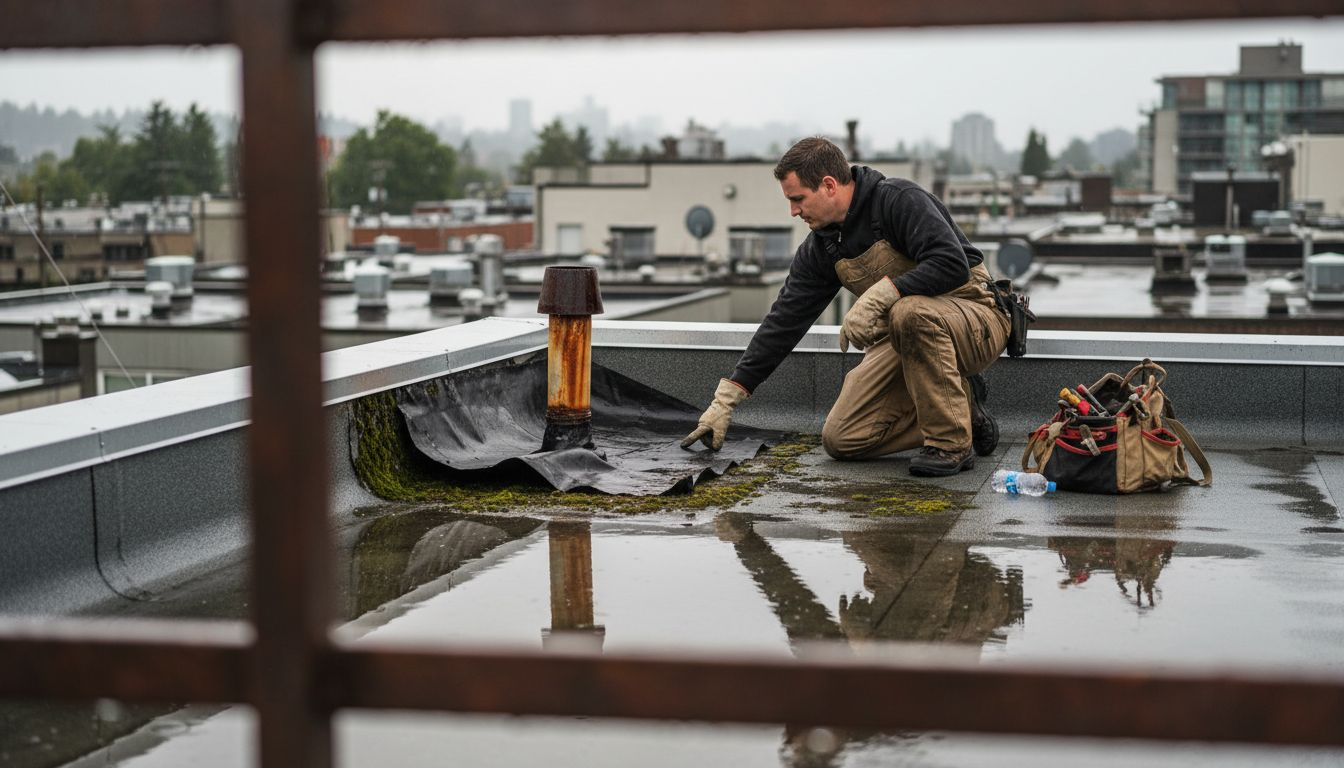
Pro tip: Schedule comprehensive roof inspections immediately following winter and spring rainy seasons to identify damage whilst it remains manageable, preventing small issues from becoming expensive emergencies.
Energy efficiency considerations driving commercial roof replacement
Regulatory changes create compelling reasons to replace roofs beyond structural necessity. Since 2023, BC’s building code requires minimum R-30 insulation in commercial roofs, establishing a new performance baseline that older roofs rarely meet.
Energy efficiency drivers include:
- Code compliance: Many existing commercial roofs fall below R-30 insulation standards, requiring replacement when undergoing major renovations or tenant improvements.
- Operating cost reduction: Upgrading roof insulation can yield energy savings up to 20% for heating and cooling, substantially lowering utility expenses over the roof’s lifespan.
- Reflective technology: Modern roofing membranes with reflective coatings reduce solar heat gain, further improving building energy performance in BC’s variable climate.
- Incentive programmes: Some BC energy efficiency programmes offer rebates for roof upgrades meeting enhanced insulation standards, offsetting replacement costs.
- Tenant satisfaction: Improved climate control from better insulation enhances tenant comfort and may support higher rental rates or occupancy retention.
Evaluating your roof’s energy performance involves comparing current insulation R-values against the R-30 minimum, calculating potential energy savings, and assessing whether retrofitting insulation without full replacement remains feasible. However, achieving code compliance typically requires full roof replacement to properly integrate modern insulation layers and vapour barriers.
A common misconception suggests energy upgrades can happen through overlay systems, but BC code requirements for proper insulation integration usually necessitate complete roof replacement. Understanding energy efficiency and roof replacement in BC alongside current BC building code standards helps property managers recognise when replacement delivers regulatory compliance and operational savings simultaneously.
Common misconceptions about roof replacement
Several myths prevent property managers from making timely replacement decisions, ultimately increasing costs and safety risks.
Myth 1: Patch repairs extend roof life indefinitely. Reality: Whilst repairs address isolated damage effectively on younger roofs, repeated patching after 15 years signals systemic membrane fatigue that repairs cannot reverse. Each patch stresses surrounding material, accelerating adjacent deterioration.
Myth 2: Visible damage provides the only replacement indicator. Reality: Age and hidden structural issues matter equally. Membrane deterioration occurs internally through moisture accumulation and material breakdown invisible from surface inspection. Professional moisture scanning reveals hidden damage requiring replacement despite acceptable surface appearance.
Myth 3: Energy efficiency upgrades do not require full replacement. Reality: Meeting BC’s R-30 insulation requirement demands proper integration of insulation layers, vapour barriers, and membrane systems that overlay approaches cannot achieve reliably. Code compliance typically necessitates complete roof replacement.
These misconceptions create false confidence in aging roofs, delaying necessary action until emergency failures force rushed, expensive replacements. Understanding actual replacement triggers prevents costly surprises.
Pro tip: Track repair frequency and costs annually. When annual repair expenses exceed 15% of estimated replacement cost, or you complete repairs more than twice yearly, plan proactive replacement before catastrophic failure forces emergency action at premium pricing.
Comparing repair vs replacement: decision framework for property managers
Property managers need clear criteria to evaluate whether repairing or replacing their commercial roof delivers better value. A three-factor framework simplifies this assessment: roof age relative to material lifespan, damage extent and type, and energy efficiency code compliance.
| Factor | Repair Viable | Replacement Required |
|---|---|---|
| Age | Under 15 years with good maintenance | Over 20 years or approaching material lifespan |
| Damage extent | Isolated issues under 10% roof area | Membrane damage exceeding 20% area or decking rot |
| Energy compliance | Meets current R-30 code | Falls below code, requires insulation upgrade |
| Cost analysis | Repairs under 15% replacement cost | Cumulative repairs approaching 30% replacement cost |
This framework incorporates key thresholds: damage exceeding 20% membrane punctures and age over 20 years generally tips decisions towards replacement. Cost-benefit analysis extends beyond immediate expenses, considering repair durability, ongoing maintenance burdens, and deferred replacement risks.
Key decision points property managers should evaluate:
- Material lifespan stage: Roofs in final third of expected life warrant replacement over extensive repairs.
- Damage concentration: Multiple damage locations indicate systemic failure rather than isolated incidents.
- Warranty status: Older roofs lack manufacturer warranties, making repairs less protected investments.
- Tenant impact: Replacement eliminates ongoing leak risks and disruptions repairs may not fully resolve.
- Future plans: Properties scheduled for sale or refinancing benefit from new roof value and reduced contingencies.
This repair versus replacement decision framework provides objective criteria, removing emotion from decisions. When multiple factors align favouring replacement, acting proactively prevents emergency situations and allows better contractor selection and scheduling flexibility.
Practical steps to plan for roof replacement
Proactive planning transforms roof replacement from emergency crisis to managed capital improvement, reducing costs and operational disruption.
- Schedule regular professional inspections: Arrange comprehensive roof assessments annually and after severe weather events, focusing on age-related deterioration signs, membrane condition, and moisture intrusion evidence.
- Evaluate energy code compliance: Compare existing roof insulation R-values against BC’s R-30 minimum requirement, identifying compliance gaps that necessitate replacement during renovations.
- Perform cost-benefit analysis: Calculate cumulative repair costs over three years versus replacement investment, factoring in energy savings, reduced maintenance, and improved tenant satisfaction from new roofing systems.
- Budget replacement in capital planning: Incorporate roof replacement into multi-year capital budgets when roofs exceed 15 years, allocating funds incrementally to avoid sudden financial strain.
- Plan timing strategically: Schedule replacements during dry summer months when weather conditions optimise installation quality and minimise tenant disruption, avoiding emergency winter replacements.
- Engage qualified professionals: Select roofing contractors with proven BC commercial experience, current certifications, and familiarity with local building codes and climate challenges.
These steps enable controlled replacement timing that maximises value whilst minimising disruption. Understanding planning roof replacement in BC helps property managers anticipate requirements and secure competitive contractor pricing through advance scheduling.
Pro tip: Engage roofing professionals familiar with BC energy codes and coastal climate demands at least 18 months before anticipated replacement needs, allowing thorough planning, budget refinement, and optimal contractor selection without time pressure compromising quality or cost.
Plan your commercial roof replacement with Paragon Roofing BC
Navigating commercial roof replacement decisions requires expertise in BC’s unique climate challenges and evolving building codes. Paragon Roofing BC specialises in comprehensive roof replacement solutions tailored for British Columbia’s demanding conditions, ensuring your property maintains structural integrity and regulatory compliance.
Our experienced team provides thorough roof condition assessments, identifying whether repair or replacement delivers optimal value for your specific situation. We understand the critical 20-year threshold where BC roofs face accelerated deterioration and help property managers plan proactive replacements that avoid emergency costs. Our installations incorporate energy code compliant R-30 insulation systems, delivering immediate utility savings alongside enhanced building performance.
Whether you manage properties in Coquitlam requiring commercial roof installation services, need guidance on replacement timing through our detailed roof replacement workflow guide, or oversee buildings in Delta seeking reliable commercial roof replacement, Paragon Roofing BC provides the expertise and quality workmanship your investment deserves. Contact us today to schedule a professional roof assessment and develop a replacement strategy that protects your property value whilst meeting all current BC building standards.
Why replace a commercial roof? Frequently asked questions
How often should I have my commercial roof inspected in BC?
Schedule professional roof inspections at least annually to monitor aging signs and damage progression. Additionally, arrange assessments immediately after severe weather events like heavy rainfall or windstorms that may cause hidden damage requiring prompt attention before deterioration spreads.
What are the risks of delaying roof replacement after leak detection?
Delaying replacement after identifying significant leaks can increase property damage costs by up to 40% through escalating water intrusion affecting interior finishes, electrical systems, and structural components. Prolonged delays also risk tenant safety, potential liability claims, and business interruption costs that exceed replacement investment.
Can energy efficiency upgrades be done without replacing the whole roof?
In British Columbia, achieving current R-30 insulation code compliance typically requires full roof replacement to properly integrate insulation layers, vapour barriers, and membrane systems. Overlay approaches rarely deliver code-compliant performance or the long-term reliability new roofing systems provide.
How do I budget effectively for commercial roof replacement?
Plan incrementally over several years once roofs exceed 15 years, setting aside annual capital reserves based on professional cost estimates. Factor inspection costs, potential energy rebates, and code compliance requirements into projections, allowing controlled replacement timing rather than emergency financing when failures occur.
Does membrane damage always require full roof replacement?
Not necessarily. Isolated membrane damage affecting under 10% of roof area on roofs under 15 years often responds well to targeted repairs. However, widespread damage exceeding 20% of membrane area or damage involving structural decking rot generally necessitates full replacement for reliable long-term performance and warranty coverage.