Burnaby commercial skylight leak prevention guide
Burnaby commercial skylight leak prevention guide
TL;DR:
- Proper flashing installation, sealant application, and routine maintenance are essential for preventing skylight leaks in Burnaby’s rainy climate. Most leaks originate from failed flashing or deteriorated sealant at the curb-to-roof junction, not the skylight unit itself. Regular inspections, surface preparation, and the use of durable polyurethane sealants help ensure long-lasting waterproofing and reduce repair costs.
Burnaby commercial skylight leak prevention is achieved through precision flashing installation, correct sealant application, and scheduled maintenance that keeps water out of your building year after year. Burnaby receives roughly 1,400mm of rainfall annually, and that volume puts constant pressure on every curb-to-roof junction around your skylights. Most leaks traced back to skylights are not caused by the skylight unit itself. They come from failed flashing or deteriorated sealant at the edges. Get those two things right, and you protect your tenants, your ceilings, and your repair budget.
What causes commercial skylight leaks in burnaby?
Most commercial skylight leaks stem from compromised flashing or failed sealant at the curb-to-roof intersection, not from the skylight unit itself. That distinction matters because it changes where you look and what you fix. The skylight glass or dome is rarely the culprit. The weak point is always the transition zone where the skylight curb meets the roof membrane.
In Burnaby’s climate, several specific factors accelerate that failure:
- Flashing tape adhesion failure at corners. Flashing tape at curb-membrane junctions, especially at corners, is the primary cause of leaks. Corners flex more than straight runs, and adhesion breaks down faster there.
- Sealant deterioration from freeze-thaw cycling. Burnaby winters bring repeated freeze-thaw events that crack and separate older sealant beads. Once a bead separates even slightly, capillary action pulls water underneath.
- DIY sealant layering. Applying new sealant over old cracked material is one of the most common mistakes on commercial roofs. The new product cannot bond structurally to a compromised substrate, so it fails within one or two rain seasons.
- Moss and debris accumulation. Organic growth holds moisture against flashing and sealant. Over time, that constant moisture contact accelerates breakdown.
- Glazing seal failure. Fogging between panes and visible cracks in the glass unit signal that the skylight itself is reaching end of life, which is a separate problem from flashing failure.
Pro Tip: Take photos of water entry points during or immediately after a rain event. Documenting water entry with photos aids professional diagnosis and prevents misidentification of the actual leak source, which saves you money on the repair.
How does proper flashing and sealing prevent skylight leaks?
Precision flashing is the single most reliable method for preventing water ingress around commercial skylights in Burnaby. Think of it like the collar on a waterproof jacket. If the collar is poorly stitched, rain gets in regardless of how good the rest of the jacket is.
Multi-stage flashing and ice-and-water shield
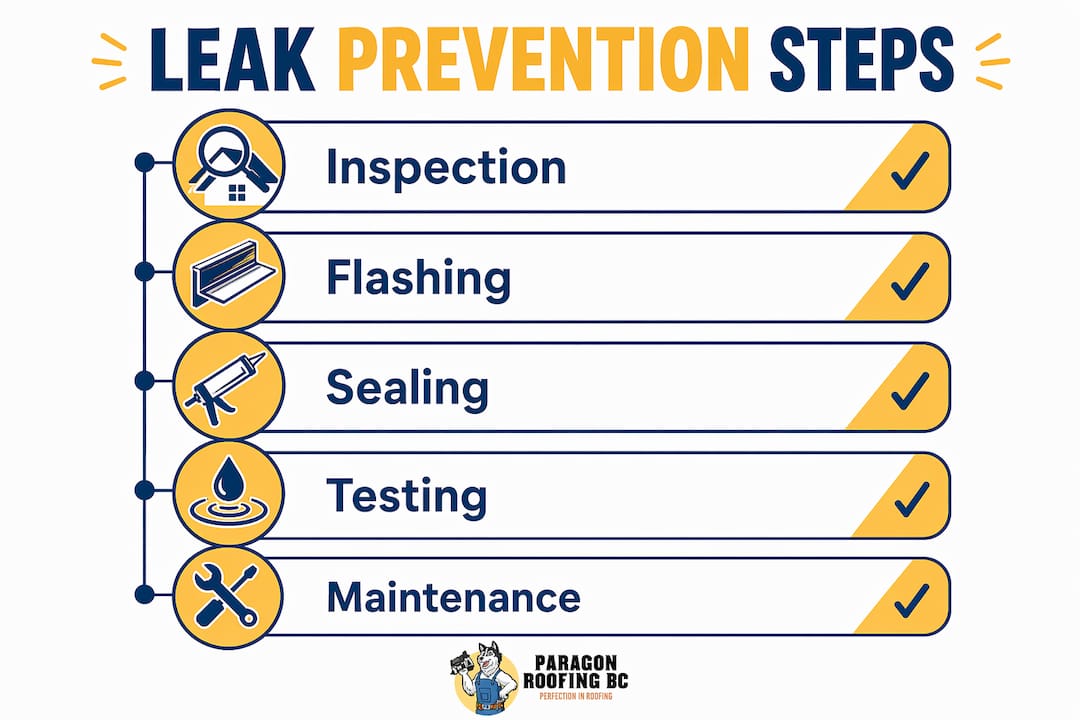
Properly installed commercial skylight units typically last 20+ years when paired with precision flashing and redundant ice-and-water shield protection. The key word is redundant. A single layer of flashing tape is not enough for a Burnaby commercial roof. Professional installers apply ice-and-water shield beneath the flashing layer, creating two independent barriers. If one layer is compromised, the second one holds.
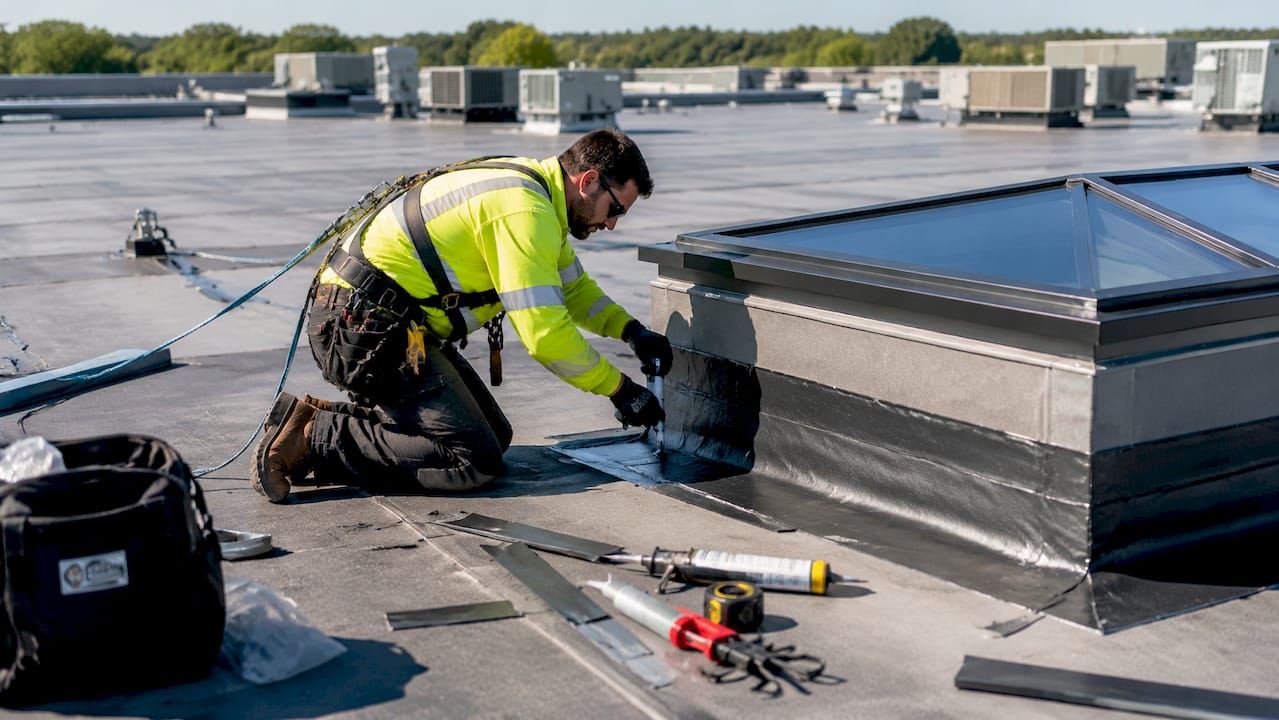
Professional installers follow manufacturer sequences including specialised flashing caps and multi-stage sealing for absolute waterproofing. Skipping steps in that sequence, such as reverse lapping flashing or over-nailing the cap, creates direct water pathways. Reverse lapping means installing flashing so the upper piece sits under the lower piece, which lets water run directly behind the flashing instead of over it.
Choosing the right sealant
Not all sealants perform equally in the Pacific Northwest. The comparison below shows the practical difference between the two most common options:
| Sealant Type | Weather Resistance | Adhesion to Metal | Recommended Use |
|---|---|---|---|
| Polyurethane (e.g., Tremco, NP1) | Excellent in wet climates | Strong and flexible | Exterior curb-to-flashing joints |
| Standard Silicone | Good UV resistance | Moderate, less flexible | Interior glazing seals only |
The most durable sealants for commercial skylights in BC include polyurethane types such as Tremco and NP1, preferred over standard silicone for exterior applications. Polyurethane stays flexible through temperature swings, which is exactly what you need when Burnaby temperatures drop below zero in january and climb above 25°C in july.
Surface preparation before resealing
Removal of all compromised sealant and substrate cleaning before applying new membrane or sealant is critical. Applying new product over old cracked material fails immediately. A professional crew will grind or scrape the old sealant completely, clean the substrate with an appropriate solvent, and prime the surface before applying the new bead. That preparation step takes time, but skipping it wastes the entire repair cost.
Pro Tip: After any skylight repair or installation, ask your contractor to perform a controlled water test simulating 15+ minutes of heavy rainfall. This is the industry standard for confirming a leak-free result before the crew leaves your property.
What maintenance routines help burnaby property managers avoid skylight leaks?
Reactive repairs cost more than scheduled maintenance. A commercial skylight that receives no attention between installations and failures will almost always develop a leak within five to seven years in Burnaby’s climate. A simple maintenance routine extends that lifespan significantly.
Here is a practical schedule for property managers:
-
Bi-annual cleaning (spring and autumn). Regular bi-annual cleaning of skylight bases and checking sealants prevents leaks caused by debris and weather damage. Clear moss, leaves, and standing debris from the curb base and surrounding roof area. Blocked drains near skylights back up water and force it against flashing edges.
-
Sealant bead inspection. Walk the perimeter of each skylight curb and look for cracking, separation, or bubbling in the sealant. A bead that has pulled away from the metal even by a few millimetres is already allowing moisture infiltration.
-
Branch and vegetation management. Overhanging branches drop debris directly onto skylight curbs and accelerate moss growth. Trim branches back at least two metres from any skylight unit.
-
Roof pitch and drainage check. Flat and low-slope commercial roofs in Burnaby are common, and poor pitch around a skylight curb allows water to pond. Ponding water finds every small gap. Confirm that water drains away from the curb rather than toward it.
-
Professional inspection every 3–5 years. A trained eye catches flashing lift, membrane separation, and glazing seal failure before they become full leaks. Pair this with your regular post-installation roof care schedule to keep everything documented.
Pro Tip: Keep a simple log of each skylight’s location, installation date, last inspection date, and any repairs made. When a leak does appear, that log tells your contractor exactly what has already been tried, which cuts diagnostic time and repair cost.
When should burnaby commercial skylights be repaired vs. replaced?
The repair-versus-replace decision is one of the most common questions property managers ask, and the answer depends on what is actually failing. Not every leak means a new skylight. But some leaks are a sign that the unit has reached the end of its service life.
Repair is the right call when:
- The leak traces back to flashing lift or sealant separation at the curb
- The glazing is clear with no fogging between panes
- The skylight frame is structurally sound with no visible cracking or warping
- The unit is fewer than 15 years old and has been maintained
Replacement is the right call when:
- End-of-life indicators are present, including fogged glazing, cracks in the glass unit, or repeated leaks despite maintenance
- The unit is over 20 years old and has never had a professional flashing overhaul
- The curb itself is rotted or structurally compromised
- Repair costs are approaching 50% of replacement cost
Here is a quick reference for the decision:
| Condition | Recommended Action | Expected Outcome |
|---|---|---|
| Flashing lift only | Reflash and reseal | 10+ years additional service |
| Sealant failure only | Full sealant removal and replacement | 5–8 years additional service |
| Fogged or cracked glazing | Full unit replacement | 20+ years with proper installation |
| Repeated leaks after repairs | Professional evaluation and likely replacement | Long-term leak resolution |
New high-performance commercial units provide 20+ years of service life with proper installation. That lifespan makes replacement a sound investment when the alternative is patching a failing unit every two or three years. For Burnaby multi-unit buildings, where one leaking skylight can affect multiple tenants, the disruption cost of repeated repairs adds up fast.
Key takeaways
Effective skylight leak prevention in Burnaby commercial buildings requires precision flashing, quality polyurethane sealants, and a consistent bi-annual maintenance routine to protect against the region’s heavy rainfall and freeze-thaw conditions.
| Point | Details |
|---|---|
| Flashing is the primary failure point | Most leaks originate at the curb-to-roof junction, not the skylight unit itself. |
| Polyurethane sealants outperform silicone | Products like Tremco and NP1 resist Burnaby’s wet climate and temperature swings better than standard silicone. |
| Surface preparation is non-negotiable | Old sealant must be fully removed before resealing; new product over old material fails immediately. |
| Bi-annual maintenance prevents most leaks | Cleaning curb bases and inspecting sealant beads twice a year stops small problems before they become costly repairs. |
| Replacement beats repeated patching | When glazing is fogged or cracked, a new unit with proper installation delivers 20+ years of leak-free service. |
What i’ve learned about skylights after years on burnaby roofs
Hey, it’s Harman here. After inspecting and repairing commercial skylights across Burnaby for years, the pattern I see most often is this: the skylight brand is rarely the problem. The installation detail is almost always the problem.
Property managers sometimes spend a lot of energy choosing between skylight brands, and I understand why. But I’ve seen premium units leak within two years because the flashing was lapped backwards, and I’ve seen budget units stay dry for fifteen years because the installer followed the manufacturer sequence exactly and used a quality polyurethane sealant at every joint.
The other thing I want to be direct about is DIY sealant repairs. I get called to buildings where someone has applied three or four layers of sealant over the years, each one over the last. By the time I get there, the joint looks thick and sealed, but water is running freely underneath all of it because none of those layers ever bonded to a clean substrate. Stripping everything back and starting fresh is the only fix that actually holds.
Burnaby’s rainfall is not forgiving. If you manage a commercial property here, the best thing you can do is schedule a professional inspection before a leak appears, not after. The cost of a proper skylight inspection in Burnaby is a fraction of what you’ll spend on ceiling repairs, tenant disruption, and emergency call-outs.
— Harman
Paragonroofingbc handles commercial skylight leaks in burnaby
Paragonroofingbc works with commercial property managers across Burnaby on skylight installation, repair, and leak prevention. Our crews are experienced with multi-stage flashing systems, polyurethane sealant application, and the specific drainage challenges that come with Burnaby’s flat and low-slope commercial roofs.

Every skylight repair we complete includes a controlled water test to confirm the waterproofing envelope before we leave your property. We also offer customised maintenance plans so your skylights get inspected on a schedule that matches Burnaby’s rainfall seasons. If you manage a commercial building and want a professional assessment, our commercial roofing team is ready to help. Reach out to Paragonroofingbc for a detailed quote and a no-pressure inspection.
FAQ
What is the most common cause of commercial skylight leaks in burnaby?
The most common cause is flashing or sealant failure at the curb-to-roof intersection, not the skylight unit itself. Burnaby’s heavy rainfall and freeze-thaw cycles accelerate this deterioration faster than in drier climates.
How often should commercial skylights be inspected in burnaby?
Bi-annual inspections in spring and autumn are the standard recommendation for Burnaby’s climate. A professional inspection every 3–5 years adds a deeper assessment of flashing integrity and glazing condition.
Can i reseal a commercial skylight myself to stop a leak?
Applying new sealant over old cracked material fails immediately because the new product cannot bond to a compromised substrate. Full removal of old sealant and proper surface preparation are required for any repair to hold.
What sealant works best for commercial skylights in BC?
Polyurethane sealants such as Tremco and NP1 are the preferred choice for exterior curb-to-flashing joints in BC. They remain flexible through temperature swings and resist weathering better than standard silicone in the Pacific Northwest climate.
When does a leaking commercial skylight need full replacement?
Replacement is warranted when the glazing is fogged or cracked, when the curb is structurally compromised, or when repeated repairs have failed to stop the leak. A properly installed new unit delivers 20+ years of service life and is more cost-effective than ongoing patching.
Recommended
Our Roofing Blog

Have more questions about roofing?
Check out our FAQs or give us a call today to speak to an expert roofer in Vancouver Lower Mainland, BC. We're here to help our neighbours make educated decisions about their roof. For our team, we value helping clients save money while making their roofs last.